Bristol Building, Colombo Fort: A Grand Old Landmark of Ceylon
Exploring the Story of One of Colombo’s Historic Colonial Buildings
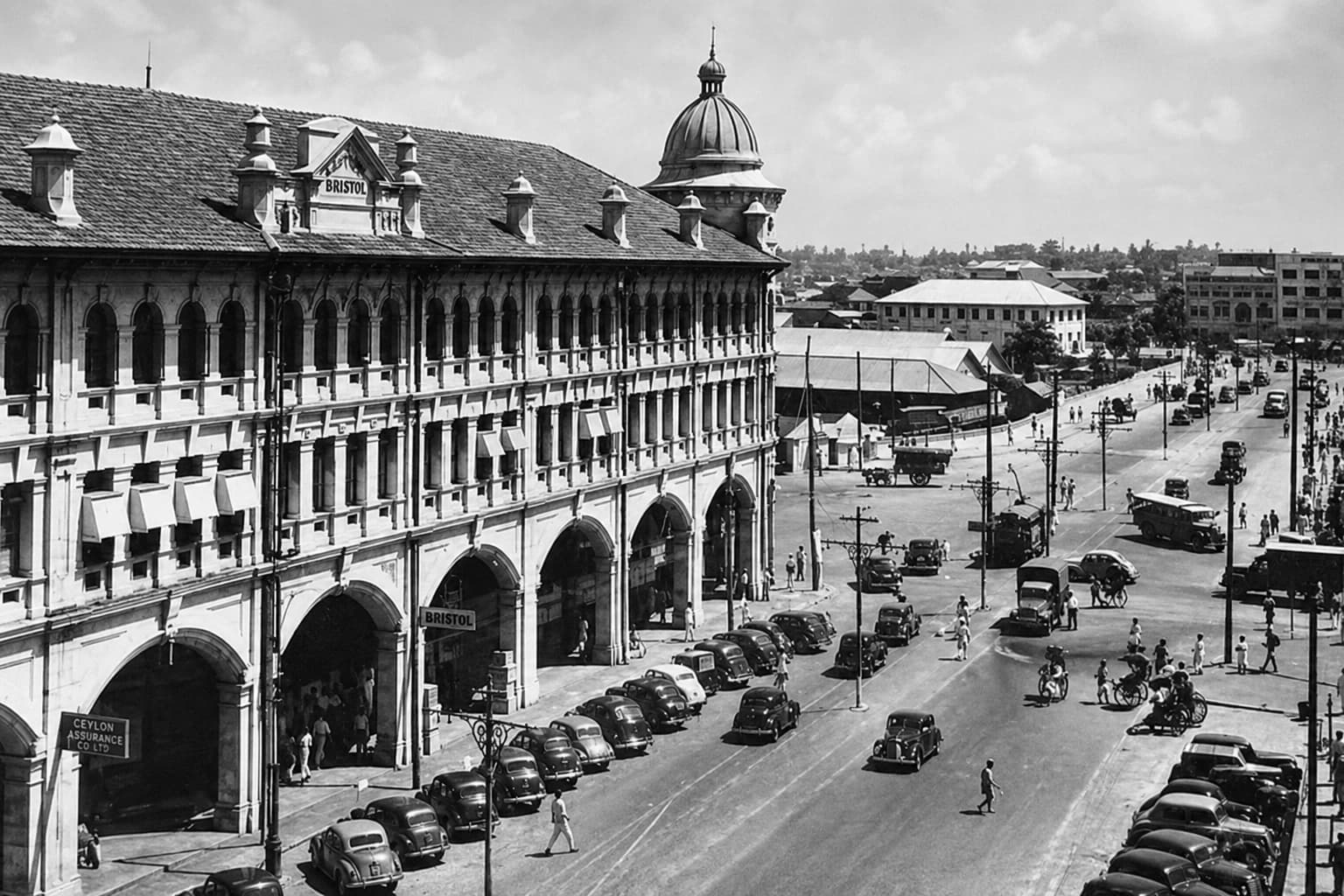
Bristol Building Colombo Fort| In the heart of Colombo Fort, where old streets still carry the atmosphere of Ceylon’s commercial past, stands the historic Bristol Building. Located near the corner of York Street and Sir Baron Jayatilaka Avenue, this late nineteenth-century landmark is one of the notable colonial-era buildings that once gave Colombo Fort its distinctive character.
Today, the area around Colombo Fort is busy with offices, banks, government buildings, hotels, and traffic. Yet behind the modern pace of the city are traces of a very different Colombo — a port city of horse carriages, grand hotels, sea-facing streets, travelling merchants, plantation planters, gem traders, colonial officials, and visitors arriving by ship.
The Bristol Building belongs to that world.
Originally built as the Bristol Hotel, it was once considered one of the finest places to stay in Colombo. Its elegant façade, arched windows, verandas, and prominent street presence made it part of the grand colonial streetscape of Fort. For heritage travellers exploring old Ceylon, the Bristol Building offers a fascinating stop in Colombo’s historic quarter.
Check our previous article- https://trippingsrilanka.com/stories/local-council-members-in-ceylon
A Luxury Hotel in Old Colombo
During the late nineteenth century, Colombo was growing rapidly as a major port city in the British Empire. Ships called at Colombo Harbour, trade expanded, and Fort became the commercial heart of the city. Grand buildings began to appear along streets such as York Street, Chatham Street, Queen Street, and the areas surrounding the harbour.
The Bristol Hotel was part of this transformation. It catered to travellers, merchants, officials, and visitors who passed through Colombo during the height of Ceylon’s colonial period. In an era before modern luxury hotels, establishments such as the Bristol were important social and commercial spaces. They were places where people stayed, dined, met business contacts, exchanged news, and experienced Colombo’s growing reputation as a cosmopolitan port city.
One of the most interesting stories connected to the Bristol Hotel is that it is said to have been the first building in Ceylon to feature electric ceiling fans. This detail may seem simple today, but in the 1890s it represented modern comfort and luxury. In the tropical climate of Colombo, ceiling fans would have been a remarkable convenience, especially for visitors arriving from Europe.
This small detail helps us understand how advanced and prestigious the Bristol Hotel was considered in its time.
Architecture That Still Speaks
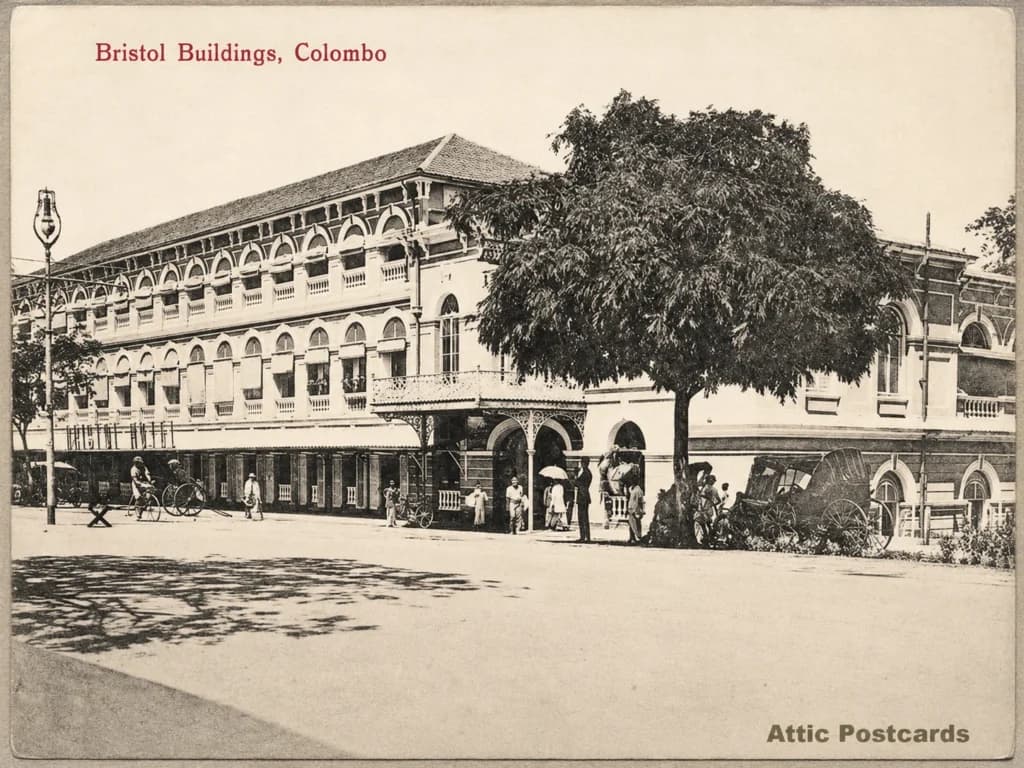
The old photograph of the Bristol Building shows a striking colonial structure with long horizontal lines, repeated arched openings, shaded verandas, and a busy street scene in front. The building’s design was practical as well as elegant. In tropical colonial architecture, high ceilings, large windows, verandas, and shaded corridors were important features. They helped improve ventilation, reduce heat, and create comfort before air conditioning existed.
The arched windows and decorative upper façade gave the Bristol Building a graceful appearance. Its scale also showed confidence. It was not a small guest house or simple commercial block. It was a major building in one of Colombo’s most important districts.
For today’s visitor, this kind of architecture is part of the charm of Colombo Fort. While many modern buildings have changed the skyline, old structures like the Bristol Building remind us of the city’s earlier identity.
From Hotel to Commercial Landmark
As Colombo changed in the early twentieth century, many buildings in Fort shifted from residential or hotel use to commercial and office purposes. The Bristol Building followed this pattern.
One notable figure associated with the building was N.D.H. Abdul Gaffoor, the pioneering gem merchant who established his jewellery business here in 1894 before later moving to the famous Gaffoor Building. This connection gives the Bristol Building another layer of importance. It was not only part of the hotel history of Colombo but also part of the city’s commercial and gem-trading heritage.
Colombo Fort was once a powerful centre of trade. Jewellery, gems, tea, shipping, banking, import-export business, and government administration were all closely linked to this district. The Bristol Building stood among these activities, witnessing the rise of Colombo as Ceylon’s main commercial capital.
Damage, Survival and Restoration
The Bristol Building’s story is not only one of elegance. It also reflects the difficult chapters of modern Sri Lankan history. The building suffered damage and partial destruction during the 1983 riots. Like several other historic buildings in Colombo, it survived but carried the marks of a troubled period.
In later years, restoration efforts helped preserve the surviving architectural framework. This is important because Colombo has already lost many old buildings to neglect, redevelopment, or changing urban needs. Every restored heritage building adds value to the city’s identity.
For heritage travellers, restoration is not just about saving walls and windows. It is about preserving atmosphere. A city becomes more meaningful when its older layers remain visible. The Bristol Building helps visitors imagine the Colombo of another century.
Why the Bristol Building Matters to Heritage Travellers
The Bristol Building is especially interesting because it connects several themes of old Ceylon in one place.
It tells the story of Colombo as a colonial port city. It reflects the rise of luxury hospitality in the late nineteenth century. It shows how architecture was adapted to the tropical climate. It is linked to early commercial activity and the jewellery trade. It also stands within walking distance of several other important Fort landmarks.
For visitors who enjoy history, architecture, photography, and old city walks, the Bristol Building is worth including in a Colombo Fort heritage route.
Places to See Nearby
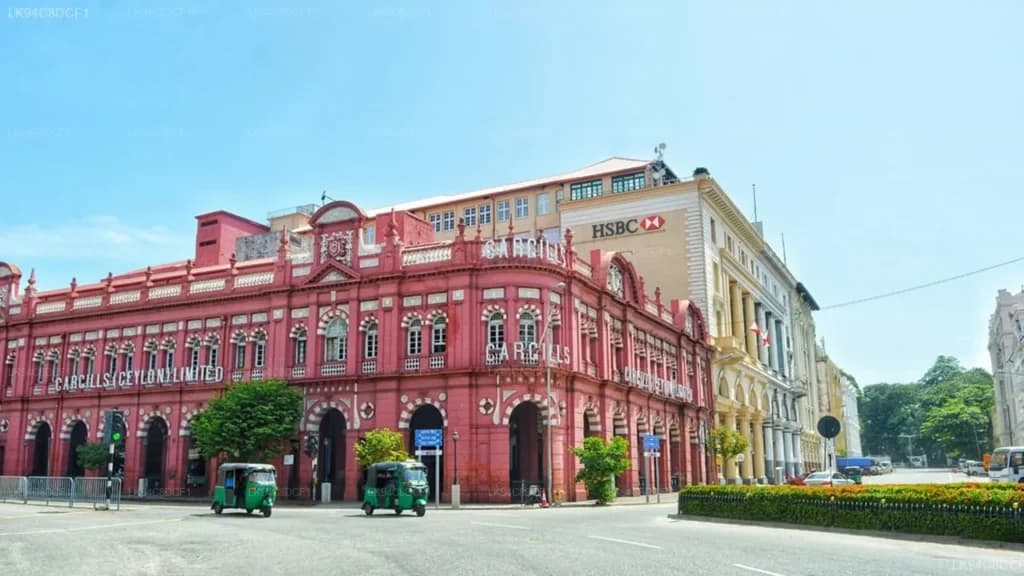
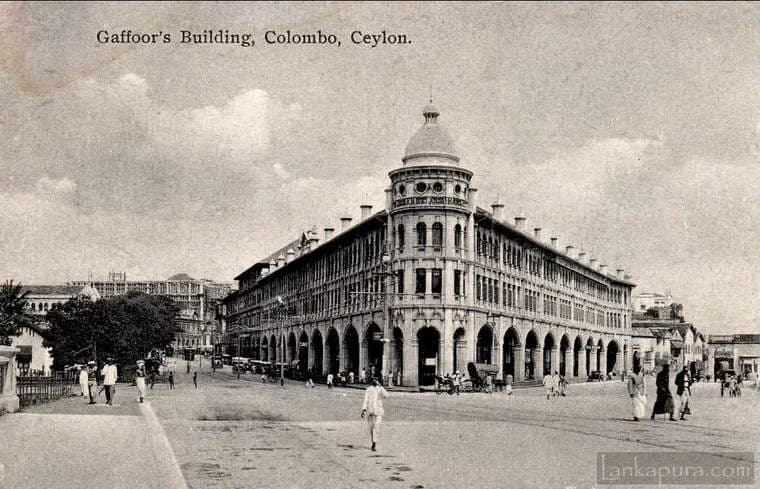
The Bristol Building is located in one of the most historically rich areas of Colombo. Travellers can combine it with several nearby sites.
The Cargills Building is one of the most iconic red-brick colonial buildings in the city. Its striking façade makes it a favourite among heritage photographers.
The Gaffoor Building, connected with N.D.H. Abdul Gaffoor’s jewellery legacy, is another important commercial landmark in Fort.
The General Treasury Building and the surrounding government quarter reflect the administrative importance of Colombo Fort during the colonial period.
The President’s House area, though access may be restricted depending on security arrangements, is also part of the historic Fort landscape.
A walk through York Street, Chatham Street, and the old Fort area gives visitors a glimpse of the city’s layered past, where colonial architecture, modern business, and port-city life meet.
A Simple Heritage Walk in Colombo Fort
Start your walk near the Cargills Building and continue through the old commercial streets of Fort. Observe the façades, balconies, windows, and street corners. These details help reveal how Colombo once looked before modern high-rises changed the cityscape.
From there, move towards the Bristol Building and take time to study its remaining architectural features. Compare the present-day structure with old photographs if available. This makes the experience more meaningful because you can see what has survived and what has changed.
Then continue towards the Gaffoor Building and the surrounding streets. This route can be completed in a short time, but it is best done slowly. Colombo Fort rewards those who look carefully.
Morning or late afternoon is ideal for photography, as the light is softer and the streets are easier to explore.
Travel Tips for Visitors
Colombo Fort is a busy working district, so expect traffic, office crowds, and security restrictions in certain areas. Wear comfortable shoes, carry water, and avoid blocking pavements while taking photographs.
Some heritage buildings may not be open to the public, so the experience is mostly external viewing and photography. However, even from the street, the architecture and setting offer plenty of interest.
For the best experience, combine the Bristol Building with a guided Colombo heritage walk or a self-guided route through Fort and Pettah. This gives a fuller understanding of how old Colombo developed as a port, trading hub, and administrative centre.
A Window into Old Ceylon
The Bristol Building is more than an old structure in Colombo Fort. It is a reminder of a time when Colombo was a grand maritime gateway to Ceylon. It speaks of luxury hotels, early modern comforts, gem merchants, commercial ambition, tropical architecture, and the changing face of the city.
For many travellers, Colombo is simply the entry point to Sri Lanka. But those who pause to explore its old streets will discover that the city has its own rich heritage. The Bristol Building is one of those places that helps bring old Ceylon back to life.
Visit Us: https://trippingsrilanka.com/stories
More from Old Ceylon
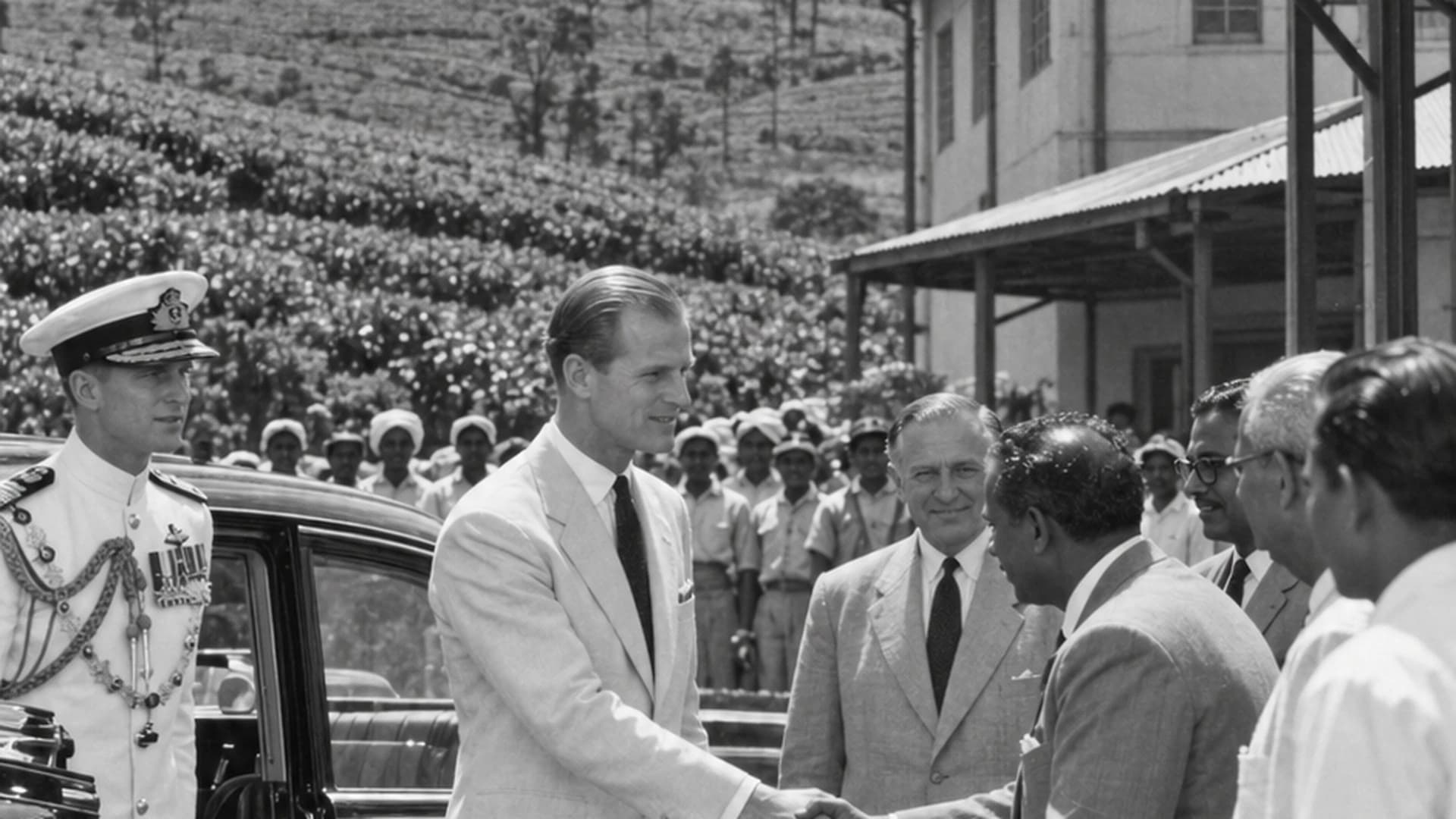
When Prince Philip Visited Pedro Estate: The Royal Visit That Became Part of Ceylon Tea History in 1954
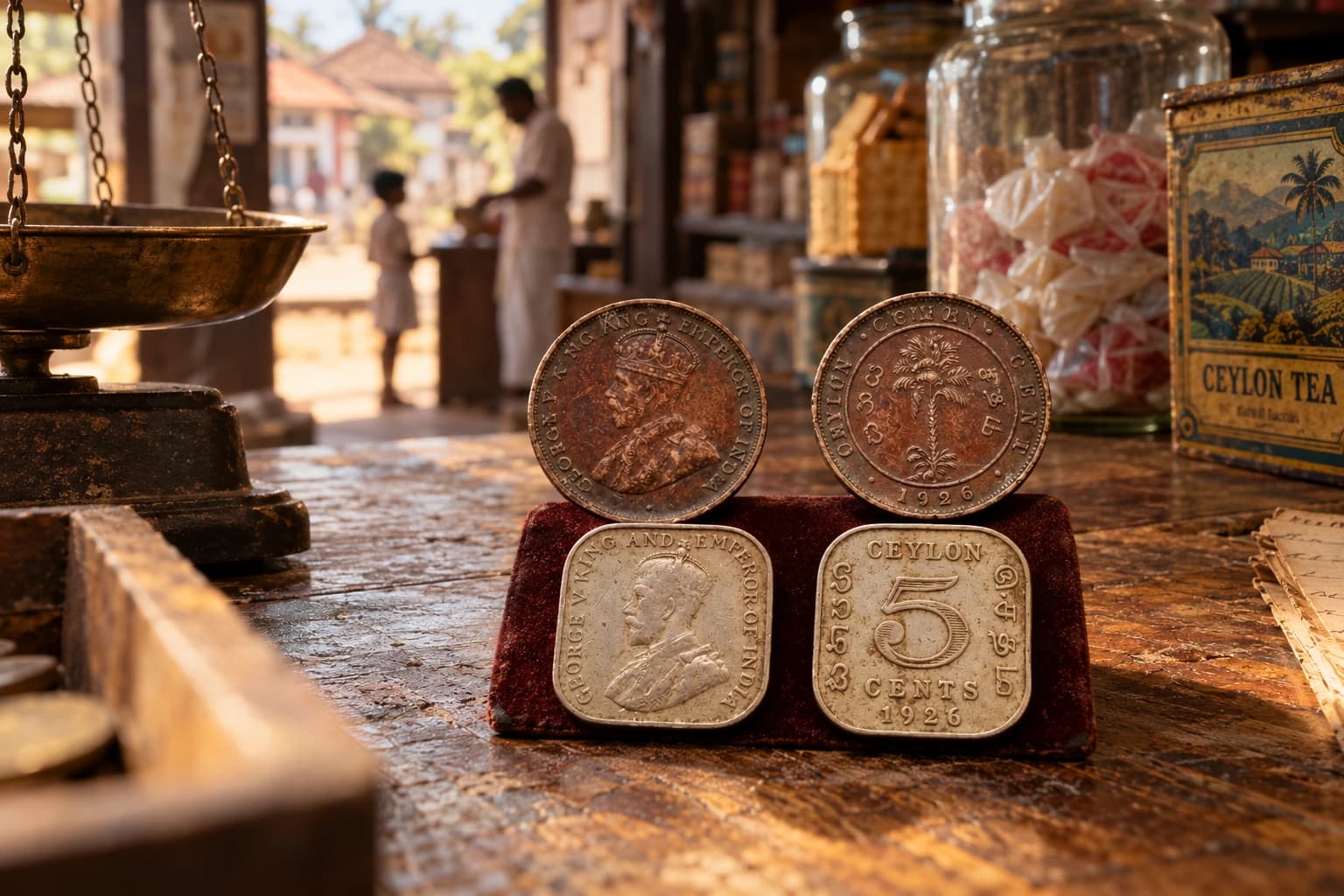
When Five Cents Mattered: The Forgotten Small Change of Old Ceylon