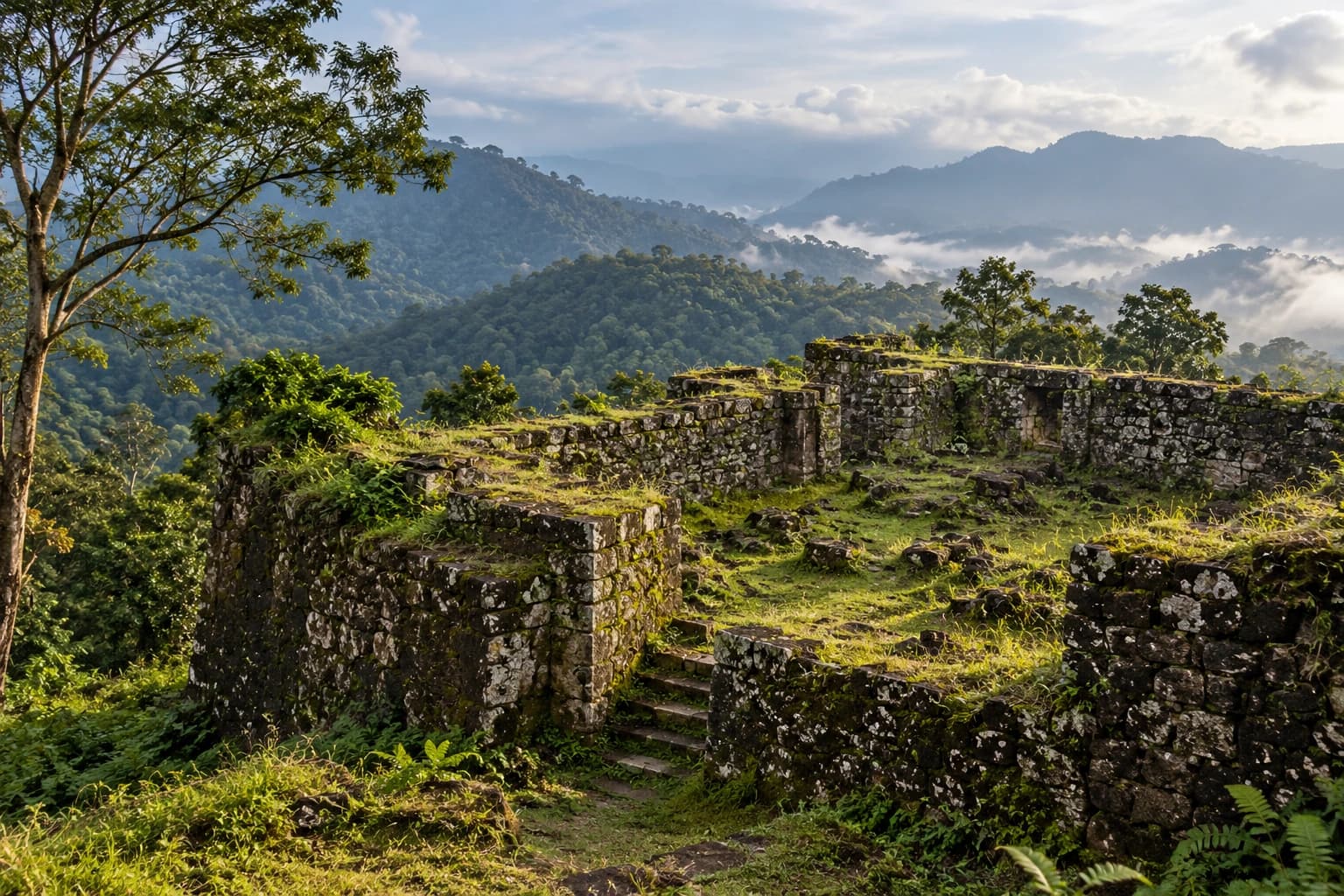

Kandy in 1952: A City Moving at a Gentler Pace
A bullock cart moves slowly across a broad street. Men in light-coloured clothing walk beneath the shade of colonial-era arcades. Whitewashed buildings stand against the distant hills, while the road remains almost entirely free from traffic.
For a few moments, modern Kandy disappears.
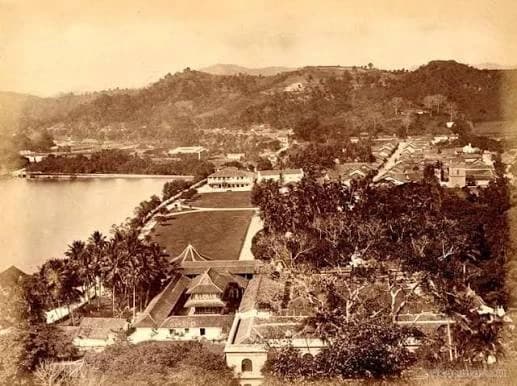
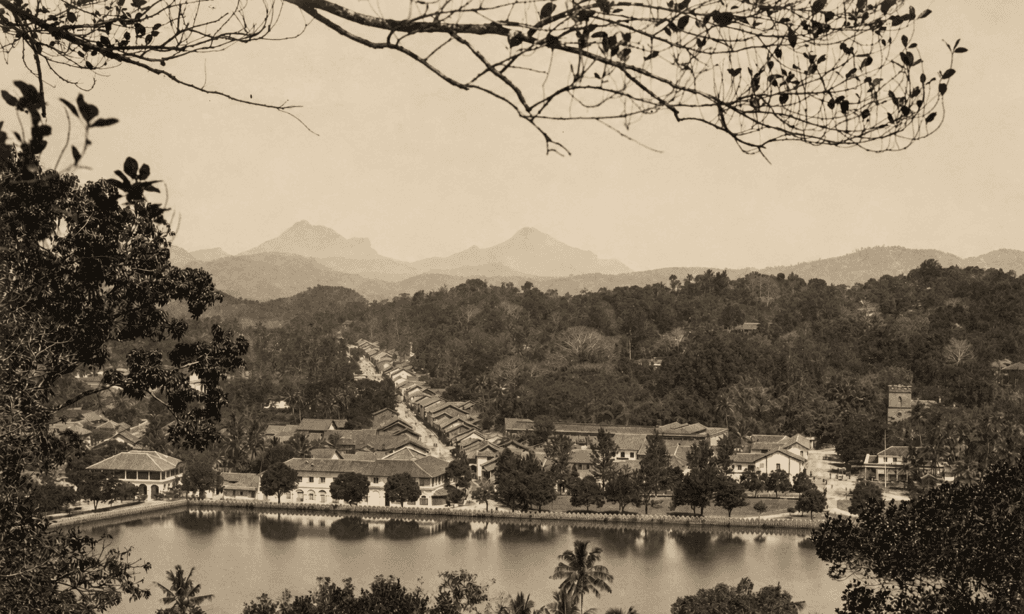
These scenes belong to Seeing Ceylon, a short American travel documentary released in 1952 as part of James A. FitzPatrick’s Traveltalks series. The eight-minute Technicolor film takes viewers from Colombo towards Kandy, pausing to observe the island’s harbour, beaches, plantations, gardens, religious traditions and everyday life.
More than seven decades later, its surviving images offer something far more valuable than a simple travel record. They provide a moving glimpse into the appearance, rhythm and atmosphere of Ceylon during the early years after independence.
Check our previous article- https://trippingsrilanka.com/stories/colonial-kandy-kingdom
Ceylon at the Beginning of a New Era
The year 1952 placed Ceylon at an important historical crossroads.
Only a few years had passed since the island gained independence in 1948. Although political authority had changed, the physical character of the country continued to reflect the long colonial period.
Government offices, railway stations, banks, hotels and commercial buildings still carried British architectural influences. English remained widely used in administration and commerce. Motorcars travelled beside bullock carts, while Western clothing appeared alongside sarongs, sarees and traditional Kandyan dress.
It was neither the Ceylon of the nineteenth century nor the Sri Lanka familiar to us today.
The country was gradually defining its post-independence identity while continuing to live among institutions, buildings and customs inherited from an earlier age. That transition can be seen throughout the old footage—not through grand political events, but through the small details of ordinary life.
The Journey Begins in Colombo
The film’s journey begins in Colombo, presented as Ceylon’s capital and principal seaport.
The harbour was then one of the island’s most important links with the outside world. Ships arrived carrying passengers, manufactured goods and correspondence, while vessels departed with tea, rubber, coconut products and other exports.
Colombo was already a busy commercial city, but the streets visible in films from the period appear far less crowded than those of today.
The skyline remained low. Mature trees softened the edges of roads and public buildings. Railway lines, tram-era streets and colonial façades shaped the character of the city. There were cars, buses, bicycles and handcarts, but not the seemingly endless flow of vehicles now associated with the capital.
The difference is not simply the absence of modern buildings.
It is the amount of space visible between people, vehicles and structures. Colombo appears to breathe. Its streets seem active without being overwhelmed, allowing the details of the city to remain visible.
Check our previous article – https://trippingsrilanka.com/stories/elephant-walk-elizabeth-taylor
Mount Lavinia and the Seaside World of Old Ceylon
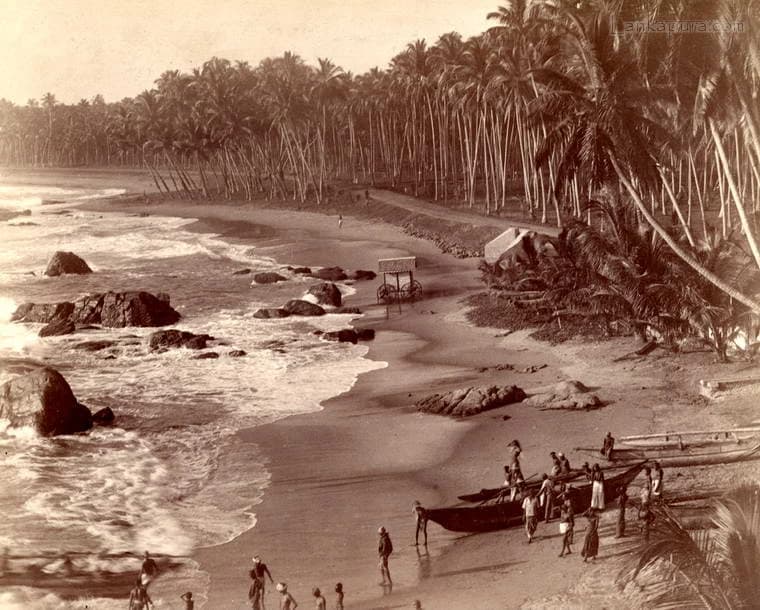
From Colombo, Seeing Ceylon turns towards Mount Lavinia, where the colour photography captures the coast and the waters of the Indian Ocean. Contemporary descriptions of the film specifically note its scenes of Mount Lavinia and the vivid appearance of the sea in Technicolor.
During the early 1950s, Mount Lavinia was already regarded as one of the capital’s best-known seaside retreats.
A railway journey from Colombo carried residents towards a coastline framed by coconut palms, sandy beaches and the historic Mount Lavinia Hotel. Families arrived for sea bathing and picnics, while couples walked along the shore as trains passed close to the water.
There were no towers of coastal apartments and far fewer restaurants, vehicles and commercial signs. The beach offered a relatively open horizon, allowing the sea to dominate the landscape.
Travel itself was slower and more ceremonial.
Passengers waited on railway platforms, carried luggage by hand and watched the coastline unfold through open windows. Reaching a destination was important, but the movement towards it was also part of the experience.
From the Coast to the Kandyan Hills
The journey from Colombo to Kandy carried travellers through one of Ceylon’s most dramatic changes of landscape.
The flat, humid western region gradually gave way to rivers, forests, rocky slopes and rising mountains. By rail, the ascent was slow enough for passengers to observe villages, paddy fields, roadside boutiques and plantations along the route.
The closer one came to Kandy, the more the surrounding hills shaped the view.
There were fewer vehicles and fewer buildings interrupting the landscape. Journeys followed the natural geography of the country instead of cutting through it at high speed.
Travel from Colombo to Kandy was therefore more than a journey between two cities. It was a passage from the island’s commercial coast into its historic central highlands.
Even today, parts of the railway preserve that sense of gradual discovery. Yet in the 1950s, without expressways, mobile phones or tightly scheduled tourist itineraries, passengers experienced the journey with fewer distractions and considerably more time.
Kandy Before the Modern Rush
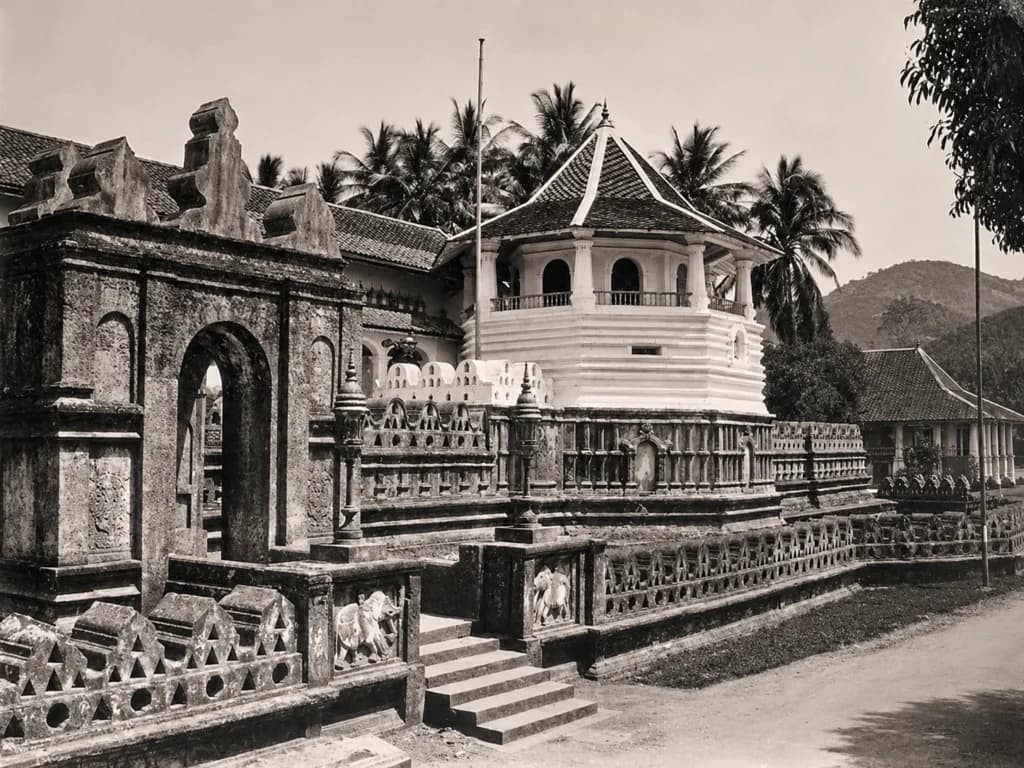
The Kandy seen in the surviving footage feels intimate.
Bullock carts share the streets with a limited number of motorcars. Pedestrians move without appearing hurried. White façades, deep verandahs and covered walkways stand clearly visible because they are not hidden behind lines of vehicles, signboards and modern construction.
The city was already an important centre of religion, administration, education and trade. Yet it retained the scale and atmosphere of a hill town.
Kandy’s identity was—and remains—inseparable from the Sri Dalada Maligawa, the Temple of the Sacred Tooth Relic. The city was the final capital of the Sinhala kings before the British occupation in 1815, and its sacred and royal associations have continued to shape its cultural importance.
In 1952, the streets surrounding the lake and temple would have carried many of the same sounds heard over generations: temple drums, bells, market voices, cartwheels and the movement of worshippers.
At the same time, colonial-era public buildings, banks and hotels occupied prominent positions in the town. Ancient traditions and European architectural influences existed beside one another, creating the layered urban character that continues to distinguish Kandy.
The Bullock Cart as Part of Everyday Life
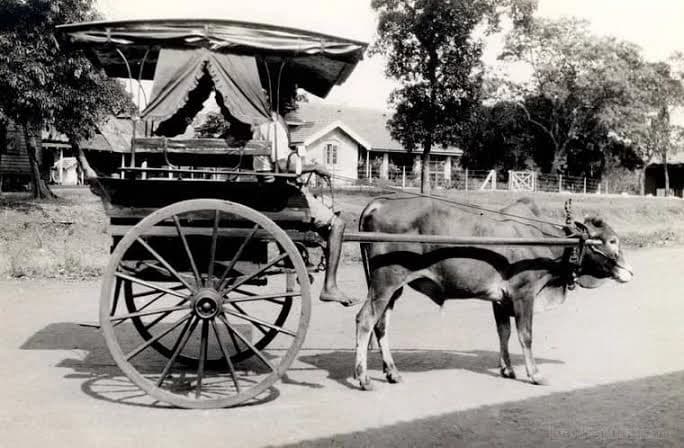
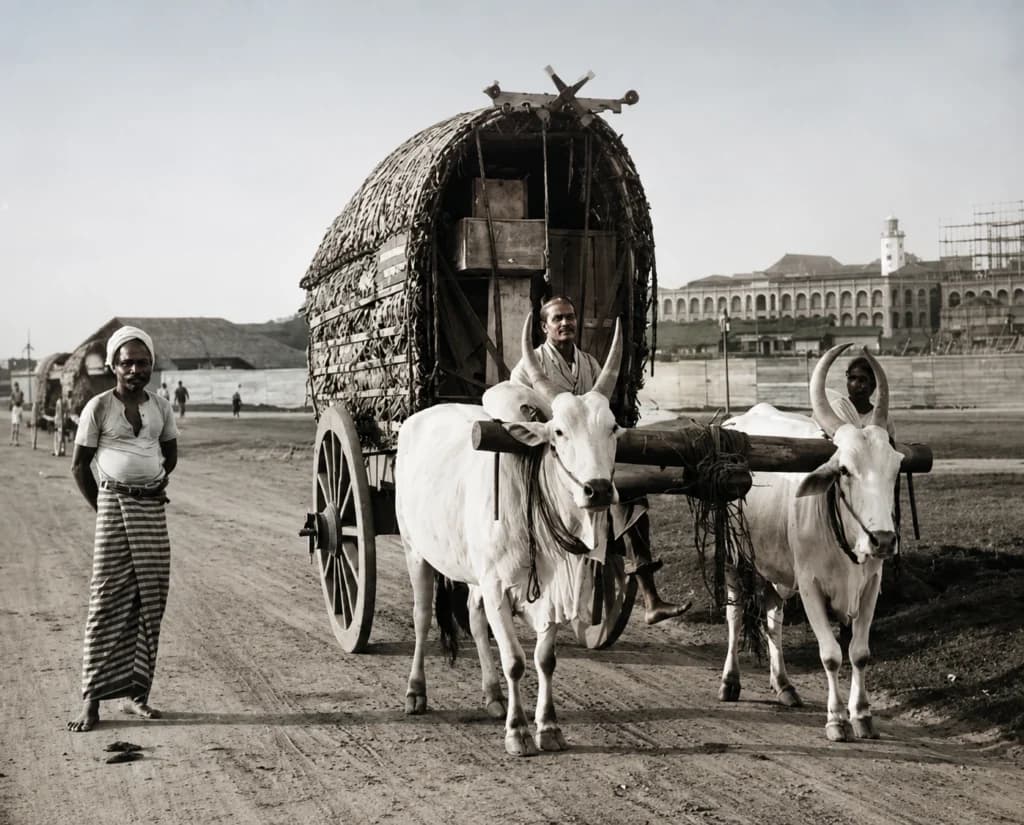
One of the most memorable details in the old imagery is the bullock cart.
Today, such a vehicle may be presented at a cultural event or preserved as a symbol of rural history. In the early 1950s, however, it was still part of ordinary transport and commerce.
Carts carried agricultural produce, timber, household goods and merchandise between villages, estates and town markets. Their pace was determined by animals, road conditions and distance rather than timetables or engines.
The sound of wooden wheels and hooves would have been familiar throughout Ceylon.
A bullock cart moving through central Kandy was not regarded as a historical spectacle. It belonged naturally to the street, sharing the road with buses, bicycles and imported motorcars.
That single image reveals the transitional character of the period. Traditional transport had not yet disappeared, but modernisation was steadily entering daily life.
Peradeniya and the Tradition of the Garden Excursion
The film also records the Royal Botanic Gardens at Peradeniya, situated a short distance from Kandy.
The gardens were formally established at Peradeniya in 1821 and occupy land bordered on several sides by the Mahaweli River. Their avenues, palms, orchids and extensive plant collections had already made them one of Ceylon’s best-known attractions by the time Seeing Ceylon was filmed.
A visit to Peradeniya in the 1950s would have unfolded slowly.
Families brought food and rested on the lawns. Couples walked beneath the avenue trees. Students gathered in groups, while visitors observed orchids, palms, flowering plants and enormous tropical trees.
There was no pressure to photograph every corner or complete the visit within a rigid itinerary. People could spend an afternoon walking, talking and sitting beside the river.
The gardens represented a form of leisure that was closely connected to time, landscape and conversation.
What the Old Camera Did Not Show
Historical travel films must also be viewed with care.
FitzPatrick’s Traveltalks were produced primarily for international cinema audiences. They presented destinations through carefully selected images of scenery, architecture, traditions and local colour.
The Ceylon shown in the film was therefore not a complete portrait of the country.
Behind the picturesque streets and colourful landscapes were communities facing poverty, unequal access to opportunity and the political uncertainties of a newly independent state. The calm appearance of a short documentary cannot reveal every difficulty experienced by the people who passed before its camera.
The language and perspective of foreign travel films from this period may also appear dated today. Local people were sometimes presented as visual attractions rather than individuals with complex lives and histories.
Nevertheless, the footage remains historically valuable.
It preserves details that the filmmakers may never have intended to document: the shape of a street, the design of a building, the clothing worn by pedestrians, the spacing of shopfronts and the relationship between the city and its surrounding hills.
Was Life Really Simpler Then?
It is tempting to look at Kandy in 1952 and conclude that life was better.
The roads were quieter. The city seemed greener. Public spaces were less commercially crowded, and people were not constantly occupied by digital devices.
But nostalgia can make the past appear more comfortable than it truly was.
Healthcare, transport, communication and education were more limited for many communities. Everyday work could be physically demanding, journeys took longer and opportunities were not distributed equally.
What the footage genuinely reveals is not a perfect society, but a different relationship with time.
Life moved more slowly. People experienced cities more directly. Journeys involved waiting, observing and speaking with others. Streets were not merely channels for traffic; they were places where commercial, religious and social life met.
That may be the quality viewers respond to most strongly today.
Why the Footage Matters
Old films transform heritage from an abstract idea into a visible reality.
Buildings now described as historic were once ordinary workplaces. Vehicles displayed in museums were once part of daily traffic. Streets altered beyond recognition were once familiar routes travelled without ceremony.
Archival footage allows younger generations to see how their grandparents and great-grandparents may have experienced the country.
It also reminds us that heritage is not limited to palaces, temples and monuments. A railway platform, market street, public garden, hotel verandah or row of old shopfronts can hold an equally important place in collective memory.
When these elements disappear, a city loses more than attractive architecture. It loses part of its ability to explain how it became what it is today.
The Kandy That Still Survives
Modern Kandy is busier, louder and more densely developed than the town seen in 1952.
Traffic fills roads once crossed easily by pedestrians and bullock carts. Commercial signs compete for attention, while development has changed many familiar streetscapes.
Yet fragments of the older city remain.
They survive in the white walls beside the lake, the shaded corridors of historic buildings, the sound of temple drums, the old railway line and the mist settling over the hills.
To watch Seeing Ceylon today is therefore not merely to admire a vanished world. It is to recognise the historical layers still present beneath modern Kandy.
For a few precious minutes, the footage returns us to a city moving at a gentler pace—a city of carts, verandahs, gardens and open streets, held quietly between the memory of the Kandyan kingdom and the uncertain promise of a newly independent Ceylon.
Visit Us: https://trippingsrilanka.com/stories
More from Old Ceylon
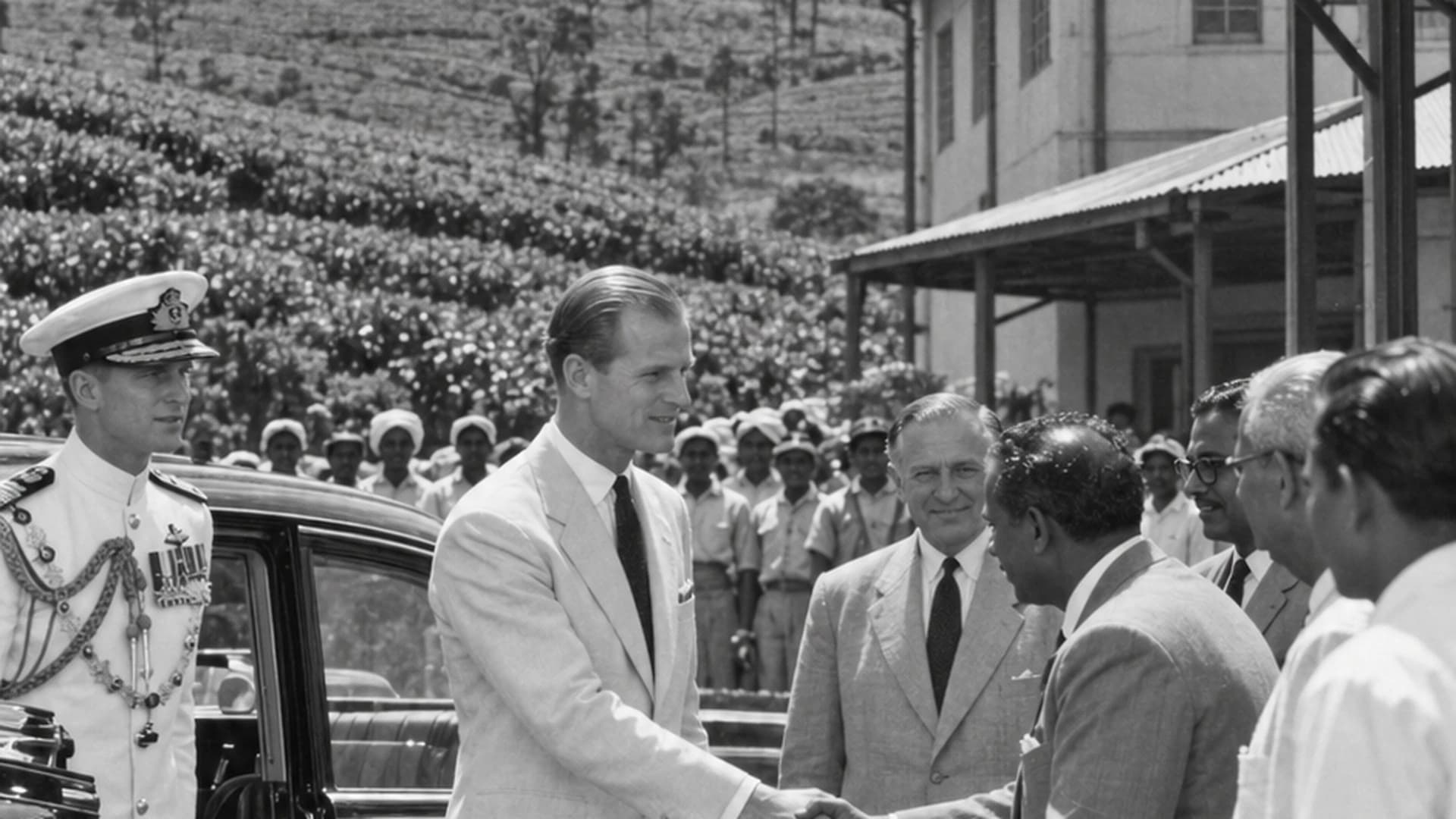
When Prince Philip Visited Pedro Estate: The Royal Visit That Became Part of Ceylon Tea History in 1954
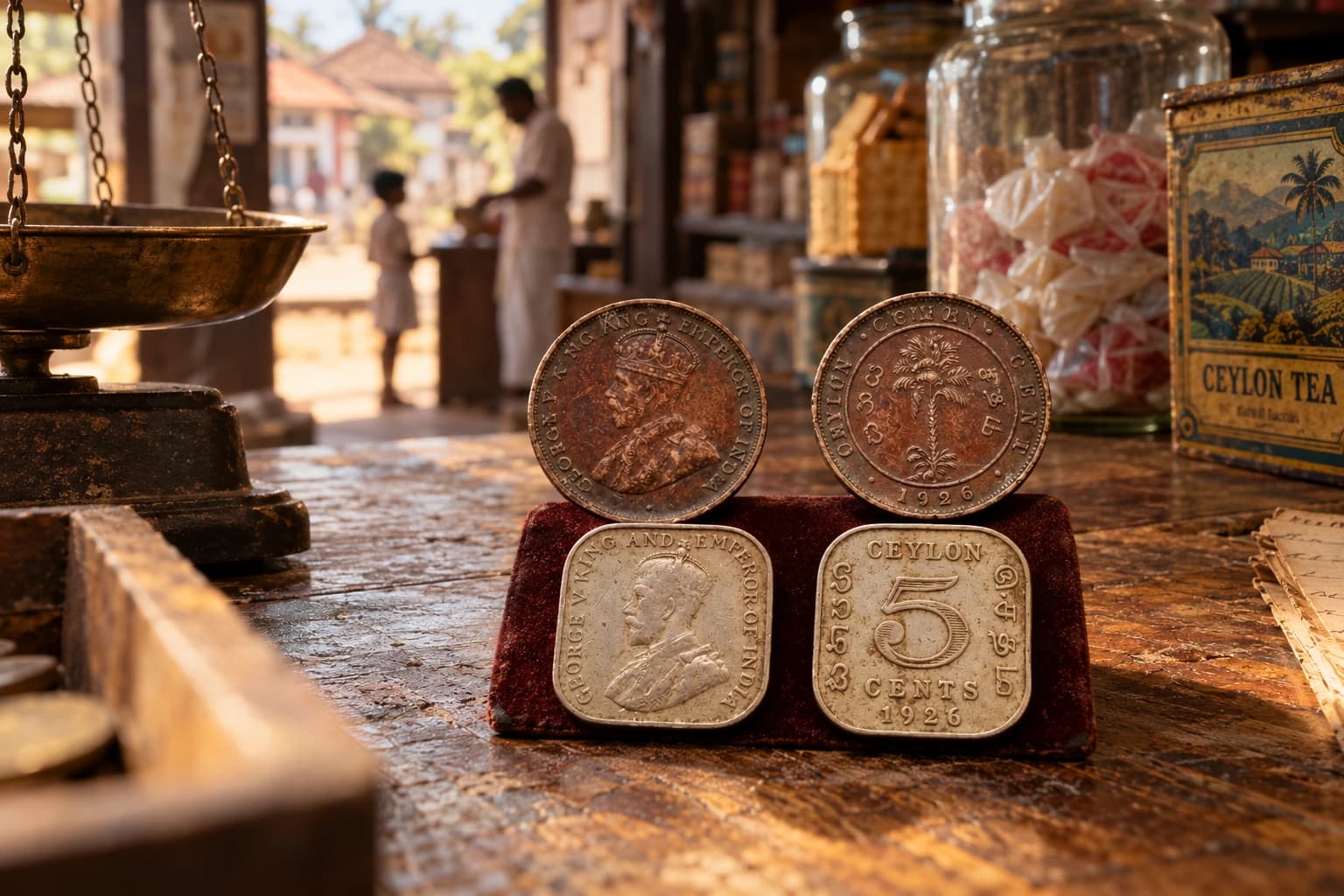
When Five Cents Mattered: The Forgotten Small Change of Old Ceylon