When Ceylon Travelled by Bullock Hackery: Memories of a Journey Before the Motor Car
There was a time when the sound of wooden wheels, the steady footsteps of a bullock and the occasional call of a cart driver were familiar parts of everyday life in Ceylon. Long before buses, motorcars and busy highways, the humble hackery carried people through towns and villages, becoming part of the island’s forgotten travelling history.
An Old Postcard and a Forgotten Way of Travelling
There is something about an old Ceylon postcard that makes one wish it could speak. Not necessarily about the grand events of history, but about the ordinary things. The people who lived in small houses beside dusty roads, the journeys they made, the neighbours they greeted and the familiar sounds that filled their mornings.
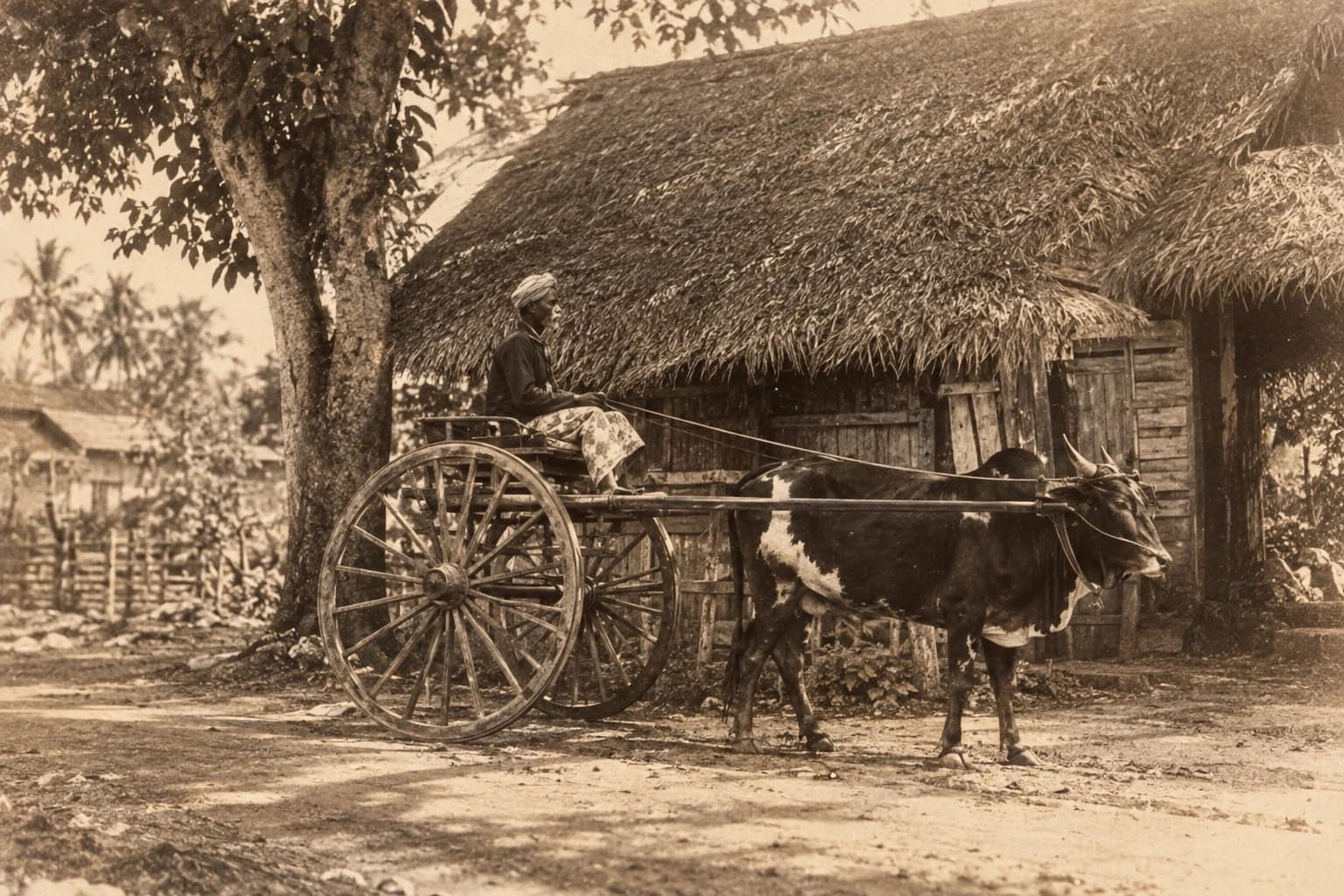
One such postcard, simply captioned Singhalese Hackery, shows a bullock standing patiently beside a thatched building. Behind it is a light wooden carriage with large spoked wheels, and a man seated above. The photographer is unknown, and the exact date and location are not established. Yet the picture preserves something that was once common throughout Ceylon and has almost entirely disappeared from its roads.
It was the age of the bullock hackery, when travelling even a modest distance required a little more planning. Roads were not always comfortable, journeys were measured in hours rather than minutes, and transport depended as much on the endurance of animals as on the condition of the road.
What Was a Bullock Hackery?
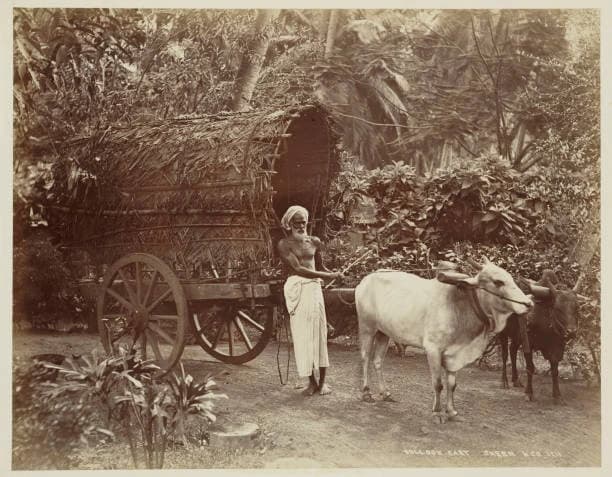
The bullock cart was an important part of everyday life in Old Ceylon. It carried produce from the countryside, household goods between villages and merchandise to local markets. The lighter hackery, however, was also a means of carrying passengers. In its various forms, it served as a modest carriage for a society that had not yet surrendered its roads to engines.
The word hackery appears frequently in nineteenth-century descriptions of Ceylon. Travellers distinguished these lighter passenger vehicles from the heavier bullock bandies used to transport goods. Some hackeries had protective hoods, while others were open to the tropical air. Their construction varied, but the familiar arrangement of two large wheels and a bullock drawing the carriage became one of the recognisable sights of colonial Ceylon.
James Emerson Tennent, writing in 1859, described well-trained bullocks drawing light passenger carriages at surprisingly brisk speeds. His account reminds us that these were not always the painfully slow vehicles we might imagine today. A good animal and an experienced driver could make reasonable progress along a suitable road, although a longer journey still depended on weather, road conditions and the endurance of the bullock.
When a Journey Was Part of the Day
A journey in a hackery must have had its own character. The passenger sat close to the road, feeling every uneven surface beneath the wheels. There was little protection from dust, and travelling during the hotter hours of the day could hardly have been pleasant. Yet along shaded roads, particularly in the early morning or towards evening, it offered a close view of the countryside that modern travel seldom allows.
One can imagine a family setting out to visit relatives in a neighbouring village, carrying a parcel of sweets or a basket of fruit. There might have been a stop at a wayside boutique, a brief conversation with someone travelling in the opposite direction, or a pause beneath a tree while the bullock rested. Such journeys required patience, and arriving at the destination could be something of an event.
Travelling was not simply the act of getting somewhere. It occupied a considerable portion of the day and became part of its memories. The road was experienced slowly, with time to notice houses, fields, roadside shops and the people encountered along the way.
The Hackery and the Arrival of the Railway
By the latter half of the nineteenth century, Ceylon’s expanding railway network was already changing the movement of people and goods. Railways connected important commercial centres and transformed the transport of plantation produce. The journey between Colombo and the hill country gradually became more convenient as railway construction progressed into the central highlands.
Nevertheless, bullock carts remained essential on roads and routes beyond the railway lines. The railway might carry a merchant or traveller across a considerable distance, but the final part of the journey could still depend on a cart. Goods arriving at a railway station also needed to be moved onwards to shops, warehouses, estates and villages.
The railway and the bullock cart therefore belonged to the same travelling world for many decades. One represented the growing speed and reach of mechanical transport, while the other continued to perform the ordinary work of connecting places beyond the tracks.
Bullock Hackeries on the Streets of Colombo
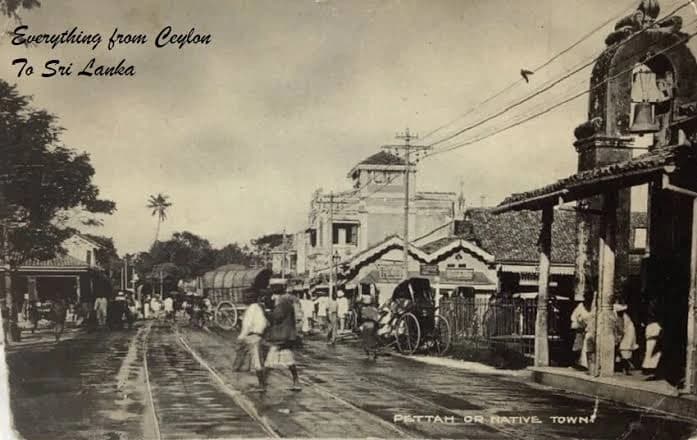
The streets of Colombo offered an especially interesting mixture of transport. Horse-drawn carriages, rickshaws and bullock hackeries shared the roads, reflecting the different occupations, circumstances and incomes of those who used them. A British Library postcard collection even preserves a view of a rickshaw and bullock hackery together on a Colombo street.
The sight would have been familiar in the colonial city. Traders moved goods through busy commercial streets, passengers travelled between neighbourhoods, and carts competed for space with other vehicles and pedestrians. Fort and Pettah were especially active centres of movement, while the residential roads beyond the commercial district offered a different travelling atmosphere.
As motor vehicles gradually became more common, the streets began to change. Yet the hackery did not immediately disappear. Older and newer forms of transport continued to share the same roads, making Colombo a city where the nineteenth and twentieth centuries could be seen moving side by side.
Nellie Bly’s Moonlit Hackery Ride in Colombo
There is a particularly interesting account by the American journalist Nellie Bly, who travelled through Ceylon during her celebrated journey around the world in 1889. Her experiences were later published in Around the World in Seventy-Two Days, providing an unusual glimpse of travel in the island during the late nineteenth century.
Bly described returning from the theatre in Colombo in a small, springless bullock hackery, travelling along quiet, tree-covered roads under the moonlight. Her recollection is particularly valuable because it takes us beyond the appearance of the vehicle and gives us a glimpse of what the journey itself felt like.
Here was an American traveller who had crossed oceans and continents, yet one of her experiences in Ceylon involved a simple bullock-drawn carriage on a quiet Colombo road. The image is far removed from the railway stations, steamships and grand hotels usually associated with nineteenth-century international travel. It reminds us that even famous travellers sometimes depended on the same humble transport used by ordinary residents.
The Hackery in Village Life
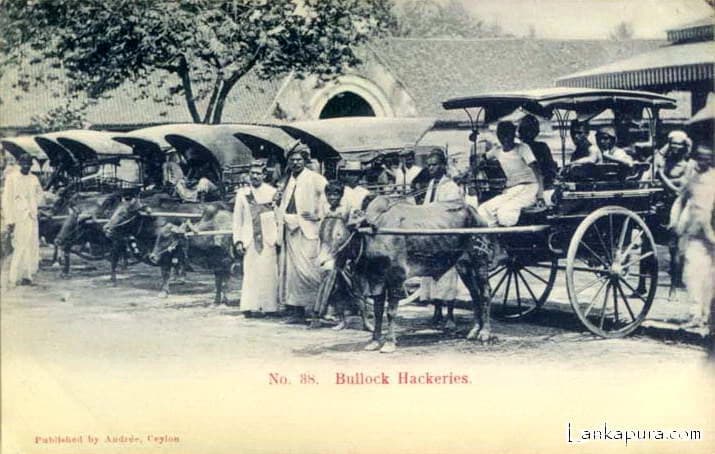
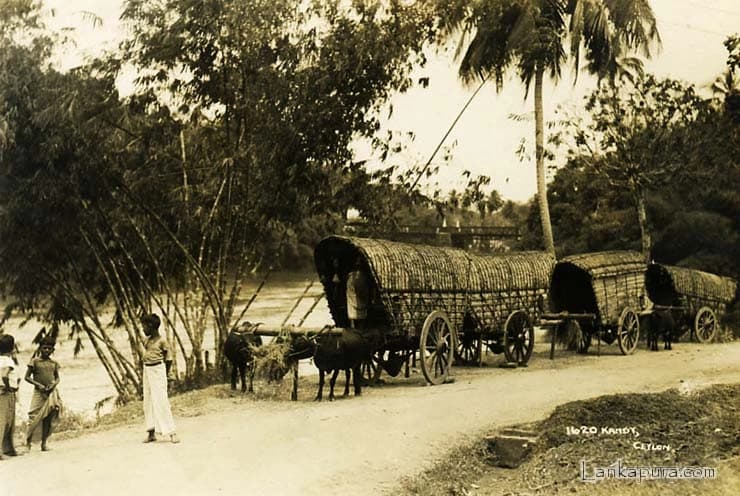
The hackery was not only a feature of colonial towns. In rural Ceylon, bullock-drawn transport remained deeply connected to everyday life. It was part of the rhythm of the village, where the arrival of a cart could announce visitors, deliveries or someone returning from the market.
A cart moving along a village road was an ordinary sight. It might carry a family to a neighbouring settlement, bring household necessities from a nearby town or transport agricultural produce to a market. The bullock, the driver and the carriage were familiar parts of the local landscape, and their movements followed the needs of the people around them.
The sound of wooden wheels and the driver’s voice could be recognised long before the cart came into view. In places where motor vehicles were still uncommon, the arrival of a hackery was simply part of the day. It belonged to a world where the road was shared by people walking, animals, bicycles and carts rather than dominated by engines.
The Village Carpenter and the Art of Cart Making
For the village carpenter and wheelwright, the construction of a cart was a skilled occupation. Strong local timber was selected for the frame, wheels and shafts. Wooden spokes had to be carefully shaped, while the wheels were strengthened with metal tyres to endure rough roads. The work required patience and practical knowledge passed from one generation to another.
A cart was not merely purchased and forgotten. It needed regular attention. Wheels had to be maintained, timber repaired and fittings checked. Damage to a wheel or axle could interrupt a journey, and repairs depended upon craftsmen who understood the construction of the vehicle.
The bullock itself required feeding, rest and care, although historical accounts also record harsh treatment of working animals. The nostalgic appearance of these old vehicles should not make us overlook the considerable burden placed upon the animals that drew them. Their strength and endurance made an important contribution to the transport of people and goods across Ceylon.
When the Motor Car Changed the Road
As the twentieth century progressed, the arrival of motorised transport gradually changed the landscape. Roads improved, buses connected towns and villages, and lorries became increasingly useful for moving goods. The bullock cart, once indispensable, began to lose its place on the main roads.
The change did not happen everywhere at once. In some rural communities, bullock carts continued to be used long after motor vehicles had become common in Colombo and other larger towns. Their usefulness endured where roads were poor, distances were short or modern transport was beyond the means of ordinary families.
For an older generation of Ceylonese, the sound of a bullock cart passing along a village road would have been an entirely familiar experience. The turning of the wheels, the occasional creak of wood and the driver’s voice belonged to the everyday sounds of home. As motor vehicles became more widespread, those familiar sounds gradually gave way to engines, horns and heavier traffic.
A Postcard That Outlived the Journey
Returning to the old postcard, one notices how unremarkable the scene must once have seemed. A bullock, a cart, a man and a thatched house. Nothing particularly grand or historic. The photographer probably saw in it a picturesque image of Ceylon suitable for sending overseas.
Someone later wrote a few lines across the front in flowing handwriting. Those words, now difficult to decipher, turn the photograph into something more personal. The card was not merely a record of a vehicle. It became part of somebody’s correspondence, travelling far beyond the little road where the original photograph was taken.
The man sitting in the hackery could hardly have imagined that generations later strangers would be looking at his picture and wondering about his world. Perhaps he was waiting for a passenger. Perhaps he had just returned from the market. Or perhaps the photographer had asked him to remain still for a moment. We cannot know, but the photograph has preserved an ordinary moment from a way of life that has largely disappeared.
The Roads of Ceylon Before Engines
Today, bullock hackeries survive largely in old photographs, postcard collections, museums and occasional traditional displays. Their disappearance represents more than a change in transport. It marks the passing of a network of village trades, habits and ways of travelling that once connected communities across the island.
The old roads carried people to markets, temples, churches, railway stations, neighbouring villages and family homes. Journeys were slower, sometimes uncomfortable and often exhausting. Yet they were also part of the everyday experiences through which people knew the country and one another.
The bullock hackery has almost vanished from the roads of Sri Lanka, but it remains in the memory of Old Ceylon. And in a faded postcard, beside a little thatched house, a bullock and its wooden carriage are still waiting to begin another journey.
Visit us: https://trippingsrilanka.com/stories
More from Old Ceylon
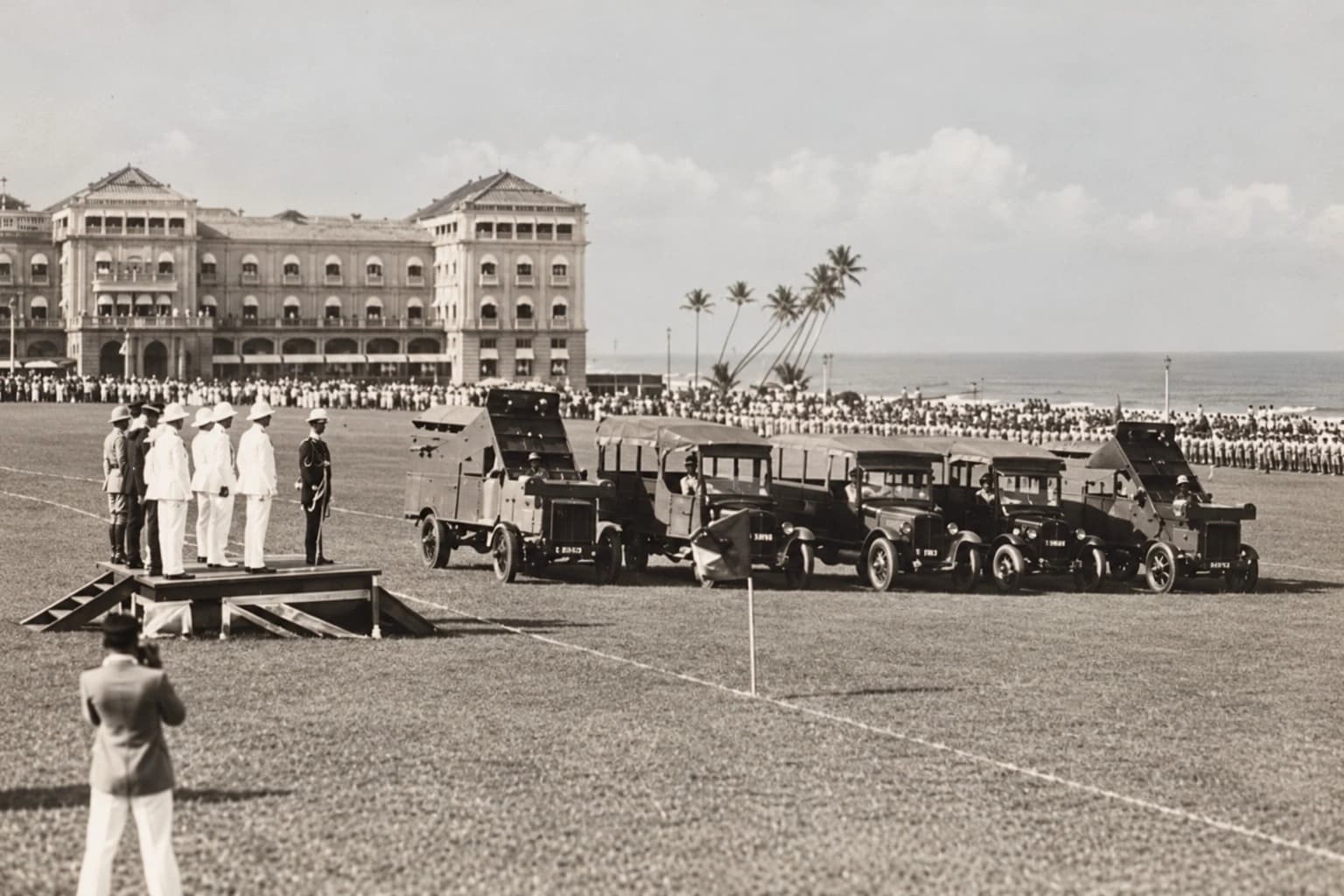
When the King’s Birthday Was Celebrated on Galle Face Green: A Glimpse of Colombo in 1933
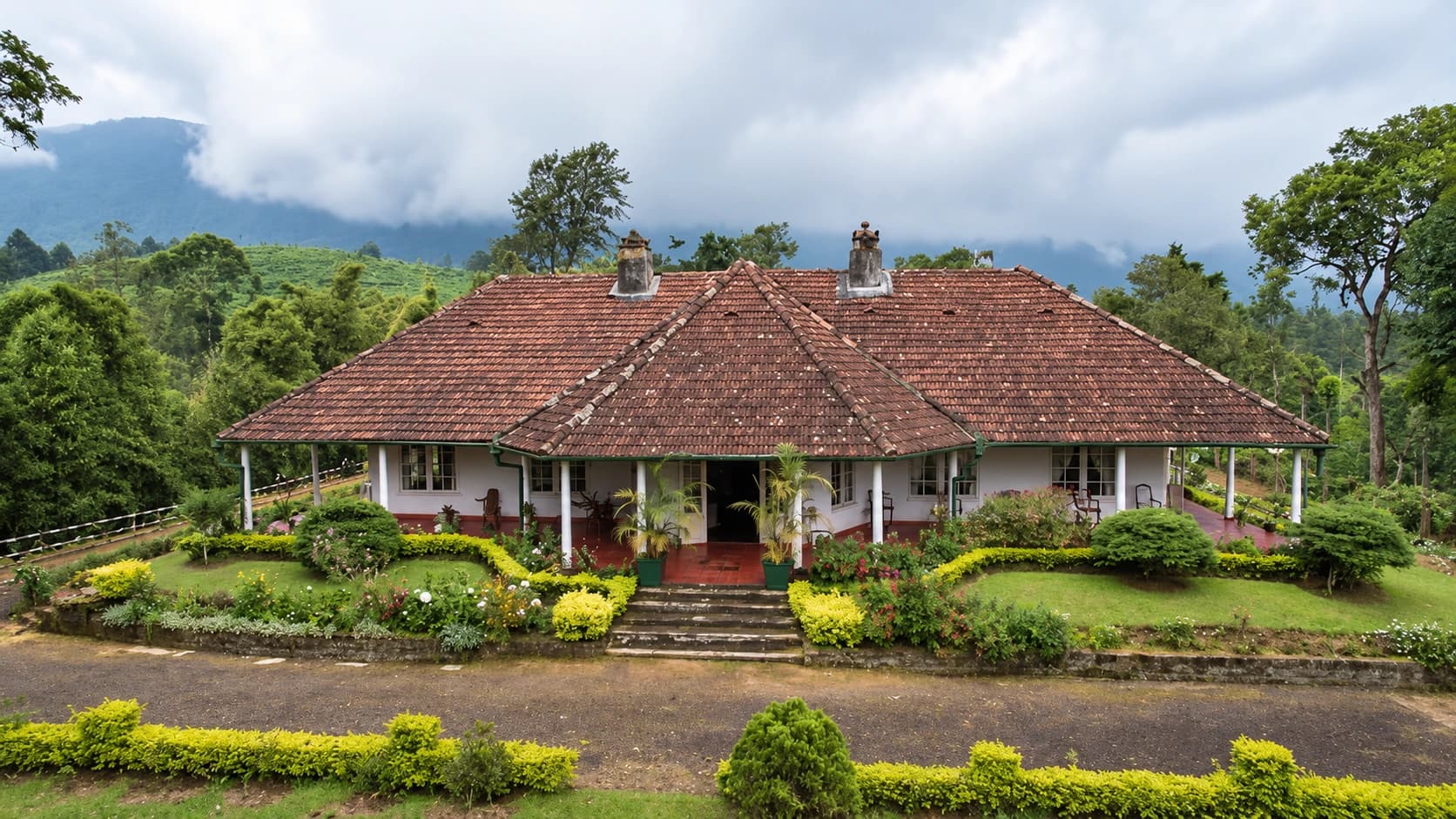
Holyrood Estate, Talawakelle: An Old Ceylon Bungalow and a Name That Echoes Scotland