The Filter in the Corner
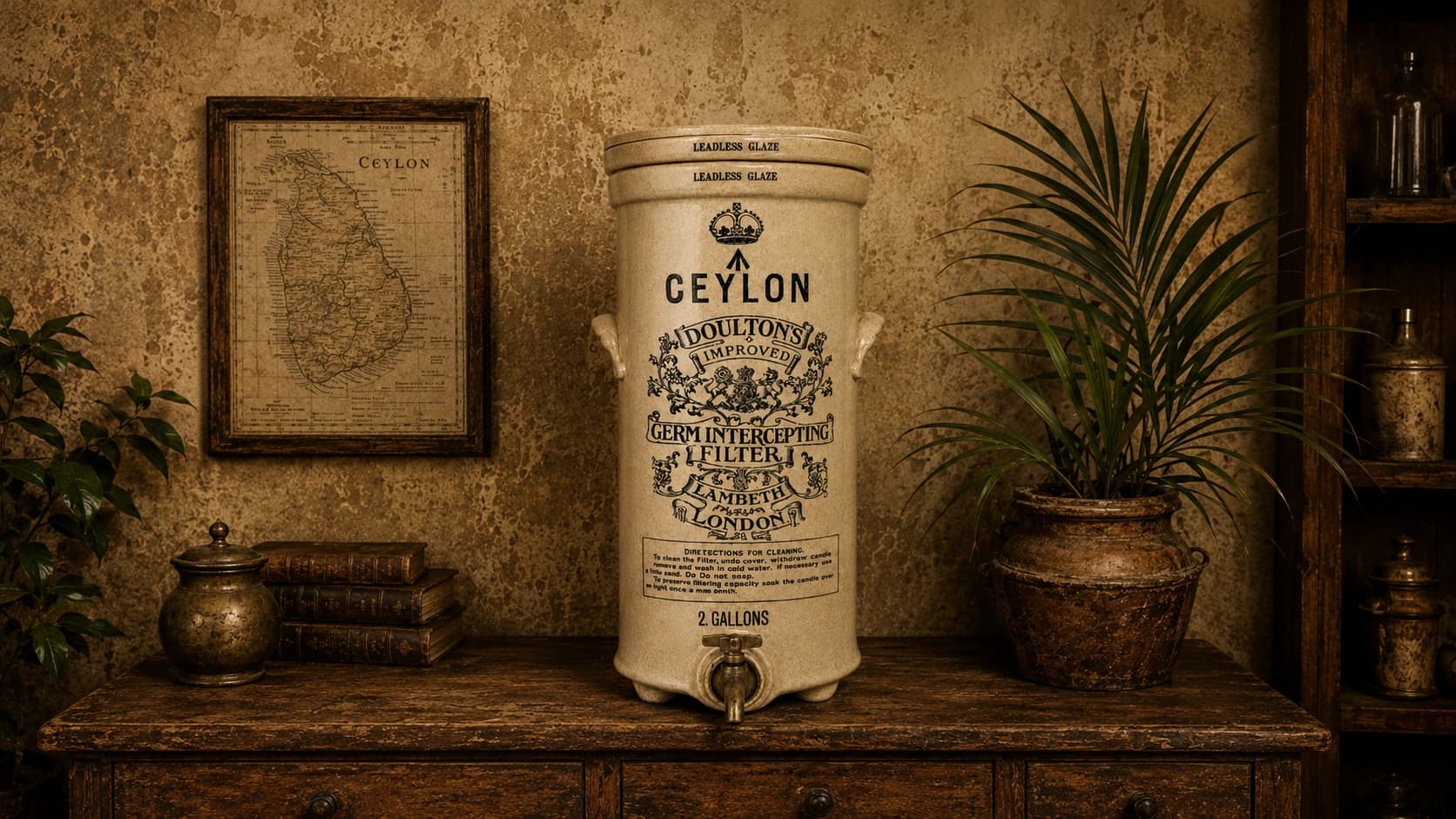
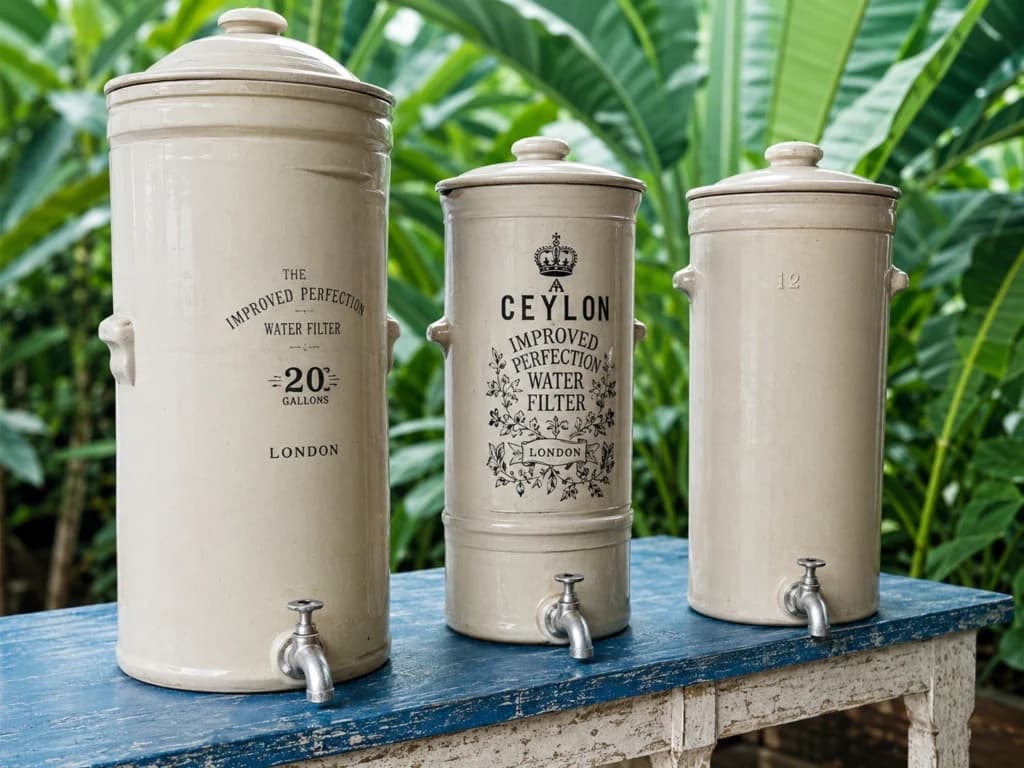
Ceylon Doulton water filter| In many old buildings of Ceylon, history did not always stand at the centre of the room.
Sometimes it stood quietly in a corner.
Not in the form of a portrait, a grand clock, a polished writing desk or a framed photograph, but as something far more ordinary — a tall ceramic water filter with a small tap at the bottom.
The old Doulton’s Improved Germ Intercepting Filter, marked Ceylon, belonged to that everyday world. It may have stood in a police station, a railway office, a planter’s bungalow, an estate building, a rest house or even a well-kept family home.
It was not an object people gathered around with ceremony. Yet many hands may have reached towards it during the day. Someone lifted the lid. Someone poured water into it. Someone waited for the water to pass slowly through the ceramic candles inside. Someone placed a cup under the tap and drank.
That simple act tells us a great deal about life in colonial and early postcolonial Ceylon.
Check our previous article – https://trippingsrilanka.com/stories/1899-ceylon-telegraph-form
A Morning in Old Ceylon
Imagine a morning in a railway station somewhere in Ceylon.
The station master arrives before the heat of the day has fully risen. The platform is quiet. The ticket counter is not yet busy. A clerk opens a ledger. A porter sweeps the floor. Somewhere down the line, a train is expected.
In the station office, the water filter is filled for the day.
Water is poured into the top chamber. The lid is replaced. Inside, three ceramic candles begin their slow work. The filter does not make a sound. It does not rush. It stands still, doing what it was made to do.
By mid-morning, the station is alive.
Passengers wait with bags. A guard checks time. A clerk writes in a register. A porter comes in tired from the platform. Someone takes an enamel cup, bends slightly and turns the small tap.
Filtered water flows out slowly.
It is a small moment, but in a hot railway station, it matters.
The filter was part of the daily rhythm of the place — trains, tickets, bells, ledgers, parcels, platform dust and water.
Before Bottled Water and Electric Purifiers
Today, clean drinking water is often treated as something instant.
There are bottles, dispensers, electric purifiers, office water coolers and modern kitchen filters. But in colonial Ceylon, drinking water required more care.
Water came from wells, tanks, rainwater storage, municipal lines, estate streams or large storage vessels. Some of it was safe. Some of it was uncertain. In warm climates, stored water could easily collect dust, insects or impurities.
A ceramic water filter gave reassurance.
The words printed on the body of the filter were meant to create trust: Germ Intercepting Filter, Leadless Glaze, Doulton’s Improved. To us, these may sound like old product wording. To people then, they suggested health, safety and modernity.
This was not just a container. It was a protective object.
It stood between the water source and the drinking cup.
In a Police Station
Now picture a police station in old Ceylon.
The day is long. A constable moves between the front room and the courtyard. A clerk writes statements. A duty officer sits behind a wooden desk. People come in with complaints, requests, reports and questions. Files, benches, ink bottles and registers fill the room.
In one corner stands the water filter.
It is used quietly throughout the day. A constable takes a cup before leaving on duty. A clerk drinks after hours of writing. An officer draws water during the afternoon heat. Perhaps a visitor is given water while waiting.
The filter gives the station a sense of order.
It suggests that even in a small official building, there were certain necessities: a desk, a chair, records, a clock, a place to sit and drinking water.
It was not dramatic. But it was essential.
In a Plantation Bungalow
In a plantation bungalow, the same filter would have had another kind of life.
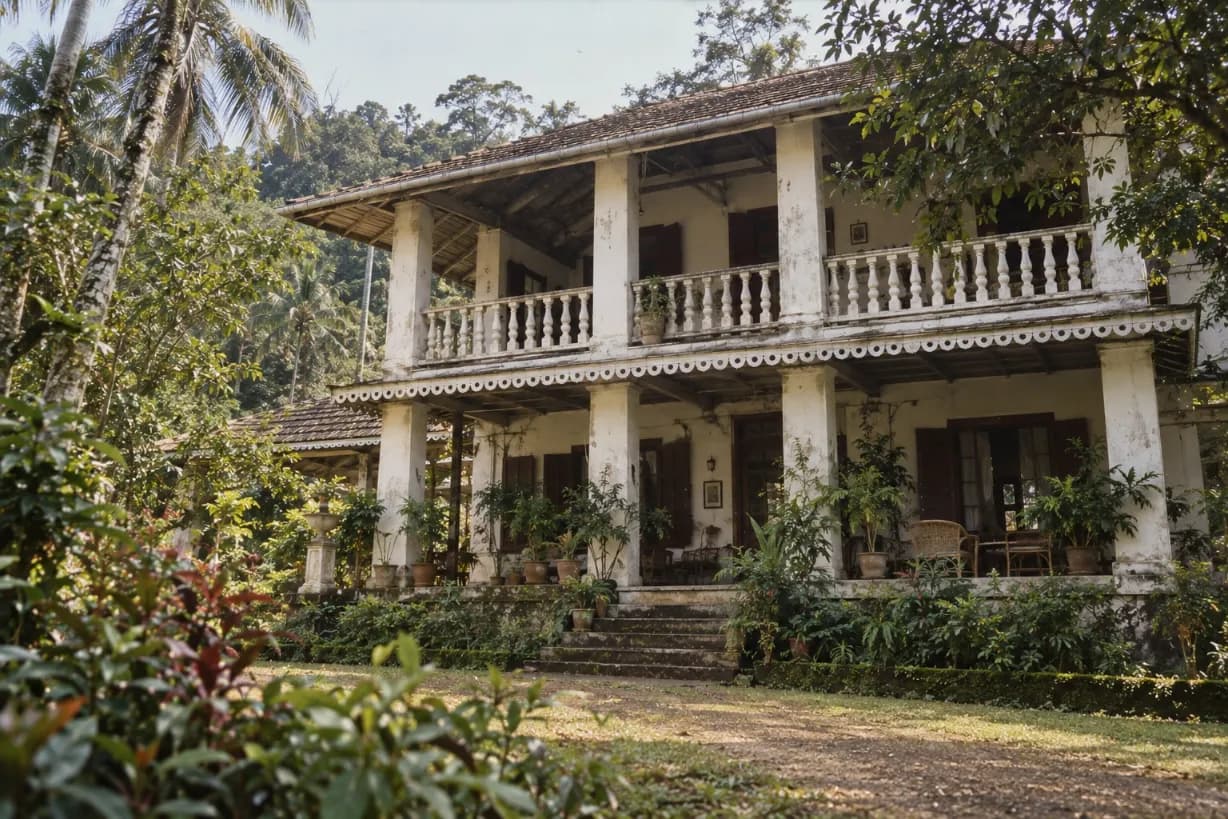
It may have stood in the pantry, dining room, office room or back verandah. Outside, tea fields stretched across the slopes. Estate workers moved along paths. The superintendent prepared for field rounds. Letters from Colombo or the agency house waited on a desk.
The household had its own rhythm.
Morning tea. Breakfast. Estate reports. Field inspections. Factory visits. Visitors from neighbouring estates. Cool evenings on the verandah. Mist over the garden.
Somewhere within that routine, the filter was checked and refilled.
In remote estate life, such an object offered comfort. The bungalow may have been far from town, but inside it there was order: lamps, crockery, ledgers, writing tables, medicine chests and drinking water.
A Doulton filter fitted naturally into that world.
It helped make a distant hill-country bungalow feel managed, prepared and civilised according to the domestic standards of the time.
The Three Ceramic Candles Inside
The caption connected to this type of filter mentions that it had three ceramic candles inside.
These were not candles for light. They were porous ceramic filter elements. Water passed through them slowly, leaving impurities behind before collecting in the lower chamber.
This meant the filter required care.
The candles had to be cleaned. The lid had to be removed. The inside had to be washed. If the candles became clogged, the water would slow. Someone had to know how to maintain it.
That is part of the everyday story.
The filter was not just bought and forgotten. It belonged to a household or institutional routine. Like polishing brass, sweeping the verandah, trimming lamps or winding clocks, maintaining the water filter was part of keeping a place in order.
The Sound of the Tap
One of the most human details of this object is the tap.
A person had to place a cup beneath it and turn it by hand. The water did not rush out like a modern tap. It came slowly, in a small controlled stream.
That action may have happened thousands of times.
A railway clerk before the afternoon train.
A planter after returning from the field.
A police officer during a long shift.
A visitor waiting in an office.
A child in a bungalow asking for water.
A servant checking whether the filter needed refilling.
No one wrote these moments down.
But the object remembers them.
A Shared Object
Unlike a personal water bottle, this filter was often shared.
That made it part of the social life of a room.
In a station office, it belonged to the staff. In a police station, it belonged to the working day. In a bungalow, it belonged to the household. In an estate office, it may have served clerks, supervisors and visitors.
People did not gather around it for conversation in the way they might gather around a dining table. But they came to it one by one, whenever they needed water.
It was an object of quiet service.
Its purpose was simple: to make water available, cleaner and easier to drink.
The Word “Ceylon”
The word Ceylon printed on the front gives the filter special meaning today.
For the people who used it, the word may have been ordinary. It was simply the name of the country printed on a useful object. But now, it carries nostalgia.
It places the filter inside a lost world of old station offices, plantation bungalows, police posts, rest houses, government quarters and mid-century homes.
The word turns the object into a small archive.
It tells us that this was not just a British ceramic filter. It was a filter made for use in Ceylon, or at least marked for the Ceylon market.
That makes it part of the island’s material memory.
Health, Trust and Everyday Modernity
Old Ceylon’s modernity did not arrive only through railways, telegraphs, motorcars and harbours.
It also arrived through small practical objects.
A water filter like this represented trust in manufactured technology. It suggested that science and design could improve daily life. It made public health feel domestic and manageable.
In a time when disease and water safety were real concerns, such a filter gave people confidence. It did not solve every problem, but it made water feel safer.
This is why the filter mattered.
It brought the language of hygiene into ordinary rooms.
Hunters and the Buying of Useful Things
The caption mentions that Hunters used to sell this type of filter.
That detail gives the object another layer of life.
Someone had to buy it. Perhaps a government department ordered it. Perhaps an estate purchased it for a bungalow or office. Perhaps a family acquired one for home use. It may have arrived through Colombo’s commercial networks, shipped from Britain, sold through a local firm and carried to its final place of use.
A ceramic object made in London could end up in a railway office in Ceylon, a police station, or a tea estate building in the hills.
This was how Old Ceylon lived with imported goods.
They became part of local routine.
A Day in the Life of the Filter
A day with this filter might have begun early.
The lid is lifted. Water is poured in. The ceramic candles begin filtering. The room slowly comes alive.
Someone drinks before work.
Someone drinks at noon.
Someone drinks after returning from outside.
Someone refills it before evening.
Someone wipes the tap.
Someone checks whether the water has run low.
By night, the building quietens.
The railway station closes its office. The plantation bungalow settles after dinner. The police station continues into the night. The filter remains where it is, waiting for the next hand to turn the tap.
This is not grand history.
It is daily life.
And daily life is often where history feels most real.
What This Object Tells Us About People
The filter tells us that people in old Ceylon cared about order, cleanliness and preparation.
They may not have had modern conveniences, but they developed systems. Water was stored. Rooms were arranged. Offices were supplied. Bungalows were maintained. Institutions had routines.
The filter also reminds us that many different people may have used the same object.
Officials, clerks, railway workers, estate staff, police officers, domestic workers, guests, travellers and children may all have drawn water from a similar filter.
It crossed social spaces quietly.
It belonged to work, home, travel and administration.
Why This Filter Matters to Old Ceylon
This filter matters because it brings Old Ceylon down to human scale.
It is easy to remember the past through large things: governors, estates, trains, clubs, churches, forts and mansions. But the past was also lived through small acts.
Pouring water.
Waiting.
Turning a tap.
Filling a cup.
Cleaning a filter candle.
Those small acts shaped everyday life.
The Doulton water filter connects many worlds of Ceylon: public health, imported goods, railway work, plantation life, police stations, offices, bungalows and domestic routines.
It is ordinary, but it is not insignificant.
Final Thoughts: Drinking Water in Old Ceylon
The old ceramic water filter marked Ceylon is more than a collectible.
It is a reminder of how people lived before instant convenience. It stood in rooms where people worked, waited, travelled, rested and managed daily responsibilities.
It may have served railway clerks, police officers, estate superintendents, bungalow households, visitors and workers. It may have stood silently through hot afternoons, misty mornings and long official days.
For Tripping Sri Lanka readers, this is the kind of object that makes Old Ceylon feel close.
It reminds us that history was not only made in council chambers, railway yards, tea auctions or plantation offices.
It was also made in simple moments — when someone turned a tap, filled a cup, and drank cool filtered water from a ceramic vessel marked Ceylon.
Visit Us: https://trippingsrilanka.com/stories