Glimpses into the World of Old Ceylon s philonthropist Charles Henry de Soysa
More Than an Old Biography
Some journeys into old Ceylon begin not with a railway station, a colonial hotel or a forgotten road, but with the opening of an old book.
A surviving copy of The De Soysa Charitaya, or, The Life of Charles Henry De Soysa, Esq., J.P. is one such doorway.
Published in Colombo in 1904 by C. Don Bastian, the work chronicled the life of Charles Henry de Soysa, one of the most remarkable Ceylonese figures of the nineteenth century. The National Library of Sri Lanka’s retrospective bibliography records Bastian’s De Soysa Charitaya as a 1904 publication and lists it at an extraordinary 900 pages.
More than a century later, surviving copies are fascinating not simply because of their age. Their illustrations, maps and plans can take us into a Ceylon that has largely disappeared.
Read our previous article: https://trippingsrilanka.com/stories/prince-alfred-in-ceylon
Charles Henry de Soysa and Old Ceylon
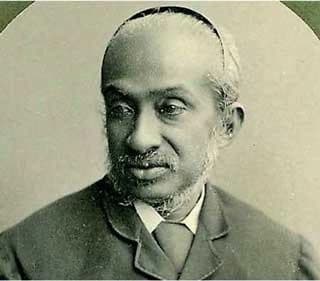
To hold a book printed in Colombo in 1904 is to encounter history in a particularly intimate form.
Its aged pages belong to an era when Ceylon was still under British rule, Colombo was expanding into a modern colonial capital and railways, plantations and new commercial enterprises were reshaping the island.
Yet this was also an age in which influential Ceylonese families were beginning to play an increasingly important role in commerce, education, healthcare and public life.
Charles Henry de Soysa stood prominently within that world.
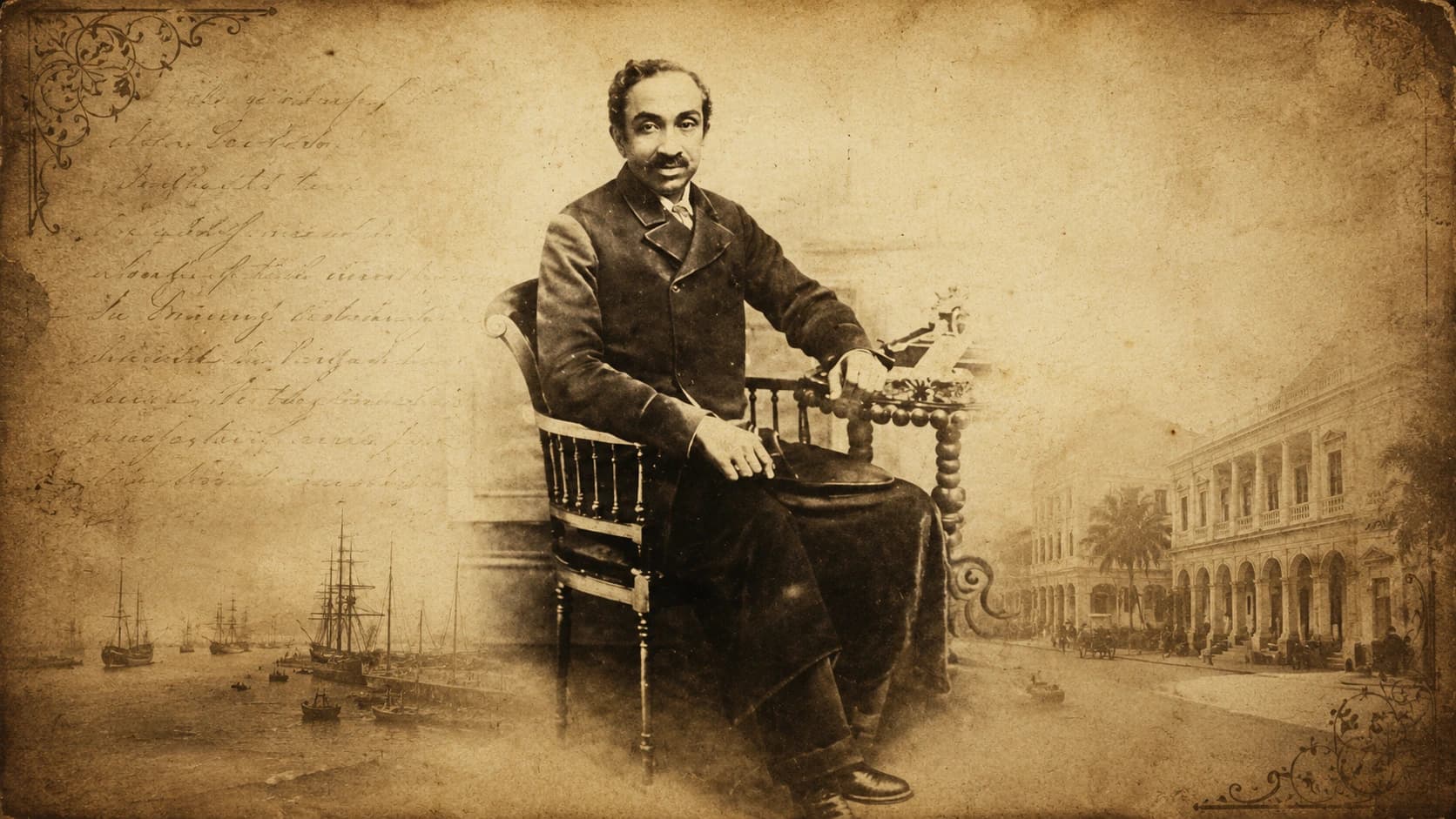
Born in 1836, he became a successful entrepreneur, planter and philanthropist. The official history of the De Soysa Maternity Hospital describes him as a pioneering planter and industrialist and records his involvement in institutions ranging from banking and agriculture to healthcare and education.
His story therefore reaches well beyond one man or one family.
It leads us into the economic and social landscape of nineteenth-century Ceylon.
Read our previous article: https://trippingsrilanka.com/stories/prince-alfred-in-ceylon
The Ceylon Seen Through Maps and Illustrations
Perhaps the most intriguing aspect of an old volume such as De Soysa Charitaya is what lies beyond its written narrative.
The surviving book contains illustrations and historical material associated with places and institutions connected to the De Soysa story. One published historical account of the lost Moratuwa Ambalama, for example, specifically identifies an old illustration as coming from the 1904 De Soysa Charitaya.
Maps and plans are particularly valuable.
A map printed more than 120 years ago does not merely tell us where something was. It can preserve roads, estates, waterways, property boundaries and place names from a landscape that may have been transformed beyond recognition.
Modern Colombo and its southern suburbs make this especially interesting. Roads have widened, wetlands and estates have been developed, old residences have disappeared and entire neighbourhoods have changed character.
A historical map allows us, however briefly, to peel those layers away.
Charles Henry de Soysa’s Ceylon
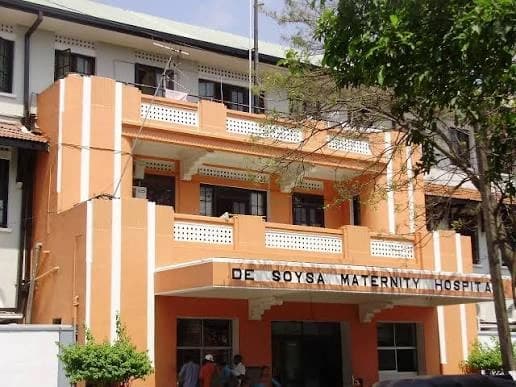
The geographical reach of Charles Henry de Soysa’s life was extensive.
His commercial and agricultural interests stretched beyond Colombo and Moratuwa into several parts of the island. Historical accounts describe large landholdings and plantations as well as commercial properties in Colombo.
But it is his philanthropy that has left the most visible legacy.
Healthcare was one of its most important dimensions. De Soysa helped establish the institution that became the De Soysa Maternity Hospital, while his family was associated with hospitals and medical institutions elsewhere on the island.
His philanthropy also extended to education and other forms of public welfare.
In Moratuwa, the story remains embedded in the landscape. Prince of Wales’ College traces its origins to his philanthropy, with its history recording the laying of the foundation stone in 1876 and de Soysa’s continuing support for the institution.
These places turn De Soysa Charitaya into something more interesting for the modern traveller.
It can be read almost as a map of connections across old Ceylon.
When Colombo Looked Very Different
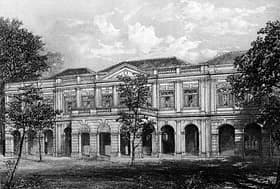
Imagine travelling through Colombo during Charles Henry de Soysa’s lifetime.
The city would have been recognisable in outline, but profoundly different in atmosphere.
Beyond the busy commercial quarters of Fort and Pettah lay stretches of cinnamon land, gardens, large residences and comparatively undeveloped suburbs. Kollupitiya, Bambalapitiya and areas further south had not yet become the dense urban corridor we know today.
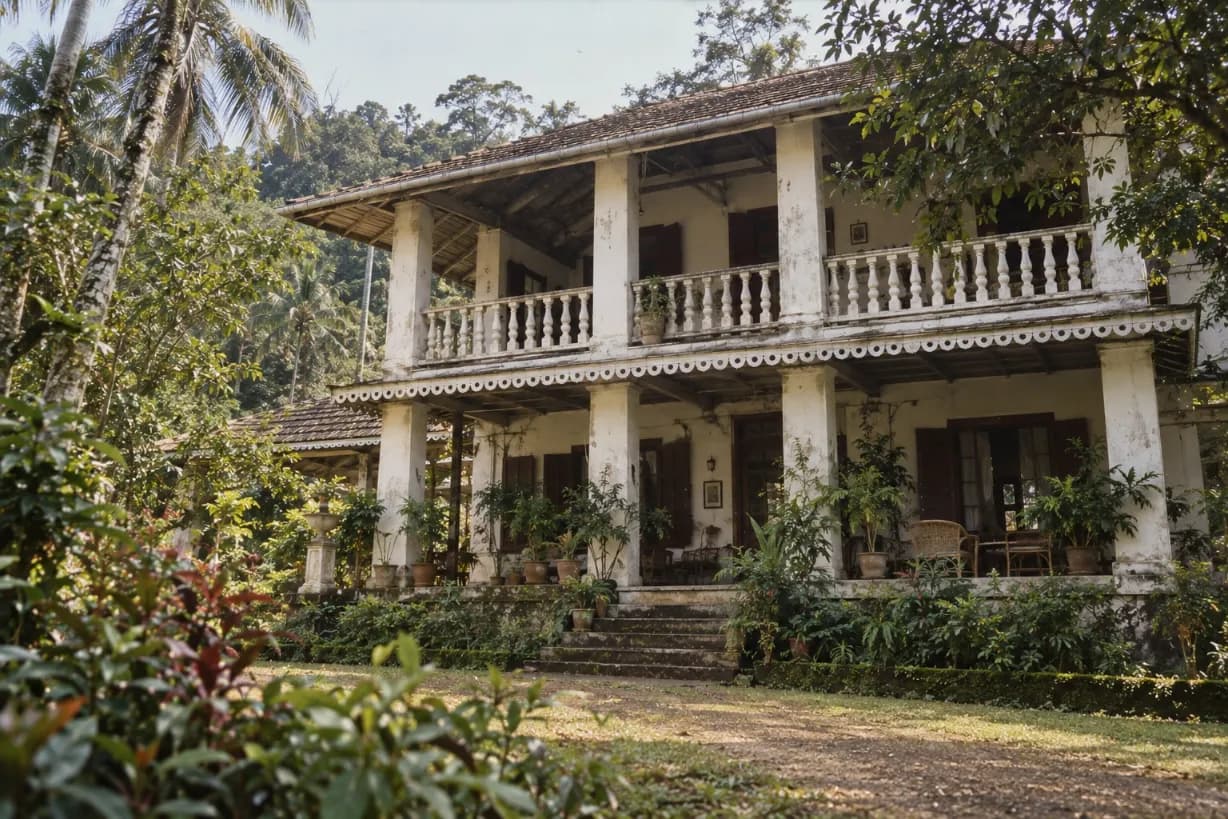
De Soysa’s famous Alfred House estate stood in Kollupitiya. Historical accounts place the property on an extensive tract of land, a reminder of just how different the geography of nineteenth-century Colombo was.
Today, anyone passing through this part of the capital encounters traffic, offices, apartments, shops and some of Colombo’s busiest roads.
It takes imagination to reconstruct the earlier landscape.
Old books help us do it.
Moratuwa and a Different Kind of Prosperity
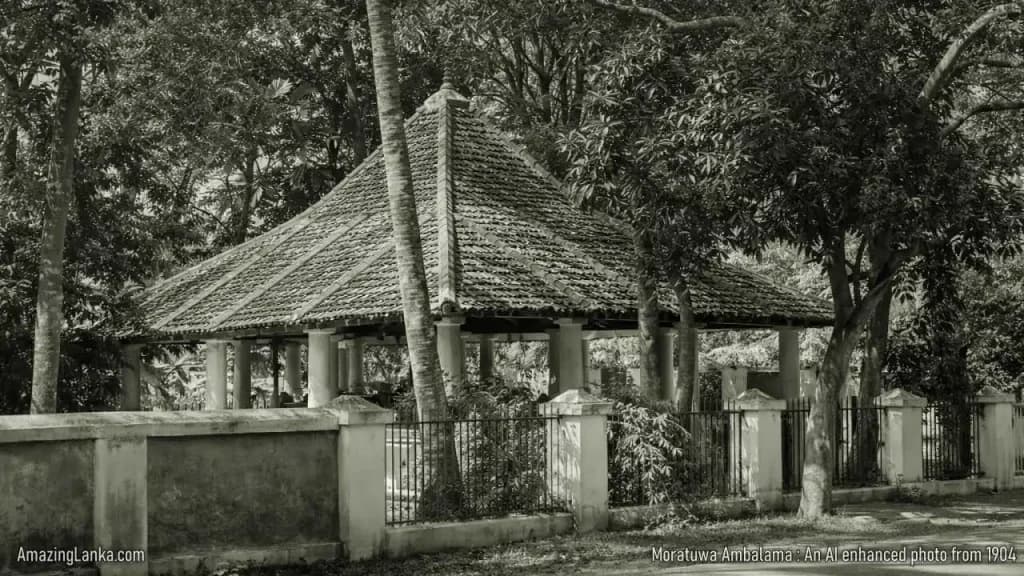
Travel south from Colombo and the story becomes even more closely associated with Moratuwa.
Long before it became absorbed into the continuous urban landscape of greater Colombo, Moratuwa was known for its own commercial families, craftsmen, coconut lands and coastal character.
The De Soysa family belonged to this world.
Charles Henry de Soysa’s wealth may have reached extraordinary proportions, but the physical legacy of that wealth was not confined to private residences. Schools, hospitals and charitable projects became part of the landscape.
An especially evocative example is the now-lost Moratuwa Ambalama. A nineteenth-century illustration describes a free rest house and orchard for wayfarers established by de Soysa, while a later reproduction is connected directly with De Soysa Charitaya.
It offers a glimpse of an older idea of travel: journeys made slowly, resting places provided along the road and hospitality embedded into the landscape itself.
Why Old Books Matter to Travellers
We often think of travel as movement through space.
But heritage travel is also movement through time.
An old photograph can change the way we see a street. A railway timetable can make an abandoned station meaningful again. A century-old map can explain why a road bends where it does.
And a book such as De Soysa Charitaya can connect buildings, estates, schools, hospitals and forgotten landmarks into one much larger story.
This is why the preservation and digitisation of rare historical material matters.
High-resolution scans of the illustrations, maps and plans in surviving copies could allow researchers and heritage enthusiasts to compare the landscapes shown in 1904 with Sri Lanka today. They could also help identify buildings or geographical features that have since vanished.
The physical book remains precious, but its historical value grows when the information within it becomes accessible.
Following the De Soysa Trail Today
For travellers interested in Colombo’s history, the De Soysa story offers the beginnings of an unusual heritage trail.
It can lead from the city towards Moratuwa, from surviving institutions to places where grand estates once stood, and from nineteenth-century philanthropy to buildings that still serve Sri Lankans today.
Some landmarks remain.
Others survive only through photographs, drawings, maps, family histories and books.
That contrast is precisely what makes exploring old Ceylon so compelling.
You begin with a name on a page and suddenly discover that the modern road beneath your feet has a much older story.
A Book That Has Outlived Its World
When De Soysa Charitaya appeared in 1904, Charles Henry de Soysa had already been dead for fourteen years.
The Ceylon it documented would itself soon begin to change.
Motorcars would replace much of the older road traffic. Colombo would spread outward. Estates would be divided. Buildings would disappear. Independence would eventually bring an end to colonial Ceylon altogether.
Yet the book remained.
Its worn pages, illustrations and maps now carry something its original readers could never have anticipated: the visual memory of a vanished landscape.
For those of us fascinated by old Ceylon, that may be its greatest appeal.
A rare historical book does not have to sit silently on a shelf.
Open it, study its maps and follow its places across modern Sri Lanka, and a journey begun in 1904 can continue more than a century later.
Visit Us: https://trippingsrilanka.com/stories