Ceylon’s Old Anglican Churches: Where English Ancestors Still Rest in Sri Lanka
English ancestors in Ceylon|For many English families, Sri Lanka is not only a tropical island of beaches, tea estates and ancient kingdoms. It is also Ceylon — a place where an ancestor may have served, planted, married, died or been buried during the British colonial period.
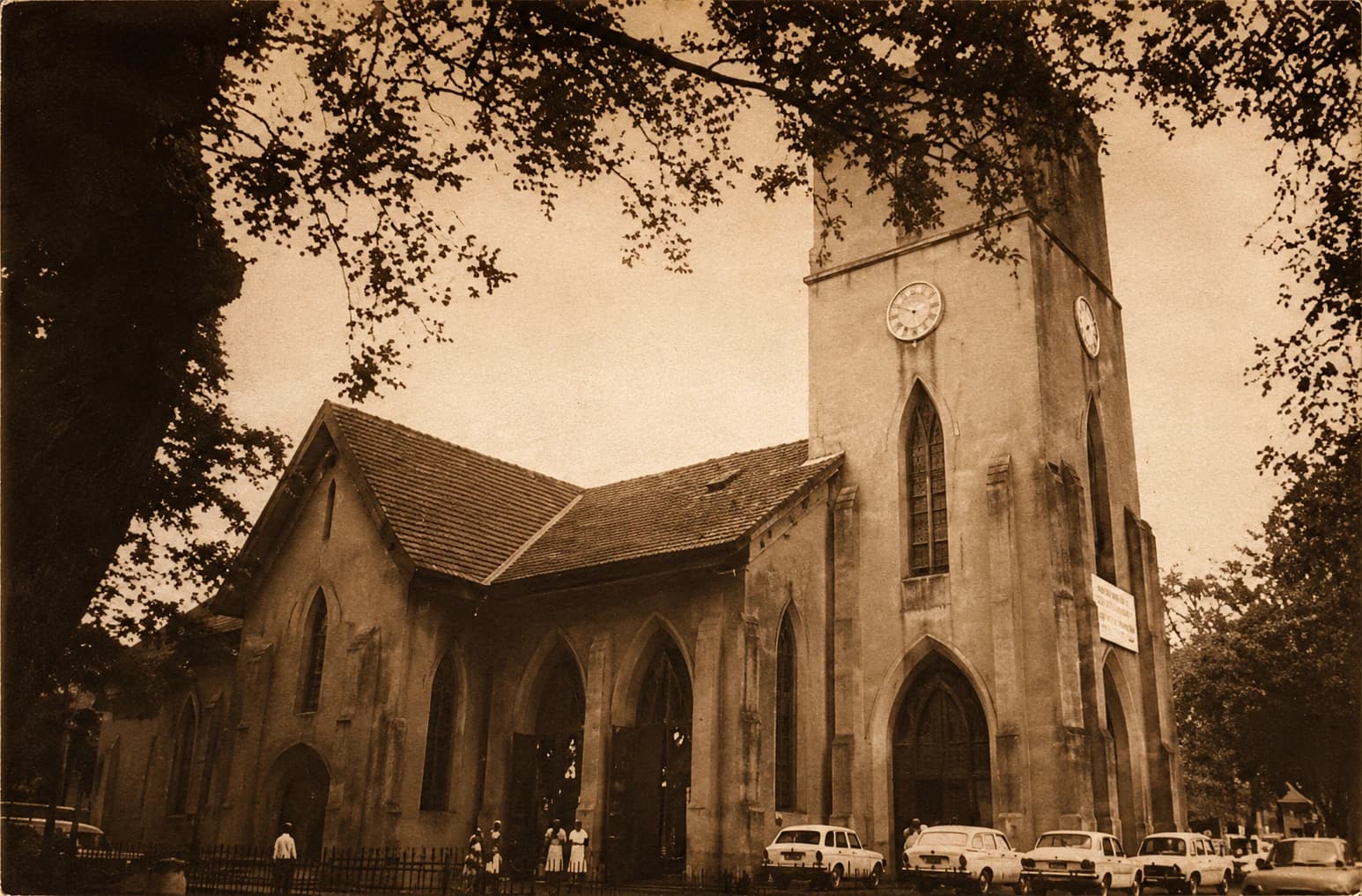
Across Sri Lanka, old Anglican churches still stand in Colombo, Kandy, Galle, Nuwara Eliya, Badulla, Matale, Trincomalee and the hill country. Some are still active places of worship. Some have quiet churchyards beside them. Others are linked to old burial grounds, memorial tablets, parish registers and cemetery records. For visitors from England tracing family history, these churches can become emotional places of discovery.
A name carved into stone. A regimental title. A planter’s estate. A date of death far from home. These small details can turn a Sri Lankan journey into a personal return to Ceylon.
Check our previous article- https://trippingsrilanka.com/stories/badulla-sri-lanka
English ancestors in Ceylon, Why Anglican churches matter in Ceylon family history
During British rule, Anglican churches were closely connected with the Church of England, colonial administration, military life, plantation society and English-speaking settler communities. Baptisms, marriages and burials were recorded through parish life. Even when a grave has disappeared, a name may survive in a register, a memorial plaque or a published inscription.
This matters especially for English descendants searching for ancestors who came to Ceylon as civil servants, soldiers, planters, engineers, merchants, clergy, teachers, railway workers, doctors or colonial officials. Some stayed only briefly. Others built families here over several generations. Many died young, often from tropical disease, accident, childbirth, war, or the hardships of estate and military life.
It is important to remember that not every colonial-era grave belongs to someone born in England. Ceylon’s Anglican and colonial burial records include English, Scottish, Irish, Welsh, Dutch Burgher, European, Eurasian and local Christian families. Still, for English visitors searching for names connected to Ceylon, the Anglican churchyard is one of the most meaningful places to begin.
Kandy: St Paul’s Church and the British Garrison Cemetery
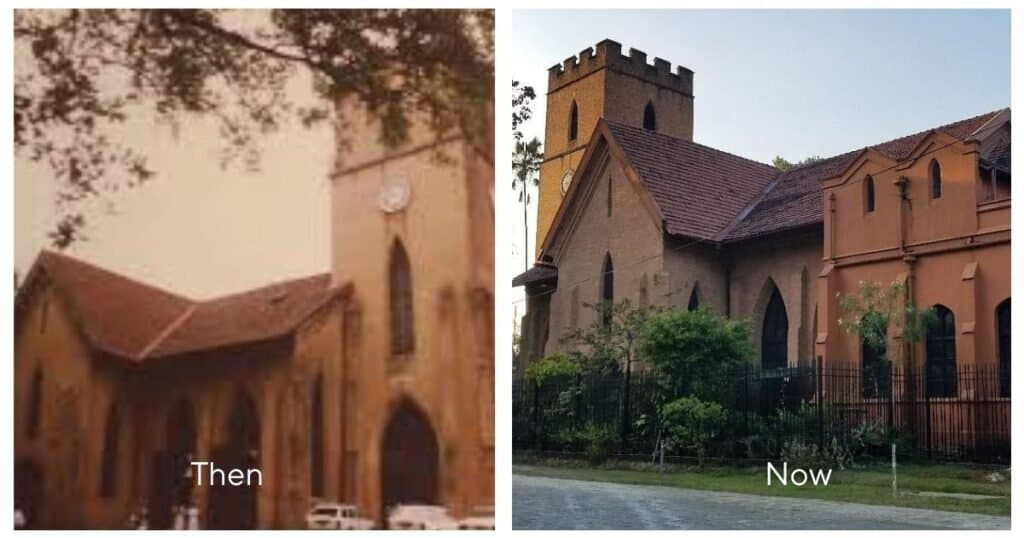
Kandy is one of the most powerful places in Sri Lanka for English ancestral travel. Close to the Temple of the Tooth, the old colonial court buildings and St Paul’s Church lies the British Garrison Cemetery, one of the island’s best-known European burial grounds.
This cemetery is especially relevant for descendants of colonial officers, soldiers, administrators and families connected with the Kandyan period. The stones tell stories of people who died far from Britain in the 19th century, including figures linked to the annexation of the Kandyan Kingdom, the Ceylon civil service and military life.
For an English visitor, Kandy offers a striking contrast. The sacred heart of the old Kandyan kingdom stands only a short distance from graves belonging to those who arrived under British rule. It is not simply a cemetery visit. It is a meeting point between empire, memory and Sri Lankan history.
When visiting, look carefully at inscriptions, military ranks, family names, ages and places of death. A gravestone may mention an estate, a regiment or a district that can lead to a deeper family trail elsewhere in the island.
Nuwara Eliya: Holy Trinity Church and the planter world
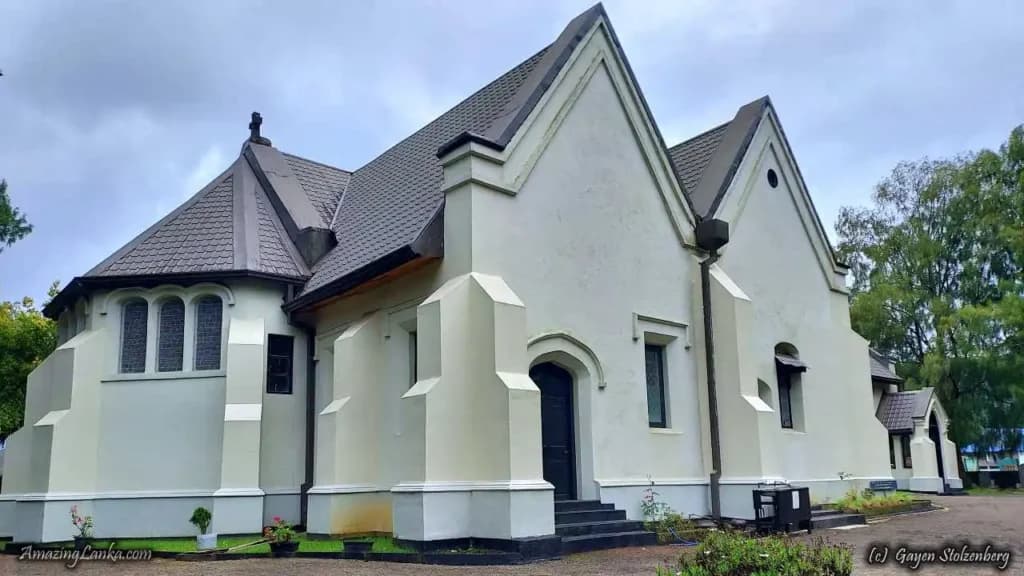
Nuwara Eliya, often called “Little England”, is one of the most important destinations for anyone tracing English ancestry in Ceylon’s hill country. Holy Trinity Church is strongly associated with the British colonial era, the growth of the hill station and the plantation community.
The churchyard and memorials are of particular interest to descendants of tea and coffee planters, estate managers, colonial officials and their families. Many English families connected with Ceylon’s plantations lived, worshipped, married and buried their dead in and around Nuwara Eliya.
For visitors from England, Holy Trinity can be deeply moving. The cool climate, old bungalows, colonial-era gardens and misty tea hills make the area feel unusually familiar, yet unmistakably Sri Lankan. This is where many British families tried to recreate a version of home in the tropics.
Before visiting, search for your ancestor’s surname through known Ceylon burial indexes and parish record collections. Once there, look not only at graves outside but also at memorial tablets inside the church. In colonial churches, wall plaques often preserve names that may not appear on surviving gravestones.
Badulla: St Mark’s Church and Uva’s colonial memory
Badulla was an important administrative and plantation region during British Ceylon. St Mark’s Church is one of the key Anglican heritage sites in Uva Province. It is associated with colonial officials, coffee and tea planters, estate families and the wider English-speaking community of the region.
For descendants researching ancestors who worked in Uva, Haputale, Bandarawela, Passara, Lunugala or nearby plantation districts, Badulla should not be overlooked. Some families who appear in records as “of Badulla”, “of Uva” or “of Haputale” may be connected to church records, cemetery inscriptions or estate histories in this region.
The story of St Mark’s also reminds us that these churches were not only religious buildings. They were memorial spaces. They carried the names of colonial officers, district figures and community members whose lives shaped, and were shaped by, the frontier world of 19th-century Ceylon.
Galle Fort: All Saints’ Church and the southern colonial port
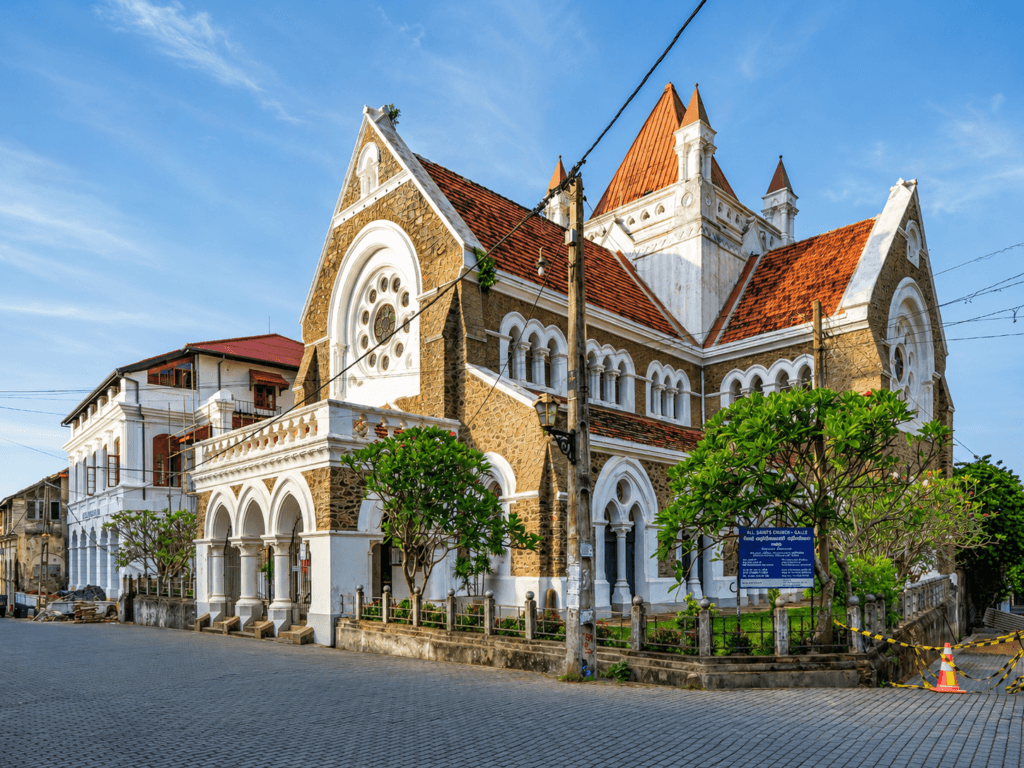
Galle Fort is better known today for boutique hotels, cafes, ramparts and Dutch-period architecture. Yet it was also a major colonial port where British military, maritime, clerical and administrative families passed through.
All Saints’ Church in Galle Fort is an important Anglican landmark. For English visitors searching for ancestors connected to shipping, the colonial service, southern administration or missionary work, Galle can be highly relevant.
Galle’s church and cemetery history is layered. The fort contains Dutch, British and later colonial memory in a compact space. A family name may appear in an Anglican record, a Dutch Reformed register, a civil record or a maritime document. This makes Galle especially interesting, but also more complex for genealogical research.
When tracing an English ancestor in Galle, widen the search. Check spelling variations, initials, military abbreviations, ship names and possible connections to Colombo, Matara, Baddegama or the southern plantation districts.
Colombo and Mount Lavinia: churches, old burial grounds and the capital’s records
Colombo was the administrative centre of British Ceylon, so many English names appear in records connected with the capital. Not all relevant burials are beside a church today. Some old burial grounds have disappeared, been moved, or survive only through inscriptions and registers.
For Anglican ancestry research, Colombo is especially important because of its churches, old burial grounds, General Cemetery records, war cemetery material and colonial-era registers. Names connected with the civil service, mercantile houses, military units, harbour work, schools and church missions may be found here.
Christ Church, Galkissa in Mount Lavinia is another significant Anglican site, with old tomb inscriptions recognised as protected monuments. This area is especially relevant to families connected with Colombo’s southern suburbs, colonial schools, coastal residences and Anglican parish life.
Colombo can be the practical starting point for an ancestry journey. It is where researchers may need to consult archives, contact church offices, compare cemetery indexes and then travel outwards to Kandy, Nuwara Eliya, Badulla or Galle.
Matale, Trincomalee and other overlooked Anglican trails
Not every family story will lead to the famous sites. Some of the most valuable clues may come from smaller Anglican churches and burial grounds.
Christ Church, Matale is relevant for families connected with the central districts, plantations and colonial administration around Matale. Trincomalee, with its harbour, garrison history and old church burial records, is important for military, naval and maritime ancestry. Baddegama, Gampola, Pussellawa, Jaffna, Negombo and other Anglican centres may also appear in family records.
This is why visitors should avoid building an itinerary only around the most famous colonial sites. An ancestor’s Ceylon story may be hidden in a small hill-country parish, a coastal churchyard or a register held far from the place where the family later lived.
How English visitors can begin the search
Before travelling to Sri Lanka, gather as much information as possible from family sources in England. Useful details include:
- Full name, including middle names
- Approximate year of birth and death
- Spouse’s name
- Occupation
- Military regiment or civil service role
- Estate name or district
- Religion or denomination
- Any mention of “Ceylon”, “Colombo”, “Kandy”, “Galle”, “Nuwara Eliya”, “Badulla”, “Matale” or “Trincomalee”
- Old photographs, letters, mourning cards or family Bibles
Then search Ceylon-specific genealogy resources. Look for Anglican burial registers, church records, cemetery inscription indexes, war grave records and published tombstone transcriptions. Many colonial families used initials, variant spellings and abbreviated ranks, so search broadly.
For example, “William Henry Thompson” may appear as “W. H. Thompson”, “Wm. H. Thompson”, “Capt. Thompson”, or under a misspelled surname. Women may appear under married names, initials, or as “wife of” a named husband.
Visiting churchyards respectfully
These places are not just tourist attractions. Many are active churches, sacred spaces and part of Sri Lanka’s living Christian heritage. Some graves are fragile. Some stones are illegible. Some churchyards are maintained by small congregations with limited resources.
When visiting, dress respectfully, ask permission before photographing inside churches, avoid walking over graves, and do not clean or rub inscriptions without guidance. A soft photograph in good light is safer than touching a weathered stone.
If you find an ancestor’s grave, take clear photos of the whole grave, the inscription, nearby stones and the wider setting. Record the church name, town, date of visit and approximate location. Nearby graves may belong to relatives, colleagues or families connected by marriage.
A suggested ancestry route through old Ceylon
For English visitors planning a family-history journey, a meaningful route could begin in Colombo, then continue to Kandy, Nuwara Eliya, Badulla and Galle.
Colombo helps with archives, church contacts and old capital records. Kandy connects the visitor to the British Garrison Cemetery and the early colonial interior. Nuwara Eliya opens the planter world of the hill country. Badulla leads into the Uva estate and administrative districts. Galle brings in the maritime and southern colonial story.
This route is also a beautiful Sri Lankan journey. It moves from the capital to the old Kandyan kingdom, into tea country, across the hill stations and down to the southern fort. For many English descendants, it can transform a holiday into an act of remembrance.
Returning to Ceylon through a family name
A visit to an old Anglican churchyard in Sri Lanka can be quiet, personal and unexpectedly emotional. You may arrive with only a surname and leave with a clearer sense of where your family story passed through the island.
These churches remind us that Ceylon was not an abstract chapter in imperial history. It was lived by individuals — some powerful, some ordinary, some forgotten. They worked here, worshipped here, raised children here, died here and were buried under Sri Lankan skies.
For English travellers looking for their ancestors, Sri Lanka offers more than scenery. It offers traces. In old Anglican churches, shaded churchyards and weathered colonial stones, the past still speaks — softly, patiently, and sometimes by name.
Visit Us: https://trippingsrilanka.com/stories