Fort Beschutter: The Forgotten Dutch Guard Post at the Gateway to Jaffna
Sri Lanka’s northern landscape is filled with places where geography shaped history. Some are famous, like Jaffna Fort, Delft Island and Elephant Pass. Others are almost forgotten, remembered only through old maps, scattered records and the faint memory of their strategic purpose. Fort Beschutter, also known as Fort Pass Beschutter or Pas Beschutter, belongs to this second category.
It was not a grand coastal fortress like Galle Fort, nor a monumental colonial stronghold built to impress. Fort Beschutter was small, practical and sharply strategic. Built by the Dutch in the narrow neck of the Jaffna Peninsula, it formed part of a defensive line that helped control movement between mainland Sri Lanka and the northern peninsula. Its purpose was simple but vital: watch, stop, inspect and defend.
A Fort Built for a Narrow Passage
Fort Beschutter stood in the Elephant Pass–Iyakachchi region, one of the most strategically important corridors in Sri Lanka. This is the land bridge that connects the Jaffna Peninsula with the rest of the island. Whoever controlled this narrow route could influence trade, movement, military access and territorial security.
The Dutch understood this clearly. Rather than depending on one large fortification, they established a line of three small forts across the neck of the peninsula: Elephant Pass Fort to the southwest, Fort Beschutter in the middle, and Fort Pass Pyl further to the northeast. Fort Beschutter was reportedly located around the Iyakachchi area, near Koyilvayal, between the other two posts.
This positioning made Fort Beschutter more than a remote military post. It was a checkpoint at one of the island’s most important geographic bottlenecks.
The Middle Link in a Defensive Chain
Fort Beschutter’s real importance came from its place within a wider defensive system. Elephant Pass Fort guarded the southern access point, Fort Pass Pyl guarded the opposite end, and Fort Beschutter sat between them as the connecting watch post.
This was not a decorative colonial project. It was a working military barrier. The Dutch East India Company used such locations to protect its commercial interests in Jaffna, especially against threats from the mainland, including forces from the Vanni region. The forts were also intended to regulate the movement of people and goods in and out of the peninsula.
Some modern descriptions refer to this as a linear defensive wall. More accurately, it appears to have functioned as a defensive line of forts rather than one continuous built wall. Historical references suggest the Dutch discussed connecting the forts through trenches, palmyra hedges, thorn fences or walls, but such plans were not fully completed.
A Checkpoint for Trade, Passports and Smuggling
Fort Beschutter was not only about war. It was also about control.
During Dutch rule, Jaffna was economically valuable. The peninsula had agricultural produce, coastal trade routes, access points to the mainland and links to regional commerce. For a colonial trading power like the Dutch East India Company, controlling movement meant controlling revenue.
Fort Beschutter helped monitor who entered and left the peninsula. It was used to prevent illegal access, smuggling and unlicensed movement of goods. Historical references also mention the need to stop people passing without passports or goods being moved without proper licences.
In that sense, Fort Beschutter was both a military outpost and an economic checkpoint. It protected borders, but it also protected taxation, trade monopolies and colonial authority.
Small Fort, Serious Function
Unlike the massive stone forts of Colombo, Galle or Jaffna, Fort Beschutter was most likely modest in scale. It was a square-shaped defensive post, similar in concept to the other small Dutch forts in the Elephant Pass area. These forts were practical structures, built for surveillance and control rather than grandeur.
The strength of Fort Beschutter was not in its size. It was in its location.
A few soldiers stationed at a narrow crossing could do what a larger army might struggle to achieve across open country. They could observe movement, delay attackers, stop suspicious traffic and alert nearby posts. In a landscape of lagoons, scrubland, salt flats and narrow roads, visibility and positioning mattered enormously.
This explains why Elephant Pass and its surrounding area remained strategically important even centuries later, including during the Sri Lankan Civil War. The same geography that mattered to the Dutch continued to matter in modern military history.
The Human Scale of the Dutch Defence Line
One of the most interesting details about this defensive chain is how small its garrison may have been. A record from 1697 reportedly noted that the three forts of Pas Elephant, Pas Beschutter and Pas Pyl together had a combined payroll strength of only 59 people, including Europeans, Mesties and Toepasses.
That number tells us something important. These forts were not always packed with large armies. They were lean, functional and dependent on geography. The Dutch did not need thousands of men here every day. They needed the right men in the right place, watching a narrow route that everyone had to pass.
Fort Beschutter therefore represents a quieter kind of military history. It was not famous for a grand siege or a dramatic architectural legacy. It mattered because it formed part of a daily system of control.
What Remains of Fort Beschutter Today?
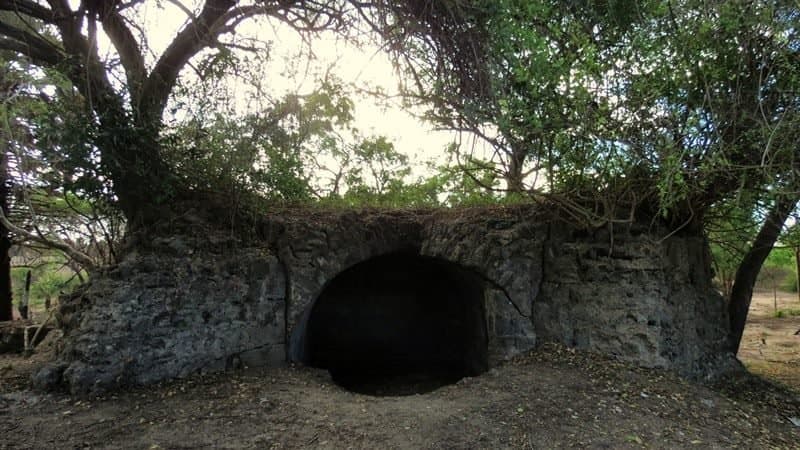
Today, Fort Beschutter is one of the lesser-known Dutch-period military sites in northern Sri Lanka. Unlike better-preserved colonial landmarks, it has not survived as a major visible ruin. Some references state that the fort was destroyed and that little or no clear physical evidence remains today.
That makes it easy to overlook. Travellers moving along the A9 highway may know Elephant Pass for its modern military history, memorials and wide northern landscape. Very few realise that nearby, hidden in the wider Iyakachchi–Koyilvayal area, once stood a Dutch guard post that helped control the entrance to Jaffna.
Even if the fort itself has largely disappeared, the story remains deeply connected to the land. The flat openness, the lagoon winds, the narrow approach to the peninsula and the sense of crossing into the north all help explain why this place was so important.
Why Fort Beschutter Still Matters
Fort Beschutter matters because it reminds us that history is not only found in grand monuments. Sometimes, the most important places are small, damaged or almost invisible.
This fort tells the story of colonial security, trade control, local resistance, movement restrictions and the strategic value of Sri Lanka’s northern gateway. It also shows how geography can shape power. A narrow strip of land between water bodies became a place where empires built checkpoints, armies planned defences and travellers were watched carefully.
For heritage travellers, Fort Beschutter is not a site to visit for towering walls or postcard views. It is a place to understand through context. It belongs to the same historical landscape as Elephant Pass Fort and Fort Pass Pyl. Together, these three outposts formed a forgotten Dutch defensive chain across the gateway to Jaffna.
A Forgotten Marker in the Northern Landscape
Fort Beschutter may no longer stand proudly above the land, but its memory still adds depth to the journey north. Every road to Jaffna carries layers of history: kingdoms, colonial powers, traders, soldiers, pilgrims and ordinary travellers. Fort Beschutter was one of the small but important places that watched over that movement.
Its story is not one of grandeur. It is a story of strategy. It was built because the Dutch understood the value of a narrow passage. It existed because trade, security and power all passed through this land. And although little may remain today, Fort Beschutter continues to mark an important chapter in the long history of Jaffna’s gateway.