A Remarkable Story from Old Ceylon
There are some stories from Old Ceylon that sound almost too good to be true.
Frank Hadow’s story is one of them.
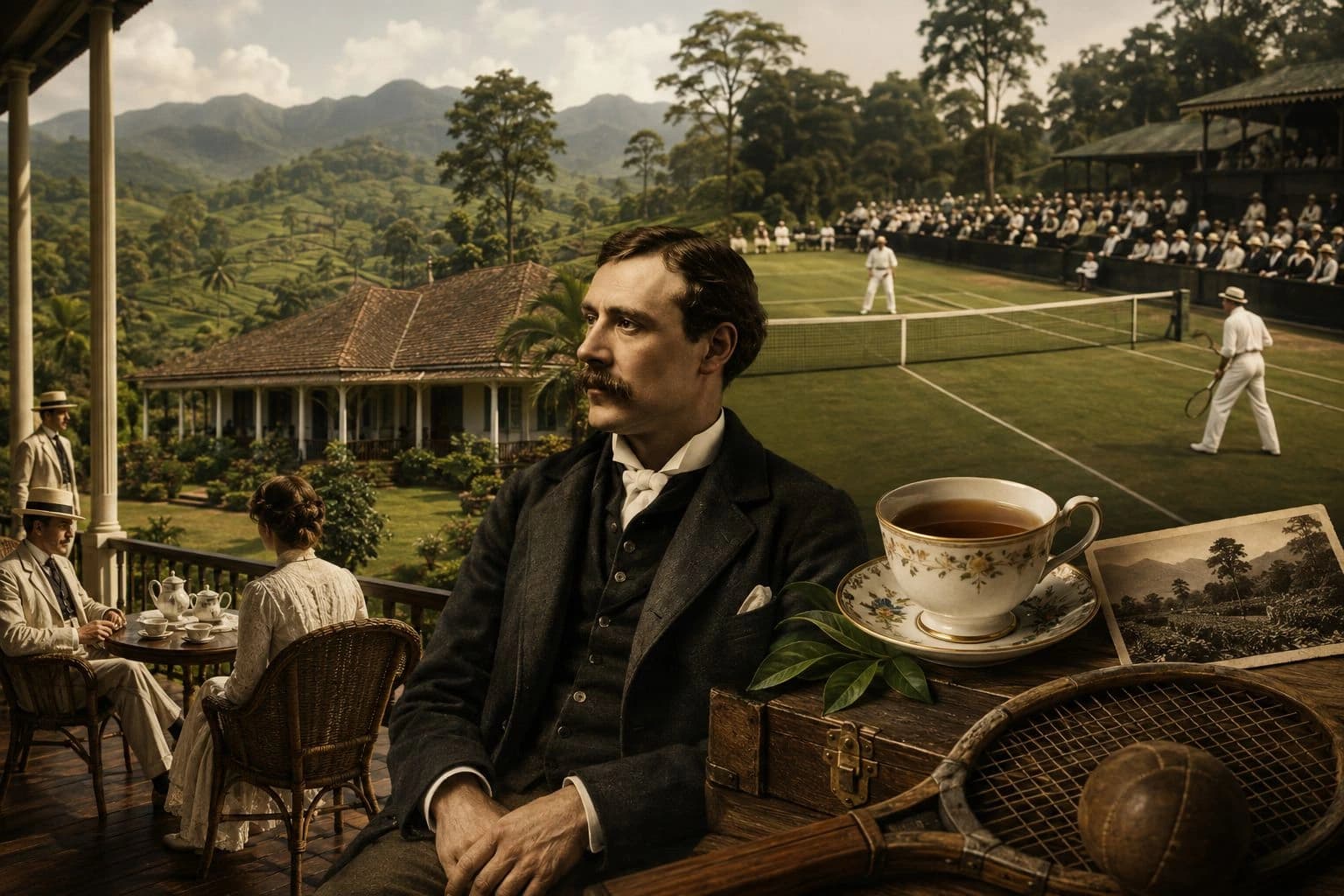
In 1878, Patrick Francis “Frank” Hadow was living the life of a planter in Ceylon. The island’s plantation economy was changing quickly at the time. Coffee, once the great crop of the highlands, was being devastated by coffee rust, while tea was beginning the rise that would eventually make the name Ceylon Tea famous around the world.
Hadow was part of that planting world, working in Ceylon with his brother and moving from coffee into tea during this period of transition.
Then he went home to England for a holiday.
And somehow, that holiday ended with him becoming Wimbledon champion.
Who Was Frank Hadow?
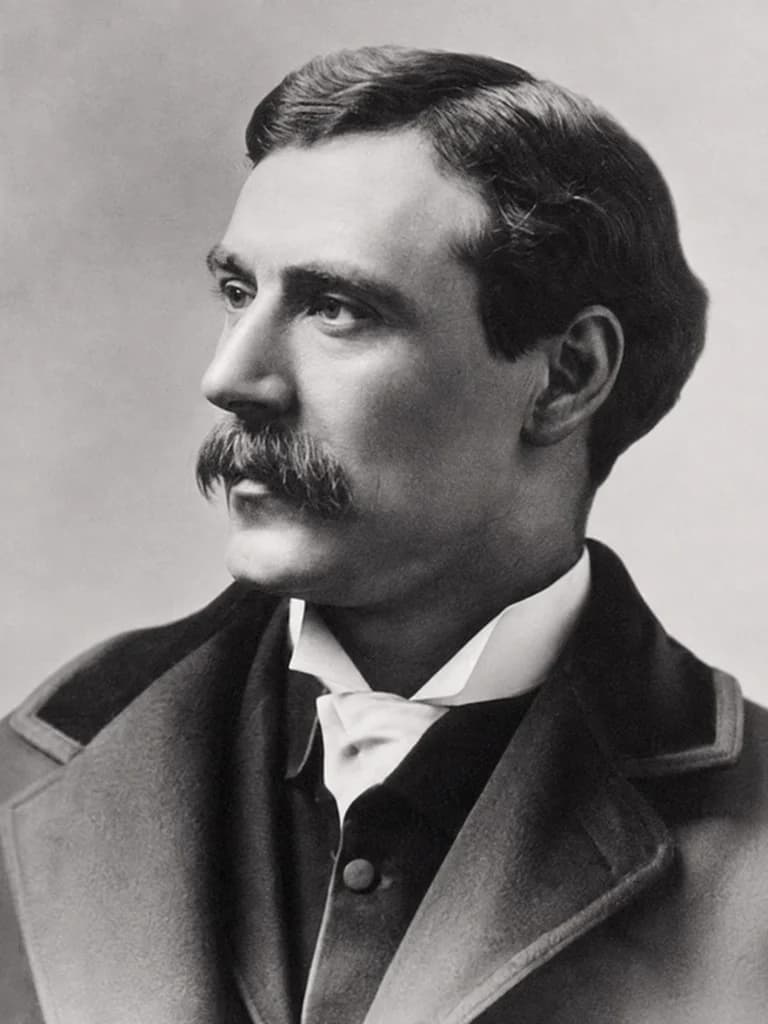
Patrick Francis Hadow, better known as Frank Hadow, was born in England in 1855.
He was educated at Harrow before attending Balliol College, Oxford. Like many young Britons of his generation, he later came out to Ceylon, where planting offered opportunity, adventure and a place in the expanding colonial economy.
By his early twenties, Hadow’s everyday world would have been very different from London.
His life was connected to estates in the central hills, long journeys between planting districts, club life, cricket, tennis and the daily routines of an industry that was still moving from coffee towards tea.
He was not only a planter.
He was also a sportsman.
From Coffee Planting to Tea Country
When Hadow was in Ceylon, the plantation world was going through one of its greatest changes.
For decades, coffee had dominated the highlands. Estates had been cleared, roads had been built and fortunes had been made around coffee cultivation.
But coffee rust devastated the industry.
Planters who had invested heavily in coffee suddenly faced uncertainty. They needed a new crop that could survive in the hill country and restore the plantation economy.
Tea gradually emerged as the answer.
James Taylor had already established commercial tea cultivation at Loolecondera in 1867, and by the 1870s more planters were beginning to understand the potential of tea.
Hadow therefore belonged to an extraordinary generation of planters who witnessed the decline of coffee and the rise of Ceylon tea.
Check our previous article- https://trippingsrilanka.com/stories/first-colombo-tea-auction
A Sportsman in the Plantation World
Sport was an important part of life in the old plantation districts.
Estate life could be isolated, especially in the nineteenth century. Planters were often scattered across hills, valleys and remote estates. Clubs became important meeting places where they could gather, socialise and compete.
Hadow was already a serious cricketer. He played first-class cricket in England and, during his years in Ceylon, became associated with the sporting life of the plantation districts.
One important place connected to that sporting world was the Dimbula Athletic and Cricket Club at Radella.
Dimbula was one of the centres of up-country planter society. Cricket, tennis and later rugby became part of the social life of the hills.
So when Hadow returned to England in 1878 and entered a tennis tournament, it may not have seemed completely surprising.
What happened next certainly was.
Check our previous article- https://trippingsrilanka.com/stories/darrawella-club-old-ceylon
Wimbledon Was Still a Young Tournament
Today, Wimbledon is one of the most famous sporting events in the world.
But in 1878, it was still new.
The first Wimbledon Championship had been held only the previous year, in 1877, when Spencer Gore became the first gentlemen’s singles champion.
In those early days, lawn tennis was still developing its tactics, rules and identity. It was far removed from the polished international spectacle we know today.
The game was young.
Its strategies were still being tested.
Its traditions were still being formed.
Into this early tennis world stepped Frank Hadow, a planter from Ceylon who had returned to England on holiday.
The Planter Who Entered Wimbledon
Hadow entered the 1878 Wimbledon Championship and made his way through the field.
Eventually, he earned the right to face Spencer Gore, the defending champion, in what was then called the Challenge Round.
On 18 July 1878, the planter from Ceylon defeated Wimbledon’s first champion in straight sets:
7–5, 6–1, 9–7
With that victory, Frank Hadow became the second gentlemen’s singles champion in Wimbledon history.
It was an extraordinary achievement.
A young man connected to the plantation districts of Ceylon had gone to England on holiday and won one of the most important early titles in tennis history.
The Shot That Changed the Match
The most enjoyable part of the story is how Hadow won.
Spencer Gore was known for coming forward and attacking close to the net. Hadow responded by sending the ball high over Gore’s head and deep towards the back of the court.
Today, this seems like one of the most ordinary shots in tennis.
It is called a lob.
But in the very young game of lawn tennis, the tactic was far more unusual. Hadow became strongly associated with the development of the lob as a response to aggressive net play.
Against Gore, it worked beautifully.
The defending champion’s attacking style was disrupted, and Hadow used his clever tactical play to win the match.
In tennis history, this gave Frank Hadow a special place not only as a champion, but also as a player linked to the evolution of the game itself.
Wimbledon Was a Chapter, Not a Career
Perhaps the most unusual thing about Frank Hadow is that winning Wimbledon did not appear to change the direction of his life very much.
He did not return the following year to defend the championship.
There was no professional tour waiting for him. There was no sponsorship campaign. There was no carefully planned attempt to build a sporting career around the victory.
Hadow had another life waiting thousands of miles away.
He went back to Ceylon.
His one appearance at Wimbledon was enough to give him a permanent place in tennis history, but for Hadow, tennis seems to have remained part of a larger life rather than its central purpose.
That makes his story even more charming.
He was not a professional athlete chasing fame. He was a Ceylon planter who entered Wimbledon while on holiday, won it, and returned to the plantation world.
Why This Story Matters to Sri Lanka
From a Sri Lankan point of view, Hadow’s story is fascinating because it connects two very different worlds.
On one side, there is Wimbledon: green lawns, English summer, early tennis traditions and sporting history.
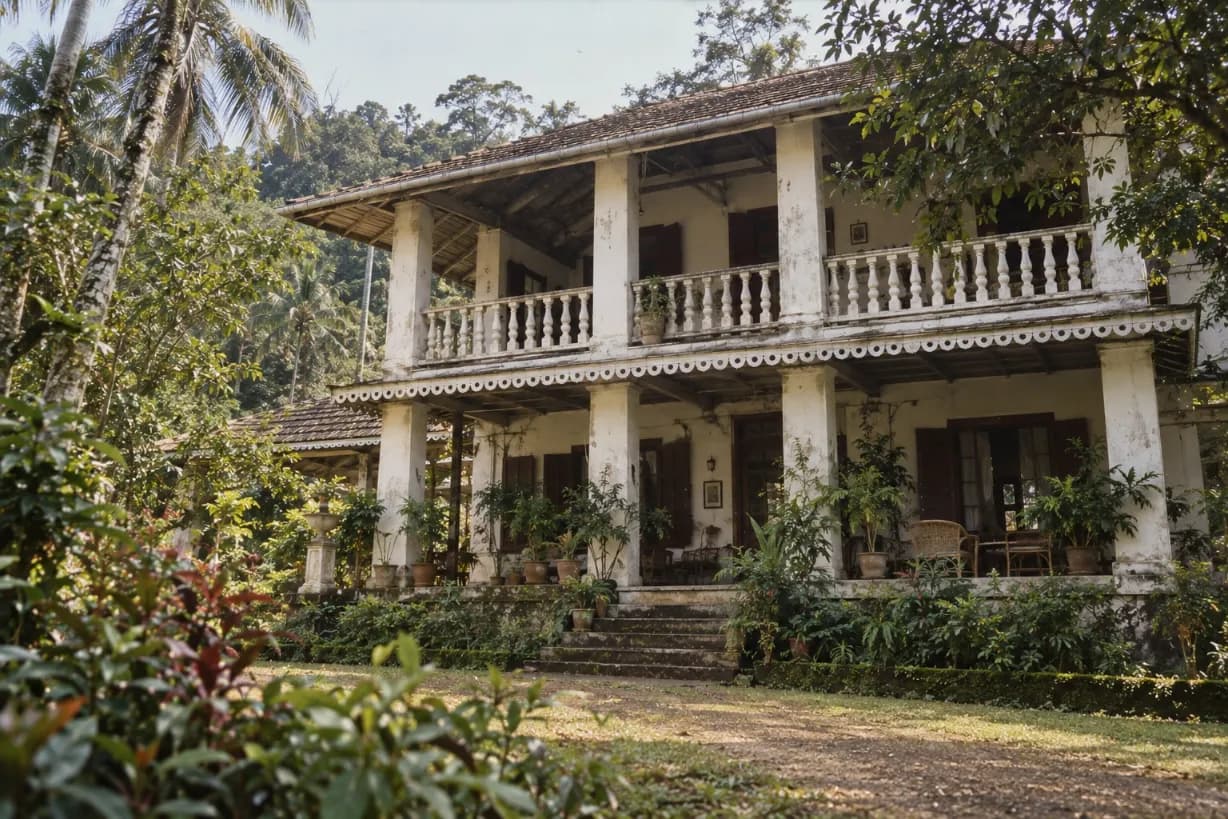
On the other, there is Ceylon’s plantation country: misty hills, coffee estates in crisis, young tea fields, estate bungalows, clubs and the emerging world of Ceylon Tea.
For a brief moment in 1878, those two worlds met through one man.
Hadow’s Wimbledon victory came at almost exactly the time when Ceylon’s plantation industry was transforming from coffee to tea.
That timing gives the story an added historical charm.
The man who won Wimbledon was not just from the world of sport. He was also part of the generation that lived through the great agricultural shift that helped shape modern Sri Lanka.
Sport in the Old Plantation Country
The connection between Ceylon’s planting districts and sport is easy to overlook today.
Estate life was not only about crops, factories and exports. There was an entire social world around the plantations.
Clubs became important centres of that world.
Dimbula, Dickoya, Nuwara Eliya and other plantation districts developed strong sporting traditions. Cricket grounds appeared among the estates. Tennis courts were built near clubs and bungalows. Rugby, dances, dinners and inter-club rivalries became part of up-country life.
After long weeks of estate work, planters gathered at clubs to compete, socialise and escape the isolation of plantation life.
Frank Hadow happened to be better at tennis than most.
Radella and the Dimbula Sporting World
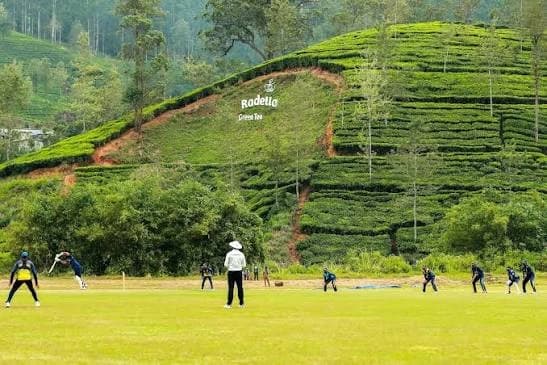
Radella Cricket Ground
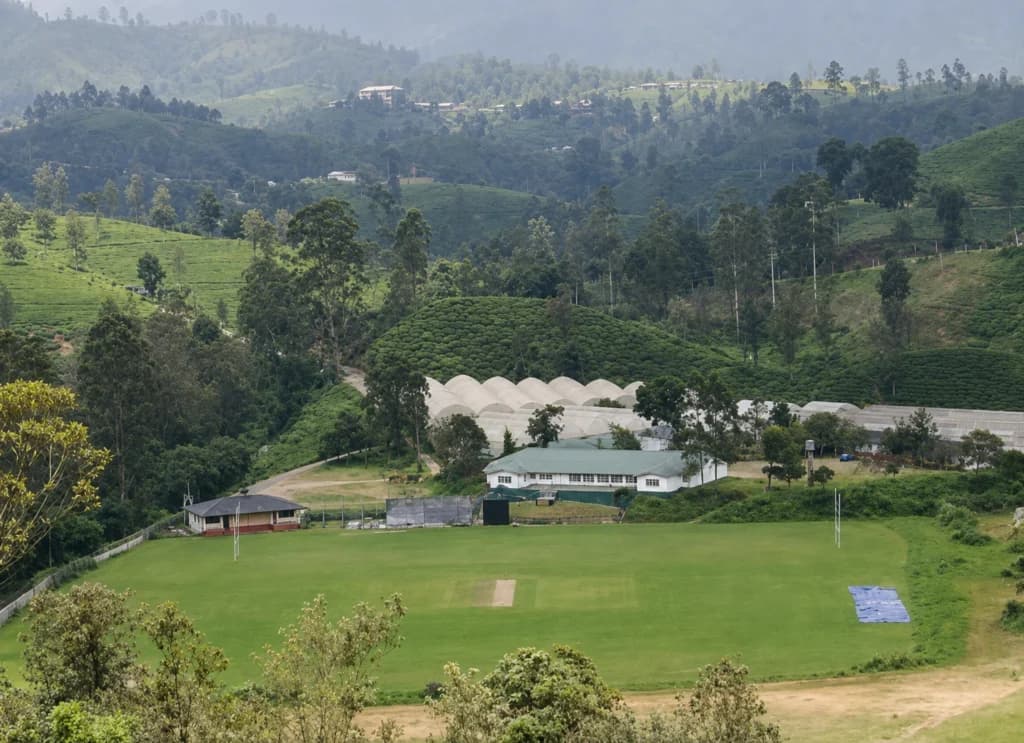
Radella Cricket Club
Radella, connected with the Dimbula Athletic and Cricket Club, remains one of the most atmospheric names in Sri Lanka’s hill-country sporting history.
Located among tea estates, it belonged to a landscape where sport and plantation life were closely linked.
Travelling through Sri Lanka’s tea country today, one can still feel echoes of that world. Roads wind through estates. Old bungalows remain scattered across the hills. Colonial-era clubhouses and cricket grounds still appear unexpectedly among the tea.
These places remind us that plantation history was never only industrial.
It was also social.
There were rivalries, matches, club gatherings, tennis courts, cricket pitches, evening conversations and long journeys from one district to another.
Hadow’s story belongs naturally to this world.
The Ceylon Tea Connection
Today, Ceylon Tea and Wimbledon seem to belong to very different worlds.
Ceylon Tea brings to mind the misty hills of Nuwara Eliya, Dimbula, Uva and Kandy.
Wimbledon brings to mind green courts, white clothing, strawberries and the English summer.
Yet Frank Hadow connects them in a curious and memorable way.
He was living and working within Ceylon’s planting world when the island was moving from coffee into tea. He returned to England and unexpectedly became Wimbledon champion. Then he went back to Ceylon and resumed his life.
It is one of those unusual links that makes Old Ceylon history so interesting.
Sri Lanka’s tea country was connected not only to agriculture and trade, but also to stories of sport, travel and personality.
A Holiday That Became Tennis History
There are grander stories in Sri Lanka’s colonial history, but few are quite as charming as this one.
A young planter left Ceylon for a holiday. He entered a tennis championship that was only in its second year. He defeated the first Wimbledon champion. He became famous in the records of tennis history.
Then he returned to plantation life.
The story feels almost impossible today, when modern sport is carefully managed, professionalised and intensely competitive.
But in the nineteenth century, life could still produce these unexpected crossings between worlds.
A planter could become a Wimbledon champion almost by accident.
What Travellers Can Remember Today
For travellers moving through Sri Lanka’s tea country today, Frank Hadow’s story adds another layer to the landscape.
The next time one passes an old estate bungalow, a plantation club, a quiet cricket ground or a former colonial sporting venue, it is worth remembering that these places were once connected to a lively sporting culture.
They were not only places of work.
They were also places where people played cricket, tennis and rugby, formed clubs, created rivalries and carried their sporting habits across oceans.
Somewhere within this planting world lived a man who crossed the seas for a holiday and returned as a Wimbledon champion.
Why Frank Hadow Belongs in Old Ceylon Memory
Frank Hadow deserves a place in Old Ceylon memory because his story connects plantation history with global sporting history.
He was:
- A planter in Ceylon during the transition from coffee to tea
- A cricketer linked to the sporting culture of the plantation districts
- A Wimbledon champion in 1878
- A player associated with the tactical use of the lob
- A figure who returned to Ceylon instead of building a tennis career
His story is unusual, human and memorable.
It reminds us that Old Ceylon was connected to the wider world in unexpected ways.
Final Thoughts: From the Tea Hills to Wimbledon
Frank Hadow’s life gives us one of the most delightful stories from the world of Old Ceylon.
He belonged to the tea-planting hills at a time of great change. He moved in the sporting world of the plantation districts. He went home to England on holiday and entered Wimbledon when the tournament was still young.
Then, against the first Wimbledon champion, he used a clever lob and won the title.
After that, he returned to Ceylon.
The story is almost too perfect: a planter from the hills, a young tournament, a tactical surprise and a victory that still appears in Wimbledon history.
For Tripping Sri Lanka readers, Frank Hadow’s story is more than a sporting curiosity.
It is a reminder that Ceylon’s tea country was connected to the world in many ways — through trade, travel, empire, sport and the remarkable lives of people who moved between them.
Somewhere between the misty estates of Ceylon and the grass courts of Wimbledon, Frank Hadow left behind a story worth remembering.