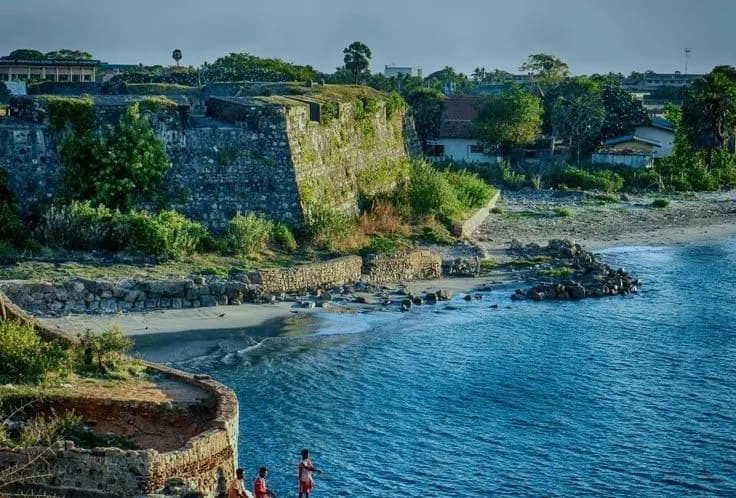
Fort Frederick Trincomalee is one of the most dramatic colonial landmarks on Sri Lanka’s eastern coast. Standing on a rocky headland above the blue waters of Trincomalee Harbour, the fort tells a story of sea power, sacred geography, European rivalry and the strategic importance of Old Ceylon.
Unlike Galle Fort, which is famous for its preserved streets and boutique atmosphere, Fort Frederick Trincomalee feels more military, more open and more tied to the sea. Its walls, gateways and viewpoints do not simply show colonial architecture. They explain why Trincomalee became one of the most desired harbours in the Indian Ocean.
For visitors interested in colonial Sri Lanka, this is not just a fort walk. It is a harbour story. Portuguese, Dutch, French and British forces all understood that Trincomalee was not an ordinary coastal town. It was a natural naval base, a safe anchorage and a key position for controlling movement across the eastern seas of Ceylon.
Why Trincomalee Harbour Mattered
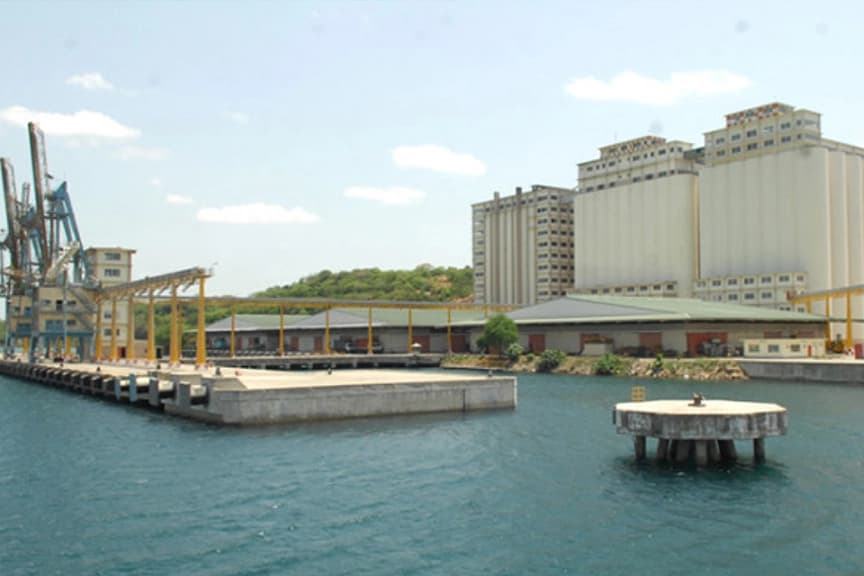
Trincomalee’s history begins with its harbour. Long before modern ports and naval bases, the bay offered what every maritime power wanted: deep water, shelter and a strategic position facing the Bay of Bengal. Ships could anchor safely, fleets could regroup, and colonial powers could watch sea routes connecting South Asia, Southeast Asia and the wider Indian Ocean.
This is why Trincomalee became so important in colonial Ceylon. Colombo was the commercial capital. Galle was a southern port. But Trincomalee had a different kind of value. It was a naval harbour of extraordinary strategic importance.
The eastern location also gave Trincomalee a special place in imperial thinking. A power that controlled this harbour could influence not only Sri Lanka, but wider maritime movement in the region. This explains why European powers repeatedly fought for it.
A Sacred Headland Before the Fort
Before Fort Frederick Trincomalee became a colonial military site, the headland was already sacred. Swami Rock, the dramatic cliff rising above the sea, was associated with the ancient Koneswaram Temple, one of the most important Hindu religious sites in Sri Lanka.
This sacred geography makes Trincomalee different from many other colonial forts. The Europeans did not build on empty land. They built on a place already filled with religious meaning, local memory and cultural significance.
The relationship between the fort and Koneswaram Temple is one of the most important parts of Trincomalee’s story. It shows how colonial power often entered existing sacred landscapes and transformed them for military purposes. Today, visitors still pass through the fort area to reach Koneswaram Temple, where devotion, sea views and colonial history meet on the same promontory.
Portuguese Beginnings
The Portuguese were the first European power to fortify Trincomalee in the early 17th century. Their arrival reflected the wider Portuguese strategy in Ceylon: control the coast, secure ports, influence trade and weaken local powers.
The Portuguese fortification was built to protect the harbour and support their naval presence. It was not yet the more developed fort seen today, but it established the colonial military importance of the site.
This period was also marked by conflict around Koneswaram Temple. The Portuguese destruction of the older temple complex remains one of the most painful and controversial episodes in Trincomalee’s history. It adds a darker layer to Fort Frederick Trincomalee, reminding visitors that colonial architecture was sometimes built through the erasure of older sacred spaces.
The Dutch and the Strengthening of the Fort
The Dutch later captured Trincomalee and strengthened the fortifications. Their approach to fort-building was more systematic and heavily influenced by European military engineering. They understood the harbour’s value and improved the defences to make the site more useful as a colonial stronghold.
The Dutch period added ramparts, defensive walls and bastions designed for artillery warfare. These structures were practical rather than decorative. They were built to resist attack, control the headland and protect the harbour.
For visitors walking through Fort Frederick Trincomalee today, the Dutch influence can still be felt in the heavy defensive character of the site. The walls and gateways are not romantic ruins alone. They are evidence of a military logic that shaped colonial Sri Lanka’s coastal landscape.
French Interest and European Rivalry
Trincomalee’s colonial story also includes French interest, even if French control was brief. This matters because it shows that the harbour was not only important to the island’s rulers. It was part of a wider global struggle among European powers.
Wars in Europe often had consequences in places like Ceylon. A conflict between European states could lead to naval manoeuvres, sieges and temporary occupations thousands of miles away. Trincomalee’s harbour made it valuable in these struggles.
This is one reason Fort Frederick Trincomalee deserves more attention. It is not simply a Sri Lankan coastal fort. It is a site connected to the global history of empire, naval warfare and Indian Ocean strategy.
The British and the Rise of Fort Frederick
The British captured Trincomalee from the Dutch in 1795. Under British rule, the fort was renamed Fort Frederick, after Prince Frederick, Duke of York. The British recognised the supreme naval value of Trincomalee Harbour and developed the area as an important military and naval station.
This British period gave Fort Frederick Trincomalee much of its later colonial identity. Barracks, administrative buildings, military quarters and improved defensive works helped turn the fort area into part of a larger imperial naval system.
For British Ceylon, Trincomalee was not just another town. It was a strategic base. The harbour’s safe position and deep waters made it valuable for the Royal Navy, especially during periods when control of the Indian Ocean was central to imperial defence.
Walking Through Fort Frederick Today
A visit to Fort Frederick Trincomalee usually begins at the main gateway. The entrance itself gives a strong sense of colonial authority, with its thick walls, arched opening and military presence. From there, the road leads through shaded areas where deer often wander freely, adding an unexpected softness to the otherwise military setting.
The fort is still associated with security and military use, so visitors should respect restricted areas and photography rules. This is not a fully open heritage town like Galle Fort. Some spaces are accessible, while others remain controlled.
That limited access actually reinforces the character of the place. Fort Frederick has never entirely stopped being a military landscape. Its colonial purpose still echoes in the way the space is managed, guarded and approached.
The Road to Koneswaram Temple
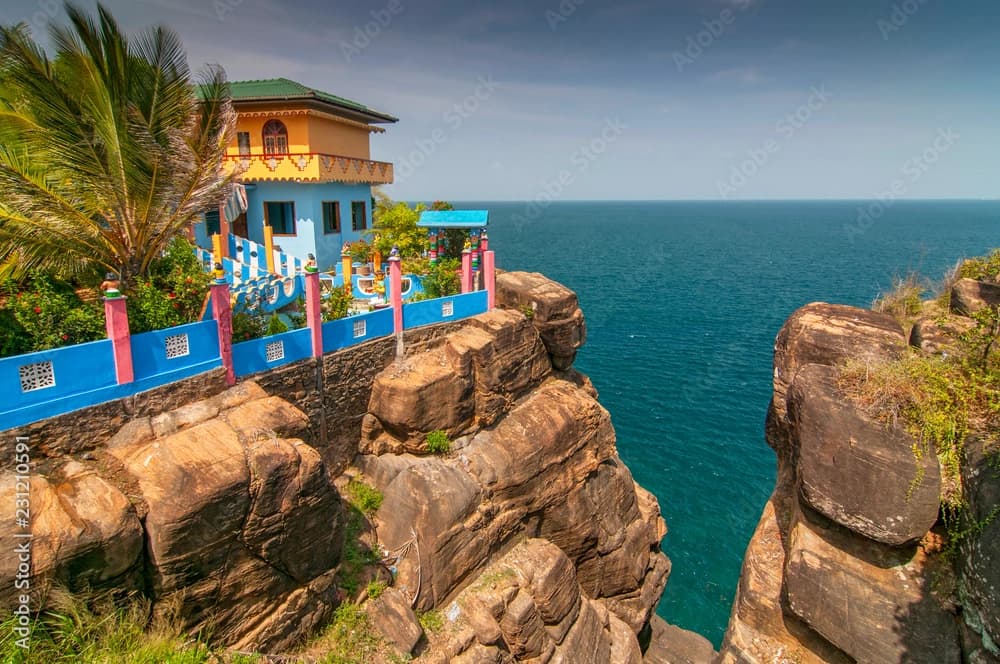
One of the most memorable parts of visiting Fort Frederick Trincomalee is the walk or drive up towards Koneswaram Temple. As the road rises towards Swami Rock, the fort’s military history begins to merge with religious atmosphere.
At the top, the sea views are extraordinary. The temple stands above the cliffs, looking out over the Indian Ocean. Pilgrims, travellers and local visitors all gather here, creating a very different mood from the fort gateway below.
This contrast is what makes the site so powerful. In one visit, you experience colonial defence, Hindu devotion, natural beauty and maritime history. Few places in Sri Lanka combine these elements so strongly.
Swami Rock and the Sea Views
Swami Rock is one of the most dramatic viewpoints in Trincomalee. From here, the ocean opens out in deep blue layers, and the harbour landscape can be understood more clearly. The height, the cliffs and the sea breeze all explain why this headland mattered both spiritually and strategically.
For heritage travellers, this viewpoint is essential. It allows you to see Fort Frederick Trincomalee not as an isolated structure, but as part of a larger coastal geography. The fort, temple, harbour and ocean all belong to the same story.
The sea views also remind visitors why colonial powers fought so hard for Trincomalee. From this headland, the eastern coast does not feel remote. It feels central to the movement of ships, armies and empires.
Trincomalee in British Naval History
During British rule, Trincomalee became especially important as a naval base. Its harbour was admired by British officers and strategists because of its natural protection and strategic position.
This role continued into the 20th century. During the Second World War, Trincomalee became an important Allied naval base. The harbour and surrounding military installations were part of the wider defence of the Indian Ocean. Japanese air raids in 1942 also showed how strategically important Ceylon had become during the war.
This later military history gives Trincomalee a different colonial atmosphere from older Dutch and Portuguese forts. It is not only a 17th-century fortification. It is also part of the story of modern naval warfare and British imperial defence.
What Makes Fort Frederick Different from Galle and Jaffna
Fort Frederick Trincomalee is often less discussed than Galle Fort or Jaffna Fort, but it has its own unique character. Galle is a preserved colonial town. Jaffna is a northern bastion beside a lagoon. Trincomalee is a harbour fort on a sacred headland.
Its main attraction is not a grid of colonial streets. It is the relationship between the fort and the sea. The walls, gateway, temple road and cliff views all point towards the harbour’s strategic importance.
This makes Fort Frederick Trincomalee ideal for travellers who enjoy military history, coastal landscapes, sacred sites and less crowded heritage experiences. It is atmospheric without being overly polished.
Best Time to Visit Fort Frederick Trincomalee
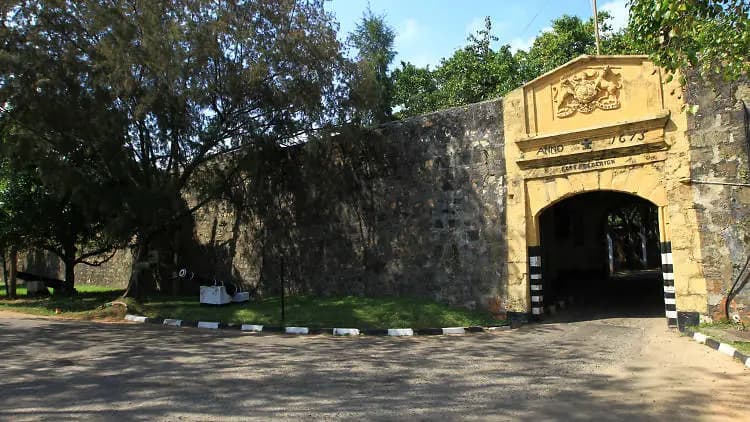
The best time to visit Fort Frederick Trincomalee is early morning or late afternoon. Morning gives cooler weather and clearer light. Late afternoon offers beautiful sea views and a softer atmosphere around Swami Rock and Koneswaram Temple.
Visitors should wear comfortable shoes, carry water and dress respectfully if visiting the temple. Since the fort area includes military zones, it is wise to follow local instructions and avoid photographing restricted areas.
A visit can take one to two hours if you walk through the fort and continue to the temple viewpoint. Travellers interested in history may want to spend longer, especially if combining the visit with Trincomalee town, the harbour area, beaches and nearby colonial or wartime sites.
Final Thoughts: The Eastern Port Story of Old Ceylon
Fort Frederick Trincomalee is one of the most important places to understand colonial Sri Lanka’s eastern coast. It tells a story of sacred land transformed by empire, of a harbour coveted by European powers, and of a fort that continued to matter from the Portuguese period through Dutch, British and wartime history.
To walk through Fort Frederick is to see how geography shaped power. The harbour made Trincomalee valuable. The headland made it defensible. The temple made it sacred. The colonial fort made it strategic.
For visitors, the experience is both scenic and historical. The gateway, ramparts, deer-filled roads, temple path and ocean views combine into one of Sri Lanka’s most memorable heritage walks.
Fort Frederick Trincomalee is not only a monument of stone. It is the eastern colonial port story of Old Ceylon, still standing above one of the island’s greatest natural harbours.
FAQs About Fort Frederick Trincomalee
Why is Fort Frederick Trincomalee important?
Fort Frederick Trincomalee is important because it guarded one of Sri Lanka’s most strategically valuable natural harbours. It was used and developed by Portuguese, Dutch and British colonial powers.
Who built Fort Frederick Trincomalee?
The first European fortification was built by the Portuguese in the early 17th century. The Dutch later strengthened the fort, and the British renamed and modified it after capturing Trincomalee in 1795.
Is Koneswaram Temple inside Fort Frederick?
Koneswaram Temple is located on Swami Rock within the fort area. Visitors usually pass through Fort Frederick to reach the temple and its famous cliff-top sea views.
Can visitors enter Fort Frederick?
Visitors can access parts of Fort Frederick and the route to Koneswaram Temple. However, some areas are restricted because the fort remains connected to military use.
What is the best time to visit Fort Frederick Trincomalee?
Early morning and late afternoon are the best times to visit because the weather is cooler and the sea views are more atmospheric.
Visit Us: https://trippingsrilanka.com/stories
More from Old Ceylon
When the King’s Birthday Was Celebrated on Galle Face Green: A Glimpse of Colombo in 1933
Holyrood Estate, Talawakelle: An Old Ceylon Bungalow and a Name That Echoes Scotland