When the King’s Birthday Was Celebrated on Galle Face Green: A Glimpse of Colombo in 1933
When Galle Face Green Was a Ceremonial Ground
There was a time when Galle Face Green was more than a place for evening walks, kite flying and watching the sun disappear into the Indian Ocean. Long before the food stalls, the crowds of holidaymakers and the familiar bustle of modern Colombo, this great stretch of open ground was one of the most important ceremonial spaces in British Ceylon. Military parades, official inspections and celebrations of the British monarchy brought together soldiers, government officials and spectators in a Colombo that has largely disappeared.
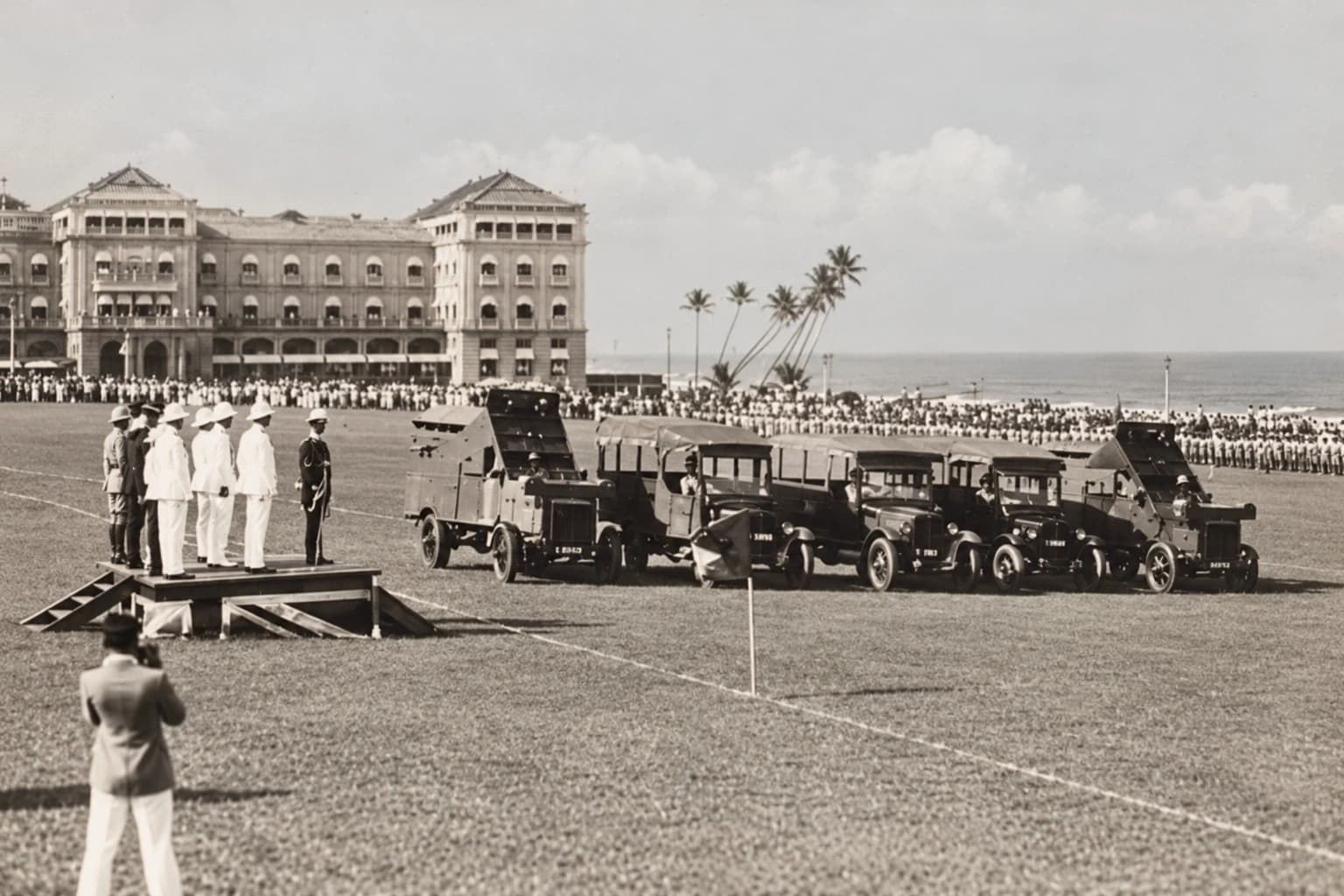
An old photograph taken in 1933 captures one such occasion. It shows the Governor of Ceylon inspecting military transport vehicles during the King’s Birthday Parade at Galle Face Green. The men stand in formation, a row of trucks occupies the parade ground, and behind them rises the grand Galle Face Hotel, already a familiar landmark of colonial Colombo.
It is a wonderfully ordinary photograph in some ways. There is no great battle, no famous political declaration and no moment of national triumph. Yet it tells us a great deal about the Ceylon of ninety-three years ago, when an island thousands of miles from London still marked the birthday of a British king with military ceremony beside the Indian Ocean.
King George V and British Ceylon in 1933
The King in question was George V, who had occupied the British throne since 1910. By 1933, Ceylon remained a British Crown colony, although the introduction of the Donoughmore Constitution in 1931 had brought universal adult franchise and a degree of internal self-government through the State Council. The Governor nevertheless remained the representative of the Crown, and public occasions such as the King’s Birthday Parade were reminders of the imperial authority that continued to shape the island’s administration.
The celebration would have been a very different sight from anything seen on Galle Face today. Imagine the open green before the arrival of the surrounding high-rise buildings, the sea breeze blowing across the parade ground, military uniforms carefully prepared for inspection and motor vehicles standing in a neat line. The Galle Face Hotel, with its broad colonial frontage, looked across a landscape where the rhythms of official Colombo were still tied closely to the traditions of the British Empire.
These parades formed part of the ceremonial calendar of colonial Ceylon. For the administration, they provided an opportunity to display military organisation and loyalty to the monarchy. For spectators, they were public occasions that briefly transformed a familiar open space into a parade ground filled with uniforms, vehicles and official ceremony.
The Military Trucks on Galle Face Green
By 1933, one aspect of military life was changing considerably. The trucks in the photograph belonged to the Ceylon Army Service Corps, an organisation whose roots went back to the final year of the First World War. In 1918, the Ceylon Supply and Transport Corps had been established to provide the logistical support required by the Ceylon Defence Force. Its work was less glamorous than that of infantry or artillery regiments, but no military organisation could function without reliable transport, equipment and provisions.
In 1930, the Corps became affiliated with Britain’s Royal Army Service Corps, and in 1933 it was redesignated the Ceylon Army Service Corps. The photograph therefore belongs to an important year in the development of Ceylon’s military transport services. The vehicles standing on Galle Face were not simply decorations for a royal celebration. They represented an increasingly organised system of military supply and transport, and the growing importance of motorised vehicles in an age when the horse and cart had not yet entirely disappeared from everyday Ceylonese life.
One can imagine how impressive these trucks must have appeared to at least some spectators. Colombo already had motorcars, buses and commercial vehicles, but the sight of military transport assembled for inspection would have carried a different significance. Their heavy bodies, upright cabins and practical construction belonged to an era when vehicles were built primarily for endurance and utility rather than comfort. They were machines intended to carry men, supplies and equipment wherever military service demanded.
The Governor’s Inspection
There is another interesting detail in the photograph. The men standing on the inspection platform appear in light-coloured uniforms, while the trucks are positioned across the green. The Governor’s inspection was part of a ceremonial tradition that placed great emphasis on military order and presentation. Such parades were designed not merely to display equipment but also to demonstrate discipline, readiness and loyalty to the Crown.
For the men taking part, a parade would have required preparation well before the Governor arrived. Uniforms had to be presented correctly, vehicles arranged and formations organised. Military inspections were carefully controlled occasions, and the photograph captures only a brief moment within a much larger ceremonial programme.
For ordinary Colombo residents, these occasions formed part of the public spectacle of colonial life. Galle Face Green had long been associated with recreation and ceremony. It was a place where different worlds could meet, even if the strict social distinctions of colonial society remained. Government officials, military officers, European residents and Ceylonese spectators could all find themselves drawn towards the same open ground, although they experienced the occasion from very different positions.
The Galle Face Hotel in the Background
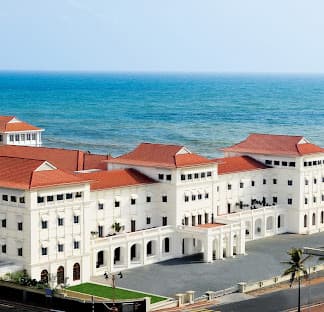
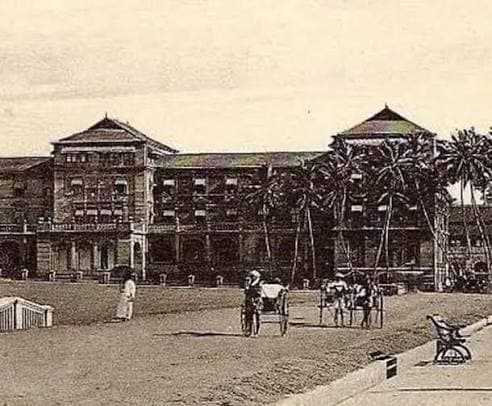
The hotel in the background is particularly evocative. Opened in the nineteenth century, the Galle Face Hotel had witnessed decades of change by the time this photograph was taken. Its verandahs and rooms belonged to a Colombo of visiting dignitaries, colonial administrators, merchants and travellers arriving by sea. In 1933, the hotel stood overlooking a city that was modernising but had not yet lost much of its older character.
The building provides an important reference point in the photograph. Without it, the scene might be mistaken for a military inspection at almost any colonial parade ground. But the familiar frontage of the hotel places the occasion unmistakably beside the Indian Ocean, on one of Colombo’s best-known stretches of open ground.
The hotel has survived while much of the city around it has changed. Its presence in the photograph allows us to compare two very different periods of Colombo’s history. The open green remains, and the sea is still there, but the skyline and the life taking place around them have changed almost beyond recognition.
Colombo Before the Modern Skyline
Colombo in 1933 was a city of tramcars, rickshaws, motorcars, colonial offices, busy harbour activity and neighbourhoods where everyday life followed its own rhythms. Pettah’s trading streets, the administrative buildings of the Fort and the residential avenues beyond the commercial centre belonged to a capital in transition.
There were already signs of modernisation. Motor transport was becoming increasingly important, commercial activity was expanding and the city’s administrative institutions were adapting to new demands. Yet much of Colombo still retained the scale and character of an earlier colonial town, with low buildings, large compounds, broad verandahs and streets shaded by mature trees.
Galle Face Green occupied a particular place within that city. It was open to the sea and closely associated with public recreation, but it could also become a formal setting for ceremonies organised by the colonial government. On the King’s Birthday, the familiar ground was transformed into a space where the authority and traditions of the Empire were put on public display.
An Empire Already Beginning to Change
At Galle Face, a royal parade could still make the machinery of the Empire seem almost permanent. Yet history was already moving in another direction. Only two years earlier, Ceylonese men and women had voted under universal adult franchise for the first time. Political demands for greater control over the country’s affairs were gaining strength, and the old colonial order was facing questions that elaborate ceremonies could not answer.
The changes would continue throughout the following decade. The Second World War altered Ceylon’s strategic importance and brought new demands upon its military and administrative institutions. In 1948, Ceylon gained independence, bringing an end to direct British colonial rule.
Sixteen years after the photograph was taken, in 1949, independent Ceylon established its own regular army. The institutions that had once served the colonial military establishment would become part of the armed forces of a newly independent country. The uniforms, ceremonies and administrative structures changed, but some of the organisational traditions continued.
From the Ceylon Army Service Corps to the Sri Lanka Army
The Ceylon Army Service Corps survived these changes. Its traditions and responsibilities continued into the post-independence period, eventually becoming part of the history of today’s Sri Lanka Army Service Corps. What began as a supply and transport organisation under colonial rule became an enduring component of the country’s military establishment.
That makes the trucks in the 1933 photograph especially interesting. They belong not only to the story of a royal parade but also to the history of military transport in Sri Lanka. The Corps’ work involved supplies, movement and the practical organisation needed to support military operations. Although such responsibilities rarely attract the attention given to combat units, they remain essential to the functioning of an army.
Seen in this context, the old photograph records a stage in the development of an institution that continued well beyond the colonial period. The vehicles may have disappeared long ago, but the work they represented did not.
Galle Face Green Then and Now
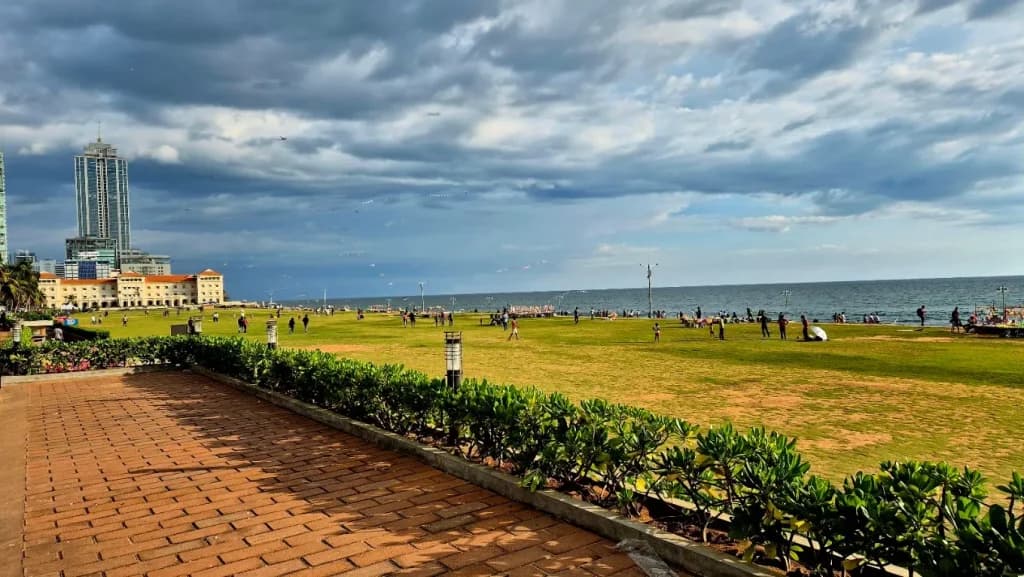
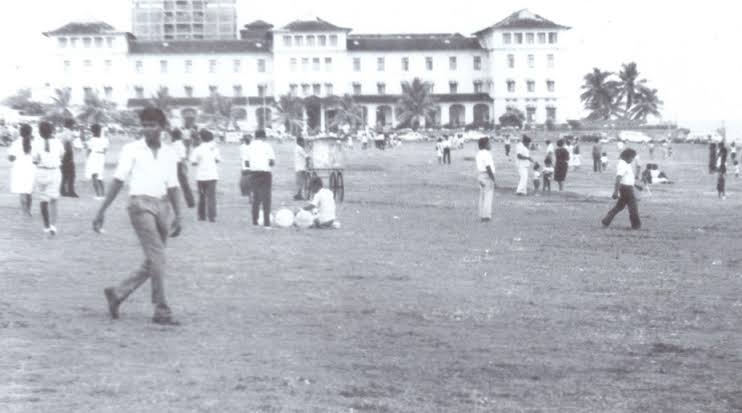
The photograph also reminds us how dramatically the physical landscape of Colombo has changed. Much of the open ground remains, and the Galle Face Hotel still stands, but the skyline around it is almost unrecognisable. The ceremonial Colombo of 1933, with its military trucks and formal inspections, has given way to a very different public life.
Today, families gather on the green, children run towards the water, and people stop to enjoy the evening breeze without giving much thought to the royal parades that once took place there. The ground has become associated with leisure, public gatherings and the everyday life of modern Colombo rather than ceremonies honouring a distant monarch.
Yet the setting has not changed completely. The sea still stretches beyond the green, and the Galle Face Hotel remains a familiar landmark. Those surviving features make it possible to stand in approximately the same landscape and imagine the scene recorded in 1933.
A Photograph That Preserved an Ordinary Ceremony
Perhaps that is what makes such old photographs worth preserving. They reveal how familiar places have carried entirely different meanings from one generation to another. A location that seems ordinary today may once have been the setting for ceremonies, gatherings and events that belonged to a very different political and social world.
To someone standing on Galle Face Green in 1933, the inspection of military trucks may have seemed little more than another annual ceremony. Few would have imagined that British colonial rule over Ceylon would end within fifteen years, or that the island would one day have its own army, national ceremonies and independent identity.
For the photographer, the occasion may simply have been worth recording because the Governor was present and the military vehicles were arranged for inspection. Yet the resulting image has acquired another value with time. It allows us to see Colombo at a particular moment, when old imperial traditions were still visible and new political changes were already taking shape.
The Green That Remembered the King
The Governor, the soldiers and the trucks have long since disappeared. The Empire whose king they honoured has passed into history. But the hotel remains, the sea still rolls against the shore, and the same breeze continues to sweep across the green.
For a brief moment in 1933, somebody raised a camera and captured a scene that might otherwise have been forgotten. The photograph preserved the military vehicles, the formal inspection and the Galle Face Hotel standing behind them, but it also preserved something less obvious: the atmosphere of a Colombo whose public life was still closely connected to the British monarchy.
Nearly a century later, that small photograph allows us to stand once again on the Galle Face Green of Old Ceylon.
Visit us: https://trippingsrilanka.com/storie
More from Old Ceylon
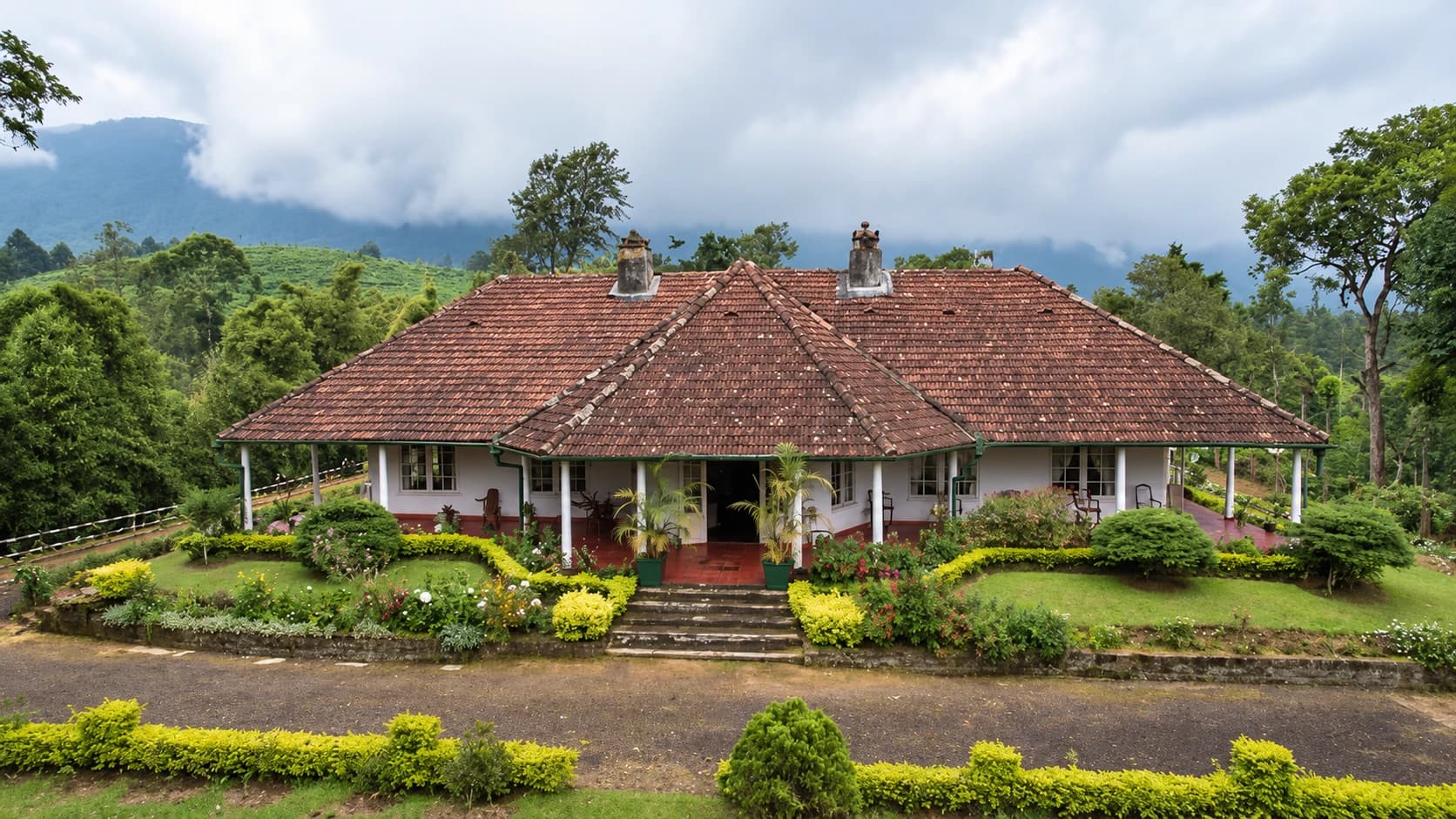
Holyrood Estate, Talawakelle: An Old Ceylon Bungalow and a Name That Echoes Scotland
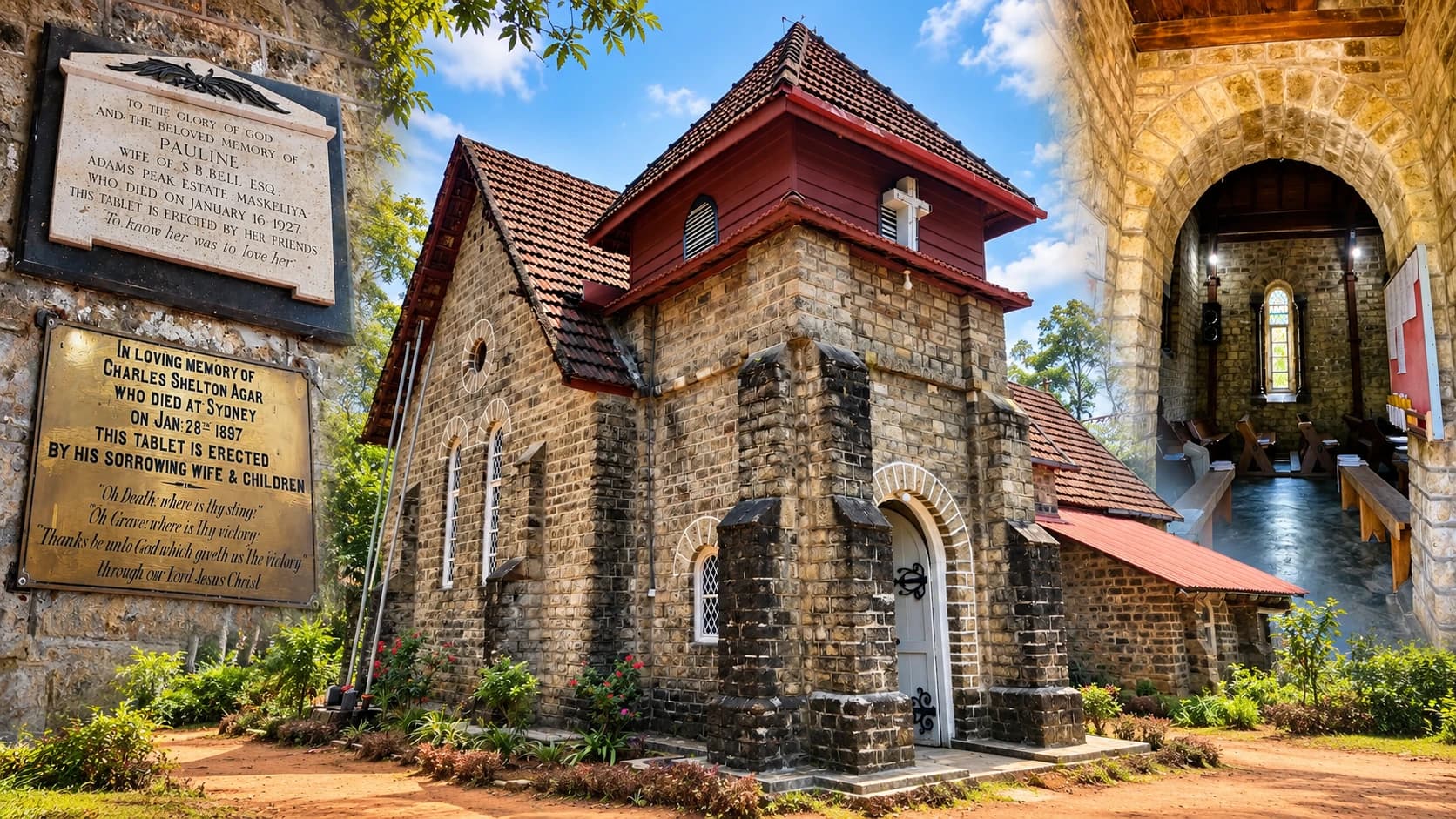
All Saints’ Church, Maskeliya: The Old Stone Church and the People Who Never Left