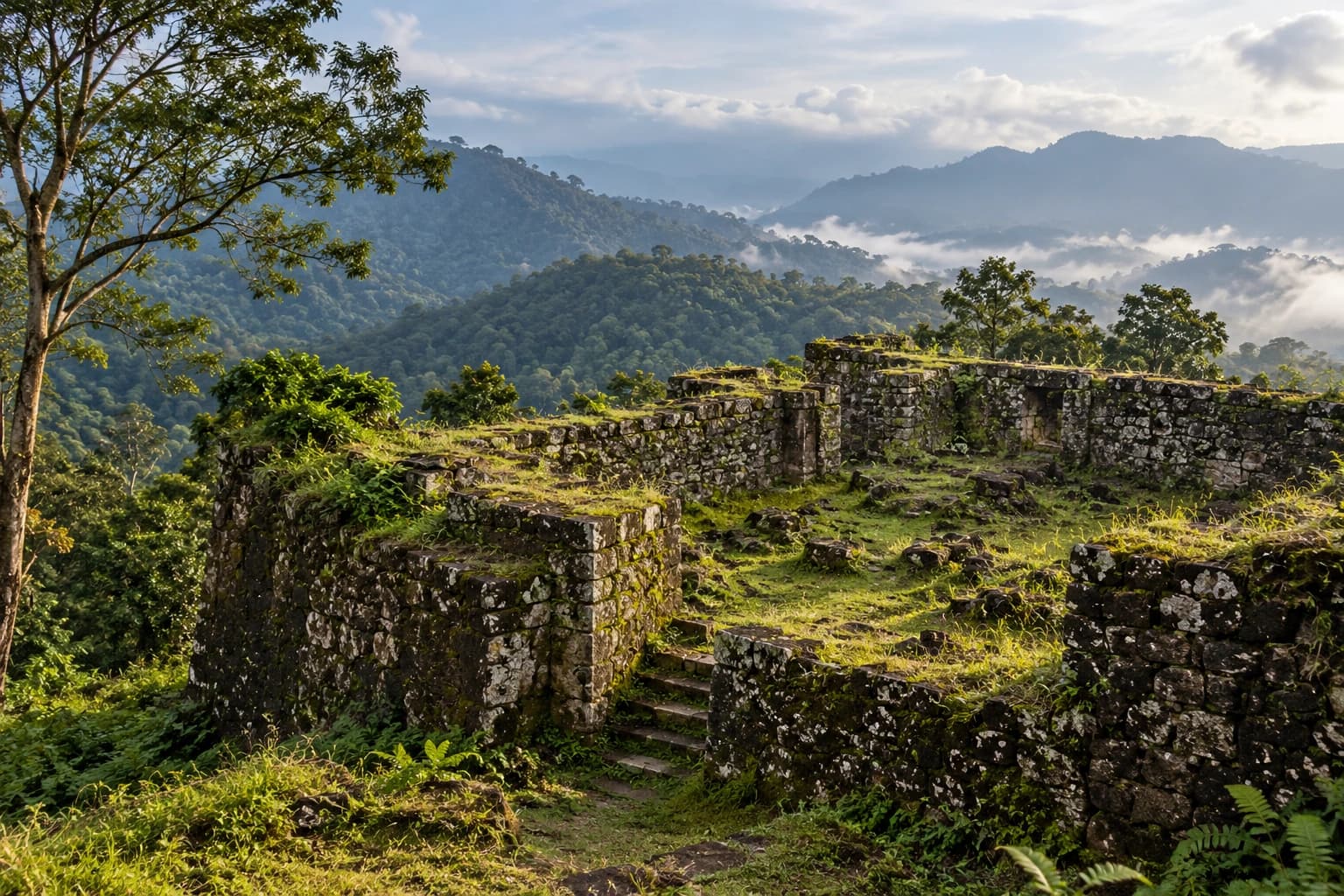
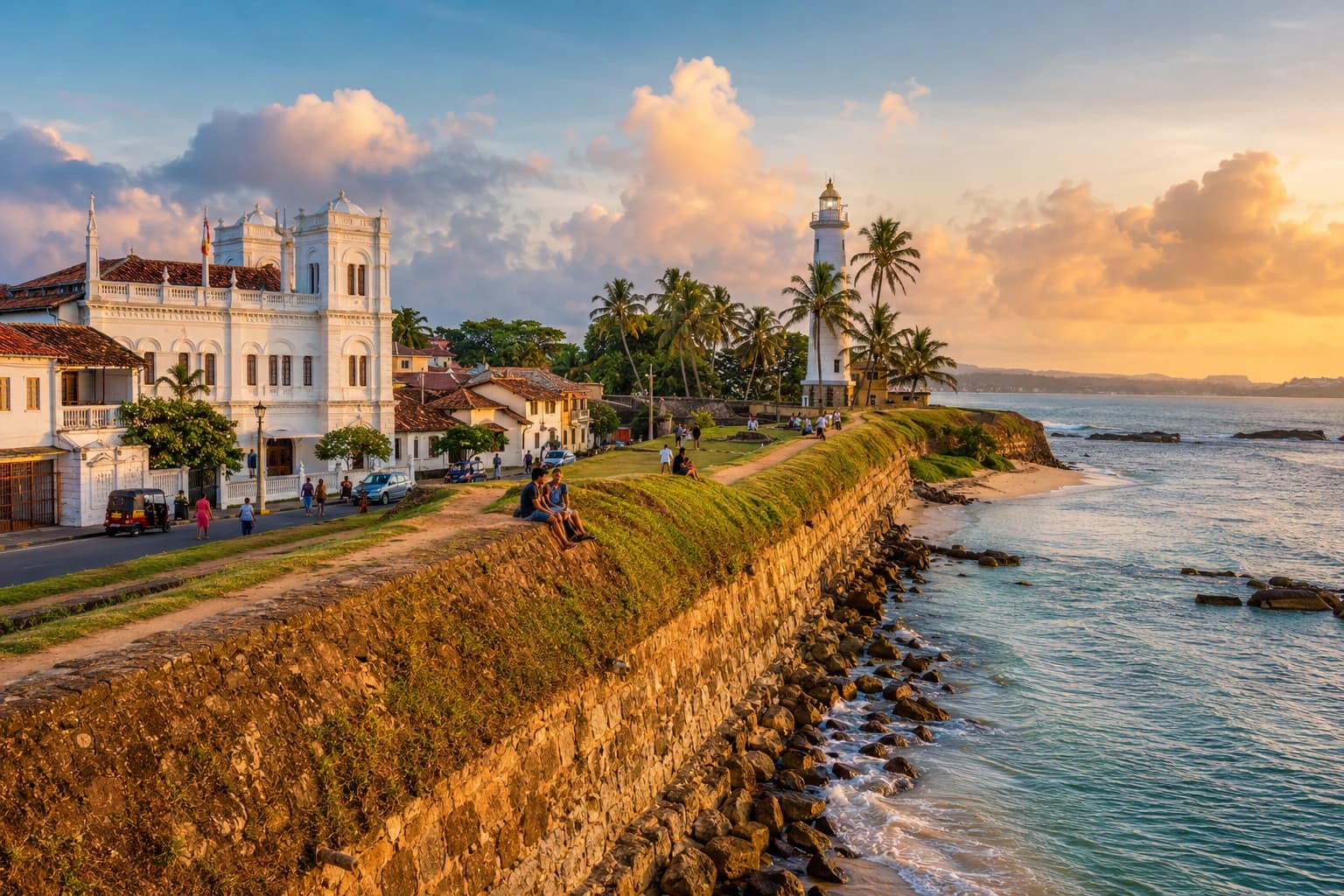
Galle Fort Sri Lanka is one of the most atmospheric heritage walks in South Asia. Standing on a rocky promontory beside the Indian Ocean, the fort is more than a collection of old walls and colonial buildings. It is a living town where Dutch ramparts, British-era streets, mosques, churches, cafés, boutique hotels and family homes exist within the same historic enclosure.
For visitors interested in colonial Sri Lanka, Galle Fort offers a rare experience. Unlike many colonial sites that survive only as ruins or monuments, Galle Fort is still alive. People live inside it. Children walk to school through its narrow streets. Travellers climb the ramparts at sunset. Old merchant houses have become guesthouses, galleries and restaurants. The fort is both a historical site and a working neighbourhood.
This walking guide is designed for travellers who want to understand Galle Fort Sri Lanka beyond the usual postcard view of the lighthouse. It follows the ramparts and streets as a heritage route, showing how Portuguese, Dutch and British layers shaped one of the most beautiful colonial towns in Sri Lanka.
Why Galle Fort Is So Important in Colonial Sri Lanka
Galle became important because of its harbour. Long before European powers arrived, the southern coast of Sri Lanka was connected to Indian Ocean trade routes. Ships, merchants, spices, gems, elephants, cinnamon and textiles all formed part of the wider world that passed through Sri Lanka’s ports.
The Portuguese arrived in the 16th century and established Galle as a fortified coastal settlement. Later, the Dutch captured and transformed it into a stronger fortified town. The fort that visitors walk through today is mainly associated with the Dutch period, although later British rule added its own administrative and architectural layers.
This mix of European fortification and South Asian coastal life is what makes Galle Fort Sri Lanka so special. It is not just a European fort placed on Sri Lankan soil. It is a colonial town adapted to tropical weather, local materials, maritime trade and the rhythms of island life.
Start at the Main Gate
A good Galle Fort walking route begins at the Main Gate. This is where the visitor crosses from modern Galle into the historic fort. The moment is subtle but powerful. Outside the walls, the city feels busy and modern. Inside, the streets narrow, the pace slows, and the past becomes more visible.
The Main Gate also reminds us that Galle Fort was not built only for beauty. It was a defensive structure. Its gates, bastions, thick walls and ramparts were designed to protect a valuable colonial port. Every entrance and sea-facing wall had a strategic purpose.
As you enter, look carefully at the thickness of the walls and the sense of enclosure. This was a town designed to control movement. Goods, soldiers, officials, merchants and residents all passed through spaces shaped by colonial security and trade.
Walk Towards the Ramparts
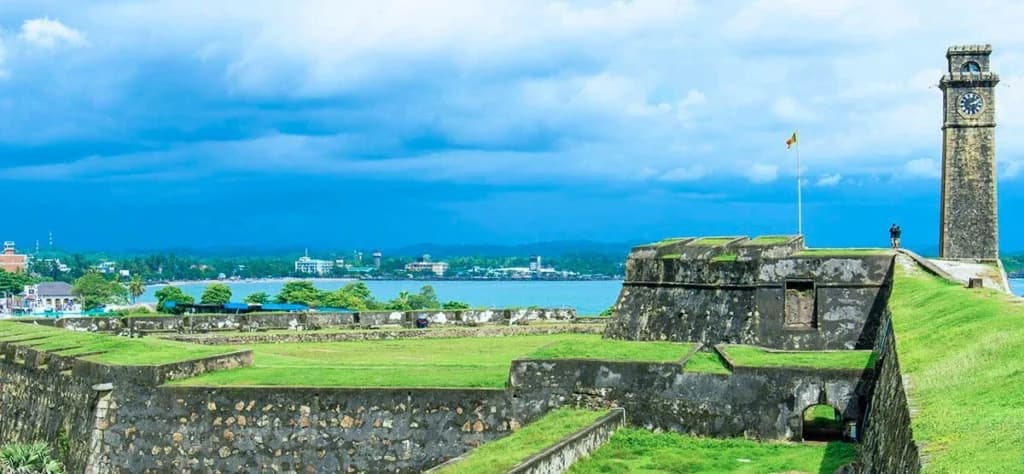
From the Main Gate, move towards the ramparts. This is where Galle Fort becomes unforgettable. The walls curve around the edge of the promontory, giving sweeping views of the sea on one side and colonial rooftops on the other.
The ramparts are the best place to understand why Galle Fort Sri Lanka is so admired. They are not only military structures. They are viewpoints, promenades and memory lines. They show how the fort defended itself against the sea while also depending on the sea for its existence.
Walking here, it is easy to imagine the harbour filled with sailing ships, the arrival of European officials, the loading of goods and the constant fear of naval attack. The fort’s beauty today can hide its original purpose. These peaceful walls were once part of a serious colonial defence system.
The Bastions: A Fort Built for the Sea
As you follow the ramparts, you will pass several bastions. These projecting sections of the fortification allowed defenders to watch and protect different angles of approach. In the Dutch period, bastions were essential to the design of coastal forts because they allowed cannon fire to cover vulnerable points.
The names and positions of these bastions give the fort much of its character. They break the walk into stages and create some of the best viewpoints in Galle. From one side, you see the ocean. From another, you see tiled roofs, church towers, narrow lanes and coconut palms.
For heritage travellers, the bastions are among the most interesting parts of Galle Fort. They show how European military planning was adapted to a Sri Lankan coastal landscape. The result is not a cold stone fortress, but a dramatic meeting point between architecture, sea, wind and tropical light.
The Lighthouse and Point Utrecht Bastion
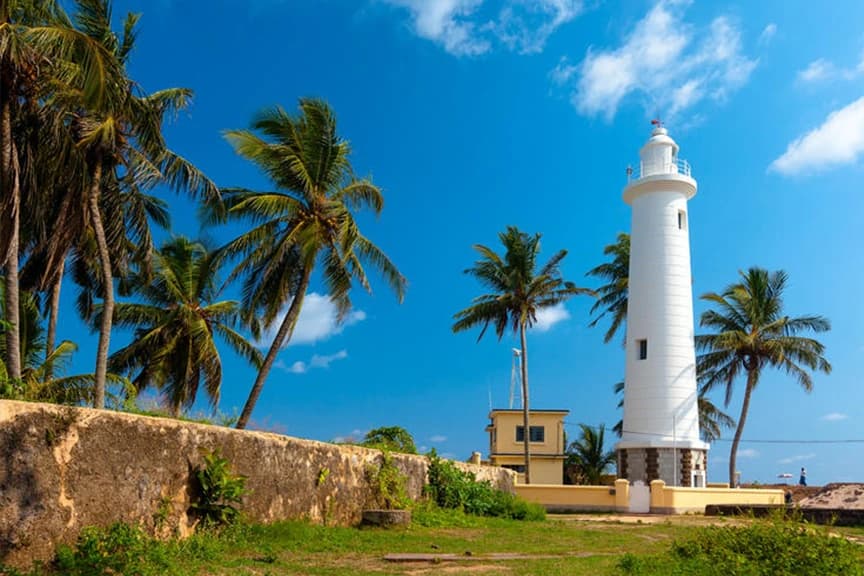
The most photographed location in Galle Fort Sri Lanka is the lighthouse near Point Utrecht Bastion. Framed by palm trees and white colonial buildings, it has become the visual symbol of the fort. Many visitors come here for pictures, but the location has deeper historical meaning.
A lighthouse belongs to the world of maritime navigation. It speaks of ships entering and leaving Galle Harbour, of colonial sea routes, and of the importance of the southern coast to Ceylon’s trade. Standing near it, you can understand why Galle was valued by colonial powers. This was not just a pretty seaside town. It was a strategic harbour in the Indian Ocean.
The lighthouse area is especially beautiful in the early morning or late afternoon. The light is softer, the heat is lower, and the ramparts feel less crowded. It is also one of the best places to pause and look back at the town inside the fort. From here, Galle appears as a compact colonial world enclosed by stone and sea.
Meeran Mosque and the Multicultural Fort
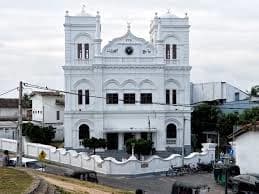
Near the lighthouse stands Meeran Mosque, one of the most striking buildings inside the fort. Its white façade and elegant form add another layer to the story of Galle. Many visitors think of Galle Fort mainly as a Dutch colonial site, but the fort has always been more culturally complex than that.
Galle was a port town, and port towns attract many communities. Muslim traders, Sinhalese families, Burghers, Europeans, South Indian communities and others all shaped the life of the fort. The presence of mosques, churches, temples, schools and old homes within a small area shows that Galle Fort was never simply a military structure.
This is one of the reasons the fort still feels alive. Its colonial buildings are important, but its human history is just as important. The fort was shaped by empire, but it was lived in by diverse communities who made it their home.
The Dutch Reformed Church
A walk through Galle Fort should include the Dutch Reformed Church, one of the most important colonial religious buildings in the town. Its architecture is restrained, dignified and deeply connected to Dutch Ceylon. Inside and around the church, old tombstones and memorials tell the stories of officials, families and residents from the colonial period.
The church gives visitors a quieter, more reflective experience of Galle Fort Sri Lanka. The ramparts speak of defence and the sea. The church speaks of settlement, faith, memory and mortality. It reminds us that colonial towns were not only places of administration and trade. They were also places where people married, worshipped, raised children and died.
For history readers, this is where the past becomes personal. Names carved in stone can make the colonial period feel less abstract. Behind the larger story of empire were individual lives, ambitions and losses.
The Streets Inside the Fort
After walking the ramparts, move into the interior streets. This is where Galle Fort becomes a living colonial town. Streets such as Church Street, Pedlar Street and Leyn Baan Street are filled with restored houses, cafés, shops, museums, galleries and boutique hotels.
The street pattern still reflects the order of a planned colonial settlement. The roads are compact and walkable, with buildings close to the street. Many old houses have thick walls, inner courtyards, verandahs and shaded openings designed for tropical conditions.
Look closely at the details. Wooden doors, fanlights, courtyards, tiled roofs and old street names all carry traces of colonial Ceylon. Some buildings have been beautifully restored. Others are more weathered. Together, they create the particular charm of Galle Fort: elegant but not artificial, historic but not lifeless.
The Old Dutch Hospital and Maritime Heritage
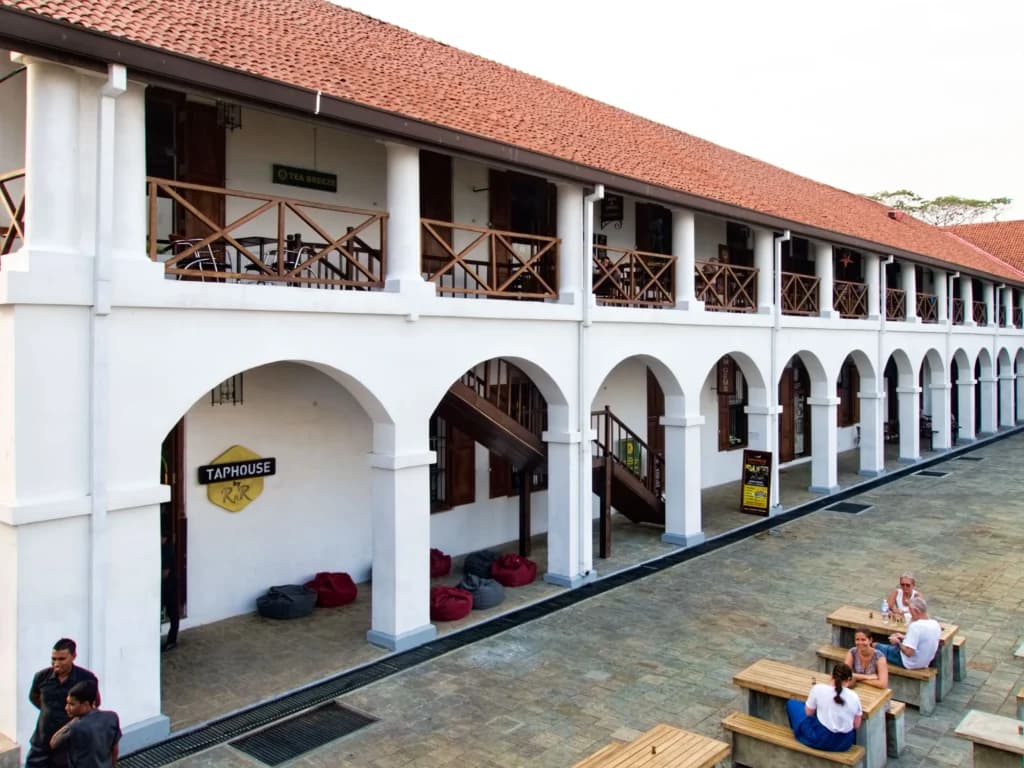
Galle also has an old Dutch Hospital building, now adapted for modern use. Like similar Dutch buildings elsewhere in Sri Lanka, it reflects practical colonial architecture designed for heat, humidity and maritime life. Hospitals were important in port towns because sailors, soldiers and officials often suffered from tropical illness after long sea journeys.
The maritime character of Galle Fort is further reflected in the museums and old warehouses around the area. These spaces help visitors understand that Galle was part of a wider Indian Ocean network. Colonial Sri Lanka was shaped not only by inland plantations and administrative capitals, but also by coastal ports that connected the island to the world.
For travellers interested in colonial history, this is an important point. Galle Fort is not isolated heritage. It is part of the larger story of Ceylon’s place in global trade, empire and navigation.
Best Time to Walk the Ramparts
The best time to walk the Galle ramparts is early morning or late afternoon. Morning gives you cooler weather and quieter streets. Late afternoon gives you golden light and a memorable sunset over the ocean.
Midday can be harsh because the ramparts are exposed to the sun. If you visit during the day, carry water, wear comfortable shoes and use sun protection. The walk itself is not difficult, but the heat can make it tiring.
A full heritage walk through Galle Fort Sri Lanka can take two to three hours if you move slowly, stop for photographs and explore the churches, museums and side streets. However, many visitors spend half a day or even a full day inside the fort because the atmosphere encourages lingering.
Why Galle Fort Still Feels Different
Many colonial sites in Sri Lanka are impressive, but Galle Fort has a special quality. It is one of the few places where the entire townscape still communicates the colonial period. The walls, streets, sea views, churches, houses and public spaces work together as one historic environment.
At the same time, the fort is not frozen in the past. Its heritage has been adapted into modern Sri Lankan life. Old villas are now hotels. Merchant houses are now cafés. Historic streets are walked by residents, schoolchildren, artists, travellers and researchers.
This living quality makes Galle Fort Sri Lanka especially valuable. It allows visitors to experience colonial Sri Lanka not as a dead chapter, but as a visible layer in the island’s present-day landscape.
Final Thoughts: Walking Through Ceylon’s Coastal Memory
To walk the ramparts of Galle Fort is to walk through one of the finest surviving colonial landscapes in Sri Lanka. The fort tells the story of Portuguese beginnings, Dutch engineering, British administration and Sri Lankan continuity. It is a place where the sea shaped history, and where history still shapes the visitor experience.
For travellers, Galle Fort Sri Lanka offers beauty, photography, architecture and atmosphere. For history readers, it offers a deeper story of colonial Ceylon, maritime trade and cultural exchange. For Sri Lanka, it remains one of the strongest reminders that the island’s colonial past was not only written in documents and battles, but also in walls, streets, harbours and homes.
Galle Fort is best experienced on foot. Walk slowly. Look up at the old façades. Follow the ramparts. Pause at the bastions. Watch the sea. Let the town reveal itself in layers. That is the real reward of visiting Sri Lanka’s best-preserved colonial fort.
FAQs About Galle Fort Sri Lanka
Why is Galle Fort famous?
Galle Fort is famous for its well-preserved colonial ramparts, Dutch-era street layout, historic buildings, lighthouse, sea views and living heritage town atmosphere.
Who built Galle Fort?
The Portuguese first established Galle as a fortified settlement in the 16th century. The Dutch later expanded and strengthened the fort, creating much of the structure seen today. The British later used and adapted the town during their rule.
Is Galle Fort a UNESCO World Heritage Site?
Yes. The Old Town of Galle and its Fortifications is recognised as a UNESCO World Heritage Site because of its outstanding example of a European-built fortified city in South Asia.
How long does it take to walk around Galle Fort?
A relaxed walk around the ramparts and main streets usually takes two to three hours. Visitors who want to explore museums, churches, cafés and shops may spend half a day or more.
What is the best time to visit Galle Fort?
Early morning and late afternoon are the best times to visit. These times offer cooler weather, better light for photography and a more comfortable walking experience.
Visit Us: https://trippingsrilanka.com/stories/colonial-colombo
More from Old Ceylon

When Prince Philip Visited Pedro Estate: The Royal Visit That Became Part of Ceylon Tea History in 1954
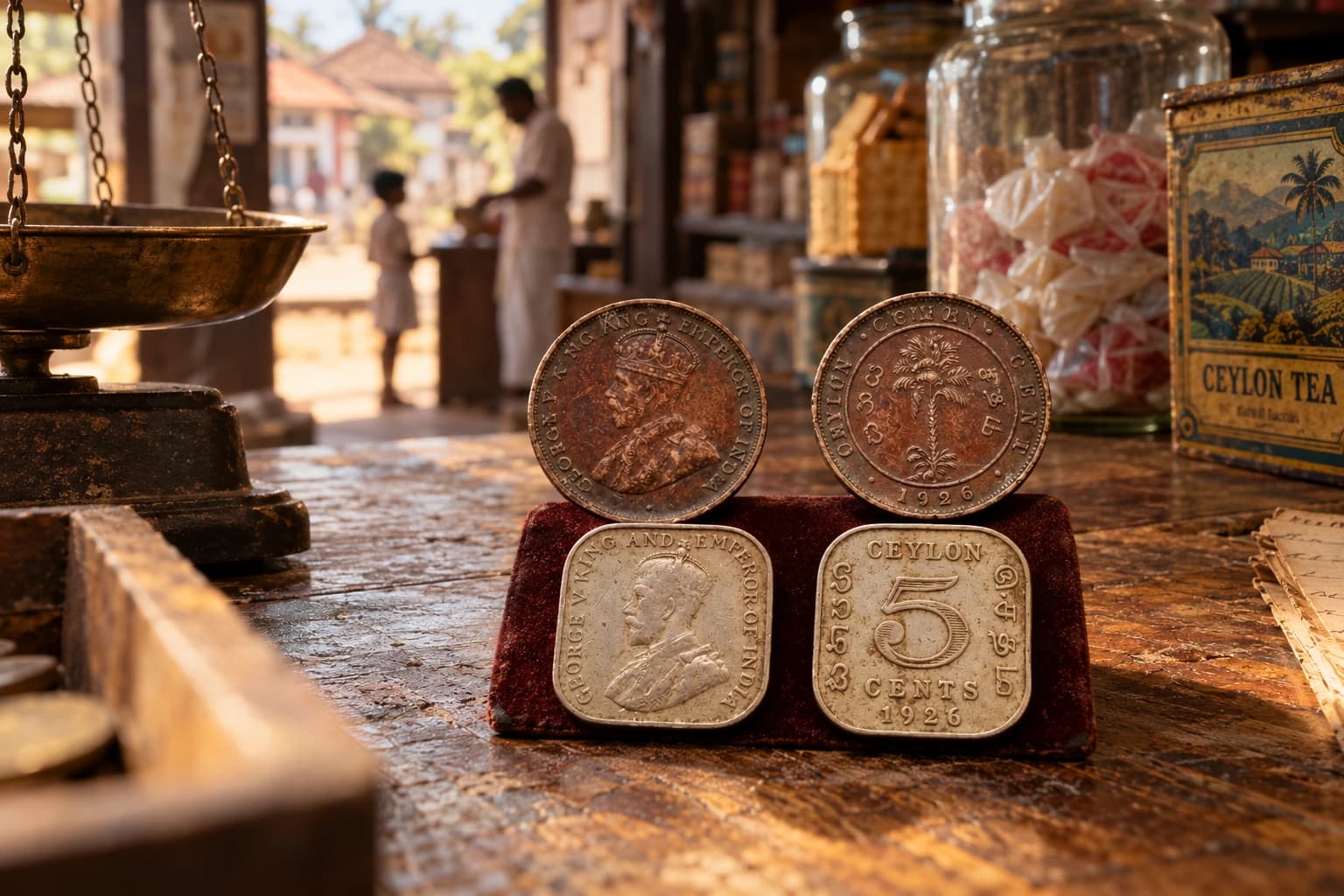
When Five Cents Mattered: The Forgotten Small Change of Old Ceylon