A Rare Film Moment in Ceylon
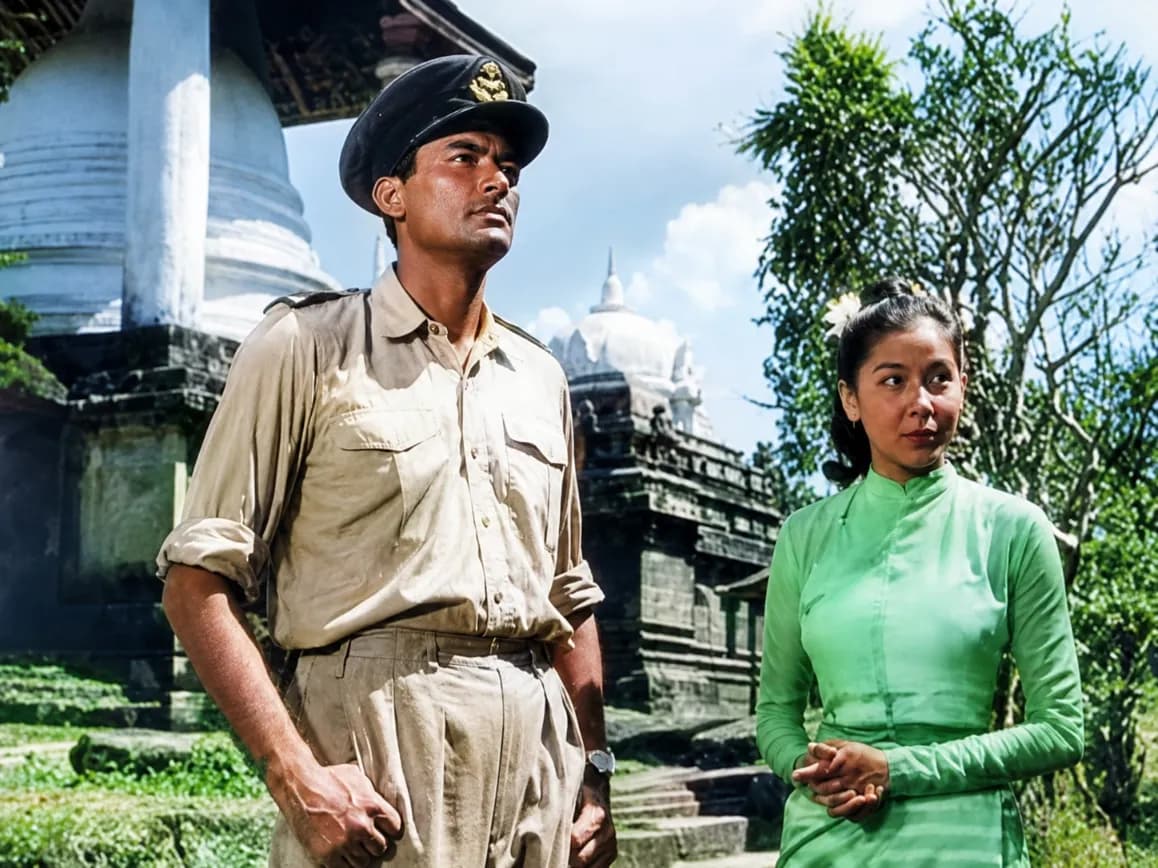
The image shows Gregory Peck at Gadaladeniya Temple, during the shooting of the 1954 film The Purple Plain. The caption identifies the scene as: “Gregory Peck at Gadaladeniya Temple shooting the 1954 film, The Purple Plain — Courtesy: The Sunday Times.”
For lovers of Old Ceylon, this photograph is more than a film still. It is a reminder of a time when Sri Lanka, then Ceylon, attracted major international film productions. Long before modern tourism campaigns, the island’s landscapes, ancient temples, colonial hotels, jungle roads, rivers and historic sites were already catching the attention of foreign filmmakers.
Here, one of Hollywood’s most admired actors stands before one of Sri Lanka’s historic Buddhist temples. The image brings together cinema, heritage, landscape and the global imagination of Ceylon in the 1950s.
The Purple Plain: A British War Film Shot in Ceylon
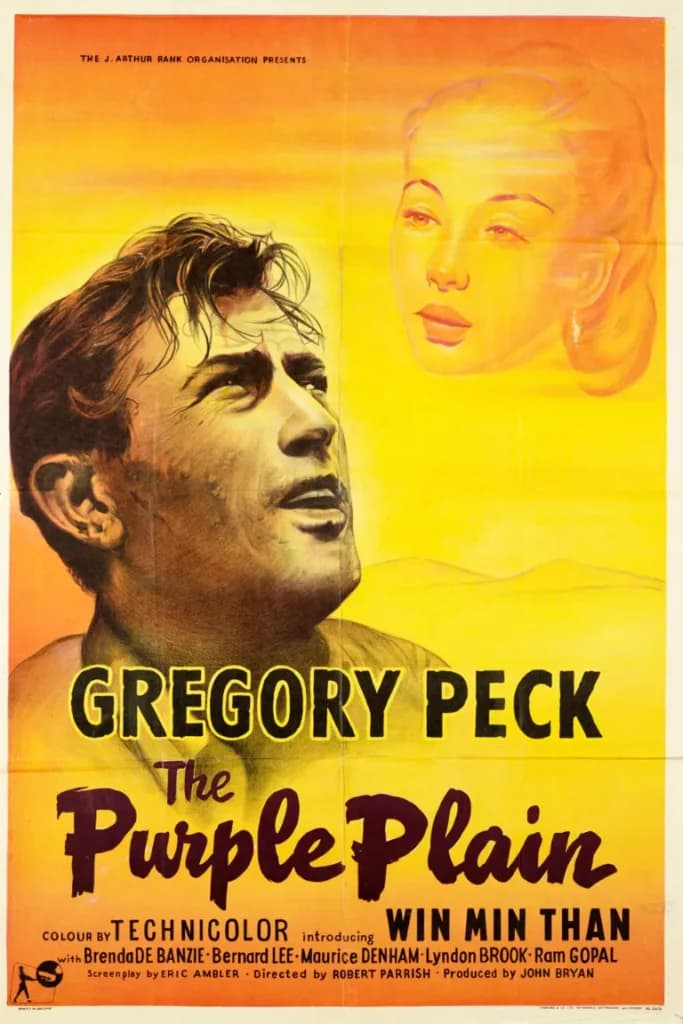
The Purple Plain was a 1954 British war drama directed by Robert Parrish and starring Gregory Peck as Squadron Leader Bill Forrester. The story is set during the Second World War, with Peck playing a troubled pilot serving in the Burma campaign.
Although the story was set mainly in Burma, many of the outdoor scenes were filmed in Ceylon. Sri Lanka’s varied landscapes gave the filmmakers the tropical forests, rocky plains, river scenes and temple settings they needed for the film.
The film also starred Win Min Than, a Burmese actress who played Anna. Her presence added an important Asian dimension to the story, while Peck brought international star power to the production.
For Ceylon, this was a significant moment. The island was not simply a scenic backdrop. It became part of the international cinema map.
Gregory Peck in Ceylon
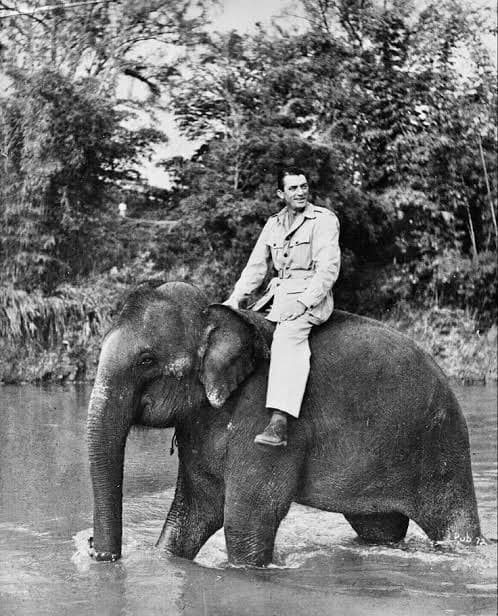
By the early 1950s, Gregory Peck was already a major Hollywood star. His presence in Ceylon would have attracted public attention wherever he went.
For local audiences and newspapers, the arrival of a star of his stature was exciting. It placed Ceylon briefly within the glamour of world cinema. Hotels, railway stations, film locations and old towns suddenly became connected to a global film production.
The photograph at Gadaladeniya Temple captures this unusual meeting between a Hollywood actor and a deeply historic Sri Lankan setting. Peck is shown in costume, wearing the look of a wartime officer or traveller, while the temple architecture rises behind him.
The contrast is striking. A Western film star stands within an ancient Sri Lankan sacred site, creating an image that belongs equally to film history and heritage memory.
Gadaladeniya Temple: A Historic Setting Near Kandy
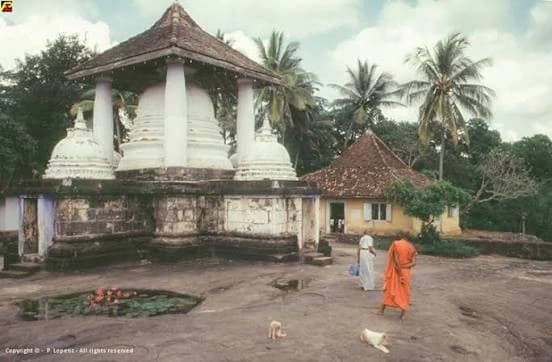
Gadaladeniya Temple, located at Pilimathalawa near Kandy, is one of the important medieval Buddhist temples of Sri Lanka. Built in the fourteenth century, it is known for its stone architecture, elevated position and distinctive South Indian-influenced design.
The temple is part of a remarkable heritage triangle near Kandy, often explored together with Lankatilaka Temple and Embekke Devalaya. These sites preserve some of the finest architecture and craftsmanship from the Gampola period.
Choosing Gadaladeniya as a film location gave The Purple Plain a strong visual quality. Its stone structure, sacred atmosphere and hill-country surroundings offered exactly the kind of timeless setting that international filmmakers often associated with Ceylon.
For modern travellers, the photograph adds another reason to visit. Gadaladeniya is not only a religious and architectural landmark. It is also connected to the story of classic cinema in Sri Lanka.
Ceylon as a Film Location in the 1950s
The 1950s were an important decade for foreign films shot in Ceylon. The island offered a rare combination of landscapes within a relatively small area: jungle, rivers, beaches, ancient ruins, hill country, colonial architecture and railway scenery.
This made Ceylon attractive to international filmmakers looking for tropical and Asian settings.
The Purple Plain was part of this wider moment. Around the same period, Ceylon was also connected to other major productions such as Elephant Walk and later The Bridge on the River Kwai. These films helped introduce Sri Lanka’s scenery to overseas cinema audiences.
For a newly independent country, this was a subtle but powerful form of global exposure. Even when Ceylon was standing in for Burma or another location, its landscapes were reaching cinema screens around the world.
Why Gadaladeniya Worked for the Film
The choice of Gadaladeniya Temple was visually powerful.
The temple has a strong architectural identity. Its stone walls, sculptural details and elevated setting make it look ancient, dignified and cinematic. It is not a plain background. It has presence.
In the image, the temple architecture frames the actors and gives the scene depth. The white and stone forms of the building contrast with the costumes and greenery. The result is a memorable composition.
For filmmakers, such locations offered authenticity and atmosphere. For viewers today, the image shows how Sri Lanka’s heritage sites entered the visual language of international cinema.
The Image as Old Ceylon Memory
This photograph is valuable because it preserves more than a movie moment.
It shows how Ceylon looked to foreign filmmakers in the 1950s. It shows the island as a place of ancient temples, tropical light and cinematic landscapes. It also captures a period when local heritage sites became part of global storytelling.
For Tripping Sri Lanka readers, this is exactly the kind of image that keeps Old Ceylon alive. It connects a famous Hollywood actor with a Sri Lankan temple, a British war film, and the wider story of Ceylon as a location for international cinema.
The photograph also reminds us that the island’s heritage is layered. A place like Gadaladeniya Temple belongs first to Sri Lanka’s religious and architectural history. But over time, it has also gathered other stories — travellers, photographers, scholars, filmmakers and visitors who saw it through different eyes.
The Purple Plain and Sri Lanka’s Cinema Trail
Today, Sri Lanka’s film-location history remains an underexplored part of heritage travel.
Travellers often visit places for ancient history, colonial architecture or natural beauty. But cinema adds another layer. It allows visitors to stand where famous films were made and imagine how directors, actors and crews transformed real landscapes into fictional worlds.
A cinema-inspired route could include:
- Gadaladeniya Temple near Kandy, linked to The Purple Plain
- Sigiriya, used in international film locations and one of Sri Lanka’s most iconic heritage sites
- Kitulgala, later famous for The Bridge on the River Kwai
- Mount Lavinia Hotel, connected to old colonial and film history
- Kandy and the central highlands, long admired for their atmosphere and scenery
Such a route would appeal to travellers interested in classic film, Old Ceylon, architecture and cultural history.
A Meeting of Temple, Star and Landscape
The power of this image lies in its unusual combination.
Gregory Peck represents mid-century Hollywood glamour. The Purple Plain represents British post-war cinema. Gadaladeniya Temple represents Sri Lanka’s medieval religious architecture. Ceylon represents a newly independent island whose landscapes were becoming visible to the world.
All of these stories meet in one photograph.
That is why the image deserves attention. It is not only a celebrity image. It is a cultural document.
It shows how global cinema briefly entered the quiet spaces of Sri Lanka’s old temple country.
Visiting Gadaladeniya Today
For travellers visiting Kandy, Gadaladeniya Temple is an excellent heritage stop.
It can be combined with nearby Lankatilaka Temple and Embekke Devalaya to form a rich half-day journey through the Gampola-period heritage landscape. The route offers stone architecture, wood carving, Buddhist and devale traditions, village roads and hill-country views.
Visitors interested in the Gregory Peck connection can look at the temple with an added layer of curiosity. Where might the film crew have stood? Which angles did they choose? How did the temple appear through a 1950s camera lens?
This is the beauty of heritage travel. A place becomes richer when we know the stories attached to it.
Final Thoughts: When Hollywood Found Ceylon
The photograph of Gregory Peck at Gadaladeniya Temple during the filming of The Purple Plain is a wonderful fragment of Old Ceylon’s film history.
It reminds us that Sri Lanka’s heritage sites have not only been places of worship, architecture and local memory. They have also been stages for international imagination.
In 1954, a Hollywood star stood before a centuries-old Sri Lankan temple, acting in a British war drama set far beyond the island. Yet the setting was unmistakably Ceylon.
Today, that image allows us to look again at Gadaladeniya — not only as a temple, but as a place where history, cinema and landscape briefly came together.
For travellers who enjoy Old Ceylon, classic film and hidden heritage stories, this is exactly the kind of moment worth remembering.
Visit Us: https://trippingsrilanka.com/stories
More from Old Ceylon
Colombo Public Library at 100: The Names That Still Remain
The Toll Gate at the Bridge: When Travelling Across Ceylon Cost a Few Cents at a Time