The Forgotten Cart Road to Helboda: A Road the Hill Country Almost Swallowed
A Road Without a Signboard
Helboda Cart Road – There are places in the hill country that are easy to miss because nobody has put up a board telling you to stop. You drive the old Kandy–Nuwara Eliya road watching the tea, the bends and the sudden waterfalls spilling down beside the highway. Somewhere around Helboda, however, another road slips away from the one we know today.
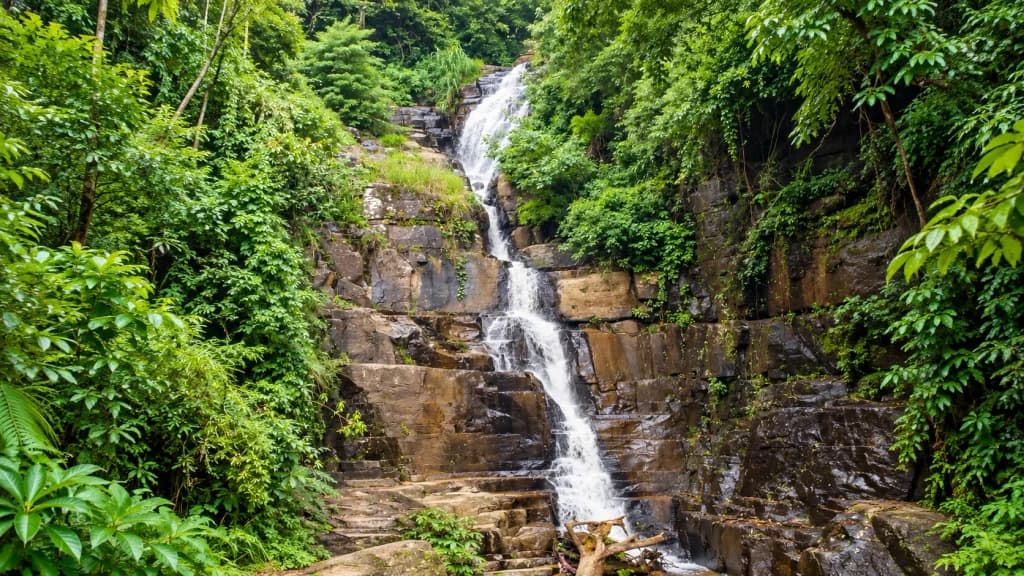
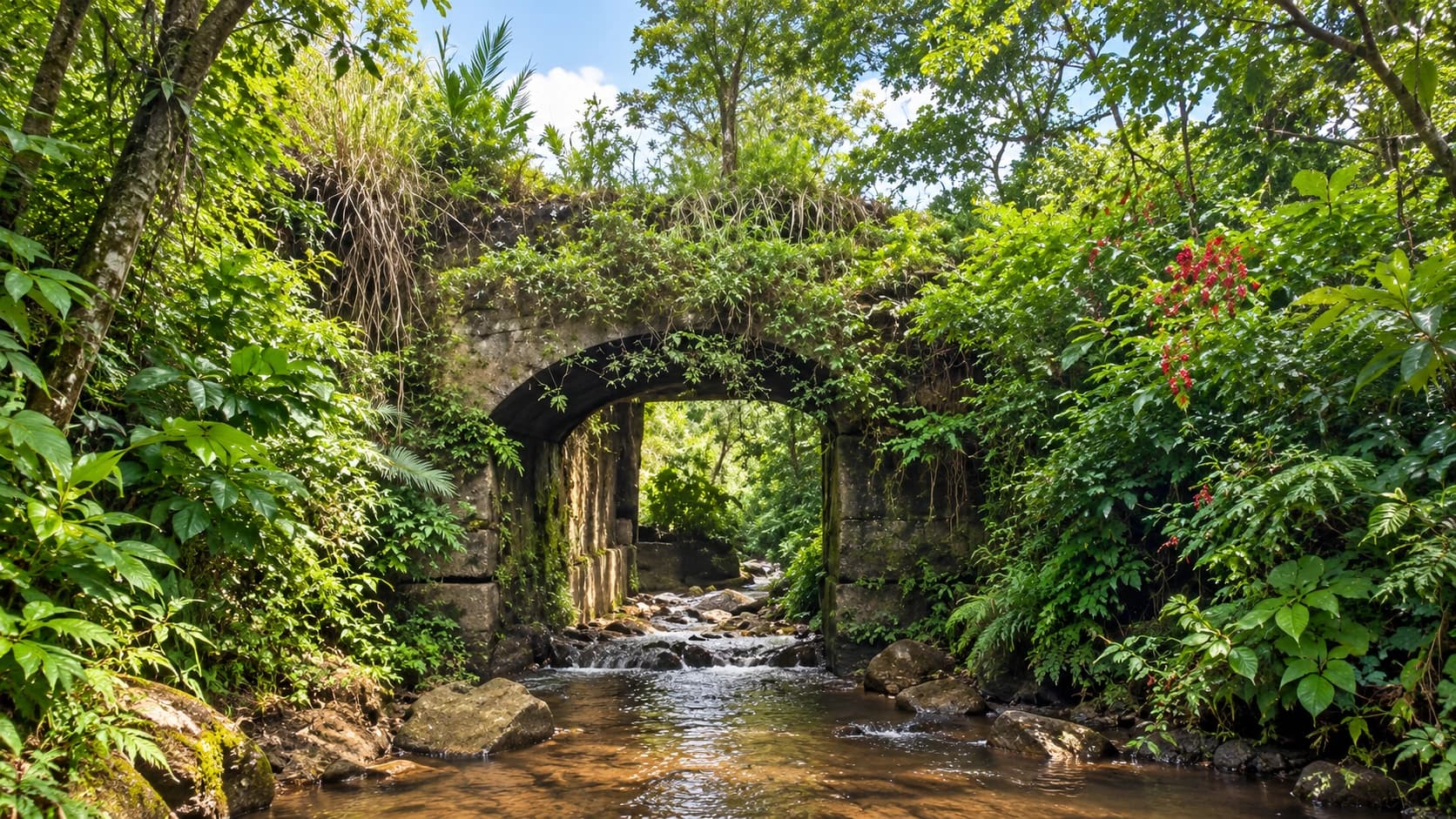
It is barely a road any longer. Vegetation has crept across it, moss has settled on the old masonry, and what appears to be a stone or masonry arch survives among the trees. It looks less like an entrance now than something the hillside is slowly taking back.
Local accounts describe this as an old cart route once used to reach Helboda Estate from the main Kandy–Nuwara Eliya road. If that memory is correct, this ordinary-looking piece of abandoned road is worth stopping for. Not because it is grand, but because it belongs to a part of plantation history that has almost disappeared.
Before the Estate Road Became a Scenic Drive
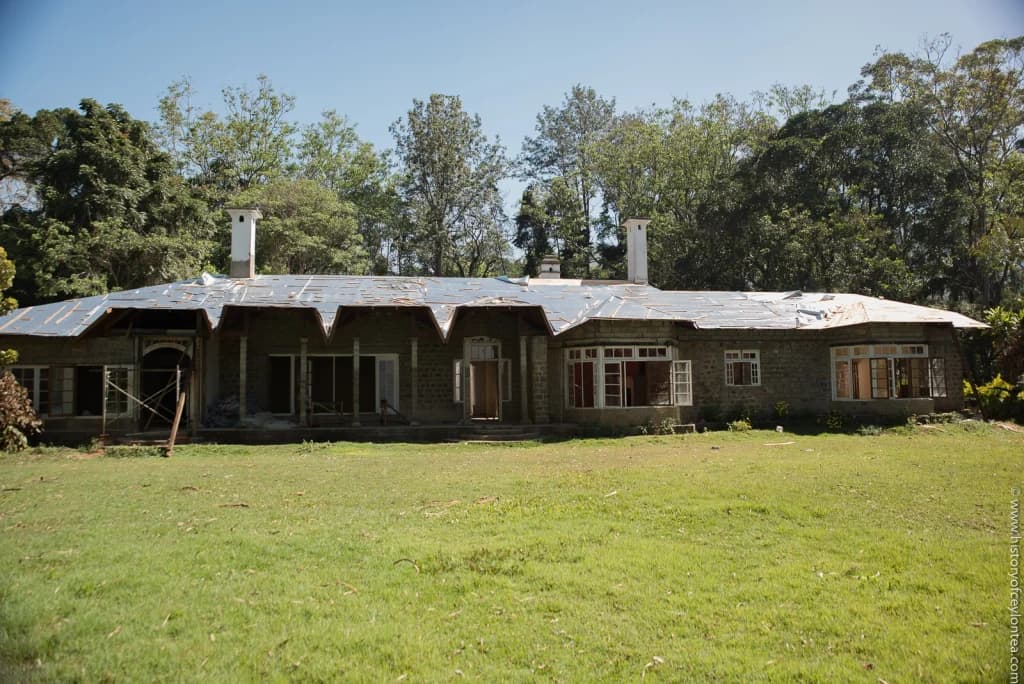
We tend to remember the tea country through its more romantic survivors: the planter’s bungalow, the tea factory, the fireplace, the old club and the railway curling around a mountainside. But an estate could not survive on scenery. Before lorries and modern estate vehicles, everything had to move somehow — produce coming down from the hills, provisions going up, machinery and building materials arriving, and people travelling between the estate and the larger roads.
During the nineteenth-century expansion of plantations, planters repeatedly needed branch roads linking estates in the central highlands with the main-road network. Some estate roads were constructed privately, while others became part of wider discussions about access, surveying and colonial infrastructure. These were not scenic routes in the beginning. They were practical lines of movement.
That makes the forgotten road at Helboda interesting for a reason quite different from the usual colonial-road story. It may represent the last mile of the plantation economy. The great road carried traffic across the country. The little road carried the estate’s world home.
Imagine Arriving Here 130 Years Ago
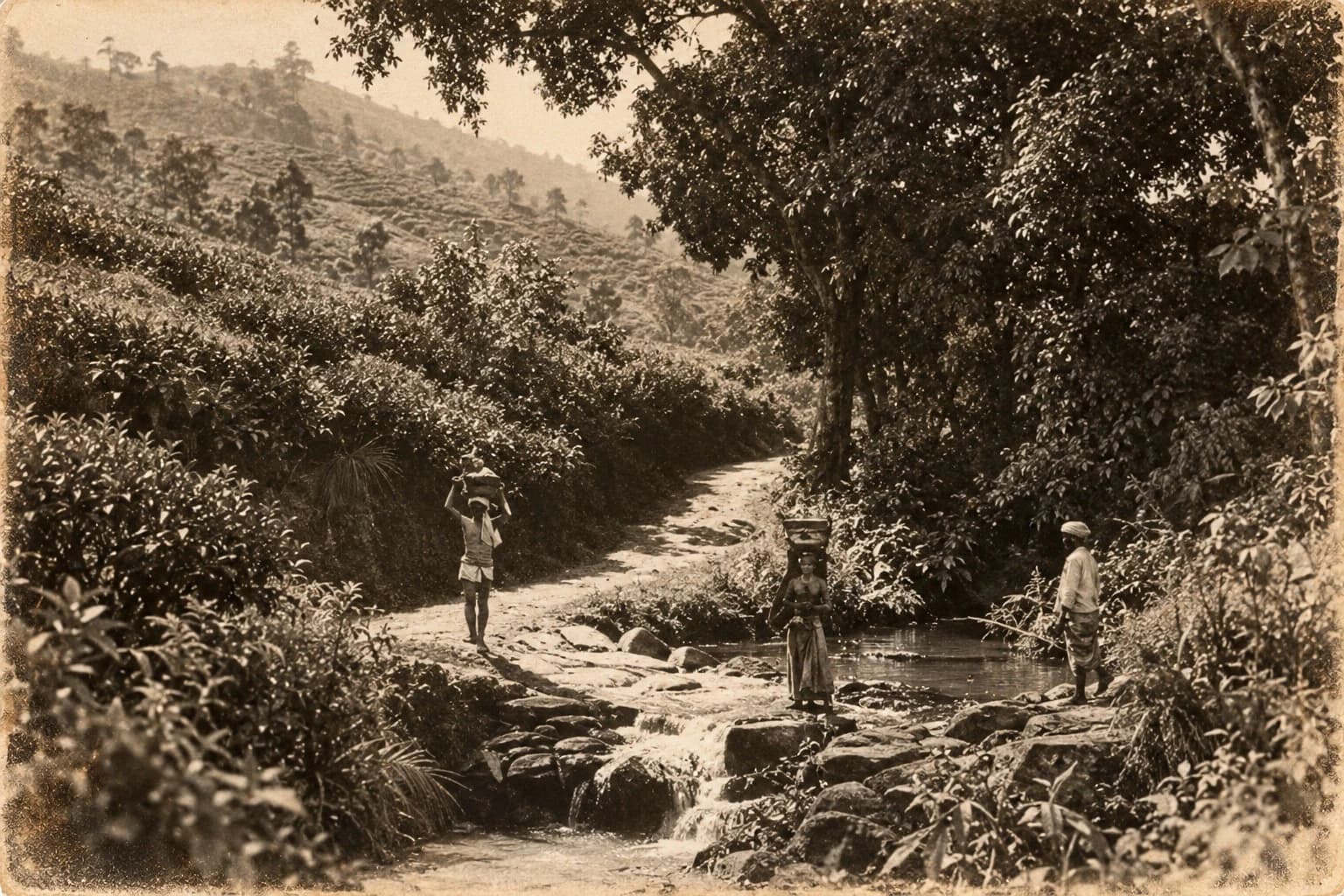
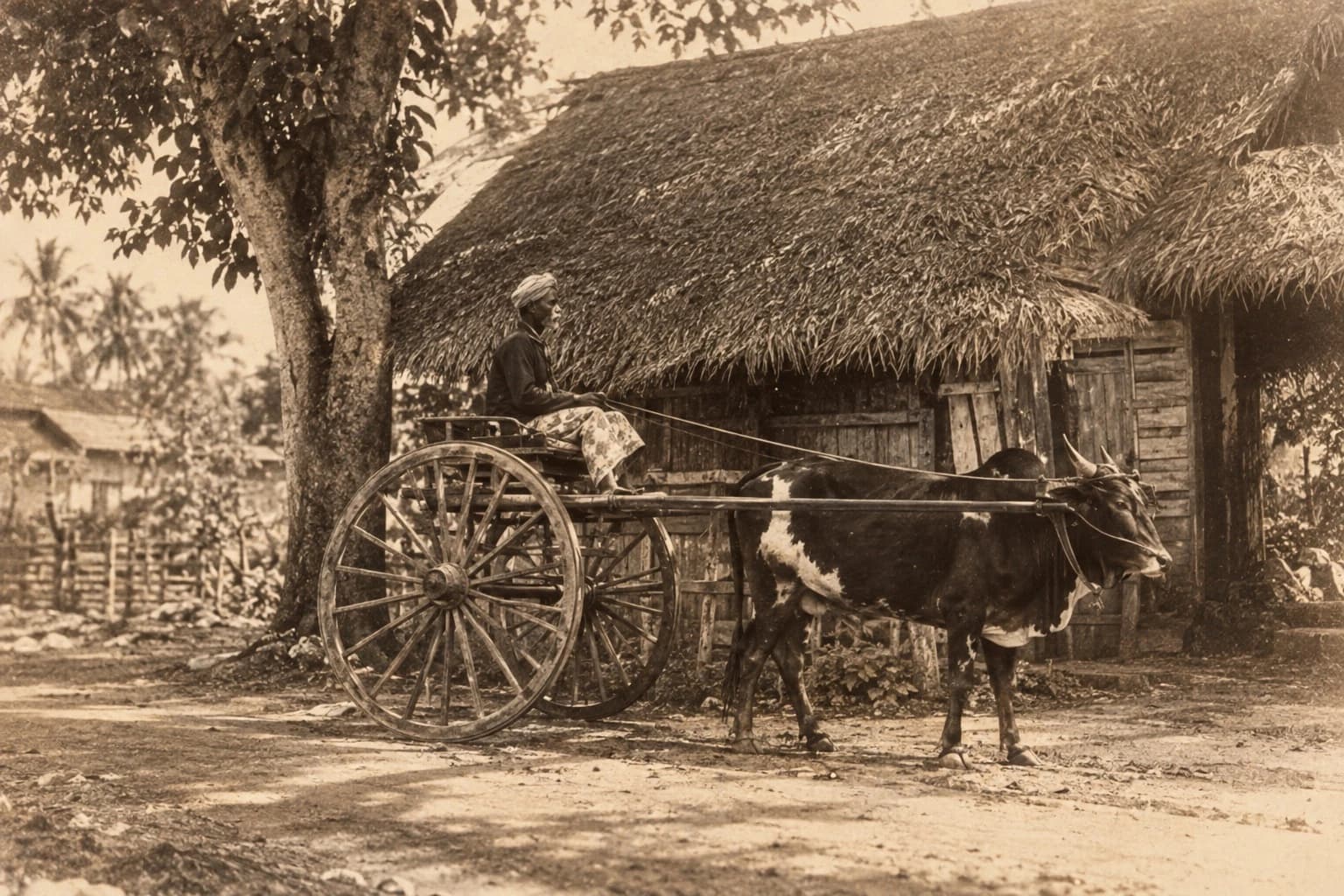
The landscape would have sounded very different 130 years ago. No buses grinding uphill, no motorcycles overtaking on the bends, no steady stream of vans heading towards Nuwara Eliya. Instead, there would have been the slow sound of carts, animals, men walking beside loads and the constant noise of water coming down the mountain.
A cart leaving the main road would have turned towards the estate and begun the climb. Progress would have been measured in bends rather than kilometres. In wet weather the surface would have become difficult. Wheels slipped, animals tired, and streams swollen by rain had to be crossed carefully.
This is why culverts, drains, retaining walls and small bridges mattered so much. A failed crossing could isolate an estate. A blocked drain could damage the road. A broken retaining wall could interrupt the movement of produce, supplies and people. Fragments such as the surviving structure at Helboda deserve a second look because they were not ornamental pieces of colonial engineering. They were working structures, and somebody once depended on them.
The Road Before Tea
There is another possibility worth remembering when exploring places like this. Not every old plantation road began with tea. Coffee had already transformed large areas of Ceylon’s central highlands before tea became the crop with which the country would become internationally associated.
After coffee leaf disease devastated the industry from the late 1860s onwards, many estates changed crops and eventually became part of the expanding tea economy. That means an old road serving a later tea estate may sometimes belong to an earlier plantation landscape. The estate name may have survived. The road may have survived. The crop did not.
Without estate plans, survey maps or contemporary records, it would be premature to put a precise date on the surviving Helboda route. But that uncertainty is exactly what makes places like this fascinating. Was the route first cut during the coffee years? Was it widened when tea expanded? Where did the carts actually go once they passed this point? Did the original road continue towards a factory, bungalow or estate store? How much of it is still there beneath the vegetation? Those questions turn a forgotten track into something close to archaeological evidence.
Helboda Was Never Really Isolated
Today, Helboda can feel like one of those places passed on the way to somewhere else. Yet geographically it sits on an important old highland corridor. The road between Gampola, Pussellawa and Nuwara Eliya climbs through country deeply shaped by the plantation economy. Helboda itself lies near waterfalls, estate lands and old hill-country routes that connected work, travel and trade.
This was not an empty mountain landscape suddenly interrupted by a tea estate. It became part of a network: main road, estate road, factory road, footpath, water crossing and bungalow track. Each connected one small part of the plantation world to another.
The railway receives much of the attention when we tell the story of Ceylon tea, and understandably so. But before a chest of produce could reach a railway station, it first had to leave the estate. That forgotten first journey often happened on roads like this.
When a Road Loses Its Purpose
Old buildings usually leave obvious ruins. Roads disappear differently. First fewer people use them. Then another route becomes easier. A bend is bypassed, a bridge is abandoned, and the drains stop being cleared. Grass appears down the centre, bushes reach in from both sides, and after a few decades the road begins looking as though it was never a road at all.
In the wet hill country, that process can be remarkably complete. Ferns cover retaining walls. Roots prise apart masonry. Moss softens hard edges. A carefully constructed piece of infrastructure slowly turns back into part of the hillside.
That appears to be happening at Helboda. Strangely, it makes the place more evocative. A perfectly restored colonial road would tell you what somebody wanted you to see. An abandoned one makes you look more carefully.
The Archive Beside the Road
There is another reason places like this should be documented now. Much of their history does not sit neatly inside a museum. It survives with people. An elderly resident may remember where the road once emerged. A shopkeeper may know what the old arch was called. Someone may remember carts using a route their parents spoke about. Another person may know where an estate building once stood, even though nothing remains there today.
It is easy to dismiss such accounts because they are oral history rather than documents. That would be a mistake. Oral memory must be checked against maps, directories, estate records and physical evidence where possible, but it often tells researchers where to start looking.
Once the people who remember these places are gone, a wall becomes simply a wall. A track becomes simply a track. An old arch in the vegetation becomes something motorists pass without ever wondering why it is there.
A Different Way to Explore the Tea Country
Perhaps we have been looking at the hill country in the wrong way. We travel from waterfall to viewpoint, from tea factory to bungalow, with each place treated as a separate attraction. The older landscape makes more sense when you connect them.
Follow the road. Notice where an estate track leaves it. Look for an old bridge below the modern one. Watch for stone-lined drains disappearing beneath weeds. Look beyond the tea bushes for retaining walls that seem to lead nowhere. Ask why a road takes an unnecessary bend. Ask the people who have lived beside it for decades.
This is not the spectacular heritage of Ceylon. It is the quieter kind. Helboda’s forgotten cart road may be exactly that: a surviving fragment of the enormous network of small roads that once kept the plantation country moving.
Old Ceylon Disappearing Into the Hillside
Thousands of travellers still pass through these hills. The old carts are gone. The people who drove them are gone. Much of the road itself may soon disappear. But beneath the moss and vegetation, the route has not quite surrendered yet.
For the traveller willing to leave the main road for a moment, Old Ceylon is sometimes still there. Not preserved behind a gate. Not labelled as a heritage attraction. Not polished for visitors. Just waiting quietly by the roadside, half-hidden by leaves, disappearing slowly into the hillside.
Visit Us: https://trippingsrilanka.com/