Colombo Fort Railway Station in 1981: When the City Dressed Up for a Royal Visit
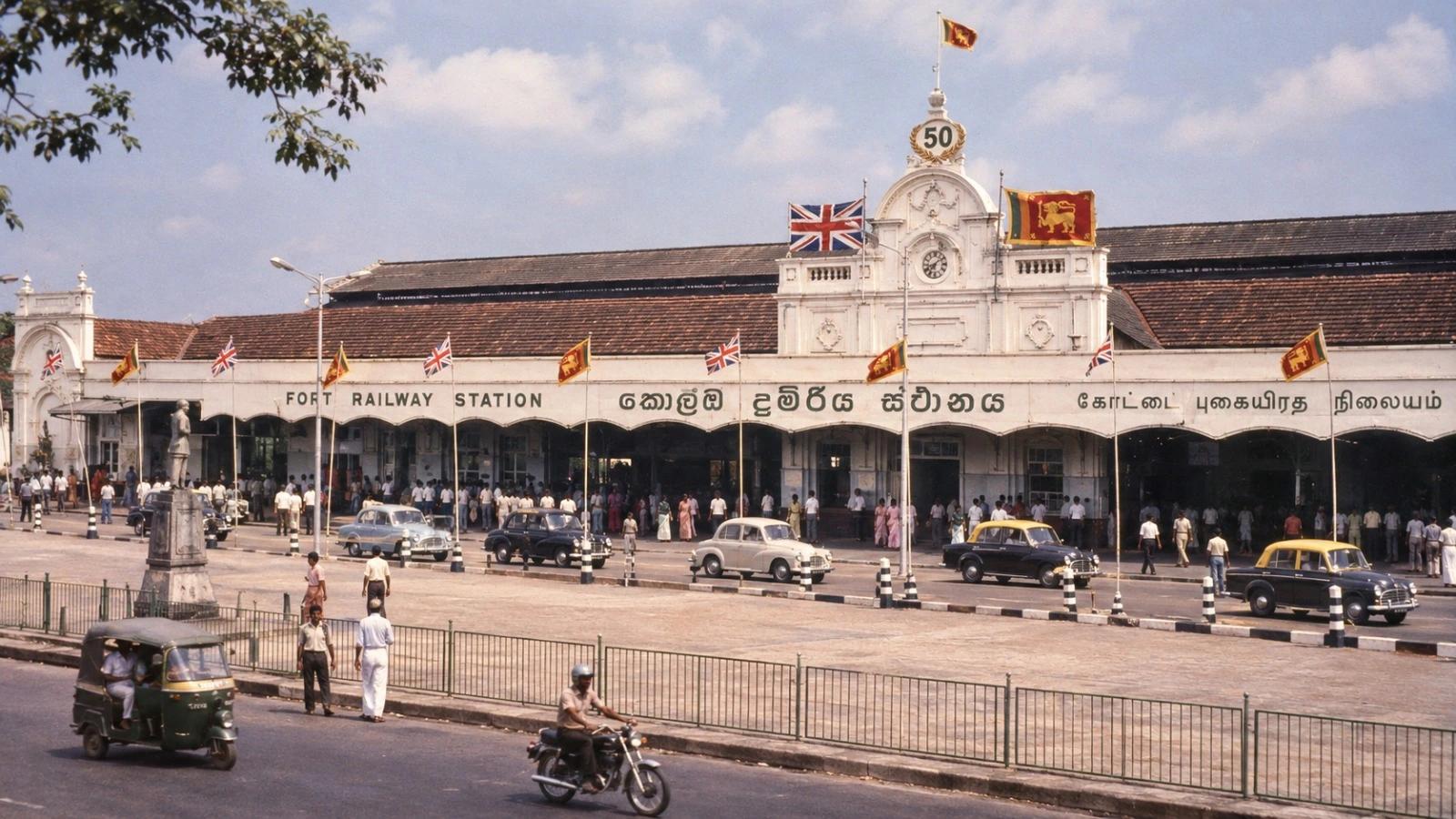
An old photograph of Colombo Fort Railway Station, decorated with British and Sri Lankan flags during Queen Elizabeth II’s visit in October 1981, brings back a Colombo of vintage cars, familiar railway journeys and a city preparing for a special occasion.
A Familiar Station in a Very Different Colombo
There is something about this old photograph of Colombo Fort Railway Station that makes you want to look at it a little longer. Perhaps it is the old cars parked outside, the three-wheelers that look so different from those we see today, or the station itself, looking remarkably familiar yet surrounded by a Colombo that has almost entirely disappeared. The year is 1981, and Fort Railway Station has been decorated for a special occasion.
British Union Jack flags flutter alongside Sri Lankan flags, while the grand old clock tower rises above the entrance with a large number 50 displayed at the top. Beneath it, the station’s name appears in Sinhala, Tamil and English. The decorations were part of the celebrations surrounding Queen Elizabeth II’s visit to Sri Lanka in October 1981, an event that attracted considerable public attention.
Yet what makes this photograph particularly interesting is not simply the royal occasion. It is everything else happening around the station. The vehicles, the people and the ordinary activity of the street bring back memories of Colombo as it was during the early 1980s, when the city was already busy but still very different from the capital we know today.
Visit us: https://trippingsrilanka.com/stories/colombo-tramways-history
The Colombo We Remember from the Early 1980s
Look closely at the road outside the station and the vehicles immediately catch the eye. There are Morris Minors and other old saloon cars, some painted black with contrasting roofs. A few brightly coloured vehicles stand out among them, while a three-wheeler waits near the pavement and a motorcyclist rides past in the foreground. The photograph captures an interesting mixture of vehicles belonging to different generations of motoring in Sri Lanka.
People are going about their ordinary business. Some stand outside the station, perhaps waiting for passengers or preparing to begin their journeys, while others cross the road or walk along the pavement. There are no mobile phones, ride-hailing apps or digital advertising screens competing for attention. Travellers relied on familiar meeting places, railway timetables and arrangements made before leaving home.
For anyone who remembers Colombo during the 1970s and 1980s, there is something especially recognisable about this scene. The cars, the roadside railings and the open space in front of the station belong to a period that is still within living memory. Many people who travelled through Fort Railway Station in those years would recognise the surroundings, even if they had forgotten the particular occasion for which the building had been decorated.
When Fort Railway Station Was a Meeting Place
Fort Railway Station was much more than a place where passengers boarded trains. For generations, it was one of Colombo’s principal meeting places, where families waited for relatives, travellers arrived from distant towns and people began journeys that might take them across much of the island. The station was an important part of everyday life for commuters as well as those travelling longer distances.
Someone arriving from Kandy might find a relative waiting near the entrance. Families returning from Galle or journeys to the north would emerge carrying suitcases and parcels, looking for transport to take them home. Porters helped with luggage, while people outside the station waited for friends or searched for buses and taxis.
There were also the goodbyes that took place before departures. Parents saw children off, relatives gathered around luggage and passengers made their way towards the platforms with instructions and reminders still being exchanged. These were ordinary scenes repeated every day, but they became part of the memories people carried of travelling through Colombo.
The station’s familiar frontage was the background to all of this activity. Its clock tower, arches and distinctive architecture made it one of the city’s most recognisable buildings. Even as Colombo changed around it, the station remained an important landmark for generations of railway passengers.
The Royal Visit of October 1981
Queen Elizabeth II and Prince Philip visited Sri Lanka from 21 to 25 October 1981, returning more than two decades after their first royal tour of Ceylon in 1954. By the time of the second visit, the country had undergone considerable political and social change. It was now the Republic of Sri Lanka, and the royal visit took place within a very different relationship between the two countries.
The visit coincided with celebrations marking 50 years since the introduction of universal adult franchise in 1931. That anniversary explains the prominent number 50 displayed above the station clock. The decoration connected the railway station with a national commemoration that extended beyond the royal visit itself.
The royal programme included celebrations at Galle Face Green, a visit to Anuradhapura and a journey associated with the Victoria Dam project, which was then under construction. The Queen also travelled aboard a specially prepared railway carriage, bringing the country’s railway system into the programme of the visit.
For several days, Colombo took on a festive appearance. Flags were displayed along prominent streets, public buildings were decorated and the royal visit became a subject of public interest. Fort Railway Station, with its prominent position in the centre of the capital and its historic architecture, was among the landmarks that reflected the occasion.
The Old Cars Outside the Station
Although the flags and anniversary decorations explain why the photograph was taken, the vehicles parked outside are perhaps what make it most nostalgic. The Morris Minors, older saloon cars and three-wheelers belong to a period when Sri Lanka’s roads carried a wider mixture of ageing imported vehicles and newer models. Their shapes, colours and chrome details are very different from the vehicles that dominate Colombo today.
For those who grew up during the 1970s and 1980s, a Morris Minor was not necessarily a collector’s car or a carefully preserved vintage vehicle. It might simply have been the family car, a neighbour’s vehicle or one of the familiar sights along the road. Some had already been in use for decades, maintained and repaired so that they could continue serving their owners.
The three-wheeler visible near the pavement is another interesting detail. Although motorised three-wheelers are now among the most familiar vehicles in Sri Lanka, the machines seen in older photographs often differ considerably from today’s models. Their presence reminds us that the familiar transport landscape of modern Colombo was already beginning to take shape in the early 1980s.
The motorcyclist passing in the foreground adds to the ordinary character of the scene. While the station was decorated for an important occasion, the city’s daily traffic continued around it. People still needed to get to work, collect passengers and attend to their usual errands.
The Small Details That Bring Back 1981
The most interesting things about old photographs are often the details the photographer never intended to preserve. In this picture, the black-and-white roadside posts, simple metal railings and broad open stretch in front of the station are just as revealing as the decorations. Small groups of people stand beneath the arches, while the station building remains clearly visible across the road.
There is a certain openness to the frontage that feels different from the surroundings of present-day Colombo. The building occupies the background without being obscured by the dense movement of modern traffic. Its familiar architectural features stand out, and the clock tower remains the most prominent element of the composition.
For someone who knew Colombo in 1981, these details might bring back memories of journeys that had nothing to do with a royal visit. Perhaps it was a regular commute into Fort, a train journey to visit relatives or an afternoon spent waiting outside the station for someone to arrive. The photograph captures a particular celebration, but it also preserves the surroundings in which thousands of ordinary journeys took place.
That is why photographs like this can become more meaningful with time. A flag or a decoration may help establish the historical occasion, but the familiar vehicles and everyday street life often bring back the strongest memories.
Fort Railway Station, Forty-Five Years Later
Forty-five years have passed since this photograph was taken. Queen Elizabeth II died in September 2022, and the cars that once lined the station frontage have largely disappeared from everyday use. Colombo has grown considerably, with changes to its roads, buildings, transport services and commercial life.
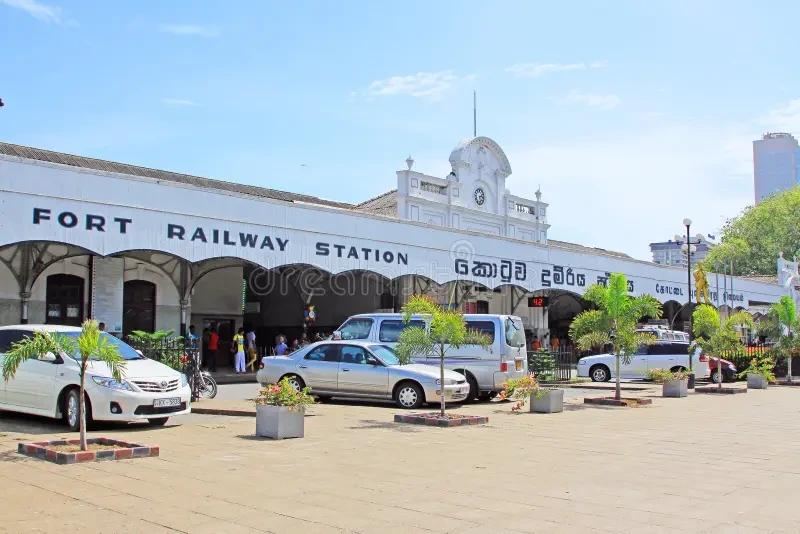
Yet Fort Railway Station continues to welcome passengers, much as it did in 1981. Its clock tower and distinctive architectural features remain familiar to travellers entering the city. People still arrive carrying luggage, wait for relatives and make their way towards trains bound for destinations across Sri Lanka.
There is something reassuring about that continuity. The surroundings have changed, and the people using the station belong to different generations, but its importance as a railway landmark remains. For those who remember travelling through Fort in earlier decades, the building itself provides a connection between the Colombo they knew and the city that exists today.
The people in the photograph could hardly have imagined that their ordinary journeys would attract the curiosity of strangers decades later. Some may have been returning home after work, while others might have been arriving in Colombo for the first time. Perhaps someone standing outside the station that day still remembers the flags, the excitement surrounding the royal visit or the unusual decorations above the clock.
A Single Photograph of Colombo in 1981
There is much that this photograph cannot tell us. We do not know the identities of the people outside the station or what brought each of them there. We cannot tell whether the photograph was taken during the royal visit itself or in the period immediately surrounding the celebrations. What we can see is a city that was marking a national occasion while continuing with its everyday life.
For those who knew Colombo in the early 1980s, the image may bring back familiar cars, the station frontage and memories of waiting for trains or meeting arriving passengers. For younger generations, it offers a glimpse of the capital before much of its modern development had taken place.
The royal decorations give the photograph its date and historical setting, but the ordinary details give it its appeal. The station, the vehicles and the people moving through the street capture a Colombo that many still remember, even though much of it has changed.
For the people standing outside Fort Railway Station in 1981, it was simply another day in the city, made a little more unusual by the flags and celebrations.For us, forty-five years later, it is a photograph of a Colombo we can no longer quite return to.And sometimes, a single old photograph is enough to bring back an entire period of our lives.
Visit us: https://trippingsrilanka.com/stories