The Grandeur and the Gloom: A History of Adisham and the Uva Highlands
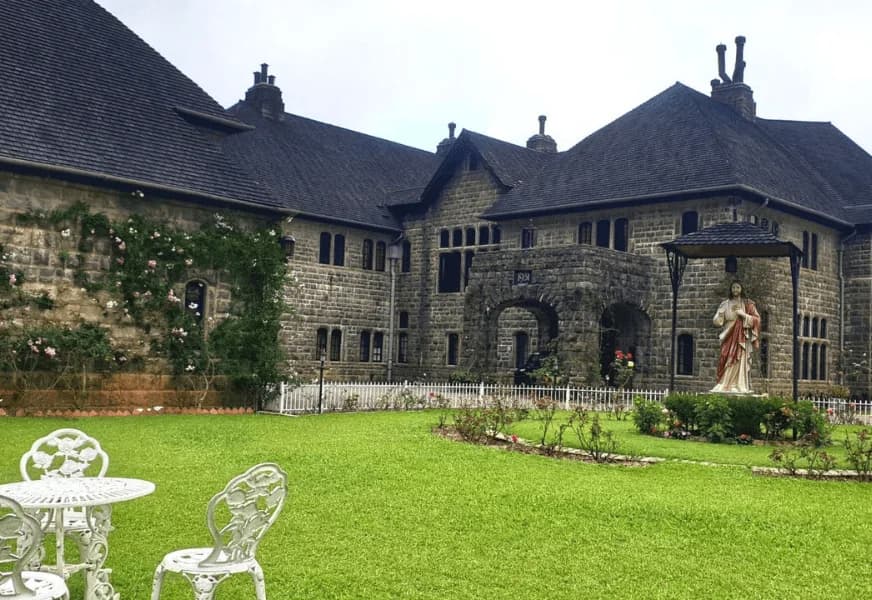
High above the misty valleys of Haputale, where the Uva highlands roll into blue-green distance, stands one of Sri Lanka’s most atmospheric colonial landmarks: Adisham Bungalow. At first glance, it appears almost unreal — a stone mansion with Tudor lines, manicured gardens, cool mountain air and an unmistakably English silhouette. Yet behind its quiet beauty lies a far more complex story.
Adisham is not merely an old bungalow. It is a place where colonial ambition, personal longing, political scandal and spiritual stillness have all left their mark. From the dream home of a powerful British planter to its later life as St. Benedict’s Monastery, Adisham remains one of the most evocative reminders of how Sri Lanka’s hill country carries both grandeur and gloom within its landscape.
Sir Thomas Villiers: From Young Planter to Colonial Power Figure
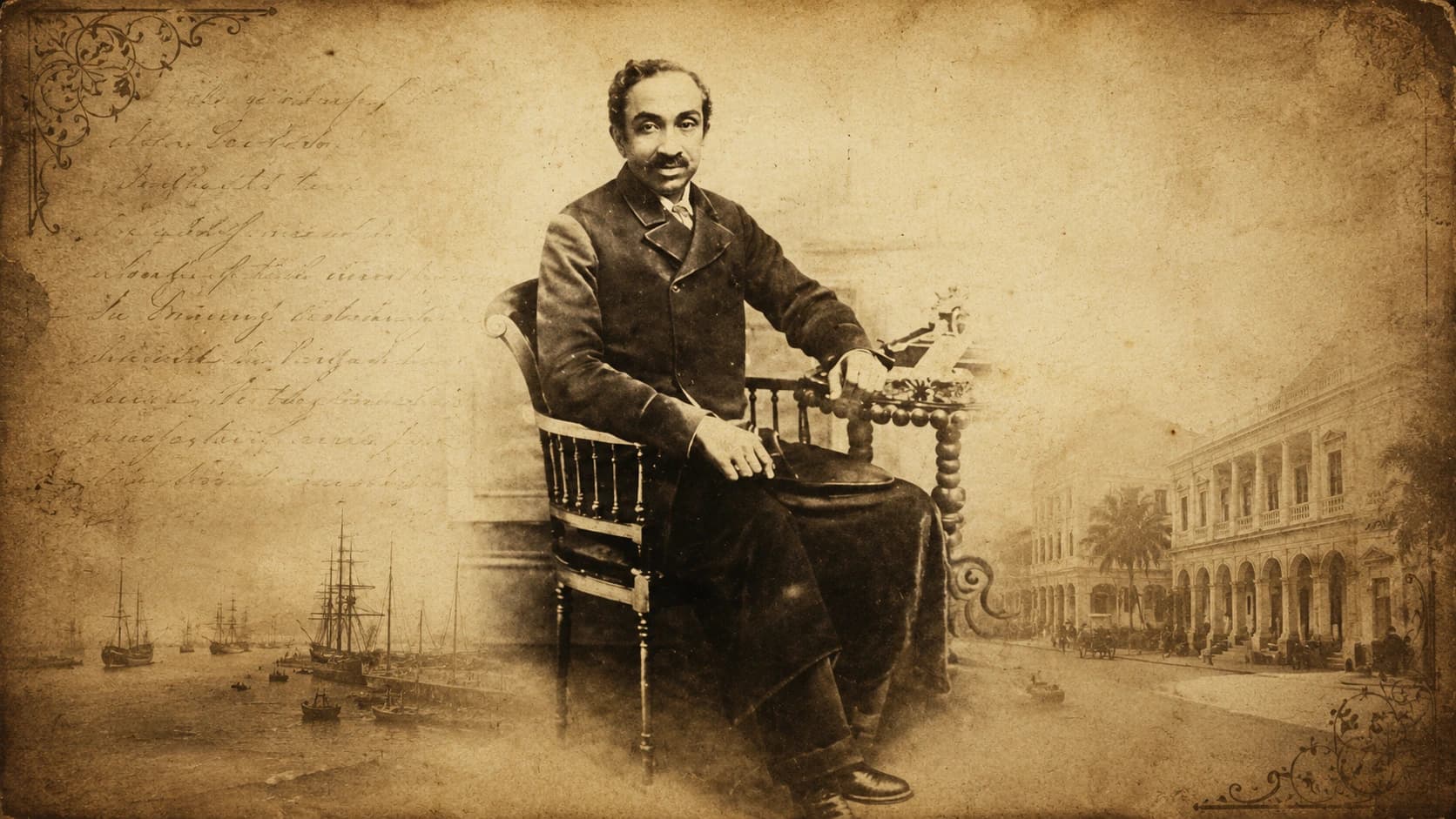
The story of Adisham begins with Sir Thomas Lister Villiers, one of the notable figures of British-era plantation society in Ceylon. Born in 1869, Villiers came from an English aristocratic background. He was connected to prominent British families, including the Russells, and arrived in Ceylon in 1887 as a young man seeking his fortune.
Like many British men who entered the plantation world, he began humbly. He first worked as a “creeper”, the term used for a trainee planter learning the harsh realities of estate life. Plantation Ceylon was not simply a romantic world of tea fields and bungalows. It was a demanding, hierarchical system built on commerce, land, labour and imperial power.
Villiers, however, rose quickly. Over the years, he became deeply involved in the commercial life of the island and eventually served as Chairman of George Steuart & Co., one of the most powerful sterling firms in colonial Ceylon. His influence was not limited to business. He also entered public life, serving as Councillor for the Fort Ward in the Colombo Municipal Council and later as a nominated member of the State Council of Ceylon.
By the early 20th century, Villiers had become part of the elite colonial establishment — wealthy, influential and deeply connected to the plantation economy. But like many British expatriates in Ceylon, he also carried with him a sense of homesickness. Adisham would become the physical expression of that longing.
A Piece of Kent in Haputale
Adisham Bungalow was completed in 1931 as Sir Thomas Villiers’ dream home. The name itself came from Adisham, the village in Kent where he was born. In the cool climate of Haputale, far from the heat and bustle of Colombo, Villiers attempted to recreate a memory of England.
The result was extraordinary.
Adisham was built as a stately stone mansion in Tudor and Jacobean styles, often described as being inspired by Leeds Castle. Its heavy stone walls, steep roofs, tall chimneys and carefully detailed interiors made it unlike anything else in the surrounding hills. It was not merely a residence; it was a statement of taste, wealth and imperial confidence.
No expense was spared in its construction. The doors, window frames and grand staircase were crafted from Burma teak. The rooms were furnished with colonial elegance. The library, one of the most admired parts of the house, reflected the intellectual and cultural world of its owner. Even today, visitors often feel that Adisham carries the atmosphere of another century, as though time has slowed within its walls.
The location was equally dramatic. Villiers acquired land at Tangamalai, meaning “Golden Hills”, a spectacular site near Haputale. At around 5,000 feet above sea level, Adisham commanded sweeping views of the Uva basin, stretching towards Welimada, Hakgala and the distant mountain ridges. The area was also part of a bird sanctuary, adding to the sense of seclusion and natural richness.
Adisham was therefore more than a house. It was a private world — a place where an Englishman in Ceylon tried to build a homeland within the highlands.
The End of an Era
The grandeur of Adisham belonged to a particular moment in history. It was built in the 1930s, when British influence in Ceylon was still strong but already approaching its final decades. By the time Sri Lanka gained independence in 1948, the political and social world that had created Adisham was beginning to disappear.
That same year, Sir Thomas Villiers left Ceylon. He sold Adisham “lock, stock and barrel” to Sedawatta Estates Ltd. It was a symbolic moment. A house built as a monument to colonial permanence had now passed into the hands of a local business family in an independent nation.
But Adisham’s next chapter would not be simple. Its ownership became linked, indirectly but memorably, to one of the darkest political episodes in post-independence Sri Lanka: the assassination of Prime Minister S.W.R.D. Bandaranaike in 1959.
The Shadow of the Bandaranaike Assassination
The serenity of Adisham’s gardens stands in sharp contrast to the political turmoil that gripped Ceylon in the late 1950s. The assassination of Prime Minister Bandaranaike was not merely the killing of a national leader. It exposed deep tensions within the young post-colonial state — tensions involving religion, commerce, political patronage and personal ambition.
One of the central figures in the conspiracy was Mapitigama Buddharakkitha Thero, the powerful Chief Incumbent of Kelaniya Temple. He was politically influential and closely connected to circles of power. The prosecution’s case linked the assassination to commercial disputes and frustrations over shipping and rice contracts. Talduwe Somarama Thero, the monk who shot Bandaranaike, carried out the killing, while Buddharakkitha was later convicted and sentenced to life imprisonment.
Wimala Wijewardene, the heiress associated with Sedawatta Estates Ltd. and Sri Lanka’s first female cabinet minister, was also drawn into the scandal. She had served as Minister of Health and was a prominent political figure of the time. In November 1959, she was arrested on suspicion of conspiracy. The prosecution alleged that meetings connected to the assassination plot had taken place at her residences, including in Colombo and Haputale.
Wijewardene was eventually acquitted due to lack of direct evidence. Yet the damage to her public life was irreversible. The scandal effectively ended her political career.
This is where Adisham’s history takes on a darker tone. The bungalow, once built as a symbol of colonial refinement, became part of the background to a period of suspicion, accusation and national trauma. Reports have long linked the later sale of the property to the legal costs arising from that high-profile murder trial. Whether viewed as direct history or historical shadow, the connection adds a sombre layer to Adisham’s story.
From Colonial Residence to Benedictine Monastery
In 1961, Adisham entered its most profound transformation. The Sylvestro-Benedictine monks of the Roman Catholic Church purchased the property for Rs. 100,000. The monastic community later moved from Ampitiya to Haputale, and Adisham was consecrated as a monastery on 8 December 1962.
This transition changed the spirit of the place entirely.
What had once been a private colonial mansion became St. Benedict’s Monastery, a house of prayer, silence and disciplined labour. The grandeur remained, but its meaning shifted. The rooms that had once reflected imperial privilege now became part of a contemplative religious setting.
The Benedictine monks, often referred to as the “Black Monks” because of their dark habits, preserved much of the bungalow’s original character. Villiers’ library, furniture and living quarters were carefully maintained. This is one reason Adisham feels so authentic today. It has not been stripped of its past or turned into a hollow tourist attraction. Instead, it survives as a living place — part heritage site, part monastery, part memory.
Ora et Labora: Prayer and Work in the Hills
The Benedictine motto, “Ora et Labora” — prayer and work — is central to life at Adisham. The monks follow a rhythm of devotion, labour and simplicity. In contrast to the political drama and colonial ambition that once surrounded the property, the monastery’s present life is quiet and grounded.
The gardens and orchards are part of that rhythm. Fresh milk, vegetables and fruit from the monastery grounds are part of Adisham’s continuing identity. The property’s guest facilities also reflect this atmosphere of retreat and reflection.
One of the most interesting details is the former quarters above the garage, once occupied by Bill Morrison, Villiers’ chauffeur and personal assistant. Morrison was associated with the yellow Daimler that served the household during its colonial years. Today, those quarters have been repurposed as a guest house, tying yet another thread of the bungalow’s past into its present life.
Adisham is therefore not frozen in time. It has changed, but carefully. Its layers remain visible.
Adisham and the Mood of the Uva Highlands
Part of Adisham’s power comes from its setting. Haputale has always had a different atmosphere from Sri Lanka’s coastal cities. The highlands are quieter, colder and more introspective. Mist moves through the trees. Tea estates run across the slopes. Mountain views appear and disappear within minutes.
In that landscape, Adisham feels perfectly placed. It is beautiful, but also slightly melancholic. The house seems to belong both to Sri Lanka and somewhere else. It carries the memory of Kent, the politics of colonial Ceylon, the trauma of post-independence power struggles and the peace of monastic life.
This is why Adisham continues to fascinate visitors. It is not simply admired for its architecture. It is remembered because it represents transition. It shows how one building can move from private ambition to public scandal, and finally to spiritual stillness.
A House of Many Histories
Adisham’s story is the story of Sri Lanka’s 20th century in miniature. It begins with the British plantation order, when men like Sir Thomas Villiers built fortunes and homes in the hills. It passes through independence, when old colonial structures gave way to new local power. It darkens in the late 1950s, when political violence shook the country. Then, unexpectedly, it finds peace through the Benedictine monks.
Today, when visitors walk through Adisham’s grounds, they are not merely seeing a beautiful old bungalow. They are entering a place where history has settled heavily but quietly. The stone walls, teak staircase, library shelves, gardens and mist-covered hills all hold fragments of different eras.
Adisham is grand, certainly. But it is also haunted by change. Its beauty lies not only in its architecture, but in the strange contrast between what it was, what it witnessed, and what it has become.
In the end, Adisham remains one of the most moving landmarks of the Uva highlands — a mansion born out of homesickness, touched by political darkness, and finally transformed into a sanctuary of prayer and silence.