A Forgotten Window Into Sri Lanka Before the Great Kingdoms
When most travellers think of Sri Lanka’s ancient past, they usually imagine the great cities of Anuradhapura, Polonnaruwa, Sigiriya and Dambulla. These places are famous for stupas, temples, palaces, cave paintings and royal monuments. But hidden close to the Dambulla region is another kind of ancient site — quieter, older in feeling, and deeply mysterious.
This is Ibbankatuwa, one of Sri Lanka’s most important megalithic burial grounds.
Located near Ibbankatuwa Wewa, close to Dambulla and Galewela, the site offers a rare look into the island’s protohistoric period — the time before Sri Lanka’s history was fully recorded in chronicles, inscriptions and royal monuments.
For Old Ceylon travellers, Ibbankatuwa is special because it takes us beyond kings and temples. It brings us closer to ordinary ancient communities: how they lived, how they honoured their dead, what objects they valued, and how early society was organised before the rise of the island’s great capitals.
Check our previous articles – https://trippingsrilanka.com/stories/kurunegala-sri-lanka
Where Is Ibbankatuwa?
Ibbankatuwa Megalithic Burial Site is located near the Kurunegala–Dambulla road, only a short distance from Dambulla town. This makes it easy to include in a wider heritage route covering Dambulla Cave Temple, Sigiriya, Anuradhapura, Polonnaruwa and Ritigala.
Despite its importance, Ibbankatuwa is often overlooked by travellers. Many pass nearby on their way to the more famous attractions without realising that one of Sri Lanka’s most valuable prehistoric and protohistoric sites lies close to the road.
That is part of its charm.
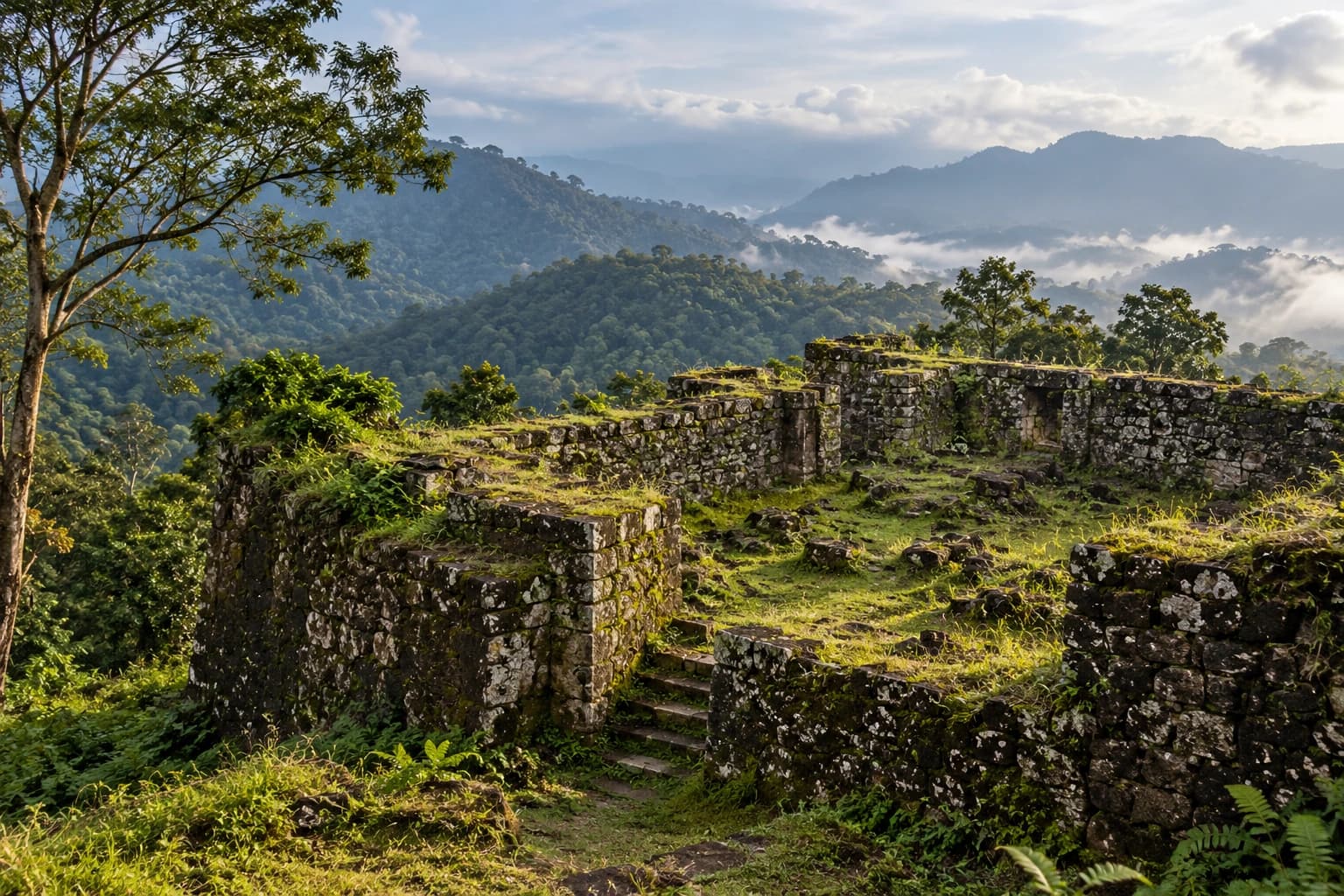
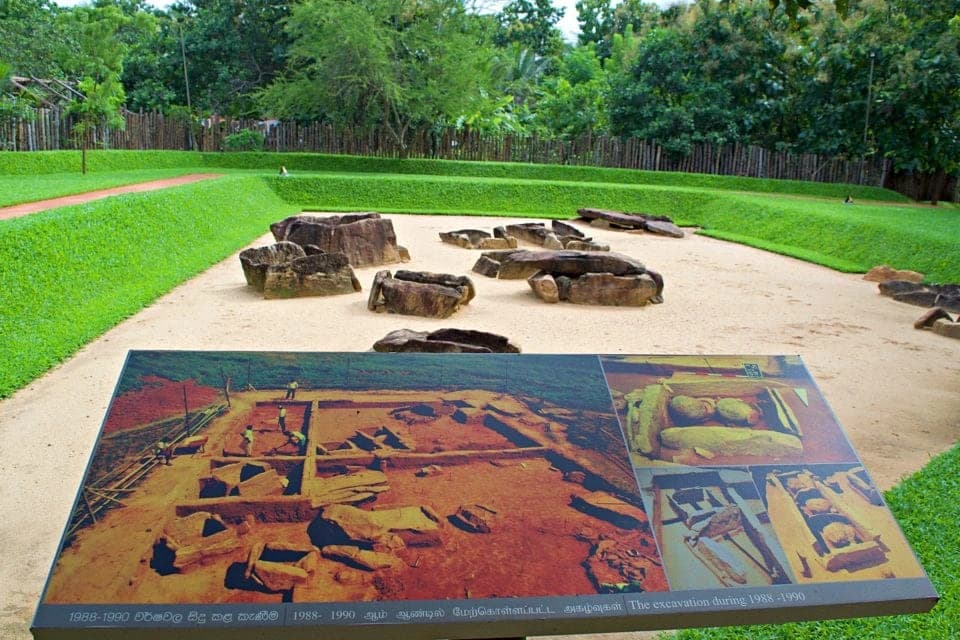
The site is not grand in the way Sigiriya is grand. It does not overwhelm visitors with height or scale. Instead, it invites careful observation. Low stone burial chambers, ancient urns and excavated tomb clusters create a different kind of heritage experience — one that feels intimate, silent and thought-provoking.
What Does “Megalithic” Mean?
The word megalithic comes from two Greek roots: “mega”, meaning large, and “lithos”, meaning stone. In archaeology, it refers to ancient structures built using large stones, often for burial, ritual or memorial purposes.
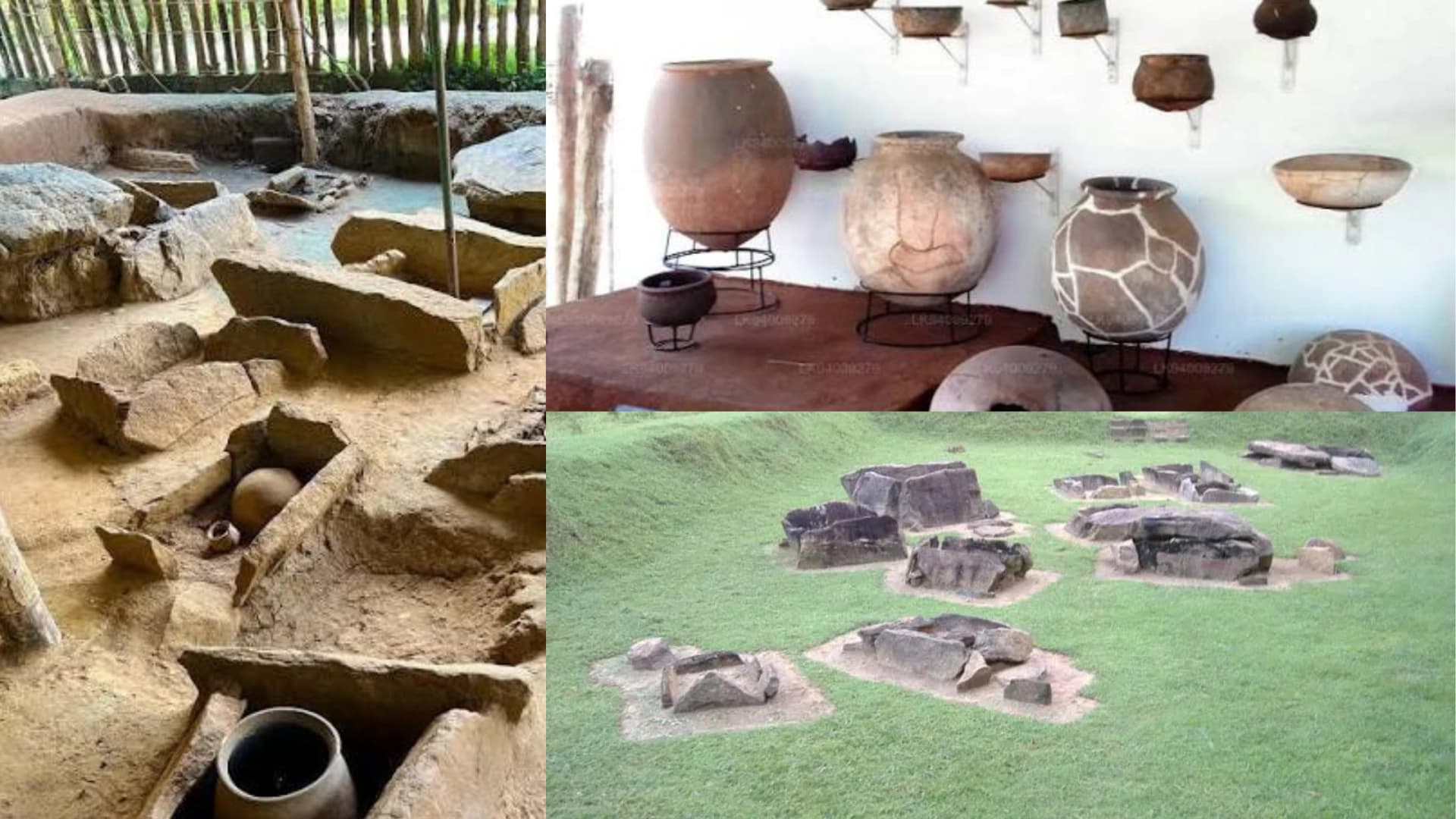
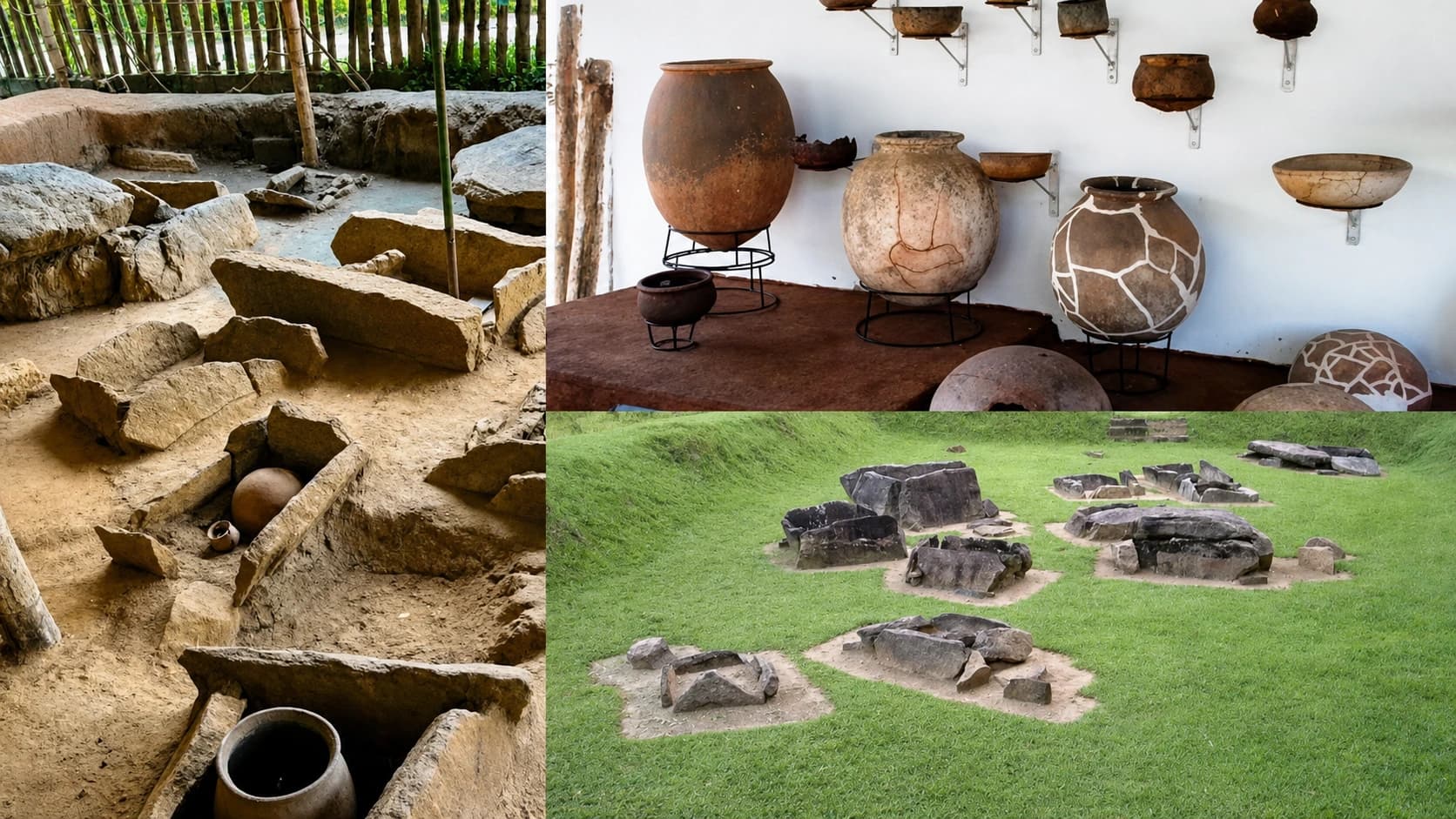
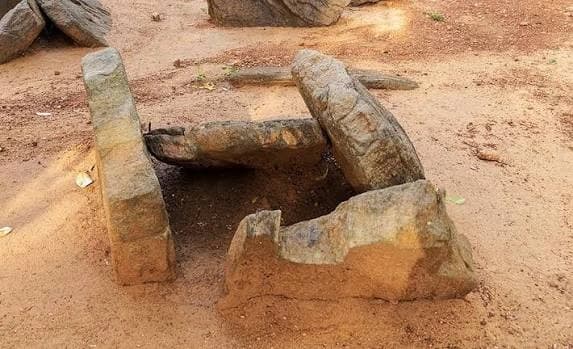
At Ibbankatuwa, the megalithic tradition is seen through stone-lined burial chambers, known as cist graves, and urn burials. These tombs were built using stone slabs, carefully arranged to create burial spaces for the dead.
This kind of burial culture is found in different parts of South Asia, especially during the early Iron Age and protohistoric period. In Sri Lanka, Ibbankatuwa is one of the clearest and most accessible examples of this tradition.
For travellers, the site helps answer an important question: what existed in Sri Lanka before the large stupas and royal cities?
Ibbankatuwa gives part of that answer.
The Age of Ibbankatuwa
Ibbankatuwa is commonly dated to the early first millennium BCE, with many references placing it around 700–400 BCE. This means the site belongs to a period more than two thousand years old and is linked to Sri Lanka’s early Iron Age and protohistoric communities.
That age makes Ibbankatuwa extremely important.
It shows that organised communities lived in this region long before many of the monumental structures that later made Sri Lanka famous. These communities had burial customs, social systems, craft traditions and possibly long-distance exchange links.
The site helps bridge the gap between prehistoric Sri Lanka and the early historic period of Anuradhapura.
In simple terms, Ibbankatuwa shows us the world before the written story became clear.
The Tombs: Stone Chambers of the Ancient Dead
The most visible features at Ibbankatuwa are the stone tombs.
Many of these tombs are built with stone slabs placed upright to form a box-like chamber. Another stone slab was often placed on top as a cover. These are known as cist burials.
Some tombs were arranged in clusters, suggesting organised burial zones rather than random graves. This tells us that the people who created Ibbankatuwa had structured beliefs about death, memory and community.
The tombs may appear simple at first. But their arrangement shows planning, labour and ritual care.
These were not careless burials. They were meaningful acts.
The people of Ibbankatuwa selected stone, shaped burial spaces, placed remains and objects inside, and marked the dead within a shared cemetery landscape.
Urn Burials and Ancient Funeral Customs
Ibbankatuwa is also associated with urn burials.
In this practice, human remains, ashes or burial material were placed inside large ceramic urns and buried. This suggests that different types of funerary customs were followed at the site.
The presence of both stone cist graves and urn burials is important because it shows variety in ancient burial practice. It may reflect differences in family groups, social identity, ritual method or changing customs over time.
For modern visitors, these burials create a strong sense of human connection. These were people with families, beliefs and memories. Their names are lost, but their burial customs remain.
That is what makes Ibbankatuwa so moving.
What Was Found at Ibbankatuwa?
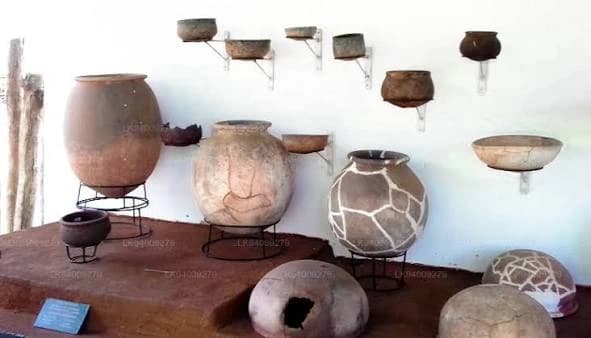
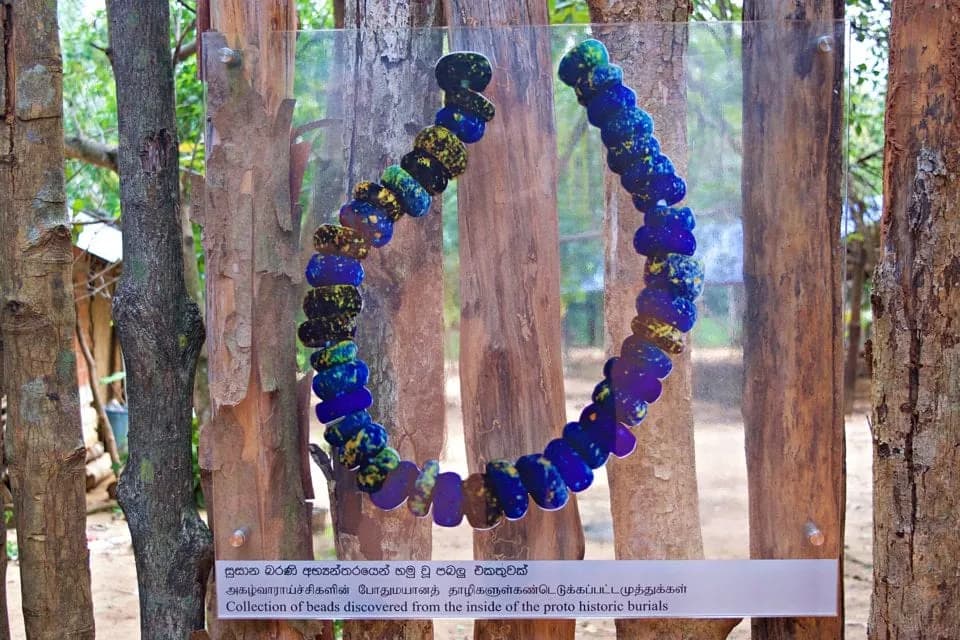
Excavations at Ibbankatuwa have revealed a range of artefacts linked to burial rituals and ancient life.
Findings include:
- Clay burial urns
- Stone-lined cist graves
- Pottery vessels
- Iron tools
- Beads
- Ornaments
- Ashes and bone remains
- Objects placed as grave goods
These artefacts suggest that the people buried here were not isolated or primitive in a simple sense. They had craft knowledge, ritual traditions and social organisation.
The beads are especially interesting. Archaeological museum references connected to Ibbankatuwa mention beads made from materials such as carnelian, agate, glass, clay and gold. Semi-precious stones such as carnelian and agate suggest wider exchange networks, because such materials may have been brought from outside the immediate region.
This makes Ibbankatuwa important not only as a burial ground, but also as evidence of early trade, craftsmanship and cultural contact.
The Beads of Ibbankatuwa: Signs of an Early Connected World
Among the most fascinating objects connected to Ibbankatuwa are the beads.
Beads may seem small, but archaeologically they can be extremely valuable. They can reveal taste, status, trade links, technology and identity. The presence of semi-precious materials suggests that the people of Ibbankatuwa were part of a wider network of exchange.
This matters because it challenges the idea that early communities in Sri Lanka were isolated.
Even before the great urban centres reached their height, people in the island were connected to materials, skills and ideas beyond their immediate settlements. Jewellery and personal ornaments were not only decorative. They may have expressed status, family identity, belief or social role.
A single bead can therefore tell a much larger story.
Ibbankatuwa and the Rise of Early Society in Sri Lanka
Ibbankatuwa is important because it helps us understand how early communities developed before the rise of Sri Lanka’s great kingdoms.
The site suggests that people in this region had:
- Organised burial grounds
- Ritual beliefs about death
- Knowledge of pottery and metal
- Access to ornaments and trade goods
- Social structures strong enough to organise cemetery spaces
- A settled relationship with the surrounding landscape
This makes Ibbankatuwa a key site for understanding the transition from prehistoric communities to more complex early societies.
It shows that Sri Lanka’s ancient civilisation did not appear suddenly with kings and cities. It grew out of earlier communities, technologies, beliefs and settlement patterns.
Why Ibbankatuwa Matters to Old Ceylon
For Old Ceylon storytelling, Ibbankatuwa has a unique place.
Old Ceylon is often associated with colonial buildings, tea estates, forts, churches, railways and old photographs. But the deeper story of Ceylon goes much further back. Ibbankatuwa reminds us that the island’s heritage is not only colonial or royal. It is also prehistoric, protohistoric and archaeological.
This burial ground reveals a Sri Lanka before written chronicles became dominant. It shows a society that honoured its dead, used stone and clay with care, and valued objects enough to place them in tombs.
In that sense, Ibbankatuwa is one of the oldest emotional landscapes of Sri Lanka.
It is a place where memory was built in stone.
A Different Experience from Dambulla and Sigiriya
Many travellers visit Dambulla and Sigiriya for dramatic experiences. Dambulla offers cave temples filled with murals and Buddha images. Sigiriya rises as a rock fortress with gardens, frescoes and royal legend.
Ibbankatuwa is different.
It is lower, quieter and more reflective. It does not show royal power. It shows human mortality.
That difference makes it valuable.
A traveller who visits Ibbankatuwa before or after Dambulla and Sigiriya gains a fuller understanding of Sri Lanka’s past. The site shows that before palaces, monasteries and kingdoms, there were communities building tombs, honouring ancestors and shaping cultural traditions.
This makes Ibbankatuwa an excellent stop for travellers who want more than the usual heritage route.
The Mystery of the People Buried There
One of the most powerful things about Ibbankatuwa is how little we know about the individuals buried there.
Their names are gone. Their languages, family stories and personal histories have disappeared. Yet their tombs remain.
This silence creates mystery.
Who were they? Farmers? Craft specialists? Local leaders? Traders? Families connected by clan or settlement? What did they believe happened after death? Why were certain objects placed in graves? Did the tomb clusters represent families, ranks or generations?
Archaeology can answer some questions, but not all.
That is why Ibbankatuwa remains mysterious. It gives us evidence, but also leaves space for wonder.
Visiting Ibbankatuwa Today
Today, Ibbankatuwa can be visited as an archaeological site near Dambulla. It is often included as a short stop, but it deserves more attention than a quick look.
Visitors should walk slowly and observe the layout of the tombs. Notice how the stone slabs form chambers. Look at the spacing between burial clusters. Imagine the effort needed to build these graves more than two thousand years ago.
Because this is an ancient burial ground, it should be treated with respect. Visitors should avoid stepping on fragile structures, touching artefacts unnecessarily or treating the site as only a photo stop.
Ibbankatuwa is not just an archaeological attraction. It is an ancient cemetery.
A Heritage Route Around Ibbankatuwa
Ibbankatuwa can be included in a rich cultural itinerary through Sri Lanka’s central and north-central heritage zone.
Nearby places to combine with Ibbankatuwa include:
- Dambulla Cave Temple
- Sigiriya Rock Fortress
- Pidurangala
- Ritigala Monastery
- Anuradhapura
- Polonnaruwa
- Nalanda Gedige
- Kandalama and Dambulla lake country
Together, these sites show different layers of Sri Lanka’s past: prehistoric burial, ancient Buddhism, royal architecture, forest monasteries, water civilisation and sacred art.
For heritage travellers, Ibbankatuwa adds depth to this route because it takes the story further back than most famous monuments.
Why Travellers Should Not Miss Ibbankatuwa
Ibbankatuwa is not the most photographed heritage site in Sri Lanka. It is not surrounded by dramatic cliffs or towering ruins. But it is one of the most thought-provoking.
Travellers should visit because:
- It is one of Sri Lanka’s key megalithic burial sites
- It reveals life before the great historic kingdoms
- It is close to Dambulla and easy to combine with major sites
- It shows ancient burial customs and social organisation
- It connects archaeology with human memory
- It offers a quiet, uncrowded heritage experience
- It deepens the story of Old Ceylon beyond colonial and royal history
For visitors who enjoy archaeology, Ibbankatuwa is a must-see. For travellers who enjoy atmosphere, it is unforgettable in a quiet way.
Final Thoughts: A Burial Ground That Still Speaks
Ibbankatuwa may seem silent, but it speaks through stone.
Its tombs tell us that people lived, died, remembered and honoured one another here more than two thousand years ago. Its pottery, beads, urns and stone chambers reveal a society with beliefs, skills and connections.
For Tripping Sri Lanka readers, Ibbankatuwa is exactly the kind of site that expands the meaning of Old Ceylon. It reminds us that the island’s story did not begin with colonial forts, tea estates or even the great capitals. It began much earlier — with communities whose names are lost, but whose burial grounds remain.
To walk through Ibbankatuwa is to stand at the edge of Sri Lanka’s earliest remembered world.
It is mysterious, quiet and deeply important.
And that is what makes it one of the island’s most remarkable ancient places.
Visit Us : https://trippingsrilanka.com/stories
Heritage places mentioned