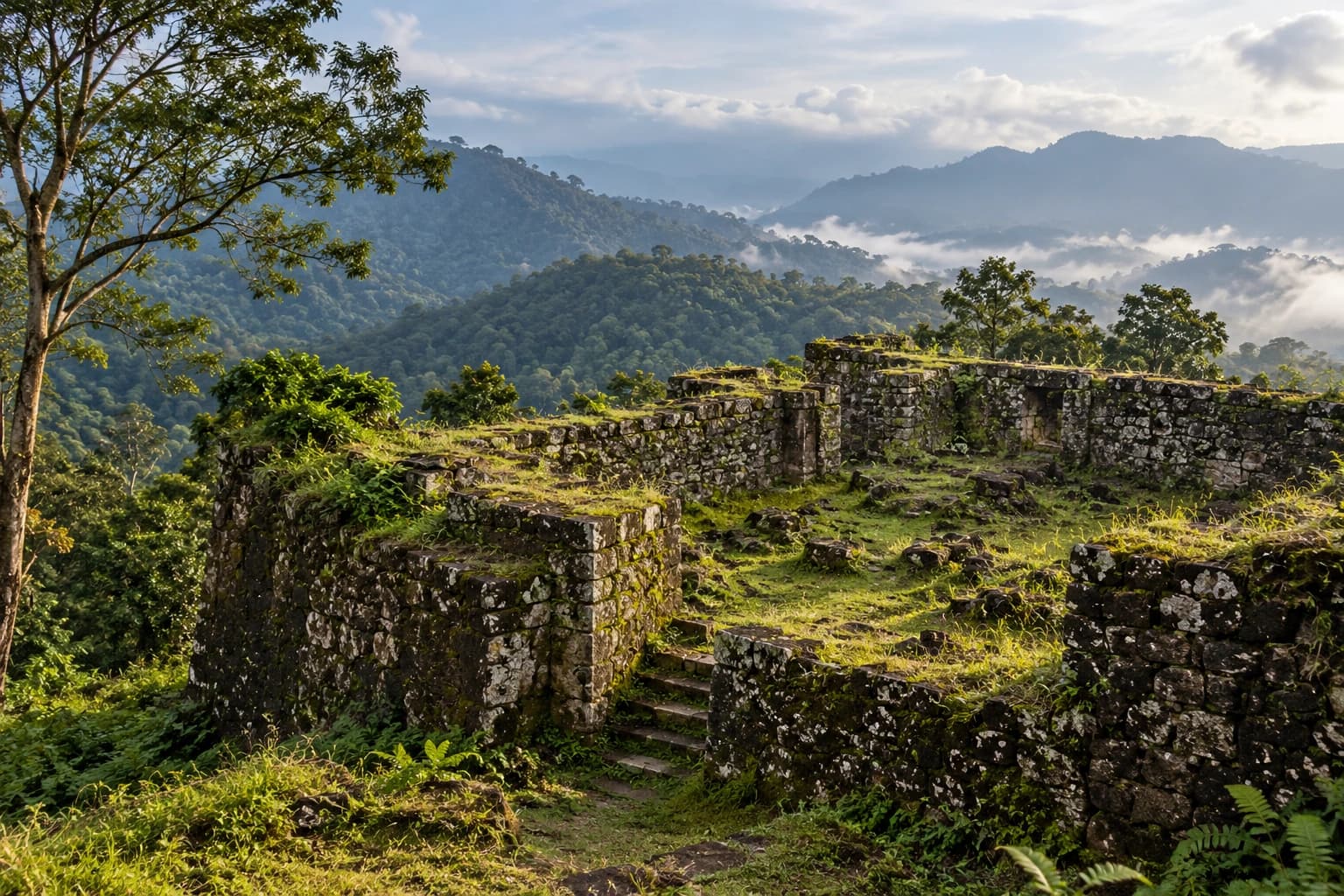
The Road That Opened the Mountains
Few places capture the drama of Old Ceylon’s mountain roads like the Kadugannawa Pass.
Located on the historic road between Colombo and Kandy, Kadugannawa is more than a scenic viewpoint. It is a place where geography, engineering, colonial ambition, Kandyan history and mountain travel come together.
For centuries, the Kandyan highlands were protected by difficult terrain. Steep slopes, thick forests, narrow paths and natural barriers made the approach to Kandy challenging. The climb through Kadugannawa became one of the most important gateways into the interior of the island.
Today, travellers often pass through Kadugannawa quickly on the A1 road. But this landscape deserves a slower look. It tells the story of how the old Kandyan kingdom was connected to the coast, how British engineers carved a modern road through the hills, and how Ceylon’s highlands became more accessible to traders, officials, pilgrims, planters and travellers.
Check our previous article – https://trippingsrilanka.com/stories/colonial-kandy-kingdom
Where Is the Kadugannawa Pass?
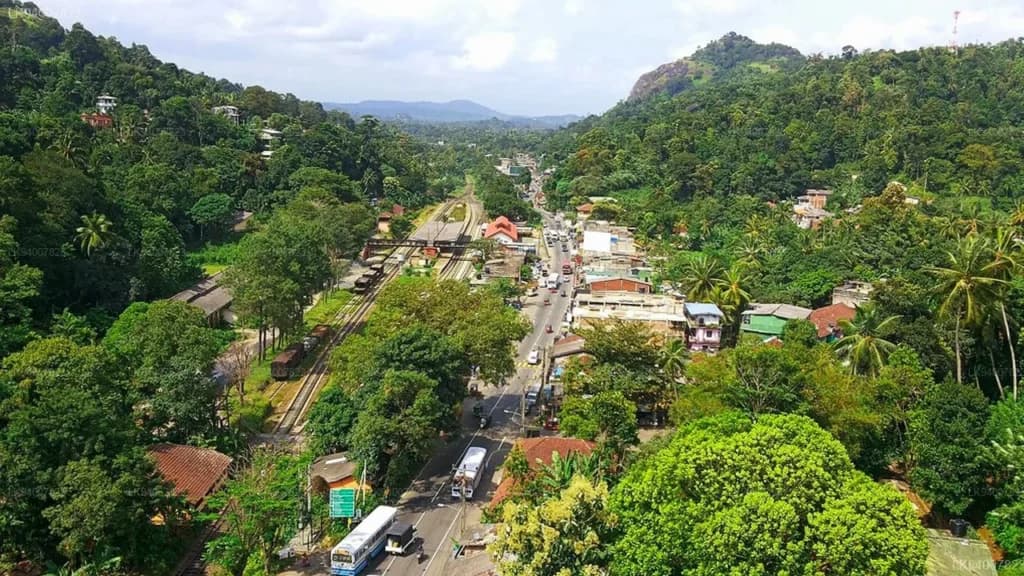
The Kadugannawa Pass is located near Kadugannawa town in Sri Lanka’s Central Province, along the Colombo–Kandy road, now part of the A1 highway. It sits between the lower country and the approach to Kandy, making it one of the most important natural passages into the central highlands.
The pass is famous for its sweeping views over the valleys below. On clear days, travellers can see distant ridges, deep green slopes and the prominent rocky shape of Bible Rock, also known as Bathalegala.
This view is one of the reasons Kadugannawa became a well-known stopping point for travellers. Long before social media viewpoints, the pass was already a place where people paused to admire the climb into the Kandyan country.
Why Kadugannawa Was Important to Old Ceylon
Kadugannawa was important because of its position.
The road from Colombo to Kandy was not simply a travel route. It was a political, military, economic and cultural link between the coast and the highlands.
Before modern roads, access to the Kandyan kingdom was difficult. The terrain helped protect Kandy from outside forces. Control of the mountain passes was therefore strategically important.
After the British took control of the Kandyan kingdom in 1815, building a reliable road to Kandy became a major priority. The road through Kadugannawa helped connect the old royal capital with Colombo, the colonial administrative and commercial centre.
This changed the island.
Officials could travel more easily. Goods could move faster. Military control became easier. Later, the expansion of plantation agriculture also depended on better transport between the highlands and the coast.
In that sense, Kadugannawa was not only a pass through a mountain. It was a passage into a new era of Ceylon’s history.
The Colombo–Kandy Road and British Engineering
The construction of the Colombo–Kandy Road was one of the major engineering achievements of early British Ceylon. Work on the modern road is associated with Captain William Francis Dawson, an officer of the Royal Engineers, who supervised the difficult task of cutting a reliable route through the hills. Dawson died in 1829 before the project was fully completed, and the memorial tower at Kadugannawa was later erected in his honour.
The route through Kadugannawa shows the scale of the challenge.
Engineers had to deal with steep gradients, rocky slopes, unstable ground, heavy rain and dense vegetation. Unlike the flat coastal roads, this was a mountain road requiring careful surveying and construction.
For modern travellers, the pass may feel ordinary because vehicles move through it every day. But in the nineteenth century, this road represented an enormous change. It made the highlands more accessible and helped reshape the relationship between Colombo and Kandy.
Dawson Tower: A Monument to the Road Builder
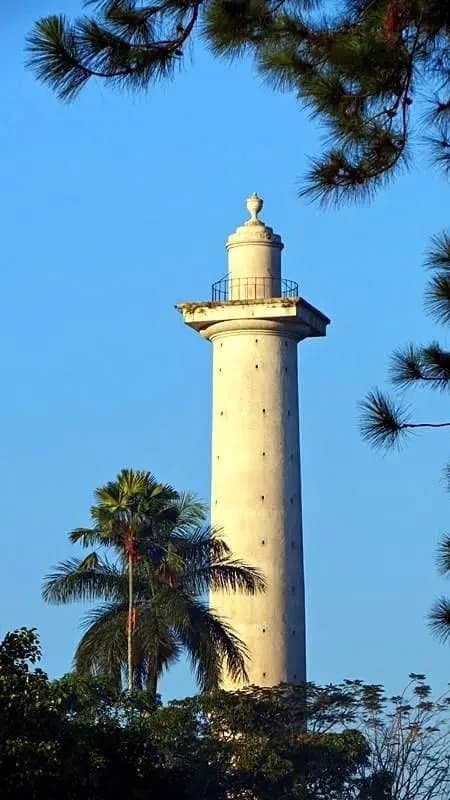
One of the most recognisable landmarks at Kadugannawa is the Dawson Tower, a tall white memorial column standing near the old road.
The tower was built to honour Captain William Francis Dawson, whose work on the Colombo–Kandy Road gave him a lasting place in Sri Lanka’s road history. It stands as a reminder of the labour, engineering and ambition behind the mountain road.
For travellers interested in Old Ceylon, Dawson Tower is worth noticing because it turns a road into a monument.
It reminds us that roads were not merely practical structures. In colonial Ceylon, they were symbols of power, movement and control. They connected administrative centres, opened up interior regions and changed the way people experienced distance.
The Dawson Tower therefore marks one of the great turning points in Ceylon’s transport history.
The Kadugannawa Tunnel and the Mountain Cut
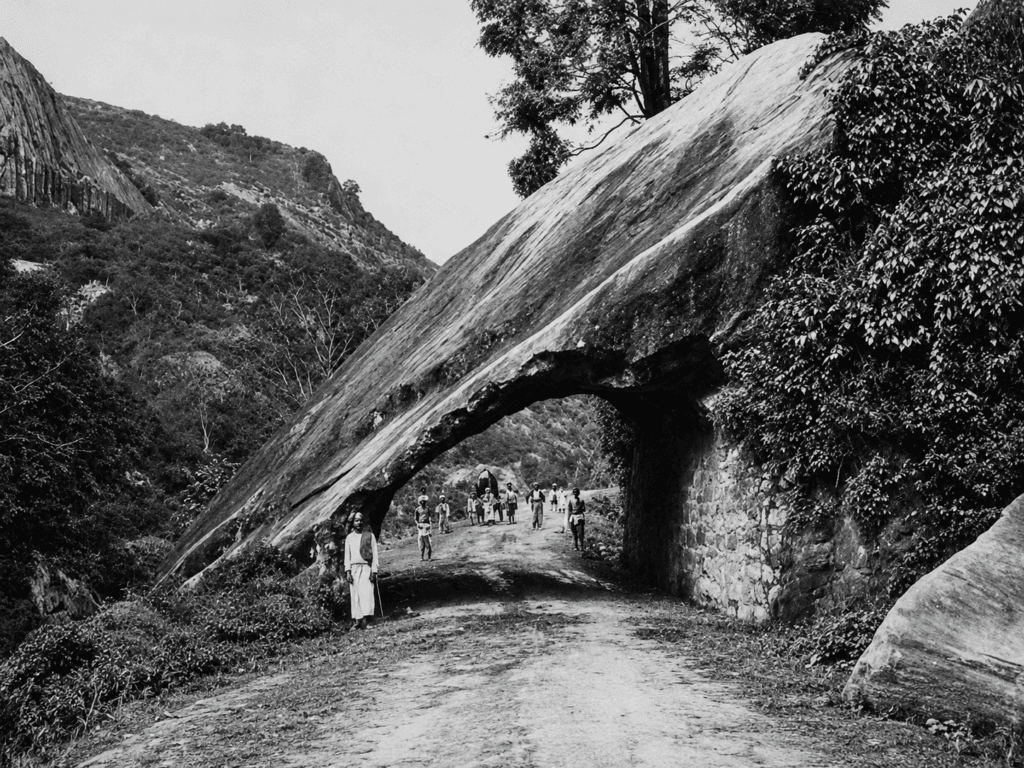
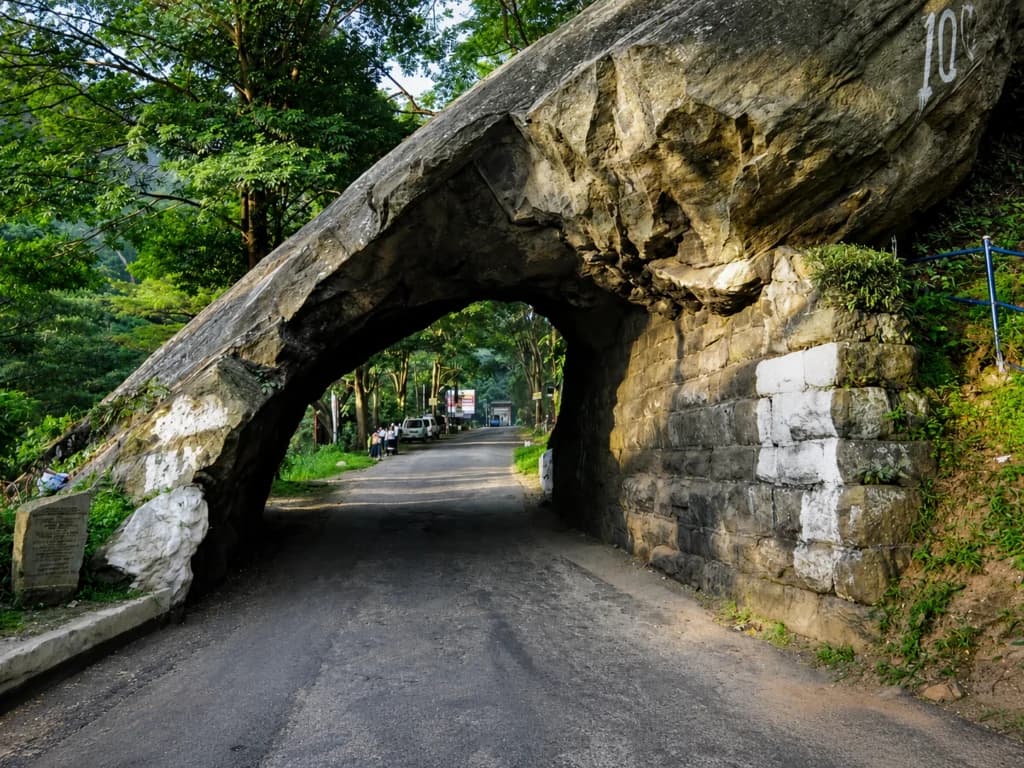
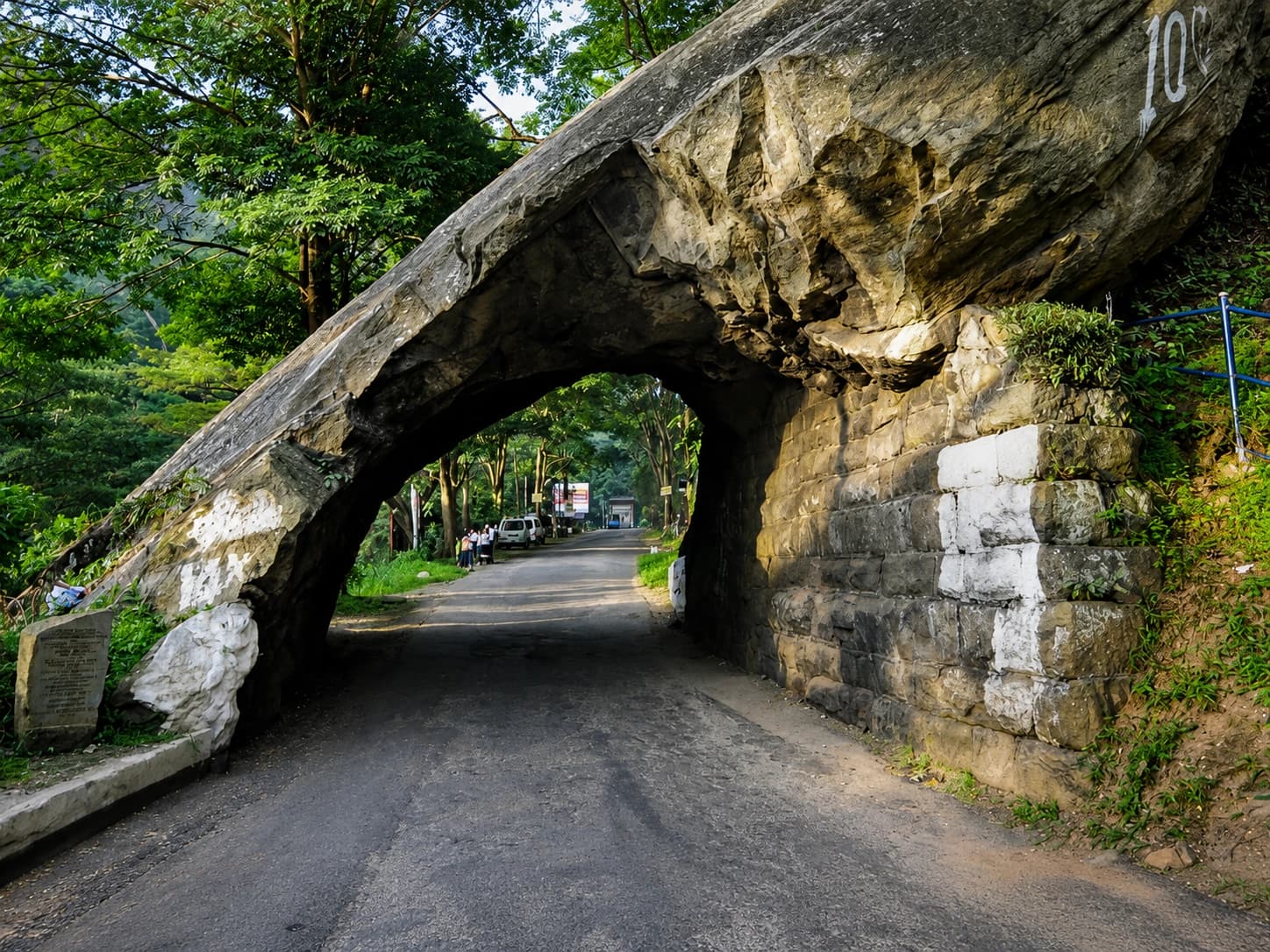
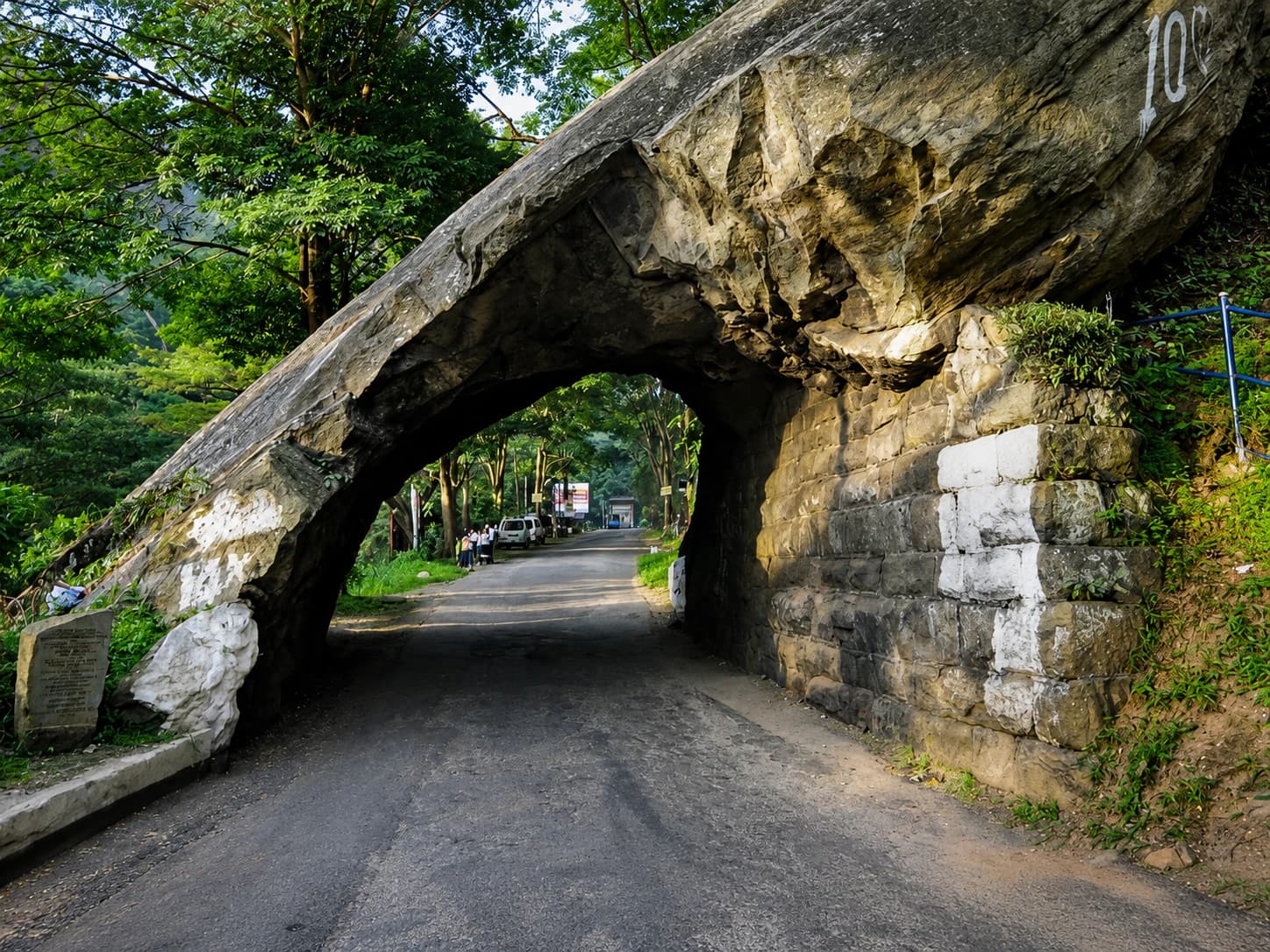
Another famous feature of the pass is the Kadugannawa rock tunnel, often called the Kadugannawa Tunnel.
This road tunnel is one of the most memorable symbols of the old Colombo–Kandy route. Cut through rock, it gives travellers a dramatic sense of passing through the mountain barrier. The tunnel has also become linked with local stories and popular memory.
For many Sri Lankans, the tunnel is part of childhood travel memory — the moment when the journey to Kandy begins to feel special.
In heritage terms, the tunnel is important because it shows how the British road builders dealt with the natural landscape. Instead of avoiding every obstacle, they cut through rock and shaped the pass into a controlled route.
The tunnel remains one of the most photographed and recognisable features of Kadugannawa.
Kadugannawa Ambalama: The Historic Wayside Rest
Another special heritage feature near the pass is the Kadugannawa Ambalama.
An ambalama was a traditional wayside rest used by travellers in earlier times. People walking long distances could stop, rest, eat, shelter from rain or wait before continuing their journey. Such structures were an important part of Sri Lanka’s older travel culture.
The Kadugannawa Ambalama is located close to the old Colombo–Kandy road and is commonly described as an early nineteenth-century wayside rest. It has been restored by the Department of Archaeology, helping preserve an important example of Kandyan-era roadside architecture.
This makes Kadugannawa especially interesting.
In one small area, travellers can see both older Sri Lankan travel culture and colonial road engineering. The ambalama belongs to the world of foot travellers, pilgrims and local movement. The road, tunnel and Dawson Tower belong to the world of British transport planning.
Together, they show how travel changed in Old Ceylon.
The View of Bible Rock and the Valley Below
Kadugannawa is also famous for its view.
From the pass, travellers can see across the valley towards Bible Rock, or Bathalegala, one of the most distinctive rock formations in the area. The landscape below opens dramatically, with layered hills, forests, settlements and farmlands.
This view has made Kadugannawa a favourite stopping point for generations.
It is easy to understand why. After the climb from the lowlands, the sudden openness of the valley gives a sense of arrival. The traveller is no longer in the coastal plain. The Kandyan highlands are beginning.
For photographers, Kadugannawa offers one of the classic road views of central Sri Lanka.
For heritage travellers, the view also has historical meaning. It shows why the Kandyan country was difficult to enter, and why road-building here was so significant.
Kadugannawa and the Kandyan Kingdom
The Kadugannawa Pass also reminds us of the natural strength of the Kandyan kingdom.
Kandy survived as an independent kingdom long after many coastal regions had fallen under European control. Geography played a major role in this survival. The highlands were difficult to invade, difficult to supply and difficult to control.
Mountain passes like Kadugannawa were therefore more than routes. They were strategic thresholds.
To enter the Kandyan country was to cross into a different political and cultural world. The terrain itself helped protect that world.
After the British established control over Kandy, improving access through passes such as Kadugannawa became part of the process of governing the interior. The pass therefore represents both the old strength of the Kandyan kingdom and the later transformation of the highlands under colonial rule.
The Railway Connection
Although Kadugannawa is best known for the road pass, the area is also connected to Sri Lanka’s railway heritage.
The railway line to Kandy and beyond became one of the great achievements of colonial transport. Like the road, it had to overcome difficult terrain and steep gradients as it climbed into the highlands.
Kadugannawa Railway Station and the surrounding railway landscape are part of this wider story. The railway helped connect Colombo, Kandy and the plantation regions, carrying people, mail, goods and eventually tea.
For travellers exploring Old Ceylon, Kadugannawa can therefore be understood as both a road heritage site and a railway heritage landscape.
It is a place where two major transport stories meet.
Special Things to Notice at Kadugannawa
Kadugannawa is best understood by noticing its layers.
The Mountain Pass
The pass itself is the main feature. It shows the natural gateway between the lowlands and the Kandyan highlands.
The Old Colombo–Kandy Road
This road changed the history of travel, administration and trade in Ceylon.
Dawson Tower
The memorial tower honours Captain Dawson and the engineering work behind the road.
Kadugannawa Tunnel
The rock tunnel remains one of the most iconic features of the old route.
Kadugannawa Ambalama
The wayside rest preserves an older tradition of Sri Lankan travel before modern roads and vehicles.
Bible Rock View
The view across the valley gives Kadugannawa its dramatic scenic character.
Railway Heritage
The railway adds another transport layer to the area’s Old Ceylon importance.
Why Heritage Travellers Should Stop Here
Many travellers pass Kadugannawa without stopping. That is a mistake.
This is one of the best places to understand how movement shaped Sri Lanka’s history. The road through Kadugannawa helped connect Colombo with Kandy. The railway later deepened that connection. The pass opened the highlands to new forms of administration, trade, military movement, plantation expansion and tourism.
But it also preserves older memories: the ambalama, the mountain barrier, the valley view and the sense of entering the Kandyan country.
For Old Ceylon travellers, Kadugannawa is not simply a place on the way to Kandy.
It is the gateway itself.
A Suggested Old Ceylon Route Around Kadugannawa
Kadugannawa can be included in a rich heritage route from Colombo to Kandy.
Travellers can begin with the old Colombo–Kandy road, stopping at Kadugannawa Ambalama, the Kadugannawa Tunnel, and Dawson Tower. From there, they can continue towards Peradeniya, with its botanical gardens and university landscape, before entering Kandy, the last royal capital of Sri Lanka.
Nearby heritage stops may include:
- Kadugannawa Ambalama
- Dawson Tower
- Kadugannawa Tunnel
- Kadugannawa Railway Station
- Bible Rock viewpoint
- Peradeniya Botanical Gardens
- Kandy city and lake
- Temple of the Tooth precinct
This route helps travellers see how road, railway, mountain geography and royal history shaped the journey into the Kandyan highlands.
Final Thoughts: The Gateway That Changed Ceylon
The Kadugannawa Pass is one of Sri Lanka’s most important historic gateways.
It carries the memory of the Kandyan kingdom, the ambition of British road builders, the engineering of the Colombo–Kandy route, the quiet dignity of the old ambalama, and the scenic beauty of the central hills.
For Tripping Sri Lanka readers, Kadugannawa is exactly the kind of Old Ceylon place worth rediscovering.
It is not just a roadside viewpoint.
It is a landscape of movement, memory and transformation — the point where the lowlands rise towards Kandy, and where the story of the highlands begins.
Visit Us: https://trippingsrilanka.com/stories
Heritage places mentioned
The Kadugannawa Pass
More from Old Ceylon
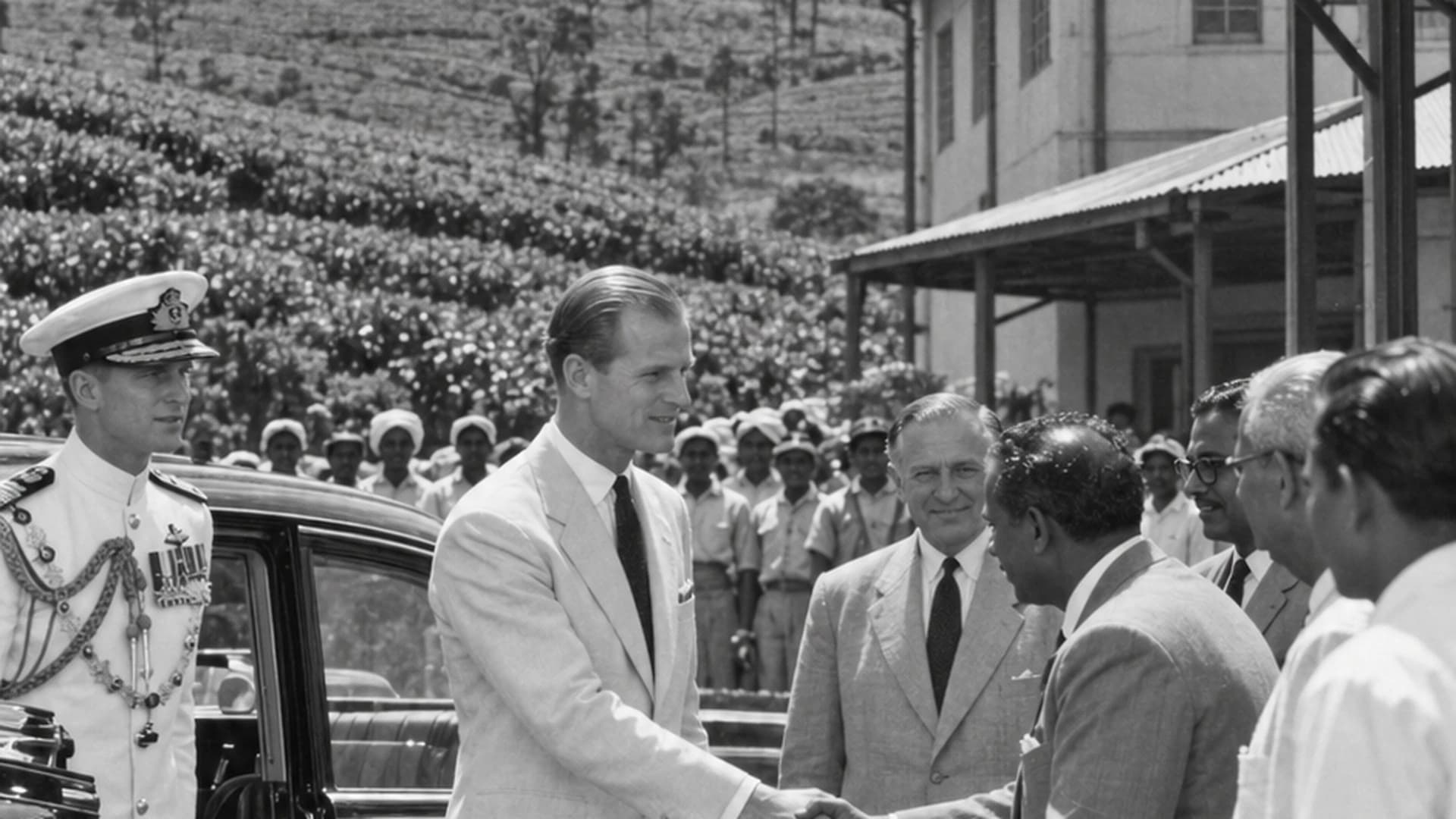
When Prince Philip Visited Pedro Estate: The Royal Visit That Became Part of Ceylon Tea History in 1954
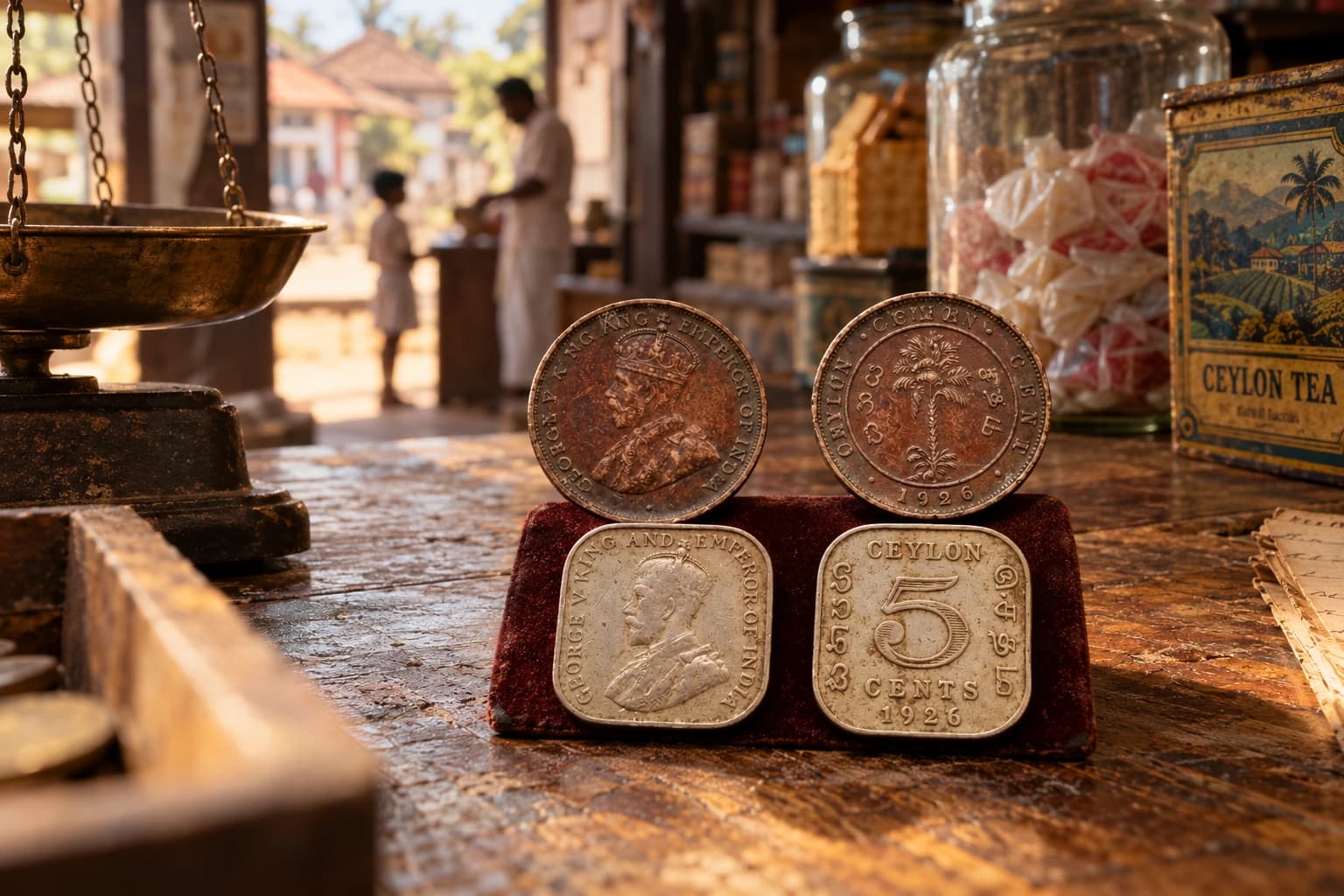
When Five Cents Mattered: The Forgotten Small Change of Old Ceylon