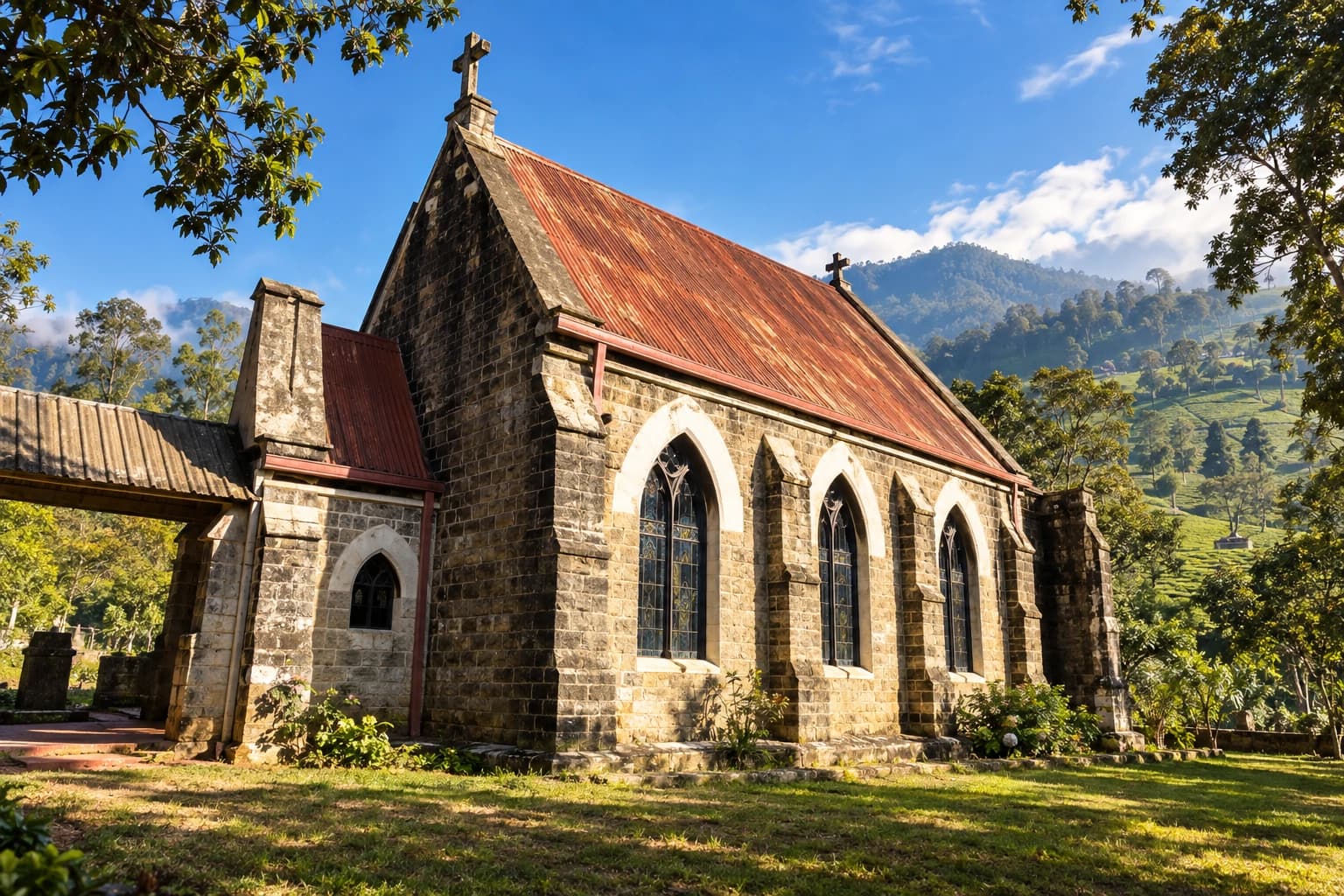
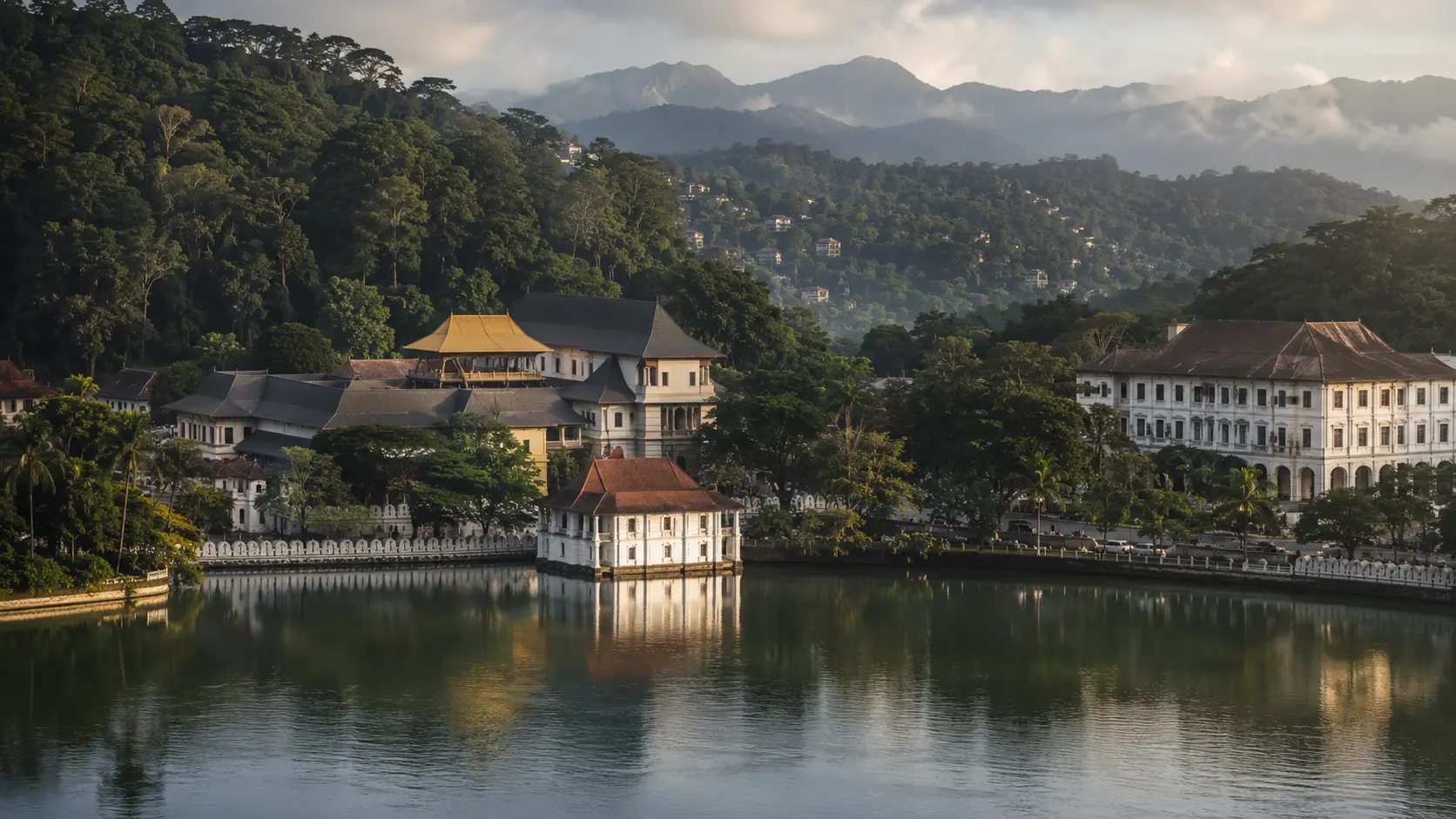
Kandy is not a colonial city in the same way as Colombo, Galle or Jaffna. It was not born as a European port. It was not designed around a Dutch fort, a British harbour or a merchant quarter facing the sea. Kandy was something different. It was the last royal capital of Sri Lanka, the mountain kingdom that resisted European control long after the coastal regions had fallen to Portuguese, Dutch and British power.
That is what makes colonial Kandy so fascinating. It was not simply occupied and rebuilt as a European town. It was absorbed into the British Empire after centuries of independence, negotiation, conflict and political pressure. The city still carries that tension. Around Kandy Lake, the Temple of the Tooth, the old Royal Palace and the surrounding hills, visitors can see where the world of the Kandyan kings met the machinery of British Ceylon.
For travellers interested in colonial Sri Lanka, Kandy offers a deeper kind of heritage walk. It is not only about old buildings. It is about sovereignty, religion, royal authority, imperial ambition and the end of an ancient monarchy.
Why Kandy Was Different from Other Colonial Cities
Most colonial cities in Sri Lanka grew around ports. Colombo, Galle, Trincomalee and Jaffna were important because of the sea. European powers needed harbours, forts, trade routes and coastal control. Kandy, however, was inland. Surrounded by mountains, forests and difficult terrain, it was naturally protected from direct invasion.
This geography helped the Kandyan Kingdom survive. While the Portuguese and Dutch controlled much of the coast, the Kandyan rulers maintained power in the interior. The kingdom used diplomacy, warfare, alliances and terrain to resist foreign domination. For centuries, Kandy represented the idea of an unconquered Sri Lankan centre.
By the time the British became the dominant colonial power in Ceylon, Kandy remained the great prize. To control the coast was one thing. To control Kandy was to claim the whole island. This is why the British takeover of Kandy in 1815 was so significant. It marked the moment when the last independent kingdom of Sri Lanka came under colonial rule.
The Last Kingdom of Ceylon
Kandy was the final capital of the Sinhalese monarchy. It was also the guardian city of the Sacred Tooth Relic, one of the most important symbols of Buddhist kingship in Sri Lanka. In traditional political belief, the ruler who protected the Tooth Relic held deep religious and political legitimacy.
This made Kandy more than a palace city. It was a sacred city. The Temple of the Tooth stood at the centre of its identity, closely linked with royal power, ritual and national memory. The king, the palace and the temple formed a symbolic triangle of authority.
When visitors walk through Kandy today, this royal layout can still be felt. The lake, temple, palace buildings and surrounding hills create a cityscape unlike anywhere else in Sri Lanka. Even after British rule changed the administration of the island, Kandy retained its spiritual and cultural gravity.
That is why colonial Kandy must be understood carefully. The British did not simply take over a town. They took over a kingdom with its own political traditions, sacred institutions and long history of resistance.
The Kandyan Convention of 1815
The defining event in colonial Kandy was the Kandyan Convention of 1815. Signed between the British and Kandyan chiefs, the convention brought the Kandyan Kingdom under the British Crown. It also deposed King Sri Wickrama Rajasinghe, the last king of Kandy.
This was not a straightforward military conquest in the ordinary sense. It involved internal political tensions, dissatisfaction with the king, British strategy and the cooperation of Kandyan elites. The result was historic: for the first time, the entire island of Ceylon came under one colonial power.
For visitors, the Kandyan Convention gives Kandy a special place in colonial Sri Lanka. Colombo may have been the administrative capital of British Ceylon, but Kandy was where the island’s last independent monarchy came to an end.
The memory of 1815 still gives the city emotional weight. Kandy is beautiful, but it is not only scenic. Its streets and royal buildings carry the story of a turning point in Sri Lankan history.
The Temple of the Tooth: Sacred Power and Colonial Politics
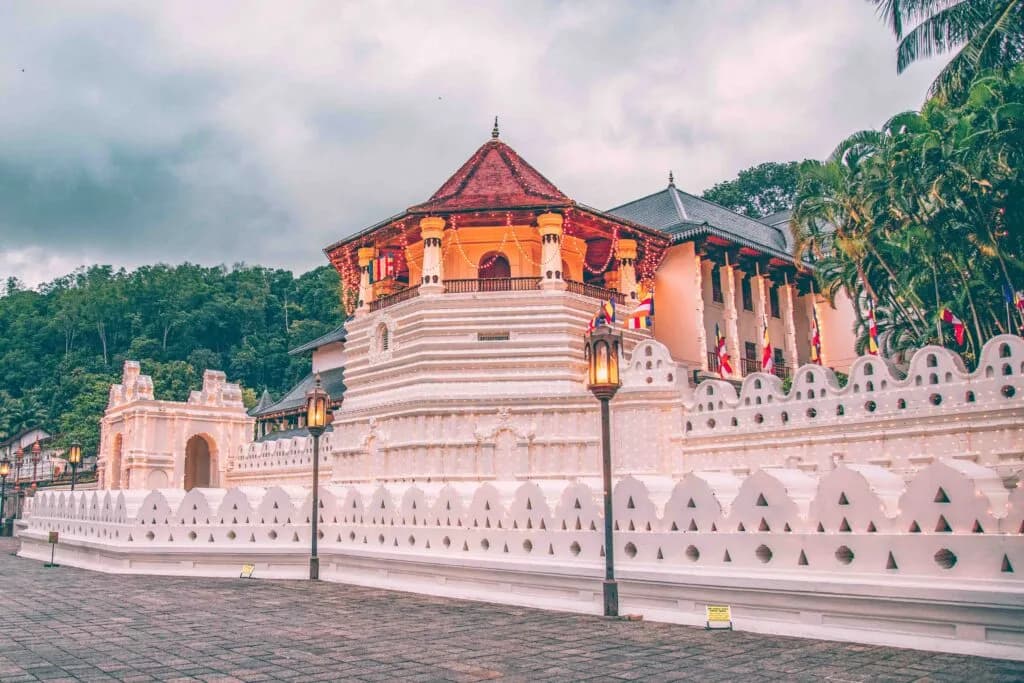
The Temple of the Tooth, or Sri Dalada Maligawa, is the heart of Kandy. It remains one of the most sacred Buddhist sites in Sri Lanka and one of the most important places for understanding the city’s history.
For colonial powers, the temple was not merely a religious building. It was a symbol of legitimacy. The British understood that control over Kandy could not ignore Buddhism or the Tooth Relic. The Kandyan Convention included assurances regarding the protection of Buddhism, showing how important religion was to the political settlement.
This is one of the most interesting aspects of colonial Kandy. British rule had to engage with local sacred authority. The empire could control territory, but it also had to manage symbols, rituals and religious expectations.
Today, visitors often come to the Temple of the Tooth for worship, architecture or cultural interest. But for history readers, it is also a place where monarchy, Buddhism and colonial politics intersected.
The Royal Palace Complex
Beside the Temple of the Tooth stands the old Royal Palace complex. These buildings help visitors imagine Kandy before colonial rule, when it functioned as a royal capital. Parts of the palace complex later became connected to museums and public heritage spaces, allowing travellers to see the material remains of the Kandyan court.
The palace buildings are different from European colonial architecture. Their proportions, rooflines and spatial arrangement reflect Kandyan traditions. This difference is important. Kandy’s identity did not begin with colonialism. The colonial layer sits on top of an older royal city.
Walking through the palace area, visitors can sense how close political and religious authority were in the Kandyan world. The king’s residence, the audience hall and the temple precinct belonged to one ceremonial landscape.
For those interested in colonial Ceylon, this area shows what the British inherited in 1815. They did not inherit an empty hill town. They inherited a sophisticated royal capital with its own architecture, courtly customs and sacred geography.
The Audience Hall and the End of Royal Authority
One of the most historically charged places in Kandy is the Magul Maduwa, or Royal Audience Hall. This was a space of royal ceremony and state function. It is also closely associated with the events surrounding the Kandyan Convention.
The building’s carved wooden pillars and open form make it one of the most beautiful examples of Kandyan architecture. But its significance goes beyond beauty. It represents the final stage of royal authority before the city entered the colonial age.
Standing near the Audience Hall, it is possible to imagine the political drama of 1815. Chiefs, British officials, royal memory and imperial ambition all converged in this setting. Few places in Sri Lanka express the transition from kingdom to colony so clearly.
This is why colonial Kandy is so compelling. Its most important colonial moment took place not inside a British-style building, but within the ceremonial world of the Kandyan monarchy itself.
Kandy Lake: Royal Vision Before Colonial Rule
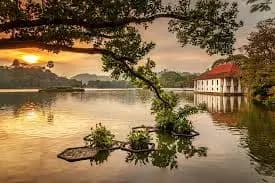
Kandy Lake is one of the city’s defining features. Built under King Sri Wickrama Rajasinghe, the last king of Kandy, it transformed the visual character of the city. Today it gives Kandy much of its charm, reflecting the temple, hills and old buildings in its still water.
Although the lake was created before British control, it became part of the colonial cityscape after 1815. British officials, travellers and residents saw Kandy through the lake’s beauty. It softened the image of the former royal capital and helped turn Kandy into one of the most admired hill cities in colonial Ceylon.
A walk around the lake is one of the best ways to experience the city. It allows visitors to see the temple, palace area, old institutional buildings and surrounding hills from different angles. The route is scenic, but also historical. It shows how a royal landscape became part of the colonial imagination of Ceylon.
Queen’s Hotel and the British Urban Layer
Near the Temple of the Tooth and Kandy Lake stands the Queen’s Hotel, one of the most recognisable colonial-era buildings in the city. Its location is significant. It sits close to the former royal and sacred centre, showing how British-era urban life developed beside the old Kandyan core.
Buildings such as Queen’s Hotel represent the later colonial transformation of Kandy into a hill capital for officials, planters, travellers and administrators. The British did not erase the old city, but they added their own layer of clubs, hotels, roads, schools, churches and administrative spaces.
This mixture gives Kandy its distinctive character. Around the lake, Kandyan royal architecture and British colonial buildings face each other. The result is not a purely European colonial town, but a layered city where local kingship and imperial modernity exist side by side.
Walking Through Colonial Kandy Today
A good heritage walk through colonial Kandy can begin at the Temple of the Tooth. From there, visitors can explore the palace complex, the Audience Hall, the National Museum area and the lakefront. The walk can then continue towards Queen’s Hotel and the surrounding streets where colonial-era buildings still contribute to the old city atmosphere.
Unlike Pettah or Colombo Fort, Kandy is best experienced slowly. The city’s history is not found only in busy streets. It is found in courtyards, temple walls, lake views, rooflines and ceremonial spaces.
Early morning is ideal for a quieter experience near the temple and lake. Late afternoon gives softer light and a more atmospheric walk around the water. Visitors should dress respectfully near religious sites and allow enough time to move through the sacred precinct without rushing.
Why Colonial Kandy Still Matters
Colonial Kandy matters because it tells a different story from Sri Lanka’s coastal forts. It shows how an inland kingdom resisted European powers, how sacred authority shaped politics, and how the British Empire finally extended its control over the whole island.
It also reminds visitors that colonial Sri Lanka was not only built by Europeans. In Kandy, the strongest visual and cultural identity remains Kandyan. The British layer is important, but it does not dominate the city in the same way it does in some coastal colonial centres.
This makes Kandy one of the most important heritage cities in Sri Lanka. It is royal, sacred, colonial and modern at the same time. Its beauty lies in that complexity.
Final Thoughts: Where Kingdom Became Colony
Kandy is one of the most meaningful places to understand the history of Old Ceylon. It was the last kingdom, the sacred city of the Tooth Relic, the mountain capital that resisted European control, and finally the place where British power completed its rule over the island.
To walk through colonial Kandy is to walk through a moment of transition. The lake still reflects the temple. The palace still speaks of kings. The British-era buildings still frame parts of the city. The hills still hold the atmosphere of an inland stronghold.
For travellers, Kandy is beautiful. For history readers, it is essential. It is the place where Sri Lanka’s royal past met the British Empire — and where the memory of that meeting still shapes the city today.
FAQs About Colonial Kandy
Why is Kandy important in colonial Sri Lanka?
Kandy was the last independent kingdom of Sri Lanka before it came under British rule in 1815. Its fall marked the moment when the whole island came under one colonial power.
What happened in Kandy in 1815?
In 1815, the Kandyan Convention was signed between the British and Kandyan chiefs. It deposed King Sri Wickrama Rajasinghe and brought the Kandyan Kingdom under the British Crown.
Is Kandy a colonial city?
Kandy is a royal and sacred city with an important colonial layer. Unlike Colombo or Galle, it was not created as a colonial port. Its colonial importance comes from the British takeover of the last kingdom of Ceylon.
What are the main heritage sites in Kandy?
Important sites include the Temple of the Tooth, the Royal Palace complex, the Audience Hall, Kandy Lake, the National Museum area and colonial-era buildings around the lake.
What is the best way to explore historic Kandy?
The best way is to walk around the Temple of the Tooth, palace area and Kandy Lake. Early morning and late afternoon are the most comfortable times for a heritage walk.
Visit Us: https://trippingsrilanka.com/stories/jaffna-fort-northern-stronghold
More from Old Ceylon
Colombo Public Library at 100: The Names That Still Remain
The Toll Gate at the Bridge: When Travelling Across Ceylon Cost a Few Cents at a Time