Maduwanwela Walawwa: The Mansion of the Black Prince of Sabaragamuwa
A Forgotten Mansion in Sri Lanka’s Deep South
Hidden in the quiet landscapes of Kolonna in the Ratnapura District, Maduwanwela Walawwa is one of Sri Lanka’s most fascinating ancestral mansions. It is not only an old house. It is a symbol of power, wealth, architecture, local authority and the changing world of Old Ceylon.
For travellers interested in heritage, colonial-era stories, aristocratic families and traditional Sri Lankan architecture, Maduwanwela Walawwa is a remarkable place to explore. Unlike many historic sites that stand in busy towns, this walawwa sits in a more rural setting, surrounded by the atmosphere of old estates, village roads and Sabaragamuwa history.
The mansion is closely associated with Maduwanwela Maha Disawe, famously remembered as the Black Prince of Sabaragamuwa. His name, personality and power still shape the way people remember this extraordinary place.
Check our previous article – https://trippingsrilanka.com/stories/mansion-museum-galle-fort
What Is a Walawwa?
A walawwa was a traditional manor house belonging to a powerful Kandyan or low-country aristocratic family. These houses were usually connected to land ownership, local administration, agriculture and social authority.
They were not ordinary homes. A walawwa often served as the centre of a family’s political, economic and social power. Visitors were received there. Disputes were settled there. Servants, tenants, officials and villagers moved through its spaces. Ceremonies, decisions and family histories were all tied to the house.
Maduwanwela Walawwa is one of the best examples of this tradition. It shows how a powerful Sri Lankan family lived, ruled, entertained and managed its estate.
The History of Maduwanwela Walawwa
The origins of Maduwanwela Walawwa go back to the eighteenth century. The house is associated with the Maduwanwela family, who rose to prominence through service to the Kandyan kings and later through their influence during the colonial period.
Over generations, the walawwa was expanded and developed. Its most famous phase came under Maduwanwela Maha Disawe, who transformed it into a vast mansion that reflected his wealth, authority and personality.
By the early twentieth century, the walawwa had become one of the most impressive manor houses in Sri Lanka. It was not simply large. It was carefully arranged with courtyards, rooms, verandahs, administrative spaces and special features that reflected both grandeur and control.
Today, the mansion is protected as an important archaeological and heritage site.
Maduwanwela Maha Disawe: The Black Prince of Sabaragamuwa
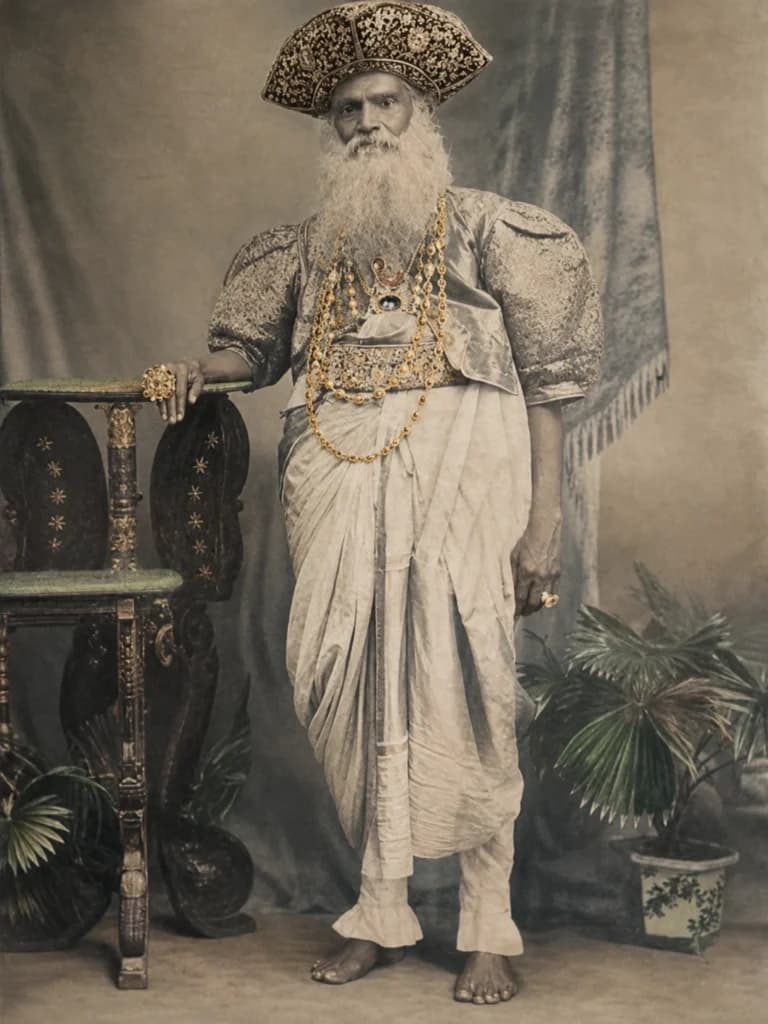
The most famous figure connected with the walawwa is Maduwanwela Maha Disawe, often called the Black Prince of Sabaragamuwa.
He was a powerful local chieftain, landowner and political personality. His reputation was built on wealth, pride, authority and a strong sense of independence. Stories about him often describe him as a bold and commanding figure who did not easily bow to colonial authority.
His title, “Black Prince”, reflects both admiration and legend. It suggests a man who stood apart from ordinary aristocrats — powerful, feared, respected and remembered.
When visitors walk through Maduwanwela Walawwa today, they are not only seeing an old building. They are entering the world of this unusual and influential personality.
The Special Architecture of Maduwanwela Walawwa
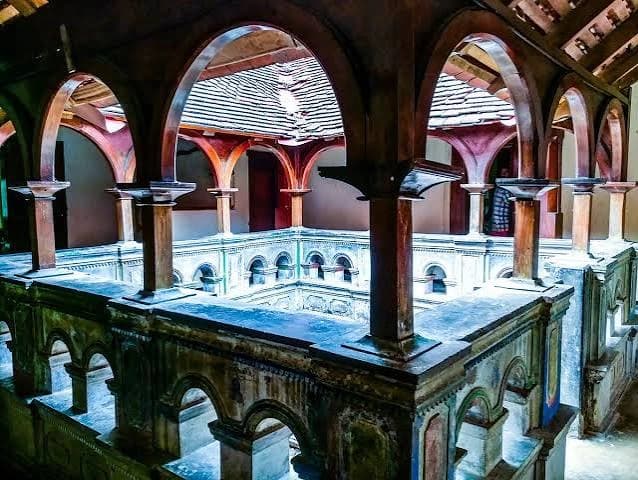
One of the most impressive things about Maduwanwela Walawwa is its architecture.
At its height, the mansion is said to have had 121 rooms and 21 inner courtyards. Although only part of the original structure survives today, the remaining sections still show the scale and complexity of the old house.
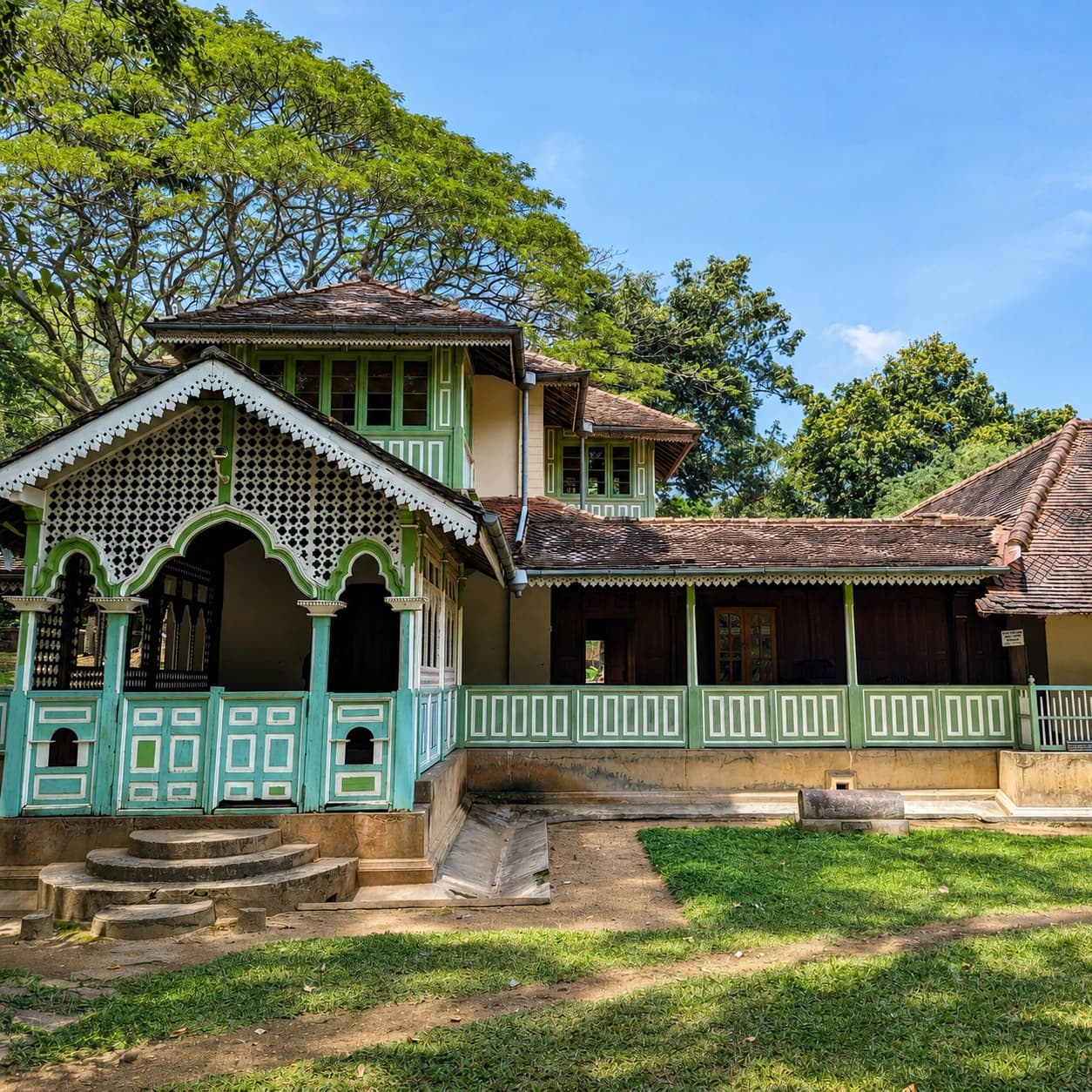
The walawwa was designed around enclosed spaces, verandahs, tiled roofs and internal courtyards. This made it suitable for Sri Lanka’s tropical climate. The courtyards brought light and air into the building, while verandahs created shaded walking spaces.
The architecture feels both grand and practical. It was built for a powerful family, but it was also built for daily life in a rural estate setting.
The Courtyards: Meda Midula of the Mansion
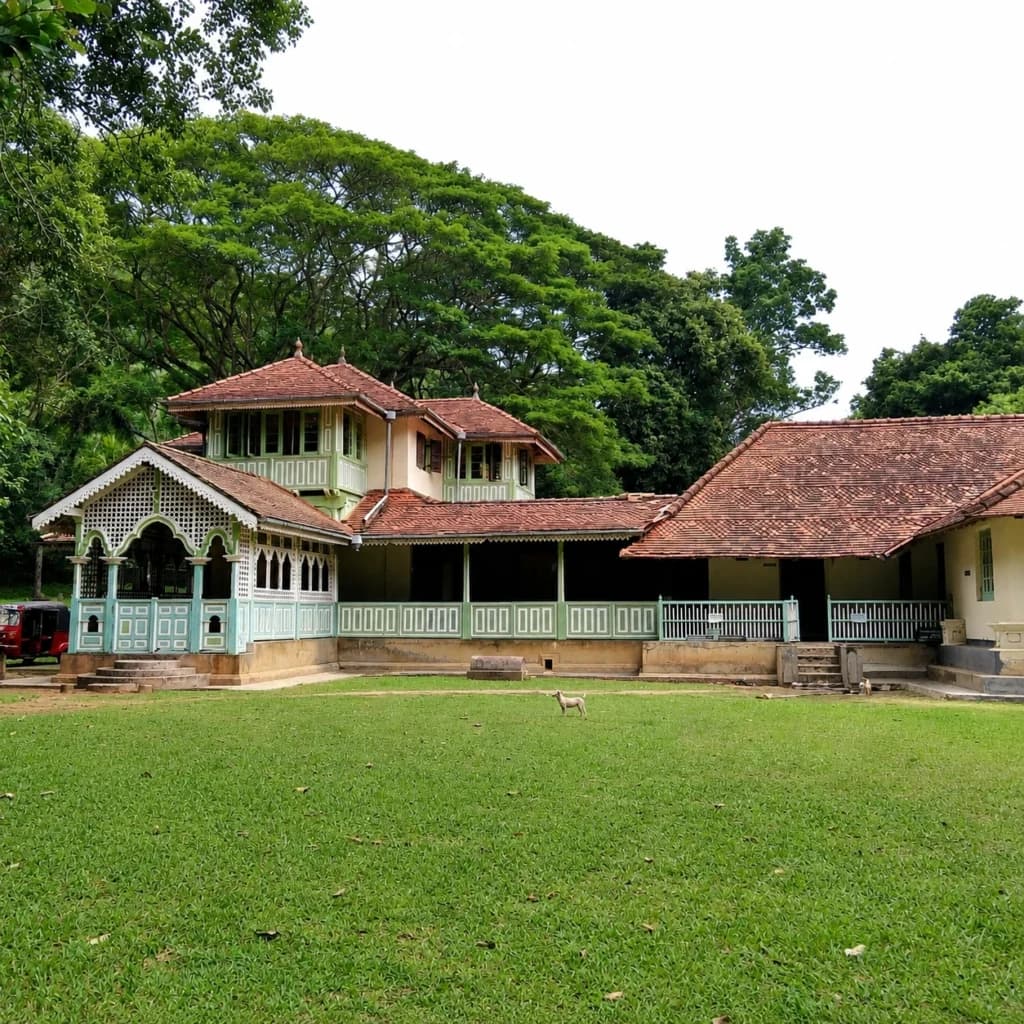
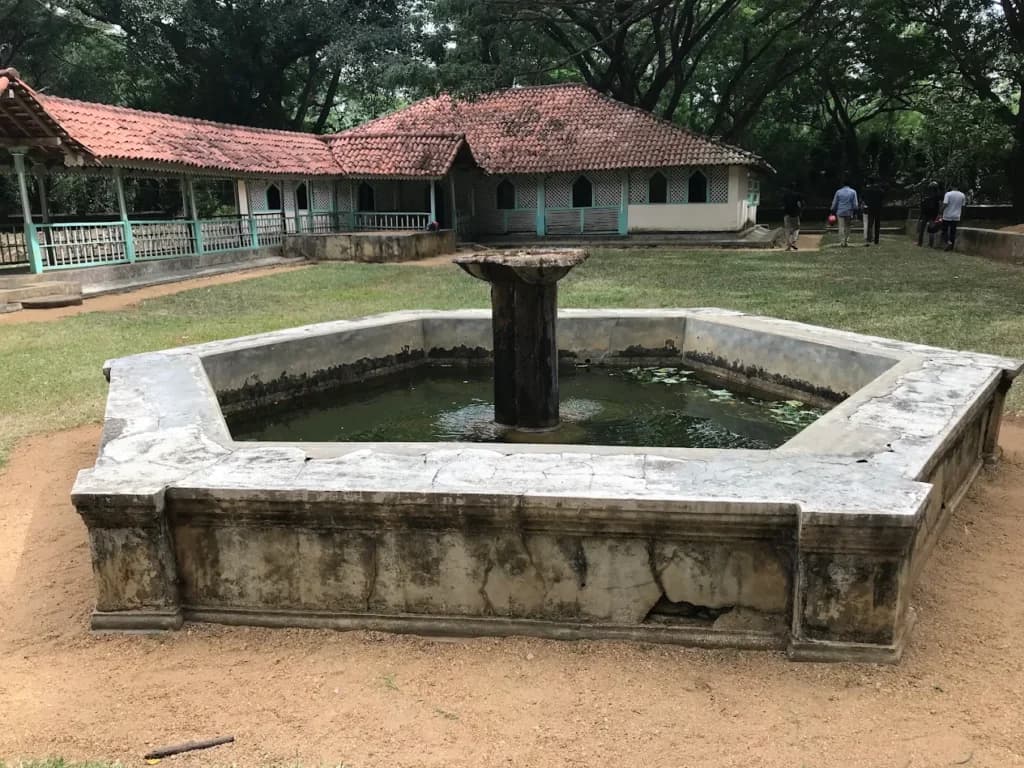
The inner courtyards, known as meda midula, are among the most special features of Maduwanwela Walawwa.
Courtyards were important in traditional Sri Lankan houses because they helped with ventilation, natural light and family life. They created open spaces within the house while still preserving privacy.
In a mansion as large as Maduwanwela Walawwa, the courtyards also helped organise the building. Different sections of the house could be connected through these open spaces.
For visitors, these courtyards are some of the most atmospheric areas of the mansion. They show the beauty of old Sri Lankan domestic architecture — quiet, shaded, inward-looking and deeply connected to climate.
The Old Courtroom Inside the Walawwa
One of the most unusual features of Maduwanwela Walawwa is the old courtroom within the premises.
This shows that the walawwa was not only a residence. It was also a place of authority. Local disputes, decisions and administrative matters could be handled under the influence of the Disawe.
The presence of a courtroom reminds visitors that powerful walawwas were closely linked to governance. The head of the house was not merely a wealthy landowner. He could also act as a local authority figure whose decisions affected surrounding communities.
This makes Maduwanwela Walawwa especially interesting. It preserves the idea of a house as a seat of power.
The Low Doorways and Local Legends
Visitors often hear stories about the special design features of the walawwa, including low doorways and unusual passageways.
One popular local tradition says that some doorways were designed so that visitors, including colonial officials, had to bend when entering. Whether this story is fully historical or partly legendary, it reflects how people remember Maduwanwela Maha Disawe — as a man of pride who wanted others to acknowledge his authority.
Such legends add colour to the experience of visiting the mansion.
They also show how architecture can become part of folklore. A doorway is not just a doorway when people attach meaning to it. It becomes a story about power, pride and personality.
Old Furniture, Objects and Household Spaces
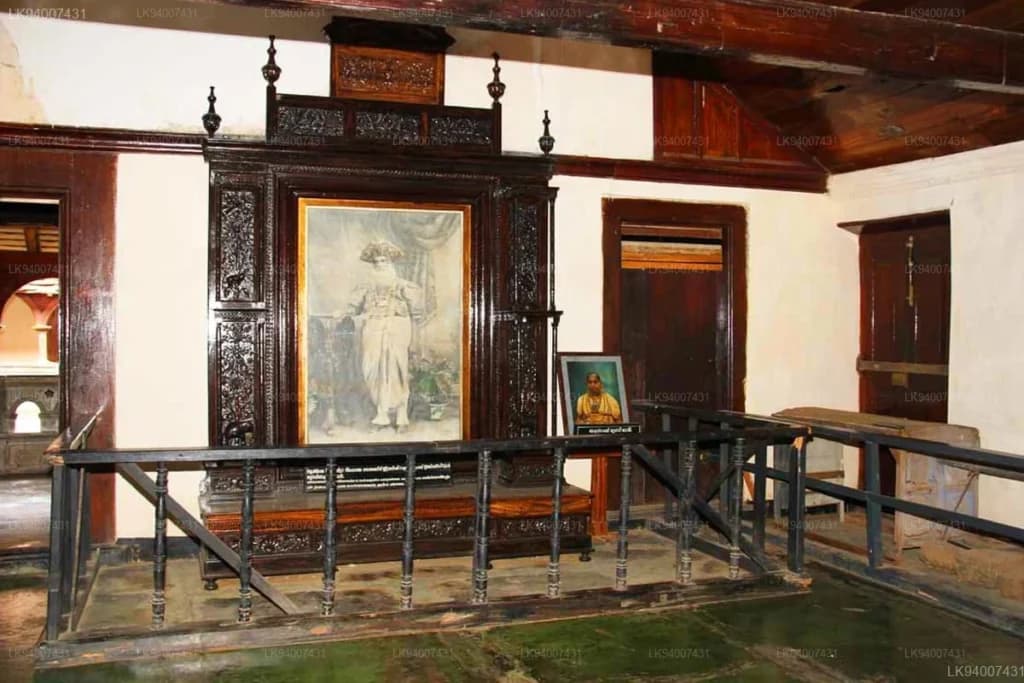
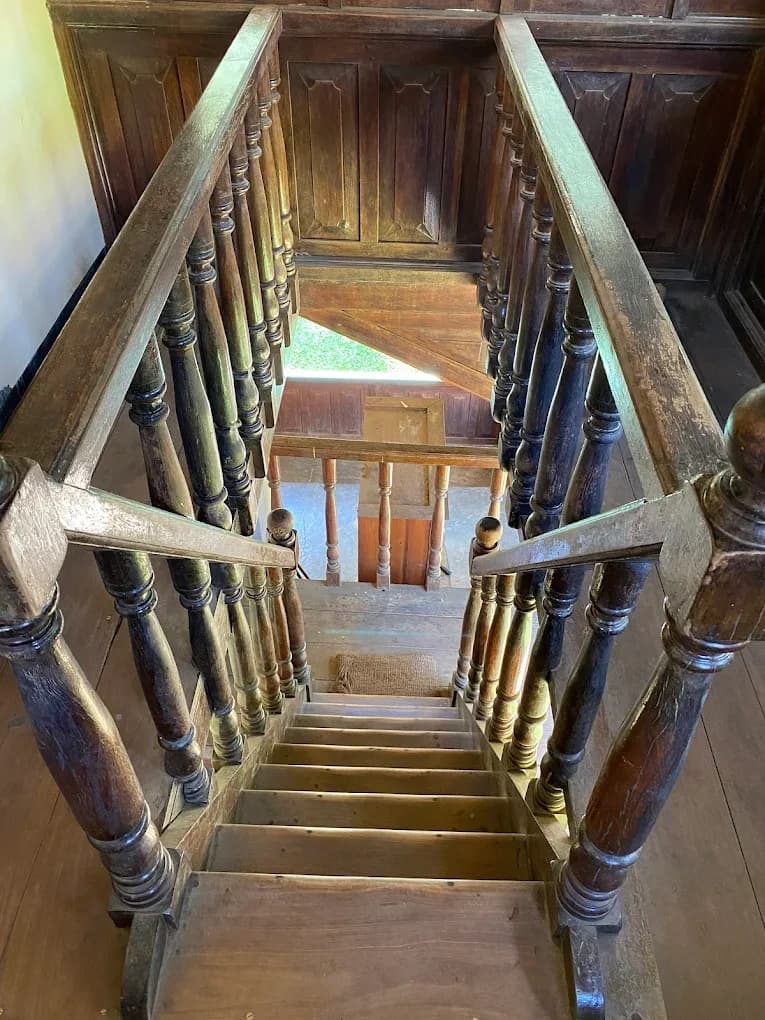
Inside the walawwa, visitors can still see old furniture, household items and architectural details connected to the mansion’s past.
These objects help bring the building to life. They show how the rooms may once have functioned and how the household operated. A mansion like this would have required many people to maintain it — family members, servants, workers, guards, cooks, clerks and visitors.
The old household spaces reveal the daily rhythm behind the grandeur.
A walawwa was not only about prestige. It was also a working domestic world with kitchens, stores, rooms, verandahs and service areas.
The Estate and Landed Power
Maduwanwela Walawwa was also connected to a vast estate.
In earlier times, land was the foundation of power. A family’s status depended not only on titles but also on the amount of land it controlled, the people who worked that land, and the agricultural wealth it produced.
The Maduwanwela family’s influence was therefore closely tied to estate ownership and rural authority. The walawwa stood at the centre of this world.
For modern travellers, this is important to understand. The building is not isolated from its surrounding landscape. It was part of a much larger social and economic system.
Why Maduwanwela Walawwa Is Special
Maduwanwela Walawwa stands out because it combines several important heritage themes in one place.
It is special because of:
- Its connection to the Black Prince of Sabaragamuwa
- Its history as a powerful aristocratic manor house
- Its large number of rooms and courtyards in the past
- Its old courtroom and administrative role
- Its traditional Sri Lankan architectural design
- Its legends about power, pride and local authority
- Its surviving furniture and household spaces
- Its location in the historic Sabaragamuwa region
- Its value as one of Sri Lanka’s most memorable walawwas
Few places in Sri Lanka preserve the atmosphere of a powerful old manor house as strongly as Maduwanwela Walawwa.
A Heritage Experience for Slow Travellers
Maduwanwela Walawwa is ideal for travellers who enjoy slow heritage exploration.
It is not the kind of place to rush through. The beauty of the mansion lies in its details — the courtyards, doorways, rooflines, old rooms, timberwork, stone features and quiet spaces.
Visitors should take time to imagine how the walawwa once functioned. Who walked through these verandahs? Who waited in the courtyards? What decisions were made in the courtroom? How did the household operate during its most powerful years?
These questions make the visit more meaningful.
Visiting Maduwanwela Walawwa Today
Today, Maduwanwela Walawwa is an important heritage attraction in the Ratnapura District. It is located in the Kolonna area, between the Embilipitiya and Rakwana regions.
Travellers visiting Udawalawe, Ratnapura, Embilipitiya, Rakwana or the Sabaragamuwa interior can consider adding the walawwa to their route.
A visit offers a different kind of Sri Lankan experience. Instead of beaches, wildlife or ancient ruins, it gives travellers a look at aristocratic domestic life and local power in Old Ceylon.
For anyone interested in heritage houses, traditional architecture, colonial-era society or forgotten Sri Lankan stories, Maduwanwela Walawwa is well worth exploring.
Final Thoughts: A Mansion That Still Speaks
Maduwanwela Walawwa is more than an old mansion. It is a rare survival from a world of chieftains, estates, local courts, family power and rural authority.
Its courtyards, rooms, legends and architecture tell the story of a time when a walawwa could command an entire region. Its connection to Maduwanwela Maha Disawe, the Black Prince of Sabaragamuwa, gives the building a personality unlike any other heritage house in Sri Lanka.
For Tripping Sri Lanka readers, this is exactly the kind of place that keeps Old Ceylon alive.
It is quiet, powerful, mysterious and deeply rooted in the island’s past.
To walk through Maduwanwela Walawwa is to step into the memory of a house that was once a kingdom of its own.
Visit Us: https://trippingsrilanka.com/stories
Heritage places mentioned
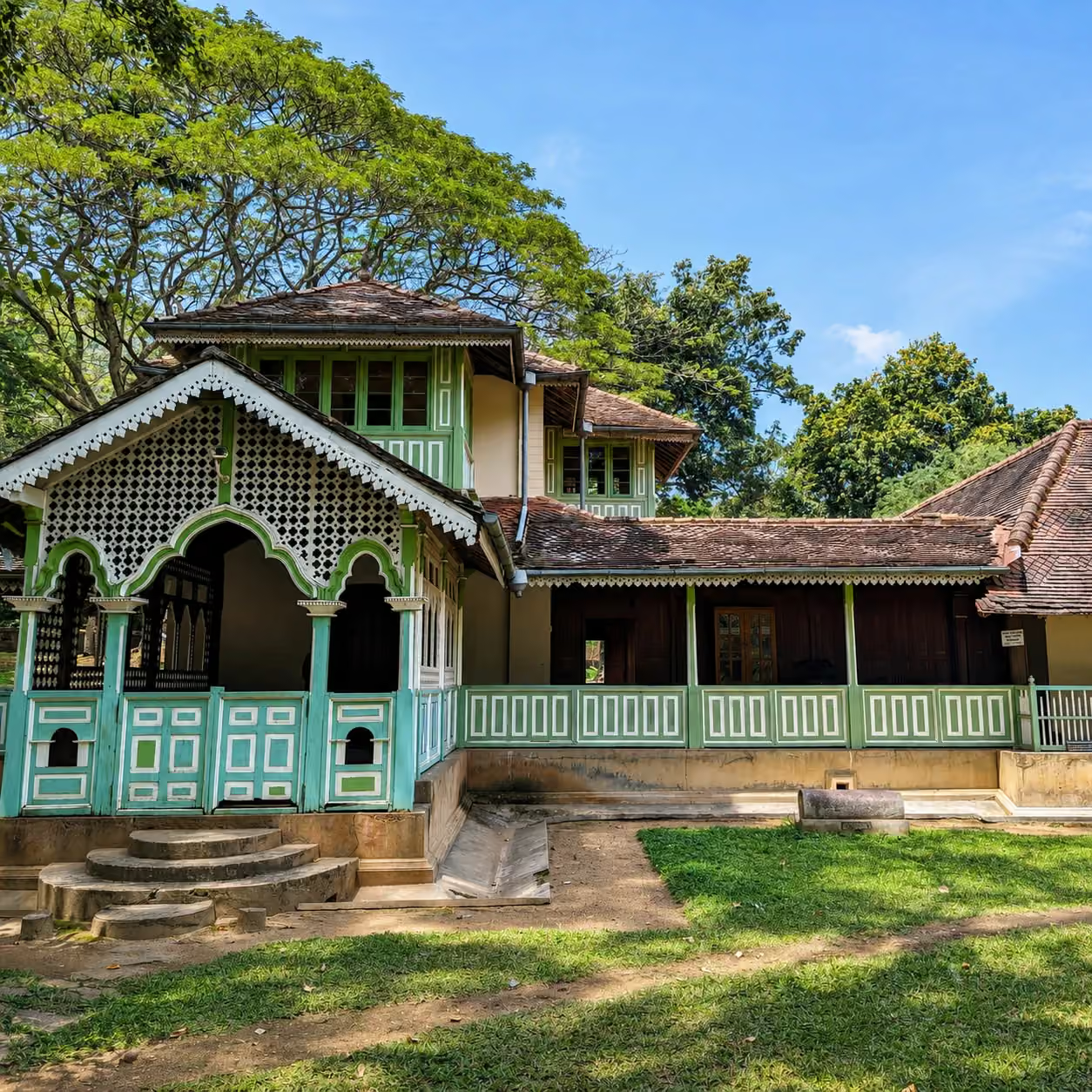
Maduwanwela Walawwa
More from Old Ceylon
When the King’s Birthday Was Celebrated on Galle Face Green: A Glimpse of Colombo in 1933
Holyrood Estate, Talawakelle: An Old Ceylon Bungalow and a Name That Echoes Scotland