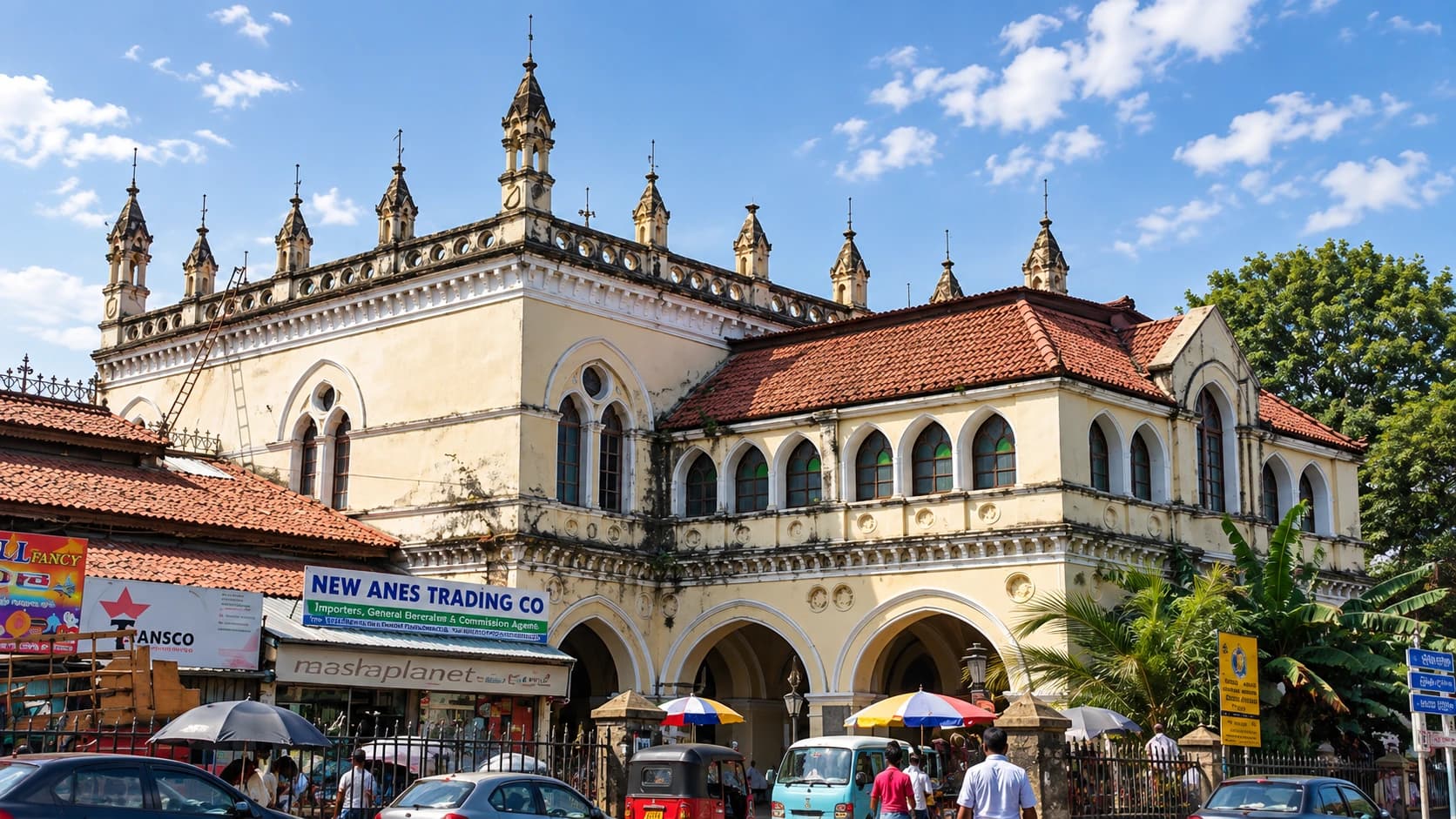
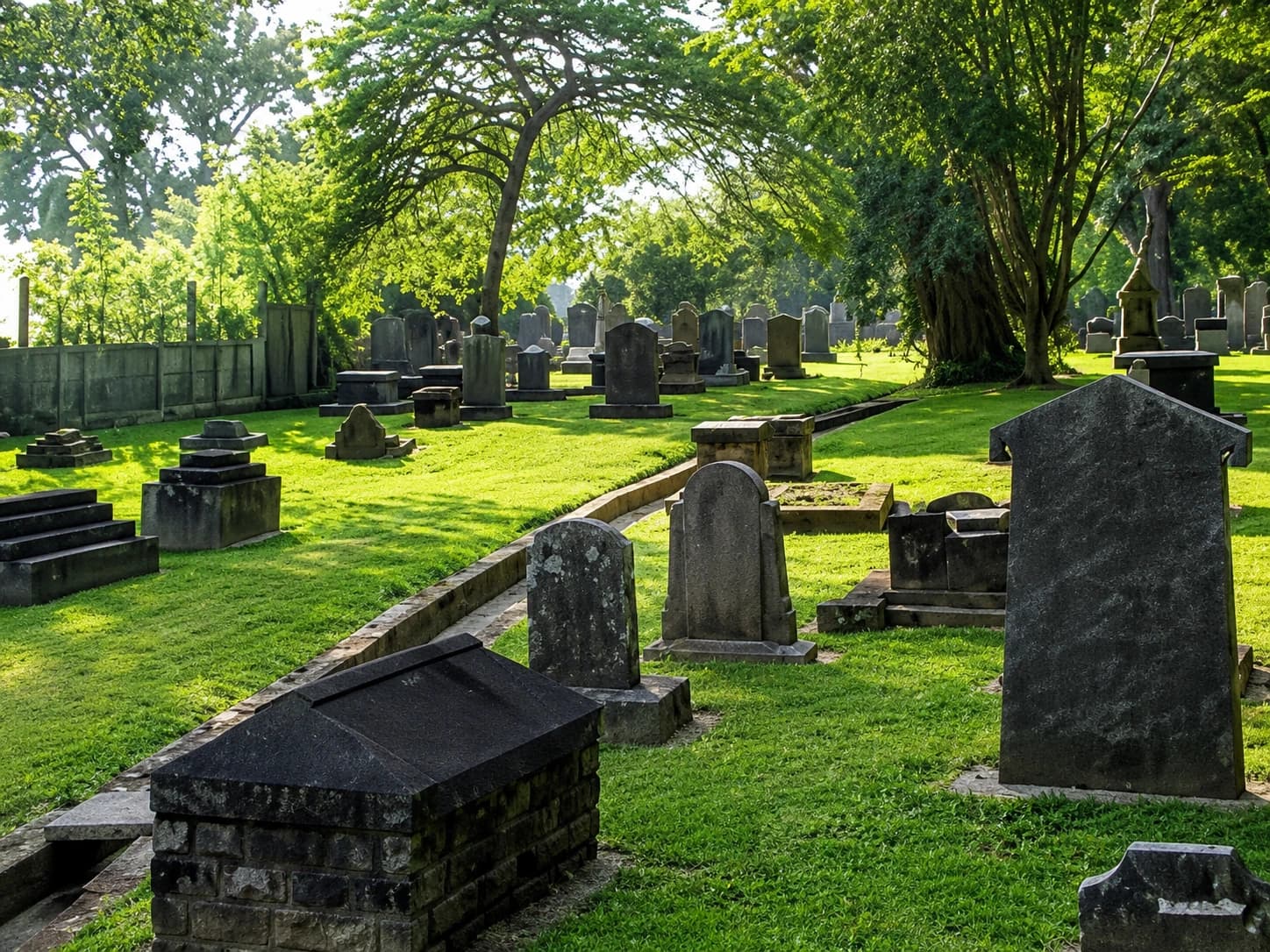
Mahaiyawa Cemetery Kandy, For most people entering Kandy, Mahaiyawa is a familiar name on a busy road. It is associated with traffic, a railway crossing, shops, buses, movement and the constant noise of a city that never fully slows down. Thousands pass through the area without thinking twice. Yet just beyond this everyday rush lies one of the most overlooked chapters of colonial Kandy.
Mahaiyawa Cemetery is not a polished tourist attraction. It does not receive the same attention as the British Garrison Cemetery near the Temple of the Sacred Tooth Relic, nor the carefully maintained Commonwealth War Cemetery at Pitakanda. But for anyone interested in colonial Ceylon, this public cemetery is deeply significant. It holds the graves of British residents, Burgher families, local elites, soldiers, planters and ordinary people who lived through the transformation of Kandy after the fall of the Kandyan Kingdom.
This is not only a cemetery. It is an archive in stone. Weathered crosses, marble tombs, angel sculptures and old inscriptions reveal a quieter side of Kandy’s colonial past — one that rests almost invisibly beside the city’s busiest streets.
After the British Garrison Cemetery
To understand Mahaiyawa Cemetery, we must first look at the British Garrison Cemetery in Kandy. The Garrison Cemetery, located close to the sacred and royal heart of Kandy, became the principal burial ground for British nationals after the British took control of the Kandyan Kingdom.
For much of the early colonial period, it was the resting place of British officials, soldiers, women, children and residents who died in Ceylon. Many of the graves record deaths from tropical diseases, accidents and the hardships of life in the hill capital during the nineteenth century.
By the 1870s, however, burials within the municipal limits were restricted, and the Garrison Cemetery was largely closed to new burials, except in special cases where families already had burial rights. This created the need for another burial ground for the expanding colonial and local communities of Kandy.
Mahaiyawa Cemetery gradually became that space. It grew into the main public cemetery of Kandy, receiving not only British residents but also Burghers, Sinhalese families, Christians of different denominations and others connected to the changing social world of the city.
A Cemetery of Colonial Transition
Mahaiyawa belongs to a different phase of Kandy’s history from the Garrison Cemetery. The Garrison Cemetery tells the story of the early British presence after 1815. Mahaiyawa tells the story of late nineteenth-century and early twentieth-century Kandy — a city becoming more urban, more mixed, and more deeply connected to the economy of British Ceylon.
This was the period when Kandy was no longer only the sacred city of the Temple of the Tooth or the memory of the last kingdom. It was also a railway-linked hill city, a plantation gateway, an administrative centre and a place where British officials, planters, missionaries, merchants, Burgher families and local elites lived side by side.
Mahaiyawa Cemetery reflects that world. It does not tell one single story. It tells many: the story of tea, the story of war, the story of colonial society, the story of art, the story of local families, and the story of ordinary lives that rarely appear in official histories.
James Taylor: The Father of Ceylon Tea
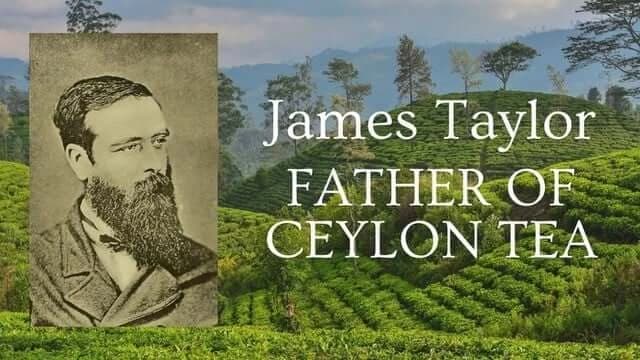
The most important grave in Mahaiyawa Cemetery is that of James Taylor, widely remembered as the Father of Ceylon Tea. His life changed the economic future of Sri Lanka.
Taylor arrived in Ceylon as a young Scottish planter and worked at Loolecondera Estate, near Hewaheta. In 1867, he planted tea commercially on the estate, helping to lay the foundation for what would become one of the island’s most famous industries. At a time when coffee plantations were failing because of disease, tea offered a new future for the hill country.
Taylor did not live to see the full global success of Ceylon tea. He died of dysentery on 2 May 1892 at Loolecondera, aged 57. His body was brought to Mahaiyawa Cemetery in Kandy, where he was buried in the Anglican section.
The story of his final journey is one of the most moving episodes connected to the cemetery. According to records preserved by St Paul’s Church, Kandy, 24 men carried Taylor’s body from Loolecondera to Mahaiyawa, a distance of about 18 miles. They divided themselves into two groups of twelve, taking turns every four miles, and reached the cemetery by late afternoon.
It was a remarkable act of respect. The man who had helped create Ceylon’s tea industry was carried to his final resting place by estate workers who understood his importance.
The Inscription on Taylor’s Grave
Taylor’s grave in Mahaiyawa is more than a memorial to one man. It is a marker of an entire economic transformation. The inscription identifies him as a pioneer of tea and cinchona enterprise in Ceylon.
Those words matter. Tea would become one of Sri Lanka’s great global identities. From the hills of Kandy and Nuwara Eliya to the auction rooms of Colombo and the teacups of the world, Ceylon tea shaped the island’s economy, landscape, labour history and international image.
Yet the man at the centre of that story rests quietly in Mahaiyawa, away from the main tourist route. Many visitors to Kandy see the tea plantations, drink Ceylon tea, and pass through Mahaiyawa without realising that one of the most important figures in the tea story is buried there.
That is why Mahaiyawa Cemetery deserves more attention. It connects Kandy directly to the rise of the tea industry and the plantation world of colonial Sri Lanka.
War Graves and Military Memory
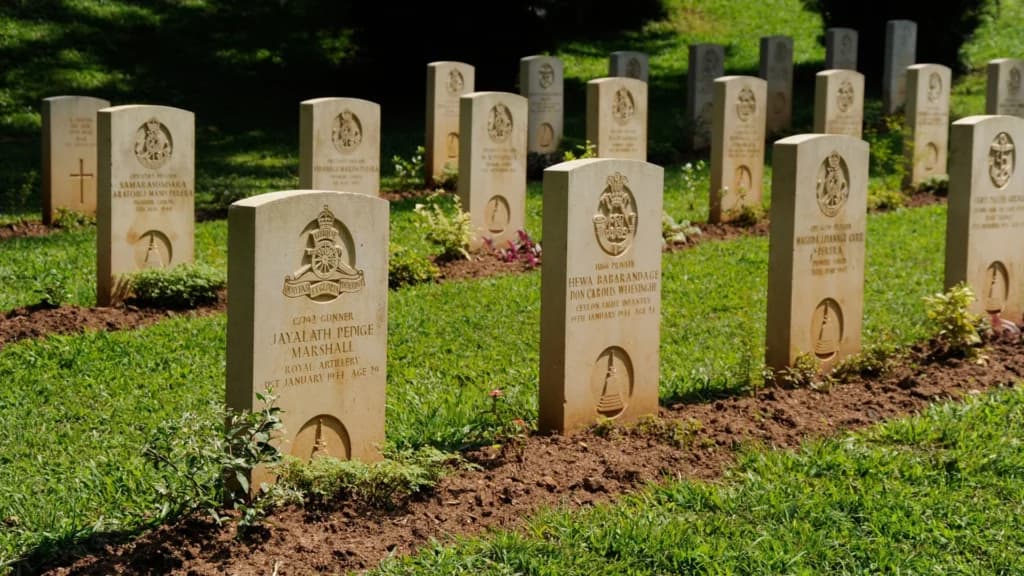
Kandy’s best-known war cemetery is the Commonwealth War Cemetery at Pitakanda. It is beautifully maintained and formally recognised as a major memorial site for servicemen connected to the First and Second World Wars.
Mahaiyawa, however, also has links to wartime memory. Commonwealth War Graves records and related cemetery histories note connections between Mahaiyawa Cemetery and war burials, including graves that were later transferred to the Kandy War Cemetery. Other records also identify a small number of Commonwealth war burials associated with Mahaiyawa itself.
This gives the cemetery another layer of significance. It is not only a burial ground for colonial civilians and planters. It is also part of Kandy’s military and wartime heritage.
For a city that later became important during the Second World War, especially when Kandy served as a major Allied command centre in South Asia, these burial grounds form part of a wider wartime landscape. Mahaiyawa may be quieter than Pitakanda, but it still belongs to that history.
Burghers, British Residents and Kandy Families
One of the most striking features of Mahaiyawa Cemetery is its diversity. It is not a cemetery for one group alone. British residents, Burgher families, Sinhalese Christians and prominent local families are all represented in its graves.
This diversity tells us something important about colonial Kandy. The city was not simply divided between British rulers and local subjects. It was socially layered. Burgher families, missionaries, professionals, artists, planters, public servants and local elites all contributed to its nineteenth- and twentieth-century character.
The cemetery’s surnames reveal this mixed world. Some names are European. Some are Burgher. Some are Sri Lankan. Together, they show how Kandy’s colonial society became more complex over time.
Mahaiyawa is therefore valuable not only for famous graves, but also for ordinary family histories. Every grave represents a life connected to the city — a household, a profession, a grief, a memory.
Art, Marble and Victorian Symbols
Mahaiyawa Cemetery is also visually significant. Many of its old graves show the artistic language of the colonial period: marble slabs, carved crosses, angel figures, urns, pillars and carefully shaped headstones.
These memorials were not random decorations. They reflected ideas of mourning, respectability, religion and social status. In Victorian and Edwardian burial culture, a tombstone could say much about a family’s position, belief and taste. The use of marble, carved angels and elaborate crosses signalled both grief and prestige.
Over time, many of these monuments have weathered. Moss, rain, tropical heat and neglect have softened their surfaces. In some cases, inscriptions are fading. But that ageing gives Mahaiyawa its atmosphere. It feels less like a curated monument and more like a forgotten world slowly being reclaimed by time.
The George Keyt Connection
Mahaiyawa Cemetery is also connected through burial records to the Keyt family name, associated with the world of Sri Lankan art and the wider Burgher community of Kandy. George Keyt, one of Sri Lanka’s most celebrated modern artists, was born in Kandy and came from a Burgher background shaped by both European and Sri Lankan cultural influences.
This connection adds another layer to the cemetery’s importance. Mahaiyawa is not only about colonial administrators and planters. It also points towards the cultural world of Kandy — the artists, families and communities that shaped modern Sri Lankan identity.
Cemeteries often preserve these links more quietly than museums. A family name on a weathered tomb can open a door into art history, social history and the mixed heritage of colonial Ceylon.
A Forgotten World Beyond the Wall
The most powerful thing about Mahaiyawa Cemetery is its contrast with the world outside. On one side of the wall, Kandy is noisy and impatient. Vehicles move, people cross the road, trains pass, and the city continues its daily routine. On the other side, time changes.
Inside the cemetery, the pace is slower. The stones stand still. Old names wait to be read. The lives of planters, soldiers, families, artists and ordinary residents remain present, but only for those willing to look.
This contrast makes Mahaiyawa one of Kandy’s most meaningful hidden heritage sites. It reminds us that colonial history is not only found in grand buildings, palaces and churches. Sometimes it is found in neglected corners, public cemeteries and names almost erased by weather.
Why Mahaiyawa Cemetery Kandy Matters Today
Mahaiyawa Cemetery matters because it helps complete the story of colonial Kandy. Without it, we remember the British Garrison Cemetery, the Temple of the Tooth, the Queen’s Hotel, the railway and the tea estates — but we miss the place where many of the people who lived through that world were finally laid to rest.
It also reminds us that heritage is fragile. Tombstones break. Inscriptions fade. Families move away. Public memory becomes selective. Unless these places are documented, protected and respectfully visited, entire chapters of local history can disappear.
For researchers, Mahaiyawa is a valuable archive. For history readers, it is a quiet but powerful site. For travellers, it offers a very different way of understanding Kandy — not through spectacle, but through memory.
Visiting Mahaiyawa Cemetery Respectfully
Anyone visiting Mahaiyawa Cemetery should do so with care. This is not only a heritage site. It is an active and sacred burial ground for many families. Visitors should avoid loud behaviour, respect religious sections, ask permission where needed, and be careful when photographing graves.
The best way to experience the cemetery is slowly. Look at the inscriptions. Notice the dates. Observe the materials and symbols. Think about how Kandy changed between the early British period and the modern city we see today.
A visit to Mahaiyawa can also be combined with the British Garrison Cemetery, the Temple of the Tooth, St Paul’s Church, the Kandy War Cemetery and the Ceylon Tea Museum. Together, these places tell a fuller story of colonial Kandy.
Final Thoughts: The Silent Cemetery of Old Kandy
Mahaiyawa Cemetery is one of Kandy’s most overlooked historical places. It holds the memory of James Taylor, the Father of Ceylon Tea. It connects to war graves, Burgher families, British residents, old Kandy society and the wider story of colonial Sri Lanka.
It is easy to pass by Mahaiyawa without noticing it. But beyond the traffic and the noise lies a quiet world of stone, memory and history. The cemetery reminds us that the present city was built by many lives — famous and forgotten, powerful and ordinary, local and foreign.
The next time you pass through Mahaiyawa, it is worth remembering what rests beyond the wall. Kandy’s colonial history is not only in its monuments. Some of it sleeps in silence, waiting to be read.
Visit Us: https://trippingsrilanka.com/stories
More from Old Ceylon
Looking for a Planter Ancestor in Old Ceylon? Following British Family Roots Back to Sri Lanka
St. Paul’s Girls School, Milagiriya: An Old Ceylon School in a Changing Colombo