A House Built Around the Weather
Old Ceylon bungalows | There was a time when a house in Ceylon was built around the weather rather than against it. Before electric fans, before air-conditioning, before sealed glass windows and concrete boundary walls, a home had to deal with the sun, the monsoon and the heavy stillness of a tropical afternoon by itself. The roof had to be wide enough to throw shade, the windows had to open properly, and the rooms needed height, air and space.
Somewhere between the garden and the house, there was usually a verandah. That long shaded space became one of the most familiar features of domestic life in Old Ceylon. Yet its history is not quite as simple as calling it Dutch or British. The houses that survive from those periods are the result of several traditions meeting here, changing slowly, and becoming suited to the island.
Dutch Houses in a Tropical Island
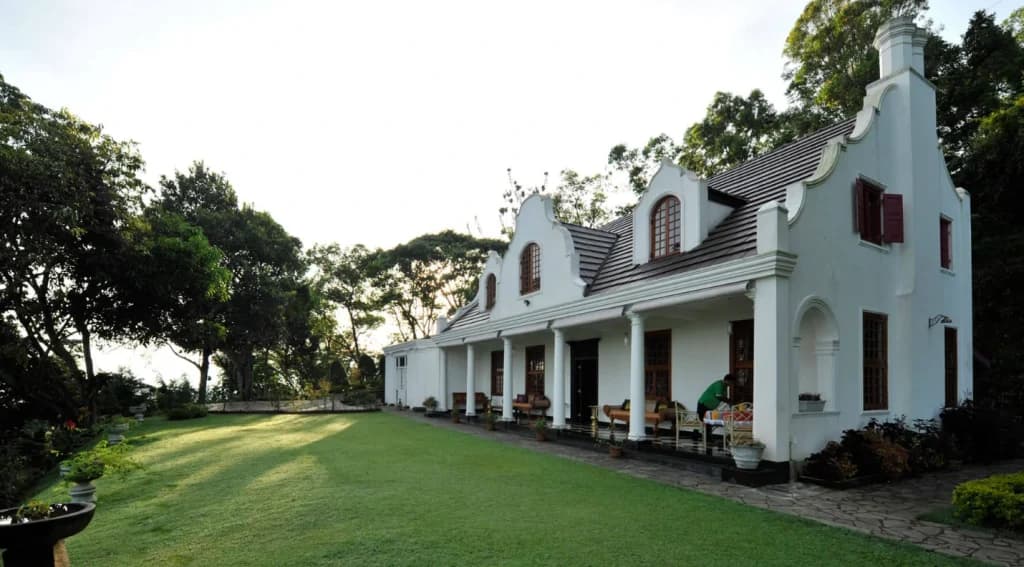
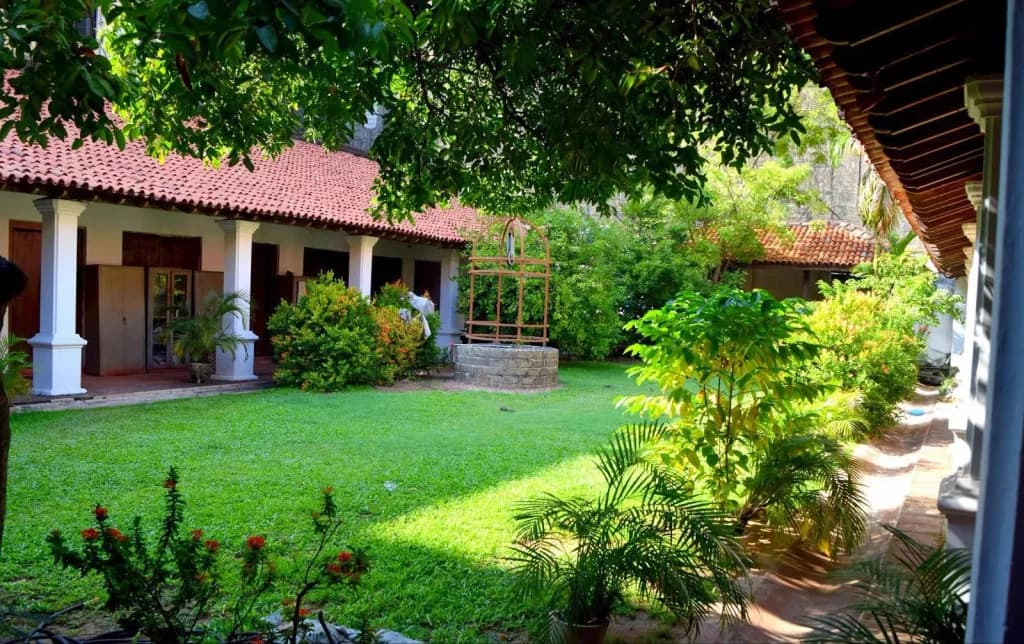
During Dutch rule, particularly in towns such as Galle and Colombo, many houses were built around deep interiors, courtyards, thick masonry walls, timber doors and tiled roofs. Some of the best surviving examples can still be seen within Galle Fort. From the street, these houses can appear restrained, sometimes almost severe, but behind the front door the plan often opens into halls, courtyards, rear verandahs and gardens.
The Dutch did not simply transplant houses from Europe and place them on the coast of Ceylon. That would have made little practical sense. The climate required something different. Heat had to be managed, rain had to be kept away from openings, and air had to move through the building. A house that ignored the climate would quickly become unbearable.
Old Ceylon bungalows | Local Knowledge and Adapted Design
Local building knowledge also mattered. Covered transitional spaces, courtyards and shaded edges were already part of architectural traditions in Sri Lanka and elsewhere in South Asia. European plans were gradually adapted by craftsmen who understood local materials, rain, heat and the rhythm of daily life in the tropics. Over time, the result became less European than the name might suggest.
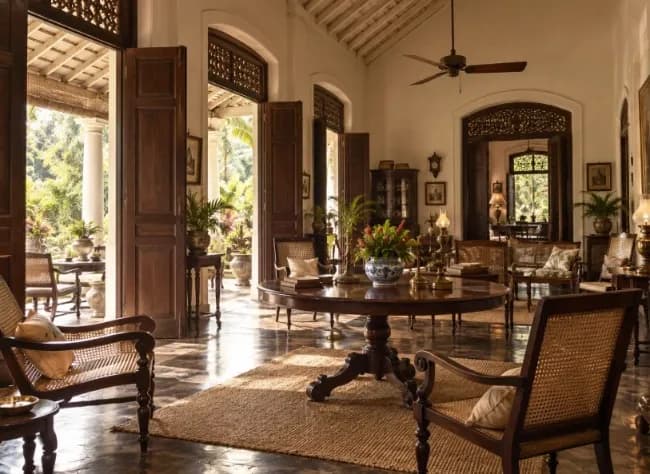
A Dutch-period house in Ceylon therefore belonged to a world of compromise and adaptation. Heavy walls could help moderate the heat. Courtyards allowed light and air into deep plots. Long roofs kept rain away from doors and windows. Timber shutters could be opened wide during the day instead of sealing the room from the outside. There is something very sensible about these old houses when seen today. They were designed at a time when a badly planned room could not be rescued later by an air-conditioner.
The Arrival of the Bungalow
When British rule began at the end of the eighteenth century, the new administration inherited many Dutch buildings and continued to use them. Some were altered, some enlarged and others eventually replaced. During the nineteenth century, however, a different type of residence became increasingly familiar across Ceylon: the bungalow.
The bungalow was not originally British. The word and the basic form came from the Indian subcontinent before being adopted by the British and carried throughout the empire. In Ceylon, it found an environment where the idea worked particularly well. A detached house standing inside its own compound could be arranged to catch the breeze. Rooms could open towards gardens. Deep verandahs could keep direct sunlight away from the main walls. Wide roofs could protect several sides of the building at once.
Colombo and the Garden House
The British bungalow eventually became part of the landscape of Colombo. Areas such as Cinnamon Gardens and parts of Kollupitiya once contained far more large houses standing inside gardens than the modern city allows us to imagine. Many were not grand in the way we might think of a mansion today. Some were quite plain, with a broad tiled roof, a generous front verandah, timber shutters and a drive leading from the gate.
What made them impressive was space. There were trees around the house and distance between one property and the next. A garden might contain palms, flowering shrubs, old shade trees and lawns that had been there for decades. The verandah looked onto this world, and through it the house remained connected to the garden instead of being shut away from it.
The Verandah as a Living Room
The verandah was often where a house felt most alive. A visitor might be received there instead of in the drawing room. Someone could read the morning newspaper in a cane chair. Children could play outside while a shower passed through the garden. Tea could be brought out late in the afternoon, when the heat had softened and the garden began to settle into evening.
It was not simply something added to the front elevation. In many houses, the verandah was one of the most useful rooms. By midday, when the garden outside had become bright and hot, the verandah remained in shade. Doors and shutters behind it could stay open without exposing the interior directly to the sun. When rain arrived, the roof gave enough protection for life to continue almost unchanged.
A House That Opened Into the Garden
This way of building gave the bungalow a particular relationship with its garden. The house did not end abruptly at a wall. There was a gradual transition from interior room to verandah, from verandah to steps, and from steps to garden. That gentle movement between inside and outside is one of the things that made old Ceylon houses feel so different.
It is also something much harder to find in Colombo today. As the city grew, land became more valuable and large compounds were divided. Many old houses disappeared entirely. Others survived for a while as offices, schools or commercial buildings before eventually giving way to newer development. Sometimes little remains except a gatepost, a boundary wall or a large tree that once stood beside a house no longer there.
The Hill Country Bungalow
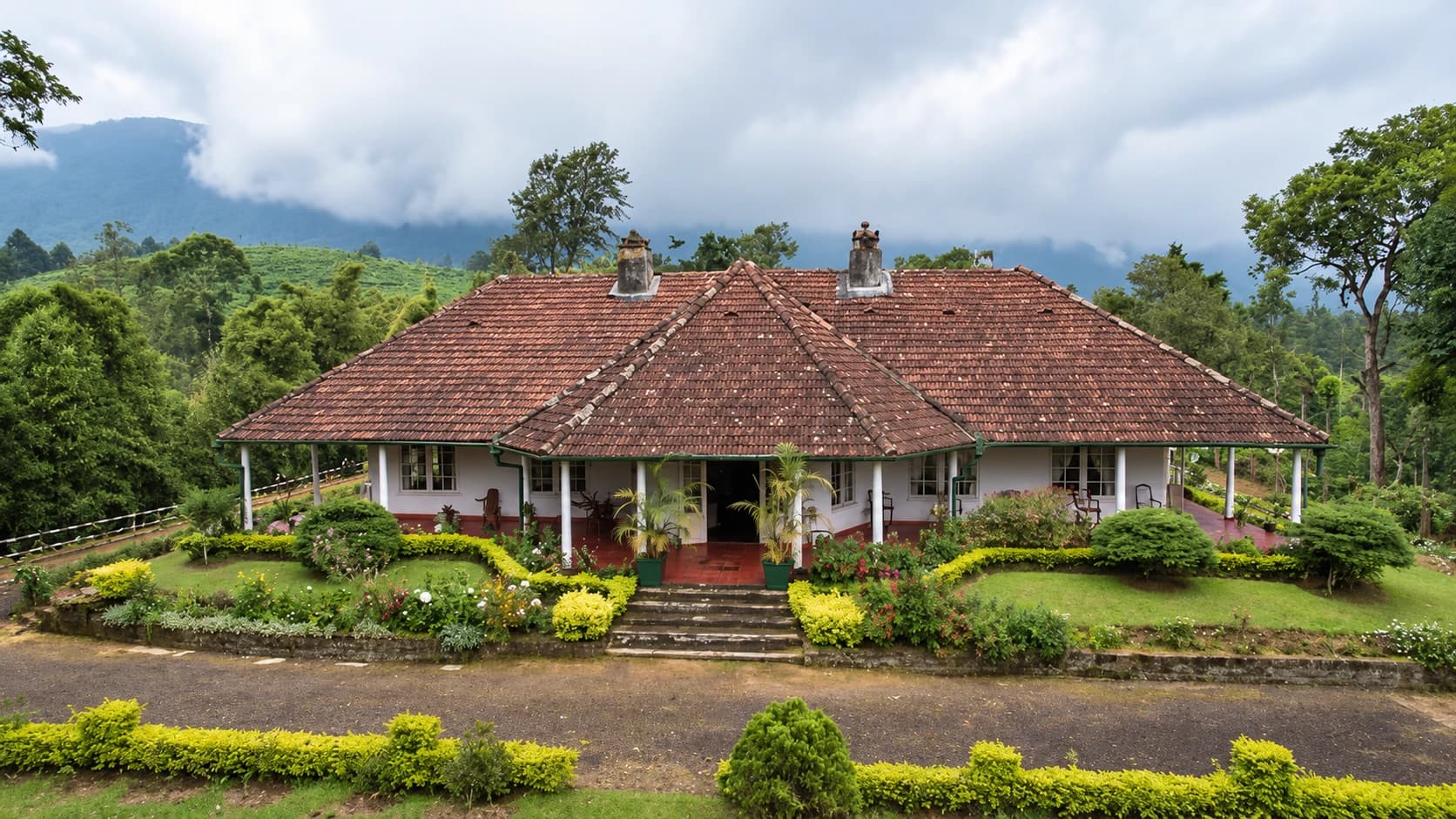
The bungalow developed differently in the hill country. As coffee and later tea expanded across the central highlands, planters and estate superintendents needed houses near the plantations they managed. Bungalows appeared across districts such as Dimbula, Dickoya, Pussellawa, Haputale and Nuwara Eliya.
Here the climate could be surprisingly cold. Rain might continue for days, and evenings could become uncomfortable without a fire. Some estate bungalows therefore acquired fireplaces, chimneys and interiors that reflected Victorian or Edwardian tastes. Yet once again, the house was shaped by Ceylon. The verandah looked across tea rather than an English field. Mist moved through the valley below. Wet boots and umbrellas accumulated near the entrance. Estate dogs found the warmest place on the floor.
English Details in a Ceylon Landscape
A planter’s bungalow might have looked English in parts, but it could never entirely escape its surroundings. The roof, the verandah, the garden and the view all belonged to the island. The house may have contained imported furniture, framed prints, fireplaces and dining rooms arranged according to British habits, but outside the windows were tea fields, rain, mist, servants’ quarters, estate roads and the constant working life of the plantation.
Many estate bungalows also grew slowly. A modest house was extended as an estate prospered. Another bedroom was added. A side verandah was enclosed. A new dining room appeared. Gardens matured around the building, and trees planted by one generation shaded another. This is why some surviving estate bungalows have a slightly irregular quality today. They were not always completed according to one perfect architectural plan. They evolved with the estate and the people living there.
The Labour Behind the Bungalow
It is important not to separate the bungalow from the larger plantation world around it. The quiet domestic life associated with these houses depended on cooks, gardeners, ayahs, house servants, drivers and the much larger workforce of the estate itself. Old photographs and nostalgic accounts often linger on the bungalow while leaving much of that labour outside the frame.
The beauty of the bungalow should not make us forget the unequal world that supported it. The polished table, the tended garden, the afternoon tea and the quiet verandah all belonged to a wider system of labour and hierarchy. To understand the bungalow honestly, it must be seen not only as architecture but also as part of the social world of colonial Ceylon.
When Dutch and British Styles Blended
By the late nineteenth and early twentieth centuries, the distinction between Dutch and British domestic architecture in Ceylon was no longer always clear. An old Dutch house might receive a British-era extension. A British bungalow could use building methods that had been common locally for generations. A local family might adopt parts of colonial domestic style and alter them again to suit their own needs.
Houses accumulated layers. That is part of their charm. A doorway might belong to one period, the tiles to another and the furniture to another still. A verandah could be altered, enclosed and reopened over the course of a century. What remained constant was the climate. The best of these old houses were built with an understanding that the weather could not simply be shut outside.
What Survives Today
Today, when an old bungalow survives behind a wall in Colombo or on an estate road in the hills, it can seem almost strangely generous. The rooms are high, the windows are large, and the verandah takes up space that a modern developer might immediately calculate in square feet. But that space was never wasted. It gave the house shade, air and somewhere to live during the hottest part of the day.
Perhaps that is what makes the old bungalows of Ceylon so memorable. They were not simply Dutch houses or British houses transplanted onto the island. They became part of a much longer architectural conversation between Europe, South Asia and Ceylon itself. After all the labels are stripped away, the things that remain are wonderfully simple: a tiled roof, open shutters, an old garden and a long verandah waiting in the shade.
Visit us: https://trippingsrilanka.com/stories