The Old Colombo Lighthouse: When a Clock Tower Guided Ships Home
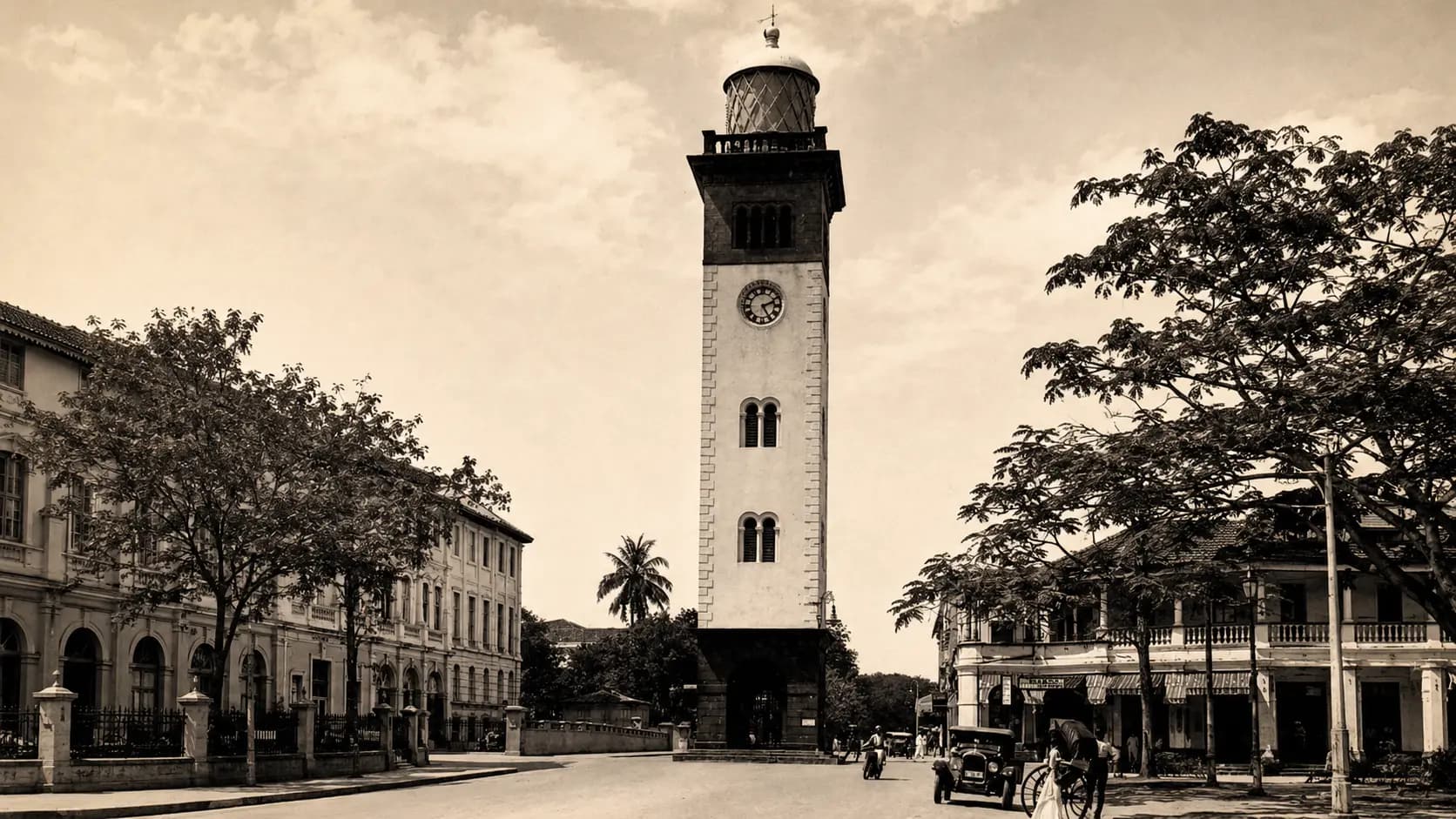
Old Colombo Lighthouse| There are landmarks in Colombo that we notice without really seeing.
We pass them in traffic, glimpse them between office buildings and perhaps use them as convenient points of reference. Yet some of these familiar structures belong to a Colombo so different from the city we know today that it takes a little imagination to place them in their original surroundings.
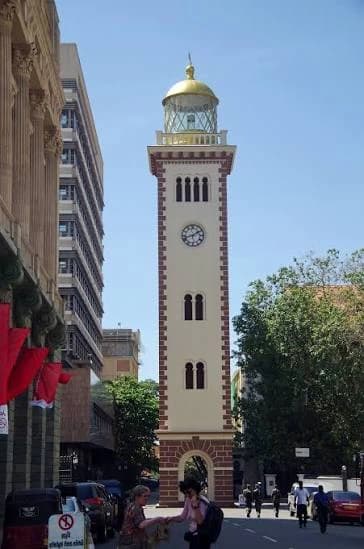
The old lighthouse and clock tower in Colombo Fort is one of them.
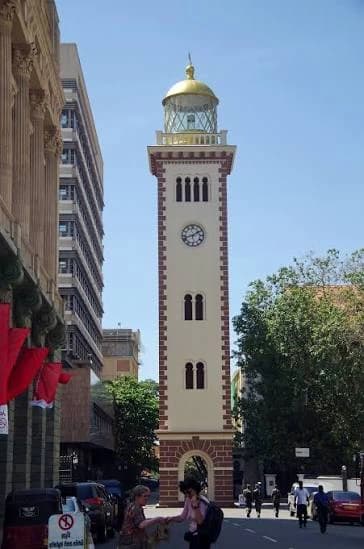
Standing at the meeting of Chatham Street and Janadhipathi Mawatha, the slender tower now appears almost enclosed by modern Colombo. Office blocks rise around it, vehicles pass beneath it and the commercial city carries on at its usual hurried pace.
But look at the tower for a moment and try to remove all of that.
Imagine fewer buildings. Imagine the sea much more present in the life of Fort. Imagine steamships approaching Colombo and a light shining from the top of this very tower.
Because the clock tower we see today was once one of Colombo’s guiding lights.
Read our previous article- https://trippingsrilanka.com/stories/colonial-colombo
A Familiar Landmark with an Unexpected Story
The tower was built in 1856–57, with construction completed in February 1857. At approximately 29 metres high, it was reportedly the tallest structure in Colombo at the time.
One particularly charming detail survives from its beginnings: the design is credited to Emily Elizabeth Ward, or Lady Ward, wife of Governor Sir Henry George Ward. Construction was carried out by the Public Works Department under J. F. Churchill.
It is a small historical detail that makes the building rather more interesting.
In an age when the names attached to colonial public works were overwhelmingly those of governors, engineers and officials, a woman is associated with the design of one of Colombo’s most enduring landmarks.
And initially, it was the clock rather than the lighthouse that mattered.
Read our previous article-
A Clock That Waited More Than 40 Years
The story of the clock begins long before the tower.
During the administration of Governor Sir Robert Brownrigg, a clock was imported from England in 1814 for a proposed clock tower in Colombo. The plan did not proceed, and the mechanism remained in government stores for decades. It was only more than 40 years later that the clock finally found a permanent home in the new Chatham Street tower.
One can imagine what the arrival of a public clock meant to mid-19th-century Colombo.
There were no phones displaying the time, no digital signs and certainly no smartwatches. A large clock visible from different directions was part of the infrastructure of an increasingly busy commercial town.
Yet the tower was about to acquire a second life.
When Colombo’s Clock Tower Became a Lighthouse
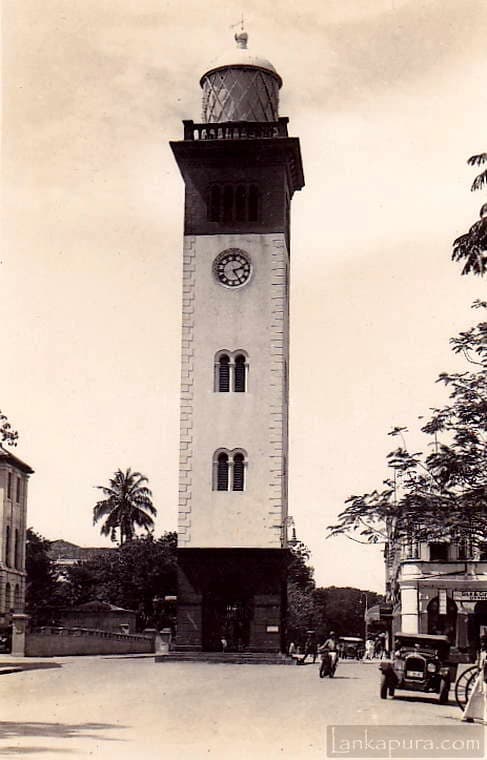
In 1865, a navigational light was added to the tower. From then on, the structure performed an unusual double duty.
By day, it told Colombo the time.
By night, it helped guide ships approaching the coast.
The lighthouse initially used oil lamps. Its equipment was subsequently improved, and the light eventually became electric. At its height, its beam could be seen many miles out at sea.
It is difficult to appreciate that function when standing in Fort today.
The tower now appears thoroughly urban. Buildings surround it, streets run past it and the modern harbour landscape feels removed from the world in which the lighthouse operated.
Old photographs make the story easier to understand.
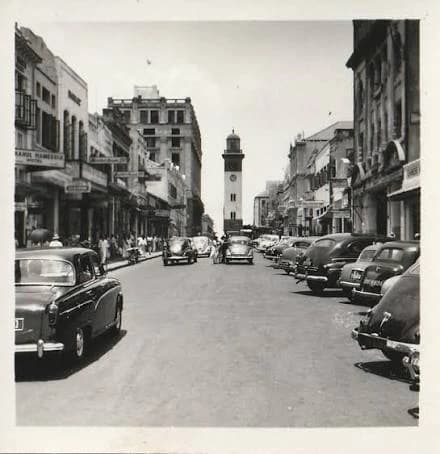
The Fort of the late 19th and early 20th centuries was lower and more open. Against that skyline, the lighthouse tower was not the modest historic curiosity it can appear to be today. It was a commanding feature of Colombo.
For someone approaching Ceylon by sea, its light would have belonged to the first impressions of the capital.
Imagine Arriving in Old Colombo
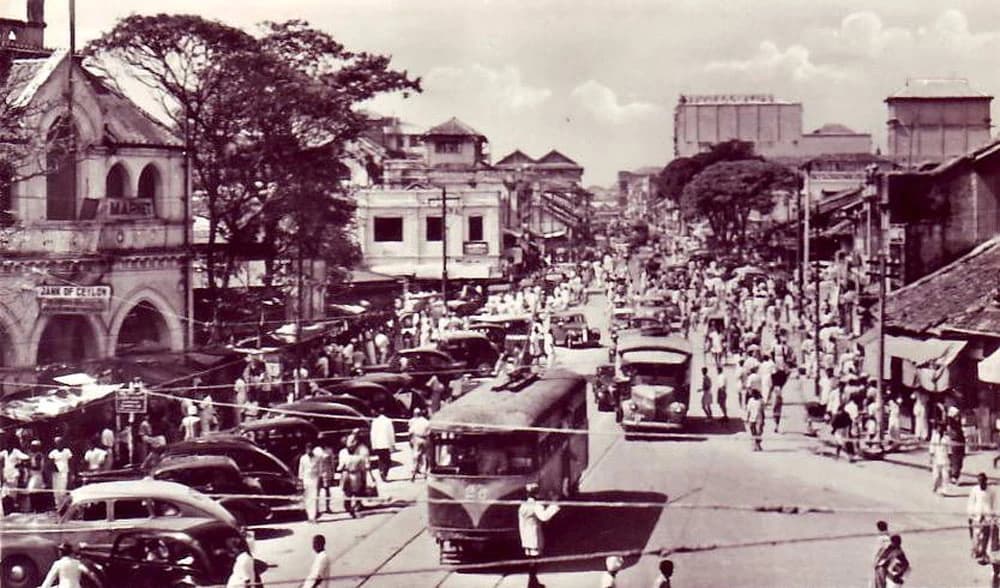
This is where the building becomes more than an architectural monument.
Imagine a passenger standing on the deck of a steamer approaching Colombo after sunset.
The coast is still some distance away. The harbour lights begin to appear. Somewhere ahead, the lighthouse flashes across the darkness.
Beyond it waits Colombo.
There would be agents, merchants, harbour workers, bullock carts, hotels and offices. There would be travellers beginning journeys into the hill country, planters returning to their estates and passengers merely stopping in Ceylon before continuing across the Indian Ocean.
The lighthouse was part of that world of arrivals and departures.
And for those already living in Colombo, the same tower belonged to everyday life. Its clock marked the hours above the streets while its light served another population altogether — those still beyond the shore.
When the City Grew Around Its Lighthouse
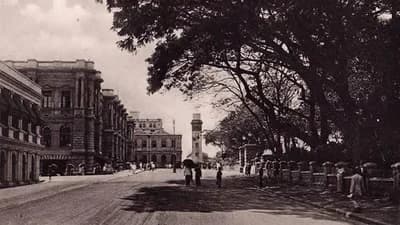
Eventually Colombo itself made the lighthouse obsolete.
As Fort developed and taller buildings appeared, they began to interfere with the visibility of the light. A lighthouse surrounded by an expanding commercial city could no longer perform its original maritime purpose effectively.
The light was finally decommissioned in 1952, with the newer lighthouse at Galle Buck taking over its navigational role.
The old tower, however, remained.
Its light went out.
Its clock continued.
That survival is what makes the structure so evocative today.
The Colombo That Disappeared Around It
Buildings often survive longer than the worlds for which they were created.
The Old Colombo Lighthouse is a particularly good example.
The sea-going Colombo it served has changed enormously. The harbour expanded. The Fort became a dense commercial and administrative district. Queen’s Street became Janadhipathi Mawatha. Modern towers rose behind Victorian façades. Motor traffic replaced the slower movement of carriages and carts.
Yet in the middle of all that change, the old clock tower remained remarkably recognisable.
Look at an old photograph of the structure and then at a modern image. The surroundings have been transformed, but the tower still provides an immediate connection between the two Colombos.
Perhaps that is why it has such nostalgic power.
It does not require us to reconstruct a vanished building from foundations or search for traces hidden beneath later development.
It is still there.
Next Time You Pass Through Colombo Fort
The next time you find yourself in Fort, look towards the old clock tower.
Then forget the buildings around it for a few seconds.
Picture a much lower skyline. Picture Chatham Street in another century. Picture the harbour beyond and ships lying offshore. As evening falls, imagine the lamp above the clock beginning to shine.
For almost a century, people at sea looked towards that light and knew Colombo was ahead.
Today it no longer guides ships.
Instead, it does something perhaps equally valuable.
It guides us back to an older Colombo, to the days when the city faced the sea, steamships brought travellers to Ceylon and a clock tower in Fort shone into the darkness of the Indian Ocean.
Somewhere inside modern Colombo, old Ceylon is never very far away.
Visit us: https://trippingsrilanka.com/stories
Heritage places mentioned