Old Town Hall Colombo: The Forgotten Civic Landmark Hidden in Pettah
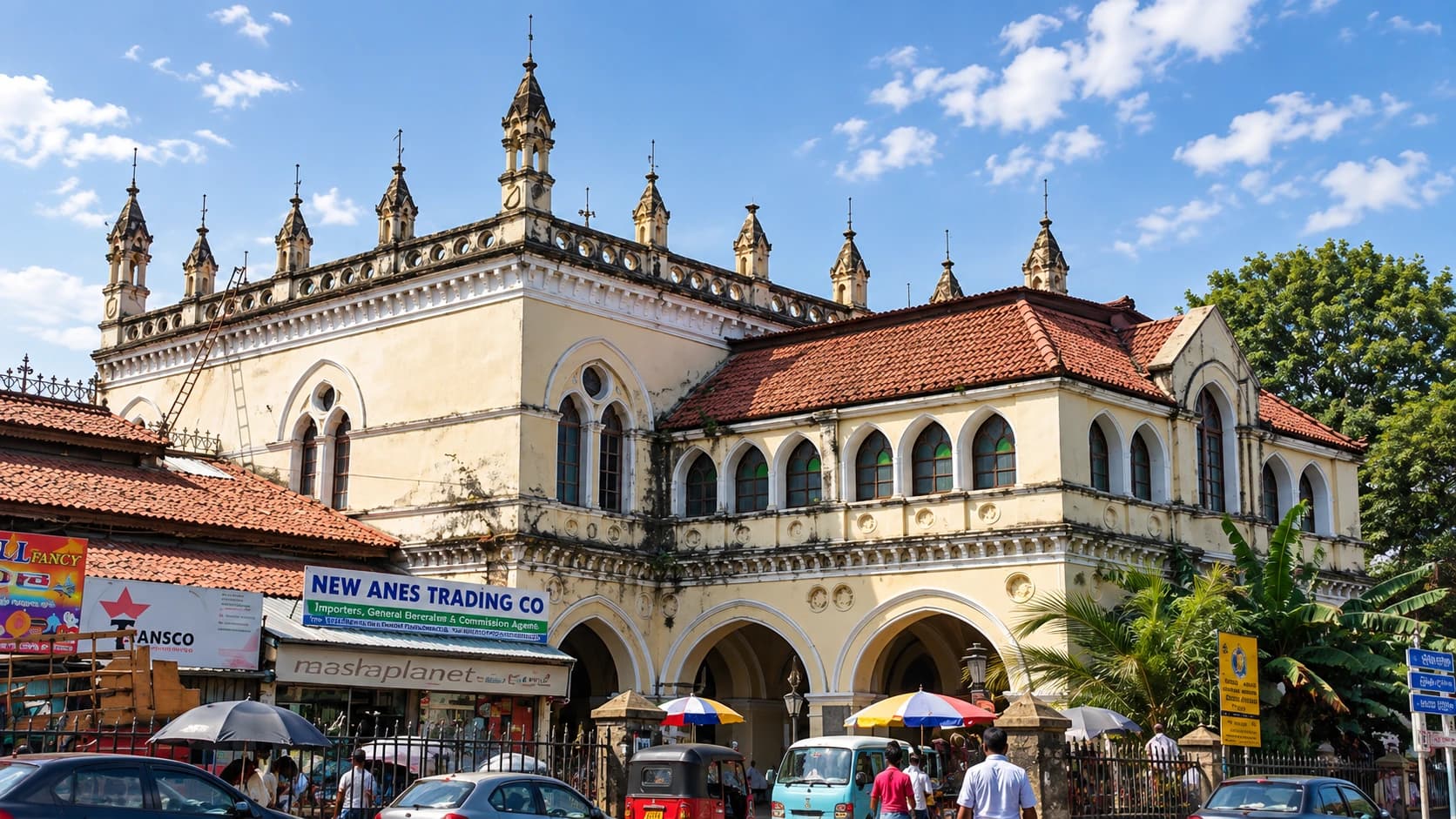
A Forgotten Civic Building in the Heart of Pettah
Old Town Hall Colombo: Pettah’s Civic Memory | There are buildings in Colombo that disappear without actually vanishing.
They remain standing, sometimes in the middle of the city, while everyday life moves around them so loudly that people stop noticing what they are.
The Old Town Hall in Pettah is one of those places.
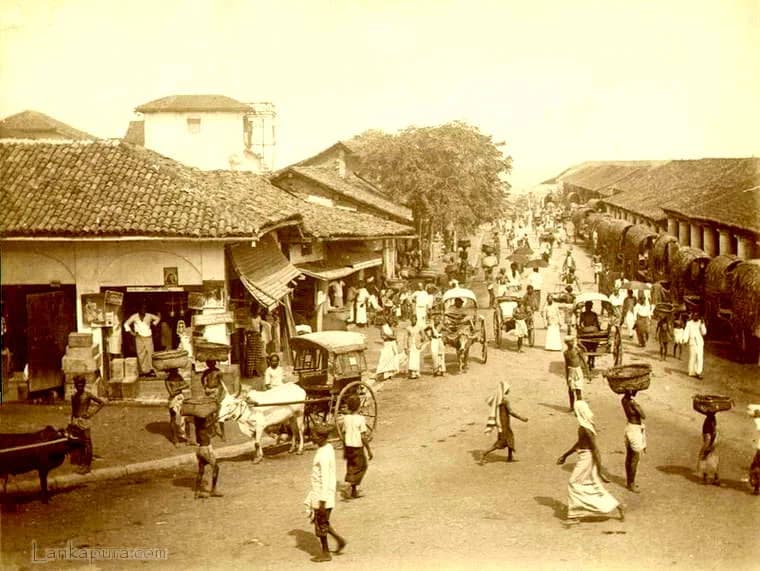
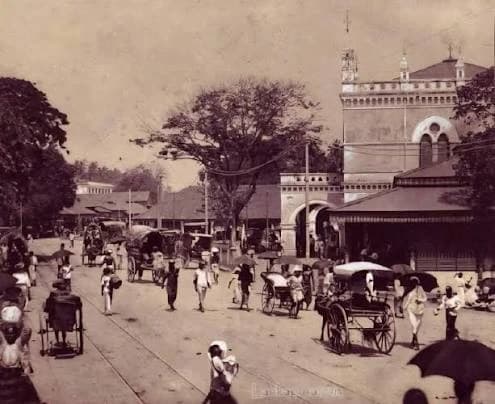
It stands in one of Colombo’s busiest commercial districts, surrounded by shops, market streets, buses, traders, carts, pedestrians and the constant movement of the city. Pettah is rarely quiet. It is a place of noise, trade, colour and urgency.
Yet within this crowded urban landscape stands a building from another Colombo.
Built in 1873, the Old Town Hall once served as the centre of Colombo’s municipal administration. Long before the present Town Hall became the city’s grand civic symbol, this building in Pettah was where municipal business was conducted and where decisions about the growing colonial city were discussed.
Today, it feels like a forgotten civic room left behind by the city it once helped govern.
Colombo Before the Present Town Hall
When people think of Colombo’s Town Hall today, they usually imagine the large white building near Viharamahadevi Park.
But that was not Colombo’s first municipal home.
The Old Town Hall in Pettah belonged to an earlier stage of the city’s growth. In the late nineteenth century, Colombo was expanding rapidly. The harbour was becoming increasingly important. Fort and Pettah were commercial centres. Roads, markets, sanitation, public health, lighting and administration were becoming urgent urban matters.
The city needed institutions to manage that growth.
The Old Town Hall was part of that process.
It was not merely a decorative colonial building. It was a working civic space, built for the practical business of managing Colombo as it developed from a colonial port town into a more organised urban centre.
That is what makes it so important.
It tells the story not only of architecture, but of municipal life.
Near Kayman’s Gate
The Old Town Hall belongs to the historic Pettah area around Kayman’s Gate, near the junction of Main Street and 4th Cross Street. This was once one of the old gateway points between the fortified city and the busy commercial quarter of Pettah.
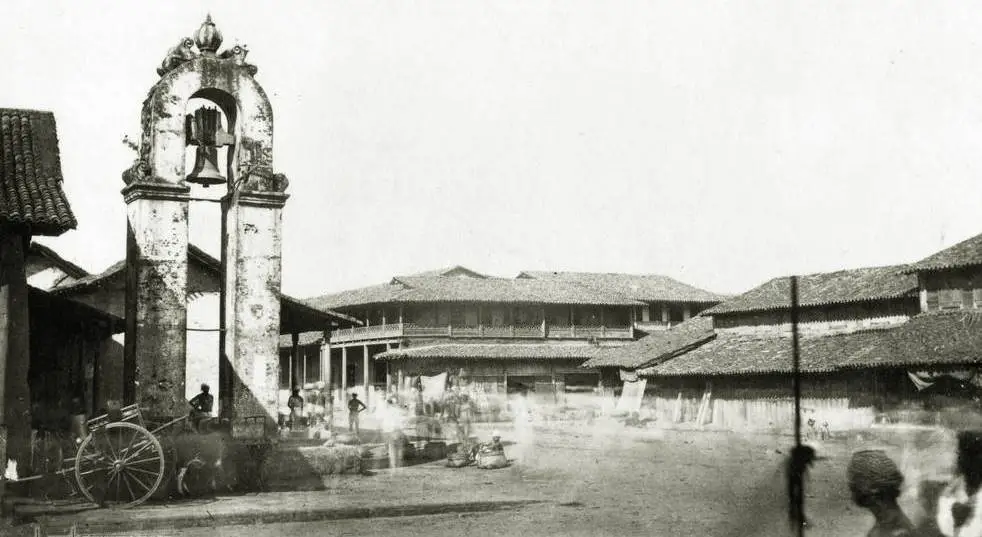
Today, the gate itself survives mainly through its historic bell tower and place name, but the area still helps explain why the Old Town Hall was built in such a busy part of Colombo. It stood close to markets, streets, transport routes and the everyday commercial life of the city.
Why Pettah Was the Right Place
At first glance, Pettah may seem an unlikely place for a civic landmark.
Today, it is associated mostly with wholesale trade, market lanes, crowded pavements, bus routes and everyday commercial life. But historically, Pettah was central to Colombo’s identity.
It stood beside Fort, close to the harbour, near important trade routes and within one of the oldest parts of the city’s urban fabric.
Pettah was never simply a market.
It was a place where trade, religion, transport, administration and community life met. Mosques, churches, shops, warehouses, old residences, markets and civic buildings all belonged to its landscape.
The Old Town Hall therefore stood in a very logical place.
It was close to the commercial life of the city. It was close to the people and streets that municipal administration affected. It was part of Colombo’s working centre, not removed from it.
That relationship is still visible today.
Step outside the building and Pettah immediately takes over again.
The Architecture of an Earlier Colombo
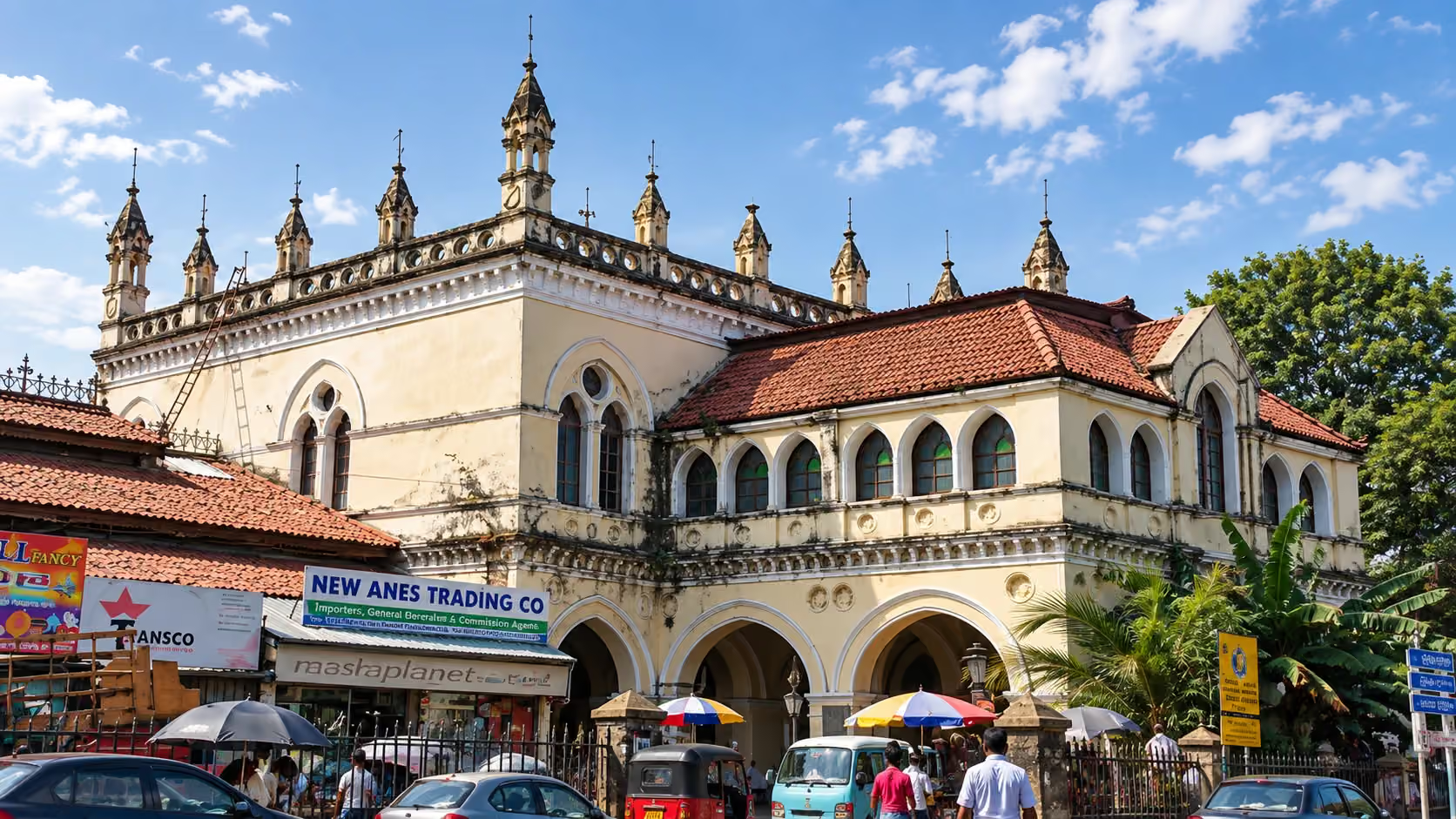
The Old Town Hall carries the architectural language of the British colonial period.
Its pointed arches, tall windows, high roofline and decorative details connect it to the Victorian Gothic Revival style that appeared in several public buildings of the period.
But the building is not grand in the way later colonial civic buildings often became.
It feels more modest, more functional and more closely tied to the street.
That gives it a particular charm.
It has the appearance of a formal public building, but it stands inside the heat, dust, movement and trade of Pettah. Its architecture suggests order and administration; its surroundings suggest commerce and everyday survival.
The contrast is exactly what makes the building interesting.
It is not isolated in a manicured heritage zone.
It survives inside the real city.
J. G. Smither and Colonial Civic Design
The Old Town Hall was designed by J. G. Smither, an important British colonial architect associated with several public works in Ceylon.
His design for the building reflected the civic needs of the period. It had to be formal enough to represent municipal authority, but practical enough to function as an administrative and meeting space.
Buildings of this kind were meant to communicate seriousness.
Their arches, high ceilings, staircases, timber work and public rooms gave physical form to administration. They were designed to make civic authority visible.
In the case of the Old Town Hall, that authority was placed directly inside the city’s commercial heart.
This was not architecture for private comfort.
It was architecture for public function.
The Council Chamber Upstairs
The most memorable part of the Old Town Hall is its upper floor.
Here, the old council chamber preserves the atmosphere of municipal Colombo in a way that is unusual, almost theatrical.
A long table occupies the room. Around it are life-sized figures representing former council members. The setting is strange at first, but it is also effective.
It makes the visitor pause.
One can imagine discussions taking place here about roads, drainage, markets, sanitation, lighting, public health and the ordinary systems that allowed Colombo to function.
These are not always the subjects that attract romantic historical attention.
But they mattered enormously.
A city is not built only through forts, hotels, churches and grand houses. It is built through regulations, budgets, inspections, committees and decisions made around tables like this one.
The old chamber reminds us of that quieter history.
Wax Figures and Municipal Memory
The wax figures inside the Old Town Hall are among its most unusual features.
They may not be polished in the manner of a modern museum display. That is part of their effect.
They give the room an oddly suspended quality, as though an old council meeting has been interrupted but not entirely dismissed.
This is municipal memory presented in a very local, almost eccentric form.
The figures invite visitors to think of the building not as an empty shell, but as a place once occupied by people who took decisions about the city.
Some of those decisions may have seemed routine at the time.
Yet over decades, such decisions shaped the Colombo we inherited.
Where markets stood.
How roads were maintained.
How public health was managed.
How urban order was imposed.
How the growing city was governed.
The Old Town Hall preserves that administrative world in a way few other buildings in Colombo do.
Edinburgh Hall and the Market Connection
The story of the Old Town Hall is also connected with Edinburgh Hall, which stood nearby and later became associated with market use.
This link is important because it shows how civic and commercial Colombo were always close to one another.
A public hall could become part of the market world.
A formal building could be absorbed into Pettah’s practical economy.
This is one of the defining patterns of Colombo heritage.
Buildings rarely remain fixed in their original purpose. They are adapted, reused, divided, neglected, revived or folded into the needs of the city around them.
The Old Town Hall and its neighbouring spaces show this clearly.
They belong to a Colombo where public administration and street commerce were never far apart.
When the City Moved Away
In the early twentieth century, Colombo’s civic centre shifted.
The present Town Hall, near Viharamahadevi Park, eventually became the city’s better-known municipal symbol. With that move, the older building in Pettah lost its former importance.
This was a turning point.
Once a building loses its main function, its future becomes uncertain.
Some such buildings are demolished. Others are converted beyond recognition. Some are left to decay slowly. A few survive, not always because they are fully appreciated, but because the city never quite removes them.
The Old Town Hall survived.
But it became a quieter building, less central to Colombo’s official image and more closely associated with memory than power.
That shift is part of its story.
It was once a place where the city was governed.
Now it is a place where the city remembers, if anyone takes the time to enter.
Restoration and Survival
By the late twentieth century, the Old Town Hall had deteriorated badly.
Its survival required restoration.
That restoration allowed the building to remain part of Colombo’s heritage landscape, rather than disappearing into the long list of historic structures lost to neglect or redevelopment.
But even after restoration, the Old Town Hall did not become one of Colombo’s most famous landmarks.
It remained strangely overlooked.
That may be because of where it stands. Pettah does not offer the calm, curated atmosphere many visitors expect from heritage tourism. It is busy, practical and sometimes overwhelming.
Yet this is precisely why the Old Town Hall matters.
It is not a heritage building removed from everyday life.
It survives inside it.
A Building Hidden by the City Around It
Many people pass through Pettah looking for something specific: textiles, electronics, household goods, fruit, spices, bags, watches, bus routes, railway access or wholesale supplies.
Very few walk through Pettah expecting to find a quiet municipal relic from 1873.
That is why the Old Town Hall can feel almost hidden in plain sight.
The building has not disappeared.
Attention has.
Modern Colombo has trained people to look quickly: at traffic, shop signs, pavements, prices and crossings. Historic buildings in such settings require slower looking.
The Old Town Hall rewards that slower attention.
Its details begin to emerge once the visitor stops treating Pettah only as a market and begins seeing it as an old urban landscape.
The View from the Upper Floor
One of the most meaningful experiences inside the Old Town Hall is looking out from the upper floor.
From there, the visitor sees Pettah not as an abstract historical district, but as a living city.
Roofs, streets, people, shops and movement stretch around the building.
This view gives the Old Town Hall its proper context.
The people who once met inside were not governing an empty colonial model of a city. They were dealing with a real place — crowded, commercial, diverse and difficult to manage.
That reality has not disappeared.
Pettah remains energetic, complicated and essential to Colombo.
From the windows of the Old Town Hall, the past and present come very close together.
The council chamber speaks of old administration.
The view outside speaks of the city that continues.
What the Old Town Hall Reveals About Colombo
The Old Town Hall reveals a side of Colombo that is often overlooked.
Colombo’s colonial history is usually told through Fort, the harbour, Galle Face, Cinnamon Gardens, grand hotels, churches, commercial buildings and official residences.
But municipal history is just as important.
Cities are shaped by everyday decisions.
Drainage systems, roads, markets, public buildings, sanitation, lighting and transport routes affect how people live. They may not sound romantic, but they are the machinery of urban life.
The Old Town Hall belonged to that machinery.
It reminds us that Old Colombo was not only a city of merchants and governors.
It was also a city of clerks, inspectors, council members, market users, municipal workers and residents whose lives were shaped by civic administration.
The Old Town Hall as Part of a Pettah Heritage Walk
The Old Town Hall is best understood as part of a wider walk through old Pettah and Fort.
Nearby are several places that help explain the layered history of the area: religious landmarks, markets, colonial buildings, old streets, transport hubs and commercial lanes that have served generations of Colombo residents.
A walk through this part of the city can bring several histories together.
The Dutch and British periods.
The growth of trade.
The development of municipal government.
The rise of Pettah as a market district.
The survival of religious and community landmarks.
The pressure of modern urban life.
In this context, the Old Town Hall becomes more than a single building.
It becomes one stop in a much larger story about Colombo’s old civic and commercial centre.
Why the Old Town Hall Matters to Old Ceylon
The Old Town Hall matters because it preserves a rare type of heritage.
It is not a colonial hotel.
It is not a railway station.
It is not a planter’s bungalow.
It is not a church or fortification.
It is a municipal building — a place where the everyday management of Colombo took place.
That makes it valuable in a different way.
It connects several important themes:
- Colombo’s early municipal administration
- Pettah as a historic commercial district
- Victorian Gothic Revival architecture in Ceylon
- The shift from old civic Colombo to the present Town Hall
- The relationship between markets and municipal life
- The survival of overlooked heritage in busy urban spaces
- The importance of ordinary civic history
Old Ceylon was not only shaped by empire, trade and plantation wealth.
It was also shaped by the less glamorous work of running towns and cities.
The Old Town Hall is one of the clearest reminders of that fact.
Final Thoughts: The Civic Memory of Pettah
The Old Town Hall is easy to miss.
That is part of its story.
It stands in Pettah, surrounded by a city that has no time to behave like a museum. Around it, Colombo buys, sells, argues, carries, repairs, eats, waits, hurries and moves on.
But inside the old building, another Colombo remains.
A Colombo of council rooms, municipal records, public decisions, Gothic arches, timber furniture and civic ceremony.
It may not be as famous as the present Town Hall.
It may not have the romance of Galle Face or the grandeur of Fort’s commercial buildings.
But it holds something just as important: the memory of Colombo learning to govern itself as a city.
For Tripping Sri Lanka readers, the Old Town Hall is worth noticing because it shows how much history can survive in plain sight.
Not hidden in the countryside.
Not protected behind silence.
But standing in the middle of Pettah, waiting for someone to look up from the rush of the street and see it.
Visit us : https://trippingsrilanka.com/storie
Heritage places mentioned
Town Hall Colombo
More from Old Ceylon
Gaffoor’s Building: The Forgotten Jewel of Old Colombo That Once Stood at the Heart of Ceylon’s Trading Empire
When Prince Philip Visited Pedro Estate: The Royal Visit That Became Part of Ceylon Tea History in 1954