A Royal Journey Through Old Ceylon
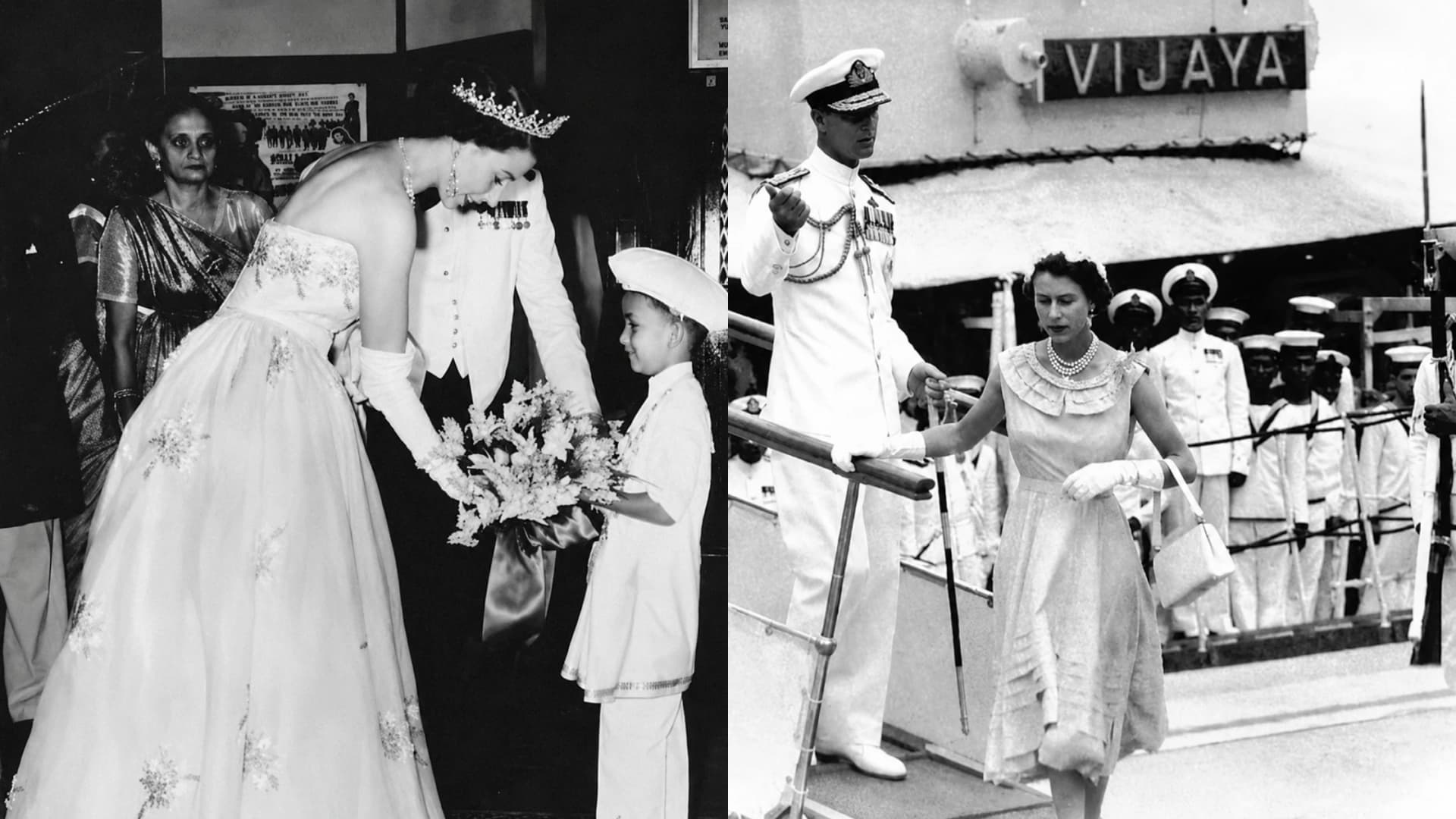
Queen Elizabeth II in Ceylon| In April 1954, Queen Elizabeth II arrived in Ceylon, the island now known as Sri Lanka, during one of the most memorable royal tours of the post-war Commonwealth era. It was only a few years after Ceylon gained independence in 1948, and the young Queen’s visit carried a special importance. At the time, Ceylon was still a Dominion, and Queen Elizabeth II was formally recognised as Queen of Ceylon.
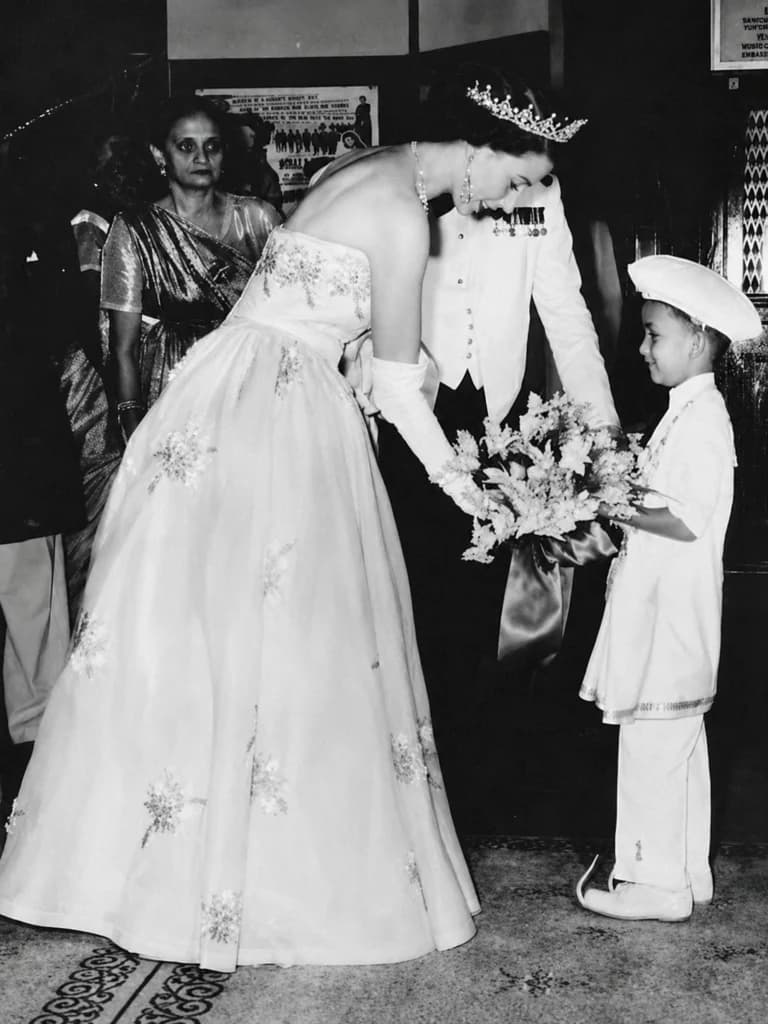
For many older Sri Lankans, the 1954 visit remained one of those grand public memories: flags, crowds, decorated streets, official ceremonies, train journeys, garden parties, schoolchildren, planters, politicians and ordinary citizens waiting to catch a glimpse of the monarch.
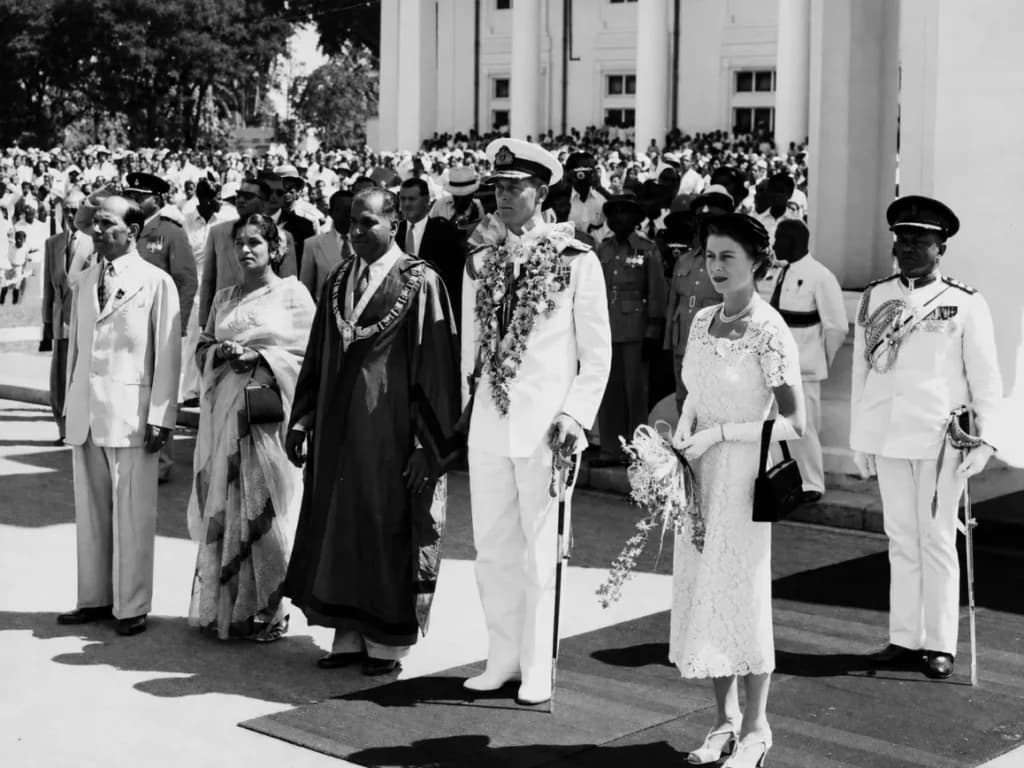
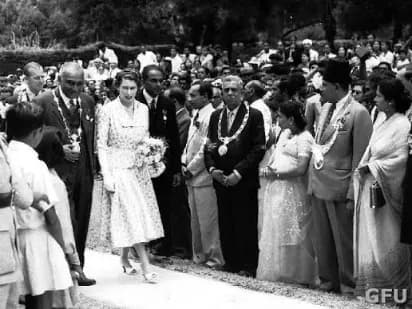
The photograph connected to this story shows Queen Elizabeth II at Radella on 17 April 1954, meeting Mr D. E. Hettiarachchi, Chairman of the Galle Planters’ Association, and his wife Mrs Manel Hettiarachchi. It is a small but fascinating window into a wider moment in Old Ceylon history: the meeting of monarchy, tea country society and a newly independent island still closely tied to Britain.
The Queen’s First Visit to Ceylon
Queen Elizabeth II’s 1954 visit was her first visit to Ceylon as monarch. She was accompanied by Prince Philip, Duke of Edinburgh. According to British diplomatic records, the Queen spent time in Ceylon in April 1954 and later returned to Sri Lanka in 1981 as Head of the Commonwealth.
The 1954 tour included Colombo, Kandy, Anuradhapura, Polonnaruwa and Nuwara Eliya, making it not just a political visit but also a journey through some of the island’s most historic and scenic regions. The British High Commission’s account notes that the tour included a royal procession through Colombo, the opening of Parliament, a train journey to Kandy and visits to ancient capitals and hill country towns.
For heritage travellers today, this route reads almost like a classic Old Ceylon itinerary: Colombo’s civic buildings, Kandy’s royal and colonial layers, the ancient cities of the North Central Province, and the cool tea country around Nuwara Eliya.
Colombo: Ceremony and State
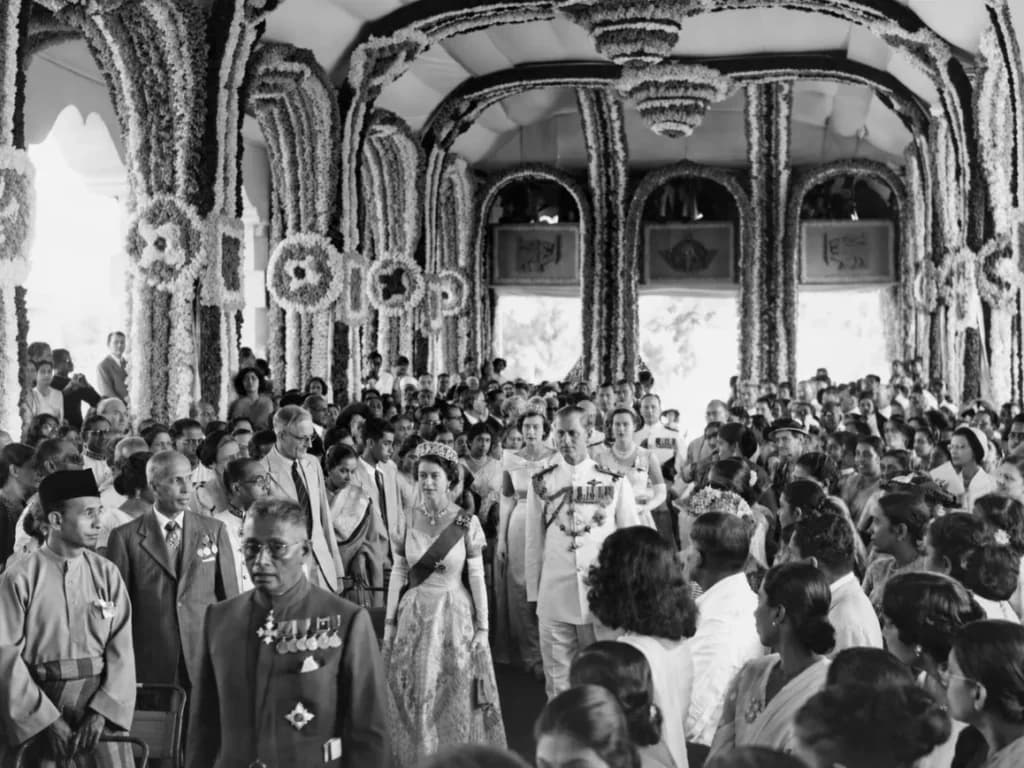
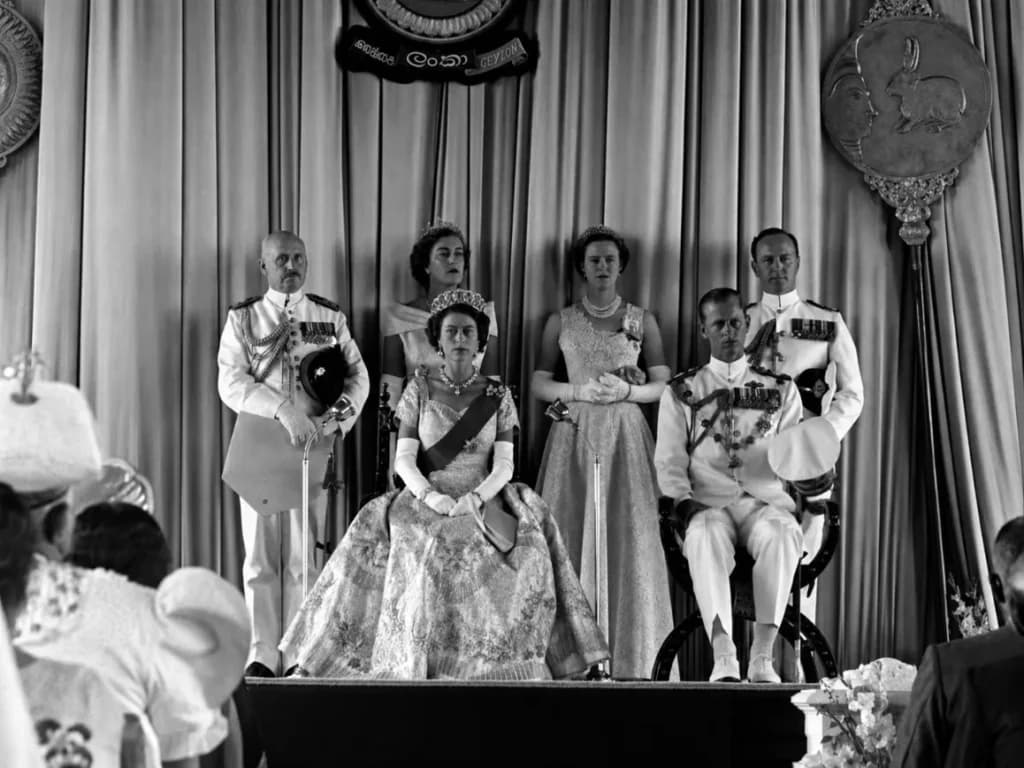
The royal visit began with ceremony in Colombo. Queen Elizabeth II arrived in the capital and was received with civic honours. One of the most important moments of the tour was the opening of Parliament. The Royal Collection Trust records a photograph from April 1954 showing the Queen arriving to open Parliament in Colombo, where she was met by Prime Minister Sir John Kotelawala.
This was a powerful image of Ceylon in the 1950s. The island was independent, but still retained the constitutional link with the Crown. Colombo, with its colonial-era buildings, formal avenues and public institutions, became the main stage for this carefully arranged royal welcome.
For visitors exploring Colombo today, traces of that world can still be seen around Independence Square, the old parliamentary precinct, Galle Face, Fort and Cinnamon Gardens. These are places where the architecture of empire, independence and modern Sri Lanka overlap.
Kandy and the Hill Country Route
From Colombo, the royal journey moved inland. Kandy was an important stop, both for its cultural meaning and its connection to the old Kandyan kingdom. The Queen and Prince Philip were received at civic events, and the tour also included the University of Ceylon at Peradeniya. Several historical accounts note that the Queen visited Peradeniya University and the Peradeniya Botanical Gardens during the 1954 tour.
The train journey itself would have been part of the spectacle. Ceylon’s railways were already famous for their mountain routes, tea estate scenery, tunnels, bridges and station towns. A royal train passing through the island would have drawn crowds at stations and along the track.
For modern travellers, following this route from Colombo to Kandy and onward to Nuwara Eliya still gives one of the best impressions of old Ceylon: railway platforms, hill slopes, tea gardens, cool air and remnants of the planter era.
Radella: A Tea Country Moment
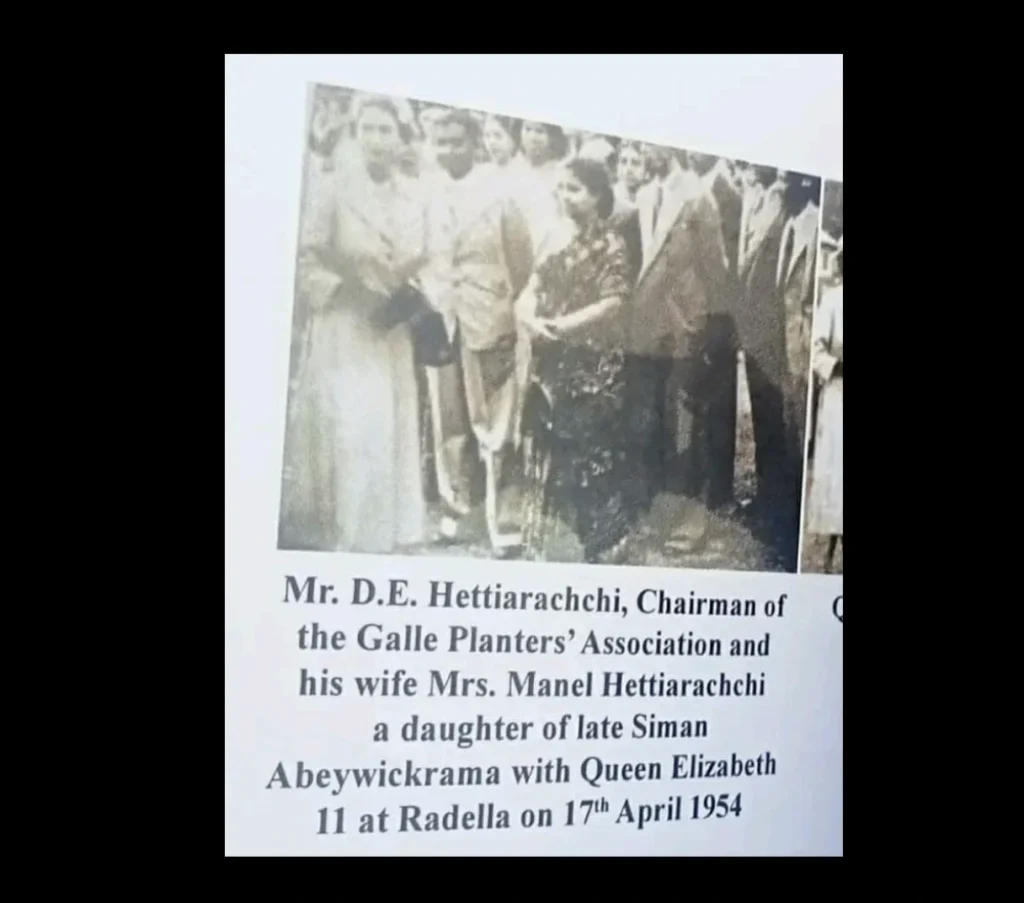
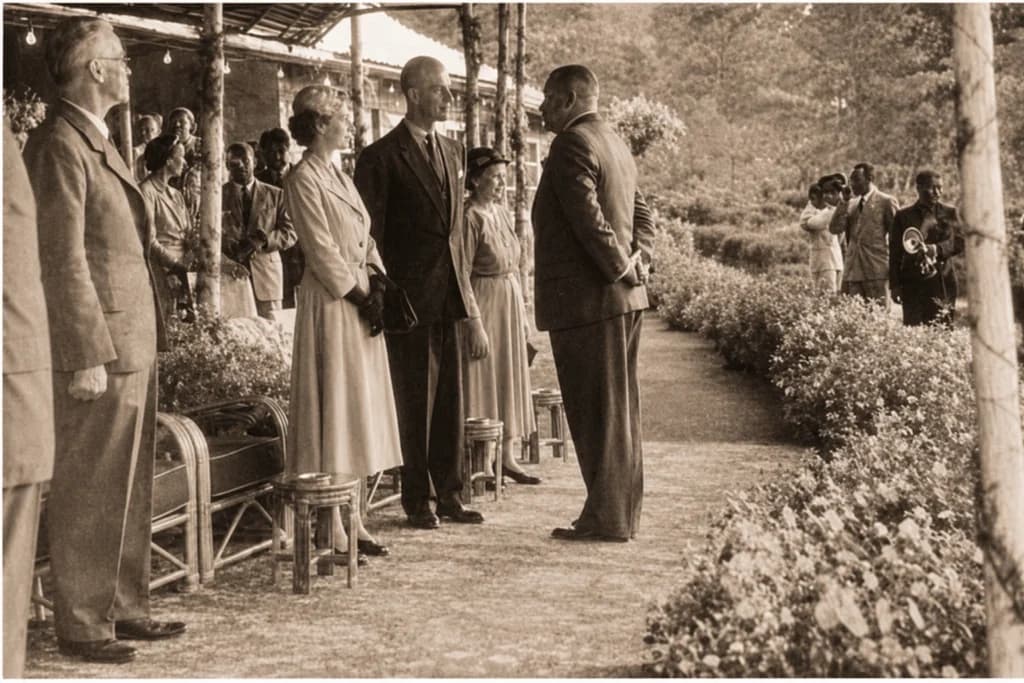
The image shared here is especially interesting because it places the Queen not only in Colombo or Kandy, but at Radella, a historic hill country location associated with tea estates and the planter community.
Radella, near Nanu Oya and Nuwara Eliya, belonged to the social geography of Ceylon’s tea country. It was close to estate bungalows, clubs, railway stations and highland roads that connected the plantations. In the 1950s, this region was still strongly shaped by the rhythms of plantation life.
The photograph caption identifies Mr D. E. Hettiarachchi as Chairman of the Galle Planters’ Association, with his wife Mrs Manel Hettiarachchi, meeting Queen Elizabeth II at Radella on 17 April 1954. This makes the image more than a royal photograph. It shows how local Ceylonese figures were part of the formal social world of the plantation sector by the mid-20th century.
It also reminds us that Old Ceylon was not a single story. By the 1950s, the island was changing. Ceylonese professionals, politicians, planters and business families were increasingly visible in spaces once dominated by British colonial society.
Nuwara Eliya and the Royal Hill Country Connection
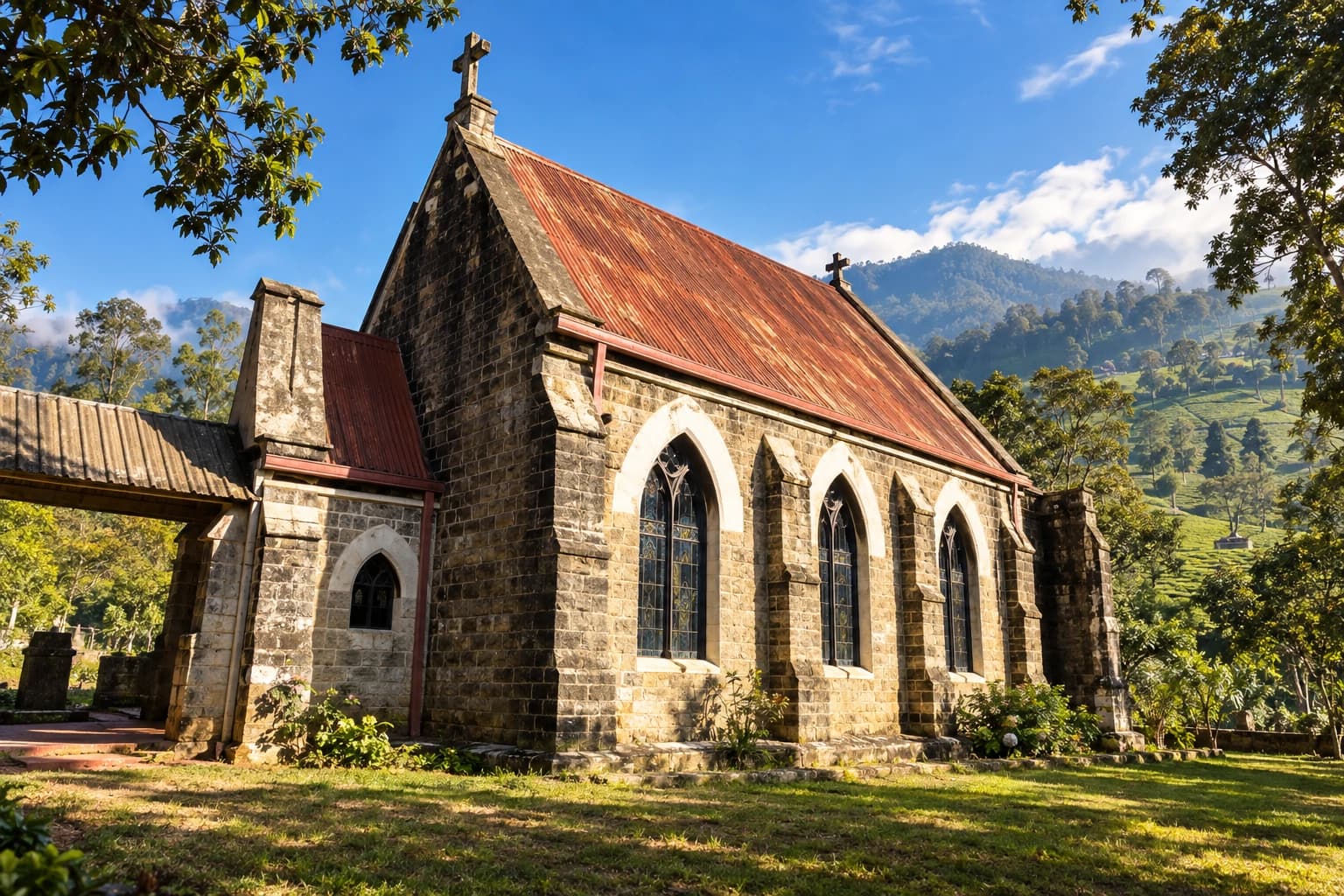
Nuwara Eliya has long been associated with British-era hill country life. Its climate, racecourse, clubs, bungalows, gardens and churches gave it the nickname “Little England”. During the 1954 tour, Queen Elizabeth II and Prince Philip also visited the Nuwara Eliya area.
One notable connection is Holy Trinity Church in Nuwara Eliya. Historical records note that Queen Elizabeth II and Prince Philip attended a service there on 18 April 1954, and that the Queen gifted a blue carpet and a stained-glass window in remembrance of the visit.
For heritage travellers, this is the kind of detail that brings history close. A royal tour is not only about grand receptions. It is also remembered through church gifts, photographs, station stops, estate gatherings and local family albums.
Why the 1954 Visit Still Matters
Queen Elizabeth II’s 1954 visit belongs to a very specific period in Sri Lankan history. Ceylon was independent, but still within the Commonwealth framework as a Dominion. The country had not yet become a republic; that would happen in 1972. The Queen’s presence therefore reflected both continuity and transition.
For the people of the time, the visit was a major public event. For today’s heritage traveller, it offers a route into understanding 1950s Ceylon: a country with ancient capitals, colonial cities, tea estates, railways, churches, clubs, civic halls and a growing national identity.
It also helps explain why photographs like the Radella image are valuable. They preserve the small human moments behind official history. A handshake, a formal introduction, a planter’s association, a hill country gathering — each detail adds texture to the story of the island.
Following the 1954 Royal Trail Today
Travellers interested in this chapter of Old Ceylon can still build a memorable heritage route around the places connected to the Queen’s 1954 visit.
Start in Colombo, exploring Independence Square, Fort, Galle Face and the old civic quarters. Continue by train to Kandy, with time at Peradeniya Botanical Gardens and the old university surroundings. From there, travel into the tea country through Nanu Oya and Nuwara Eliya. Visit Holy Trinity Church, walk through the old hill town, and continue towards Radella if you are tracing the plantation landscape connected to the 1954 visit.
This is not only a royal trail. It is a journey through the atmosphere of mid-century Ceylon — a world of railway journeys, ceremonial welcomes, tea estates, old hotels, hill country churches and public memory.
A Photograph from Radella, A Story of Ceylon
The 1954 visit of Queen Elizabeth II to Ceylon remains one of the island’s most striking royal episodes. It connected Colombo’s formal state ceremonies with Kandy’s cultural setting, the ancient cities, and the cool landscapes of Nuwara Eliya and Radella.
The photograph of the Queen at Radella on 17 April 1954 captures one quiet moment within that larger journey. It shows the royal visitor, the planter world, and a Ceylonese family connected to the social life of the tea country.
For Tripping Sri Lanka readers, it is exactly the kind of image that keeps Old Ceylon alive — not as distant history, but as a trail still visible in places, buildings, railway lines, churches, gardens and family memories.
A Worthy Ending: Remembering Old Ceylon Through One Photograph
The photograph of Queen Elizabeth II at Radella on 17 April 1954 may seem like a small moment from a large royal tour. But its value lies in exactly that. It captures history at a human scale.
In one image, we see the Queen of Ceylon, a planter association chairman, his wife, and the social world of the hill country. Behind them is a larger story of empire, independence, tea, family memory and national change.
More than seventy years later, this photograph still invites us to pause. It reminds us that Old Ceylon was not only made of grand buildings and official ceremonies. It was also made of introductions, journeys, railway stops, estate gatherings and people who stood briefly within the frame of history.
For heritage travellers, the 1954 royal visit is still worth tracing. It leads us from Colombo to Kandy, from the ancient cities to Nuwara Eliya, and from public history to private memory.
That is the true beauty of Old Ceylon. Its past is not completely gone. It still lives in photographs, landscapes, churches, railway lines, tea estates and stories waiting to be rediscovered.
Visit Us: https://trippingsrilanka.com/stories
More from Old Ceylon
Colombo Public Library at 100: The Names That Still Remain
The Toll Gate at the Bridge: When Travelling Across Ceylon Cost a Few Cents at a Time