A Hidden Monastery in the Ancient Forest
Deep within Sri Lanka’s dry-zone wilderness, far from the usual tourist crowds, lies one of the island’s most mysterious ancient sites: Ritigala Monastery.
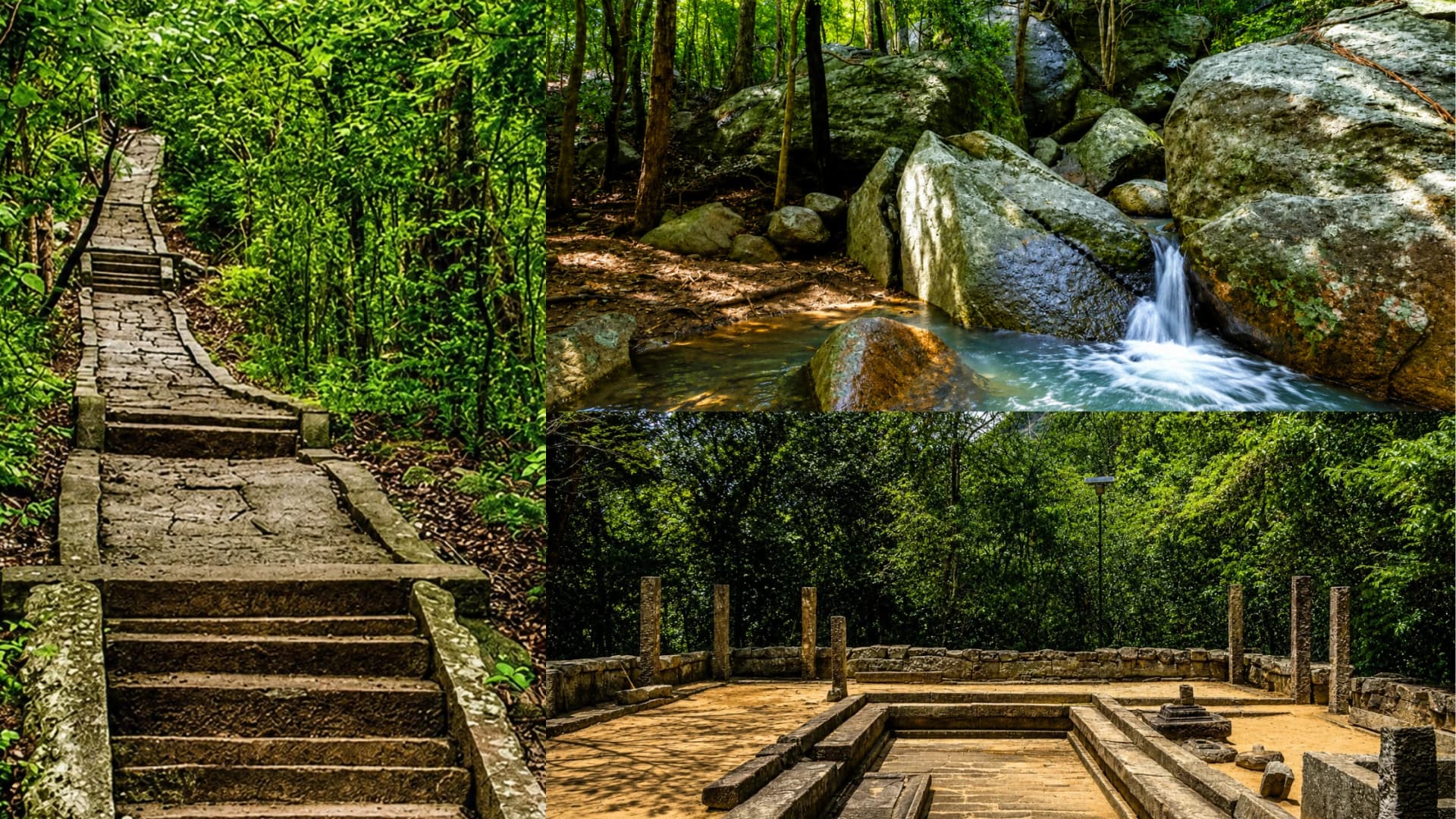
Located on the slopes of Ritigala Mountain in the North Central Province, this ancient forest monastery feels very different from the better-known ruins of Anuradhapura, Polonnaruwa or Sigiriya. There are no giant stupas dominating the skyline. There are no busy processions or crowded temple courtyards. Instead, Ritigala offers silence, stone pathways, forest shade, old meditation platforms and a powerful sense of mystery.
For travellers interested in Old Ceylon, Buddhist heritage, archaeology and nature, Ritigala is one of Sri Lanka’s most rewarding hidden places.
It is not only an ancient monastery. It is a forest world where architecture, spirituality and wilderness seem to merge.
Check our previous article – https://trippingsrilanka.com/stories/h-c-p-bell-ceylon-ancient-cities
Where Is Ritigala Monastery?
Ritigala Monastery is located within the Ritigala Strict Nature Reserve, between the cultural triangle regions of Anuradhapura, Habarana, Kekirawa and Sigiriya.
This makes it an excellent heritage stop for travellers exploring Sri Lanka’s ancient cities and jungle landscapes. It is close enough to combine with Sigiriya or Anuradhapura, yet it feels far more remote and quiet.
The monastery lies on the lower slopes of Ritigala Mountain, the highest mountain in Sri Lanka’s dry zone. This unusual mountain environment creates a cooler, greener and more secluded atmosphere than the surrounding plains.
The journey to Ritigala already feels like part of the experience. Roads narrow, forests thicken, and the noise of modern life gradually disappears. By the time visitors reach the ruins, the place already feels set apart from the ordinary world.
The Ancient History of Ritigala
Ritigala has a long history connected to Buddhism, kingship, forest meditation and monastic life.
The area is associated with ancient Buddhist monks who sought solitude away from the busy city monasteries. Over time, Ritigala became an important forest hermitage, especially linked with ascetic monks known as Pansukulika monks.
These monks followed a strict and simple way of life. Their name is often connected with the wearing of robes made from discarded cloth or rags. Unlike monks living in large urban monasteries, the Pansukulika monks preferred seclusion, discipline and meditation in the forest.
Ritigala’s location made it ideal for this kind of life. It was remote, quiet, shaded and separated from the distractions of ordinary society.
Historical accounts also connect royal patronage to the monastery, especially during the Anuradhapura period. Kings supported forest monasteries like Ritigala because they were respected centres of spiritual discipline.
Banda Pokuna: The Great Stone Reservoir
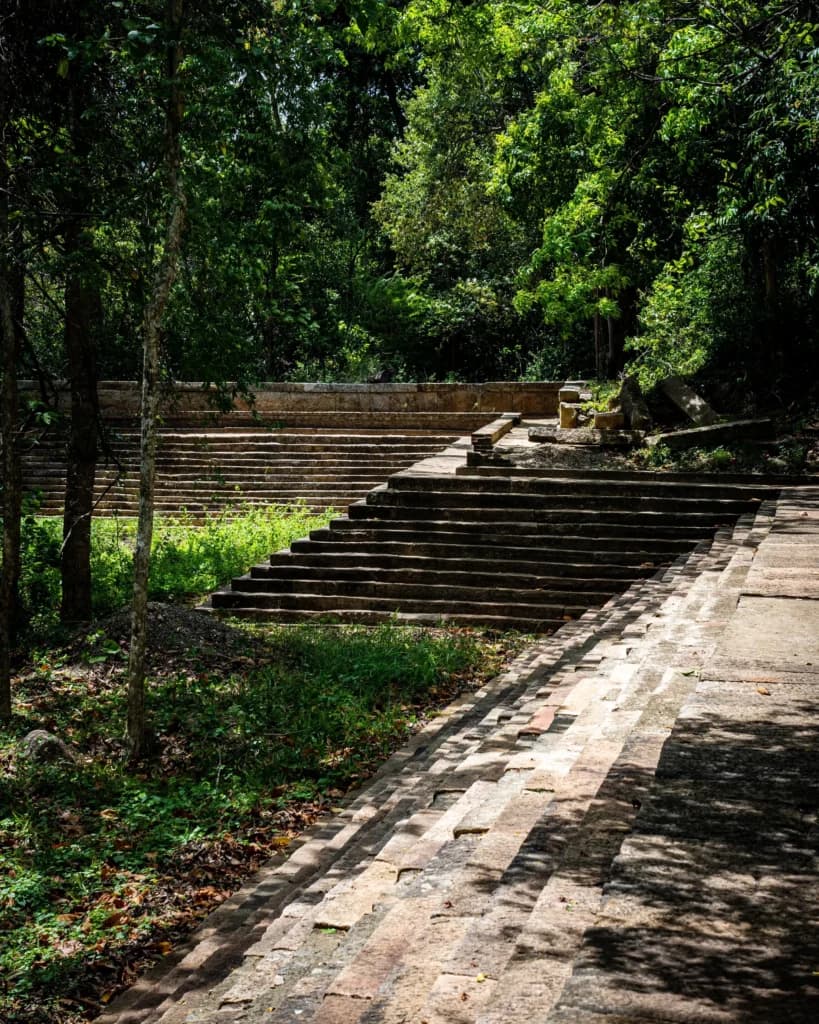
One of the first major features visitors encounter at Ritigala is Banda Pokuna, an ancient man-made reservoir near the entrance to the monastery complex.
This large stone-lined pond is one of the most impressive features of the site. It shows the engineering skill of ancient Sri Lanka and suggests that water management was an important part of the monastery’s design.
The reservoir may have served practical and ritual purposes. It could have provided water for the monastery, while also functioning as a place of cleansing before entering the sacred forest complex.
For modern visitors, Banda Pokuna sets the mood for the journey ahead. It is quiet, still and surrounded by trees. Its stone edges give a sense of age and ceremony.
It reminds us that Ritigala was not a random collection of ruins. It was a carefully planned monastic landscape.
The Famous Stone Pathway
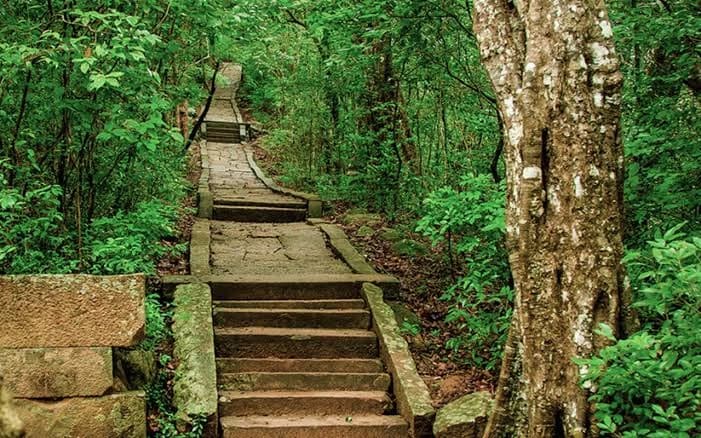
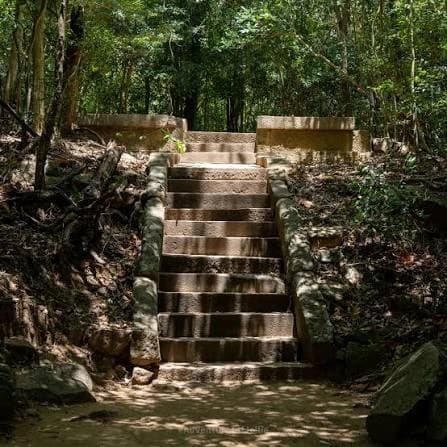
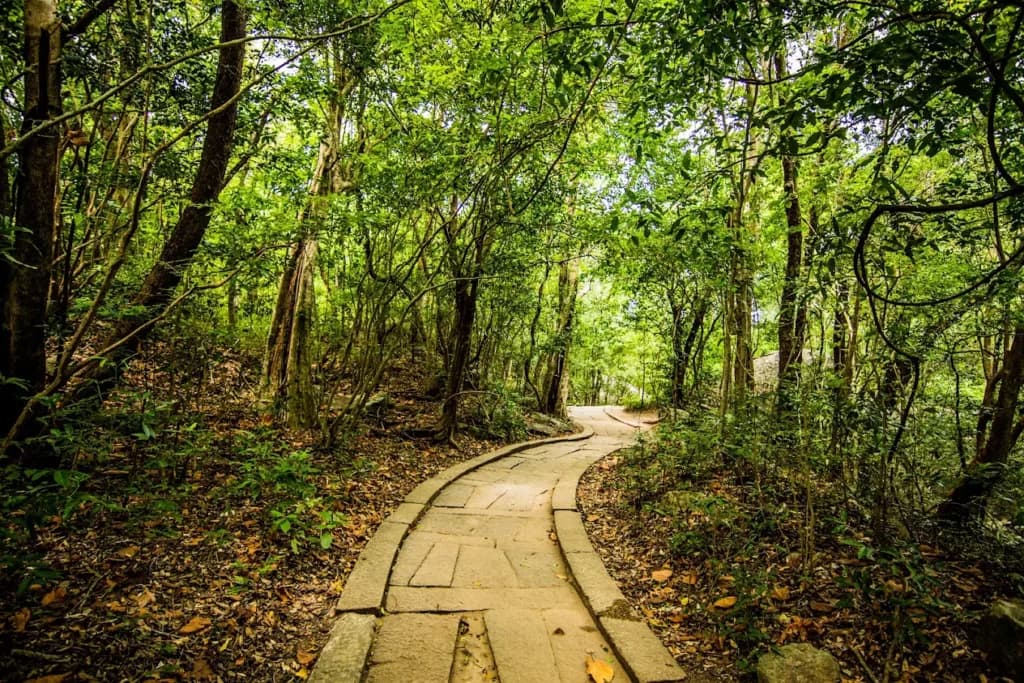
Perhaps the most memorable feature of Ritigala Monastery is its ancient stone pathway.
This pathway leads visitors through the forest, past stone steps, platforms, courtyards and ruined structures. It is made from carefully laid stone slabs and appears remarkably elegant even after centuries of exposure to weather and roots.
Walking along this path is one of the best experiences at Ritigala.
Unlike many heritage sites where visitors move from one monument to another in open space, Ritigala unfolds slowly through the forest. The pathway creates a rhythm. It guides the visitor deeper into the monastery, almost as if following the footsteps of the monks who lived there long ago.
The path is more than a route. It is part of the spiritual experience of the place.
Meditation Platforms and Double Structures
Ritigala is especially known for its stone platforms, often described as double-platform structures.
These platforms are believed to have been used by forest monks for meditation, study, teaching or simple monastic living. Many are built with carefully cut stone and connected by short stone bridges or pathways.
What makes them special is their simplicity.
They are not heavily decorated. They do not display the elaborate carvings often seen in major royal temples. Instead, they reflect restraint, order and discipline. This matches the austere life of the monks who lived at Ritigala.
For heritage travellers, these platforms are among the most important features of the monastery. They show a different side of ancient Sri Lankan Buddhism — not the grand public monument, but the quiet forest dwelling.
An Architecture of Simplicity
Ritigala Monastery is powerful because of what it does not show.
Unlike many ancient Buddhist sites, Ritigala has very few obvious religious symbols. Visitors do not find a large central stupa, a great image house or a towering Buddha statue dominating the site.
Instead, the ruins are modest, practical and deeply connected to the landscape.
This simplicity is one of Ritigala’s greatest strengths. It reflects the lifestyle of the ascetic monks who sought spiritual progress through discipline and detachment. Their monastery did not need grand decoration. It needed silence, shelter, water, paths and places for meditation.
The result is one of Sri Lanka’s most atmospheric ancient monastic sites.
The Mystery of Ritigala
Ritigala is often described as mysterious, and with good reason.
The forest is dense. The ruins are partly hidden by trees. The pathways seem to disappear into shadow. Mist and filtered sunlight create a quiet, almost secretive atmosphere.
Local legends also add to the mystery. Ritigala Mountain is connected in folklore with ancient healers, medicinal plants and stories from the Ramayana tradition. Many people believe the mountain has special herbs and unusual natural energy.
Whether one approaches Ritigala through history, archaeology or legend, the place feels different.
It does not reveal itself all at once. It asks visitors to walk slowly, observe carefully and listen to the silence.
Ritigala and Medicinal Plants
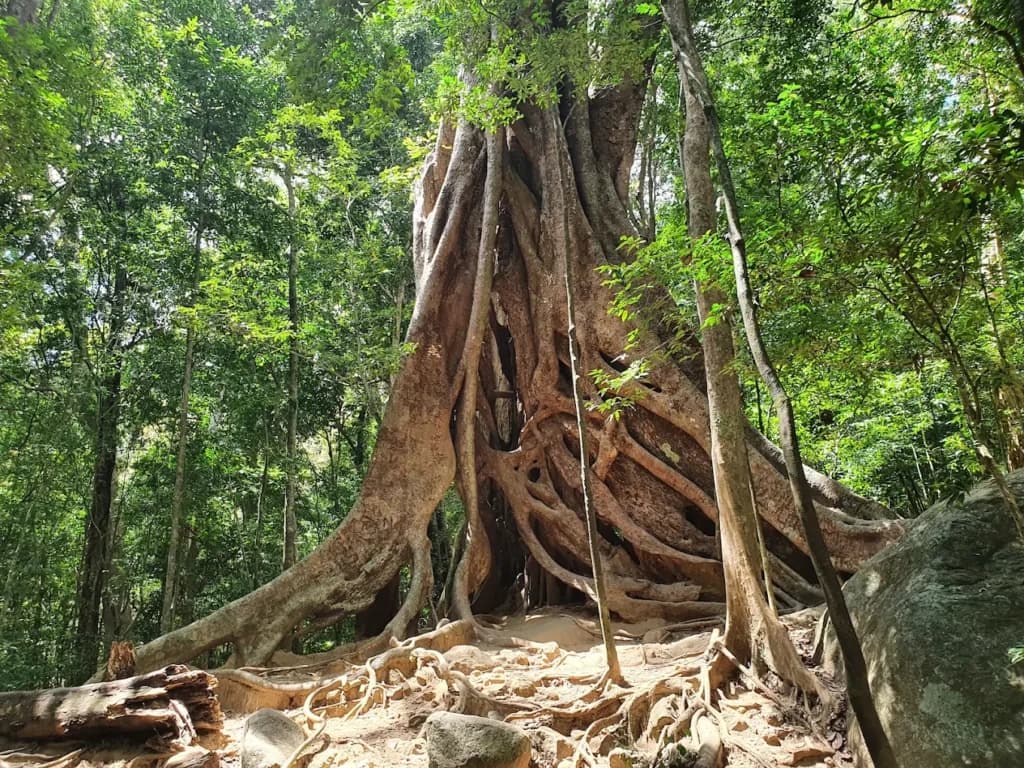
Ritigala Mountain is also famous for its biodiversity and medicinal plants.
Because of its elevation and unusual climate, the mountain supports plant species that are not common in the surrounding dry-zone plains. This has contributed to its reputation as a place of rare herbs and healing plants.
For centuries, local tradition has linked Ritigala with herbal knowledge. Some legends say that medicinal plants connected with ancient healing stories were found here.
This botanical richness adds another layer to the monastery’s identity. Ritigala was not just a spiritual retreat. It was also a natural sanctuary.
The combination of forest, medicine, meditation and archaeology makes the site especially unique.
Why Heritage Travellers Should Visit Ritigala
Ritigala is ideal for travellers who prefer quiet, meaningful heritage experiences.
It is not as crowded as Sigiriya or the main ruins of Anuradhapura. Its beauty lies in stillness, shade and discovery.
Visitors come to Ritigala for several reasons:
- Ancient Buddhist forest monastery ruins
- Stone pathways and meditation platforms
- Banda Pokuna reservoir
- Jungle atmosphere and nature reserve setting
- Connection to Pansukulika ascetic monks
- Rare plants and forest biodiversity
- A peaceful alternative to crowded heritage sites
- Photography and slow travel experiences
For those who enjoy walking through history rather than simply viewing it from a distance, Ritigala is unforgettable.
How to Experience Ritigala Slowly
The best way to experience Ritigala is to walk slowly.
Begin near Banda Pokuna and take time to observe the reservoir before moving deeper into the monastery. Follow the stone path carefully. Notice the way the forest surrounds the ruins. Look at the platforms, bridges, steps and stonework.
Do not rush from one point to another.
Ritigala’s power comes from atmosphere. The silence, the shade, the old stones and the sound of the forest are all part of the experience.
Travellers should also respect the site as both an archaeological reserve and a sacred heritage landscape. Avoid climbing on fragile structures, disturbing wildlife or removing anything from the site.
A Heritage Route Around Ritigala
Ritigala can be included in a wider cultural triangle itinerary.
Travellers can combine it with:
- Anuradhapura – ancient royal capital and sacred Buddhist city
- Mihintale – cradle of Buddhism in Sri Lanka
- Sigiriya – royal rock fortress and UNESCO World Heritage Site
- Dambulla Cave Temple – ancient cave paintings and Buddha statues
- Habarana – a convenient base for jungle and heritage travel
- Kekirawa – gateway town for Ritigala and surrounding historic landscapes
This route gives travellers a richer understanding of ancient Sri Lanka. Anuradhapura shows royal Buddhism. Sigiriya shows palace and fortress architecture. Dambulla shows cave art and devotion. Ritigala shows the quiet world of forest monks.
Together, they tell a fuller story of the island’s ancient civilisation.
Tips for Visiting Ritigala Monastery
Ritigala is a forest site, so visitors should prepare properly.
Wear comfortable walking shoes because the stone paths can be uneven and slippery after rain. Carry water, but avoid leaving plastic or litter. Visit during the morning or late afternoon for cooler weather and better light.
Because the site lies within a nature reserve, visitors should also be mindful of wildlife and forest conditions.
A guide can make the visit more meaningful, especially for those interested in history, archaeology and monastic life. Without context, some ruins may appear simple. With explanation, they become part of a remarkable ancient forest monastery.
Final Thoughts: The Quiet Soul of Ancient Sri Lanka
Ritigala Monastery is one of Sri Lanka’s most atmospheric heritage sites.
It does not impress through size alone. It impresses through silence, mystery and setting. The stone paths, meditation platforms, reservoir and forested slopes create a sense of ancient discipline that is difficult to find elsewhere.
For Tripping Sri Lanka readers, Ritigala is exactly the kind of place that reveals the deeper layers of Old Ceylon.
It is a site for travellers who want more than photographs. It is for those who want to walk through a landscape where monks once lived in simplicity, surrounded by trees, stone and silence.
In Ritigala, the ruins do not feel abandoned. They feel hidden.
And that is what makes the monastery unforgettable.
Visit Us: https://trippingsrilanka.com/stories
Heritage places mentioned
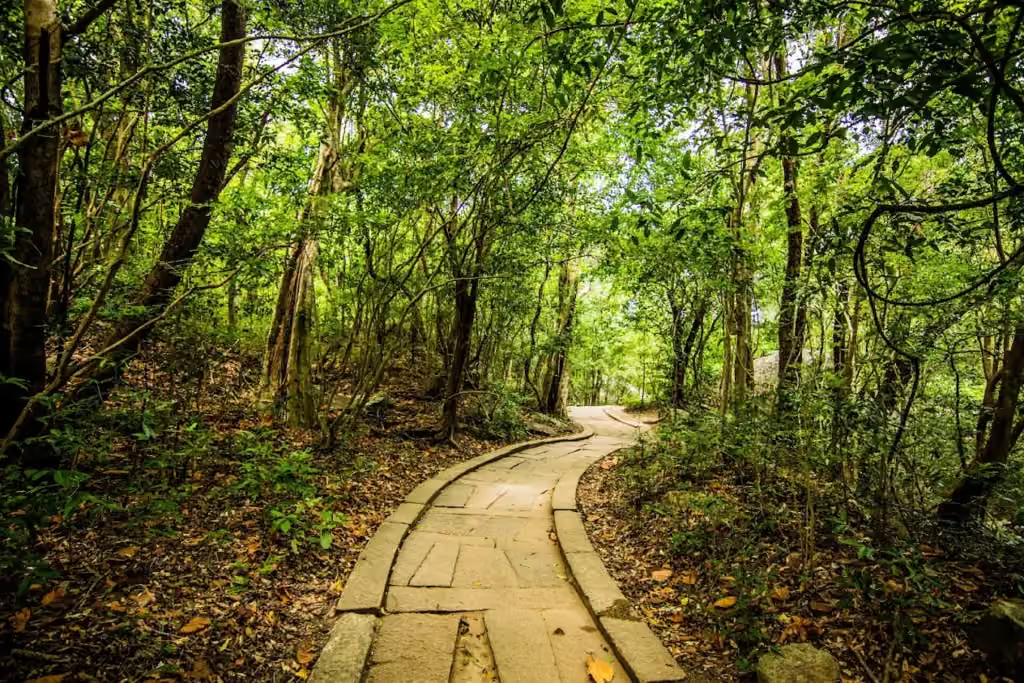
Ritigala Monastery
More from Old Ceylon
When the King’s Birthday Was Celebrated on Galle Face Green: A Glimpse of Colombo in 1933
Holyrood Estate, Talawakelle: An Old Ceylon Bungalow and a Name That Echoes Scotland