When Ceylon Entered the Jet Age: Remembering Air Ceylon in the 1960s
A Time When Flying Felt Extraordinary
Air Ceylon in the 1960s| There was a time when hearing an aircraft overhead was enough to make people stop and look up.
Children ran outside. Adults shaded their eyes against the sun. Anyone fortunate enough to be travelling aboard one of those aircraft had a story that would probably be repeated for years.
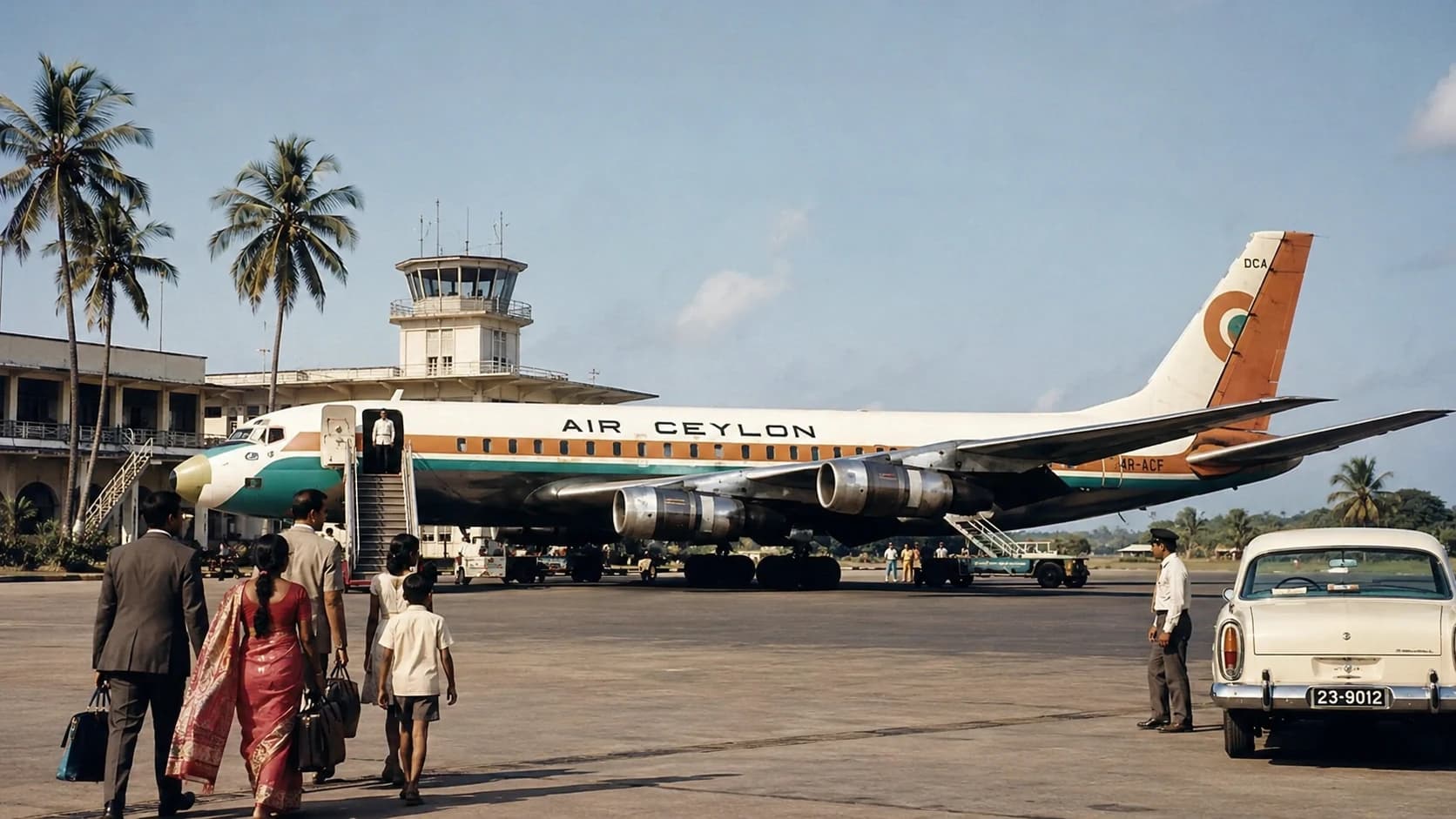
In the Ceylon of the early 1960s, air travel was still something extraordinary.
This was before crowded terminals, online check-ins, mobile boarding passes and inexpensive regional flights. Travelling overseas required planning, preparation and, for many families, a great deal of excitement.
At the centre of this era was Air Ceylon, the country’s national airline and one of the most memorable names from Sri Lanka’s aviation past.
Check our previous article- https://trippingsrilanka.com/stories/air-ceylon
The Days of Air Ceylon
Air Ceylon began operations in the late 1940s, when commercial aviation in the region was still developing.
Its early aircraft belonged to the great post-war age of propeller-driven flying. These were the days when air travel still felt adventurous, formal and rare.
Over time, however, aviation technology changed rapidly.
By the beginning of the 1960s, jets were transforming international travel.
For Ceylon, the arrival of jet services represented far more than simply faster aircraft. It was a sign that the island was becoming more closely connected with the wider world.
Air Ceylon and the Jet Age
Through its association with BOAC, the British Overseas Airways Corporation, Air Ceylon was able to offer jet services using the famous de Havilland Comet.
For travellers who were used to propeller aircraft, the Comet must have seemed almost futuristic.
It was faster, sleeker and more modern than the aircraft many people had known before. It gave international travel a new sense of speed and glamour.
The arrival of jet travel helped change the way people imagined distance.
London, Singapore and other destinations no longer felt quite as impossibly far away as they once had.
Ratmalana Airport: Colombo’s First International Gateway
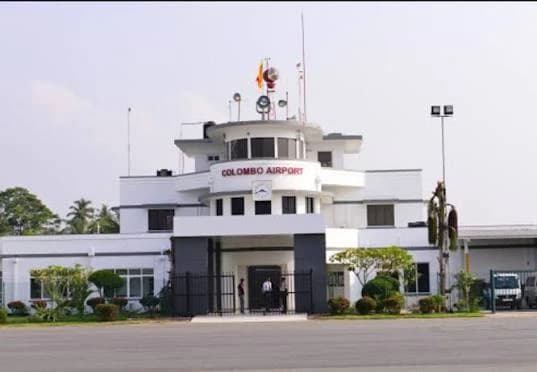
Long before Katunayake became the international airport familiar to generations of Sri Lankans, there was Ratmalana Airport.
Today, Ratmalana sits within a heavily developed part of Greater Colombo. But during its years as the country’s principal airport, the surroundings were very different.
There were fewer buildings, quieter roads and far more open land.
The airport itself had a much more intimate atmosphere than today’s international terminals.
Aircraft could be seen relatively close to the terminal. Passengers walked across the apron. Families arriving to say goodbye could watch the activity of the airport unfolding around them.
For many people, simply visiting Ratmalana to see someone leave the country was an occasion.
Going Abroad Was a Major Family Event
Older Sri Lankan families will remember when the phrase “going abroad” carried enormous significance.
An overseas journey was rarely casual.
Suitcases might be prepared several days in advance. Passports, tickets and documents were checked repeatedly. Relatives came to the house to wish the traveller well.
Someone would inevitably bring food for the journey, even if the airline was providing meals.
On departure day, several members of the family might accompany the passenger to the airport.
There could be excitement, but there were also emotional farewells.
International telephone calls were expensive. Letters took time. There was no instant reassurance that somebody had landed safely.
When a son, daughter, husband, wife or parent boarded an aircraft for another country, the distance felt much greater than it does today.
The Airport Farewell
Perhaps one of the strongest memories associated with early aviation is not actually the flight.
It is the farewell.
Anyone who grew up hearing stories from that generation will recognise the scene.
Family members standing together.
A final photograph before departure.
Someone reminding the traveller to write as soon as they arrived.
Children waving.
Parents trying not to become emotional.
The traveller disappearing towards the aircraft.
Then the engines started.
For those remaining behind, watching the aircraft leave was sometimes the final glimpse they would have of a loved one for months or even years.
Those moments became part of family history.
The Romance of Early Air Travel
Flying itself also felt different in those days.
Passengers dressed for the occasion.
Men often travelled in shirts, jackets or suits. Women wore carefully chosen dresses or saris. Air travel was considered sophisticated, and travellers often wanted to look the part.
There was also a sense of occasion aboard the aircraft.
Meals were served properly. Cabin service was more formal. Airline luggage labels and printed tickets became souvenirs that families sometimes kept for decades.
Even the aircraft had a distinct glamour.
The polished metal fuselages, airline insignia and roar of early jet engines belonged to an age when aviation represented modernity, status and possibility.
Seeing a Comet Over Ceylon
Among the aircraft associated with this period, the de Havilland Comet occupies a special place.
The Comet was one of the pioneering commercial jet airliners and helped introduce passengers around the world to a completely new form of long-distance travel.
For Ceylonese travellers, jet services dramatically reduced the psychological distance between Colombo and major international cities.
The aircraft represented speed, progress and the promise of a more connected future.
For aviation enthusiasts growing up around Colombo, seeing one arrive or depart would have been unforgettable.
A Comet over Ceylon was not just an aircraft in the sky.
It was a sign that the island had entered the jet age.
A Different Colombo in the 1960s
The Colombo encountered by travellers leaving Ratmalana in the early 1960s was very different from today’s city.
High-rise buildings were rare. Traffic was considerably lighter. Neighbourhoods now filled with apartments and commercial developments still contained large gardens, coconut trees and open spaces.
Cars such as Morris Minors, Austin Cambridges, Hillmans and Volkswagens moved along roads that would seem remarkably quiet today.
The railway remained an essential part of daily travel.
Across the island, the word Ceylon still appeared everywhere — on stamps, tea boxes, government documents, postcards and aircraft.
Air Ceylon carried that name into the skies.
The Meaning of the Name “Air Ceylon”
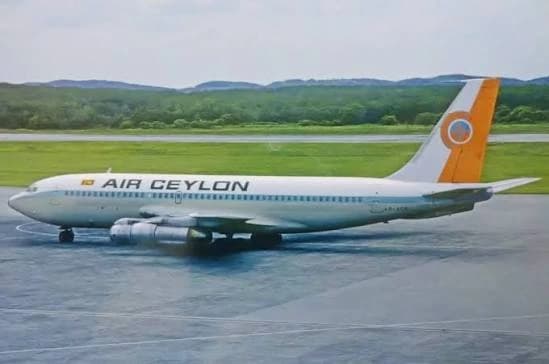

For many people, Air Ceylon was more than an airline name.
It represented the country itself.
The name appeared on tickets, luggage labels, aircraft and travel documents. For those leaving the island, it may have been one of the last visible reminders of home before departure.
For those returning, it may have been one of the first familiar names they saw.
In that sense, Air Ceylon carried more than passengers.
It carried identity, memory and national pride.
The Excitement of an Overseas Journey
An overseas journey in the Air Ceylon era carried a sense of adventure that is difficult to recreate today.
Families discussed the trip for weeks. Clothes were prepared carefully. Gifts were packed. Addresses were written down. Letters of introduction, documents and travel money were checked.
For students leaving for university, businesspeople travelling abroad or families migrating, the journey was a major turning point.
The aircraft was not simply transport.
It was the beginning of a new chapter.
That is why old aviation memories remain so emotional. They were tied to education, work, migration, family separation, hope and uncertainty.
Printed Tickets, Labels and Souvenirs
In the age of Air Ceylon, travel left behind physical traces.
A printed ticket.
A baggage label.
A boarding card.
An old passport stamp.
A photograph taken near the airport.
A postcard sent after arrival.
Families often kept these items for years.
They became proof of an important journey.
Today, these objects have become small pieces of aviation history. They remind us that travel was once slower, more formal and more memorable because it left something tangible behind.
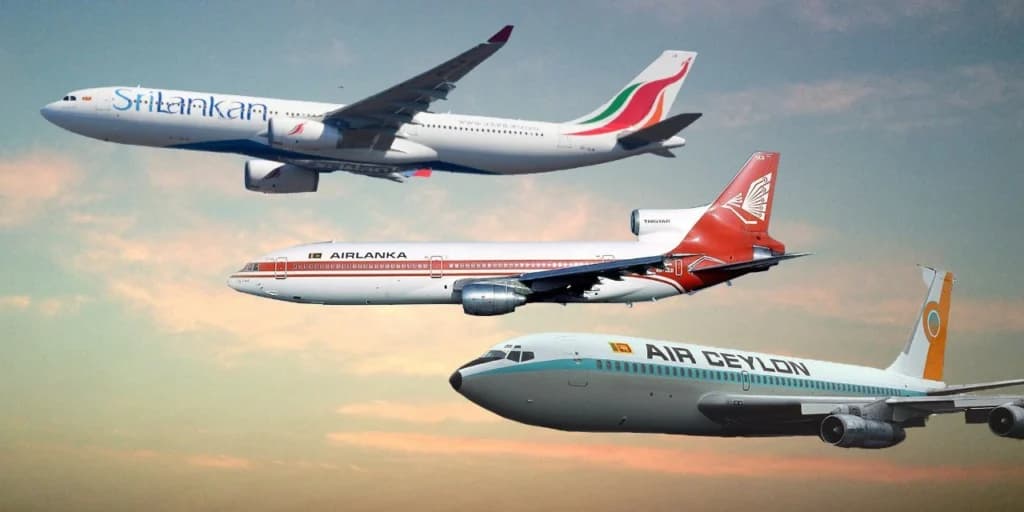
From Air Ceylon to Air Lanka
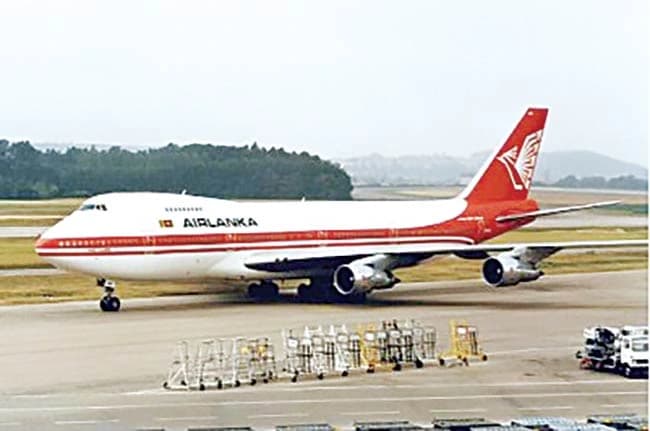
Air Ceylon continued operating through changing partnerships and aircraft types during the following years.
But the aviation industry was evolving rapidly.
Eventually, Air Ceylon ceased operations in 1979, bringing an important chapter of the country’s aviation story to an end.
That same year, Air Lanka emerged as Sri Lanka’s new national carrier.
For another generation, Air Lanka would create its own memories — distinctive aircraft liveries, journeys from Katunayake, overseas holidays, migrant departures and emotional airport reunions.
Later still came SriLankan Airlines.
But before all of them, there was Air Ceylon.
Memories That Still Survive
Somewhere in Sri Lankan homes, pieces of this aviation history probably still survive.
An old passport.
A faded Air Ceylon ticket.
A baggage label.
A black-and-white photograph taken at Ratmalana.
A postcard sent from London.
A story repeated by a parent or grandparent about their first flight overseas.
These small memories matter because travel history is not only about aircraft specifications, airports and airline companies.
It is about people.
It is about the young student leaving Ceylon for university. The businessman travelling overseas for the first time. The family beginning a new life in another country. The relatives waiting anxiously for news that they had arrived.
It is also about the child standing near Ratmalana, staring upwards as a jet climbed into the tropical sky.
Why Air Ceylon Matters to Old Ceylon
Air Ceylon matters because it belongs to a turning point in Sri Lanka’s travel history.
It connects several important themes:
- The rise of commercial aviation in post-war Ceylon
- Ratmalana Airport as Colombo’s early international gateway
- The arrival of jet travel in the 1960s
- BOAC and the de Havilland Comet connection
- The emotional culture of airport farewells
- The glamour and formality of early air travel
- The movement from Air Ceylon to Air Lanka
- The memory of Ceylon as a name carried into the skies
For those who remember that era, Air Ceylon was more than an airline.
It was part of a time when the world seemed much larger, journeys felt more adventurous and seeing an aeroplane disappear into the clouds could leave an impression that lasted a lifetime.
Final Thoughts: When Ceylon Took to the Skies
Air Ceylon belongs to one of the most nostalgic chapters of Sri Lanka’s travel history.
It was the airline of printed tickets, dressed-up passengers, emotional farewells, Ratmalana departures and the first excitement of jet-age travel.
In the 1960s, flying overseas was not ordinary. It was an event.
Families gathered. Photographs were taken. Passports were checked. Letters were promised. Aircraft engines started. And someone watched from the ground as a loved one disappeared into the sky.
Today, air travel is faster, easier and more common.
But the romance of those early journeys remains.
Air Ceylon reminds us of a time when Ceylon entered the jet age — and when every flight felt like the beginning of a story worth remembering.
Visit Us: https://trippingsrilanka.com/stories
More from Old Ceylon
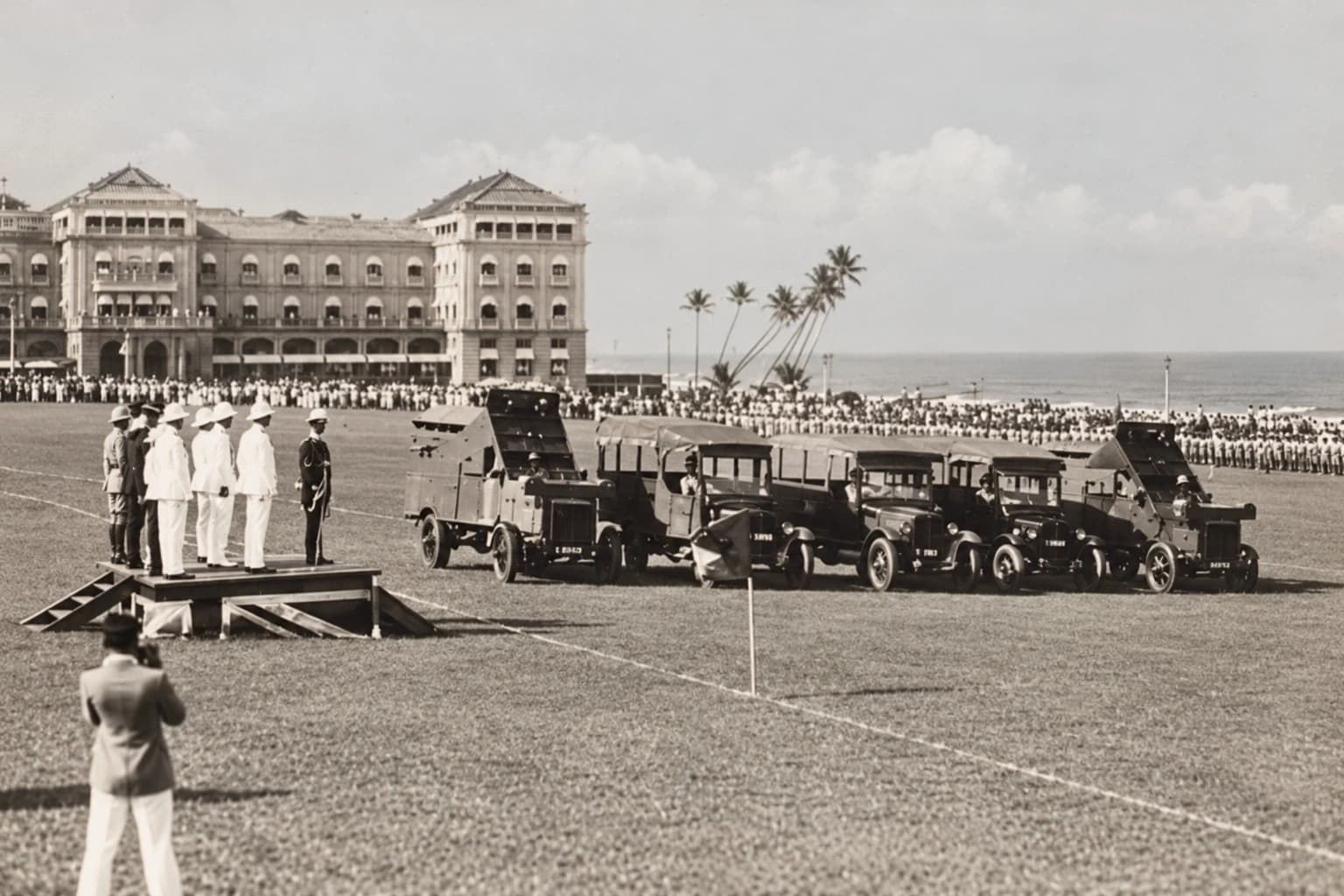
When the King’s Birthday Was Celebrated on Galle Face Green: A Glimpse of Colombo in 1933
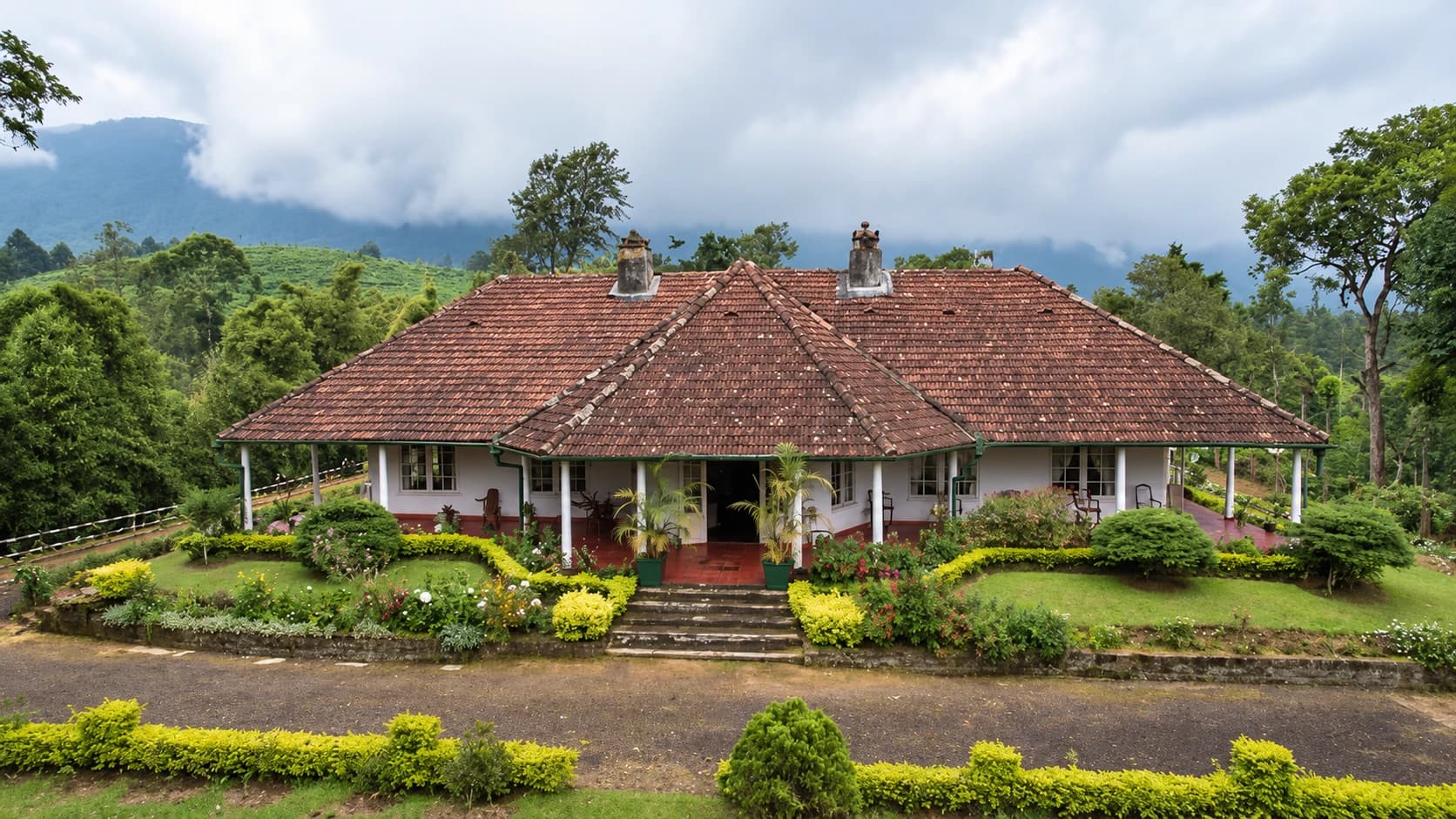
Holyrood Estate, Talawakelle: An Old Ceylon Bungalow and a Name That Echoes Scotland