The Man Who Helped Bring Old Ceylon Back Into View
When travellers visit Anuradhapura, Polonnaruwa or Sigiriya today, they see grand ruins, restored monuments, sacred sites, stone pillars, ancient tanks, moonstones, inscriptions and royal landscapes. These places now form part of Sri Lanka’s proud cultural identity and are among the island’s most treasured heritage destinations.
But in the late nineteenth century, much of this ancient world was hidden under jungle, scattered across dry-zone plains, or known mainly through local memory, Buddhist tradition and old chronicles. The ancient cities had not vanished completely. Pilgrims, villagers, monks and earlier officials knew of many of these places. Yet their systematic archaeological study had only just begun.
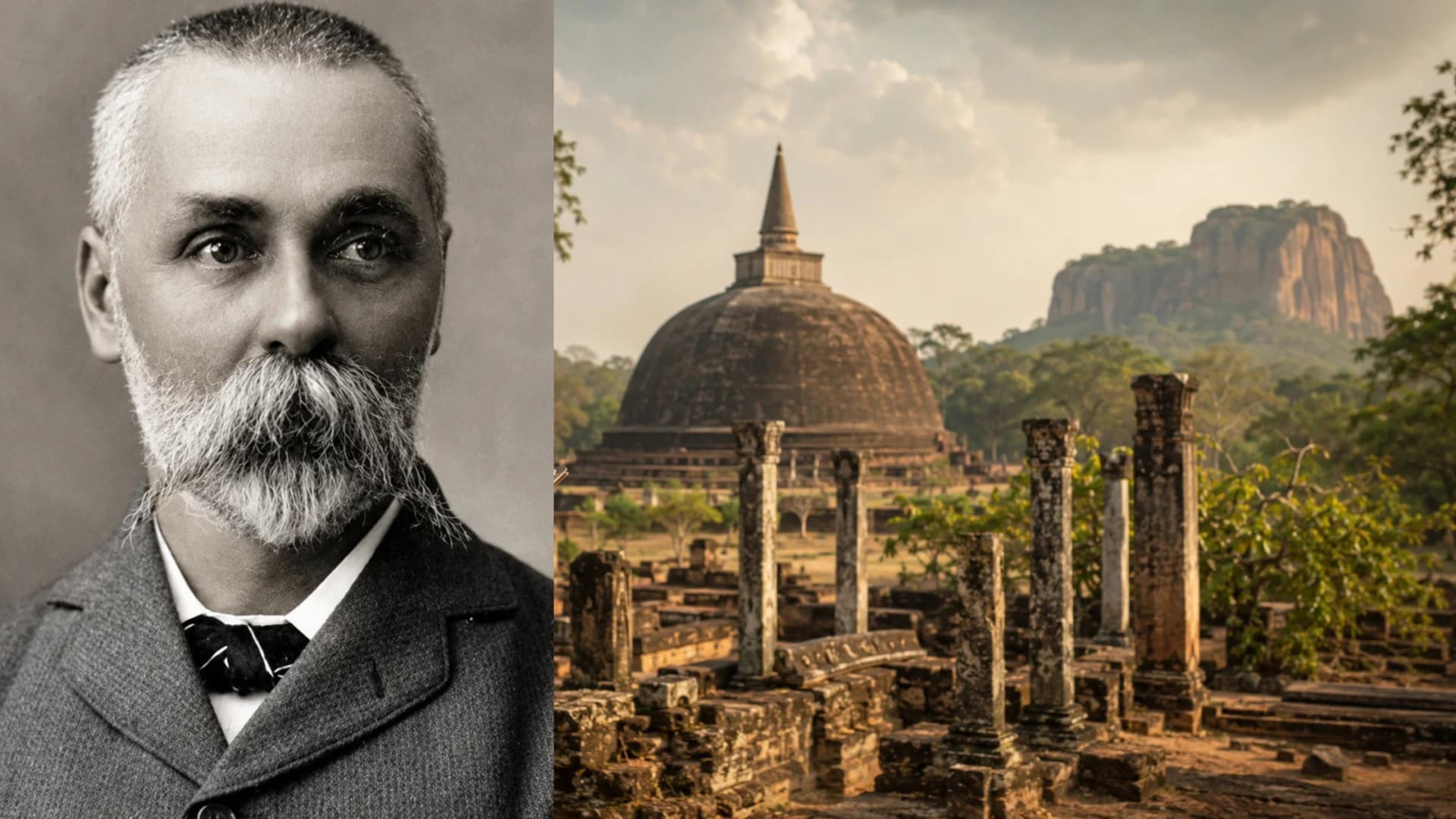
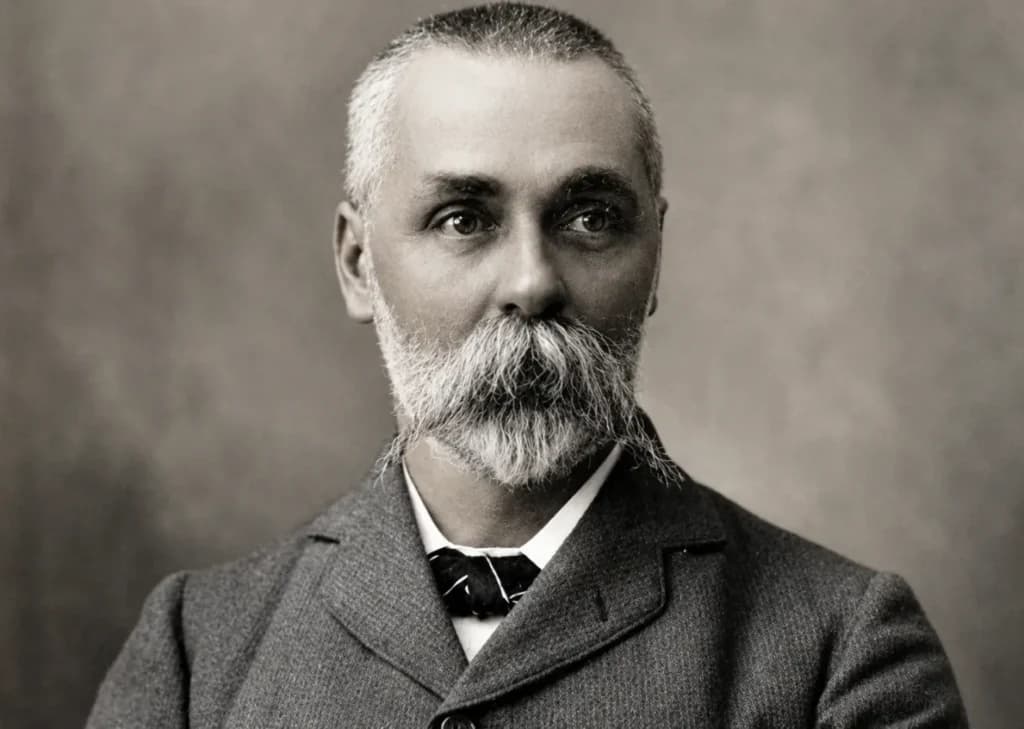
One of the most important figures in this story was Harry Charles Purvis Bell, better known as H.C.P. Bell. He was a British civil servant in Ceylon who became the island’s first Archaeological Commissioner. In 1890, Governor Sir Arthur Gordon directed Bell to begin archaeological operations in the North Central Province, a moment the Department of Archaeology recognises as the official beginning of scientific archaeology in Sri Lanka.
From Civil Servant to Archaeological Commissioner
Bell was not merely a desk-bound colonial officer. His work took him into ruined capitals, forested monastic sites, inscription fields, rock fortresses and ancient reservoirs. He recorded, mapped, excavated and described remains that helped later generations understand the scale and sophistication of early Sri Lankan civilisation.
Before Bell’s formal appointment, there had already been important archaeological interest in Ceylon. S.M. Burrows carried out methodical work in Anuradhapura and Polonnaruwa between 1884 and 1886. Bell’s importance lies in the way he gave the work a more organised, official and continuing structure through the Archaeological Survey of Ceylon.
His early work included the famous Kegalle Report, a detailed record of antiquities in the Kegalle District. This showed Bell’s method: he was interested not only in great capitals but also in inscriptions, temples, ruins and local historical traces scattered across the island.
Anuradhapura: The Sacred City in the Jungle
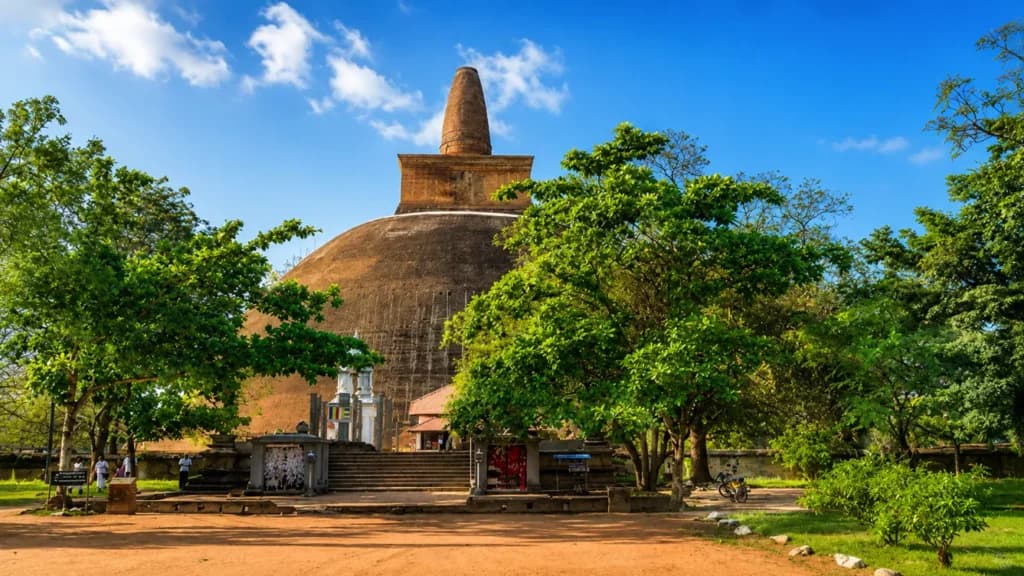
Anuradhapura was one of Bell’s great archaeological fields. Once the political and religious capital of ancient Ceylon, it flourished for around 1,300 years before being abandoned after invasion in 993. For centuries, parts of the city remained wrapped in jungle, even though its sacred importance never fully disappeared.
For the heritage traveller, Anuradhapura is not simply a ruin field. It is a city of scale. The great stupas, stone monasteries, bathing ponds, guardstones, moonstones and irrigation works reveal a civilisation deeply skilled in architecture, religion, engineering and urban planning.
Bell’s archaeological work helped give form to this buried landscape. The old stones were no longer isolated ruins. They became part of a larger historical picture: royal power, Buddhist devotion, monastic learning, hydraulic engineering and artistic skill.
Today, when visitors walk around Abhayagiri, Jetavanaramaya, Ruwanwelisaya or the ancient monastic complexes, they are walking through a landscape that early archaeological surveys helped identify, record and preserve for the modern world.
Check the previous article – Kurunegala: Colonial Streets, Rock Views and Old Provincial Ceylon
Polonnaruwa: The Medieval Garden City
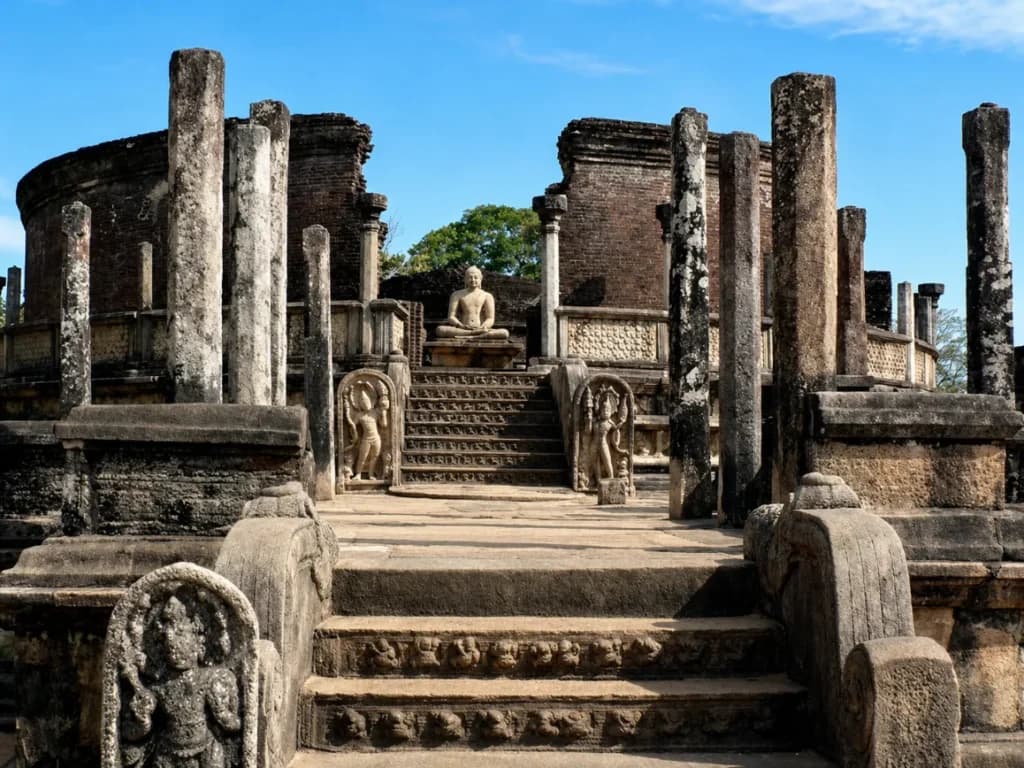
If Anuradhapura tells the story of early sacred kingship, Polonnaruwa shows the splendour of medieval Ceylon. UNESCO describes Polonnaruwa as the second capital of Sri Lanka after the destruction of Anuradhapura in 993. It includes Chola-period monuments as well as the remarkable garden-city created by King Parakramabahu I in the twelfth century.
Polonnaruwa is one of the finest places in Sri Lanka to understand the elegance of ancient urban design. The visitor can move from royal palace ruins to audience halls, from carved stone lions to lotus baths, from the Quadrangle to Gal Vihara, where the Buddha images still carry an extraordinary stillness.
Bell’s surveys and reports helped bring attention to Polonnaruwa’s ruined cityscape. He worked in a period when archaeology was still developing as a discipline in Ceylon. His records, plans and descriptions became part of the foundation on which later conservation and research were built.
For modern travellers, Polonnaruwa is especially rewarding because it feels open, walkable and atmospheric. The ruins stand amid dry-zone light, open lawns, reservoirs and quiet roads. It is one of the best places to feel the grandeur of old Ceylon without needing much imagination.
Sigiriya: Rock Fortress, Frescoes and Early Archaeology
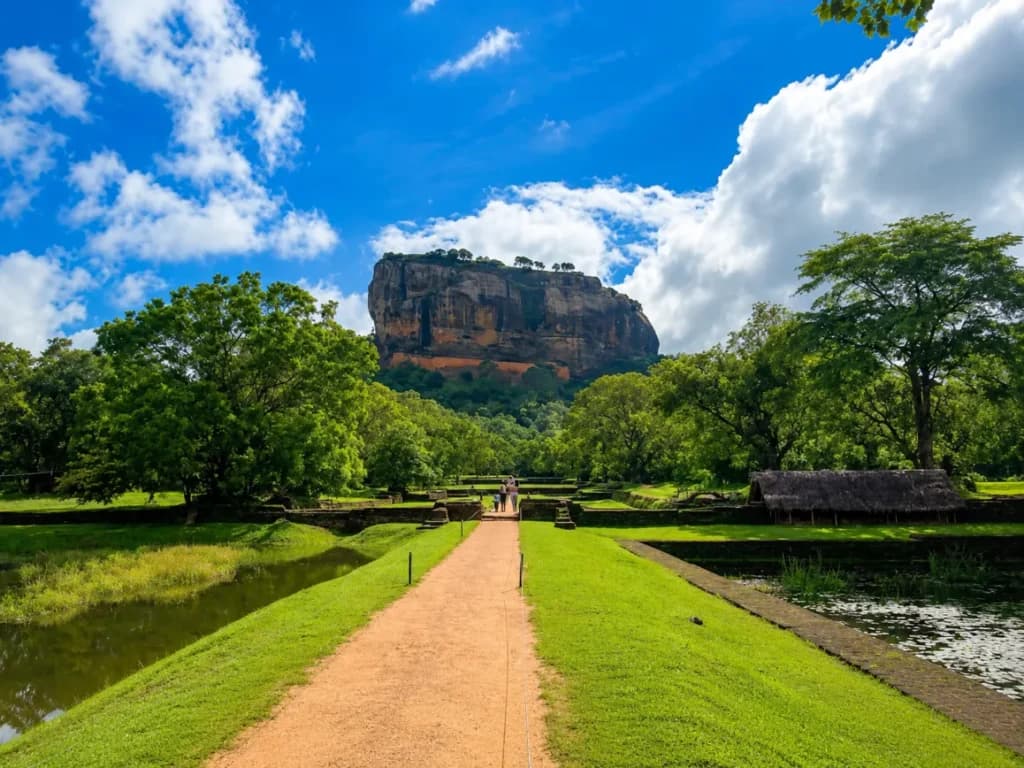
Sigiriya had already attracted attention before Bell, but his work helped place it firmly within the archaeological imagination of Ceylon. Archaeological work at Sigiriya began on a small scale in the 1890s, and Bell became the first archaeologist to conduct extensive research at the site.
Sigiriya itself is one of the most dramatic heritage landscapes in Asia. Built by King Kassapa I, who ruled from 477 to 495, the ancient capital rises around a granite rock about 180 metres high. Its palace ruins, gardens, terraces, mirror wall, frescoes and lion stairway make it one of the island’s most unforgettable historical sites.
The Department of Archaeology notes that Bell’s explorations at Sigiriya and Polonnaruwa produced results of exceptional interest, including the discovery of murals in 1897.
For today’s traveller, Sigiriya is often seen as a climb. But it is much more than that. It is a complete designed landscape. The water gardens, boulder gardens, terraces, palace summit and painted galleries show the ambition of a king who turned a rock into a royal statement.
Bell’s work helped fix Sigiriya in the heritage record not simply as a spectacular rock, but as an ancient capital worthy of careful study.
Check the previous article – Matale: Colonial Streets, Spice Routes and Hill Country Gateways
What Bell Actually “Discovered”
It is better to say Bell rediscovered, recorded and interpreted Ceylon’s ancient cities rather than simply “discovered” them. These sites were not unknown to Sri Lankans. Sacred places such as Anuradhapura remained part of living Buddhist memory. Local communities knew ruins, paths, tanks and inscriptions long before official archaeology arrived.
Bell’s role was different. He helped turn scattered knowledge and jungle-covered remains into mapped archaeological sites. He measured monuments, copied inscriptions, produced reports, supervised excavations and helped create a documentary foundation for future scholars.
That is why his work still matters. He made old Ceylon visible in a modern archaeological language.
The Bell Legacy for Heritage Travellers
For Tripping Sri Lanka readers, Bell’s story is not only about archaeology. It is also about how we see the island today.
When we travel through the Cultural Triangle, we are not just moving between tourist attractions. We are following an archaeological trail that was shaped by monks, kings, villagers, chroniclers, colonial surveyors, Sri Lankan scholars and later conservationists.
Bell belongs to that layered story. His work opened a path for the modern appreciation of Anuradhapura, Polonnaruwa, Sigiriya and other ancient sites. Later Sri Lankan archaeologists, including figures such as Senarath Paranavitana, built on this foundation and carried the study of the island’s past much further.
The result is what visitors experience today: ancient cities that are no longer lost, but alive again through travel, scholarship, pilgrimage and national memory.
How to Follow Bell’s Ancient Cities Trail Today
A good heritage route begins at Anuradhapura, where visitors can spend at least two days exploring the sacred city, the great stupas, monasteries and ancient irrigation landscapes.
From there, continue to Sigiriya, ideally arriving early in the morning. Climb the rock, but also leave time for the gardens and surrounding archaeological landscape. Sigiriya is best understood slowly, not as a rushed photo stop.
Then travel to Polonnaruwa, where a full day allows time for the Royal Palace area, the Quadrangle, Rankoth Vehera, Lankatilaka and Gal Vihara. The city is ideal for travellers who enjoy photography, ruins, sculpture and open-air history.
For a deeper route, add Ritigala, Mihintale and Kegalle. These places widen the story beyond the famous capitals and show the many layers of old Ceylon that Bell and later archaeologists helped document.
Why This Story Still Matters
H.C.P. Bell’s work reminds us that heritage is not only found. It is studied, recorded, protected and reintroduced to the public.
The ancient cities of Ceylon were not dead ruins waiting silently in the jungle. They were part of a living island memory. Bell’s contribution was to help give that memory a formal archaeological record.
Today, every traveller who stands before the stupas of Anuradhapura, the stone Buddhas of Polonnaruwa or the painted walls of Sigiriya is part of that continuing rediscovery.
Old Ceylon is still there, carved in stone, held in silence, waiting for those who know how to look.
Visit Us: https://trippingsrilanka.com/stories
More from Old Ceylon
Colombo Public Library at 100: The Names That Still Remain
The Toll Gate at the Bridge: When Travelling Across Ceylon Cost a Few Cents at a Time