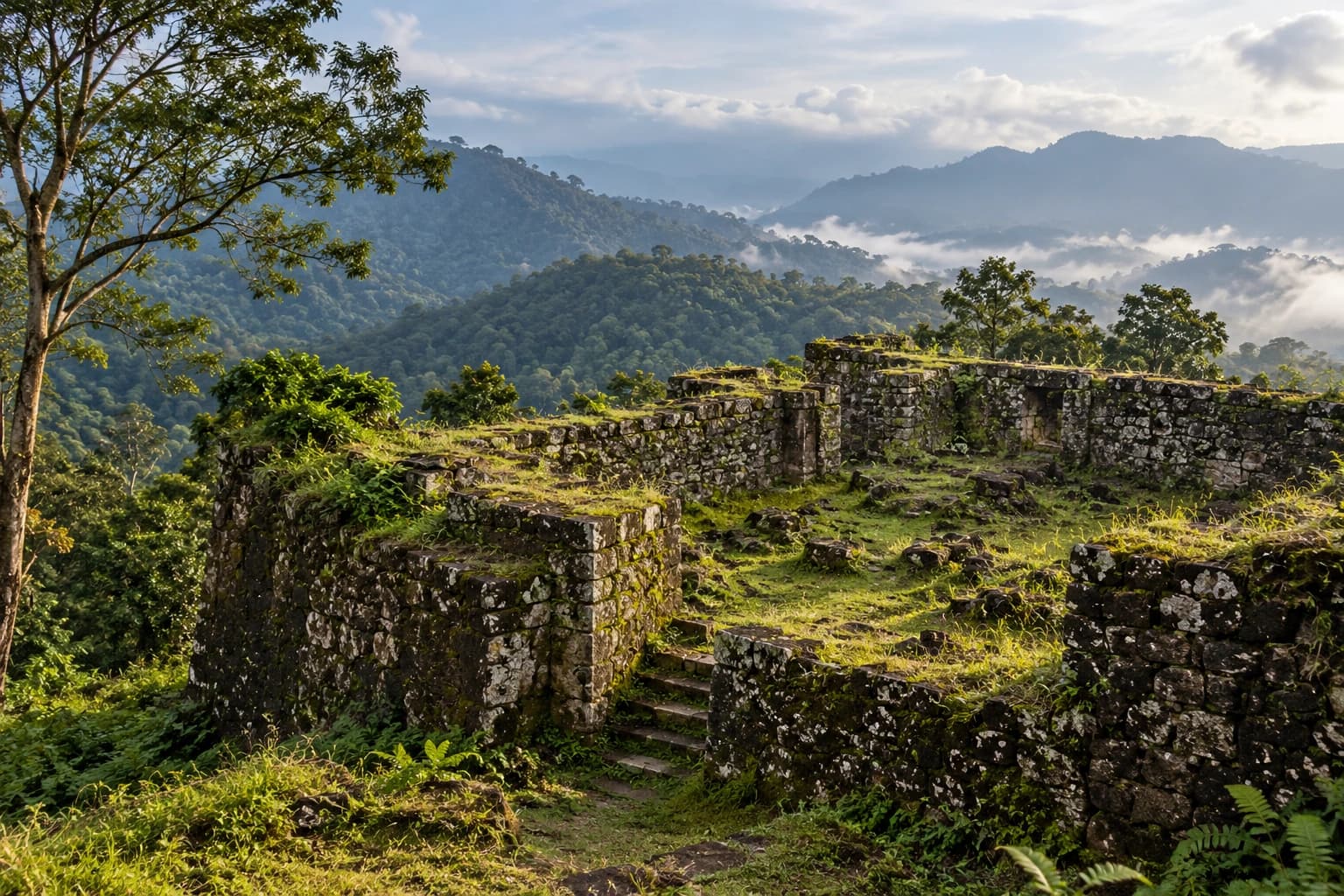
St Margaret’s Church of Kotagala: The Little Stone Church That Watched Coffee Country Become Tea Country
A Church Among the Estates
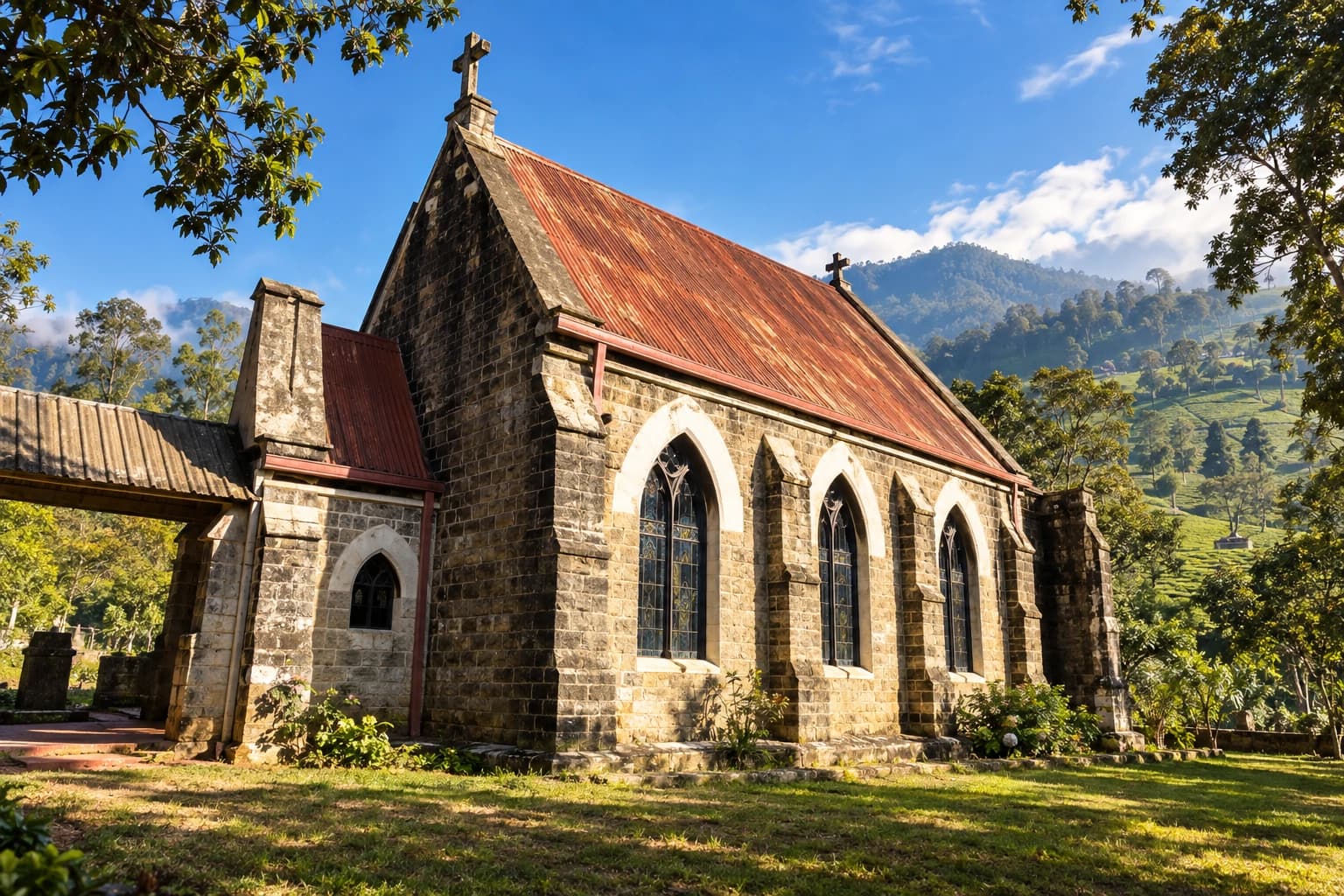
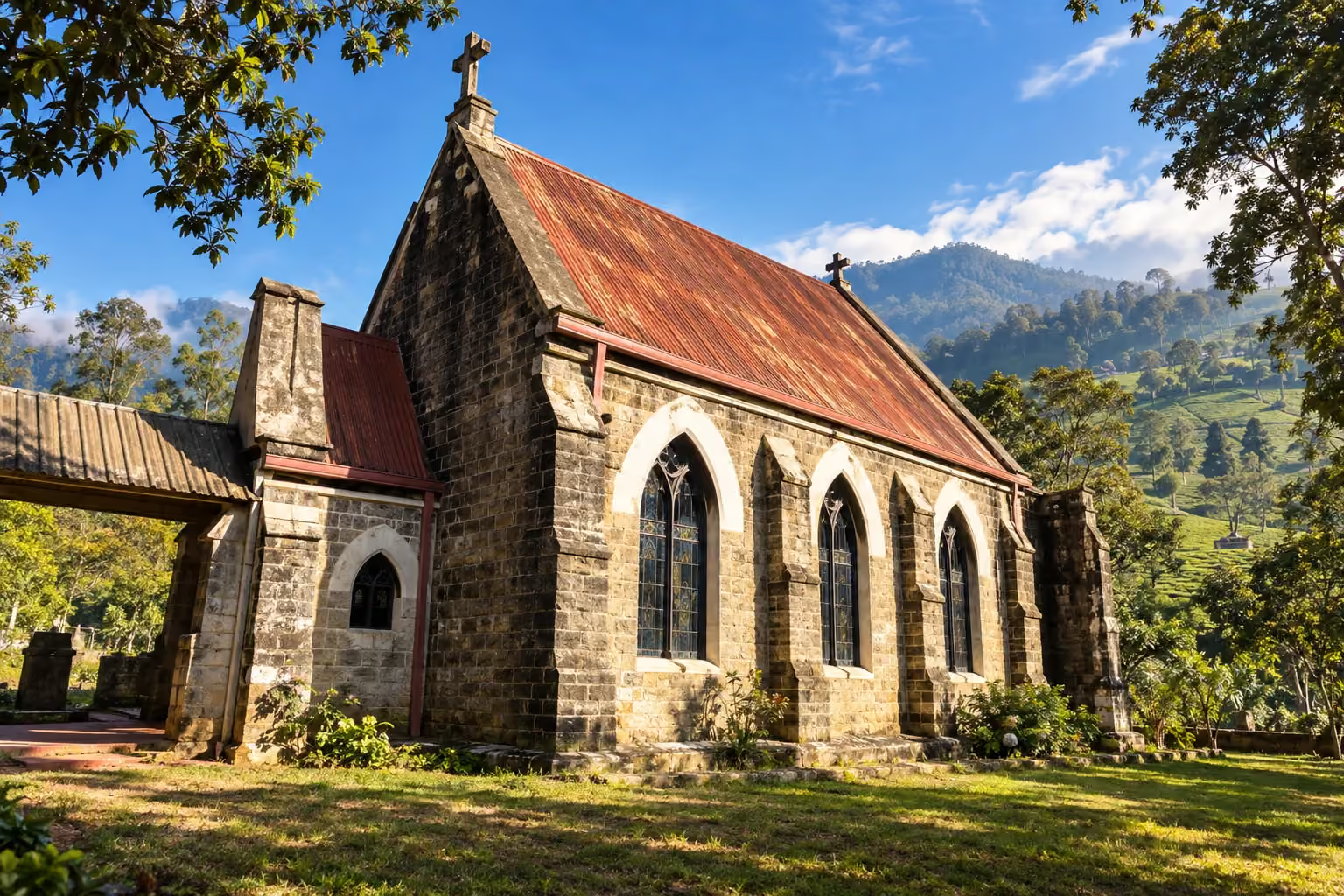
St Margaret’s church of Kotagala | There is something slightly unexpected about finding an English-looking stone church among the estates of Kotagala. Its pointed windows, steep roof and dark masonry seem more suited to a damp country parish thousands of miles away. Mist sometimes settles around it, tea covers the surrounding hills, and beyond the churchyard lies a landscape shaped and reshaped by nearly two centuries of plantation history.
It would be easy to describe St Margaret’s Church, Kotagala simply as another surviving relic of British Ceylon. But its story is more interesting than that. When the idea for the church first emerged, tea had not yet become the crop that defined Sri Lanka’s hill country. The estates around Dimbula were part of Ceylon’s great coffee experiment. St Margaret’s therefore belongs to a brief and enormously important moment when the landscape we now instinctively think of as tea country was still becoming something else.
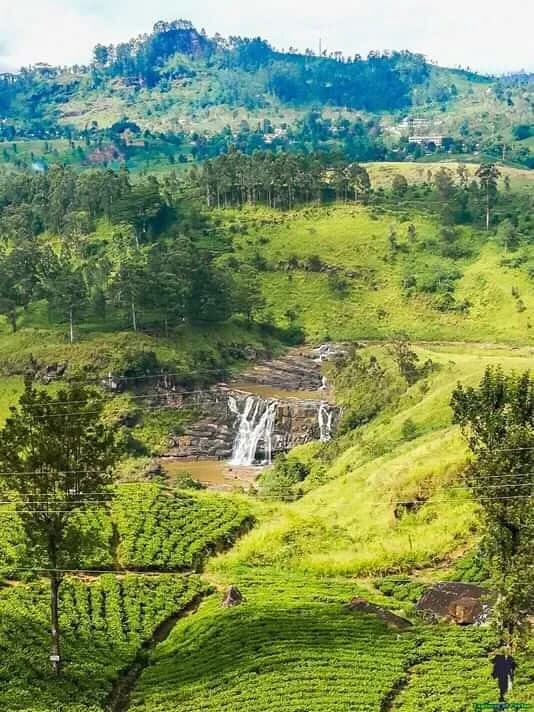
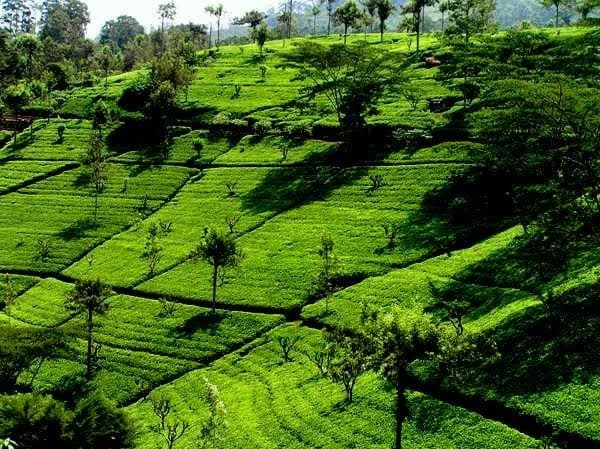
Unlike an abandoned planter’s bungalow or the ruins of an old coffee store, the church survived that transformation. It remained while coffee failed, while tea spread, while estate communities changed, and while Kotagala became part of the familiar hill-country world travellers pass through today.
Before Dimbula Became Tea Country
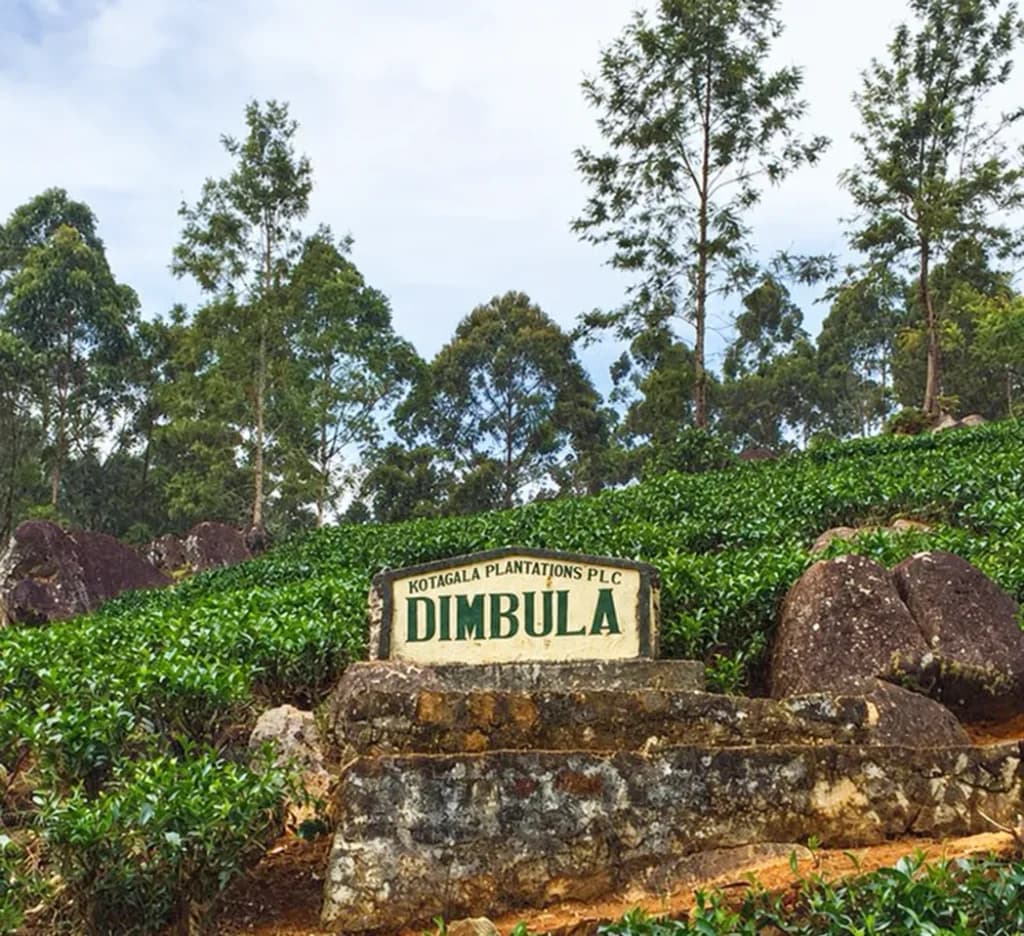
The story begins in 1871. By then European-owned coffee estates had spread into Dimbula and Dickoya, creating settlements in country that had previously been difficult to reach from Colombo. The plantation districts were expanding faster than much of their social infrastructure.
There were estates, factories, superintendent’s bungalows and labour settlements, but relatively few permanent Anglican churches. Services could instead be held in planter’s bungalows and even coffee warehouses when travelling clergy reached the district. Religion, like roads and schools, had to follow the plantations into the hills.
On 25 September 1871, a meeting was held in Dimbula under the chairmanship of Piers Claughton, Anglican Bishop of Colombo. The gathering decided that the district needed its own clergy and churches. Two locations were eventually selected. One was at Lindula. The other was a small rise on Forest Creek Estate at Kotagala.
That detail changes the way St Margaret’s should be understood. This was not originally a church built in the middle of the famous tea country we recognise today. It was a church planned for coffee country.
A Church on Forest Creek Estate
Forest Creek itself appears in surviving records as an established nineteenth-century plantation property. The estate is generally recorded as having been established around 1870 by George Smith and Neil Gow, and contemporary legal records independently place Gow at Forest Creek Estate in Dimbula during the early 1880s.
The site chosen for St Margaret’s was on a knoll within the estate. The foundation stone was laid in 1876, with the building reportedly following plans supplied by a London architect. Four years later, on 15 April 1880, St Margaret’s was formally dedicated by the Rev William Henry Elton.
The dates are significant. During precisely these years, Ceylon’s coffee economy was being devastated by Hemileia vastatrix, the coffee leaf disease that changed the future of the hill country. Plantations that had seemed permanent suddenly became uncertain investments. Across the highlands, owners experimented with alternatives, including cinchona, before tea eventually became dominant.
St Margaret’s therefore rose while the economic world surrounding it was changing. The congregation arriving there in its earliest years would have looked out across a landscape that was not necessarily the continuous green carpet of tea familiar to travellers today.
The Architecture of Another Climate
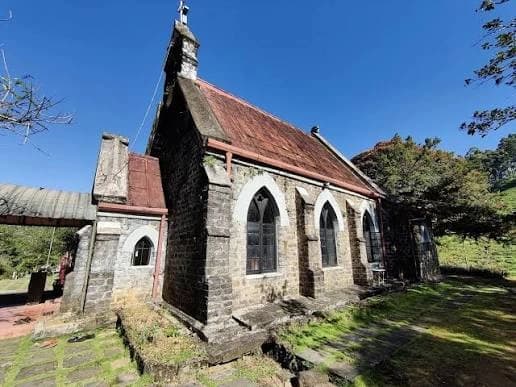
The church itself is modest. That is part of its charm. There is no enormous tower or elaborate façade announcing its presence across the valley. Instead, St Margaret’s relies on the visual language of the Victorian Gothic Revival: pointed openings, heavy stone walls, buttresses and a steeply pitched roof.
In the cool climate of the central highlands, the architecture feels strangely convincing. Mist, rain, stone and steep hills create an atmosphere that can appear almost British at first glance, even while the surrounding vegetation remains unmistakably tropical. This may be one reason Gothic architecture translated so effectively into the plantation districts.
Yet St Margaret’s should not simply be regarded as an imported piece of England. Buildings change meaning as the communities around them change. A church built for one colonial setting can gather other histories over time. St Margaret’s did exactly that.
The People Missing From the Usual Story
Old accounts of hill-country churches frequently focus on planters, chaplains and European families. The surviving records of St Margaret’s tell a broader story. An archival index compiled from its baptismal register contains hundreds of birth and baptism records associated with St Margaret’s Church, Forest Creek.
Look through those names and another Kotagala begins to appear. There are people associated with Forest Creek itself, but also with estates such as Mount Vernon, Wallaha, Sheen, Tangakelle, Mayfield, Drayton and Stair. Many recorded names belong to Tamil Christian families and others connected with the wider plantation community.
That matters. It means St Margaret’s history cannot adequately be told simply as the story of an Anglican church built for British planters. Whatever its original colonial setting, the documentary trail shows the church becoming part of a wider estate society.
A building created during the expansion of the plantation economy eventually accumulated the births, baptisms, marriages, deaths and memories of generations who lived among those plantations. The register may therefore be one of the church’s most interesting surviving historical artefacts. It turns architecture into social history.
The Churchyard Beside It
Then there is the cemetery. Old gravestones remain beside St Margaret’s, including memorials associated with the colonial plantation community. Walk through an old hill-country cemetery and the dates can sometimes tell a story almost as clearly as an archive.
People travelled enormous distances to work on Ceylon’s estates. Some spent most of their adult lives here. Others died surprisingly young. Illness, accidents and the practical isolation of plantation districts meant that death could be an immediate presence in nineteenth-century estate life.
The churchyard consequently gives St Margaret’s a different quality from a reconstructed heritage attraction. This is not scenery assembled to resemble Old Ceylon. People actually lived, worshipped and were buried here. The stones beside the church are not decoration. They are part of the same human landscape as the estate roads, bungalows, labour lines and tea fields around Kotagala.
From Coffee to Tea
By the end of the nineteenth century, the landscape surrounding St Margaret’s had changed profoundly. Coffee had retreated. Tea was spreading across Dimbula. Forest Creek itself subsequently passed to the Anglo-Ceylon and General Estates Company in 1898, according to historical accounts.
An 1899 Ceylon Government Gazette provides a particularly useful glimpse of that transformed landscape. When the colonial government sought land for a proposed hospital at Dimbula, several parcels belonging to Forest Creek Estate were described explicitly as tea land.
In other words, within roughly a generation of the decision to establish a church here, the agricultural landscape around it had been rewritten. St Margaret’s remained. That may be the most interesting way of seeing the building today. It is a fixed point in a landscape that changed around it.
A Protected Piece of Kotagala
The church eventually received formal archaeological recognition. St Margaret’s was declared an Archaeological Protected Monument on 23 January 2009, with the designation later appearing in the Government Gazette.
More than a century after its construction, the little estate church had entered yet another phase of its life. First it had been a church serving an emerging coffee district. Then it became a church surrounded by tea. Then it formed part of the religious and family life of generations of estate communities. Finally, it became a recognised piece of Sri Lanka’s architectural heritage.
That long survival gives the building a quiet importance. St Margaret’s is not only old because of its date. It is old because it has carried several versions of Kotagala within its walls.
Look Beyond the A7
Kotagala is easy to pass through. For many travellers, it is simply another name encountered on the road or railway between Hatton and Nuwara Eliya. But places such as St Margaret’s reward slower travel.
Stand beside the church and the familiar hill-country landscape begins to reveal its layers. The tea is comparatively recent. Before the tea there was coffee. Around the plantations grew settlements, railway lines, churches, cemeteries, schools and communities. People arrived from Britain and India and from elsewhere in Ceylon. Some stayed for only a few years. Others established families whose connections with these hills continued for generations.
St Margaret’s has stood through much of that change. Its stone walls do not merely preserve a piece of Victorian architecture. They preserve a point in time when one version of Ceylon’s hill country was disappearing and another was just beginning.
Final Thoughts: The Church That Watched the Landscape Change
Perhaps that is why St Margaret’s feels so appropriate in Kotagala today. It does not dominate the landscape. It sits within it. The church belongs to the estates, the mist, the road, the old cemetery and the memory of a plantation world that changed crop, community and ownership over time.
To call it simply a British church is too small a description. It began in a British colonial context, certainly. But its longer story belongs also to the coffee frontier, the rise of tea, the estate communities of Kotagala and the many families whose lives passed through its register and churchyard.St Margaret’s watched coffee country become tea country.And in that quiet survival, it tells one of the hill country’s most layered stories.
Visit us: https://trippingsrilanka.com/stories
Heritage places mentioned
St Margaret’s Church of Kotagala
More from Old Ceylon
When Prince Philip Visited Pedro Estate: The Royal Visit That Became Part of Ceylon Tea History in 1954
When Five Cents Mattered: The Forgotten Small Change of Old Ceylon