Wellawatte Canal and Layards Folly: A Forgotten Waterway of Old Colombo
A Quiet Postcard from Old Colombo
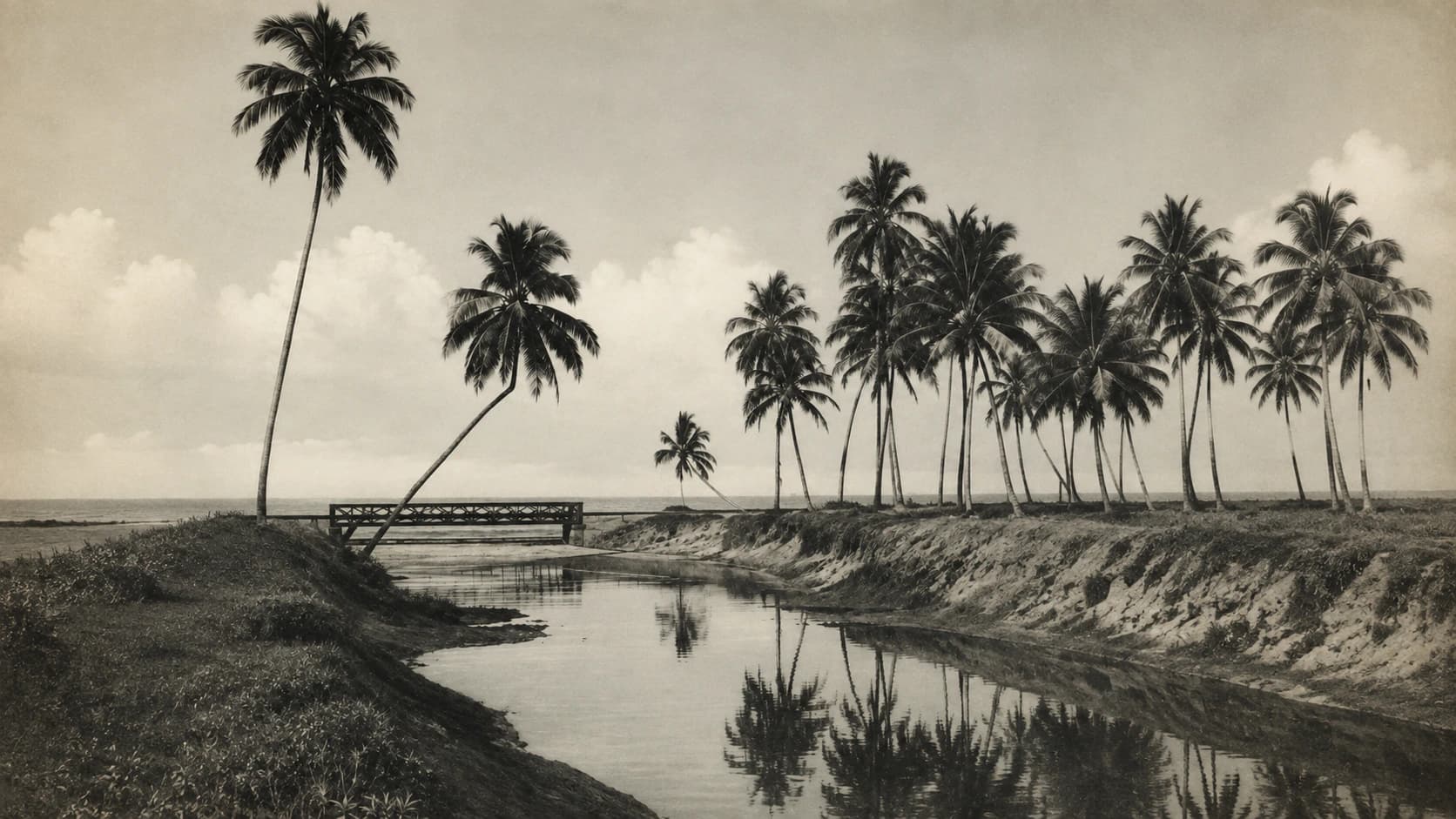
An old Ceylon postcard titled “Wellawatte Canal and Bridge – Colombo – Old Ceylon Vintage Postcard” captures a calm scene that feels almost impossible to imagine in today’s busy Colombo.
A narrow canal moves silently through the landscape. Tall coconut palms lean over the water. A small bridge crosses the canal in the distance. The still surface reflects the trees and sky, giving the whole scene a dreamlike quality.
This is not the Colombo of traffic, apartments, offices and crowded roads.
This is an older Colombo — slower, greener and more closely connected to water.
The image is linked to Wellawatte Canal, also associated in old references with Layards Folly, a name that adds mystery and character to this forgotten corner of colonial Colombo.
Check our previous article – https://trippingsrilanka.com/stories/old-ceylon-canals-sri-lanka
Where Was Wellawatte Canal?
Wellawatte lies along the southern coastal stretch of Colombo, between Bambalapitiya and Dehiwala.
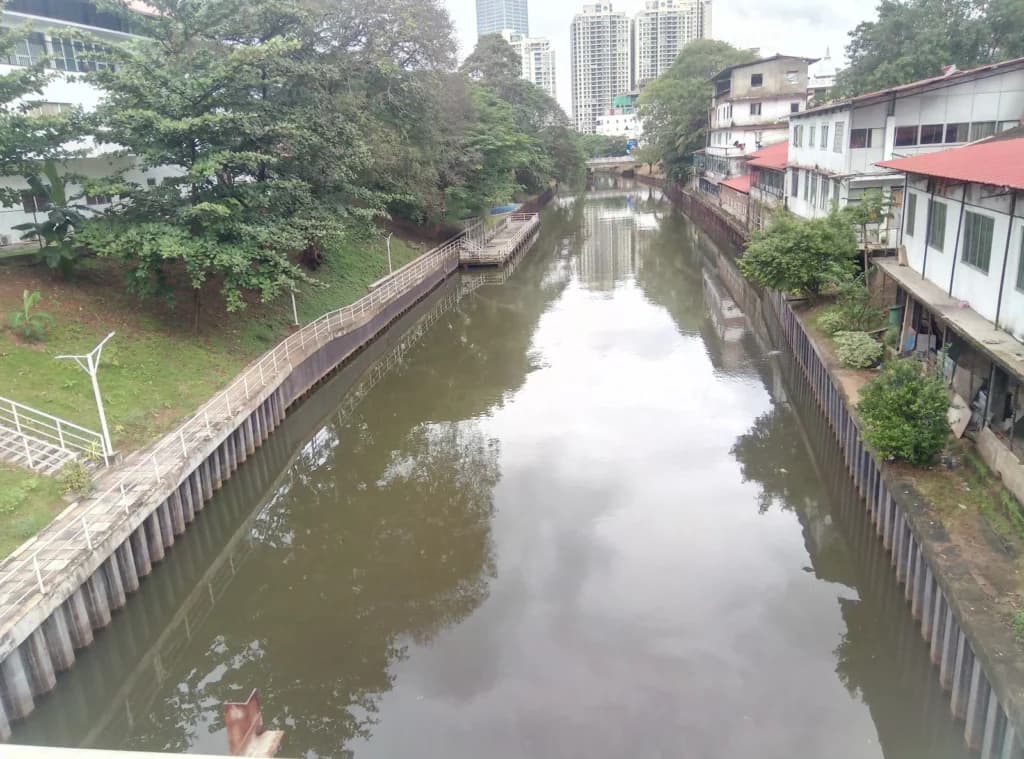
Today, Wellawatte is known as a dense urban area filled with shops, apartments, railway crossings, schools, temples, kovils, churches and busy roads. But in earlier times, the area had a very different atmosphere.
It was more open, more coastal and more semi-rural.
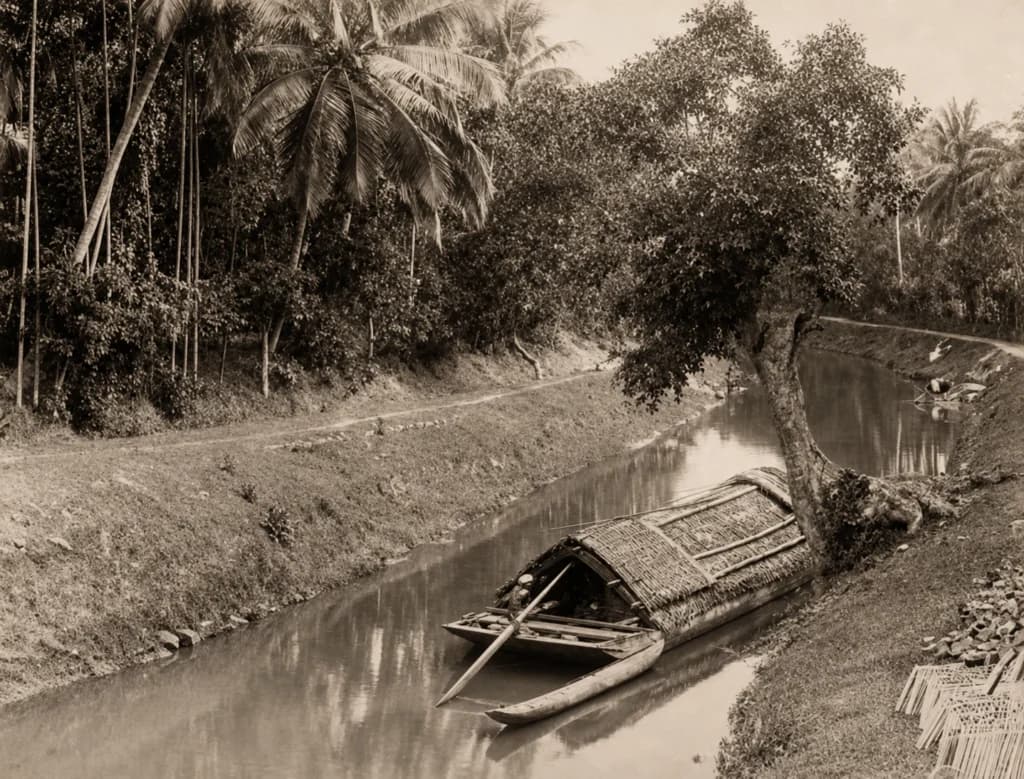
Canals, marshy land, coconut palms, garden houses and small bridges formed part of its landscape. The old postcard gives us a glimpse of this forgotten Wellawatte — a place where water, trees and sky still shaped the everyday view.
The Canal as Part of Colombo’s Waterway Network
Colombo was not only a city of roads.
It was also a city of canals, lakes, drains and waterways. These water routes were used for movement, drainage, trade and connection between different parts of the city and its surroundings.
During the colonial period, canals helped move goods and people before modern road transport became dominant. They also shaped the layout of neighbourhoods and influenced how people lived near water.
The Wellawatte Canal belonged to this wider waterway culture.
It reminds us that Old Colombo had a quieter side — one where boats, bridges, coconut groves and shaded banks were part of daily life.
What Was Layards Folly?
The name Layards Folly gives the postcard added historical interest.
Old place names like this often carry stories connected to colonial officials, landowners, estates, residences or local landmarks. In the case of Wellawatte, the name suggests a place once well known enough to appear in postcard captions and local memory.
The word “folly” itself is interesting. In colonial usage, it could refer to an unusual house, garden feature, eccentric building, ambitious project or a place remembered for its distinctive character.
Even when the exact details fade, the name remains evocative.
Layards Folly gives this scene a personality. It suggests that the canal and bridge were not just ordinary features of the landscape, but part of a named and remembered location in Old Colombo.
A Bridge Over Still Water
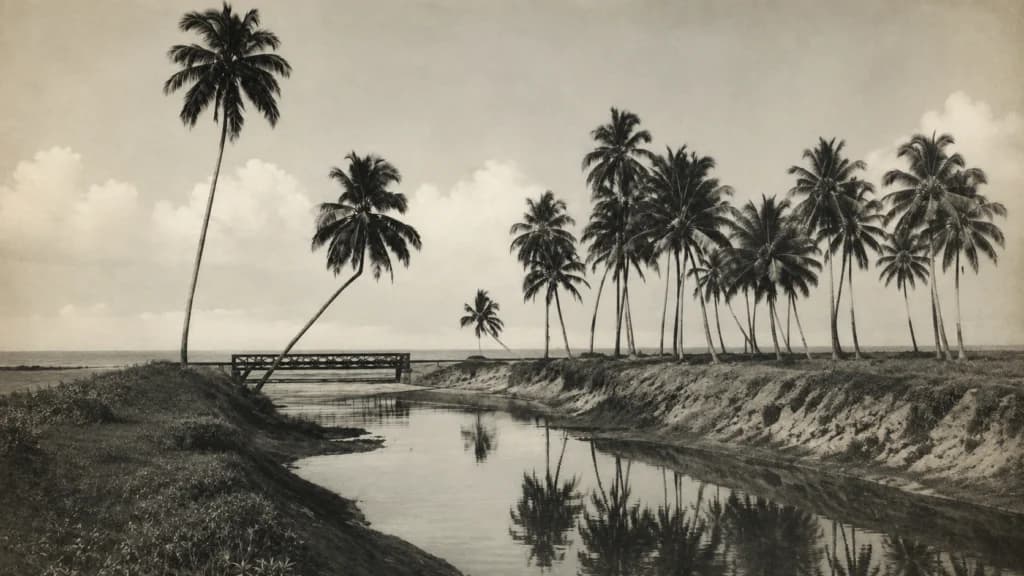
The small bridge in the postcard is one of the most important details.
Bridges were practical, but they were also symbolic. They connected settlements, roads, gardens and neighbourhoods divided by water. In canal-side areas, a bridge could mark a familiar crossing point used by residents, workers, vendors, schoolchildren and travellers.
The bridge in the image appears modest and functional.
It does not dominate the scene. Instead, it blends into the quiet landscape of water and palms.
This tells us something about Colombo before heavy urbanisation. Infrastructure existed, but it was still surrounded by open space and natural scenery.
Coconut Palms and the Old Coastal Landscape
The tall coconut palms in the image are central to its atmosphere.
They remind us that many parts of Colombo once had a strong coastal village character. Before the full spread of urban development, coconut trees, sandy lanes, gardens, wells and open plots were common in neighbourhoods close to the sea.
Wellawatte, like many coastal suburbs, carried this mixture of town and village.
The canal, the palms and the open sky create an image of Colombo that feels far removed from the concrete city of today.
It was still a capital, but not yet completely hardened by modern traffic and construction.
Life Along the Canal
The postcard does not show people clearly, but it allows us to imagine canal-side life.
Perhaps residents crossed the bridge on foot. Perhaps small boats moved along the water. Perhaps children played near the banks, and vendors walked between houses and roads. Estate workers, gardeners, fishermen, domestic workers and travellers may all have known this place.
In the early morning, the canal may have reflected mist, palms and the first light of the day. By afternoon, it would have carried the heat and stillness of Colombo. In the evening, the shadows of coconut trees would have lengthened across the water.
The canal was not merely scenery.
It was part of the everyday geography of the people who lived nearby.
Wellawatte Before the City Closed In
The postcard is valuable because it shows Wellawatte before the city closed in around it.
Today, Colombo’s southern corridor is heavily built up. Roads are busy, land is expensive, and open water bodies are often hidden behind walls, drains, buildings or neglected edges.
But the old image reminds us that Wellawatte once had a more spacious and watery identity.
There were views across canals. There were palms reflected in still water. There were bridges that felt almost rural. The boundary between city and village was softer.
This is one of the most powerful things old postcards can do.
They reveal the landscape that modern residents have almost forgotten.
The Role of Postcards in Preserving Old Ceylon
This image was published as a vintage postcard, credited to Plâté & Co., one of the important names associated with old Ceylon photography and postcard publishing.
Postcards were more than souvenirs. They helped document places, landscapes and buildings that have since changed beyond recognition.
A traveller could buy a postcard, write a message on the back and send a fragment of Ceylon across the world. In doing so, the postcard preserved a visual memory.
Today, these postcards allow us to see older versions of Colombo.
They show railway stations, hotels, canals, temples, streets, bridges, beaches and gardens before modern development transformed them.
The Wellawatte Canal postcard is one such surviving memory.
A Different Kind of Colombo Heritage
When people think of Colombo heritage, they often think of Fort, the Galle Face Hotel, old government buildings, churches, commercial houses and colonial mansions.
But waterways are also part of the city’s heritage.
Canals shaped movement, drainage, settlement and neighbourhood identity. They influenced how people travelled and how communities developed. They also gave Colombo a softer, greener landscape.
Wellawatte Canal belongs to this less celebrated heritage.
It may not have the grandeur of a colonial hotel or public building, but it tells us something equally important: how ordinary landscapes shaped everyday life.
Why Wellawatte Canal Matters to Old Ceylon
Wellawatte Canal matters because it reveals a forgotten layer of Colombo.
It connects several important themes:
- Colombo’s old canal and waterway network
- The semi-rural past of Wellawatte
- Colonial-era bridges and local crossings
- Coconut-lined landscapes near the coast
- The role of postcards in preserving visual memory
- The gradual transformation of Colombo’s suburbs
- The quiet everyday beauty of Old Ceylon
This is not a story of grand monuments.
It is a story of water, palms, bridges and memory.
Reading the Image Today
Looking at the postcard today, one feels both beauty and loss.
The beauty lies in the stillness of the canal, the reflection of the palms and the quiet bridge in the distance.
The loss lies in knowing how much of this landscape has changed.
Modern Colombo has gained speed, density and convenience, but it has also lost many of its quiet waterside views. Canals that once appeared scenic have often become neglected, hidden or heavily urbanised.
The image therefore asks us to look again.
It reminds us that Colombo’s waterways should not be treated merely as drains or forgotten back lanes. They are part of the city’s historical identity.
Final Thoughts: A Canal That Still Carries Memory
The old postcard of Wellawatte Canal and Layards Folly is more than a pretty image.
It is a small window into an older Colombo — a city of coconut palms, quiet bridges, still water and slower movement.
Before modern roads and buildings reshaped the area, Wellawatte held landscapes that felt almost rural. The canal reflected not only the trees above it, but also a way of life that has now largely disappeared.
For Tripping Sri Lanka readers, this is the kind of Old Ceylon scene worth remembering.
It shows us that heritage is not only found in famous buildings.
Sometimes it flows quietly through a canal, beneath a small bridge, under the shadow of coconut palms.
Visit Us: https://trippingsrilanka.com/stories’
More from Old Ceylon
Colombo Public Library at 100: The Names That Still Remain
The Toll Gate at the Bridge: When Travelling Across Ceylon Cost a Few Cents at a Time