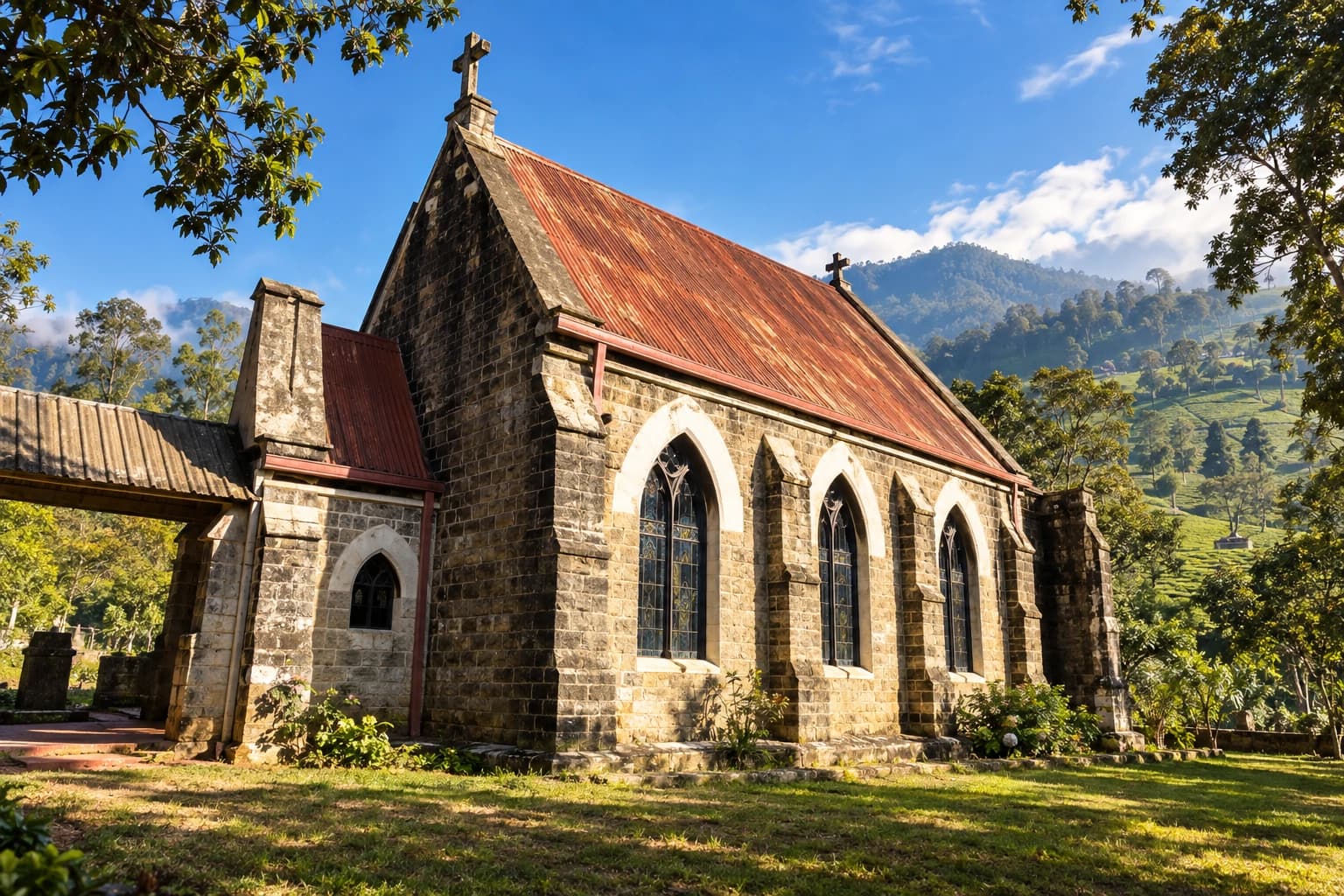
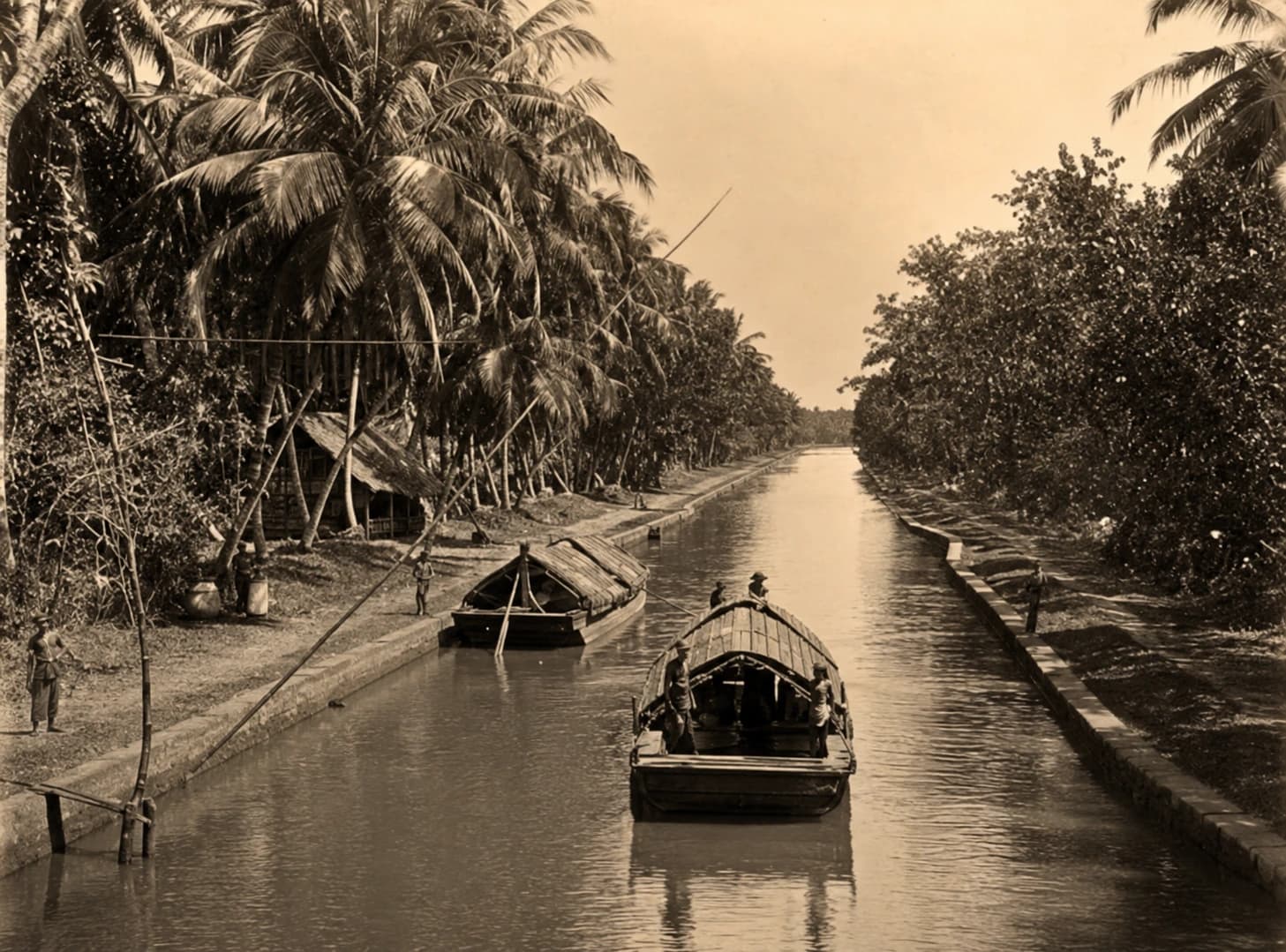
Old Ceylon Canals; For travellers who search for Old Ceylon, Sri Lanka’s most beautiful stories are not always found in the obvious places. They are not only in ancient cities, grand temples, tea estates or famous beaches. Sometimes, they are hidden in quiet waterways, shaded by coconut palms, crossed by old bridges and watched over by fishing communities that still live close to the rhythm of the water.
The canals of Sri Lanka’s western coast offer this rare experience.
They are calm, atmospheric and deeply local. They carry the feeling of another time, when boats moved slowly between towns, lagoons, markets and coastal settlements. Long before highways changed the way people travelled, these waterways helped connect communities and keep daily life moving.
Today, they remain one of the most charming ways to experience the spirit of Old Ceylon.
A Waterway Filled With Memory
The canals were once part of a larger network of rivers, lagoons and man-made waterways that connected important coastal areas. They helped people move produce, household goods and trade items between villages and ports.
In the past, travel by road was slow, especially during the rainy season. A canal journey was often easier, safer and more practical. Boats could glide through narrow channels, linking inland communities with coastal towns.
This made the canals an important part of everyday life. They were used by traders, fishermen, farmers and families. They were not just transport routes. They were social spaces, working routes and lifelines for communities.
That is why these waterways still feel so alive today.
Old Ceylon canals Feeling
For the modern traveller, the appeal of the canals is not only historical. It is emotional.
A boat ride along these waterways feels like entering a softer, slower Sri Lanka. The noise of the road fades. The water becomes calm. The light changes. Coconut palms lean over the banks. Birds move through the mangroves. Small homes face the canal. Traditional boats rest along the edges.
This is not a polished attraction created only for tourists. It is a living landscape.
You see people going about their daily lives. Fishermen prepare their nets. Children walk along narrow paths. Families sit outside their homes in the evening. Birds skim the surface of the water.
For travellers who love heritage, photography and slow travel, the canals offer something deeply rewarding.
Check the previous article – Colonial Colombo: A Guide Through Colonial Capital
Negombo: The Heart of Canal Travel
Negombo hamilton canal Then and Now
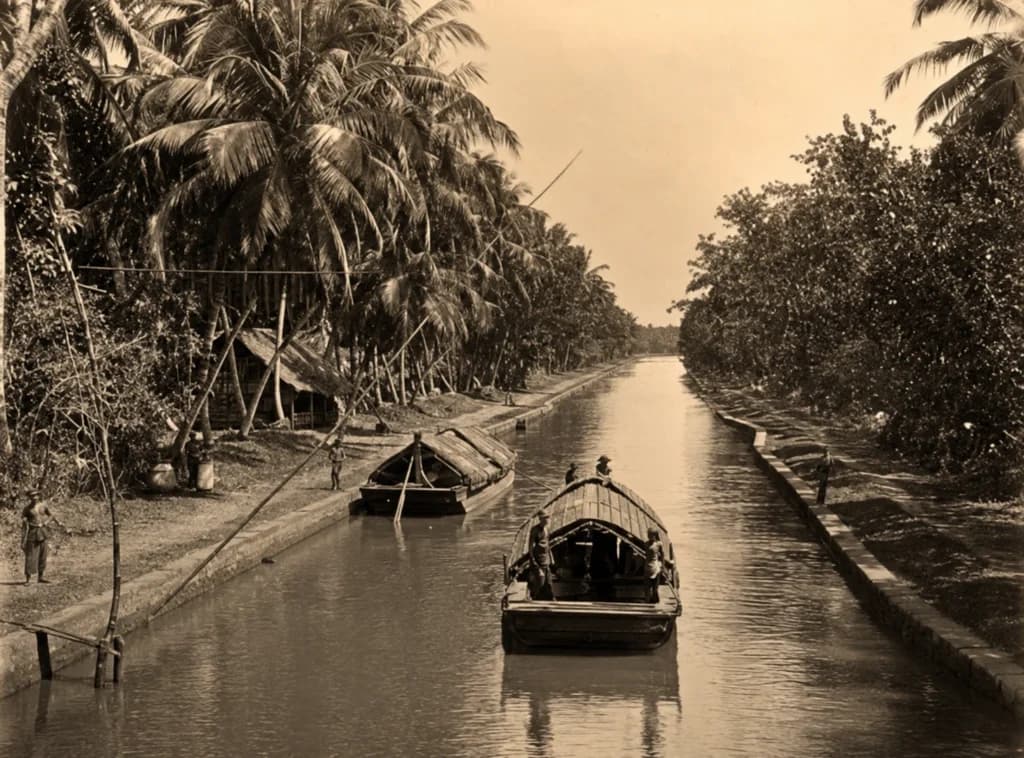
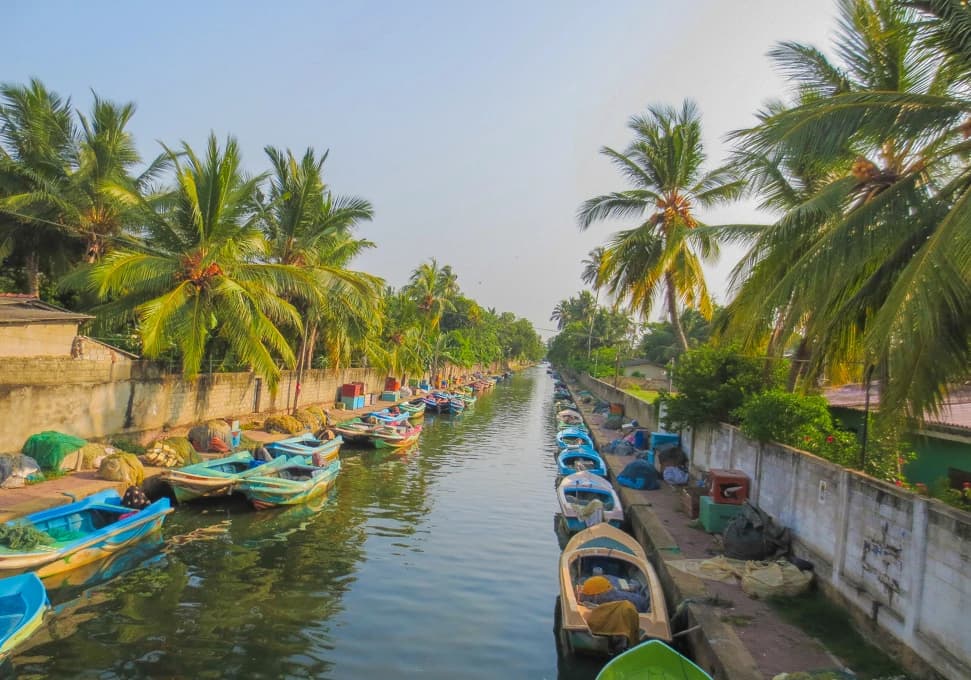
Negombo is one of the best places to experience Sri Lanka’s historic canal life.
Located close to Colombo and the international airport, Negombo is already known for its beach, lagoon, fish market and old churches. But its canal is one of its most atmospheric attractions.
A boat ride through the Negombo canal reveals a different side of the town. It is quieter than the beach. It is more intimate than the market. It gives visitors a chance to see how water has shaped life in this coastal region for generations.
The canal passes through areas where fishing remains central to daily life. Colourful boats, fishing nets, waterside homes and tropical greenery create a scene that feels both simple and timeless.
For many travellers, this is exactly the kind of experience they are looking for — authentic, visual and connected to place.
A Route Through Everyday Heritage
The canals are important because they show heritage in daily use.
Many historic attractions are viewed from a distance. Visitors look at a building, take a photograph and move on. But the canals are different. They are still part of the landscape.
People still live beside them. Birds still nest near them. Boats still move through them. The water still reflects the sky, the trees and the changing light of the day.
This makes canal tourism especially meaningful. It allows travellers to experience heritage as something alive, not something locked away.
Old Ceylon is not only about buildings and monuments. It is also about atmosphere. It is found in the way sunlight falls on water, the sound of oars, the smell of the lagoon breeze and the sight of a narrow boat passing under an old bridge.
Wildlife and Mangrove Beauty
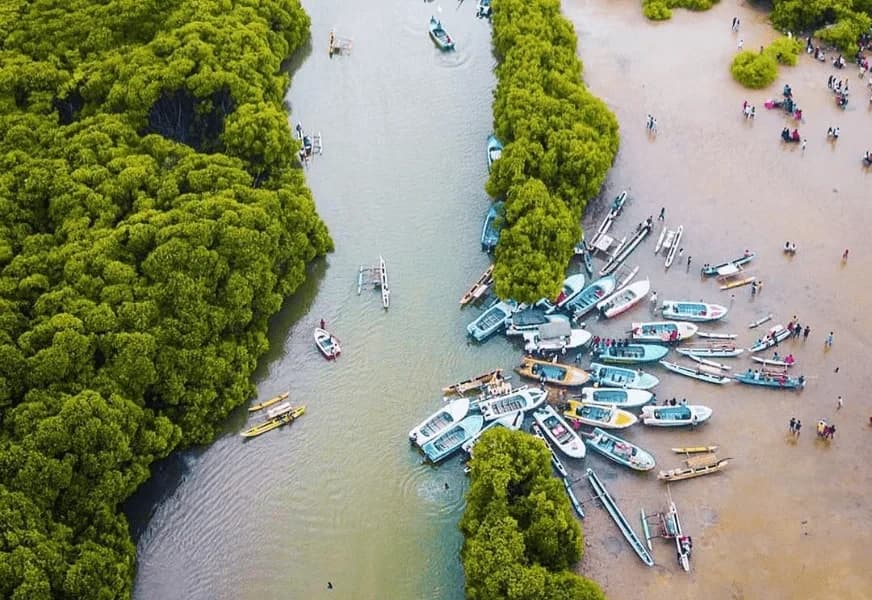
The canals are also rich in natural beauty.
Many sections pass through or near wetlands, lagoons and mangrove ecosystems. These areas support birdlife, small reptiles, fish and other wildlife. For nature-loving travellers, this adds another layer to the experience.
During a canal ride, visitors may see kingfishers, herons, egrets and cormorants. Monitor lizards may appear along the banks. Butterflies move through the greenery. The mangroves create shelter, shade and texture.
This blend of heritage and nature makes the canal experience different from a standard sightseeing tour. It is peaceful, scenic and full of small details.
For photographers, early morning and late afternoon are the best times. The light is softer, the water reflects beautifully and local activity is more visible.
Why Today’s Travellers Will Love It
Modern travellers are increasingly drawn to experiences that feel real. They want more than hotel views and crowded attractions. They want stories, local connection and moments that feel personal.
The canals offer all of this.
They are ideal for slow travellers, heritage lovers, photographers, birdwatchers, families, couples, writers, artists and visitors looking for hidden attractions near Colombo.
A canal tour can easily be combined with other experiences in Negombo. Visitors can explore the fish market, visit the lagoon, enjoy seafood, walk through older neighbourhoods and spend time by the beach.
This makes the canals a strong addition to any Sri Lanka travel itinerary, especially for those arriving or departing through Colombo airport.
The Charm of Slow Travel
The real beauty of the canals is their pace.
A canal journey does not demand attention in a loud way. It asks travellers to slow down.
There is no need to rush. The experience unfolds gently. Every bend in the waterway reveals something small but memorable — a boat tied to a tree, a bird landing on a branch, an old wall covered in moss, or a fisherman standing in the fading light.
This is the kind of travel that stays in the mind.
It gives visitors space to feel the place, not just see it.
Preserving a Forgotten Treasure
Sri Lanka’s canals deserve more care and attention. They are part of the island’s transport history, coastal culture and natural environment.
With better conservation, clean waterways, responsible boat operators and good storytelling, they could become one of the most distinctive heritage tourism experiences in the country.
Simple improvements can make a big difference. Clear visitor information, trained local guides, safe boat rides, photography routes and links to nearby attractions can help travellers understand why these canals matter.
Most importantly, canal tourism should benefit the communities who live beside these waterways. When local boatmen, guides, small restaurants and craft sellers are included, tourism becomes more meaningful and sustainable.
A Journey Into Old Ceylon
For those who seek the charm of Old Ceylon, the canals offer something rare.
They are not grand. They are not dramatic. But they are beautiful in a quiet, lasting way.
They tell the story of a Sri Lanka shaped by water, trade, village life and coastal communities. They remind us that heritage is not always found in stone walls or museum displays. Sometimes, it moves slowly beneath a wooden boat, reflecting palm trees and golden evening light.
A canal ride through Sri Lanka’s western coast is more than a tourist activity. It is a journey into memory.
It is Old Ceylon, still flowing.
Visit Us: https://trippingsrilanka.com/
More from Old Ceylon

Colombo Public Library at 100: The Names That Still Remain
The Toll Gate at the Bridge: When Travelling Across Ceylon Cost a Few Cents at a Time