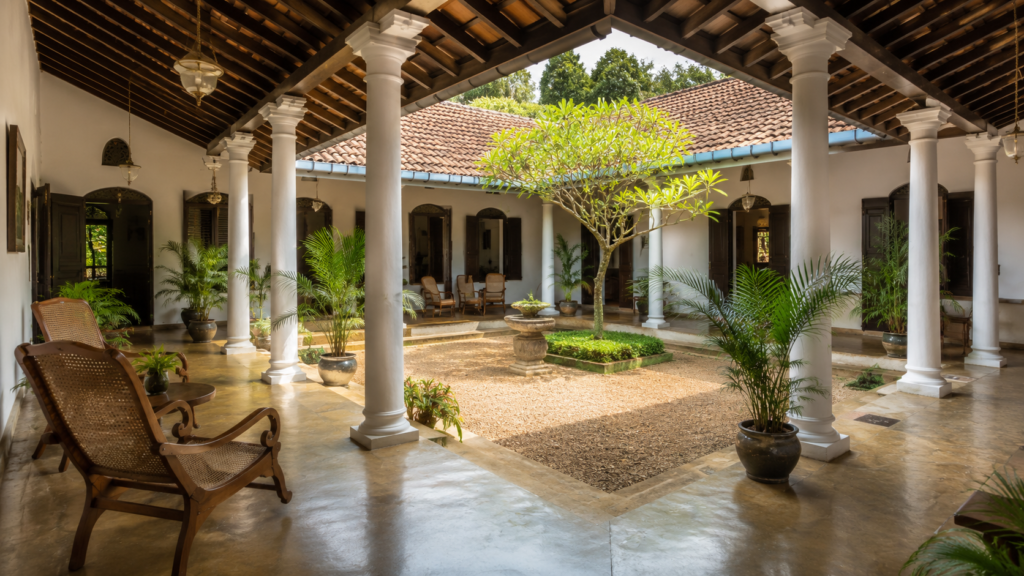
The photograph above captures a quiet moment from colonial-era Ceylon: a woman seated along a broad veranda, surrounded by towering palms and shaded gardens. While the exact location remains uncertain, the scene offers a fascinating glimpse into a feature that once defined life across the island — the veranda.
A Space Between Indoors and Outdoors
Long before air-conditioning, glass towers, and modern apartments, life in Ceylon adapted itself to the rhythms of the tropical climate. One architectural feature became almost universal across homes, government buildings, hotels, clubs, and plantation bungalows: the veranda.
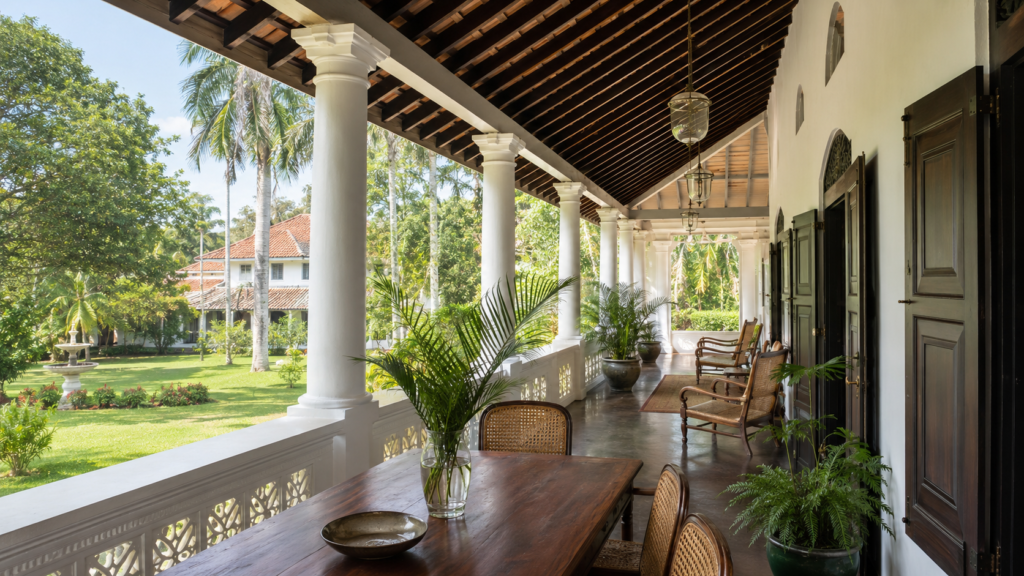
In colonial Ceylon, the veranda was more than just an architectural detail. It was an essential living space. Designed to capture cooling breezes while providing shelter from intense sunlight and sudden tropical rainstorms, verandas served as the social heart of many homes.
The image shows exactly this type of environment — a wide open space where one could sit comfortably while remaining connected to the surrounding landscape.
The Tropical Influence on Colonial Architecture
When European settlers first arrived in Ceylon, they quickly discovered that architectural styles imported directly from Europe were poorly suited to the island’s climate.
Heavy stone buildings trapped heat. Small windows limited airflow. Thick enclosed rooms became uncomfortable during the hottest months.
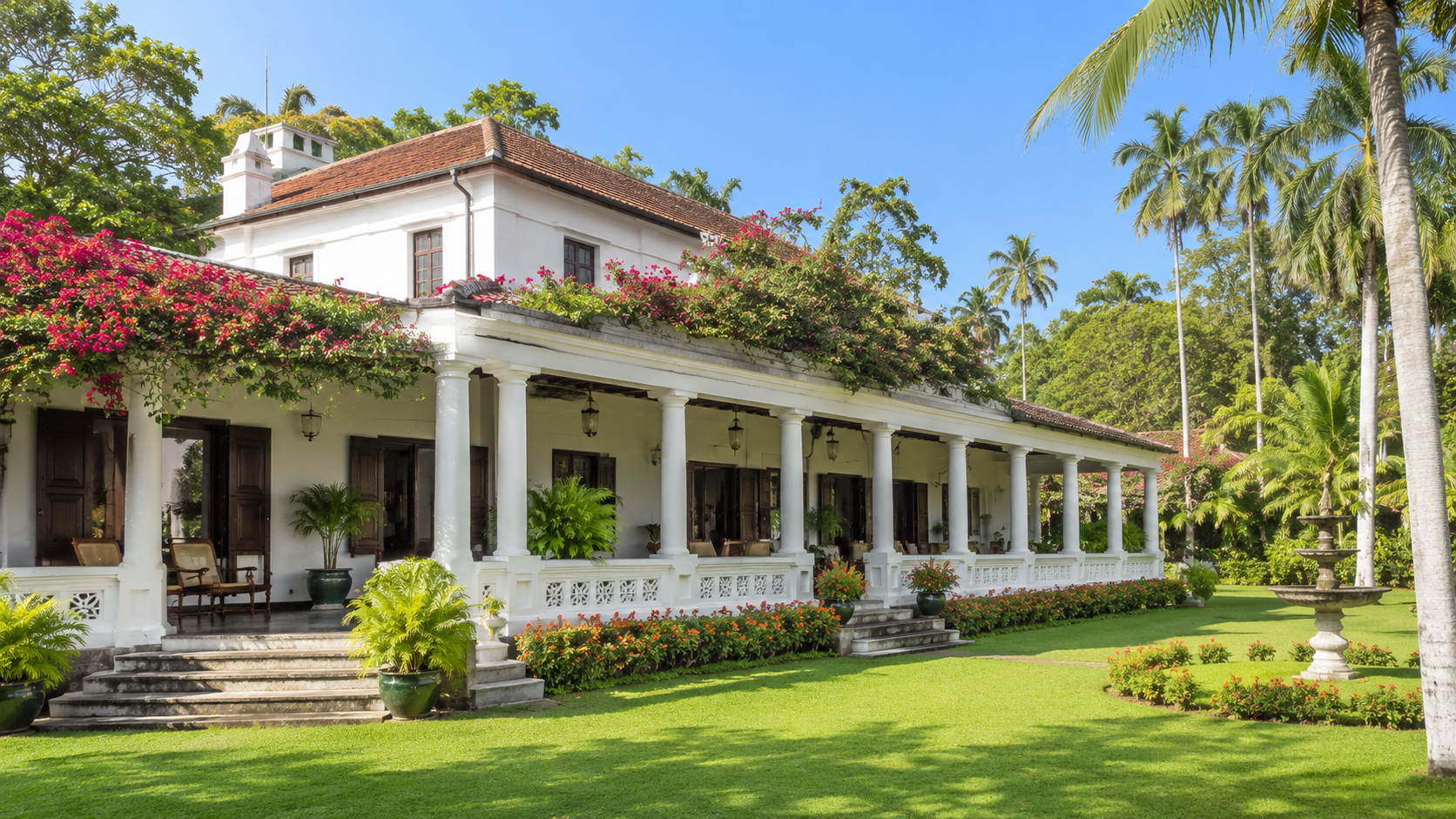
Over time, colonial architects began adapting local building traditions. They incorporated larger windows, higher ceilings, broad overhanging roofs, and spacious verandas that wrapped around entire structures.
These changes created a distinctly tropical style of architecture that blended European aesthetics with practical solutions developed over centuries in South Asia.
By the late nineteenth century, many colonial residences in Colombo, Kandy, Galle, Nuwara Eliya, and the plantation districts featured expansive verandas similar to the one seen in this photograph.
Click on here “What Life Really Felt Like in Colonial Ceylon: Tea, Trains, Letters and Lost Elegance”
The Social Centre of the Home
For many families, the veranda functioned as an outdoor living room.
Morning tea was often served there. Newspapers were read beneath the shade of ceiling fans or woven blinds. Visitors were welcomed before entering the main house. Children played within sight of parents relaxing nearby.
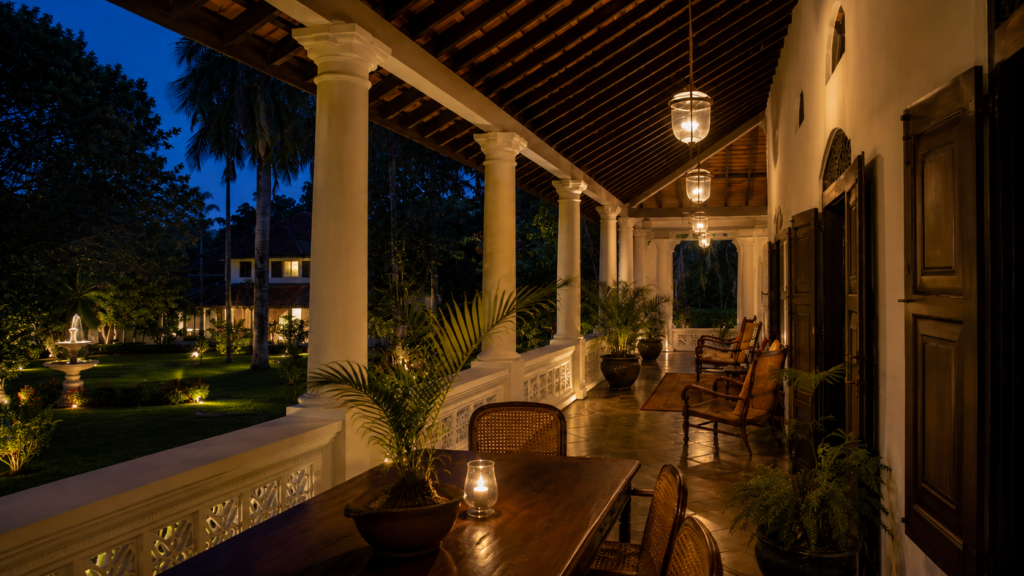
During the evening, verandas became gathering places where residents escaped the heat trapped inside rooms during the day. Conversations stretched into the night while lanterns illuminated the surrounding gardens.
In plantation districts, bungalow verandas offered spectacular views across rolling tea estates, creating ideal settings for social gatherings and quiet reflection alike.
Gardens as an Extension of the Veranda
One striking feature visible in the photograph is the lush tropical vegetation surrounding the seated figure.
Colonial-era residences often incorporated carefully designed gardens that worked in harmony with the veranda itself. Palm trees provided shade, flowering shrubs added colour, and expansive lawns created cooling green spaces around buildings.
Rather than separating house and garden, architects sought to blur the boundary between them.
The veranda became a transitional zone where nature and architecture met. Residents could enjoy fresh air, birdsong, and tropical scenery without leaving the comfort of home.
This relationship between building and landscape remains one of the defining characteristics of Sri Lanka’s historic architecture.
A Symbol of Leisure and Status
Large verandas were also symbols of prestige.
Government officials, plantation managers, wealthy merchants, and prominent families often built residences with particularly grand verandas designed to impress visitors.
Photographs from the late nineteenth and early twentieth centuries frequently depict residents posing along these spaces, highlighting both the architecture and the lifestyle associated with it.
The woman seated in this image reflects that photographic tradition. Such portraits were often intended to capture not only a person but also the setting that represented comfort, elegance, and social standing.
The Legacy That Remains Today
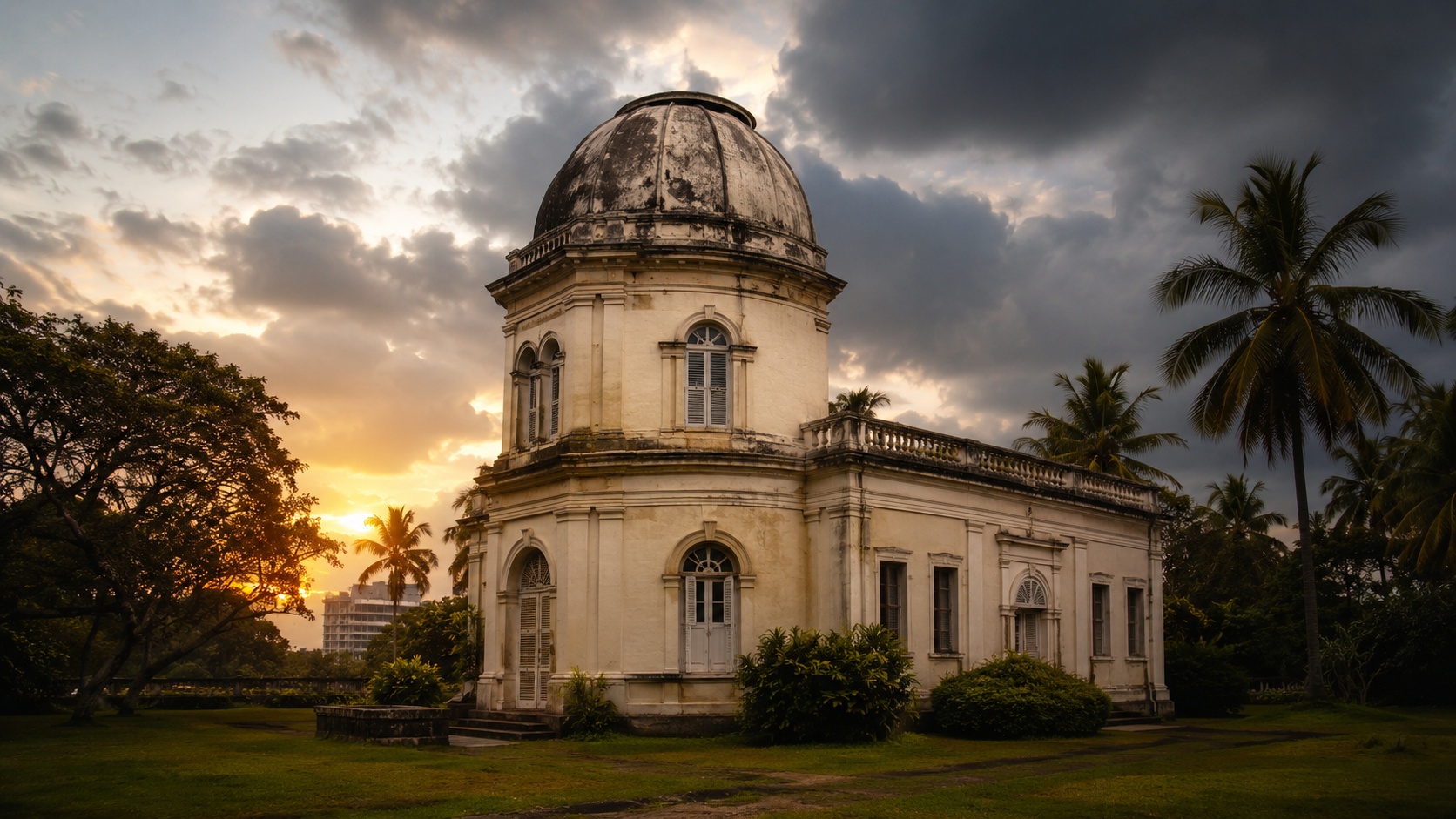
Although many colonial residences have disappeared due to urban development, numerous examples still survive throughout Sri Lanka.
Visitors can encounter beautiful verandas at historic hotels, restored plantation bungalows, colonial-era government buildings, and private heritage homes across the island.
In cities like Colombo and Galle, as well as the hill country around Nuwara Eliya and Haputale, these structures continue to offer a tangible connection to the past.
Many modern Sri Lankan architects still incorporate veranda-inspired designs into contemporary homes, recognising the practicality and beauty of open-air living spaces suited to tropical conditions.
Why These Old Photographs Matter
Historic photographs like this one preserve more than architectural details. They capture everyday moments that rarely appear in official histories.
A woman resting on a veranda may seem like a simple scene, yet it reveals how people interacted with their environment, how homes were designed, and how daily life unfolded in colonial Ceylon.
These images remind us that history is often found not only in famous events and grand buildings but also in ordinary moments lived beneath the shade of a tropical veranda.
Key Takeaways
- Verandas were essential features of colonial-era architecture in Ceylon.
- They provided cooling shade and natural ventilation in the tropical climate.
- Many colonial homes used verandas as social and living spaces.
- Gardens and verandas were designed to function together as connected environments.
- Historic verandas remain important features of Sri Lanka’s architectural heritage today.
- Old photographs help preserve everyday stories from the island’s past.
A Quiet Window into Old Ceylon
Looking at this century-old photograph, it is easy to imagine the sounds that once accompanied the scene — rustling palm leaves, distant bird calls, the afternoon breeze moving through the garden.
The veranda offered more than comfort. It provided a place to pause, observe, and connect with the landscape that surrounded it. In many ways, it became one of the defining spaces of colonial life in Ceylon.
Today, these surviving verandas continue to tell stories of an era when architecture worked with nature rather than against it, creating timeless spaces that remain as inviting now as they were more than a hundred years ago.