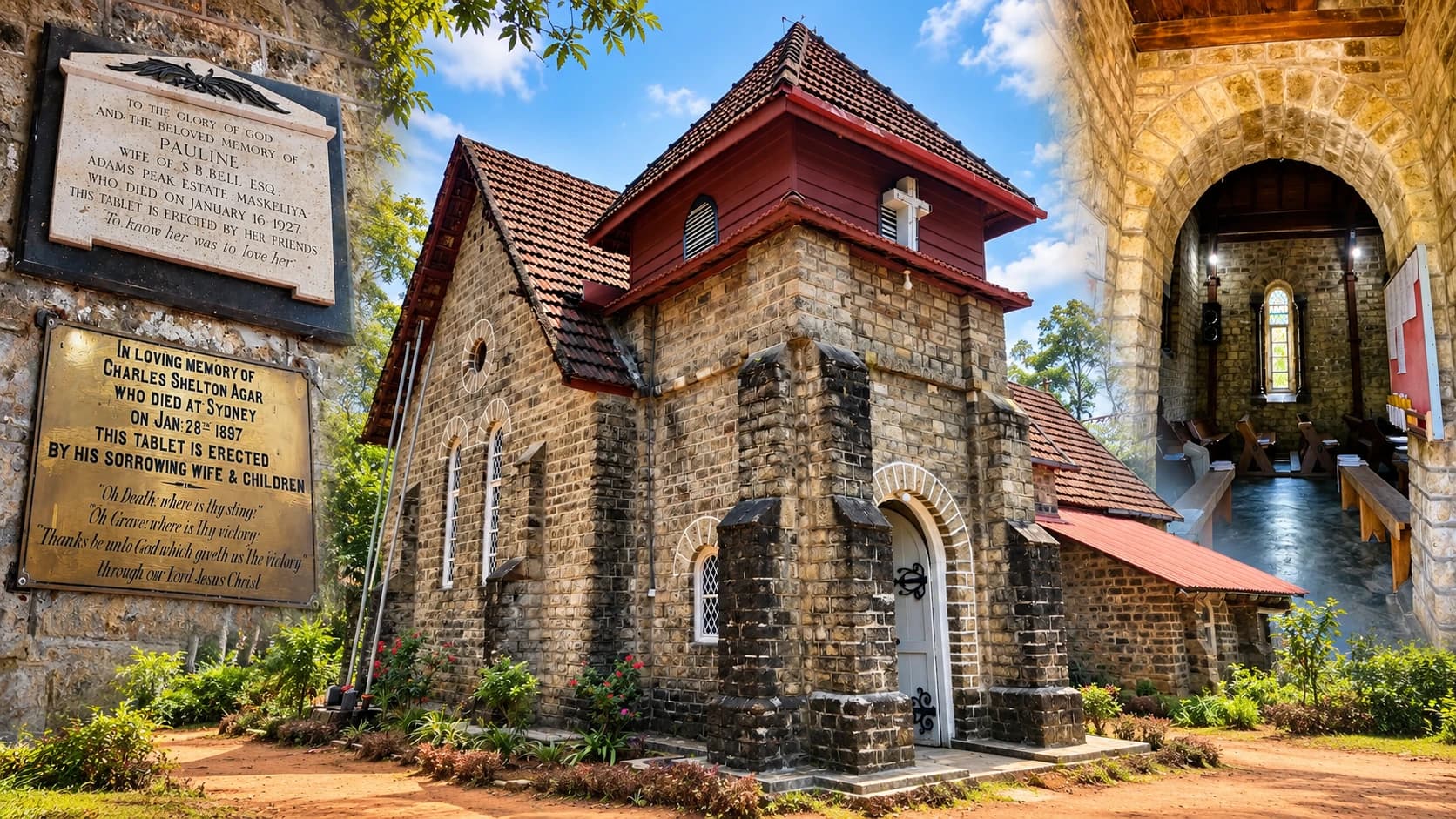
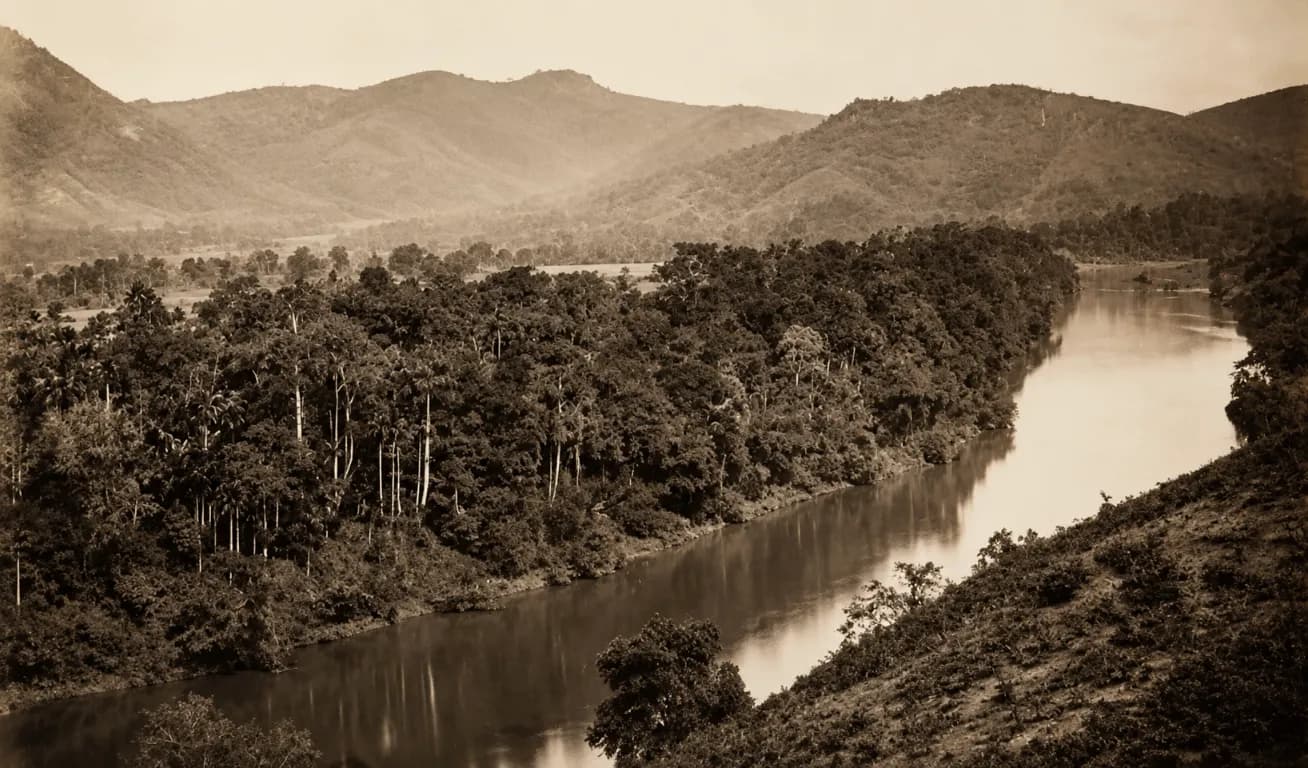
Gampola sri lanka| is one of those Sri Lankan towns many travellers pass through without fully noticing. It sits between Kandy and the deeper hill country, close to the Mahaweli River, surrounded by green slopes, tea-country roads and mountain views. For most visitors, it is a railway stop, a road junction or the gateway to Ambuluwawa. But for those interested in colonial Sri Lanka and Old Ceylon, Gampola is worth a slower look.
Colonial Gampola does not have the obvious grandeur of Colombo, the ramparts of Galle, or the “Little England” atmosphere of Nuwara Eliya. Its charm is quieter. It is a small inland town shaped by an older royal past, British-era railway development, plantation routes, market life and the movement between Kandy and the hill country.
This makes Gampola a useful heritage stop. It tells a story often missed in colonial travel writing: the story of smaller towns that connected kingdoms, plantations, railways, rivers and hill-country roads. Gampola was not only a place between destinations. It was part of the route by which colonial Ceylon moved inland.
Check our previous article- https://trippingsrilanka.com/stories/colonial-kandy-kingdom
A Town with an Older Royal Memory
Before Gampola became part of British Ceylon’s transport and plantation world, it had a much older historical identity. In the 14th century, Gampola became one of Sri Lanka’s royal capitals. This was a period of shifting inland power, after earlier capitals had declined and before Kotte rose to greater prominence.
The Gampola period is especially remembered through religious and artistic heritage. Some of the finest medieval temples near Kandy are linked with this era, including Lankatilaka Vihara, Gadaladeniya Vihara and Embekke Devalaya. These sites are not all inside modern Gampola town, but they belong to the wider cultural world of the Gampola kingdom.
This older layer is important because colonial Gampola did not emerge on empty ground. The British-era town developed in a landscape that already carried royal, Buddhist, artistic and regional importance. That makes Gampola different from some purely colonial settlements. It was first a place of Sri Lankan history, and only later became part of the colonial inland network.
Between Kandy and the Hill Country
Gampola’s location explains much of its later importance. The town lies south of Kandy, on the way towards Nawalapitiya, Hatton, Nanu Oya, Bandarawela and Badulla. In practical terms, this made it a gateway between the old Kandyan heartland and the plantation highlands.
During British rule, this route became increasingly important. Coffee and later tea transformed the central highlands, and the colonial government needed roads and railways to move produce, workers, officials and goods. Towns like Gampola became part of this movement.
Unlike Nuwara Eliya, Gampola was not created mainly as a cool hill-station retreat. Unlike Kandy, it was not the great symbolic capital of the last kingdom. It was a connector town. That practical role is exactly what makes colonial Gampola historically interesting.
The Railway and British Ceylon’s Inland Network
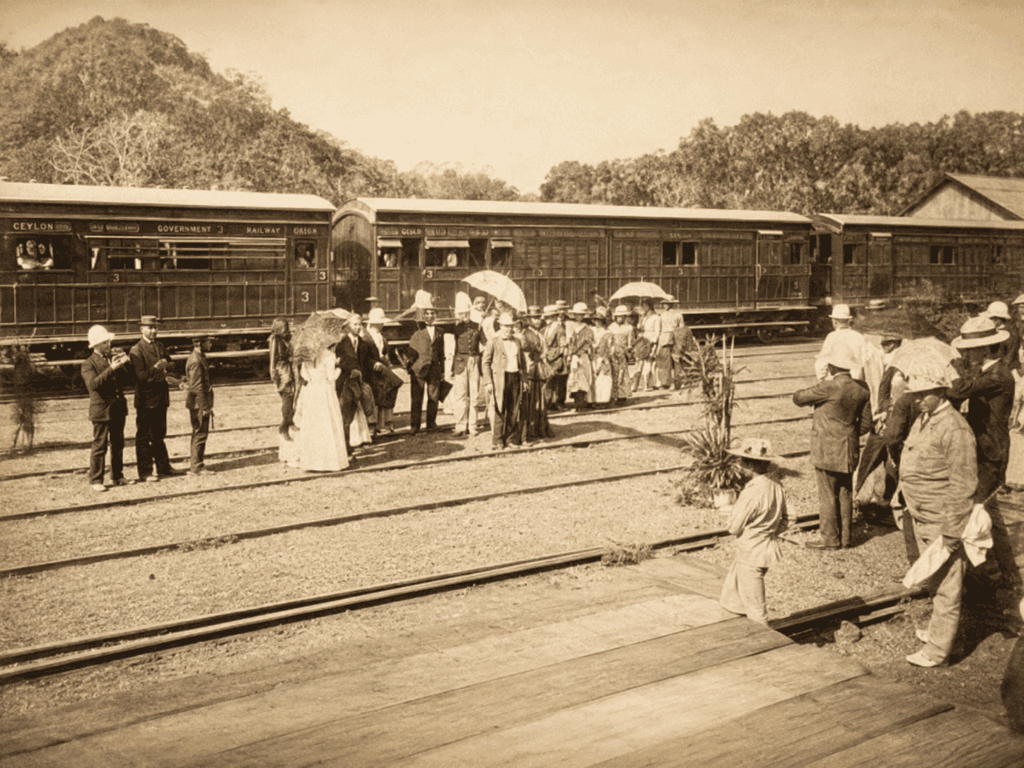
The railway is one of the strongest colonial associations in Gampola. Sri Lanka’s Main Line, built under British rule, changed the hill country forever. It connected Colombo to the interior and later continued through the tea country towards Badulla.
Gampola Railway Station became one of the important stops on this route. For colonial Ceylon, the railway was not only a passenger convenience. It was economic infrastructure. Coffee, tea, goods, mail, officials and travellers depended on it. The railway linked plantation districts to Colombo’s port and helped integrate inland towns into the colonial economy.
Today, Gampola Railway Station still carries an old-world atmosphere. It may not be as famous as Ella, Nanu Oya or Badulla, but it belongs to the same railway story. The station, hills, tracks and passing trains help visitors imagine a slower age of movement through Ceylon’s interior.
For heritage travellers, this is one of Gampola’s strongest colonial features. It is not a grand monument, but a living piece of railway heritage.
A Market Town by the Mahaweli
Gampola also has the feel of an old market town. Its streets are busy with local trade, buses, shops, small eateries, schools and everyday movement. The Mahaweli River and surrounding valleys give the town a natural setting that softens the urban bustle.
This kind of town life is important to colonial history. British Ceylon was not only made of forts, governors’ houses and plantation bungalows. It also depended on market towns where local produce, imported goods, estate supplies and ordinary people moved through the same streets.
Gampola’s market atmosphere still reflects that function. It serves nearby villages, estates and road travellers. For visitors, the value is not in a single polished colonial quarter, but in the continuity of inland town life.
Plantation Routes and Old Ceylon Movement
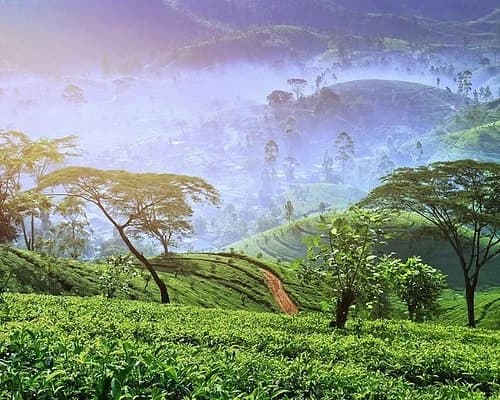
The landscape around Gampola connects directly to the plantation world. From the town, roads lead towards tea estates, hill viewpoints and older estate areas. The scenery changes quickly: town streets give way to winding roads, greenery, rivers and slopes.
This was the world that British Ceylon transformed through coffee and tea. The central highlands became one of the most important plantation regions in the empire’s Asian economy. Railways and roads were built to support that transformation.
Gampola’s role was modest but meaningful. It stood at the edge of this plantation movement, connecting Kandy’s older world with the hill-country economy beyond. In that sense, colonial Gampola belongs to the same story as Nawalapitiya, Hatton, Bandarawela and Badulla — smaller towns shaped by rail, road, estate life and regional trade.
Ambuluwawa and the Modern View Over Gampola
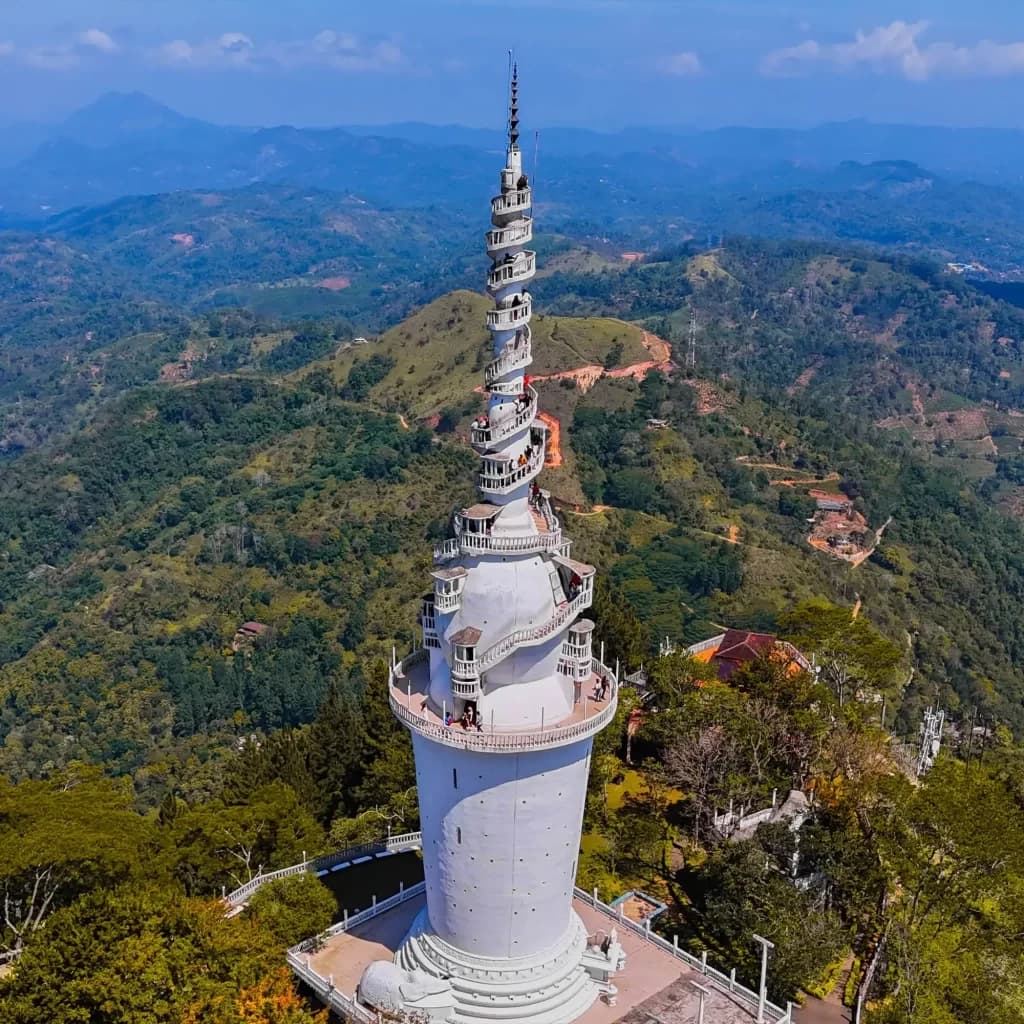
Today, the most famous landmark near Gampola is Ambuluwawa. The white spiral tower rising above the hills has become a popular destination for travellers seeking panoramic views and dramatic photographs. While Ambuluwawa is not a colonial site, it is useful for understanding Gampola’s landscape.
From the heights of Ambuluwawa, visitors can see why this area mattered as a route between valleys and mountains. The town sits within a green basin, surrounded by ridges and roads leading towards Kandy and the hill country. The viewpoint gives context to the town’s historical role as a connector.
A visit to Ambuluwawa also gives Gampola stronger travel appeal. For a modern itinerary, the town can combine colonial railway atmosphere, older Gampola-era temple heritage and a scenic hilltop experience in one short stop.
Lankatilaka, Gadaladeniya and Embekke: The Older Gampola Era
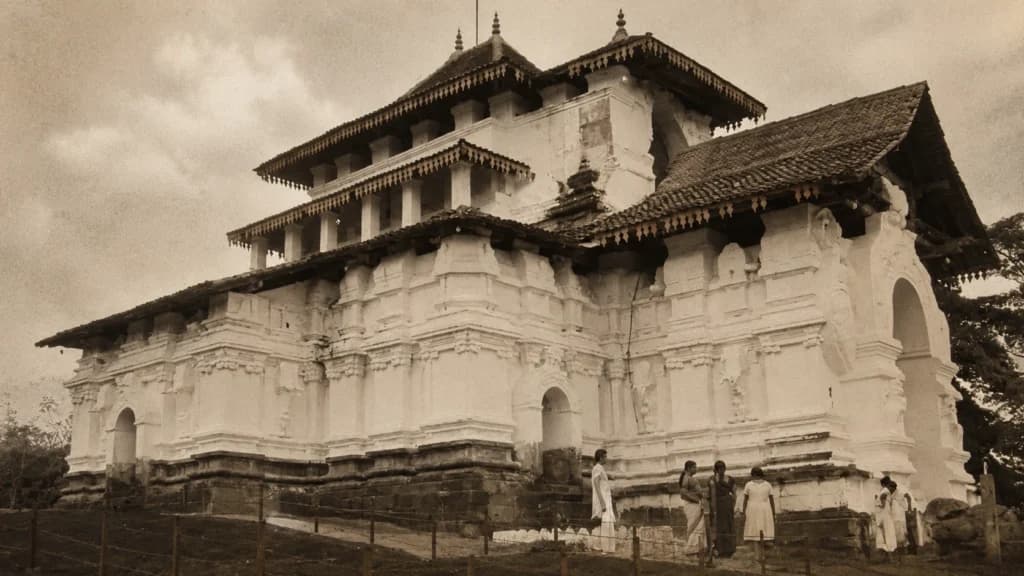
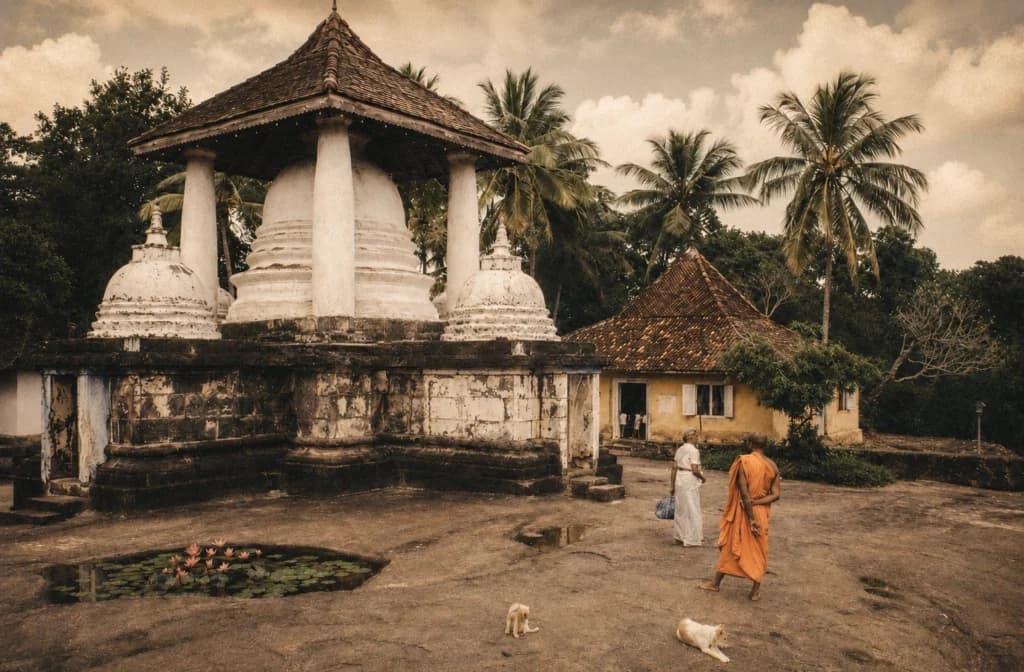
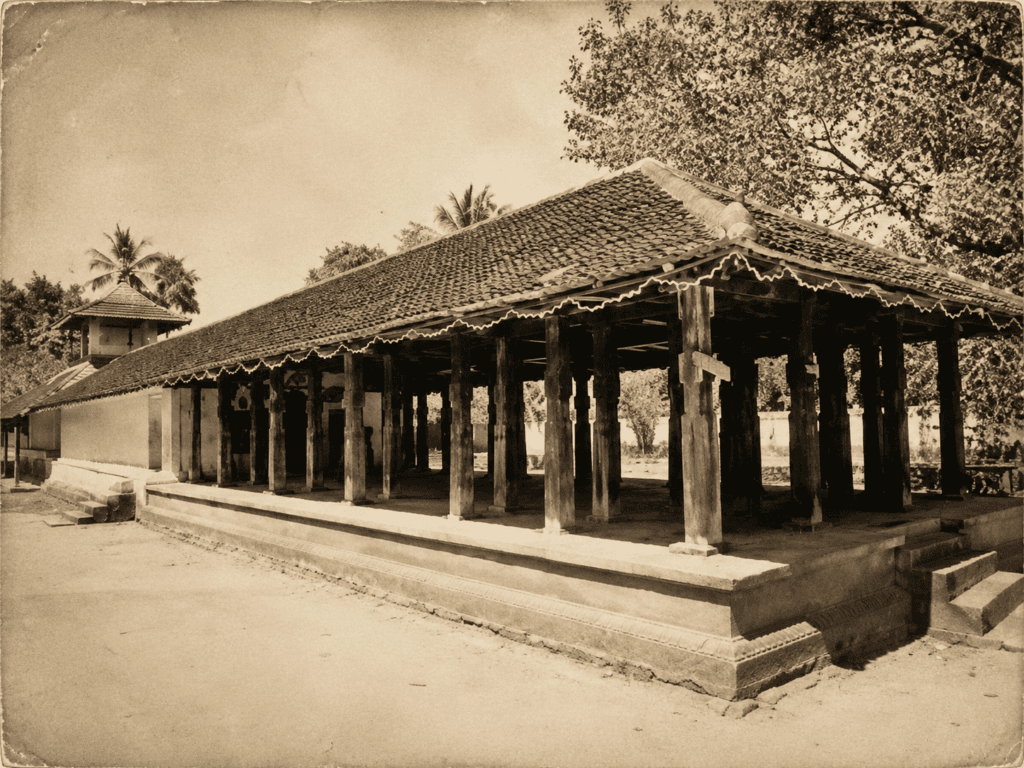
Travellers interested in deeper heritage should look beyond the town centre to the temples associated with the Gampola period. Lankatilaka Vihara, Gadaladeniya Vihara and Embekke Devalaya are among the finest cultural sites connected with this medieval era.
Lankatilaka is known for its impressive architecture and hilltop setting. Gadaladeniya shows strong stone construction and South Indian artistic influence. Embekke Devalaya is especially famous for its wood carvings, among the most admired examples of traditional craftsmanship in Sri Lanka.
These sites matter because they balance the colonial story. They remind visitors that Gampola’s identity is older than British roads and railways. A good heritage route should not separate colonial Ceylon from the deeper Sri Lankan past. In Gampola, the two sit close together.
What Makes Colonial Gampola Different
Colonial Gampola is different because it is understated. There is no large fort, no grand colonial hotel and no formal heritage townscape. The colonial layer is found in transport, routes, railway buildings, old streets and the town’s function within the hill-country network.
This is exactly why Gampola deserves attention. Not every colonial town was designed to impress. Some towns mattered because they helped things move. People moved through them. Produce moved through them. Trains stopped there. Roads passed through them. Markets served surrounding communities.
Gampola’s colonial value lies in that practical history. It shows how British Ceylon worked beyond the obvious centres of power.
A Suggested Travel Stop in Gampola
A simple Gampola heritage stop can begin at the railway station. Spend a little time observing the platform, tracks and surrounding hills. This is one of the easiest ways to feel the town’s colonial railway connection.
From there, walk or drive through the town centre to experience its market-town atmosphere. If time allows, continue to Ambuluwawa for the panoramic view over Gampola and the surrounding highlands. Travellers with a deeper interest in history can include Lankatilaka, Gadaladeniya and Embekke as part of the wider route.
This makes Gampola ideal as a half-day stop between Kandy and Nuwara Eliya, or between Kandy and the southern hill country. It is also a useful alternative for travellers who want something quieter than the usual Kandy–Ella route.
Best Time to Visit Gampola
Morning is the best time to explore Gampola. The town is active, the weather is more comfortable and the light is better for photography. If visiting Ambuluwawa, early morning or late afternoon is preferable because the midday sun can be harsh.
Travellers should wear comfortable shoes, especially if walking through the town or visiting hilltop sites. Since Gampola is a functioning local town rather than a curated tourist district, visitors should expect traffic, crowds and everyday commercial activity.
That ordinary quality is part of the attraction. Gampola feels real, not staged.
Why Gampola Deserves More Attention
Gampola deserves more attention because it adds a missing chapter to Sri Lanka’s heritage map. It connects the medieval Gampola kingdom, the Kandyan region, British railway expansion, plantation movement and modern hill-country travel.
For history readers, it offers a layered inland story. For travellers, it works as a meaningful stop between better-known destinations. For researchers, it shows how smaller towns supported the larger systems of colonial Ceylon.
Gampola may not compete with Galle or Kandy as a major heritage city, but it does not need to. Its value lies in its position, atmosphere and layered memory.
Final Thoughts: A Quiet Link in Old Ceylon
Gampola is a small town with a larger story. It stands between Kandy and the hill country, between medieval kingship and colonial railway movement, between sacred temple heritage and plantation-era routes.
To visit colonial Gampola is to understand that Old Ceylon was not only made of famous capitals and forts. It was also made of connector towns — places where trains stopped, markets gathered, roads climbed into the hills and travellers paused before moving on.
For anyone exploring colonial Sri Lanka beyond the obvious route, Gampola is worth that pause. Its charm is quiet, but its place in the story of inland Ceylon is real.
FAQs About Gampola
Why is Gampola important in Sri Lankan history?
Gampola was a royal capital in the 14th century and later became an important inland town between Kandy and the hill country.
Is Gampola connected to colonial Sri Lanka?
Yes. Gampola became part of British Ceylon’s inland transport and plantation network, especially through the Main Line railway and road routes into the hill country.
What can visitors see in Gampola?
Visitors can see Gampola Railway Station, the town centre, Ambuluwawa Tower and nearby Gampola-era temples such as Lankatilaka, Gadaladeniya and Embekke.
Is Gampola worth visiting?
Yes. Gampola is worth visiting as a lesser-known heritage stop between Kandy and the hill country, especially for travellers interested in railway history, temple heritage and offbeat Old Ceylon towns.
What is the best time to visit Gampola?
Morning or late afternoon is best, especially if visiting Ambuluwawa or walking through the town. These times offer better light and more comfortable weather.
Visit Us: https://trippingsrilanka.com/stories
More from Old Ceylon
When the King’s Birthday Was Celebrated on Galle Face Green: A Glimpse of Colombo in 1933
Holyrood Estate, Talawakelle: An Old Ceylon Bungalow and a Name That Echoes Scotland