A Hidden Palace Near the Temple of the Tooth
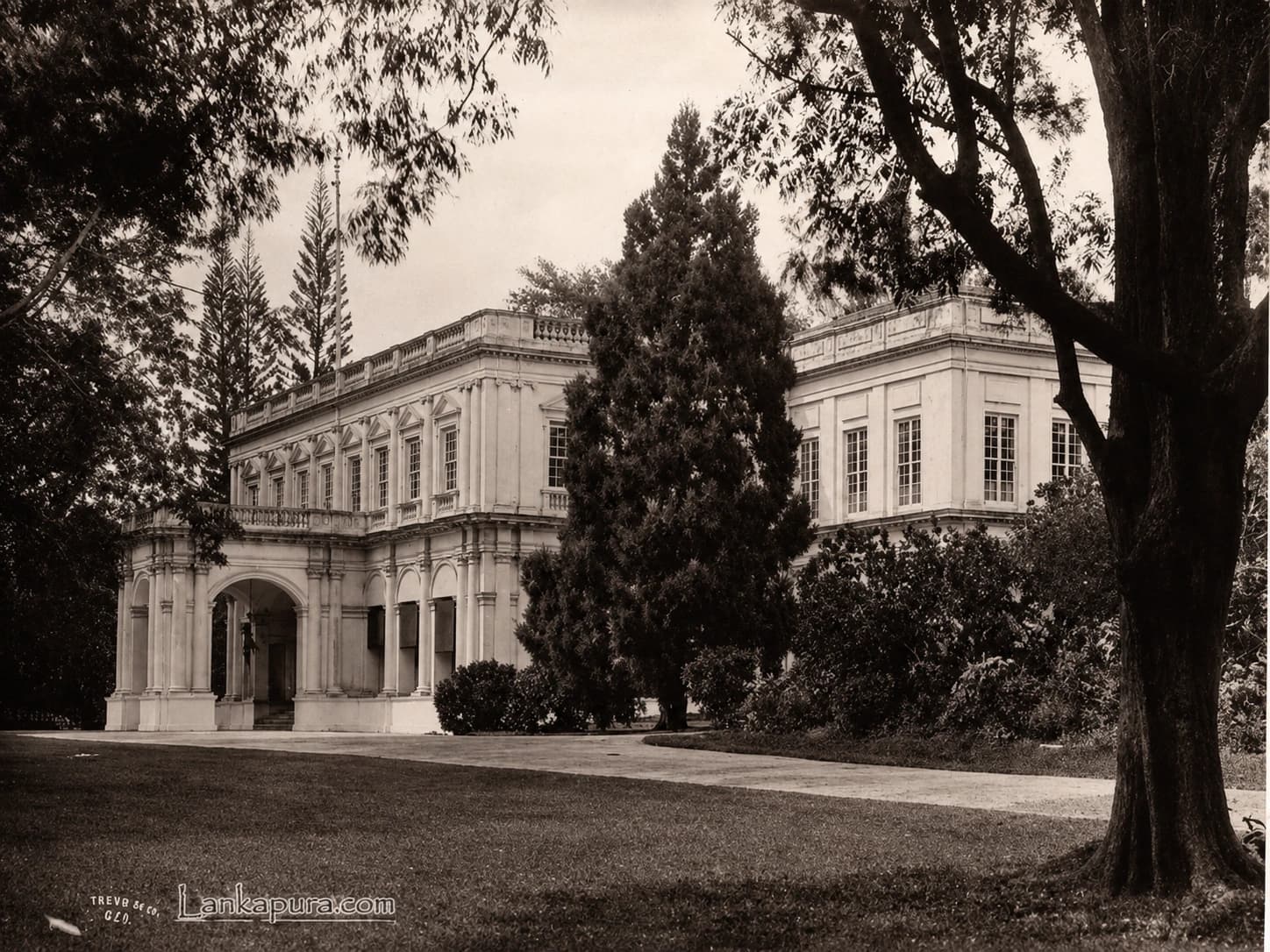
Governor’s Pavilion Kandy | In the heart of Kandy, close to the sacred Temple of the Tooth, stands one of the city’s most overlooked colonial landmarks: the Governor’s Pavilion.
Today, it is better known as the President’s Pavilion, an official residence of the President of Sri Lanka. But before Sri Lanka became a republic in 1972, this building was known as the Governor’s Pavilion. It served as a prestigious official residence connected to British governors, royal visitors, wartime commanders and later the Governor-General of Ceylon.
For most travellers, Kandy is remembered for the lake, the Temple of the Tooth, the Perahera, Kandyan dancing, old hotels and hill-country scenery. Yet the Governor’s Pavilion adds another important layer to the city’s history.
It reminds us that Kandy was not only the last royal capital of Sri Lanka. It also became a major centre of colonial administration, ceremony and official residence after the fall of the Kandyan Kingdom.
Check our previous article – https://trippingsrilanka.com/stories/colonial-kandy-kingdom
Where Is the Governor’s Pavilion Kandy?
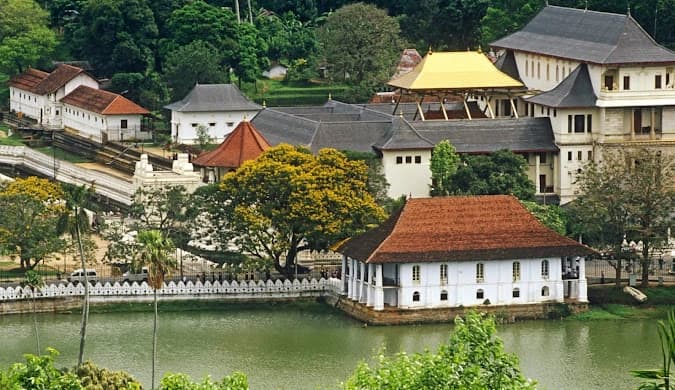
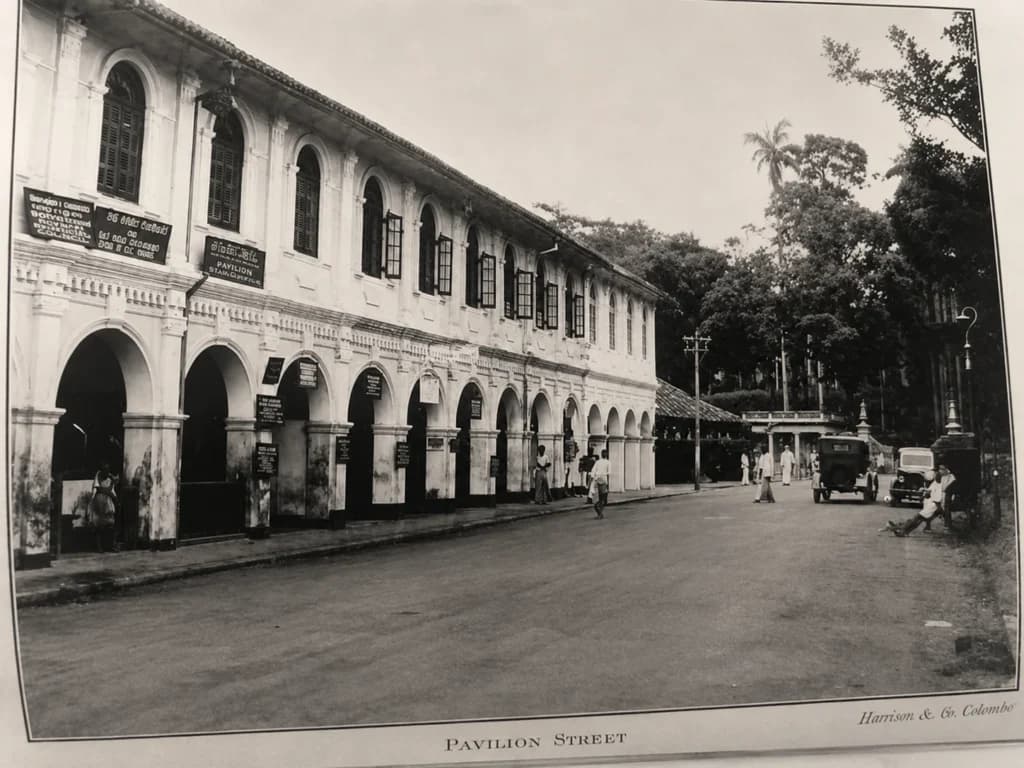
The Governor’s Pavilion is located in central Kandy, near the head of Pavilion Street, close to the Temple of the Tooth and Kandy Lake. Its location is highly significant.
This was not a distant country bungalow or a private estate residence. It stood within the ceremonial and symbolic heart of Kandy.
Nearby were the sacred tooth relic temple, the old royal palace area, colonial administrative spaces and the lake that became one of the city’s defining features. By placing an official residence here, the British connected their authority directly to the old royal and religious centre of the Kandyan kingdom.
For heritage travellers, this location tells an important story. The building stands at the meeting point of Kandyan kingship, Buddhist sacred geography and British colonial authority.
Kandy After the Fall of the Kandyan Kingdom
To understand the Governor’s Pavilion, we must first understand Kandy after 1815.
In that year, the British took control of the Kandyan Kingdom through the Kandyan Convention. The fall of Kandy brought the last independent kingdom of Sri Lanka under British rule.
At first, the British had to manage a difficult political situation. Kandy was not just another town. It was the symbolic heart of the island’s last monarchy. It carried deep religious, royal and cultural meaning.
The British therefore needed to establish a visible presence in the city. Official residences, administrative offices, military posts and ceremonial spaces all helped reinforce colonial authority.
The Governor’s Pavilion belonged to this new world. It was part of the British effort to make Kandy not only a conquered royal city, but also a functioning colonial administrative centre.
A European-Style Residence in the Kandyan Capital
The Governor’s Pavilion was built as a European-style official residence for the Governor of Ceylon during visits to Kandy. Historical references describe it as a palace-like residence associated with the late eighteenth or early nineteenth-century colonial period, later used by British governors when they visited the hill capital.
Its architecture reflected official prestige.
Unlike traditional Kandyan buildings, the Governor’s Pavilion belonged to the world of colonial residence architecture. It was designed for comfort, ceremony and rank. A building of this kind would have included large reception spaces, verandahs, formal rooms and grounds suitable for entertaining important visitors.
It was not simply a house. It was a stage for colonial presence.
In a city once ruled by Kandyan kings, the Governor’s Pavilion became a new kind of palace — not royal in the old Kandyan sense, but official, colonial and ceremonial.
Why It Was Called the Governor’s Pavilion
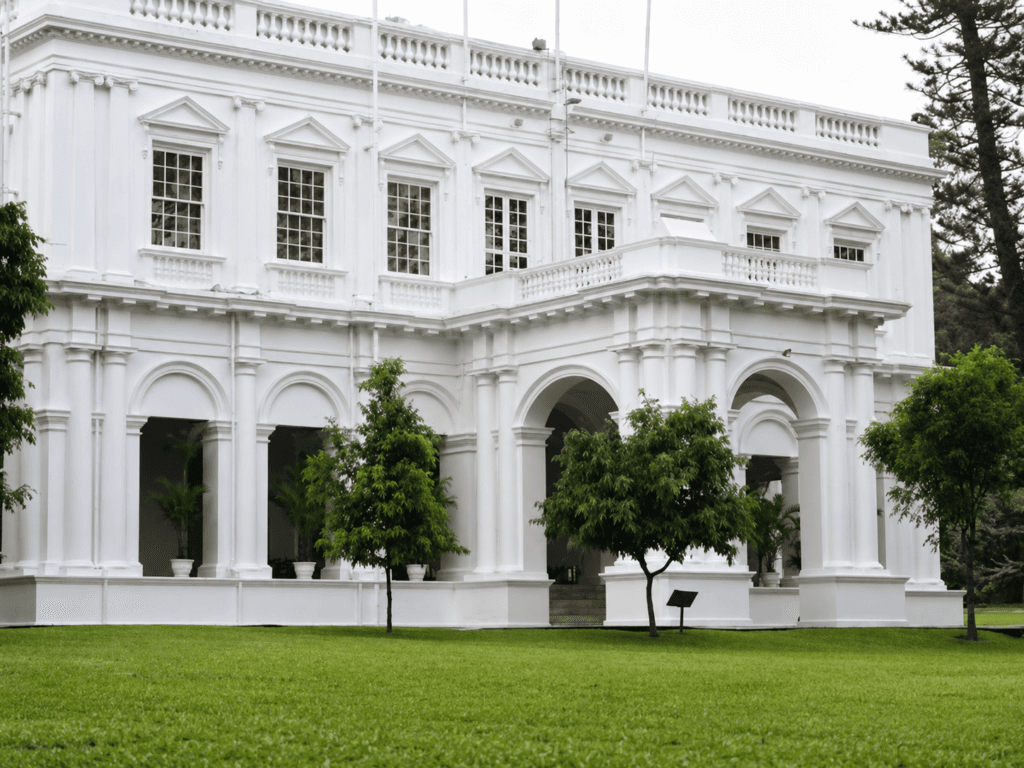
The name Governor’s Pavilion reflected its function.
During British rule, the Governor of Ceylon was the highest representative of the Crown on the island. When the Governor visited Kandy, he needed a residence suitable for official duties, receptions and ceremonial occasions.
The word “pavilion” gives the building a slightly softer image than “palace,” but its meaning was still powerful. It suggested an elegant official residence used for state presence in the hill capital.
After Ceylon became independent in 1948, the building became the official residence of the Governor-General of Ceylon in Kandy. When Sri Lanka became a republic in 1972, it was renamed the President’s Pavilion.
That change in name reflects the island’s constitutional journey: from colony, to Dominion, to republic.
Royal Visits and Ceremonial Kandy
The Governor’s Pavilion was also linked to royal visits.
One of the most notable royal connections was the visit of Albert Edward, Prince of Wales, later King Edward VII, who visited Ceylon in 1875. The Governor’s Pavilion was used in connection with royal hospitality during such visits to Kandy.
This matters because Kandy was an essential stop for royal visitors to Ceylon.
A royal visit to the island was not complete without entering the old Kandyan capital, seeing the Temple of the Tooth area, attending formal receptions and experiencing the symbolic heart of the highlands.
The Governor’s Pavilion helped support that ceremonial world. It provided a residence and reception space within the most important city of the former Kandyan kingdom.
Check our previous article- https://trippingsrilanka.com/stories/queen-elizabeth-ii-in-ceylon
The World War II Chapter
One of the most remarkable chapters in the history of the Governor’s Pavilion came during the Second World War.
In 1944, the South East Asia Command of the Allied forces was moved to Kandy. Admiral Louis Mountbatten, Supreme Allied Commander of South East Asia, took up residence at the Governor’s Pavilion until the end of the war.
This gives the building international importance.
For a period during World War II, Kandy was not only a historic hill capital. It became part of the strategic command structure of the Allied war effort in Asia. Decisions connected to a vast theatre of war were linked to the city.
The Governor’s Pavilion, therefore, was not merely a colonial residence. It became part of wartime history.
This is one of the reasons the building deserves greater attention in Old Ceylon storytelling.
From Governor’s Pavilion to President’s Pavilion
After independence in 1948, Ceylon remained a Dominion within the Commonwealth. The Governor-General represented the monarch, and the building continued its official role in Kandy.
It was then known as the residence of the Governor-General of Ceylon in the hill capital. After Sri Lanka became a republic in 1972, the building was formally renamed the President’s Pavilion.
This name change is historically important.
It shows how a colonial residence was absorbed into the post-independence state. The building did not disappear after British rule. It continued to serve the state under a new political identity.
Today, the President’s Pavilion is still an official residence, although it is used only rarely for official functions.
The Esala Perahera Connection
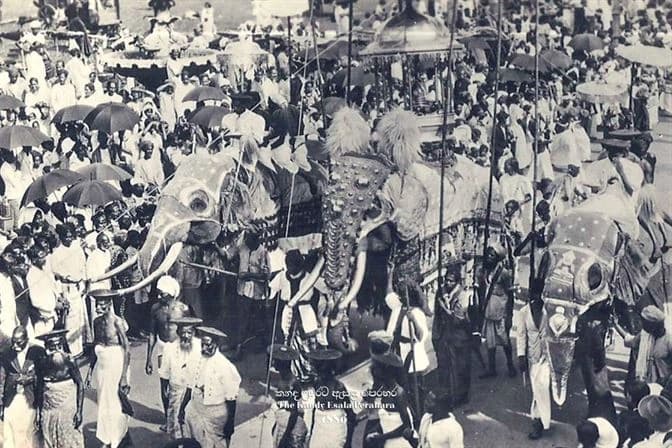
One of the most important ceremonial associations of the President’s Pavilion today is with the Kandy Esala Perahera.
At the conclusion of the Perahera, the traditional perahera sandeshaya is presented to the President at the President’s Pavilion. This makes the building part of one of Sri Lanka’s most important cultural and religious events.
This is a fascinating layer of history.
A former colonial Governor’s residence now plays a role in a national ceremonial tradition connected to the Temple of the Tooth and Kandyan heritage.
It shows how buildings change meaning over time. What began as a symbol of colonial authority has become part of Sri Lanka’s own state ceremony.
A Colonial Palace Beside a Sacred City
The Governor’s Pavilion is especially interesting because of its setting.
Kandy is not an ordinary colonial town. It was the last royal capital of Sri Lanka and remains one of the island’s most sacred cities. The Temple of the Tooth gives Kandy its spiritual authority, while the old palace complex preserves the memory of Kandyan kingship.
The Governor’s Pavilion stands near this sacred and royal landscape.
That closeness is powerful. It tells a story of replacement, adaptation and continuity. The British built their official residence near the symbolic centre of the former kingdom. Later, independent Sri Lanka reused the same building for presidential purposes.
The building therefore sits at the centre of a long historical conversation between monarchy, empire and republic.
Why the Governor’s Pavilion Matters to Old Ceylon
The Governor’s Pavilion matters because it reveals an often-forgotten side of Kandy’s history.
Most visitors see Kandy through the lens of the Temple of the Tooth, the lake and the Perahera. These are essential parts of the city’s identity. But colonial Kandy also deserves attention.
The Governor’s Pavilion reminds us that Kandy became a major colonial administrative and ceremonial city after 1815. It hosted governors, princes, officials, wartime commanders and later national leaders.
It also shows how political power was expressed through architecture.
A residence could communicate authority. A location could claim symbolic space. A formal reception could turn a city into a stage.
For Old Ceylon travellers, the Governor’s Pavilion helps complete the story of Kandy.
Special Things to Notice
Even if visitors cannot enter the building, its story can be understood through several key themes.
The Location
Its position near the Temple of the Tooth and central Kandy makes it one of the most symbolically placed official residences in Sri Lanka.
The Name Change
The shift from Governor’s Pavilion to President’s Pavilion reflects Ceylon’s transition from colony to Dominion to republic.
The Royal Connection
The building was linked to important royal visits, including the Prince of Wales in 1875.
The World War II Connection
Admiral Mountbatten’s wartime residence there gives the building international historical importance.
The Perahera Connection
Its role in the presentation of the perahera sandeshaya links the building to modern Sri Lankan state ceremony.
The Colonial Palace Character
The building represents the official residence architecture of British Ceylon in the Kandyan capital.
A Suggested Heritage Walk Around the Governor’s Pavilion
The Governor’s Pavilion can be understood as part of a wider Kandy heritage route.
Travellers can begin at the Temple of the Tooth, then explore the old palace area, the lakefront and the surrounding colonial-era streets. From there, they can include the exterior surroundings of the President’s Pavilion, Pavilion Street and nearby historic landmarks.
A meaningful heritage route may include:
- Temple of the Tooth
- Old Royal Palace area
- Kandy Lake
- Pavilion Street
- President’s Pavilion, formerly Governor’s Pavilion
- Queen’s Hotel
- St Paul’s Church
- Udawattakele Forest Reserve
- Peradeniya Road and old colonial-era buildings
This route shows Kandy not only as a sacred city, but also as a layered capital shaped by Kandyan kings, British governors, royal visitors, wartime commanders and modern Sri Lankan state ceremony.
Visiting the Governor’s Pavilion Kandy Today
Because the building is an official presidential residence, it is not a casual tourist attraction. Public access is limited, and visitors should respect security and official restrictions.
Still, its heritage value can be appreciated from the surrounding area and through its historical context.
For travellers interested in Old Ceylon, simply understanding the building’s story changes the way Kandy is seen. The city becomes more than a temple town or hill-country destination. It becomes a place where several systems of power met: Kandyan kingship, British colonial government, Allied wartime command and modern Sri Lankan state authority.
Final Thoughts: Kandy’s Forgotten Colonial Palace
The Governor’s Pavilion is one of Kandy’s most important forgotten colonial buildings.
It stood near the heart of the old Kandyan kingdom as a residence of British authority. It hosted royal and official visitors. It became connected to World War II through Admiral Mountbatten and the South East Asia Command. After independence, it continued as the Governor-General’s residence and later became the President’s Pavilion.
For Tripping Sri Lanka readers, this is exactly the kind of Old Ceylon story worth rediscovering.
The Governor’s Pavilion is not only a building. It is a witness.
It has seen empire, monarchy, war, independence, republic and ritual.
Quietly standing near Kandy’s sacred centre, it remains one of the most powerful reminders of how deeply layered the city’s history really is.
Visit Us: https://trippingsrilanka.com/stories
Heritage places mentioned
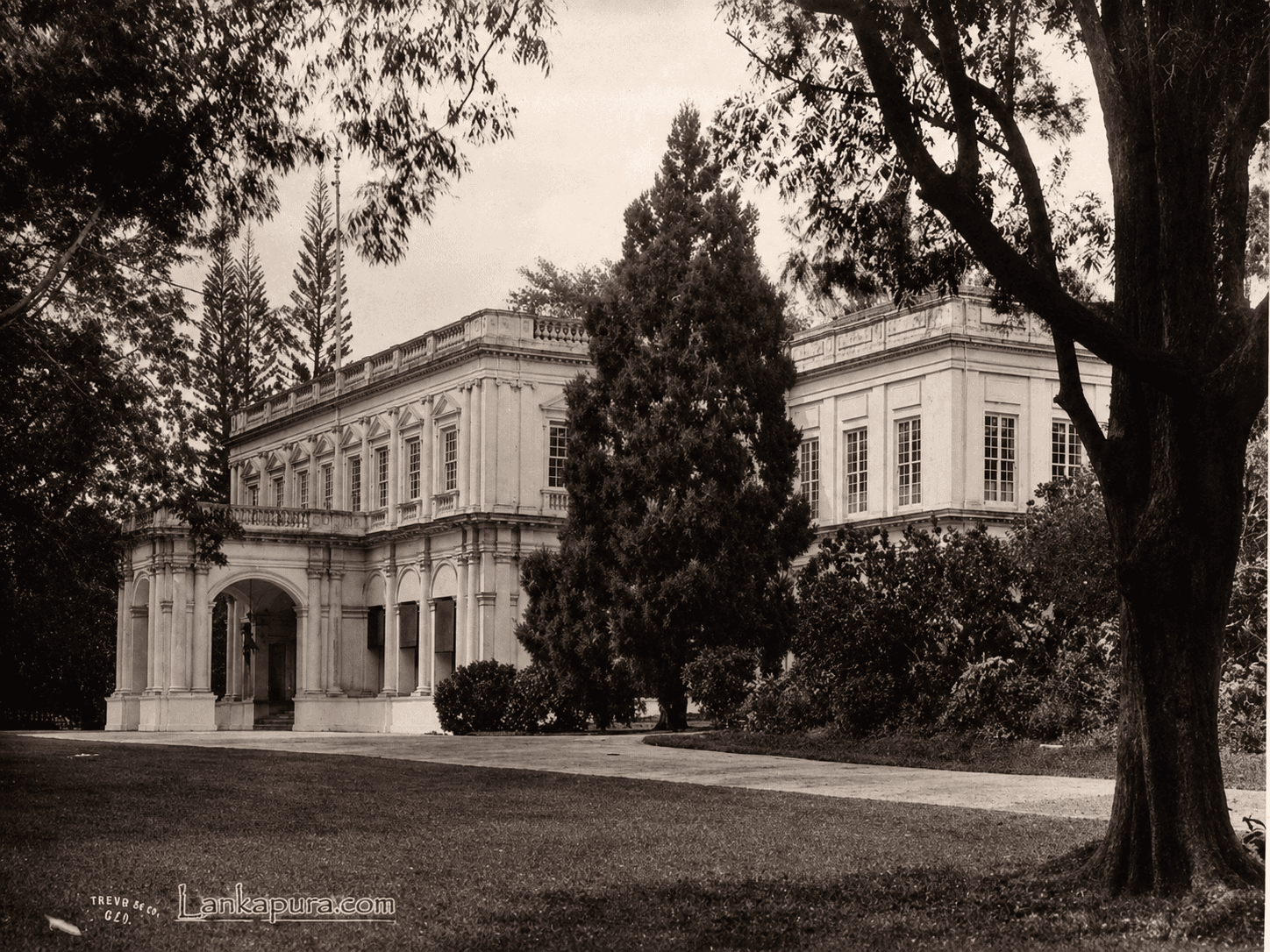
Governor’s Pavilion Kandy
More from Old Ceylon
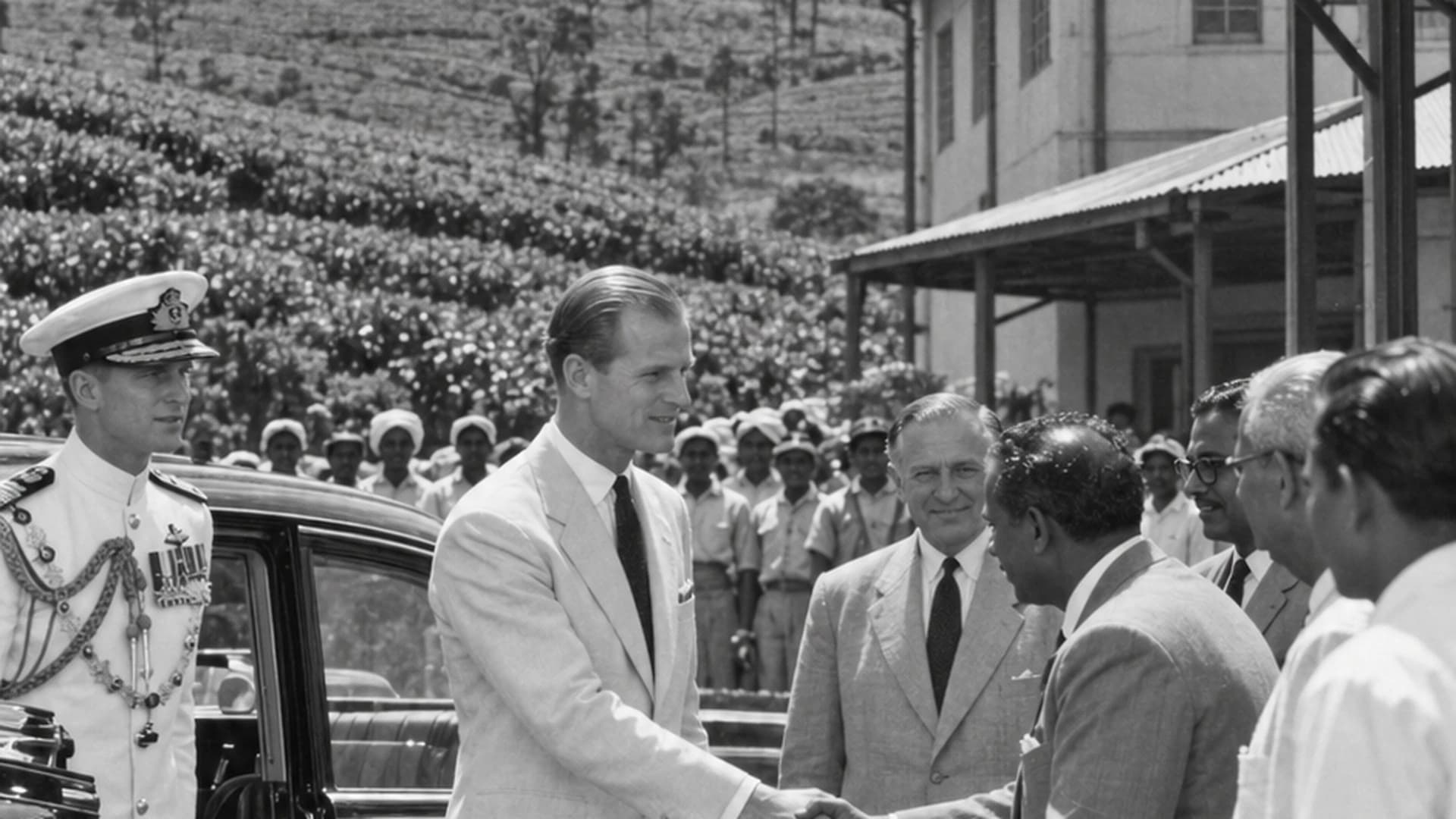
When Prince Philip Visited Pedro Estate: The Royal Visit That Became Part of Ceylon Tea History in 1954
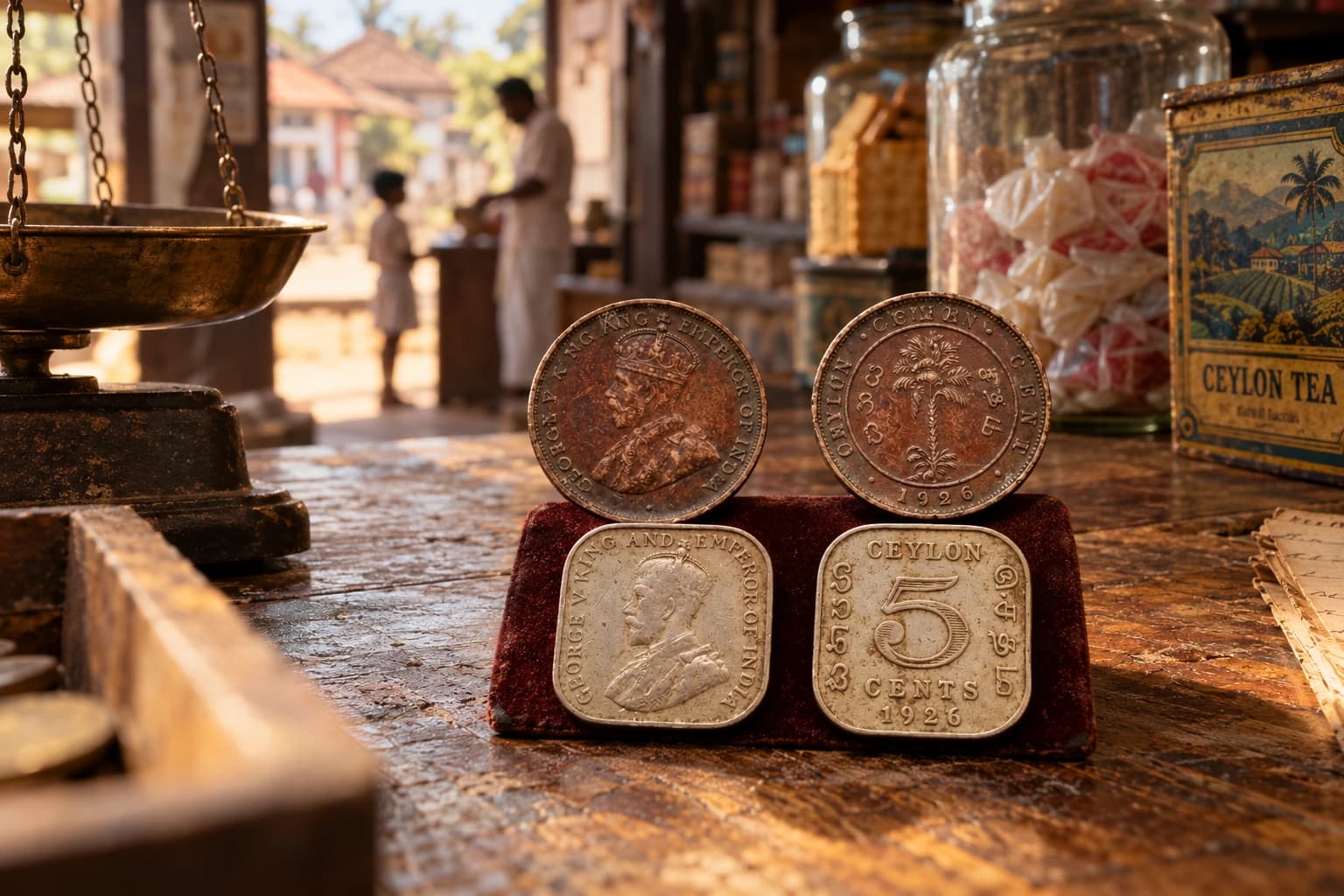
When Five Cents Mattered: The Forgotten Small Change of Old Ceylon