Hammenhiel Fort: The Island Fortress Between Kayts and Karainagar
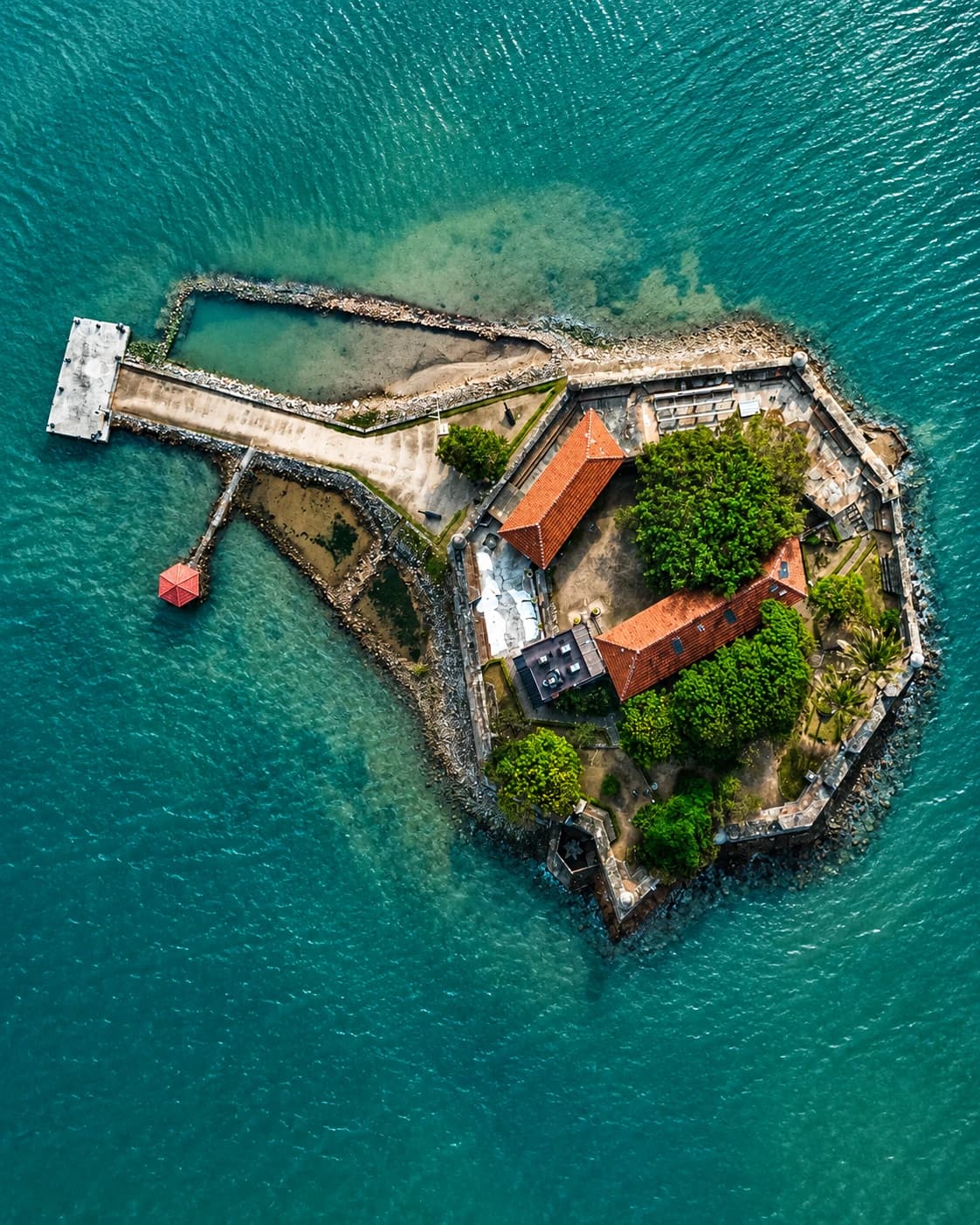
Hammenhiel Fort is one of the most unusual colonial landmarks in northern Sri Lanka. Set on a small rocky island between Kayts and Karainagar, near the entrance to the Jaffna Lagoon, it looks like a fortress placed directly into the sea. From the shore, its stone walls, red-tiled roofs and surrounding blue water create a striking image — part military stronghold, part island hideaway, part forgotten chapter of Old Ceylon.
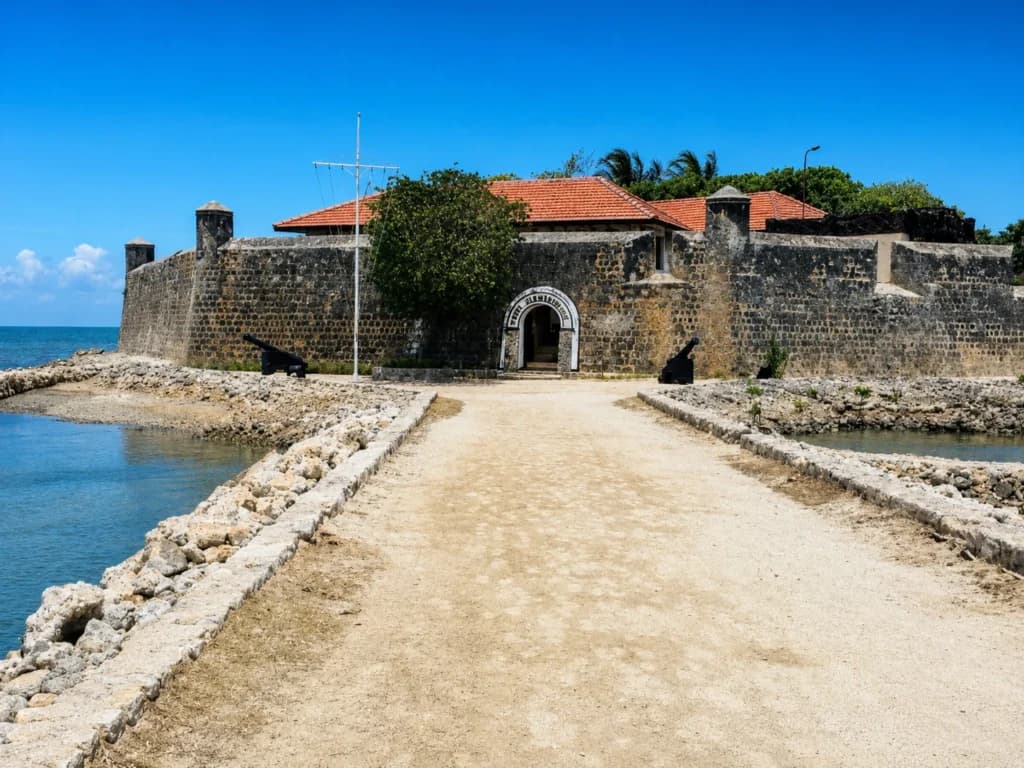
Unlike Jaffna Fort, which dominates the mainland city, Hammenhiel Fort feels separate from ordinary life. It is reached by boat and surrounded by water on every side. This isolation is exactly what made it valuable. In colonial Ceylon, a small island fort could guard a channel, control movement by sea and serve as a secure place for soldiers, supplies and later prisoners.
For travellers interested in colonial Sri Lanka, Hammenhiel Fort offers a rare experience. It is not a large town fort like Galle. It is not a hill-country colonial retreat like Nuwara Eliya. It is a sea fort — compact, defensive, atmospheric and deeply connected to the maritime history of the Jaffna islands.
Check our previous article- https://trippingsrilanka.com/stories/jaffna-fort-northern-stronghold
Why Hammenhiel Fort Mattered
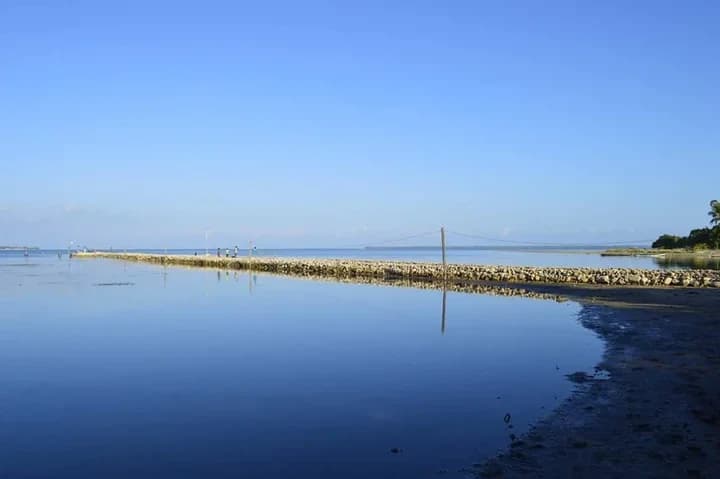
Hammenhiel Fort mattered because of its position. The fort sits between Kayts and Karainagar, close to the water routes leading into the Jaffna Peninsula. In a region shaped by lagoons, islands, causeways and sea passages, control of water movement was essential.
The Jaffna islands have always had a maritime character. Kayts, Karainagar, Delft, Pungudutivu and other islands formed a northern world connected by boats, fishing, trade, religion and movement across the Palk Strait. For European colonial powers, this geography was strategically important. Whoever controlled the sea approaches to Jaffna could help protect the peninsula and monitor movement between northern Ceylon and South India.
Hammenhiel Fort was therefore not built for beauty. It was built for control. Its small size should not mislead visitors. In the 17th century, a fort on this island could play a serious role in defending the entrance to Jaffna.
Portuguese Origins
The story of Hammenhiel Fort begins with the Portuguese. They built the original fort in the early 17th century, using quarried coral and local materials. The Portuguese were then trying to secure their position in northern Ceylon, especially around Jaffna, which had its own royal and maritime importance.
The fort was originally known by a Portuguese name connected to the idea of a royal fort. Like many Portuguese fortifications in Sri Lanka, it combined military purpose with imperial ambition. It was part of a wider coastal defence system designed to support Portuguese power across the island.
The Portuguese fort was small, but its island location made it difficult to attack. At the same time, its isolation created a weakness. A fort surrounded by water needed a reliable supply of fresh water. This weakness would later become crucial during the Dutch attack.
Dutch Capture in 1658
The Dutch captured Hammenhiel Fort in 1658 during their campaign against the Portuguese in Ceylon. This was the same period when Dutch power was expanding across the island’s coastal regions. The Dutch East India Company wanted control of ports, forts, trade routes and strategic coastal points.
During the Dutch siege, the fort’s water supply became a major problem. Without adequate fresh water, the Portuguese defenders could not hold out for long. The fort eventually surrendered, allowing the Dutch to take control of this important sea position.
The Dutch then renamed the fort Hammenhiel. The name is usually explained as meaning the “heel of the ham”. According to this tradition, the Dutch imagined the shape of Ceylon as resembling a smoked ham, and this little island fort stood at the heel-like projection.
It is one of the more unusual place-name stories in colonial Sri Lanka, and it gives the fort a memorable identity.
Dutch Reconstruction and Military Design
After capturing the fort, the Dutch rebuilt and strengthened it. They improved the structure, added stonework, reinforced the defences and paid attention to water storage. The rebuilt fort became a compact but effective island stronghold.
Hammenhiel Fort is often described as octagonal in form. Its thick walls were designed for defence, with gun positions facing out towards the surrounding water. The fort’s interior included vaulted spaces, storage areas and accommodation for a small garrison.
The Dutch also corrected some weaknesses of the earlier Portuguese structure. They strengthened the fort against the effects of the sea and improved rainwater storage. This mattered because an island fort could not function without a dependable water supply.
In the Dutch period, Hammenhiel was not meant to house a large settlement. It was a military point. Its purpose was to guard, observe and control. Everything about the fort’s design reflects that practical role.
A Fort in the Sea
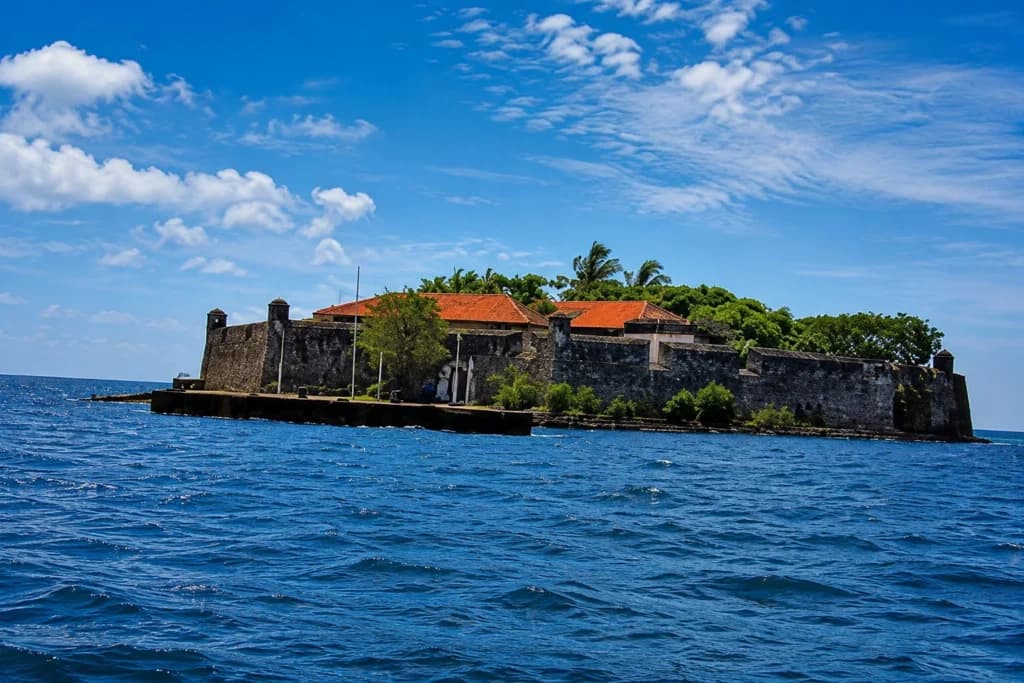
The most powerful part of visiting Hammenhiel Fort is its setting. The fort stands alone in shallow northern waters, separated from the mainland and nearby islands. Its walls appear low and solid against the sea, while the red roofs and small courtyard soften the military character of the site.
This makes Hammenhiel different from almost every other colonial fort in Sri Lanka. Most forts are entered through streets, gates or town centres. Hammenhiel is approached across water. That short boat journey changes the visitor experience. You do not simply arrive at a monument. You cross into it.
The sea also explains the fort’s mood. The wind, salt air, open sky and surrounding lagoon waters make the site feel remote, even though it is not far from the shore. It is one of the few places in Sri Lanka where colonial military architecture and island travel feel completely joined.
British Rule and Prison History
After Dutch control ended, Hammenhiel Fort came under British rule. Like many older Dutch forts, it was reused rather than abandoned. The British recognised the value of its isolation and used it as a prison.
This later prison history gives the fort a darker atmosphere. A place built to guard the sea became a place to hold people securely. Its surrounding waters made escape difficult, while its thick walls and enclosed rooms made it suitable for detention.
Over time, the fort was also used for other official purposes, including as an isolation station connected with public health. This again shows how colonial structures often changed function across centuries. A military fort could become a prison, then a hospital or quarantine space, and later a heritage property.
Hammenhiel Fort is therefore not only a Dutch military site. It is a layered place of defence, detention, isolation and reuse.
Modern Use as a Heritage Stay
In recent years, Hammenhiel Fort has been converted into a unique heritage resort operated by the Sri Lanka Navy. This modern use has helped preserve the structure while giving visitors a rare chance to experience the fort from inside.
The idea of staying in a former sea fort is unusual. It allows travellers to experience the architecture, courtyard, walls and surrounding waters in a slower way. Instead of seeing the fort only as a distant silhouette, visitors can feel its compact scale and island atmosphere.
Still, this is not a conventional hotel setting. Its attraction lies in the history and location. The fort’s old prison associations, military structure and sea-bound setting remain part of the experience.
Visitors should check access arrangements before travelling, because entry usually depends on the current operating conditions of the resort and boat access.
What to See at Hammenhiel Fort
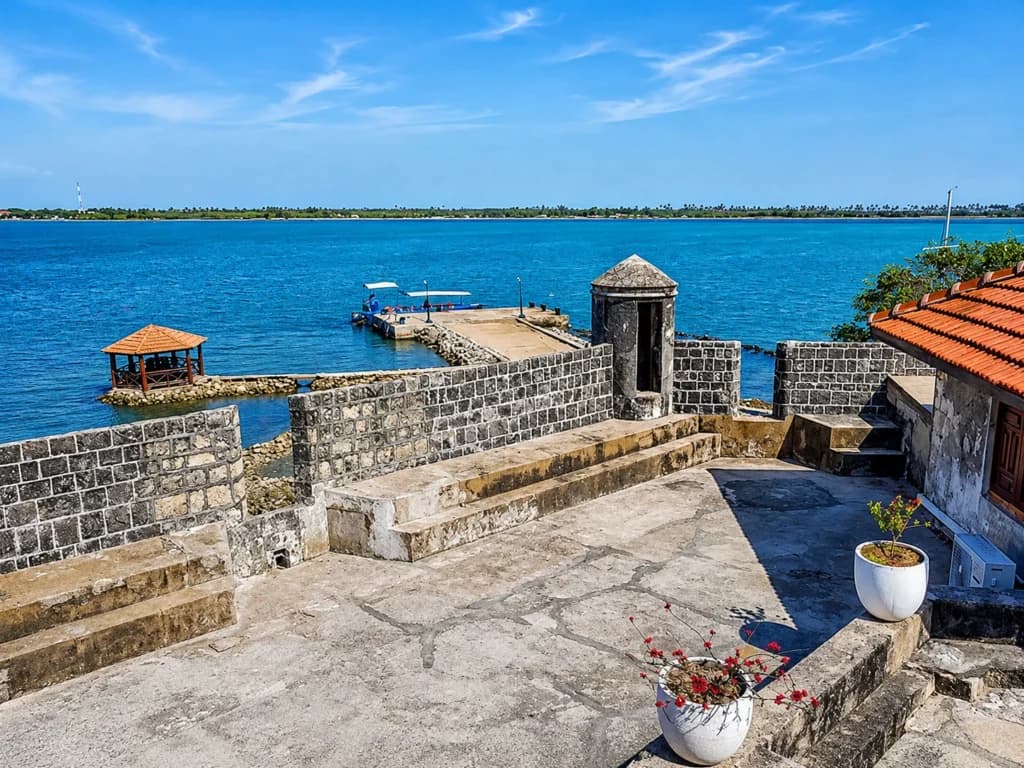
The main thing to observe at Hammenhiel Fort is the relationship between the structure and the sea. The walls, gateway, courtyard and gun positions all make sense only when seen against the water around them.
Look carefully at the thickness of the walls and the enclosed feeling of the interior. Notice the red roofs, stone surfaces, vaulted spaces and small scale of the fort. Unlike larger forts, Hammenhiel can be understood almost at once, but its atmosphere grows stronger the longer you stay.
The view from the fort is also important. Across the water, the islands of the Jaffna region appear low and quiet. Fishing boats, causeways and coastal settlements complete the scene. This is northern Sri Lanka at its most maritime.
Combining Hammenhiel with the Jaffna Islands
Hammenhiel Fort is best visited as part of a wider Jaffna islands itinerary. Travellers can combine it with Kayts, Karainagar, Casuarina Beach, Delft Island, Jaffna Fort, Nallur Kandaswamy Temple and the causeways that connect the northern islands.
This makes the fort especially valuable for slow travel. It is not just a single heritage stop. It is part of a larger island journey through northern Sri Lanka, where colonial history, Tamil culture, Catholic churches, Hindu temples, fishing villages and dry-zone coastal landscapes all meet.
For travellers who have already seen Galle or Colombo, the Jaffna islands offer a very different side of colonial Ceylon. The landscape is flatter, drier, quieter and more exposed. Hammenhiel Fort fits that atmosphere perfectly.
Best Time to Visit Hammenhiel Fort
The best time to visit Hammenhiel Fort is during clear weather, when the sea is calm and boat access is easier. Morning and late afternoon are usually better for light and heat. Midday can be harsh because the northern sun is strong and the exposed sea setting offers limited shade.
Visitors should carry water, use sun protection and check in advance whether access is available. Since the fort is operated under naval management, arrangements may differ from ordinary public heritage sites.
Photography is one of the main pleasures of the visit. The fort is especially beautiful from the water, where its shape and isolation can be fully appreciated.
Why Hammenhiel Fort Deserves More Attention
Hammenhiel Fort deserves more attention because it tells a part of colonial Sri Lanka’s story that is easy to miss. The island’s colonial history is often told through major forts, capitals and plantation towns. But small maritime strongholds like Hammenhiel show how control also depended on channels, lagoons, islands and sea passages.
The fort also adds depth to the heritage of northern Sri Lanka. Jaffna is not only about temples, libraries, palmyrah landscapes and the mainland fort. The islands around Jaffna carry their own histories of travel, trade, faith and defence.
For history readers, Hammenhiel is a compact lesson in Portuguese ambition, Dutch military strategy and British reuse. For travellers, it is one of Sri Lanka’s most unusual heritage experiences — a fort in the sea, reached by boat, surrounded by northern light and water.
Final Thoughts: A Small Fort with a Large Memory
Hammenhiel Fort may be small, but it has a powerful presence. Its stone walls rise from a lonely island between Kayts and Karainagar, carrying the memory of Portuguese builders, Dutch soldiers, British prison use and modern heritage adaptation.
To visit Hammenhiel Fort is to experience colonial Ceylon from the water. It is quieter than Galle, smaller than Jaffna Fort and less known than Trincomalee, but its setting is unforgettable. The sea is not just a background here. It is the reason the fort exists.
For travellers exploring northern Sri Lanka, Hammenhiel Fort is worth adding to the route. It is a unique island fortress where history, isolation and sea views come together in one of the most atmospheric colonial sites in Sri Lanka.
FAQs About Hammenhiel Fort
Where is Hammenhiel Fort located?
Hammenhiel Fort is located on a small island between Kayts and Karainagar, near the entrance to the Jaffna Lagoon in northern Sri Lanka.
Who built Hammenhiel Fort?
The fort was first built by the Portuguese in the early 17th century and later captured, renamed and rebuilt by the Dutch.
Why is it called Hammenhiel?
The name Hammenhiel is usually explained as meaning the “heel of the ham”. The Dutch are said to have imagined Ceylon as shaped like a smoked ham, with the fort located near the heel-like point.
Can visitors stay at Hammenhiel Fort?
Yes, the fort has been converted into a heritage resort operated by the Sri Lanka Navy, though visitors should check access and booking conditions in advance.
Is Hammenhiel Fort worth visiting?
Yes. Hammenhiel Fort is one of Sri Lanka’s most unusual colonial forts because it stands on a small island, is reached by boat, and combines Portuguese, Dutch, British and modern naval history.
Visit Us: https://trippingsrilanka.com/stories
More from Old Ceylon

Colombo Public Library at 100: The Names That Still Remain
The Toll Gate at the Bridge: When Travelling Across Ceylon Cost a Few Cents at a Time