Ketaboola Estate Mini-Hydro Scheme: The Forgotten Powerhouse of Old Ceylon
A Hidden Powerhouse in Sri Lanka’s Plantation Hills
Hidden among the forested hills and flowing waterways of Sri Lanka’s Central Province is a remarkable reminder of the engineering ingenuity that once powered the island’s great plantation estates.
The Ketaboola Estate Mini-Hydro Scheme, believed to have been constructed in 1909, represents an era when remote tea estates generated their own electricity using the natural force of mountain streams.
Long before electricity reached many rural communities, estate engineers were diverting water through channels, pipes and turbines to operate machinery, illuminate bungalows and bring power to isolated plantation settlements.
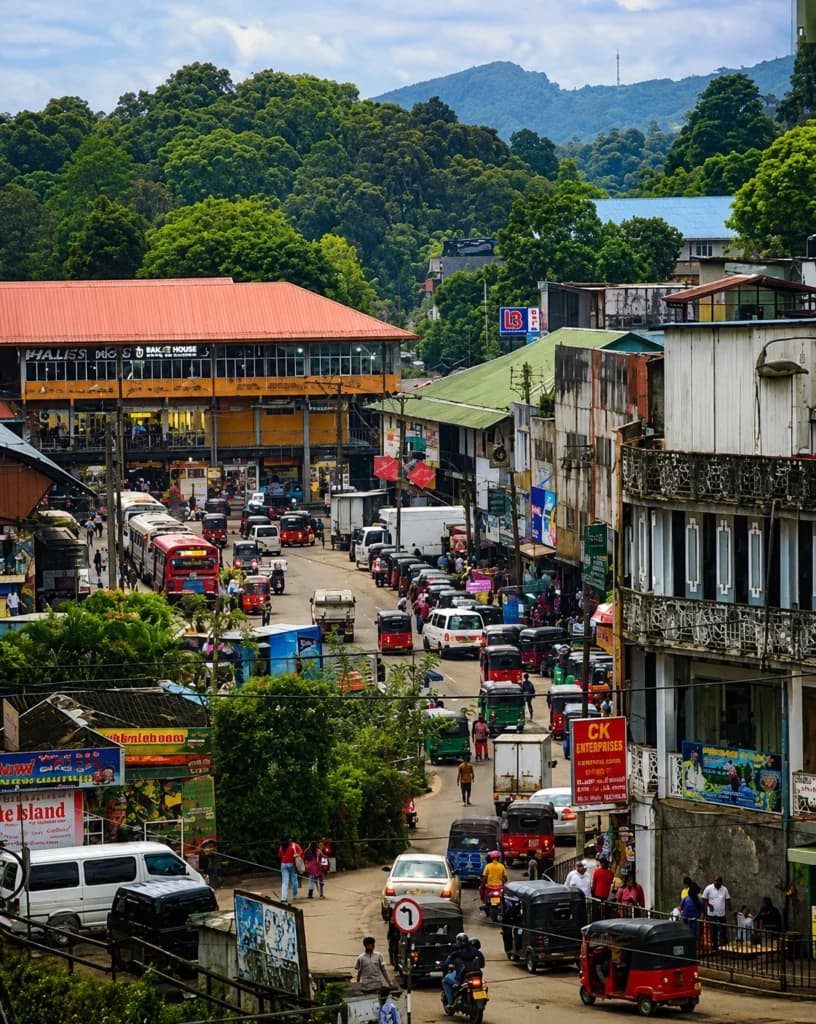
Located in the wider Nawalapitiya region, Ketaboola remains closely associated with Sri Lanka’s historic plantation country. It is not only a story about tea. It is also a story about water, engineering, energy and the hidden industrial heritage of Old Ceylon.
Powering the Plantations of Old Ceylon
During the late nineteenth and early twentieth centuries, the Central Highlands became the heart of Ceylon’s plantation economy.
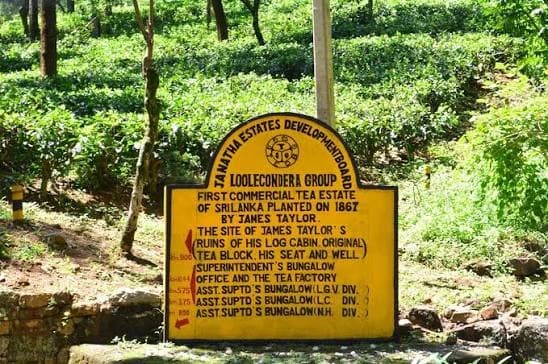
Commercial tea cultivation began at Loolecondera Estate in 1867 and expanded rapidly after coffee plantations were devastated by disease. As tea spread across the hills, factories, workers’ settlements, estate offices and planters’ bungalows appeared throughout the highlands.
Tea production required considerable mechanical power.
Fresh tea leaves had to be withered, rolled, processed, dried and prepared for transport. These tasks could not be handled efficiently without machinery. Yet many estates stood far from towns, roads and established electricity networks.
Planters therefore turned to the most dependable source of energy available to them: water.
The steep slopes, heavy rainfall and numerous streams of Sri Lanka’s hill country created ideal conditions for small hydropower installations. Instead of building enormous dams, estates could divert part of a nearby stream and use the natural fall of the land to generate power.
This made mini-hydro technology one of the most practical solutions for plantation life in Old Ceylon.
Check our previous article – https://trippingsrilanka.com/stories/hapugastenne-estate-racecourse
Why Water Power Was Ideal for Tea Estates
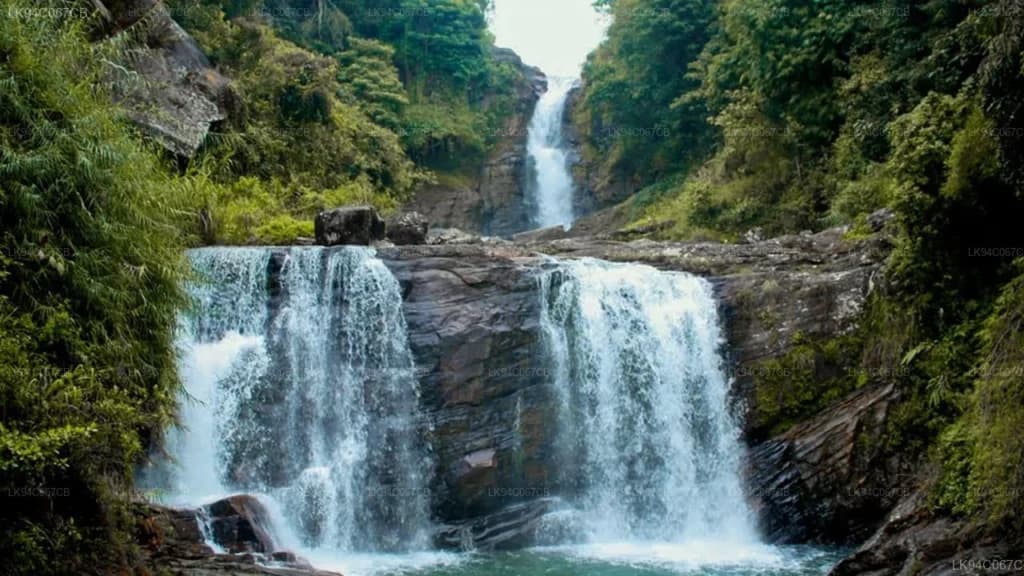
The tea country of Ceylon was naturally suited for hydropower.
The land was steep. Streams flowed down from the hills. Rainfall was frequent. Estates were often spread across sloping terrain, creating natural differences in elevation.
This meant that water could be guided from a higher point to a lower point, creating pressure strong enough to turn machinery.
For estate owners and engineers, this was extremely useful. Transporting coal, oil or other fuel into remote hill-country estates was expensive and difficult. Mountain roads were narrow, weather conditions were unpredictable and estates were often isolated.
Water, however, was already there.
The plantation landscape itself became part of the power system.
How an Estate Hydro Scheme Worked
An early estate hydropower system usually began with a small diversion point along a stream.
Water was guided into a narrow channel or estate-built watercourse and carried towards a forebay, or holding area. From there, it travelled down a steep pipe known as a penstock towards a turbine located at a lower elevation.
The pressure created by the descending water turned the turbine.
Depending on the design and period, the turbine could either operate factory machinery directly through belts and shafts, or drive a generator that produced electricity.
After passing through the turbine, the water was released back into the stream through a tailrace.
The system was simple in principle, but difficult in practice. Its success depended on careful surveying, dependable water flow, precise engineering and good maintenance.
Every channel, pipe, turbine and powerhouse had to be adapted to the natural contours of the estate.
The Ketaboola Estate Installation
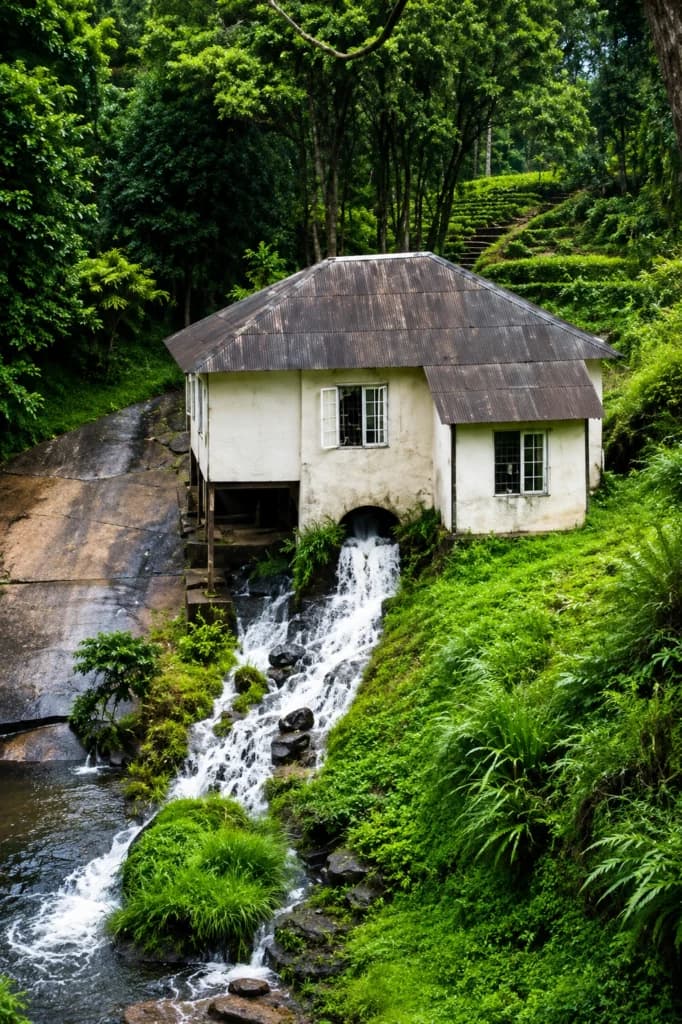
The historic installation at Ketaboola Estate is often described as one of the early estate-based hydropower schemes developed in the plantation districts.
According to the surviving historical account, the scheme was constructed in 1909 and used water from the estate to provide power for plantation buildings and industrial operations.
Its location reflects the practical thinking of early estate engineers. Rather than transporting large quantities of fuel through difficult mountain roads, they used a renewable energy source already flowing through the property.
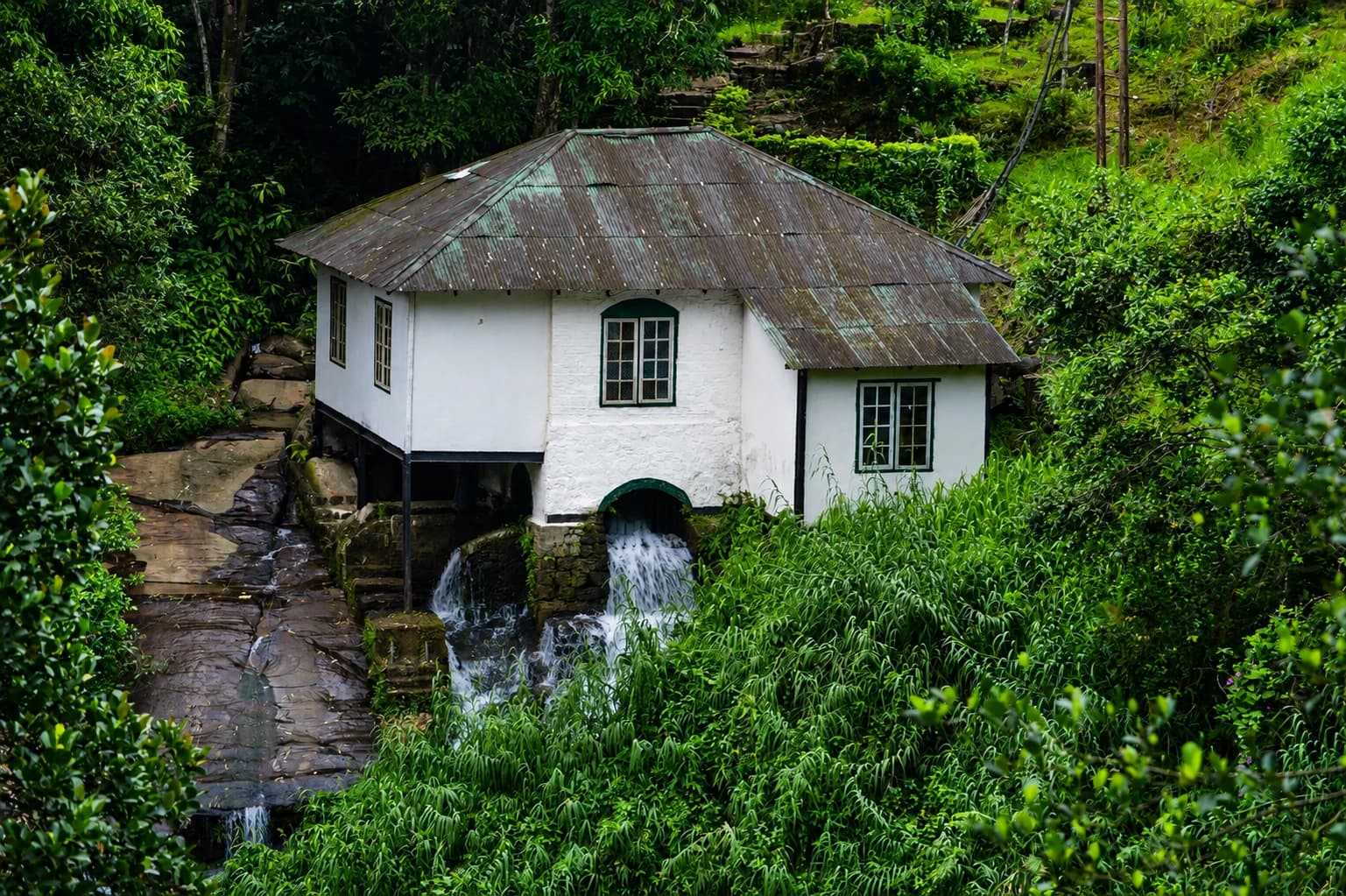
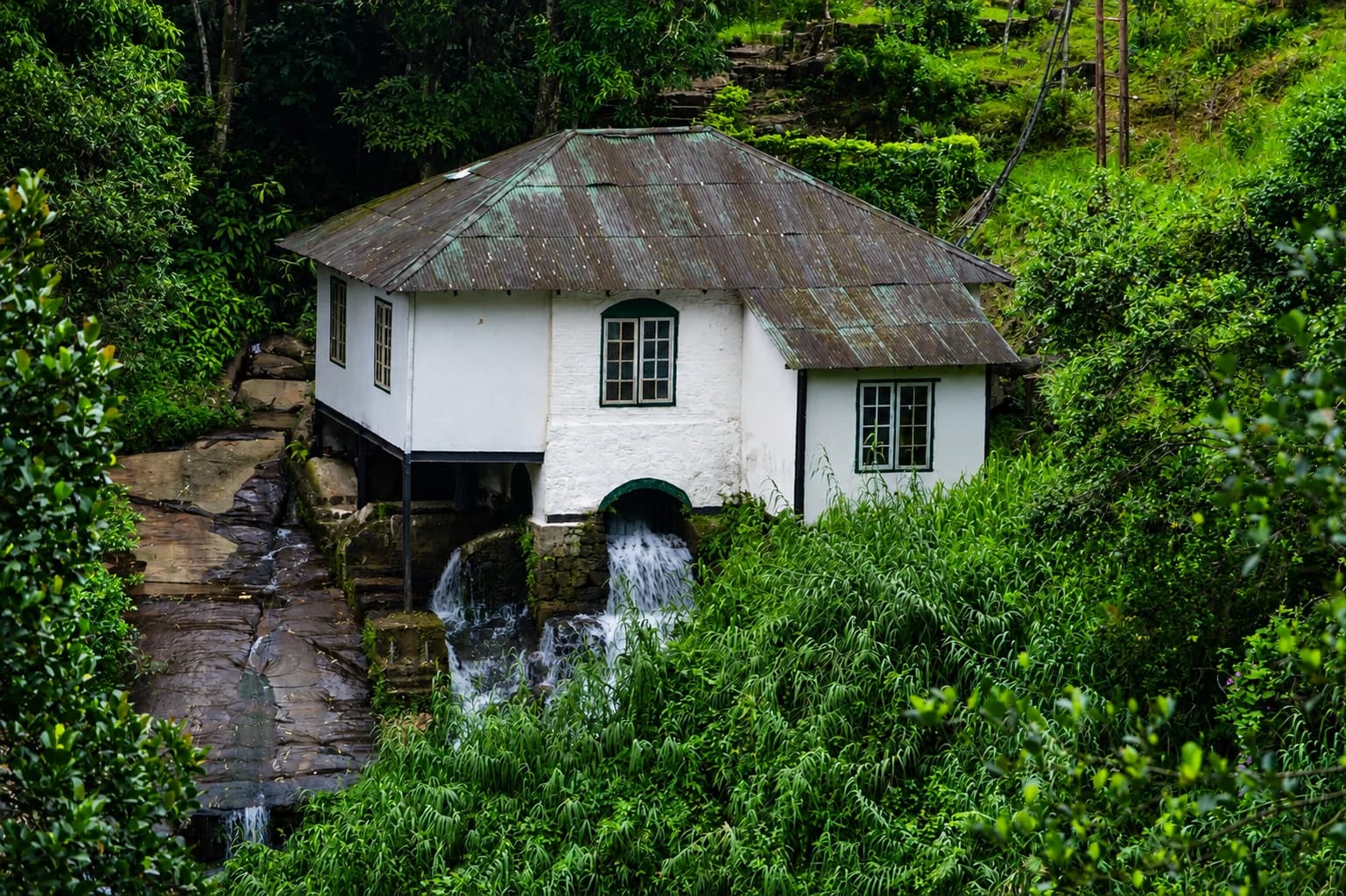
The small powerhouse appears almost absorbed into its surroundings. Its modest walls, pitched roof and arched water outlet give it the appearance of a secluded cottage beside a stream.
Yet this unassuming building once formed part of the essential infrastructure of a working plantation.
Inside, water power would have been converted into the energy needed to support the daily life and production of the estate.
The Powerhouse Beside the Stream
One of the most striking things about the Ketaboola Mini-Hydro Scheme is the modest appearance of the powerhouse.
It does not look like a grand industrial building. It does not dominate the landscape. Instead, it sits quietly beside the water, almost hidden by greenery.
This is what makes it so fascinating.
The building shows how estate engineering was often practical, compact and closely fitted to the landscape. The powerhouse only needed to do one thing well: receive water pressure, house the machinery and convert the force of the stream into usable energy.
The arched water outlet is especially important because it shows how the water returned to the stream after passing through the system.
For heritage travellers, this detail helps explain the whole process. The building was not just a room for machines. It was part of a living water circuit.
Electricity Beyond the Tea Factory
Estate hydropower was not limited to operating tea rollers and other machinery.
Where sufficient power was available, electricity could also be supplied to administrative offices, workshops and the planter’s bungalow. Lighting transformed life on estates that had previously relied on candles, kerosene lamps and other forms of illumination.
For a remote plantation, electricity was a major change.
It meant safer and more efficient factory work. It allowed estate offices to function better. It made bungalow life more comfortable. It also gave the estate a sense of modernity at a time when many nearby rural communities still had no access to electricity.
Some systems may also have provided limited lighting to labour lines and other estate buildings.
However, access to electricity within colonial plantations was not necessarily equal. The benefits of new infrastructure often reflected the social hierarchy of estate life.
The surviving hydro scheme therefore tells two connected stories. It demonstrates engineering progress, but it also reflects the economic and social organisation of the plantation system in which it operated.
Engineering Shaped by the Landscape
One of the most impressive features of early estate hydropower schemes was their relationship with the natural environment.
The engineers did not attempt to overpower the landscape with enormous structures. Instead, they studied the direction of streams, the steepness of slopes and the seasonal availability of water.
The terrain itself became part of the machinery.
A narrow stream flowing through a tea estate could be transformed into a dependable source of industrial energy. Gravity supplied the pressure, while carefully constructed channels controlled the movement of water.
This combination of natural geography and mechanical engineering helped remote estates become more self-sufficient.
It also anticipated the principles now associated with decentralised renewable energy.
A Forgotten Chapter of Sri Lanka’s Energy History
Many estate hydropower installations were eventually abandoned, replaced or disconnected as national electricity networks expanded and factory technology changed.
As power distribution improved, estates no longer needed to depend entirely on their own small hydro systems. Machinery was modernised. Some old turbines fell silent. Channels became overgrown. Powerhouses were forgotten.
Yet their historical importance has not disappeared.
The Sri Lanka Sustainable Energy Authority has documented projects intended to rehabilitate and repower abandoned micro-hydro installations within the tea plantation sector. Government energy reports have also referred to estate micro-hydro projects considered for rehabilitation and connection to the national grid.
These initiatives show that the old estate systems were more than colonial curiosities. In some locations, the waterways and infrastructure retained practical energy potential long after their original machinery had stopped working.
Ketaboola’s surviving installation is particularly valuable because it allows visitors, researchers and heritage enthusiasts to visualise how such systems once operated.
Industrial Heritage in the Tea Country
Sri Lanka’s heritage is often associated with ancient temples, royal cities, forts, churches, colonial residences and old railway stations. Industrial structures receive far less attention.
Yet industrial heritage is essential to understanding modern Sri Lanka.
Powerhouses, railway workshops, tea factories, bridges, irrigation systems and estate machinery all helped shape the island’s economic and social history.
The Ketaboola Estate Mini-Hydro Scheme connects several major themes:
- The rise of the Ceylon tea industry
- The development of estate engineering
- The early use of renewable energy
- The transformation of plantation life
- The industrial history of the Central Highlands
- The self-sufficiency of remote estates
- The relationship between landscape and technology
This makes Ketaboola more than a technical site. It is part of Sri Lanka’s wider industrial memory.
Why Ketaboola Matters to Old Ceylon
Ketaboola matters because it reveals a side of Old Ceylon that is often forgotten.
Old Ceylon is usually remembered through tea bungalows, railway journeys, colonial clubs, churches, forts and hill stations. But behind that visible world was another world of machinery, labour, water systems and technical skill.
A plantation could not operate on beauty alone.
Tea factories needed energy. Estate buildings needed light. Machinery needed maintenance. Roads, channels, pipes and workshops were essential to the survival of plantation life.
The Ketaboola Mini-Hydro Scheme reminds us that the romance of the tea country was supported by a serious engineering network.
It shows how water helped power the plantation economy.
Preserving an Industrial Heritage Site
Preserving the Ketaboola Mini-Hydro Scheme is important because structures like this are rare and easily overlooked.
The building alone is not enough. The wider system should also be understood and documented wherever possible.
Important elements may include:
- The stream diversion point
- The water channel
- The forebay or holding area
- The penstock route
- The powerhouse
- The turbine or generator remains
- The tailrace outlet
- Nearby estate buildings that received power
Together, these elements form a complete engineering system.
Historical plans, estate records and oral accounts from former workers could provide further information about the machinery, generating capacity and buildings that originally received electricity.
Without proper documentation, this kind of heritage can disappear quietly.
Old Technology with a Modern Message
More than a century after the Ketaboola scheme was reportedly constructed, the world is once again searching for cleaner and more localised forms of energy.
Solar panels, wind turbines and modern small-hydro plants may use advanced technology, but the basic principle remains familiar: communities can generate power by intelligently using the natural resources available around them.
The early estate engineers of Old Ceylon worked without digital surveys, computer modelling or modern construction equipment. Nevertheless, they created systems capable of supporting factories and residences in some of the island’s most difficult terrain.
Their work deserves recognition not merely as colonial engineering, but as part of Sri Lanka’s longer history of renewable energy.
Ketaboola therefore has a modern message.
It shows that small-scale renewable energy is not new to Sri Lanka. It has deep roots in the plantation landscape.
A Heritage Experience for Slow Travellers
For heritage travellers, Ketaboola offers a different kind of experience.
This is not a grand tourist attraction. It is a quiet industrial relic hidden in the hills. Its value lies in understanding what it once did.
Visitors who appreciate old machinery, tea history, engineering, water systems and forgotten buildings will find the site especially meaningful.
It invites slow observation.
Look at the stream. Notice the building’s position. Think about the movement of water. Imagine the turbine turning. Picture the estate factory operating with power generated from the hills.
This is the kind of place that makes Old Ceylon feel more real because it reveals the working systems behind the scenery.
A Quiet Powerhouse in the Hills
Today, the Ketaboola Estate Mini-Hydro Scheme stands as a quiet monument to an almost forgotten period.
Water still rushes beneath the old structure, recalling a time when the movement of a mountain stream could bring machinery to life and illuminate an isolated estate bungalow.
It may not possess the grandeur of a great dam or the fame of a historic railway bridge. Yet its modest scale is precisely what makes it fascinating.
The Ketaboola powerhouse reveals how ingenuity, water and landscape came together to power the plantations of Old Ceylon.
A small building beside a stream became part of Sri Lanka’s industrial story.
Final Thoughts: The Forgotten Powerhouse of Old Ceylon
The Ketaboola Estate Mini-Hydro Scheme is one of those rare heritage sites that tells a story through silence.
It does not need a grand façade or monumental scale. Its importance lies in what it once made possible.
It powered machinery. It lit estate buildings. It supported plantation life. It turned water into energy long before modern renewable energy became a global conversation.
For Tripping Sri Lanka readers, Ketaboola is a reminder that Old Ceylon was not only about scenery and colonial romance. It was also about engineering, labour, power and practical intelligence.
The little powerhouse in the hills deserves to be remembered.
It is a forgotten but valuable chapter in Sri Lanka’s tea country, energy history and industrial heritage.
Visit Us: https://trippingsrilanka.com/stories
Heritage places mentioned
Ketaboola Estate Powerhouse
More from Old Ceylon

When Prince Philip Visited Pedro Estate: The Royal Visit That Became Part of Ceylon Tea History in 1954
When Five Cents Mattered: The Forgotten Small Change of Old Ceylon