Mansions of Old Kollupitiya: Kollupitiya today is one of Colombo’s busiest urban districts. Traffic moves along Galle Road, apartment towers rise behind old walls, embassies sit beside schools, and only a few quiet corners still hint at the world that once stood here.
But in the late nineteenth and early twentieth centuries, Kollupitiya was very different.
It was not yet the dense commercial neighbourhood we know today. It was a place of large gardens, private roads, shaded verandahs, horse stables, sea breezes and enormous family residences. Some of the wealthiest and most influential families in colonial Ceylon built their Colombo homes here. These were not merely houses. They were social landmarks.
They carried names such as Alfred House, Calverly, Sravasti, College House, Turret House, Firdousi, Lakshmi Giri, Srimathipaya, Canela Villa and Villa Venezia. Some survived by becoming schools, embassies, government offices or university buildings. Others disappeared completely, leaving only a street name or a memory.
Together, they tell the story of old Kollupitiya.
Check our previous article- https://trippingsrilanka.com/stories/prince-alfred-in-ceylon
Kollupitiya Before the City Closed In
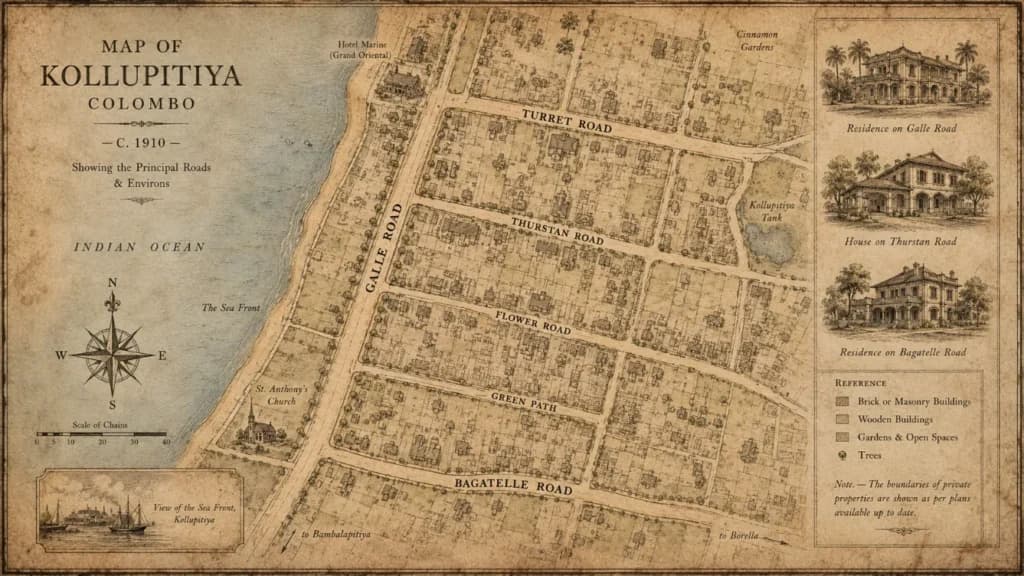
The Kollupitiya of old Ceylon was shaped by land. Large plots stretched from Galle Road inland towards what are now Thurstan Road, Flower Road, Green Path and Dharmapala Mawatha, formerly Turret Road.
These estates gave Colombo’s elite something rare: space.
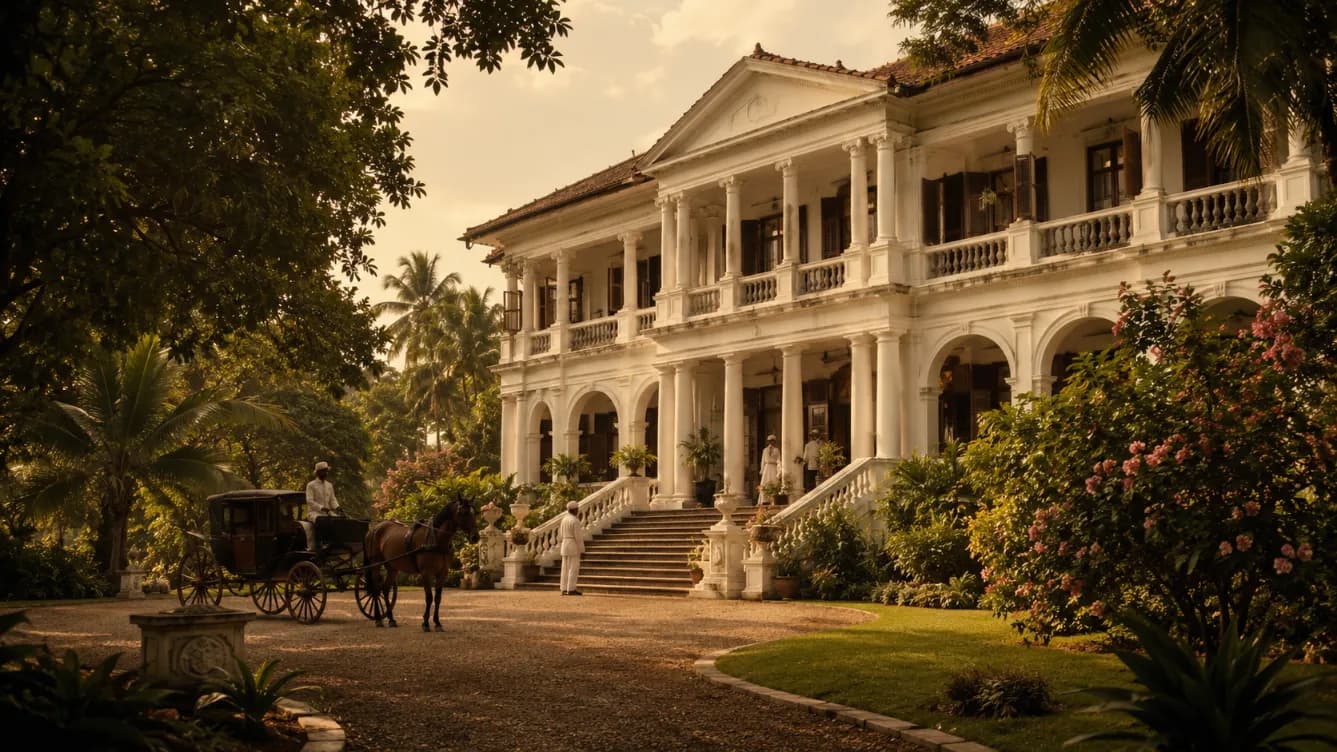
The old mansions had deep gardens, carriage entrances, servants’ quarters, stables, lawns and long verandahs designed for the tropical climate. Many were single-storeyed bungalows, while others were more elaborate two-storeyed residences influenced by Victorian, neoclassical, Tuscan, Venetian and Indo-Saracenic styles.
Their owners were also part of a changing society. Some came from old colonial officialdom. Others were Ceylonese entrepreneurs, lawyers, planters, philanthropists, doctors and reformers who had become powerful in business and public life.
Kollupitiya became a place where wealth, education, politics and social ambition met.
Alfred House: The Great Symbol of Kollupitiya
No discussion of old Kollupitiya can begin without Alfred House.
Built by Charles Henry de Soysa on the land once known as Bagatelle, Alfred House became one of the most famous private mansions in colonial Colombo. It gained its name after Prince Alfred, Duke of Edinburgh, visited Ceylon in 1870. De Soysa had the honour of entertaining the prince, and the mansion became linked with one of the grandest social occasions of nineteenth-century Ceylon.
The estate was vast. The old Bagatelle lands covered a large part of what later became some of Colombo’s most important urban space. Over time, the original estate was divided, roads were created, and new residences emerged from the old grounds.
Today, Alfred House itself is gone. But the name survives through Alfred House Gardens, Alfred Place and the memory of a mansion that once represented Ceylonese wealth at its most visible.
It was more than a residence. It was a statement.
Calverly and the Life of the Verandah
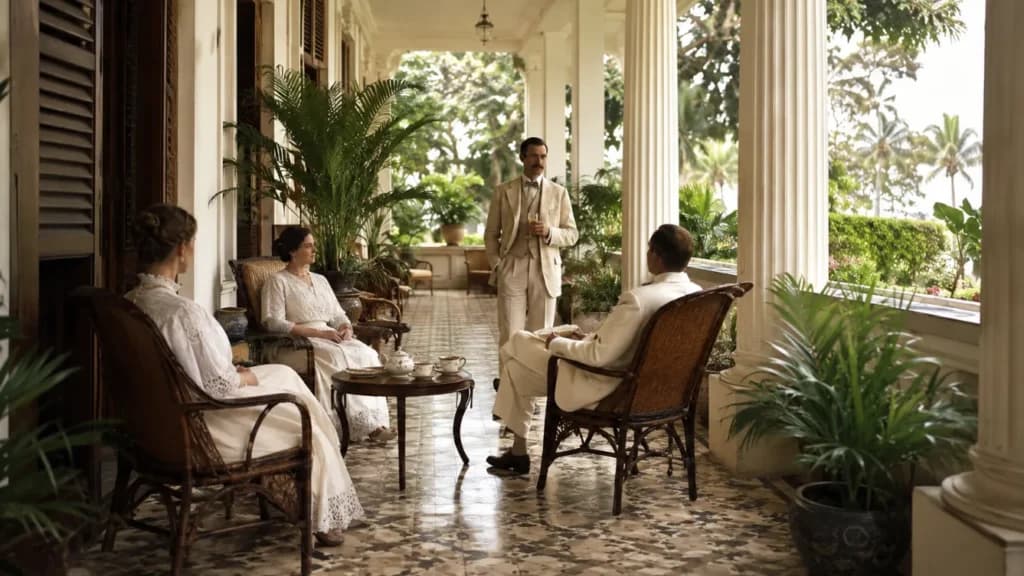
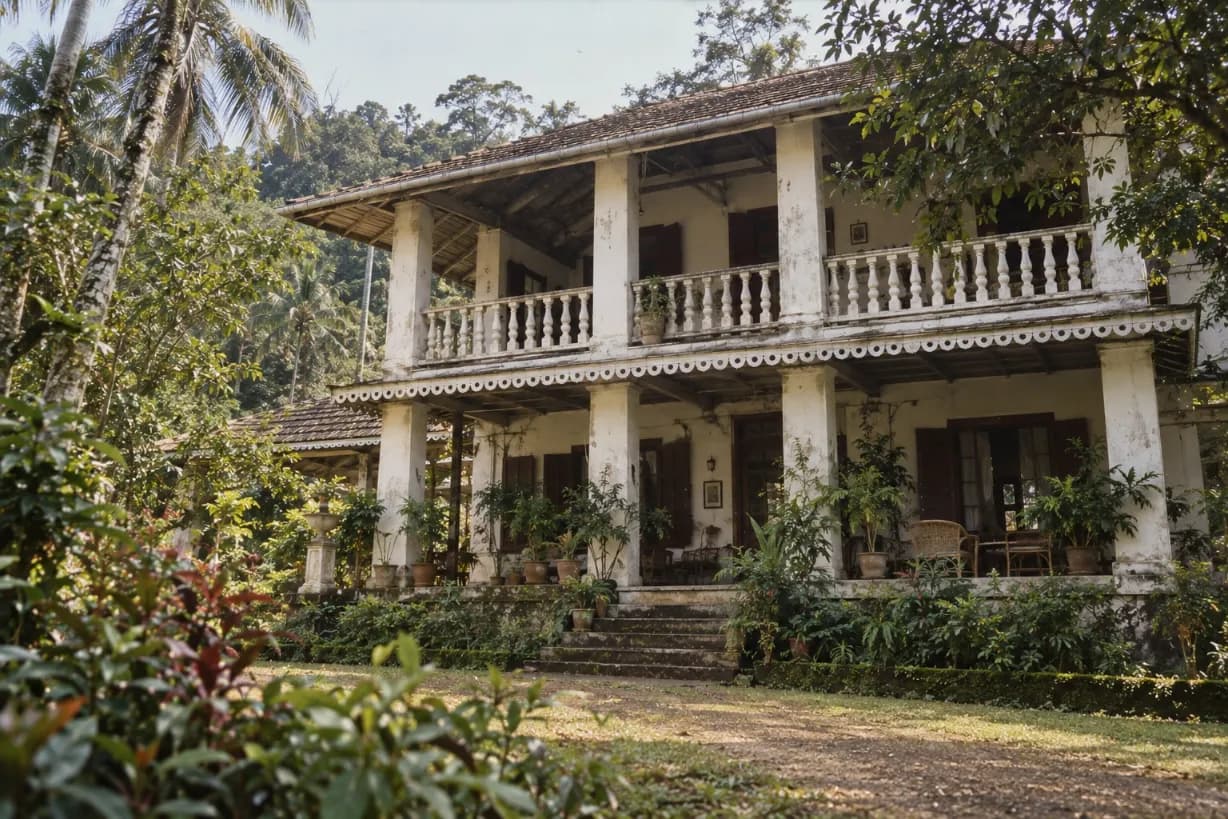
One of the most atmospheric images connected with these Kollupitiya homes is the verandah of Calverly House.
Calverly stood on Turret Road and was associated with Advocate Frederick Dornhorst. Its wide verandah captures something essential about old Ceylon domestic life. These verandahs were not decorative extras. They were living rooms, reception areas, places for evening conversation, tea, family gatherings and quiet observation of the garden.
In Colombo’s heat, the verandah was an architectural necessity. It softened the boundary between house and garden. It allowed air to move. It also created a social stage, where family, guests, servants and visitors moved through carefully understood spaces.
Calverly later became connected with Buddhist Ladies’ College, showing how many old private homes found second lives as educational institutions.
This is one of the most important patterns in Kollupitiya’s architectural history. The mansion often vanished as a family home, but survived as a school, office, hostel or public building.
Turret Road: A Corridor of Mansions
Turret Road, now Dharmapala Mawatha, was once one of the great residential corridors of Colombo.
Along and around it stood homes such as Turret House, Firdousi, Muirburn, Carlton Lodge, Canela Villa, Fairlight, Fincastle and Elscourt Manor. These were the addresses of planters, lawyers, businessmen, diplomats and public figures.
Turret House itself later became important during the Second World War, when Royal College used several of these large homes for school purposes. Firdousi housed the science laboratory. Carlton Lodge housed the lower school. The spacious grounds of Turret House served as an assembly area.
This gives us a vivid image of wartime Colombo: elite private mansions temporarily converted into classrooms, laboratories and school offices.
Elscourt Manor also had a rich history. It became associated with Bishop’s College and was later demolished. Like so many of these houses, it moved through several stages: private mansion, institutional space, memory.
Houses That Became Institutions
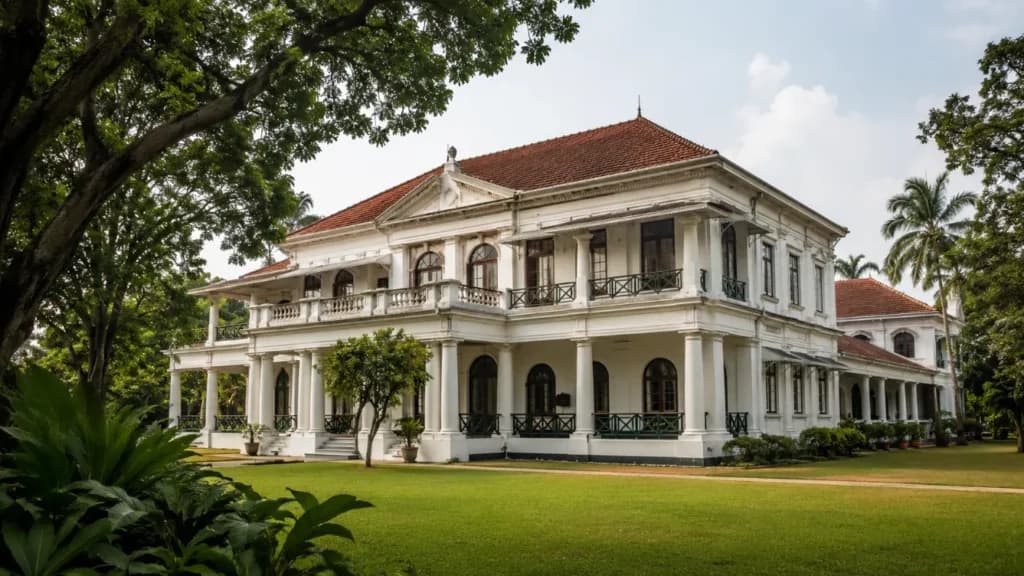
Some of Kollupitiya’s grand homes escaped total disappearance because they were absorbed into public or institutional life.
College House, formerly Regina Walauwa, is one of the best examples. Once a private residence connected with the de Soysa family, it later became part of the University of Colombo. Today it remains one of the most recognisable heritage buildings in the university landscape.
Sravasti, built for W. A. de Silva, also survived through transformation. Designed in the spirit of a Tuscan villa, it became one of Colombo’s notable residences and later served as accommodation for Members of Parliament. It was associated with major public personalities and visitors, including figures from India’s cultural and political world.
Srimathipaya, linked with Sir Ernest de Silva, is another powerful example. What began as a private mansion on Flower Road eventually became the office of the Prime Minister. Its story reflects the journey of many colonial-era houses: from family wealth to state function.
These buildings remind us that Colombo’s political and educational institutions often grew out of private elite spaces.
A Neighbourhood of Philanthropists, Reformers and Power Brokers
The mansions of Kollupitiya were not only architectural landmarks. They were also homes of influence.
Families such as the de Soysas, Peirises, de Silvas, Fernandos and others shaped education, business, philanthropy, law, politics and public life in Ceylon. Some supported schools. Some funded religious and social causes. Some became involved in reform movements. Others shaped commerce, newspapers, planting, banking and civic institutions.
Rippleworth, the home of Sir James Peiris, was connected with political reform activity during colonial times. Sravasti welcomed important intellectual and political visitors. Srimathipaya became associated with public service and philanthropy through Sir Ernest de Silva.
In this sense, the Kollupitiya mansion was not a retreat from public life. It was often where public life was discussed, negotiated and hosted.
Behind the garden gates, Colombo’s future was being shaped.
What Was Lost
A modern Colombo street scene with a faded colonial gate, old wall and new apartment towers in the background.
Many of these mansions are now gone.
Villa Venezia was demolished. Alfred House disappeared. Elscourt Manor was demolished in the 1950s. Isabel Court, once associated with the old Lotus Chinese restaurant at Kollupitiya Junction, is also gone. Several other homes survive only through road names, school histories or family memories.
The loss is not only architectural. It is also emotional.
When a mansion disappears, Colombo loses more than bricks, timber and roof tiles. It loses a way of reading the city. It loses the connection between a street and the people who once lived there. It loses stories of gardens, stables, verandahs, servants, reform meetings, school beginnings, embassy years and wartime improvisations.
Modern Colombo has grown quickly. That growth is necessary. But heritage disappears fastest when people stop naming it.
This is why lists like “Homes of Kollupitiya” are valuable. Even when brief, they preserve names that would otherwise fade.
Walking Through Mansions of Old Kollupitiya Today
To walk through Kollupitiya now is to walk through layers.
A school may stand where a mansion once stood. A government office may occupy a former private residence. A road name may carry the memory of a family. A garden wall may hide the last trace of an old estate. A modern apartment tower may rise over land that once held stables, orchards or a verandah facing the sea breeze.
The old mansions of Kollupitiya remind us that Colombo was not built in one period. It is a city of overlapping eras.
Portuguese and Dutch memories shaped earlier Colombo. British colonial planning shaped its roads and residences. Ceylonese elites then made those spaces their own, adding local ambition, philanthropy, politics and family identity. Post-independence Colombo transformed them again into schools, offices, embassies and public institutions.
That is the real story of Kollupitiya.
Not simply colonial architecture. Not simply old wealth. But transformation.
Why These Mansions Still Matter
The mansions of old Kollupitiya matter because they help us understand Colombo’s social history.
They show how land was used before modern density. They show how Ceylonese families rose in wealth and influence during the colonial period. They show how private homes became public institutions. They show how architecture carried identity, status and climate intelligence.
Most importantly, they remind us that Colombo’s heritage is not only found in forts, churches and government buildings.
It is also found in verandahs, garden walls, school compounds, road names and half-remembered houses.
Kollupitiya may no longer look like the garden suburb it once was. But beneath the traffic, shops and high-rises, the old city remains.
You only have to know where to look.
Visit Us: https://trippingsrilanka.com/stories