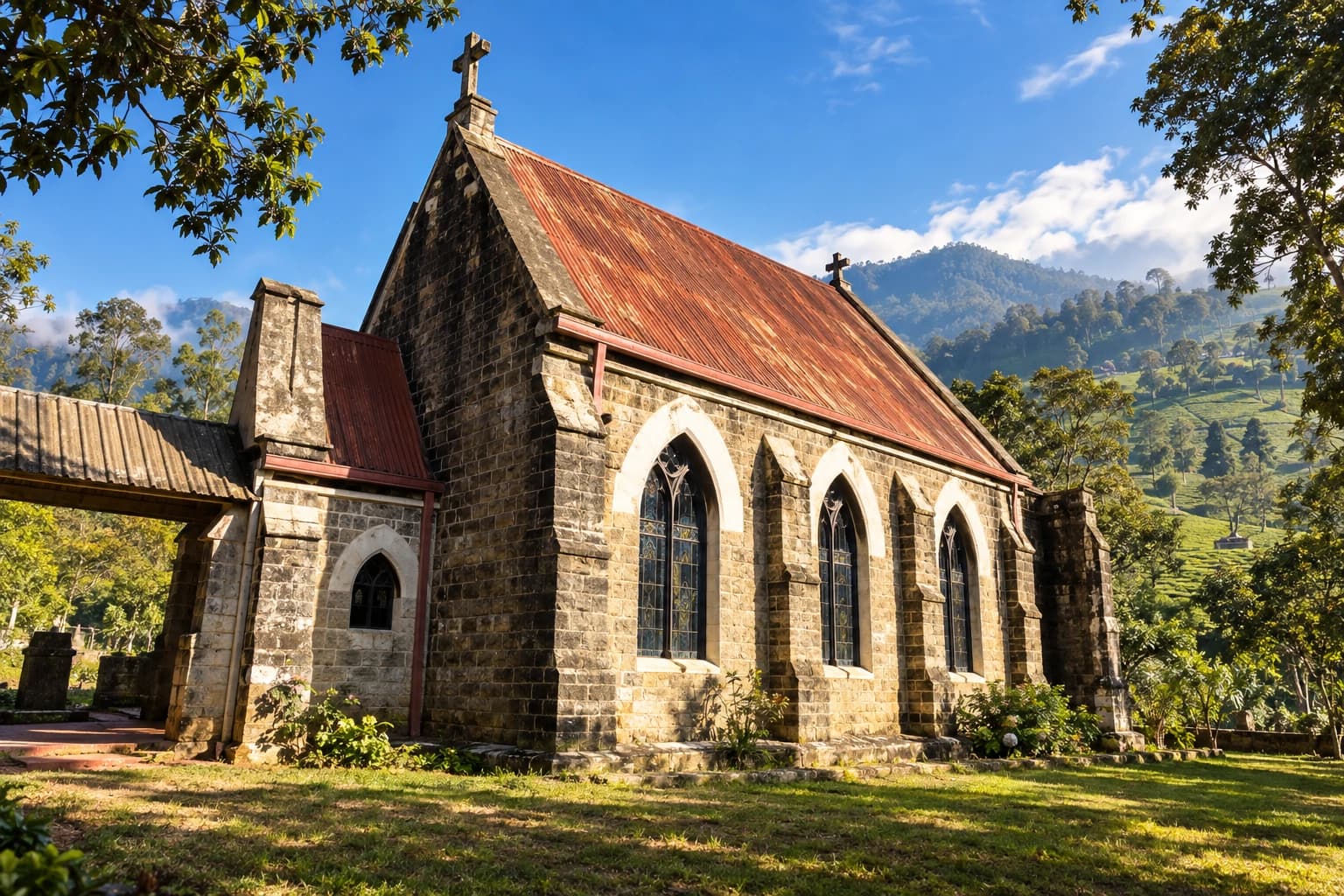
Matara Fort and Star Fort: Colonial Defences on Sri Lanka’s Southern Coast
Matara is often treated as a quick stop on the way to Mirissa, Dondra, Weligama or the deep south. But for travellers interested in colonial Sri Lanka, the city has a much older and more layered story. Between the sea, the Nilwala River and the busy streets of modern Matara, two colonial landmarks still carry the memory of Dutch Ceylon: Matara Fort and Matara Star Fort.
Unlike Galle Fort, Matara does not present itself as a complete colonial town filled with boutique hotels and preserved streets. Its heritage is more practical and understated. The old fort area is now part of a living administrative town, while the Star Fort stands nearby as a compact and unusual defensive structure. Together, they reveal how colonial powers tried to control Sri Lanka’s southern coast, inland routes, river crossings and maritime trade.
For visitors, Matara Fort and Matara Star Fort make an excellent short heritage stop. They are easy to include in a southern coast itinerary, but they reward more than a quick photograph. They tell a story of Portuguese beginnings, Dutch military planning, Kandyan resistance, British administration and the everyday survival of colonial buildings in a modern Sri Lankan city.
Check our previous article- https://trippingsrilanka.com/stories/galle-fort-sri-lanka-ramparts
Why Matara Mattered in Colonial Ceylon
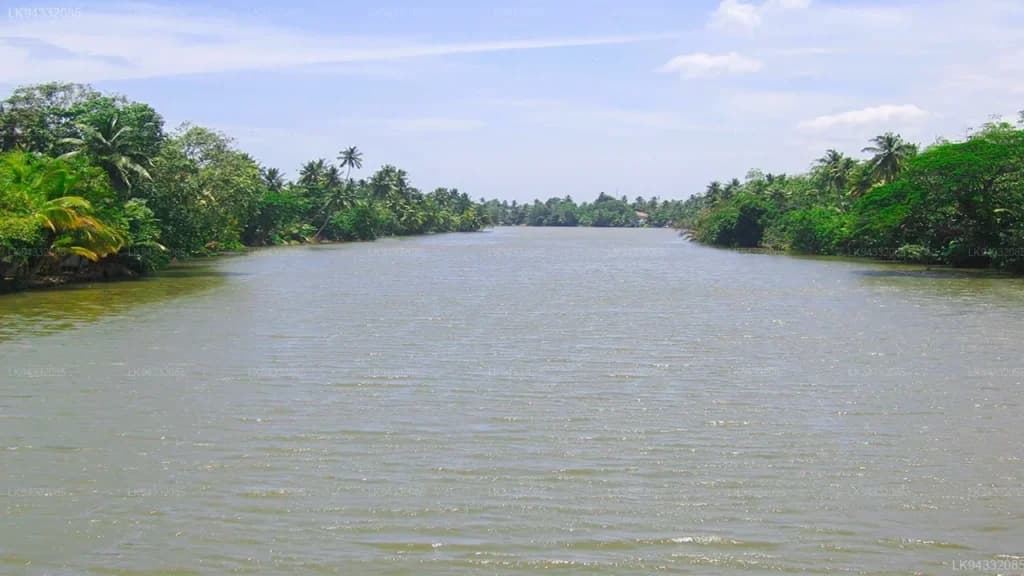
Matara’s importance came from its location. The city sits on Sri Lanka’s southern coast, close to the mouth of the Nilwala River. This gave it both maritime and inland value. A colonial power stationed here could watch the coast, control movement across the river and connect with the surrounding hinterland.
During the Dutch period, Matara became an important southern centre. It was linked to trade, local administration and inland defence. The Dutch were especially interested in coastal control because their power in Ceylon depended on ports, forts, rivers, cinnamon routes and strategic settlements.
Matara was not as large as Colombo or as internationally famous as Galle, but it mattered. It helped complete the Dutch network of southern defences. It also showed the limits of coastal fortification, because attacks could come not only from the sea but also from inland.
Matara Fort: The Older Coastal Defence
Matara Fort is the older and larger of the two colonial defences. The Portuguese first fortified Matara during their period of control, and the Dutch later rebuilt and strengthened the fort after gaining power in the south.
The fort was built near the sea and the Nilwala River, occupying a strategic position between water and town. Its thick rampart was designed to protect the colonial settlement and administrative buildings inside. In the Dutch period, this area would have been connected to trade, storage, official work and military control.
Today, Matara Fort does not feel like a separate heritage enclosure. It is part of the functioning city. Government offices, courts, schools, churches and other buildings occupy the old fort area. This makes the site different from Galle Fort, where the fort identity is more clearly preserved for visitors.
In Matara, the colonial layer is absorbed into daily life. That is exactly what makes it interesting.
The Rampart and the Sea
The remaining rampart is one of the key features of Matara Fort. It gives visitors a sense of how the Dutch used heavy walls to define and protect their coastal settlements. The rampart also offers views towards the sea, reminding us that Matara’s colonial story was always tied to the southern coastline.
This was not simply a decorative wall. It was part of a defensive system. But like many colonial defences in Sri Lanka, its purpose changed over time. What was once a military structure later became part of the urban fabric.
Walking near the rampart today, you can see the contrast between old stone, public buildings, traffic, schools and local town life. The fort does not ask visitors to imagine a frozen past. It shows how colonial architecture can be reused, adapted and absorbed by a living city.
The Dutch Reformed Church
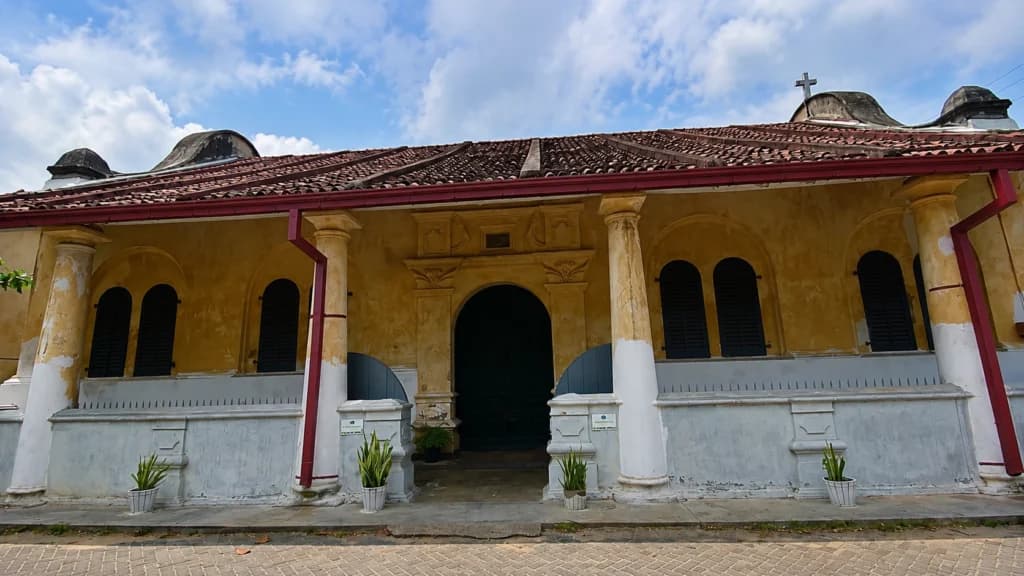
One of the most important heritage sites within the Matara Fort area is the Dutch Reformed Church. Built during the Dutch period, it reflects the religious and community life of Dutch Ceylon. Churches like this were not only places of worship. They were also part of the social structure of colonial towns, serving officials, families and local Christian communities.
The church adds a quieter layer to the fort’s military story. Forts were not only about cannon, walls and gates. They were also places where people lived, worshipped, married, worked and died. The presence of old gravestones and church architecture helps turn Matara from a military site into a human historical landscape.
For history readers, this is one of the most rewarding stops in the fort area.
The Matara Rebellion and the Weakness of the Main Fort
The Dutch learned a difficult lesson in Matara during the 18th century. The main fort was strong against coastal threats, but it was vulnerable from the inland side. During the Matara Rebellion, forces connected to the Kandyan Kingdom captured the fort and exposed this weakness.
This event is central to understanding why Matara Star Fort was built. The Dutch realised that their main fort needed additional protection from attacks approaching across the river and from the landward side. The answer was not simply to repair the old fort. They built a separate defensive post nearby.
This is what makes Matara’s colonial defences so interesting. The two forts should be read together. Matara Fort shows the original coastal defence. Matara Star Fort shows the Dutch response to a specific military failure.
Matara Star Fort: A Small Fort with a Big Story
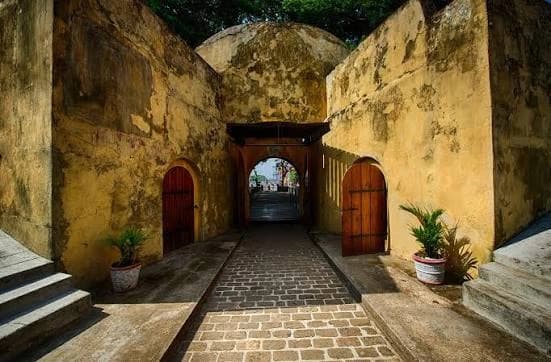
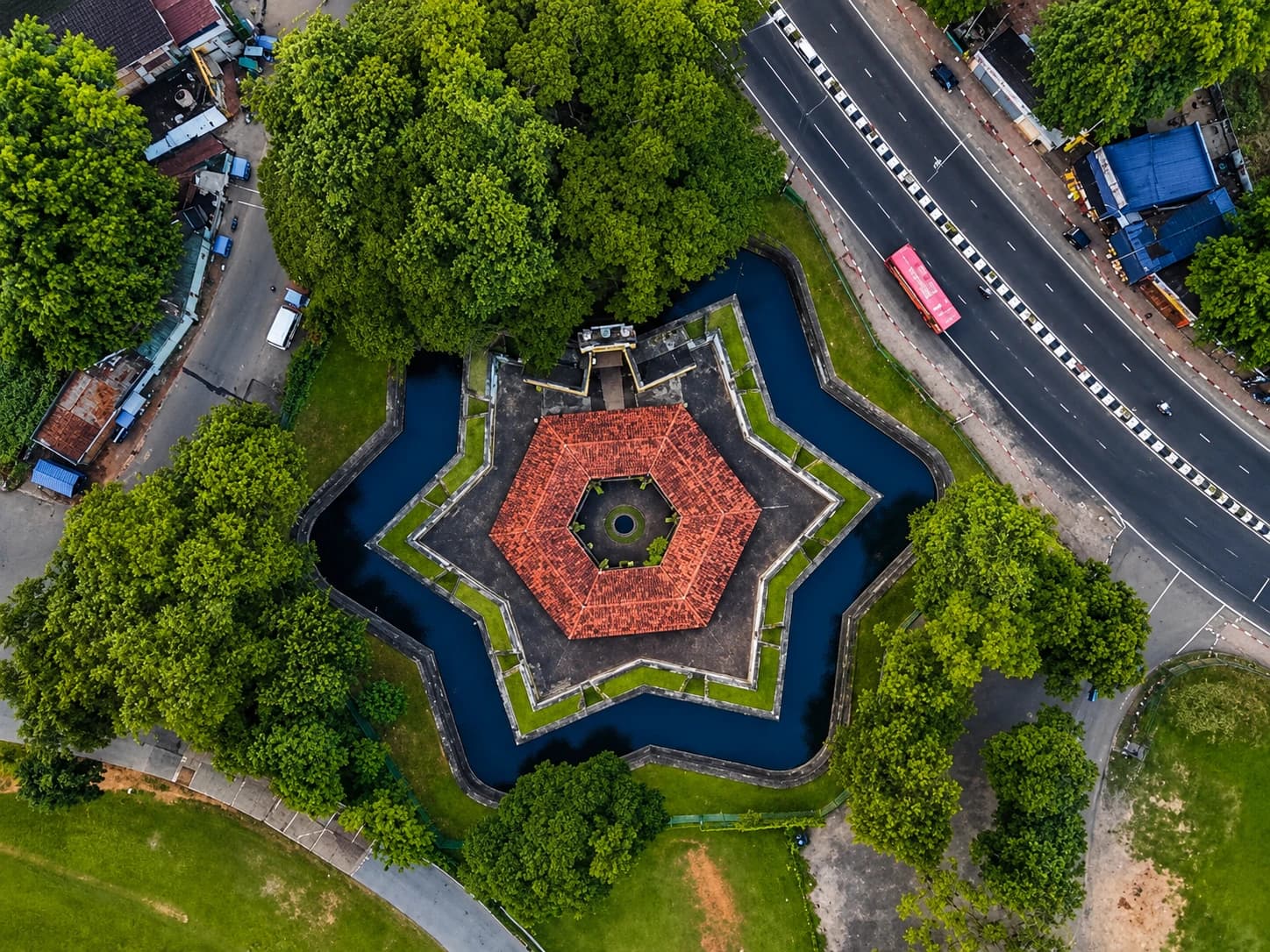
Matara Star Fort is one of the most unusual colonial forts in Sri Lanka. Built by the Dutch in 1765, it was designed in the shape of a star, with angled points that allowed defenders to cover approaches from multiple directions.
The fort was built on the western bank of the Nilwala River, close to the main fort but separate from it. Its purpose was clear: to protect Matara Fort from inland attack and strengthen Dutch control over the river approach.
The star shape was not chosen for beauty alone. It belonged to a wider European tradition of military engineering. Star-shaped forts were designed to reduce blind spots and improve defensive fire. In Matara, the design was adapted to local needs and local geography.
For visitors, Matara Star Fort is compact and easy to explore. But its small size should not mislead anyone. This was a carefully planned military structure, built after conflict and shaped by strategic necessity.
The Gateway of Star Fort
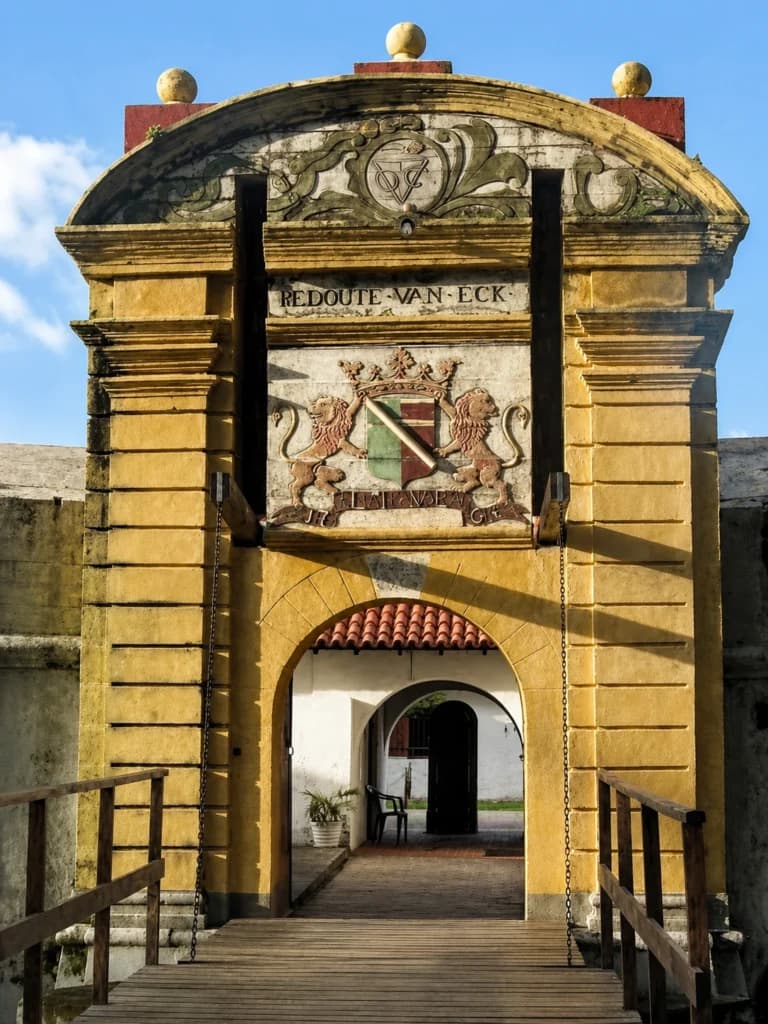
The gateway is one of the most memorable features of Matara Star Fort. The entrance carries the name “Redoute Van Eck”, along with Dutch colonial symbols. This links the fort to Governor Lubbert Jan Baron van Eck and the Dutch administration of the period.
The entrance gives the fort much of its character. A bridge leads across the moat, and the gateway opens into a compact interior. Compared with the wide streets of Galle Fort or the open ruins of Jaffna Fort, Matara Star Fort feels almost intimate.
This intimacy is part of the appeal. Visitors can understand the whole structure quickly: the moat, the walls, the star shape, the gateway and the interior space. It is one of the clearest examples in Sri Lanka of a small colonial defensive work built for a precise purpose.
The Moat, Bastions and Interior
Matara Star Fort was surrounded by a moat, adding another layer of defence. The star-shaped layout allowed cannon to be placed in a way that covered several approaches. The fort was designed to hold a small garrison, supplies and ammunition.
Inside, the space is limited but atmospheric. A well in the centre supplied water, while internal rooms and cells reflected the fort’s military function. Today, the site has been restored and is associated with museum use, giving visitors a clearer sense of its structure and purpose.
For travellers interested in colonial Ceylon, this is a valuable site because it shows military design on a manageable scale. You do not need hours to understand it. A careful visit of thirty to forty-five minutes can reveal a great deal.
British Rule and Later Use
After the Dutch period, Matara’s forts passed into British control. Like many former Dutch structures in Sri Lanka, they were reused for administrative and civic purposes. The British adapted colonial spaces to suit their own system of government, courts, schools and public offices.
In Matara Fort, this administrative continuity remains highly visible. The old fort area still functions as a public and institutional zone. This gives Matara a different kind of heritage value. Its colonial buildings are not isolated ruins. They continue to serve the city.
Matara Star Fort also survived by being reused over time, including as an official residence and later as a heritage site. This pattern of reuse is common in Sri Lanka. Colonial structures often survived not because they were protected as monuments from the beginning, but because they remained useful.
A Short Heritage Walk in Matara
A good colonial heritage walk in Matara can begin at Matara Fort. Spend time near the rampart, observe the sea-facing setting and walk through the old administrative area. Look for the Dutch Reformed Church and other colonial-era structures that remain within the fort zone.
From there, continue towards Matara Star Fort. The distance is short, and the contrast between the two sites is rewarding. The main fort feels broad, coastal and urban. The Star Fort feels compact, geometric and defensive.
Together, they make one of the best short colonial walks on Sri Lanka’s southern coast. The route is especially useful for travellers who do not have time for a full-day heritage itinerary but still want to experience Old Ceylon beyond Galle.
Nearby Heritage Stops
Matara has other heritage sites that can be combined with the fort walk. The Old Nupe Market, also known as the Old Dutch Trade Centre, is one of the most interesting colonial-era buildings in the area. Its timber architecture and market history add a commercial layer to Matara’s colonial story.
Dondra Head, located a short drive away, offers another southern landmark, while the beaches around Matara, Polhena and Mirissa make it easy to combine heritage with coastal travel.
This is one of Matara’s advantages. It is not only a heritage destination and not only a beach stop. It can be both.
Best Time to Visit Matara Fort and Star Fort
The best time to visit Matara Fort and Matara Star Fort is early morning or late afternoon. The southern coast can be hot during the day, and the light is better for photography outside midday hours.
Because the sites are close to the town centre, they are easy to include in a short itinerary. Comfortable shoes are useful, and visitors should be respectful around churches, public offices and official buildings.
Matara Star Fort is especially suitable for a short stop because it is compact. Matara Fort is better enjoyed slowly, by walking around the old area and noticing how colonial traces remain within the modern city.
Why Matara’s Forts Deserve More Attention
Matara’s forts deserve more attention because they explain a part of colonial Sri Lanka that is often overshadowed by Galle. Galle may be more famous, but Matara shows how Dutch power worked across the southern coast through a network of defences, trading points and administrative centres.
Matara Star Fort is particularly valuable because it was built as a response to a real military weakness. It was not merely symbolic. It was a practical defensive solution created after the Dutch realised that their main fort could be attacked from inland.
For travellers, this makes the site more interesting. You are not just seeing an old fort. You are seeing a colonial lesson written in stone.
Final Thoughts: A Southern Fort Story Beyond Galle
Matara Fort and Star Fort offer a compact but meaningful journey into colonial Ceylon. They reveal how the Dutch defended the southern coast, how inland resistance challenged colonial control, and how old military spaces became part of a modern Sri Lankan town.
Matara Star Fort may be small, but it is one of the most distinctive colonial defences in Sri Lanka. Matara Fort may be less polished than Galle, but its living administrative character gives it authenticity.
For anyone travelling along the southern coast, Matara is worth more than a passing glance. Between the sea, the Nilwala River and the old fort walls, the city preserves a strong and fascinating chapter of Sri Lanka’s colonial past.
FAQs About Matara Star Fort and Matara Fort
Why was Matara Star Fort built?
Matara Star Fort was built by the Dutch after the main Matara Fort proved vulnerable to attacks from the inland side. It was designed to strengthen the defence of the main fort and protect approaches from the Nilwala River area.
When was Matara Star Fort built?
Matara Star Fort was built in 1765 during the Dutch period in Ceylon.
Is Matara Star Fort different from Matara Fort?
Yes. Matara Fort is the older and larger coastal fort area, while Matara Star Fort is a smaller star-shaped defensive structure built nearby as an additional protection point.
Can visitors explore Matara Star Fort?
Yes, visitors can usually explore Matara Star Fort as a short heritage stop. It is compact and can be visited within a relatively short time.
Is Matara worth visiting for colonial history?
Yes. Matara is worth visiting for colonial history because it has two important Dutch-period fortifications, a Dutch Reformed Church, old administrative buildings and nearby colonial-era heritage sites such as the Old Nupe Market.
Visit Us: https://trippingsrilanka.com/stories
More from Old Ceylon

Colombo Public Library at 100: The Names That Still Remain
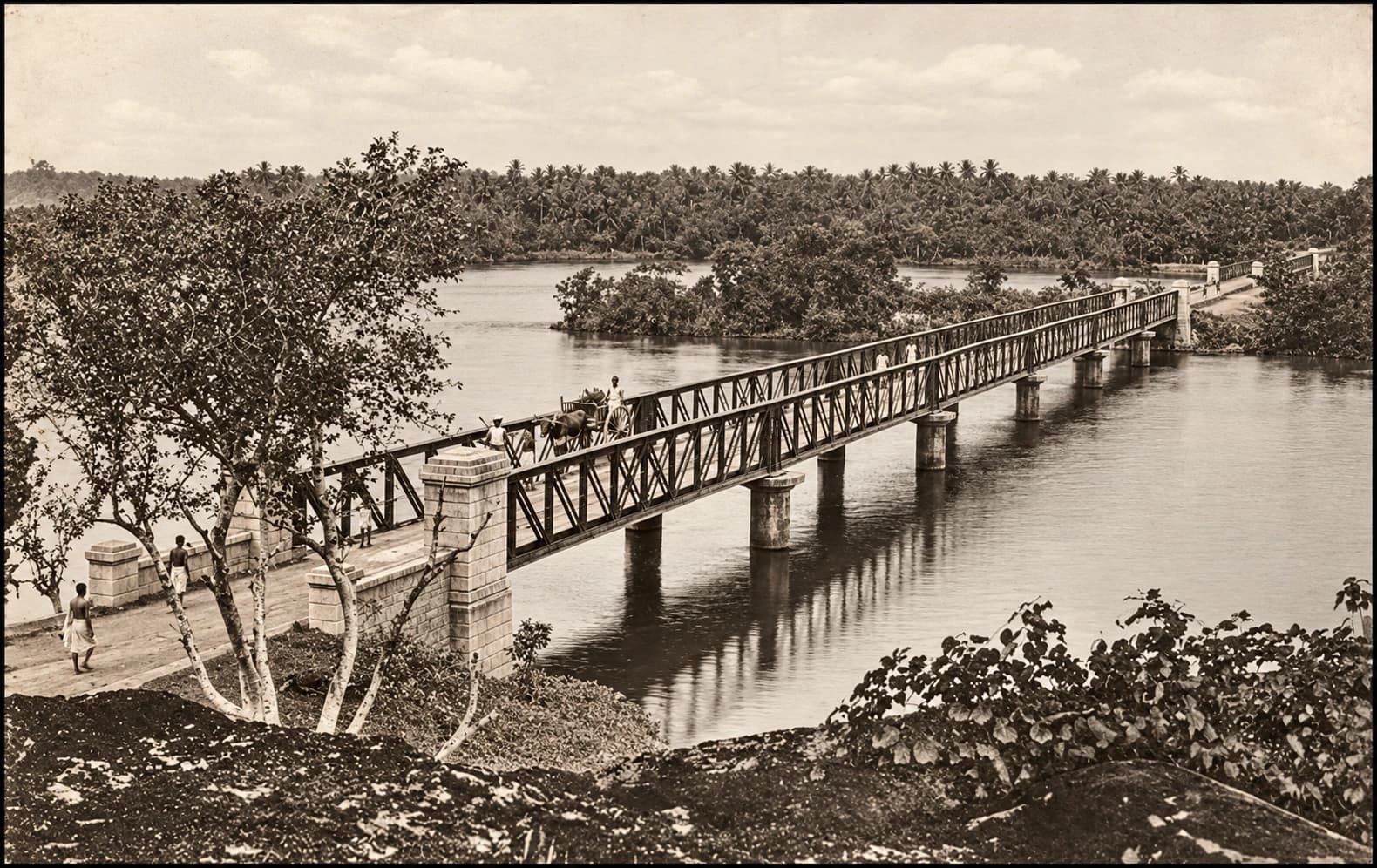
The Toll Gate at the Bridge: When Travelling Across Ceylon Cost a Few Cents at a Time