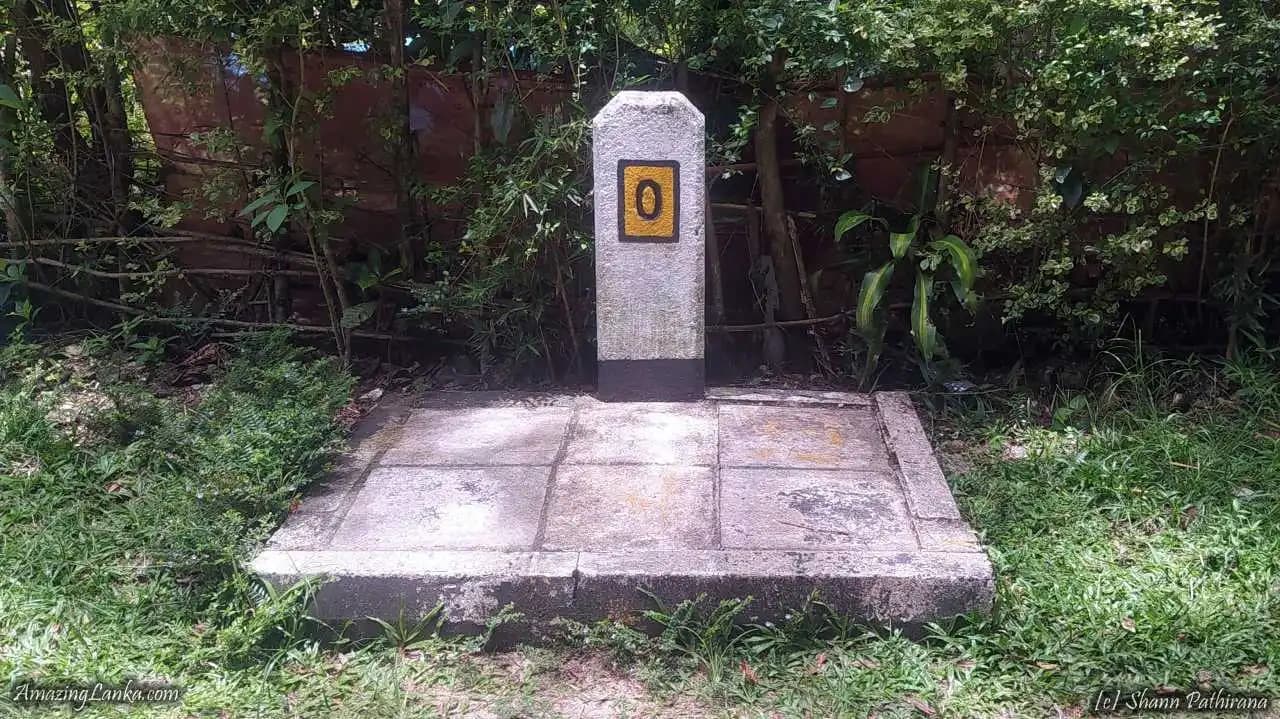
Norton Bridge 0 Mile Post is one of those quiet places.
Some places in Sri Lanka do not need grand monuments to tell a story. A small roadside marker, an old estate road, a misty bend in the hills or a forgotten milestone can open a whole chapter of Old Ceylon.
Surrounded by dense greenery and standing near the dramatic Seven Virgin Mountain Range, also known as Saptha Kanya, this modest marker may be easy to miss. It does not have the scale of a colonial fort, the elegance of a hill-country hotel or the fame of a railway station. Yet it belongs to one of the most atmospheric landscapes in central Sri Lanka — a region shaped by tea estates, hydroelectric history, mountain roads, waterfalls, colonial movement and deep local memory.
For travellers interested in colonial Ceylon, Norton Bridge is more than a scenic hill-country stop. It is a place where roads, rivers, plantations and mountains meet. The 0 Mile Post gives us a starting point to understand that hidden story.
Check the previous article- https://trippingsrilanka.com/stories/nuwara-eliya-little-england
A Small Marker in a Vast Landscape
The image of the Norton Bridge 0 Mile Post is powerful because of its simplicity. A white roadside marker stands alone, surrounded by wet green vegetation. Behind it are leaves, trees and the thick growth of the central highlands. The number “0” is clear, almost symbolic.
A zero mile marker usually suggests a beginning. It marks a point from which distance is measured. In this case, whether viewed as a road marker, a local landmark or a piece of hill-country memory, the 0 Mile Post gives Norton Bridge a sense of origin.
It invites a question: what begins here?
The answer is not only a road. What begins here is a journey into one of Sri Lanka’s most fascinating inland landscapes — the world of tea country, mountain passes, river valleys and the shadow of Saptha Kanya.
Norton Bridge: A Hill-Country Crossroad
Norton Bridge is located in central Sri Lanka, in the hill country between areas such as Hatton, Maskeliya, Laxapana and the routes leading towards Adam’s Peak country. It is not a large town, but it has long held importance because of its location.
This is a landscape of water and height. Rivers and streams flow through the hills. Mist moves across the slopes. Tea estates cover the surrounding ridges. Roads twist through valleys and climb towards viewpoints, waterfalls and old estate settlements.
During colonial Ceylon, such places mattered deeply. The British hill-country economy depended on roads, bridges and estate routes. Tea, supplies, labour, machinery and officials had to move through difficult terrain. Small settlements like Norton Bridge helped connect plantations, power schemes, markets and administrative centres.
That is why a simple marker here feels meaningful. It belongs to a landscape where movement itself was history.
The Seven Virgin Mountain Range
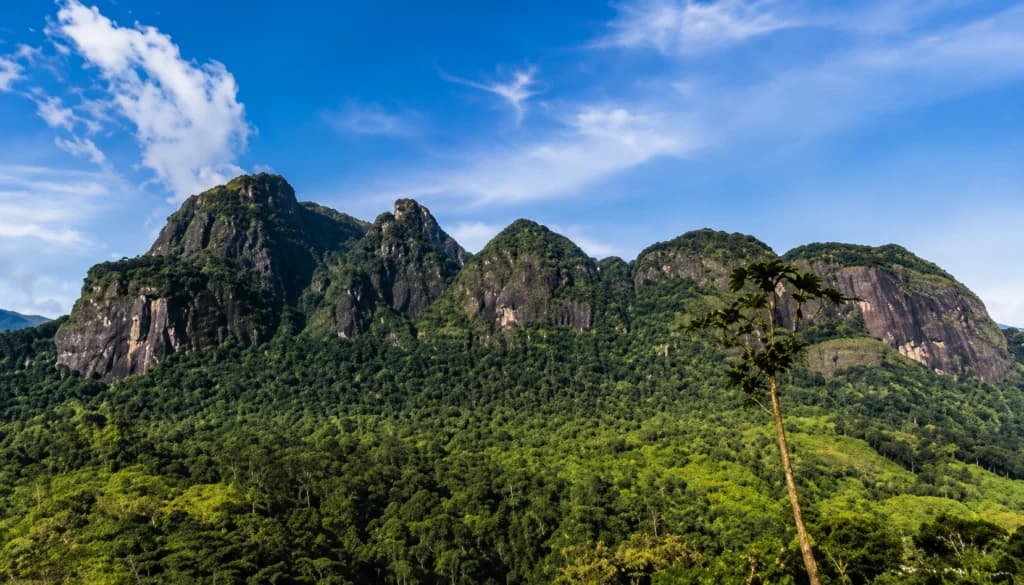
The most dramatic natural feature near Norton Bridge is the Seven Virgin Mountain Range, known locally as Saptha Kanya. The name means “Seven Virgins”, referring to the range of peaks that rise in a striking line across the hill-country skyline.
These mountains are part of the region’s identity. They give Norton Bridge its sense of drama and mystery. In misty weather, the peaks can appear and disappear behind clouds. In clear light, they stand like guardians above the tea estates and valleys below.
For travellers, the Seven Virgin Mountain Range is not only scenic. It carries memory. Its name is wrapped in local imagination, folklore and tragedy. The range is beautiful, but it is also solemn because of the 1974 Martinair Flight 138 disaster, when an aircraft carrying Indonesian pilgrims crashed into the mountains, killing all 191 people on board.
This gives the area a different emotional depth. The mountains are not just a view. They are part of Sri Lanka’s aviation memory and hill-country history.
A Landscape of Tea Roads and Estate Life
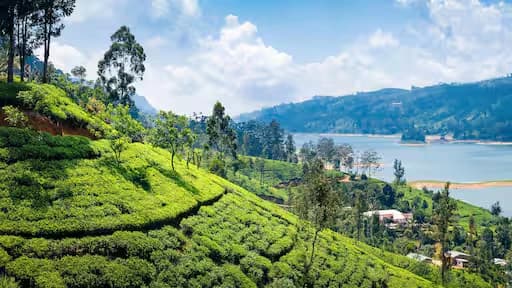
Norton Bridge belongs to the world of tea. Around this region, estate roads cut through green slopes and connect small settlements, factories, workers’ lines and bungalow landscapes. This is one of the strongest Old Ceylon associations of the central hills.
The tea industry transformed Sri Lanka’s highlands during British rule. Forests and older landscapes were converted into plantations. Roads were built to move tea leaves, machinery and people. Estate communities developed around work, transport and administration.
The road systems of the hill country were not casual. They were part of a larger economic network. A milestone, a bridge or a bend in the road could be part of the machinery that connected remote estates to Colombo, export markets and the wider world of Ceylon tea.
Seen in this way, the Norton Bridge 0 Mile Post is not just a marker in greenery. It becomes a symbol of the routes that carried the plantation economy.
Norton Bridge and Hydroelectric History
Norton Bridge is also closely linked to Sri Lanka’s hydroelectric story. The surrounding area is associated with the Laxapana hydro power scheme, one of the most important early hydropower developments in the country.
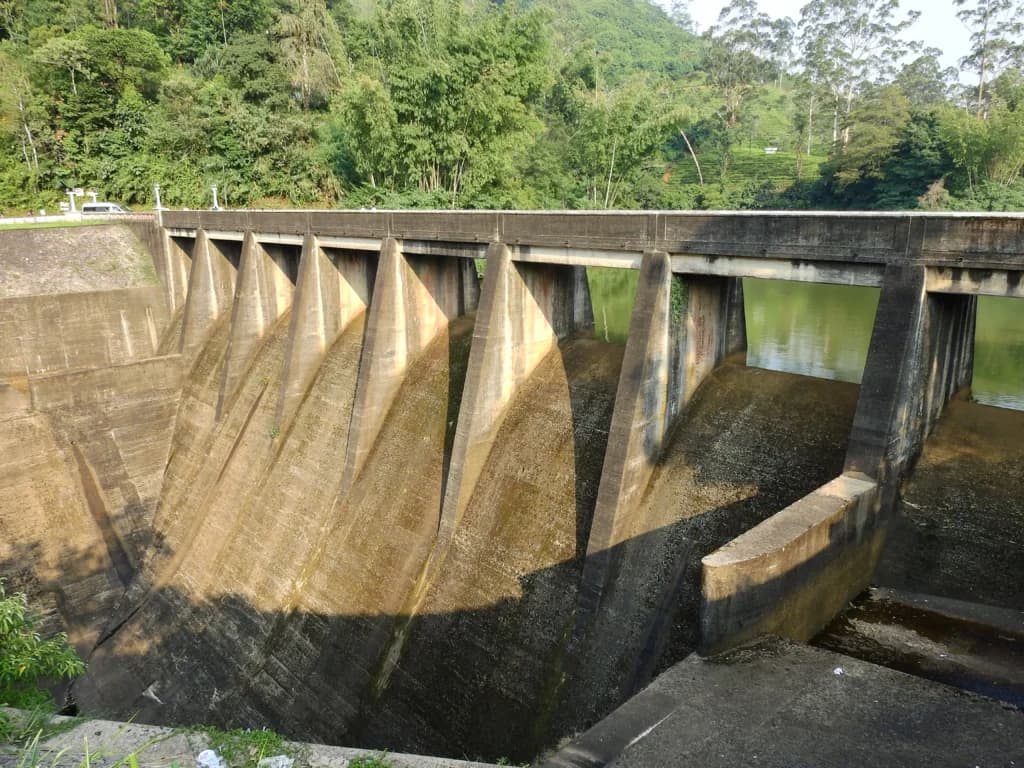
Water is everywhere in this region. Streams, reservoirs, dams, tunnels and waterfalls form part of the hill-country landscape. During the twentieth century, engineers used this geography to generate power. The Norton Dam and the nearby hydroelectric network helped connect the natural force of the mountains with the modern development of Ceylon.
This adds another layer to the story. Norton Bridge is not only a tea-country place. It is also a power landscape. Its rivers and valleys helped build modern Sri Lanka.
For history readers, this makes the area especially interesting. It shows how the hill country was transformed in several ways: first through plantations, then through railways and roads, and later through hydroelectric engineering.
The Old Ceylon Feeling of Norton Bridge
There is a particular mood in Norton Bridge that suits slow travel. It is quieter than Nuwara Eliya, less busy than Hatton, and far less touristy than Ella. The beauty here is not polished. It is damp, green, misty and lived-in.
The 0 Mile Post captures that mood. It stands without decoration, almost hidden by leaves. It feels like something from an older road system, a remnant of a slower time when distances were measured carefully and journeys through the hills took patience.
For travellers searching for Old Ceylon, this is exactly the kind of place that matters. It reminds us that history is not always found in grand buildings. Sometimes it survives on the roadside, in a marker, in an old bridge, in a tea estate path or in a mountain name remembered by local people.
A Route for Slow Travellers
Norton Bridge works best as part of a slow hill-country route. It can be combined with Laxapana Falls, Maskeliya, Adam’s Peak routes, tea estates, reservoirs and viewpoints of the Seven Virgin Mountain Range.
This is not a destination to rush through. The roads are narrow and scenic. The weather changes quickly. Mist, rain, sunshine and shadow can all appear within a short time. That changing atmosphere is part of the experience.
A slow traveller can stop near the 0 Mile Post, look at the surrounding greenery and use it as a symbolic beginning. From there, the journey can continue into a region of waterfalls, estate roads, mountain views and colonial-era infrastructure.
For photographers, the area is especially rewarding in the morning or late afternoon. The light softens the landscape, and the mist adds depth to the hills.
The Memory of the 1974 Air Disaster
Any article about the Seven Virgin Mountain Range should mention the Martinair disaster with respect. On 4 December 1974, Martinair Flight 138 crashed into Saptha Kanya while approaching Sri Lanka. All 191 people on board died.
The passengers were mostly Indonesian Hajj pilgrims travelling onward for their pilgrimage. The tragedy remains one of the worst aviation disasters connected to Sri Lanka.
For local people and those who know the history, the mountains carry this memory. The landscape is beautiful, but it is not empty of grief. Travellers who visit the area should treat this history with sensitivity.
This is part of what makes Norton Bridge and Saptha Kanya so powerful. The place holds natural beauty, colonial-era movement, tea history, hydro history and modern tragedy within one landscape.
Why the 0 Mile Post Deserves Attention
The Norton Bridge 0 Mile Post deserves attention because it gives travellers a reason to pause. In a time when many people rush from one famous attraction to another, this small marker invites a different kind of travel.
It asks us to notice the road itself.
Roads shaped colonial Sri Lanka. They connected estates to towns, workers to plantations, goods to markets and remote valleys to the wider island. In the hill country, every bridge and mile marker mattered because the terrain was difficult and movement was never simple.
The 0 Mile Post may seem small, but it belongs to this story of distance, direction and connection. It is a reminder that Old Ceylon was built not only through grand plans, but also through practical routes across difficult land.
Preserving Small Heritage Markers
Sri Lanka’s heritage conversation often focuses on major sites: forts, temples, palaces, railway stations and colonial hotels. These are important. But smaller markers also deserve care.
Mile posts, bridges, old road signs, estate name boards, culverts and wayside structures are part of the country’s historical landscape. They help tell the story of how people moved, worked and lived.
If such places are ignored, they can disappear quietly. A marker may be damaged, painted over, removed or swallowed by vegetation. Once lost, a small but meaningful piece of local memory disappears with it.
The Norton Bridge 0 Mile Post is a reminder to look carefully at the ordinary details of the road. Sometimes, the smallest objects hold the strongest sense of place.
Final Thoughts: Where the Road Begins Again
The 0 Mile Post at Norton Bridge is not a famous monument. It is not a major tourist attraction. But it has the quiet power of a beginning.
It stands in a landscape shaped by the Seven Virgin Mountain Range, tea estates, hydroelectric history, waterfalls, roads and local memory. It belongs to a part of Sri Lanka where Old Ceylon still feels close — not in polished buildings, but in mist, greenery, road markers and mountain silence.
For travellers who enjoy slow heritage journeys, Norton Bridge offers something rare. It is a place where the road itself becomes the story.
The next time you pass through this hill-country region, do not rush past the marker. Stop for a moment. Look at the number. Look at the forest around it. Look towards the mountains.
Here, at zero, a different journey into Old Ceylon begins.
FAQs About Norton Bridge 0 Mile Post
Where is the Norton Bridge 0 Mile Post?
The Norton Bridge 0 Mile Post is associated with the Norton Bridge area in central Sri Lanka, close to the Seven Virgin Mountain Range and hill-country routes around Maskeliya, Laxapana and Adam’s Peak country.
What is special about Norton Bridge?
Norton Bridge is special because it sits in a scenic hill-country region linked to tea estates, hydroelectric history, mountain roads, waterfalls and the Saptha Kanya or Seven Virgin Mountain Range.
What is Saptha Kanya?
Saptha Kanya, also known as the Seven Virgin Mountain Range, is a dramatic mountain range near Norton Bridge and Maskeliya in Sri Lanka’s central highlands.
Is Norton Bridge connected to colonial Ceylon?
Yes. Norton Bridge belongs to the wider colonial hill-country landscape shaped by tea estates, estate roads, bridges, transport routes and later hydroelectric development.
What can travellers see near Norton Bridge?
Travellers can explore views of the Seven Virgin Mountain Range, Laxapana Falls, Norton Dam, tea estate roads, mountain scenery and routes connected to Adam’s Peak and Maskeliya.
Visit Us: https://trippingsrilanka.com/stories
More from Old Ceylon
When the King’s Birthday Was Celebrated on Galle Face Green: A Glimpse of Colombo in 1933
Holyrood Estate, Talawakelle: An Old Ceylon Bungalow and a Name That Echoes Scotland