Oonankande: Following the Faint Trail of a Forgotten Ceylon Estate
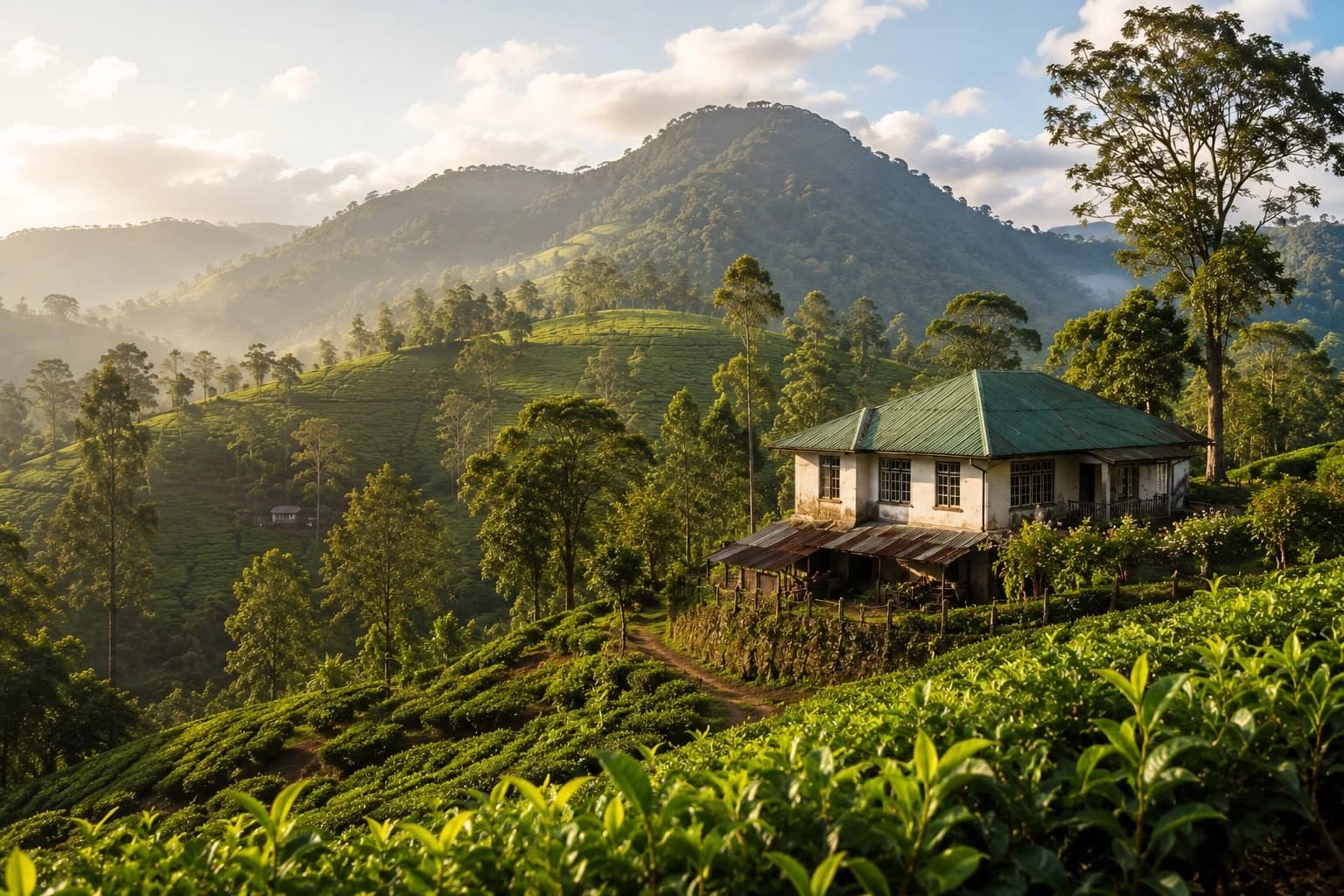
A Forgotten Name on an Old Ceylon Map
Oonankande Estate Ceylon| There are names on old maps of Ceylon that have almost disappeared from memory.
Oonankande is one of them.
The name belonged to an estate in the Dolosbage country, in the hills beyond Nawalapitiya, where roads climbed through country that was once dotted with estates, bungalows and small settlements.
Dolosbage itself was well known in the planting world. Today, outside the area, many Sri Lankans would struggle to place it on a map.
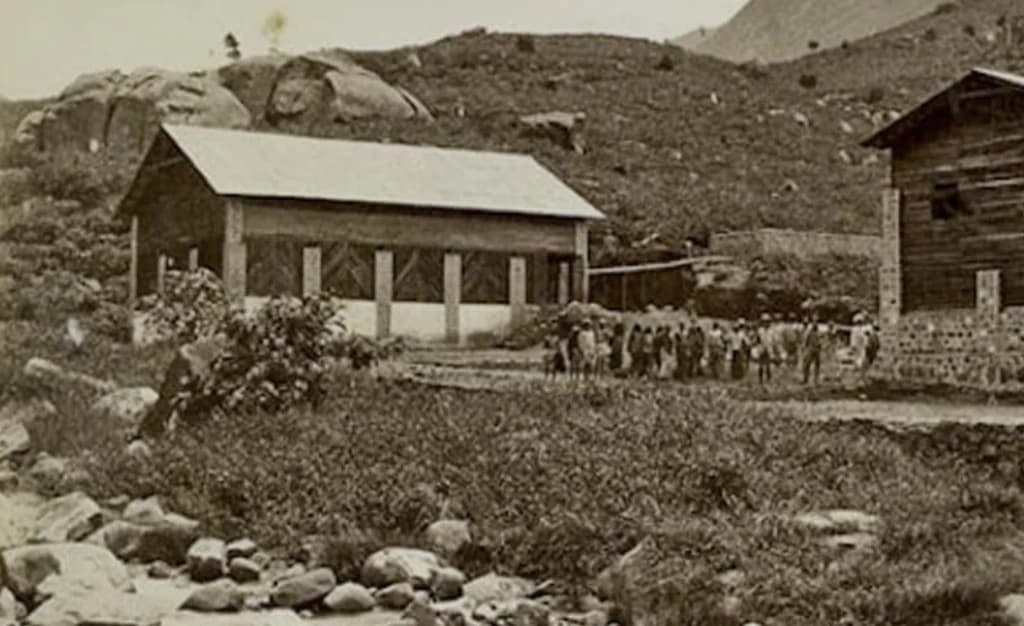
Yet Oonankande keeps appearing in the old records.
Not prominently. There is no grand history devoted to it and no famous episode seems to have secured its place in popular memory. Instead, it survives in the ordinary paperwork of Ceylon: government notices, lists of landowners, road assessments and directories.
Taken together, those scattered references begin to tell a story.
Read our previous article- https://trippingsrilanka.com/stories/maberiyatenna-estate
The First Traces of Oonankande
One of the earlier names attached to Oonankande is J. Gidlow, who appears in a record from 1901.
A few years later, another name surfaces.
In 1908, a Ceylon Government record listing those qualified to serve as jurors and assessors in Sabaragamuwa includes a short entry:
G. A. Hunter, Oonankande.
Nothing more.
It is precisely the sort of line that would normally be passed over without a second glance. More than a century later, however, it gives us a fixed point in the estate’s history.
A man named Hunter was living or working at Oonankande in 1908.
The Hunter Connection
Seventeen years later, the name appears again.
In 1925, George Hunter is listed in connection with Oonankande, with 153 acres recorded against the estate. The same record associates him with another 60 acres at Uduwa.
Whether G. A. Hunter of 1908 and George Hunter of 1925 were the same man cannot yet be said with certainty.
The dates and place make the possibility intriguing, but old records deserve to be read for what they actually say, rather than what we would like them to say.
What they do establish is that the Hunter name was associated with Oonankande during the early decades of the twentieth century.
The Country Around Oonankande
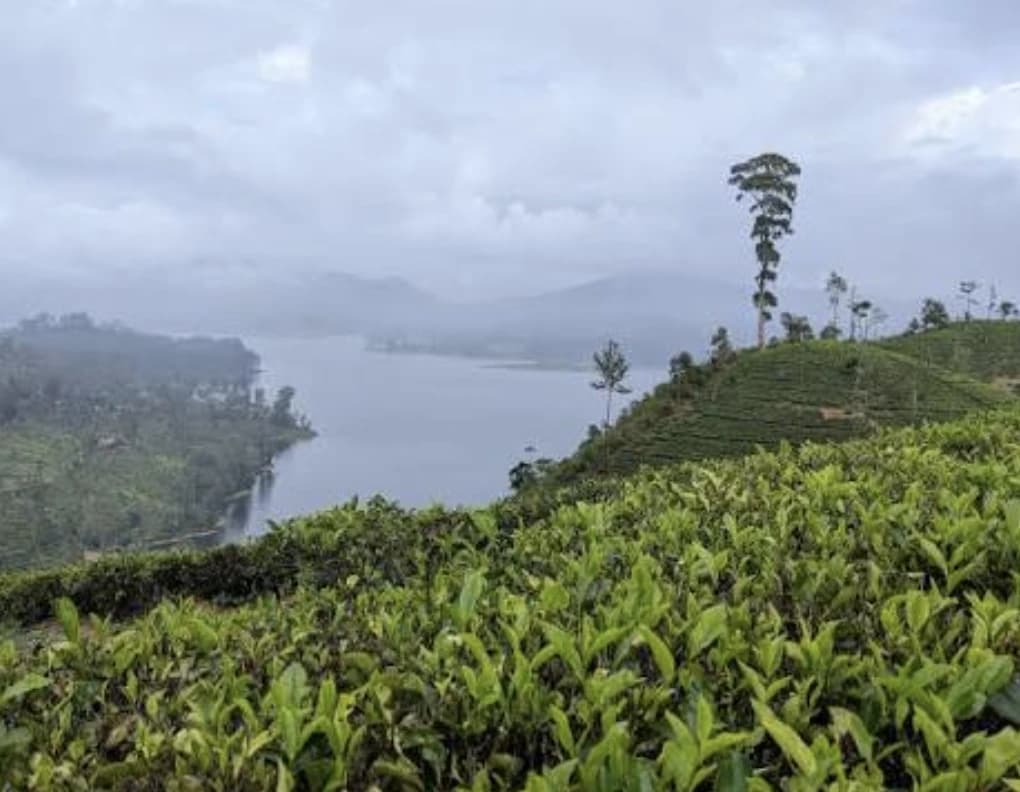
To understand Oonankande, it helps to look beyond the estate itself.
Dolosbage belonged to a landscape quite different from the familiar postcard views of Nuwara Eliya.
This was rugged mid-country, cut by streams and steep slopes, with estate roads winding between properties whose names regularly appeared in the directories of the period.
Kandaloya, Doteloya, Tebuwatte, Dedugalla and others formed part of the same wider world.
Travel through such country was slow.
Roads mattered enormously. So did bridges, bridle paths and the routes that connected estates with railway stations and market towns.
This explains why estates such as Oonankande appear so often in records concerned with roads.
Maintaining those routes was not an administrative footnote. For isolated properties in the hills, they were the connection with everything beyond the estate.
Produce had to leave.
Food, machinery and mail had to come in.
People did too.
Estate Roads and Remote Plantation Life
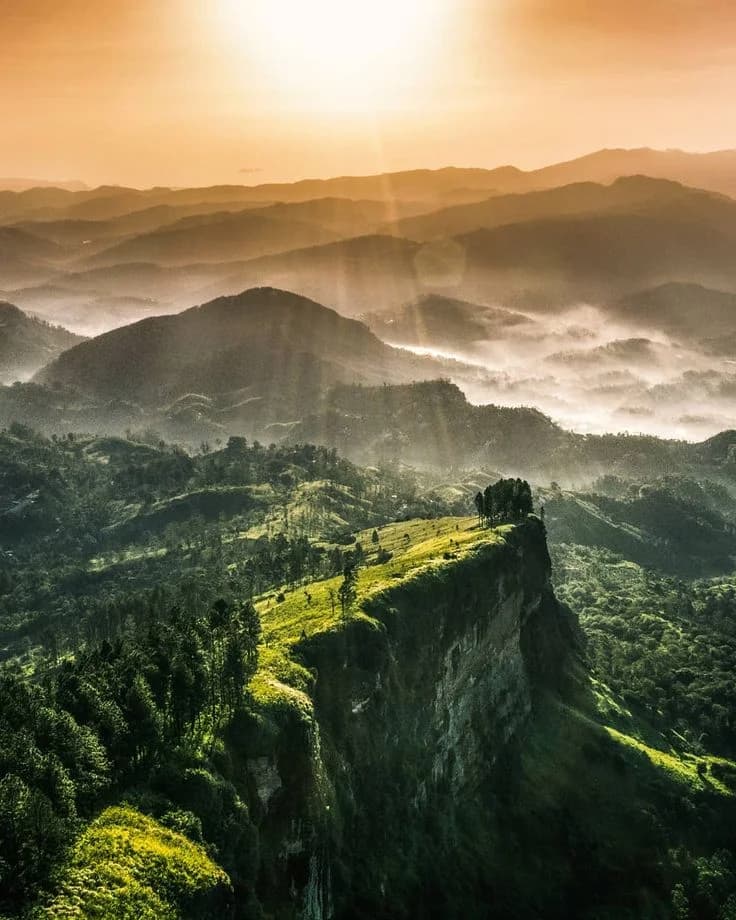
For old estates in Dolosbage, roads were lifelines.
An estate road was not simply a path through scenery. It connected the plantation to markets, railway stations, towns, medical help, neighbouring estates and administrative centres.
A damaged road could delay produce. A broken bridge could isolate a property. Heavy rain could make travel dangerous.
This was especially true in districts like Dolosbage, where the terrain was steep and distances felt longer than they appeared on paper.
Oonankande belonged to this kind of country.
Its story cannot be separated from the practical difficulty of reaching it, maintaining it and keeping it connected to the wider plantation world.
E. W. Bedford Enters the Story
By the middle of the 1920s, E. W. Bedford enters the story.
Bedford had worked elsewhere in the Dolosbage district before becoming associated with Oonankande, where he would remain for many years.
His name gives the estate another fixed point in the old record.
But the most interesting detail comes later.
From 1949, Oonankande appears in a way that feels unexpectedly personal.
Bedford was an amateur radio operator.
A Wireless Signal from the Hills
An international radio callbook records Bedford under the call sign VS7EB, with his address simply given as:
E. W. Bedford
Oonankande Estate
Dolosbage, Ceylon
Three lines were enough.
There is something wonderfully evocative about that address now. No road, postcode or directions were required. Oonankande was a destination in its own right.
And somewhere in those hills sat a wireless set.
At a time when an overseas telephone call was beyond the ordinary experience of most people in Ceylon, signals from Oonankande could travel far beyond the island.
Bedford might have been exchanging Morse code or speaking with another enthusiast hundreds or thousands of miles away.
For a moment, the estate ceases to be a name in a government register.
We can almost hear it.
The Estate Outlived the Names
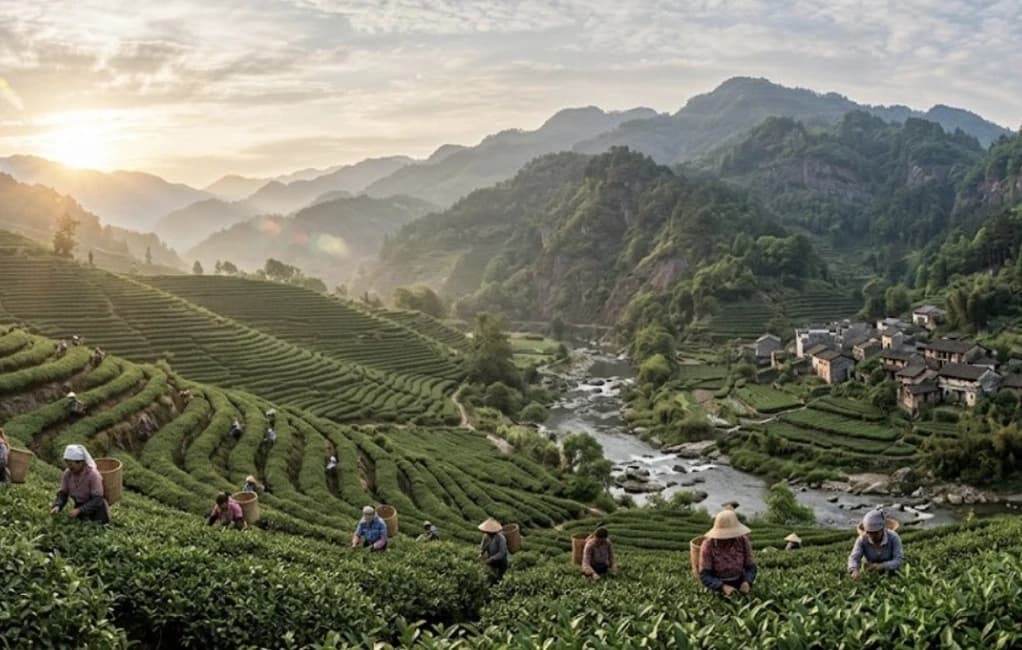
Oonankande continued to appear in official records as Ceylon moved towards the end of British rule.
It was listed among the estates of the Kegalle District in 1940 and was still appearing in government records in 1952.
By then, several generations had passed since the first references we have traced.
Gidlow.
Hunter.
Bedford.
There must have been many more.
The official records naturally preserve the names of owners, managers and others whom the colonial administration needed to identify. They tell us far less about the generations of Sri Lankan men and women whose lives were tied to these estates and the surrounding villages.
That is one of the limitations of looking at Old Ceylon through its paperwork.
The record is never the whole story.
But sometimes it is enough to recover the outline of a place.
The People Missing from the Paper Trail
The records that survive usually tell us about landowners, managers, acreage, road assessments and official administration.
They rarely tell us enough about the workers, families, villagers, cart drivers, clerks, cooks, gardeners and estate staff who formed the living world around an estate.
Oonankande would not have existed only through the names printed in directories.
It would have had people who knew its roads, fields, buildings and weather by memory. There would have been families connected to its work, its neighbouring estates and the wider Dolosbage country.
This is the silent part of the story.
To recover it properly, one would need oral histories, family memories, old photographs, estate papers and local knowledge from the area.
What Became of Oonankande?
That is perhaps the more interesting question now.
Across Sri Lanka, old estate names have survived in curious ways.
Some remain in everyday use. Some became villages. Others were divided, amalgamated or absorbed into larger properties. Occasionally, the name survives on an old map long after almost everything associated with it has changed.
Oonankande deserves a closer look for precisely that reason.
Its paper trail takes us from the beginning of the twentieth century through the final years of colonial Ceylon. We find different names attached to it, acreage recorded, roads assessed and even a radio call sign transmitted from it.
What the records cannot easily show is what it felt like to arrive there.
Questions Still Waiting in the Hills
The story of Oonankande leaves several questions open.
What stood beside the road?
Where was the bungalow?
What remains of the old estate buildings?
How did the estate connect with neighbouring properties?
What crops were grown there at different times?
How much of the Oonankande known to Hunter and Bedford can still be recognised in the landscape today?
Those questions cannot be answered from a government register.
They require going back to the hills.
They require walking the roads, speaking to older residents, looking for surviving foundations, tracing place names and searching for private papers that may still be held by families.
Why Oonankande Matters to Old Ceylon
Oonankande matters because it represents the many estates of Old Ceylon that have almost slipped out of memory.
Not every plantation became famous.
Not every estate had a grand bungalow that became a hotel.
Not every name survived in popular history.
But these smaller places were part of the real plantation landscape. They formed the network of roads, work, settlement, production and movement that shaped the hills of Ceylon.
Oonankande connects several important themes:
- Forgotten estate names
- Dolosbage plantation history
- Old roads and remote hill-country travel
- Estate ownership and acreage records
- The Hunter and Bedford connections
- Amateur radio in colonial Ceylon
- The limits of official records
- The need to preserve local memory
Its story is faint, but that is exactly why it is worth following.
Between Archive and Landscape
For now, Oonankande remains where so many forgotten places of Old Ceylon can still be found: somewhere between the archive and the landscape.
Its story is scattered across old documents and held together by a name that has somehow survived them all.
A few lines in a government record.
An acreage return.
A road reference.
A call sign in a radio directory.
A place name still attached to the hills.
These fragments may seem small, but they are enough to show that Oonankande was once part of a living plantation world.
Final Thoughts: Following the Faint Trail
Oonankande is not a famous estate.
That is what makes it interesting.
Its history does not arrive through monuments or dramatic events. It comes through scattered references, uncertain connections and the quiet persistence of a place name.
We meet Gidlow, then Hunter, then Bedford. We follow acreage records, roads and radio signals. We enter the rugged Dolosbage country and begin to imagine an estate that once mattered to the people who lived and worked there.
For Tripping Sri Lanka readers, Oonankande is a reminder that Old Ceylon is not found only in celebrated buildings and famous estates.
Sometimes it waits in names almost forgotten.
Visit us more – https://trippingsrilanka.com/stories
Heritage places mentioned
Oonankande Estate
More from Old Ceylon
Armour Street: The Colombo Road That Still Carries an Old Name
Gaffoor’s Building: The Forgotten Jewel of Old Colombo That Once Stood at the Heart of Ceylon’s Trading Empire