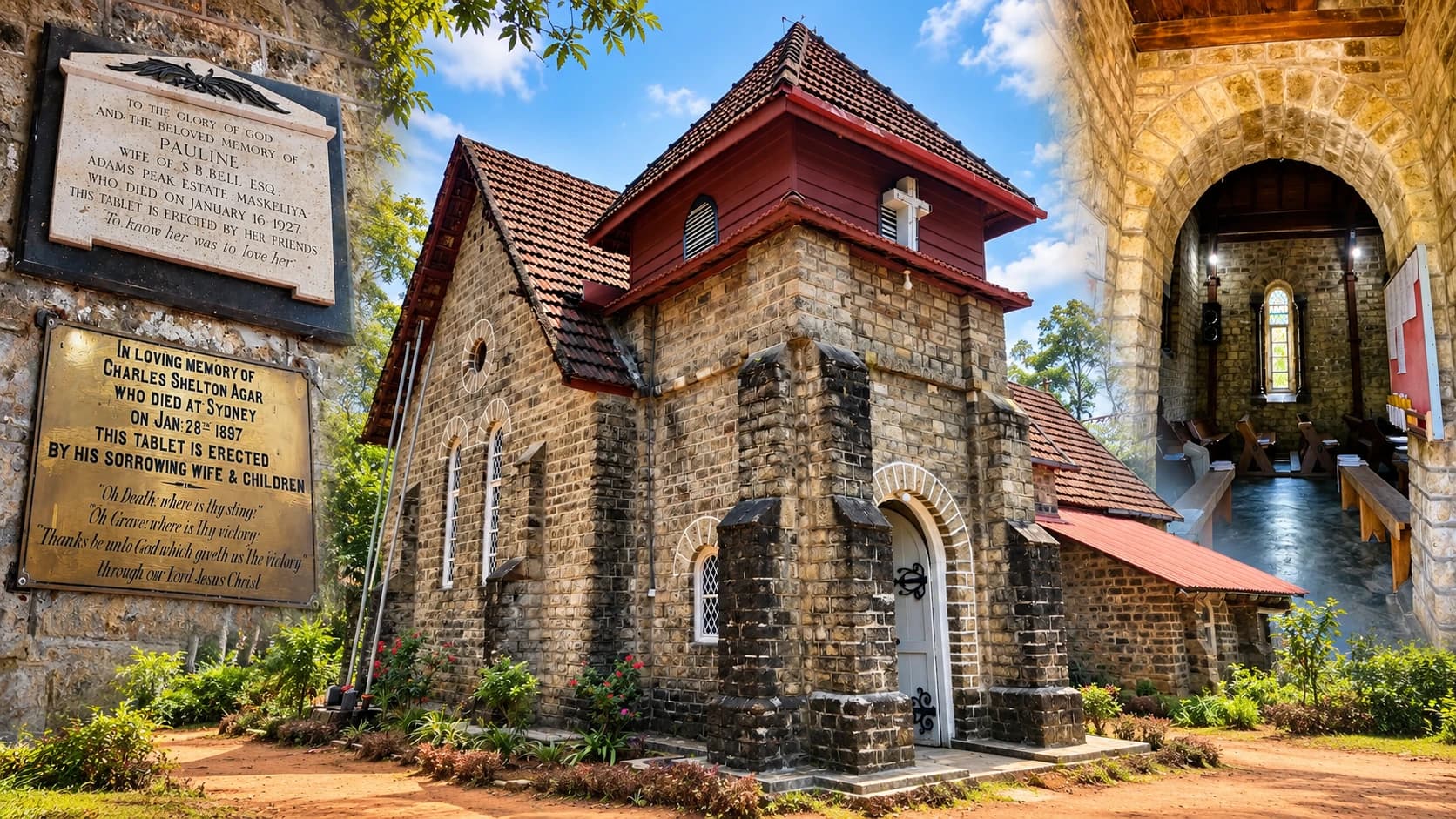
Queen Elizabeth II in Nuwara Eliya: A Royal Walk Through Holy Trinity Church in 1954
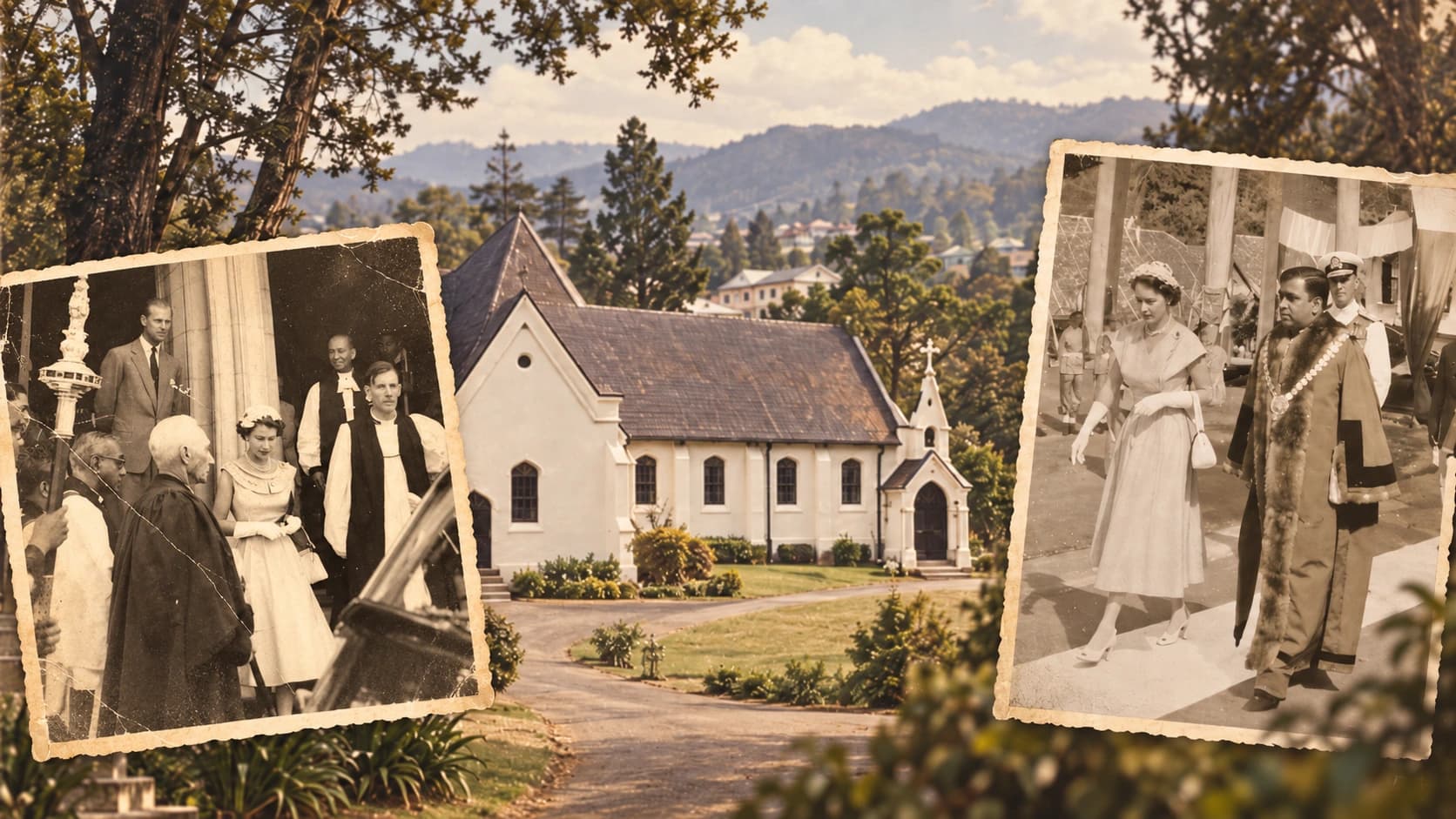
Queen Elizabeth II in Nuwara Eliya| There are photographs from old Ceylon that do more than record history. They seem to hold a moment still.
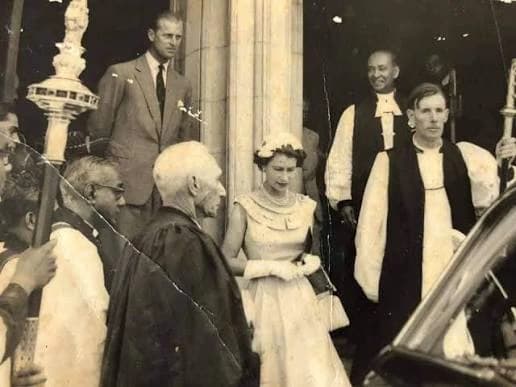
One such photograph takes us to Nuwara Eliya in April 1954, where Queen Elizabeth II and Prince Philip, Duke of Edinburgh, are seen walking through the churchyard of Holy Trinity Church. Surrounded by clergy, dignitaries, gravestones and the tall trees of the hill country, the young Queen appears in a Ceylon that was itself living through a period of remarkable change.
Today, the photograph offers a fascinating glimpse into both Nuwara Eliya’s colonial past and one of the most memorable royal visits to Sri Lanka during the 20th century.
The Queen Comes to Ceylon
Queen Elizabeth II arrived in Ceylon in April 1954 as part of the extensive Commonwealth tour that followed her coronation in June 1953.
She was only 27 years old.
Ceylon, meanwhile, had gained independence from Britain just six years earlier, in 1948. It remained a constitutional monarchy at the time, with Elizabeth II as Queen of Ceylon, and would not become the Republic of Sri Lanka until 1972.
The 1954 visit therefore belongs to an intriguing period in the island’s history. The institutions and ceremonies of the colonial era remained highly visible, yet Ceylon was already governing itself as an independent country and developing a new national identity.
The royal tour took the Queen and Prince Philip to several parts of the island. Among their destinations was Nuwara Eliya, the famous hill station that had developed during the British period around tea plantations, clubs, hotels, churches and country houses.
It must have been one of the most familiar-looking landscapes the royal couple encountered in tropical Ceylon.
Read our previous article- https://trippingsrilanka.com/stories/queen-elizabeth-ii-in-ceylon
A Quiet Moment at Holy Trinity Church
The surviving photograph captures none of the grandeur normally associated with a royal tour.
There are no enormous crowds or ceremonial processions. Instead, Queen Elizabeth II walks quietly along a path through the churchyard, accompanied by Prince Philip and members of the Anglican clergy.
Beside them stand old gravestones and memorials. A large stone cross dominates the foreground. Beyond it are the tall trees and carefully maintained grounds characteristic of old Nuwara Eliya.
The image could almost have been taken in a country parish somewhere in Britain were it not for its setting high in the mountains of Ceylon.
The clergyman walking close to the Queen is identified in accounts accompanying the photograph as Archibald Rollo Graham Campbell, then Bishop of Colombo.
It is an understated scene, but that is precisely what makes the photograph so compelling. Rather than presenting royalty at a distance, it captures the Queen as a visitor walking through one of Nuwara Eliya’s oldest Christian landmarks.
Holy Trinity Church and Old Nuwara Eliya
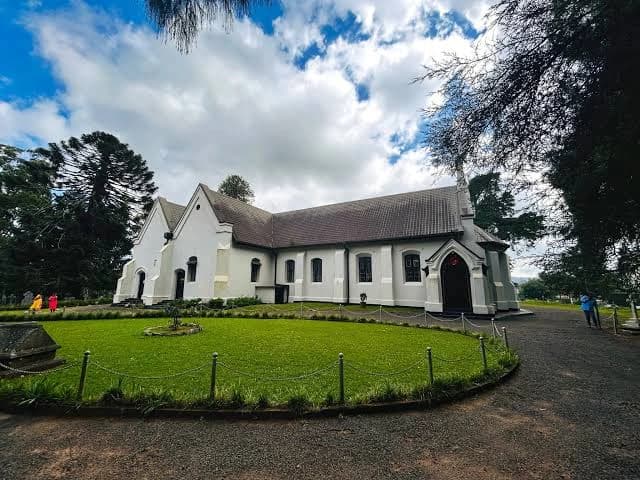
Holy Trinity Church is deeply connected with the development of Nuwara Eliya during the 19th century.
As the hill station grew, churches became part of a wider landscape that included plantation bungalows, the racecourse, golf club, government buildings and grand hotels. For British officials and planters living far from home, these institutions recreated aspects of the social world they had left behind.
Yet Nuwara Eliya gradually developed an identity of its own.
The town’s architecture, gardens and institutions were transplanted into a distinctly Sri Lankan mountain landscape of mist, eucalyptus, tea country and tropical highland vegetation. The result was a place unlike anywhere else on the island.
Holy Trinity Church remains part of that landscape today.
Its churchyard is particularly evocative. Old memorials carry the names of people who lived and died in the hill country generations ago, turning the grounds into a quiet historical record of Nuwara Eliya’s past.
Queen Elizabeth II in Nuwara Eliya in the 1950s
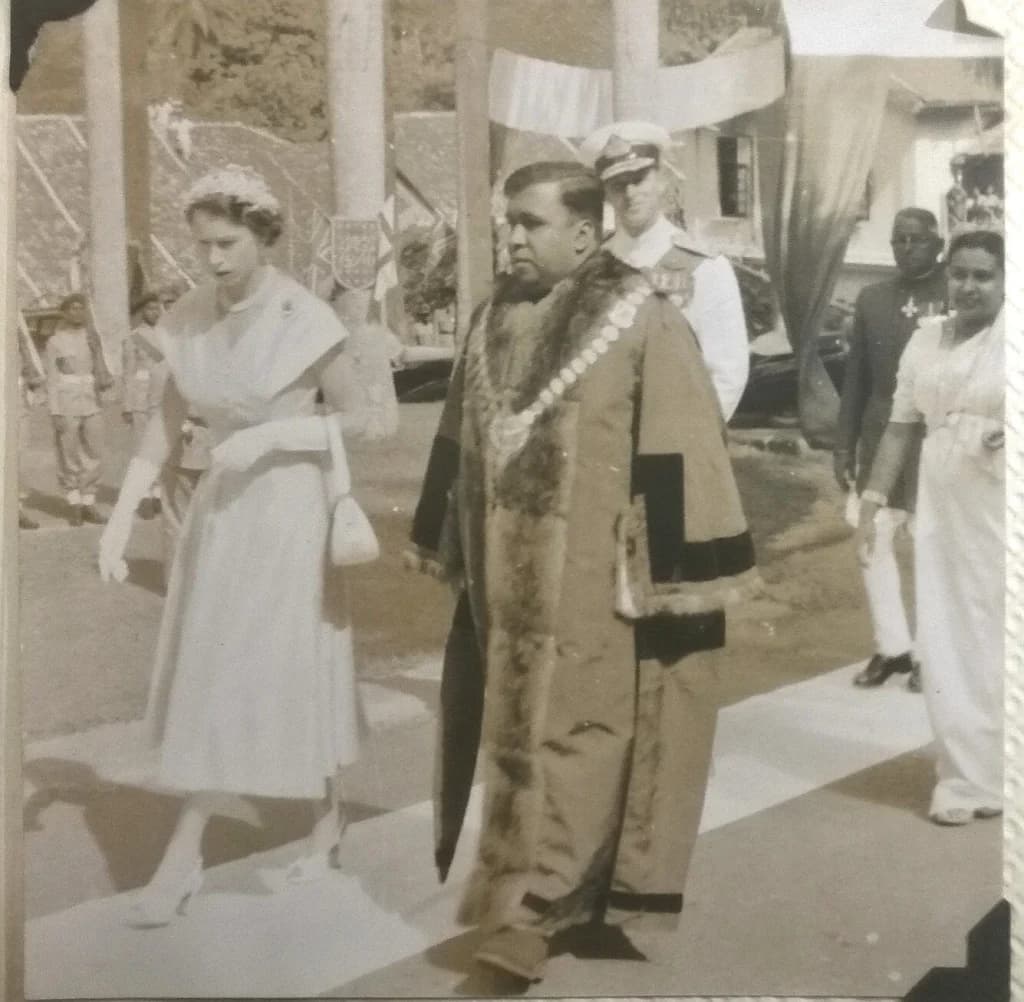
To imagine this royal visit properly, we have to imagine a very different Nuwara Eliya.
The town of the early 1950s was quieter and considerably less developed than the bustling holiday destination familiar to Sri Lankans today.
The old Post Office was already a landmark. The Grand Hotel represented the elegance of the colonial hill station. The golf course and racecourse remained important features of the town, while tea estates stretched across the surrounding hills.
Cars shared roads that saw nothing like today’s volume of traffic. Gardens and open land occupied places where buildings would later appear.
And overlooking it all were the mountains, mist and cold air that had first made Nuwara Eliya such an unusual settlement in tropical Ceylon.
Against this background, the arrival of the young Queen would have been a major event.
A Country Between Two Eras
The photograph becomes even more interesting when viewed against what was happening politically.
Queen Elizabeth II was not visiting a British colony in 1954.
She was visiting an independent Ceylon.
The distinction matters.
Ceylon had achieved independence on 4 February 1948, although it remained within the Commonwealth as a dominion. Elizabeth II was therefore separately the country’s monarch under its constitutional arrangements.
Less than two decades after her visit, that relationship would end. In 1972, Ceylon became the Republic of Sri Lanka, with a president replacing the monarch as head of state.
The photograph at Holy Trinity Church consequently belongs to a relatively short chapter in Sri Lankan history: the years between independence and the establishment of the republic.
It captures a newly independent nation while many of the symbols, institutions and social landscapes inherited from the British period were still very much present.
The Queen’s Connection with Sri Lanka
The 1954 journey was Queen Elizabeth II’s first visit to Ceylon as monarch, but it was not her last visit to the island.
She returned to Sri Lanka in 1981, by which time both the country and the monarchy’s relationship with it had changed considerably.
The contrast between those visits tells its own story.
The young Queen photographed in Nuwara Eliya in 1954 was walking through a country only a few years removed from British colonial rule. By 1981, she was visiting the Republic of Sri Lanka as Head of the Commonwealth rather than as its sovereign.
Over the decades that followed, photographs of the 1954 tour became historical documents in their own right.
They preserve not only the royal visit but the Sri Lanka that surrounded it.
Walking Through the Same Nuwara Eliya Today
This is perhaps what makes old photographs of Nuwara Eliya particularly powerful.
Much has changed, but enough survives to make the past recognisable.
Visitors can still walk through parts of the town and encounter buildings, churches, hotels and landscapes that appeared in photographs more than a century ago. Holy Trinity Church remains one of those places.
Knowing that Queen Elizabeth II and Prince Philip once walked through these grounds adds another layer to its history.
Stand among the old memorials and trees and it is possible to imagine that April day in 1954: clergy waiting, dignitaries gathering, the royal party arriving and the young Queen walking quietly through the churchyard.
For a few moments, the distance between modern Sri Lanka and old Ceylon becomes surprisingly small.
Visit us: https://trippingsrilanka.com/stories
Heritage places mentioned
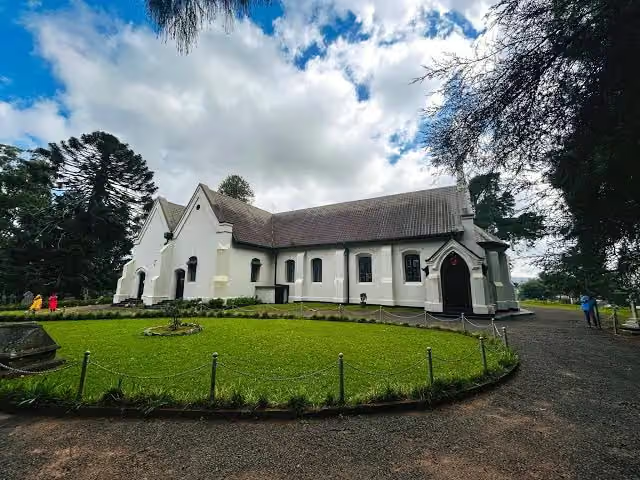
Holy Trinity Church,NuwaraEliya
More from Old Ceylon
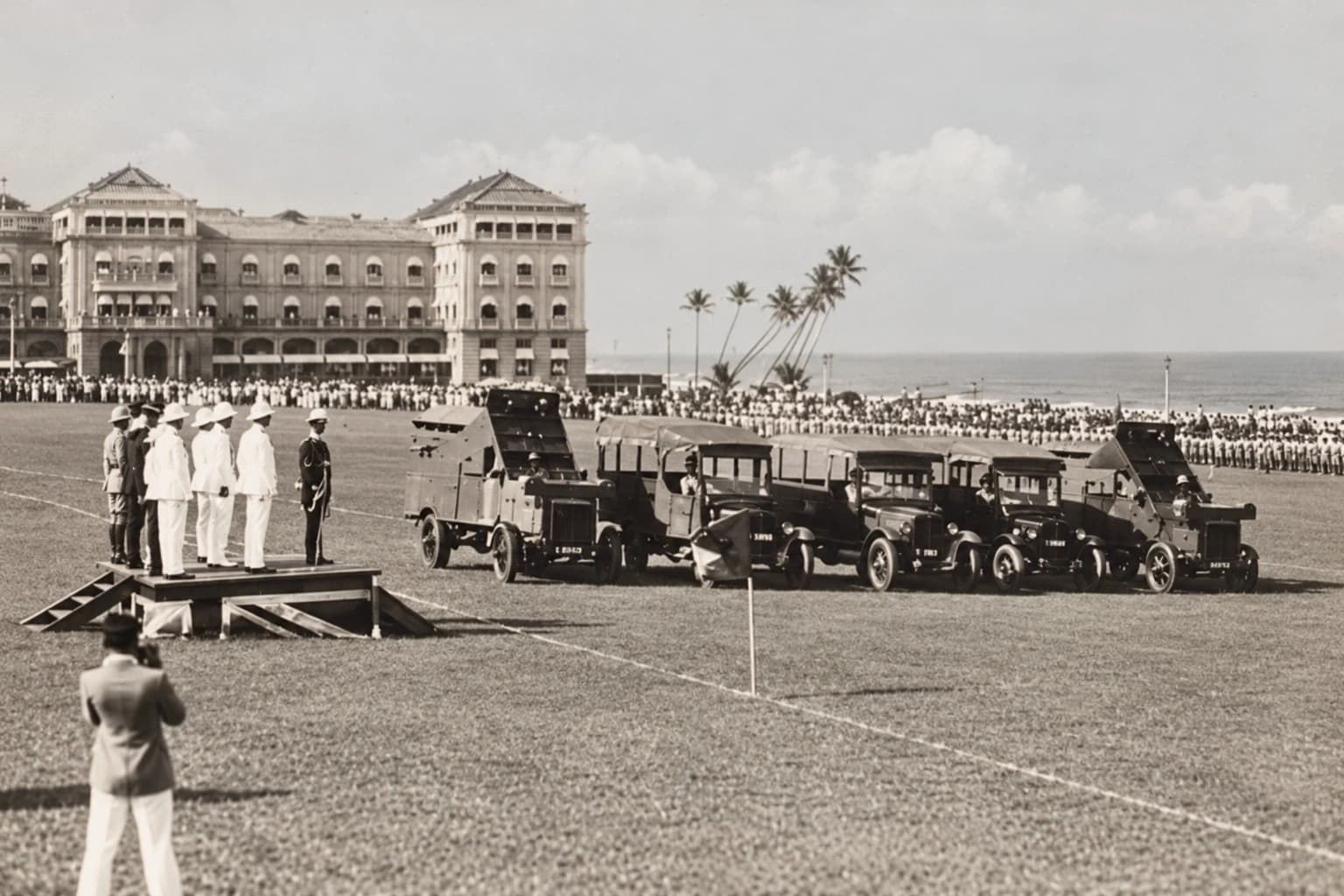
When the King’s Birthday Was Celebrated on Galle Face Green: A Glimpse of Colombo in 1933
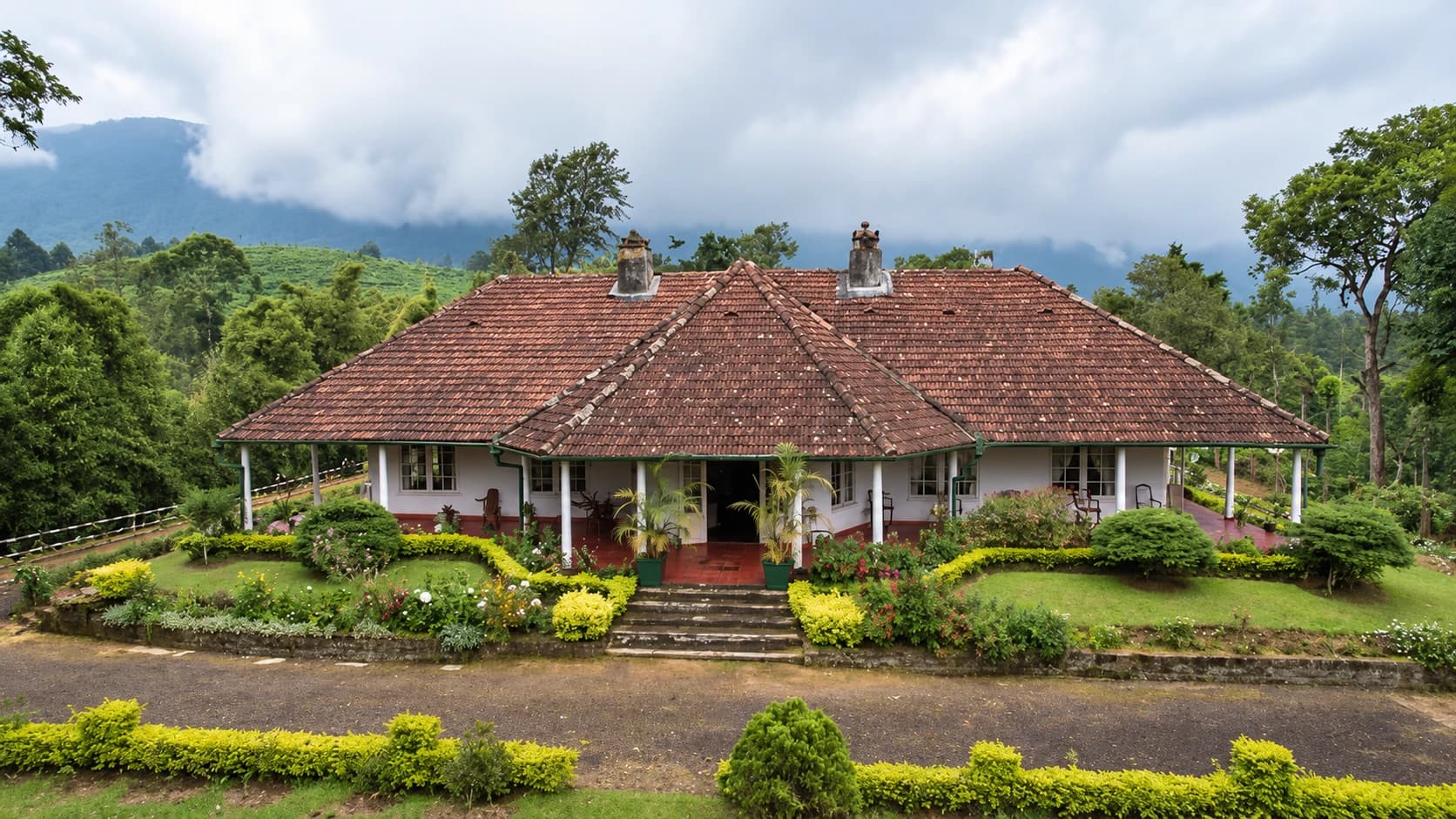
Holyrood Estate, Talawakelle: An Old Ceylon Bungalow and a Name That Echoes Scotland