The Railway Ceylon Built: Forgotten Stations, Lost Lines and Stories Along the Track

Sri Lanka railway history| Some of Sri Lanka’s railway history is easy to find.
It is there in the great stone stations, the tunnels through the hills, the bridges across deep valleys and the familiar climb from Rambukkana towards Kadugannawa. Much of it is still in daily use, which is perhaps why we sometimes fail to notice just how old it is.
But another part of the story has almost disappeared.
There were stations in Colombo that no longer exist. A narrow-gauge railway once climbed higher than Pattipola. The journey to Kandy took four and a half hours. Small railway halts served villages that had virtually no other way in or out. And some of the stories repeated today about famous railway structures are not quite what the surviving engineering records tell us.
A 2017 book, Ceylon Railway Heritage, by K.A.D. Nandasena and Vinodh Wickremeratne, gathered many of these details together. Nandasena had spent decades working with the railway, while Wickremeratne had long been associated with railway history and preservation.
What emerges from their work is not simply a history of locomotives.
It is a picture of an island being changed by rails.
Read our previous article: https://trippingsrilanka.com/stories/uda-pussellawa-railway-blackpool
When the Railway Climbed into the Mountains


The first great challenge of the Ceylon railway was obvious from the beginning.
Colombo was close to sea level.
The plantation districts were not.
To reach Kandy and eventually the high country, engineers had to take a railway designed for heavy traffic through some of the most difficult terrain on the island.
The climb becomes apparent after Rambukkana. From there, the railway begins its ascent towards Kadugannawa, negotiating steep slopes, rock cuttings and curves that still make this one of the most interesting sections of the Main Line.
Farther into the hills, the railway eventually reaches Pattipola at approximately 6,226 feet above sea level.
For anyone who has travelled through Pattipola today, the station can seem surprisingly modest for such a significant point on the railway. There is no grand monument announcing what has been achieved.
The train simply arrives.
Yet this is the summit of Sri Lanka’s broad-gauge Main Line.
The engineering becomes even more remarkable when the gradients are considered. Between Nawalapitiya and Badulla, sections of the line reach gradients of around 1 in 44. For the steam locomotives of an earlier age, hauling a train into these hills was serious work.
The railway was not merely laid across the landscape.
The landscape had to be negotiated, cut through and, at times, conquered.
But Pattipola Was Not the Highest Railway

There is a nice contradiction hidden in Sri Lanka’s railway history.
Pattipola is famous for being the highest point on the present railway network.
But it was not the highest railway reached in Ceylon.
That distinction belonged to the Uda Pussellawa Railway.
Opened in the early twentieth century, this narrow-gauge line ran from Nanu Oya through Nuwara Eliya and onwards towards Ragala. Its track was only 2 ft 6 in wide, considerably narrower than the main railway system.
At Kandapola, the line climbed to an elevation about 90 feet higher than Pattipola.
It must have been an extraordinary little railway.
Imagine a small steam train leaving Nanu Oya and working its way towards Nuwara Eliya through the cold, misty plantation country, continuing through Kandapola and farther into the hills.
Today Nuwara Eliya has no railway station.
Visitors arrive by road from Nanu Oya and often assume that this has always been the arrangement.
It has not.
For almost half a century, from 1903 until the line was closed during the 1940s, trains travelled directly through this part of the high country.
Most of the railway itself has vanished.
The landscape remains.
A Train to Kandy 150 Years Ago
The railway also changed something less visible: distance.
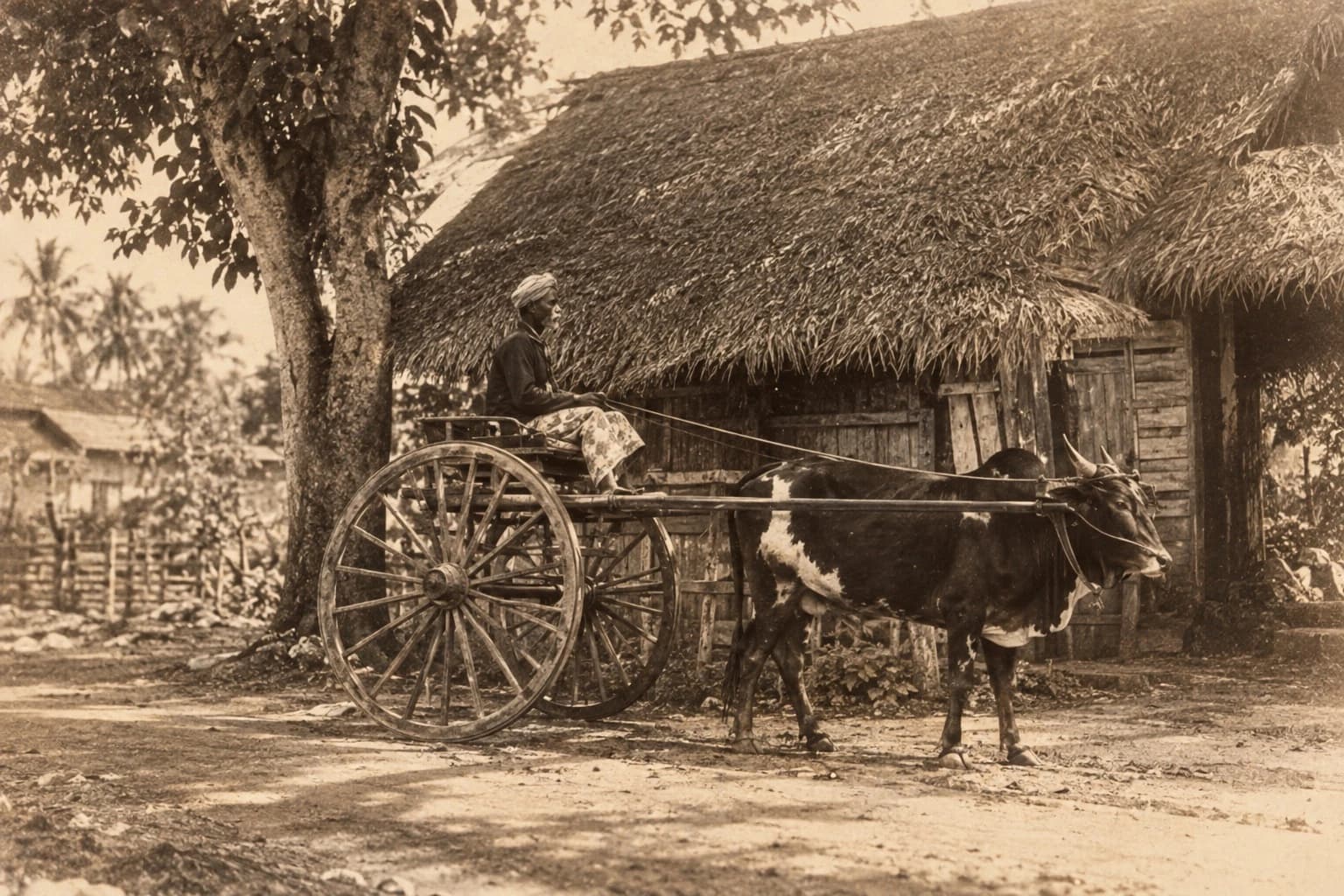
Before the train, travelling between Colombo and Kandy meant a long journey by road.
The arrival of the railway suddenly made the hill capital accessible on a timetable.
But nobody was rushing there.
In the early years, the journey from Colombo to Kandy took around four and a half hours.
Third Class passengers reportedly paid six shillings and three pence. First Class cost roughly three times as much.
The figures give us an unusual glimpse of railway travel in the nineteenth century.
There would have been none of the sealed air-conditioned carriages familiar on some trains today. Steam locomotives worked hard on the gradients. Stations were fewer. The railway environment itself was new.
Passengers were seeing the country from an entirely different perspective.
That remains one of the great pleasures of travelling by train in Sri Lanka.
Roads tend to follow towns.
Railways often reveal what lies behind them.
Colombo Fort Was Not Always Colombo Fort


Even one of the most familiar stations in Sri Lanka has a more complicated history than many passengers realise.
The Colombo Fort Railway Station we use today is not the first.
It is the third.
An early Fort station was a timber structure located around the area of the present-day Secretariat Halt. It operated from 1878 until 1883.
A second Fort station was subsequently built behind the area now occupied by Lake House and remained in use into the early twentieth century.
The present station opened in 1917.
That means the railway geography of central Colombo once looked very different.
Today it is almost impossible to imagine Fort without its great railway station and the streams of commuters moving through it every day.
Yet tracks, stations and railway buildings shifted as the city developed.
Colombo itself was changing rapidly, and the railway changed with it.
Look at an old map of Fort and Pettah and the modern city begins to loosen slightly. Roads change names. Shorelines move. Buildings disappear.
So do railway stations.
The Nine Arch Bridge and the Story We Prefer to Tell

Few places demonstrate the difference between railway history and railway folklore better than the Nine Arch Bridge near Demodara.
The story told most often is now familiar.
During the First World War, steel intended for the bridge was supposedly diverted for military use. A local builder then constructed the bridge using brick, stone and cement instead.
It is the kind of story people remember easily.
There is only one problem.
The engineering evidence does not support it.
Nandasena and Wickremeratne examined original plans and an engineering paper connected with Harold Cuthbert Marwood, the Executive Engineer responsible for railway construction.
Their conclusion was that the bridge was deliberately designed without steel.
Its masonry construction was not an emergency solution forced upon the engineers when steel failed to arrive. It was the intended engineering method.
The bridge was completed in 1919.
None of this diminishes it.
Quite the opposite.
The real achievement is impressive enough without embellishment.
A large masonry railway viaduct was designed and constructed in difficult hill country more than a century ago, and trains still cross it.
The structure does not need a legend to make it remarkable.
A Living Museum Between Kandy and Matale
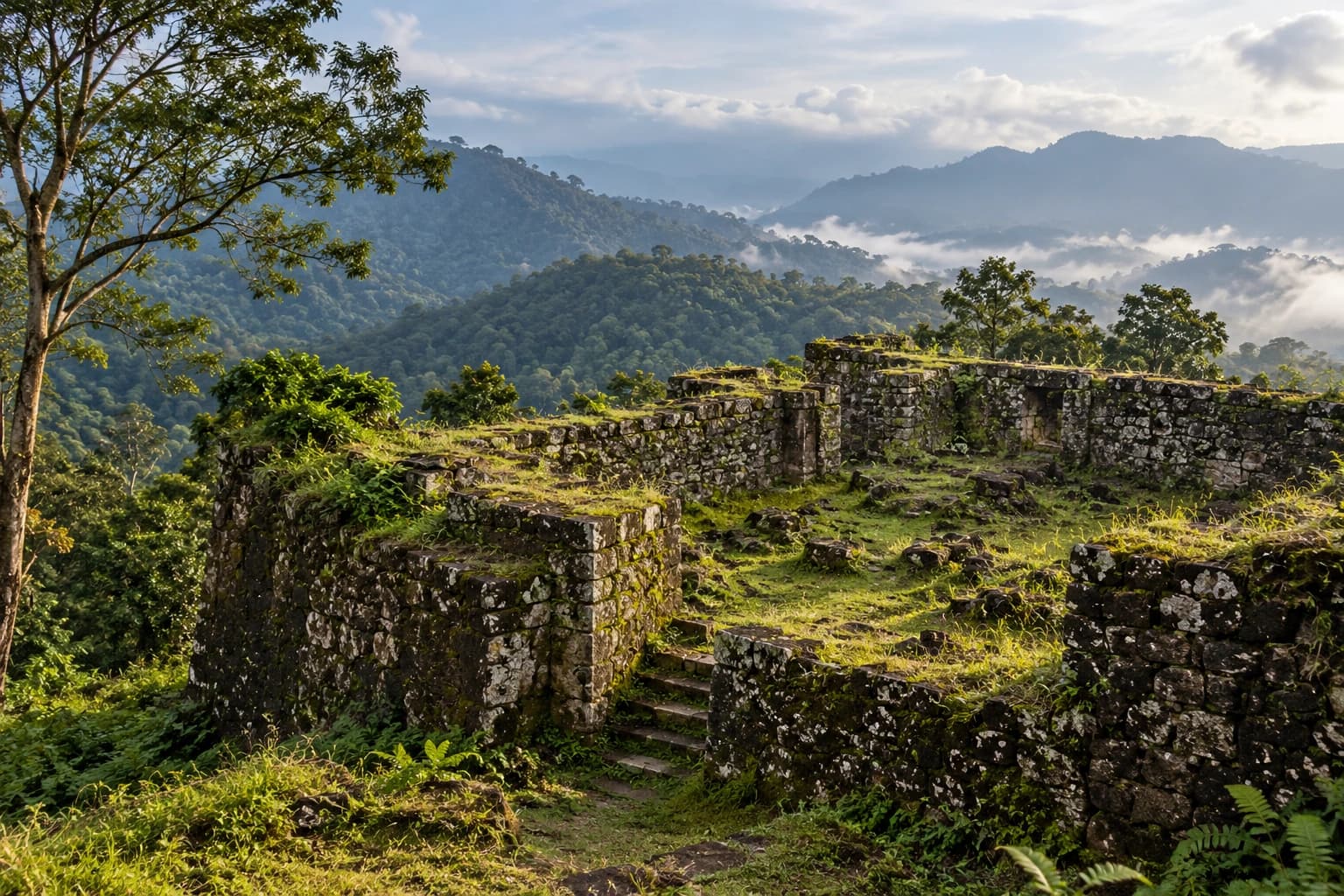
Not every piece of old railway Sri Lanka has disappeared.
Some survives in plain sight.
The Kandy–Matale line was described by the authors as something of a living museum.
Along the route were old station buildings with columned architecture, traditional railway equipment and semaphore signals of an earlier pattern.
There were also small halts serving settlements where the railway remained an important link with the outside world.
This is railway heritage in its most vulnerable form.
Not a famous bridge.
Not a locomotive preserved behind glass.
Just an old signal beside the track, a station verandah, a platform sign or a railway building that has survived because nobody has yet had reason to replace it.
Such things are easily overlooked until they disappear.
Small Halts and Forgotten Platforms
Some of the most interesting railway places are not the grand stations.
They are the small halts, minor platforms and half-forgotten stops that once mattered deeply to nearby communities.
A halt might have served a village, an estate, a school, a market route or a settlement with few other transport options.
To outsiders, it may have seemed insignificant.
To the people who used it, it was a connection to the rest of the island.
Letters, parcels, students, workers, traders and travellers all passed through these small railway places. They were part of daily life, not tourist scenery.
When such places disappear, a whole pattern of movement disappears with them.
That is why the smaller railway traces deserve attention too.
More Than Trains
The railway left traces throughout Ceylonese society.
It changed how tea reached Colombo. It affected where towns developed. Railway workshops created skilled employment. Station communities formed. Railway accidents entered public memory. Trains appeared in films, books, postcards and stamps.
There was even a recognisable railway culture of its own.
Station masters, guards, engine drivers, signalmen, clerks, porters and permanent-way workers belonged to a system operating across the island according to its own rhythms and rules.
That world has changed enormously.
Steam has gone from regular service. Diesel locomotives replaced it. Semaphore signals have gradually given way to newer systems. Stations have been altered. Branch lines have closed.
But enough remains for us to see what the railway once was.
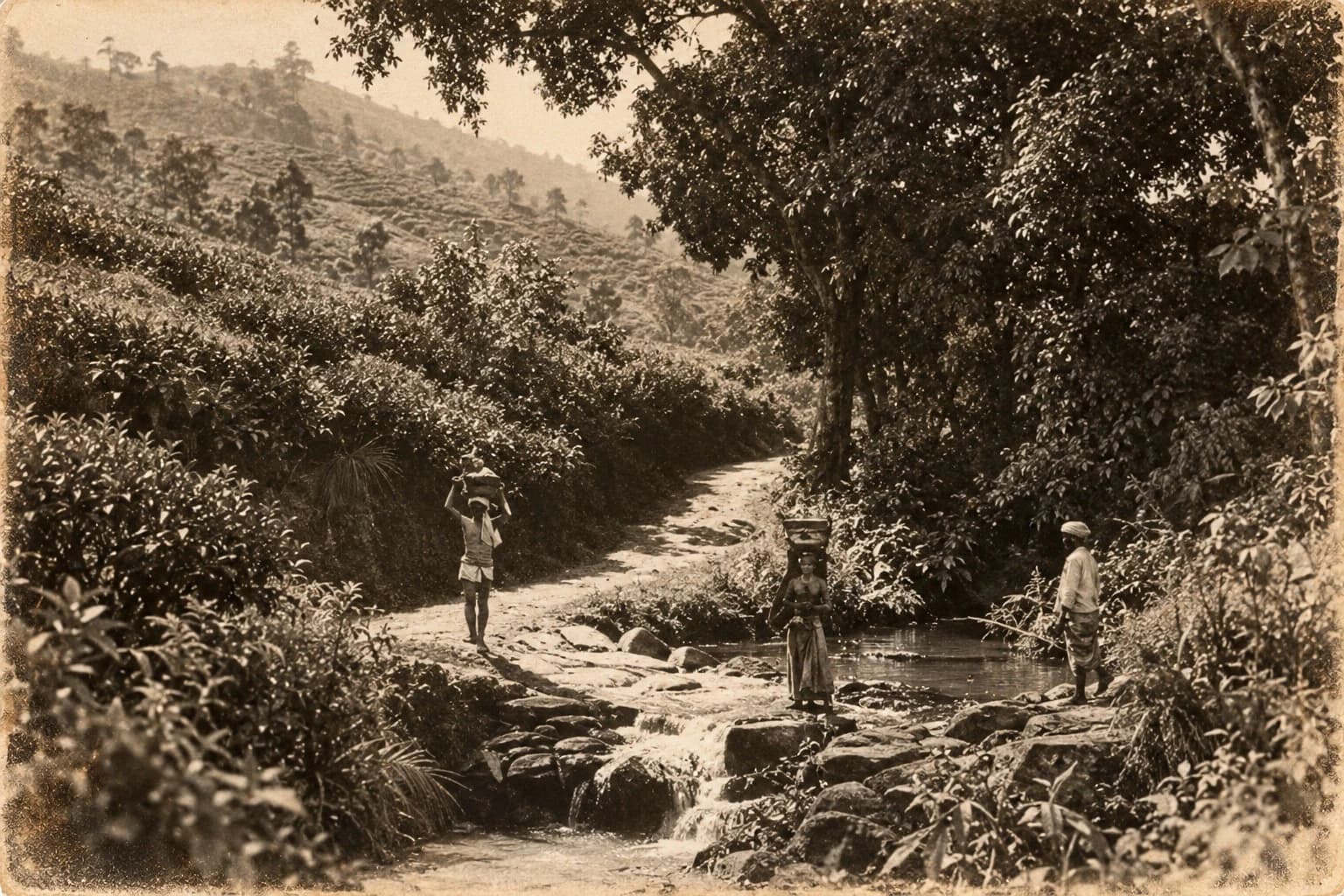
The Railway and the Tea Economy
It is impossible to separate the railway from the rise of Ceylon tea.
The hill-country lines were not built only for beautiful journeys. They carried produce, supplies, letters, workers, planters and officials across difficult country.
Tea grown in the hills needed a reliable route to Colombo.
Before the railway, transport depended on roads, carts and slower systems that made movement expensive and difficult. Rail changed the scale of the plantation economy.
Factories, estates and towns became tied more closely to the ports and markets beyond the island.
The romantic train journey we enjoy today was once part of a hard-working commercial system.
Behind the view from the carriage window was an export economy being carried downhill, wagon by wagon.
Look Out of the Window
The best place to understand Sri Lanka’s railway history is probably not a museum.
It is a train.
Travel slowly enough and the evidence begins to appear.
A stone retaining wall.
An old iron bridge.
A disused platform half-hidden by vegetation.
A railway bungalow beside the line.
A semaphore signal still standing near a country station.
A cutting through rock made when steam locomotives were still new to the island.
These things are easy to pass without noticing because they have become part of the scenery.
But they are not scenery.
They are pieces of a railway system built across Ceylon over more than a century and a half, altered repeatedly but never completely erased.
And sometimes the most interesting railway story is not the famous bridge ahead.
It is the abandoned platform you passed five minutes earlier and never thought to ask about.
Sri Lanka railway history| Why the Railway Ceylon Built Still Matters
Sri Lanka’s railway matters because it changed the way the island moved.
It connected Colombo with the hills. It carried tea to the port. It shortened journeys that once took days. It created railway towns, station communities and new patterns of trade and travel.
But it also left behind smaller stories.
Lost stations.
Closed branch lines.
Forgotten halts.
Old signals.
Disappearing railway buildings.
Names that survive only in old timetables, maps and memories.
The railway was not just an engineering achievement.
It was one of the great forces that reshaped Old Ceylon.
Final Thoughts
Some railway history announces itself.
The Nine Arch Bridge does.
The Kadugannawa climb does.
The great stations do.
But much of the railway’s story is quieter.
It sits in vanished Fort stations, in the lost Uda Pussellawa line, in the little halts between Kandy and Matale, and in the trackside details that most passengers barely notice.
That is why the railway remains one of the best ways to read Old Ceylon.
Not quickly.
Not only through famous landmarks.
But slowly, from the window of a moving train, watching the island reveal the lines it once built across itself.
Visit us: https://trippingsrilanka.com/stories