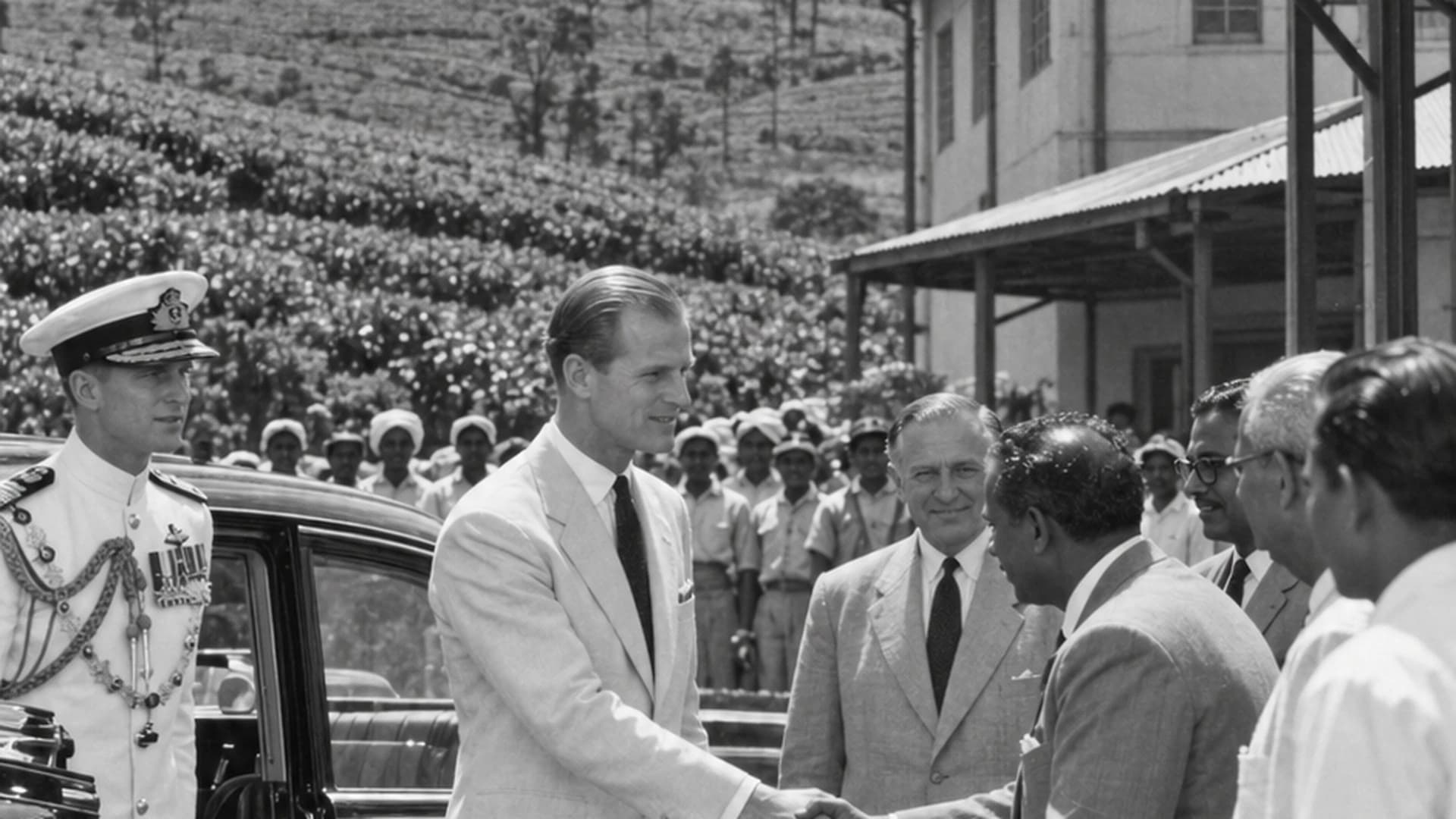
St. Paul’s Girls School, Milagiriya: An Old Ceylon School in a Changing Colombo
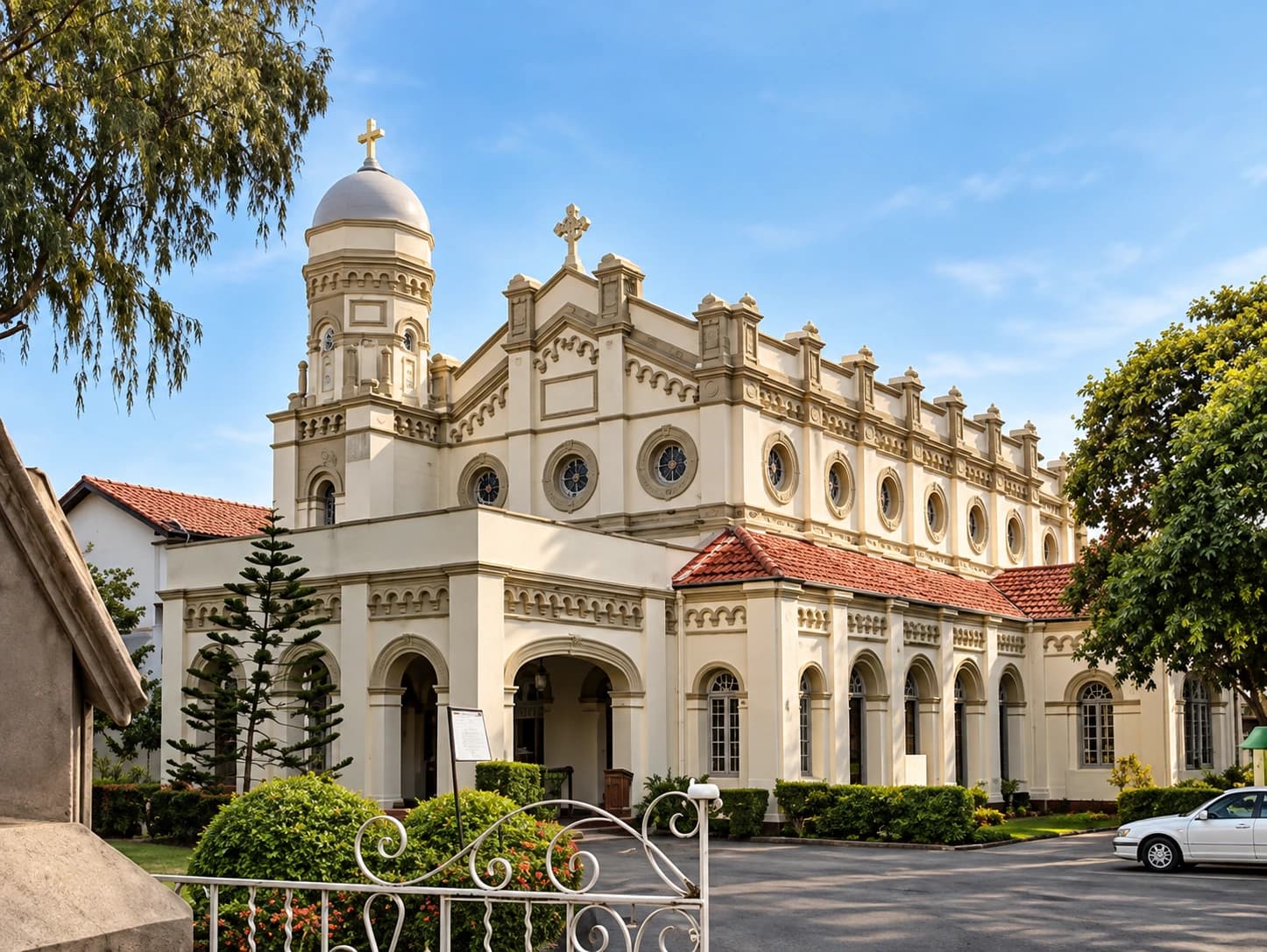
St. Paul’s Girls’ School Milagiriya| Among the many old photographs of schools in Ceylon, a caption as simple as “St. Paul’s School” can be surprisingly difficult to place. The name sounds specific, but in Colombo it was not unique, and over time many photographs lost the longer captions that may once have identified the exact location.
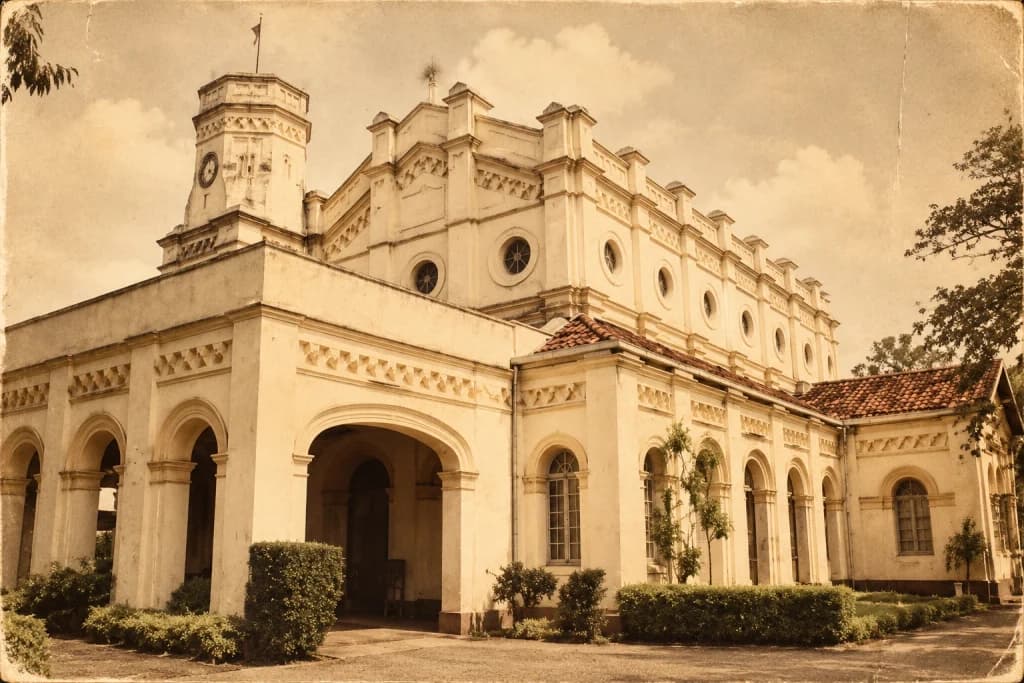
In this case, the strongest trail leads to St. Paul’s Girls’ School, Milagiriya, one of Colombo’s long-established girls’ schools, with a history reaching back to the closing years of the nineteenth century.
The school began in 1887, at a time when Colombo was still expanding beyond its older commercial centre and when places such as Milagiriya had a very different character from the crowded urban neighbourhoods we know today.
Read our previous article: https://trippingsrilanka.com/stories/english-ancestors-in-ceylon
A Small Parish School in 1887
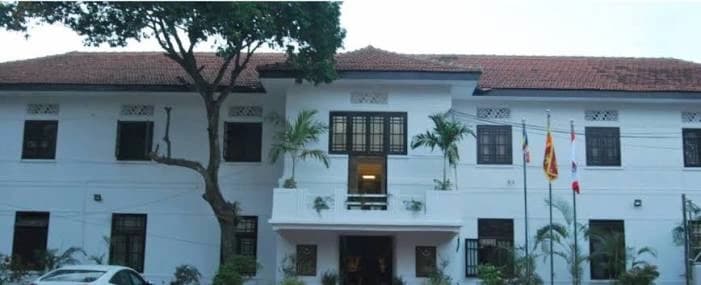
St. Paul’s Girls’ School was founded on 14 January 1887 as a parish school connected with St. Paul’s Church, Milagiriya. It opened with only 24 pupils and four teachers, under the guidance of its first principal, Mrs Stella Coban.
Its beginnings were therefore quite modest. There were no large buildings or extensive facilities. It was, in essence, a neighbourhood school attached to the life of the parish, serving families living in and around Milagiriya.
This was not unusual in Old Ceylon. A number of schools established during the British period grew out of church and mission work, particularly in Colombo and other important towns. Education, religion and community life were often closely linked, and St. Paul’s developed within that same setting.
The Milagiriya of the 1880s would have been far quieter than the Colombo 5 of today. The roads were less crowded, houses were more scattered, and large parts of the outer city still retained a suburban, almost semi-rural appearance. The school belonged to this earlier landscape.
Milagiriya in Old Colombo
By the late nineteenth century, Colombo was steadily pushing outward from Fort and Pettah. The commercial centre remained concentrated around the harbour, but residential districts were beginning to spread further south.
Milagiriya formed part of that growing suburban belt. Churches, houses and schools gradually became landmarks in these newer parts of the city, and St. Paul’s Church was already an important centre for the local community.
The school grew beside the parish and was closely associated with it from the beginning. This is why the name Milagiriya is important when tracing the history of St. Paul’s School. Without the location, the name can easily be confused with other schools that later carried the same dedication.
Old photographs often make such identifications difficult. A building might survive under a familiar name while the road, neighbourhood and surroundings change completely. In some cases, the caption is all that remains, and even that may have been shortened over the years.
The Burgher Community and English Education
In its early period, St. Paul’s served a largely Burgher population, and teaching was conducted in English.
This reflected the character of a number of Colombo schools during the British period. English education was closely linked with government service, the professions and the growing commercial sector of the city. For many families, an English-medium education offered opportunities that went well beyond the classroom.
The Burgher community played an important role in Colombo’s social and professional life during this period, and schools such as St. Paul’s formed part of that world. The school was therefore not simply an educational institution. It was also connected to the way families in colonial Colombo prepared their children for employment and social advancement.
As the city changed, however, the school’s character changed with it.
St. Paul’s Girls’ School Milagiriya| why the Name Can Be Confusing
The name St. Paul’s Girls’ School was not confined to Milagiriya.
By the twentieth century, official records show that there was also a St. Paul’s Girls’ School in Borella. A government record from 1961 lists both the Borella and Milagiriya schools separately.
This is an important detail when working with old photographs. A caption reading only “St. Paul’s School” does not, by itself, prove that the building shown is the Milagiriya school.
The identification has to be supported by the school’s own history, its connection with St. Paul’s Church and the continuity of the institution at Milagiriya from the late nineteenth century onward.
This is one of the small difficulties of studying Old Ceylon photographs. Names that appear obvious today were not always unique at the time.
From English to Sinhala and Tamil
St. Paul’s did not remain an English-medium parish school.
As the population of Colombo grew and became more diverse, the school expanded its language of instruction and eventually provided education in English, Sinhala and Tamil.
This was part of a wider change taking place across the country. Schools that had originally served smaller religious, ethnic or linguistic communities gradually opened their doors to a broader population.
Colombo itself was becoming larger and more mixed. Families moved into new suburbs, roads improved, public transport expanded and residential districts developed beyond the older parts of the city. Schools had to respond to these changes.
St. Paul’s did the same.
By the first half of the twentieth century, it had already moved far beyond the character of the small parish school that had opened in 1887.
A School Growing With Colombo
The growth of St. Paul’s can also be read as part of the growth of Colombo itself.
During the early decades of the twentieth century, areas such as Bambalapitiya, Havelock Town and Milagiriya became increasingly connected with the wider city. What had once been quieter residential districts were gradually drawn into Colombo’s expanding urban landscape.
The school grew within this changing environment.
More pupils came through its classrooms, its facilities developed, and it became an established part of education in the city. Generations of families came to know the school not as a small parish institution, but as one of Colombo’s recognised girls’ schools.
This is why early photographs of schools are often so revealing. The buildings themselves may be modest, but the surroundings can tell us just as much. An open piece of land, an unpaved road, a church tower or the absence of later buildings can give a clearer picture of Old Colombo than a written description.
The 1961 State Takeover
A major turning point came in 1961, when St. Paul’s Girls’ School, Milagiriya was taken over by the state.
The change was part of the wider transformation of education in post-independence Ceylon, when many denominational schools came under government administration.
For St. Paul’s, the takeover brought an end to the form of church administration under which the school had begun more than seventy years earlier.
The institution continued, but it was now entering a different period of its history.
The school that had started as an Anglican parish school in colonial Ceylon was becoming part of the state education system of an independent country.
From Anglican Origins to a Buddhist School
Only a few years after the state takeover, another important change followed.
In 1964, St. Paul’s became a Buddhist school.
The shift is an interesting reminder of how much the character of an institution can change while its name remains the same. Buddhist religious observances gradually became part of school life, and the school developed a new identity under state administration.
Yet the name St. Paul’s survived.
This creates one of the most striking contrasts in the school’s history. An institution that had begun as an Anglican parish school serving a largely English-speaking community in British Ceylon continued under the same historic name while becoming part of a very different educational and social environment.
St. Paul’s Girls’ School Milagiriya| A National School by 1993
In 1993, St. Paul’s Girls’ School, Milagiriya was declared a National School.
By then, there was little resemblance between the scale of the modern institution and the parish school that had opened with 24 pupils more than a century earlier.
Its buildings had expanded, the number of pupils had increased and the curriculum had developed considerably. The surrounding neighbourhood had changed just as dramatically.
What remained was the connection with Milagiriya and the school’s long history in the area.
An Old Ceylon Name That Survived
Today, St. Paul’s stands within one of Colombo’s busiest urban districts. The streets around it carry heavy traffic, the neighbourhood is densely built, and the quiet suburban landscape of the late nineteenth century has almost entirely disappeared.
Yet the school’s name still reaches back to 1887.
That is what gives old photographs of St. Paul’s their value. They show more than the history of a school. They offer a glimpse of Milagiriya before modern Colombo grew around it, and of an institution that changed repeatedly as the city and the country changed.
Behind the simple caption “St. Paul’s School” lies a much longer story — one that begins with a small parish school in Old Ceylon and continues through more than a century of Colombo’s history.
Visit us: https://trippingsrilanka.com/stories
Heritage places mentioned
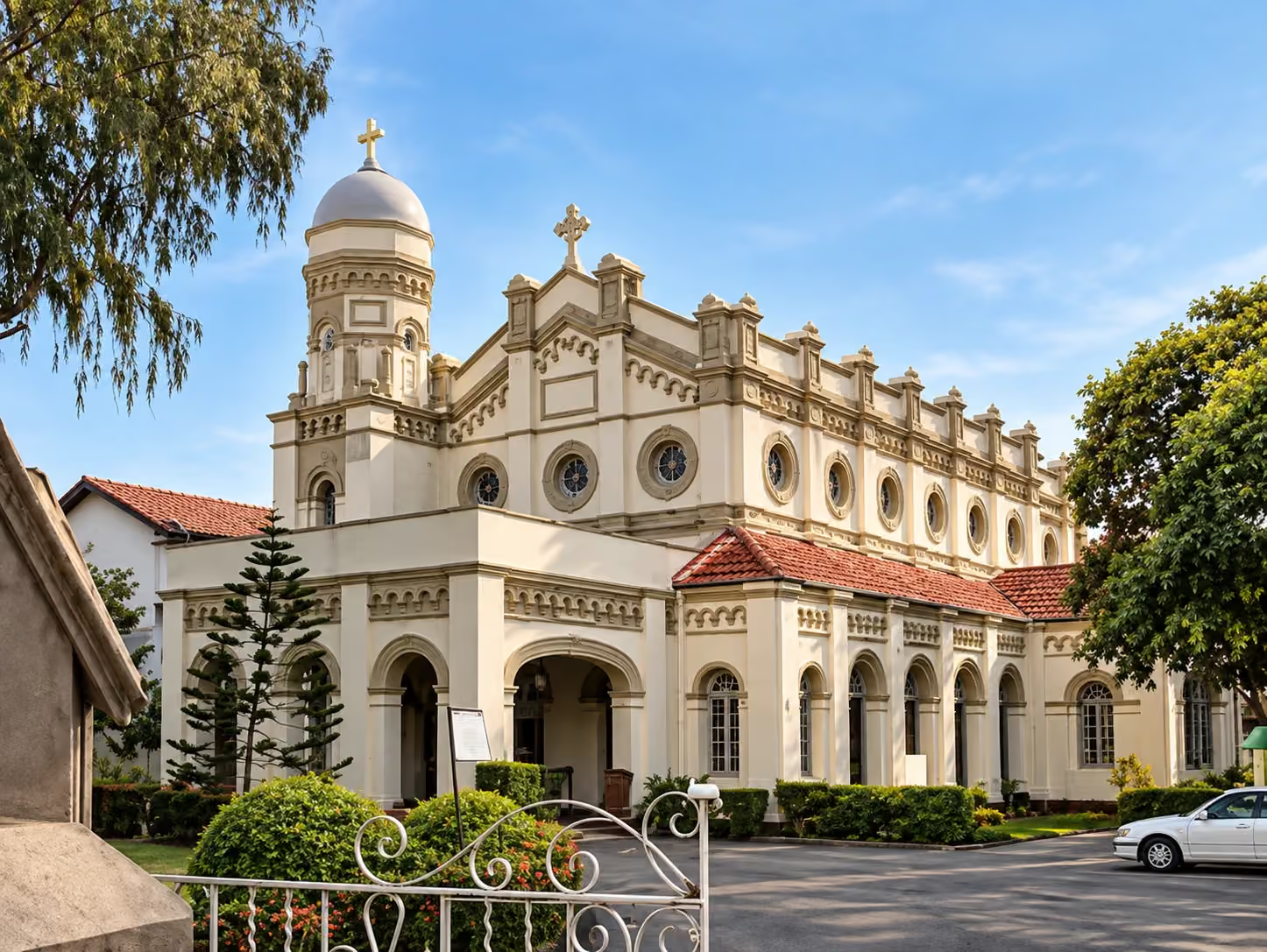
St. Paul’s Girls School, Milagiriya
More from Old Ceylon
Armour Street: The Colombo Road That Still Carries an Old Name
Gaffoor’s Building: The Forgotten Jewel of Old Colombo That Once Stood at the Heart of Ceylon’s Trading Empire