A House Beside the Tracks
station master’s house Ceylon | There were houses in old Ceylon where the railway was not something you travelled on, but something you lived with. The line ran close enough to be heard through the day. A train was not an interruption. It was part of the household rhythm, arriving with its whistle, its metal sound, its smoke, its lamps at night and the brief excitement it brought to an otherwise quiet station.
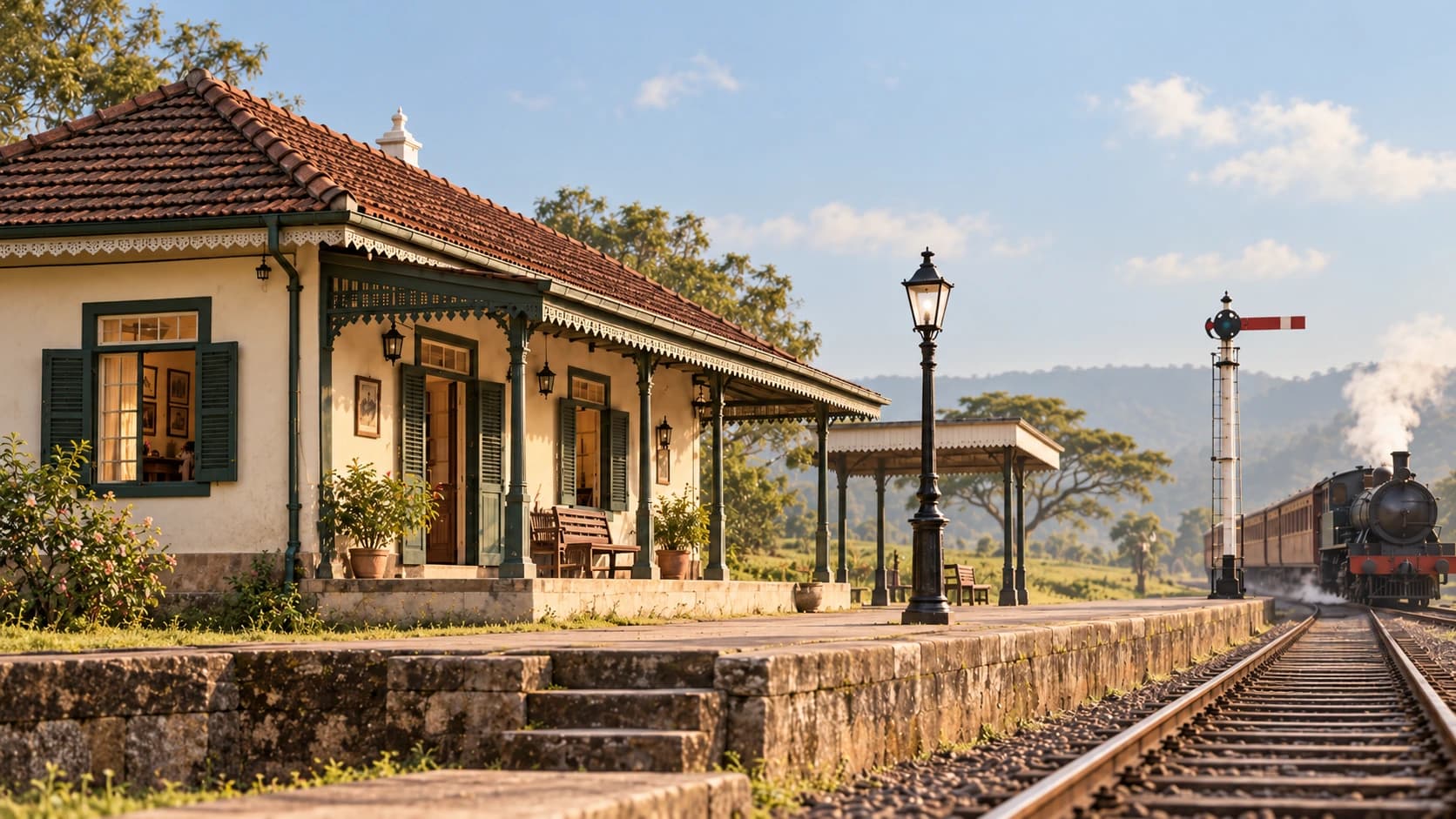
The station master’s house belonged to that world. It was usually not grand. It might have stood beside a small country station, near a level crossing, or just beyond the platform where the railway buildings gave way to garden, fence and track. From the verandah, one could often see the line, the signal posts, the station nameboard and the platform where passengers waited with bags, parcels and children half-asleep beside them.
To write railway history only through locomotives is to miss this quieter side of it. The railway was also a domestic world. Families lived beside it. Children grew up with the timetable in their ears. Wives knew the difference between an ordinary train and one running late. The sound of a bell, a whistle or a night train could carry through the house like news.
Read our previous article : https://trippingsrilanka.com/stories/uda-pussellawa-railway-blackpool
The Man Who Kept the Station Moving
The station master was one of the most recognisable figures in the railway town. He was not merely a man in uniform standing on a platform. He was responsible for order in a place where timing mattered. Trains had to arrive, depart, cross, wait or pass according to rules that left little room for carelessness.
In small stations, his duties could feel almost personal. He knew the regular passengers, the traders who sent goods by rail, the families waiting for relatives, the postal bags, the parcels and the station staff. He watched the line, handled messages, followed the timetable and carried the authority of the railway in places far from Colombo.
His house stood close because the railway did not keep ordinary office hours. A train could pass late. A message could arrive after dark. A problem on the line might require attention. In that sense, the station master never fully left work behind. Even at home, the line was near enough to call him back.
Bells, Signals and Small Certainties
The old station was a place of sounds. Bells rang with a purpose. Signals changed with meaning. Footsteps echoed on platform boards or stone. A porter called out. Somewhere a telegraph or telephone message was received. A train approaching from beyond the bend announced itself before it could be seen.
For the children of a station master, these sounds must have become a second language. They would know when a train was expected. They would know which direction it came from by the way the noise travelled. They would recognise the difference between a slow goods train, a passenger train, a shunting movement or a late-night arrival that made the whole house stir.
There was comfort in that regularity. The railway measured the day. Morning trains, afternoon trains, evening trains and the distant rumble after bedtime gave shape to time itself. Long before clocks and phones filled every room, the passing train told people where they were in the day.
Children of the Railway
To grow up beside a station was to have a childhood unlike most others. The platform was not quite a playground, but it was part of the known world. Children would have watched passengers arrive with baskets, trunks, umbrellas, parcels and sometimes livestock. They would have seen soldiers, monks, schoolboys, estate workers, traders, tourists, clerks and families travelling between towns.
Every train brought faces from elsewhere. A small station could suddenly become busy for a few minutes, then fall quiet again after the last carriage disappeared. For a child, that must have made the world feel both large and close. Places such as Kandy, Badulla, Galle, Anuradhapura, Matara or Colombo were not just names. They were directions from which trains came and to which trains went.
Railway children probably learnt early not to cross the line carelessly, not to play too near the track and not to treat the railway as ordinary ground. But they also grew up with a familiarity others did not have. The smell of sleepers after rain, the shine of rails in the morning, the red and green of signals, the station lamp being lit, the sound of a train taking a curve – all these became part of memory.
The Quarters Behind the Public Station
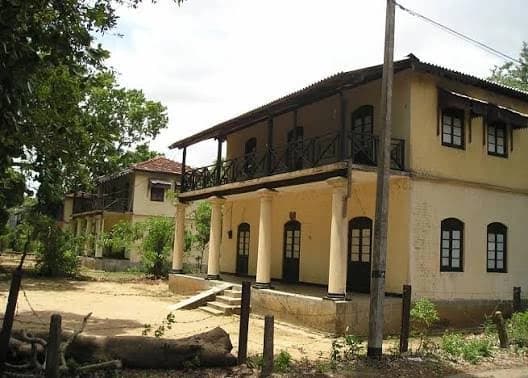
The station itself belonged to the public. The house behind or beside it belonged to the family. Yet the two were never fully separate. A verandah could look towards the platform. A garden fence could stand only a short distance from the track. Visitors to the house might arrive by train, stepping off almost at the doorstep.
Railway quarters were practical buildings. They had to serve families who moved according to postings, transfers and promotions. A station master might spend years in one town and then be sent elsewhere. His children might remember their childhood not by one permanent ancestral home, but by a chain of stations: one in the hills, one near the coast, one in the dry zone, one on a junction line.
That gave railway families a map of Ceylon different from most people’s. Their memories followed the tracks. They knew not only the famous stations but also the smaller halts, junctions and sidings where ordinary railway life unfolded.
Night Trains and Sleepless Houses
The railway changed after dark. The crowds thinned, the air cooled and the station lamps became more important. A platform at night had a different feeling from the same platform in daylight. Voices carried further. A whistle sounded lonelier. The arrival of a train could briefly flood the station with light, steam, movement and human noise before leaving it quiet again.
For the station master’s family, night trains were part of the house. A child might wake to the sound of one passing in the dark. A wife might know from the hour whether it was on time or running late. The station master might leave the house with a lamp, coat or cap, stepping from the private world of the family into the official world of the line.
There is something deeply atmospheric about that life. The sleeping house, the dark garden, the lamp-lit station, the rails shining faintly, and somewhere beyond the bend a train approaching with its passengers unaware of the household listening nearby.
The Railway as Neighbour
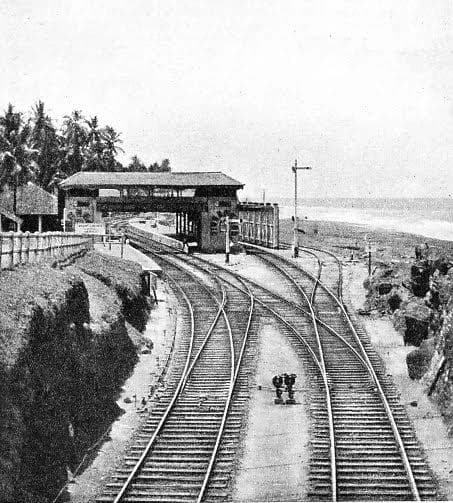
For most people, the railway was a service. For these families, it was a neighbour. It could be noisy, demanding and dangerous, but also strangely dependable. It brought letters, visitors, newspapers, goods and news from other towns. It carried relatives away and brought them back. It connected a small station house to the rest of the island.
The railway also brought a sense of importance to places that might otherwise have seemed remote. A village with a station was no longer entirely cut off. It had a timetable, a platform, a nameboard and a place in the railway map of Ceylon. The station master’s house stood at the edge of that connection, half domestic and half official.
In some towns, the station became one of the most important local institutions. People came not only to travel, but to send parcels, meet arrivals, ask about trains and gather news. The station master was therefore part of the social life of the place, whether he wanted to be or not.
A Family Life Measured by Transfers
Railway service often meant movement. A station master and his family could not always choose where they lived. A posting might take them from a busy junction to a quiet rural station, from the coast to the hills, from heat and dust to mist and rain. Each transfer meant packing up a home and beginning again beside another stretch of track.
For children, this could be unsettling, but it also gave them a wider island. They learnt different towns, climates, accents and landscapes. They knew the railway not as a single line on a map, but as a series of lived places. One station might be remembered for mango trees. Another for cold mornings. Another for a level crossing, a temple bell, a goods yard or a particular bend where trains appeared suddenly.
The station master’s house was therefore both stable and temporary. It was home while the posting lasted. Then another station became home.
The Women Who Held the House Together
Railway stories often centre on the men in uniform, but the household beside the tracks had another history too. Wives and mothers kept the domestic world steady in places shaped by timetable and transfer. They received visitors, raised children, managed meals, dealt with isolation and created a sense of home in government quarters that may never have truly belonged to them.
Their work rarely appears in railway records. Yet without them, the station master’s house would have been only a building. They made it livable. They turned quarters into homes, planted gardens, arranged furniture, maintained family routines and softened the hardness of a life lived beside rules, bells and rails.
In small stations especially, the station master’s wife may have had to live with both visibility and loneliness. Everyone knew the railway family, but that did not mean company was always easy. A station could be busy for ten minutes and silent for hours.
Small Stations, Large Memories
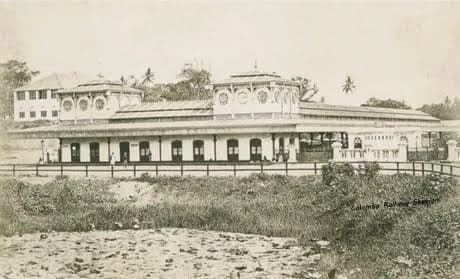
The grand railway histories remember bridges, engines, gradients, tunnels and stations of architectural importance. But for many families, the railway survived in smaller memories. A bench on a platform. A water column. The smell of coal smoke. A signal cabin. A garden beside the quarters. A father walking to the station in uniform. A mother waiting for the evening train. A child counting carriages as they passed.
These details matter because they show how deeply the railway entered ordinary life. It was not only an engineering achievement or a colonial transport system. It was also a way of organising time, work, family and memory across the island.
The station master’s house gives us a different entrance into railway history. Not from the engine shed, but from the verandah. Not from the locomotive, but from the family who heard it every day.
What Remains Today
Many old railway quarters still survive in some form, though not always noticed. Some remain in railway use. Some have been altered. Others stand quietly near stations, their original purpose easy to miss unless one knows what to look for. A house beside the line, a verandah facing the track, an old garden, a path leading towards the platform – these are clues.
Modern travellers often pass through stations quickly. They look for the train, the ticket counter, the platform number and the photograph. The old domestic world of the railway is easier to overlook. Yet it is still there in fragments, especially in smaller stations where railway life has not been completely overwhelmed by the rush of modern travel.
To notice these houses is to remember that the railway was lived from both sides of the platform. It carried passengers, but it also shaped the lives of the people who served it.
Final Thoughts: The House That Listened to Trains
The station master’s house was not famous. It was not built to impress travellers or appear on postcards. But it belonged to one of the most intimate parts of railway history in Old Ceylon: the life of families who lived close enough to hear the railway breathe.
Through them, the railway becomes more than locomotives and timetables. It becomes a childhood beside the tracks, a father called out at night, a mother keeping house near the platform, a garden shaken by passing trains and children learning the world through arrivals and departures.
The station master’s house reminds us that history often survives in the places between public and private life. A platform was public. The railway line was official. But just beyond it, behind a fence or a hedge, there was a family listening.And every time a train passed, the house remembered it.
Visit us: https://trippingsrilanka.com/stories