A Vanished Transport System of the Tea Country
tea ropeways Sri Lanka| Long before estate lorries began climbing the narrow roads of Sri Lanka’s hill country, freshly plucked tea travelled to factories in a far more remarkable way.
Large sacks filled with green tea leaves were suspended from steel cables and sent gliding across valleys, streams and steep plantation slopes. These aerial ropeways formed an ingenious transport network that connected distant tea fields with the factories where the leaves would be weighed, withered, rolled and transformed into Ceylon tea.
Today, the machinery has largely vanished. Yet old photographs and the memories of estate communities preserve the story of a time when tea appeared to travel through the air.
For travellers interested in Old Ceylon, these forgotten ropeways reveal a fascinating side of Sri Lanka’s plantation heritage, not only the beauty of tea country, but also the engineering, labour and transport systems that kept the industry alive.
Check our previous article – https://trippingsrilanka.com/stories/maha-uva-estate-halgranoya
A Photograph Suspended in Time
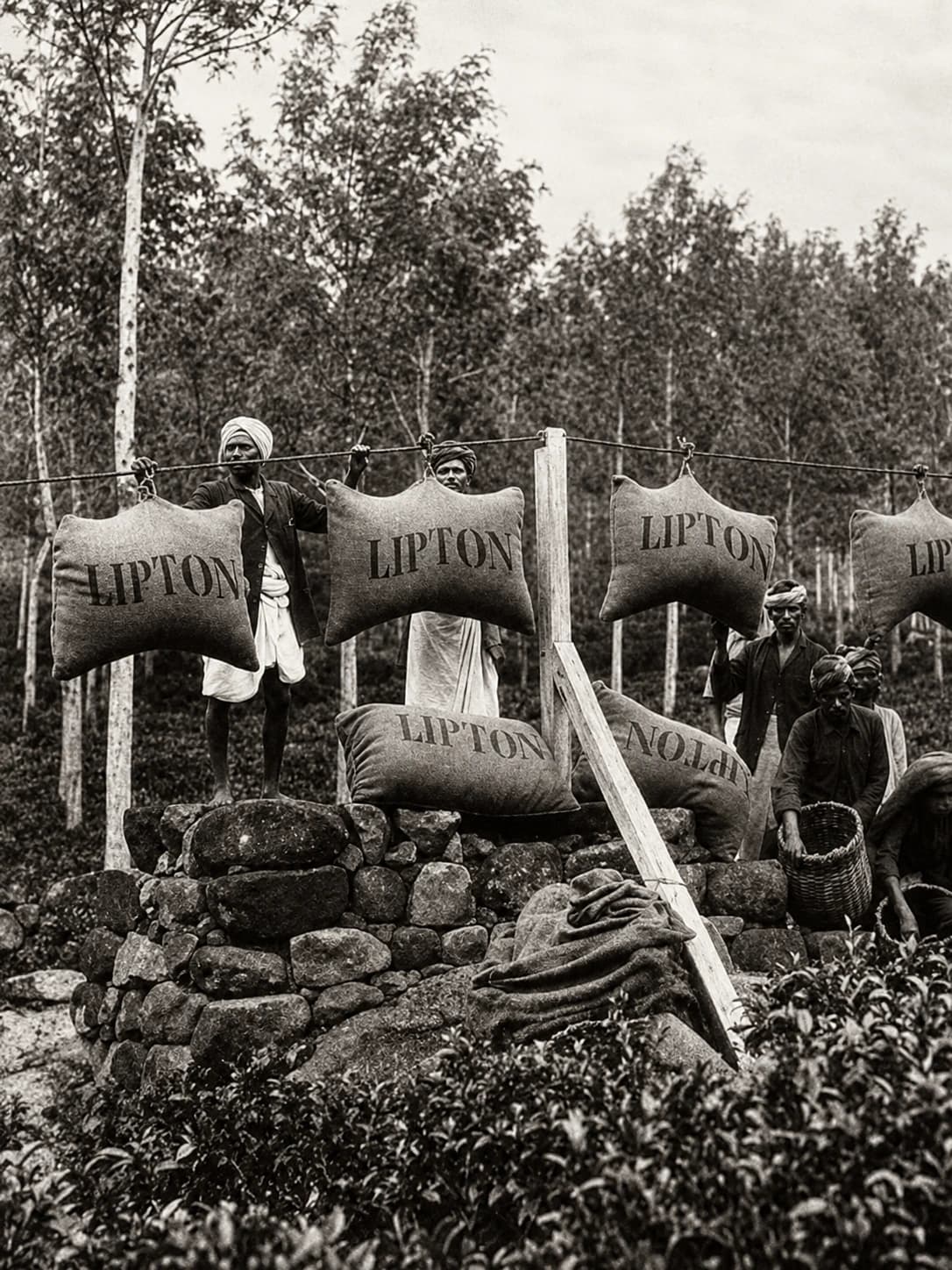
The historic photograph connected to this story captures an extraordinary scene from the plantation era.
Several large sacks marked “LIPTON” hang from a cable above a group of estate workers. The sacks appear heavy with freshly plucked tea leaves, while workers stand beside the supporting structure and receiving point.
It is a photograph filled with small but valuable details: rough stonework, timber supports, woven baskets, cable machinery and the people whose labour kept the entire system operating.
The exact estate and date represented in the image have not been confirmed. Nevertheless, it provides rare visual evidence of a transport method once used across parts of Ceylon’s tea country.
For Old Ceylon storytelling, the image is important because it shows tea not as a finished product in a cup, but as part of a working landscape — harvested, packed, moved and processed through a carefully organised system.
Why Tea Estates Needed Aerial Ropeways
Many of Ceylon’s most productive tea estates were established across steep and difficult terrain.
Tea fields could extend along mountain ridges, into valleys and across divisions situated several miles from the central factory. This made transport one of the greatest practical challenges of plantation life.
Freshly plucked leaves had to be gathered, weighed and carried to the factory before manufacturing could begin. On arrival, the leaves were weighed and spread across racks or troughs for withering — the first major stage in producing black tea.
Before dependable estate roads and motor vehicles became widespread, workers often carried tea sacks manually or transported them using carts and pack animals. During wet weather, narrow tracks could become muddy, slippery and difficult to use.
Aerial ropeways offered an efficient alternative.
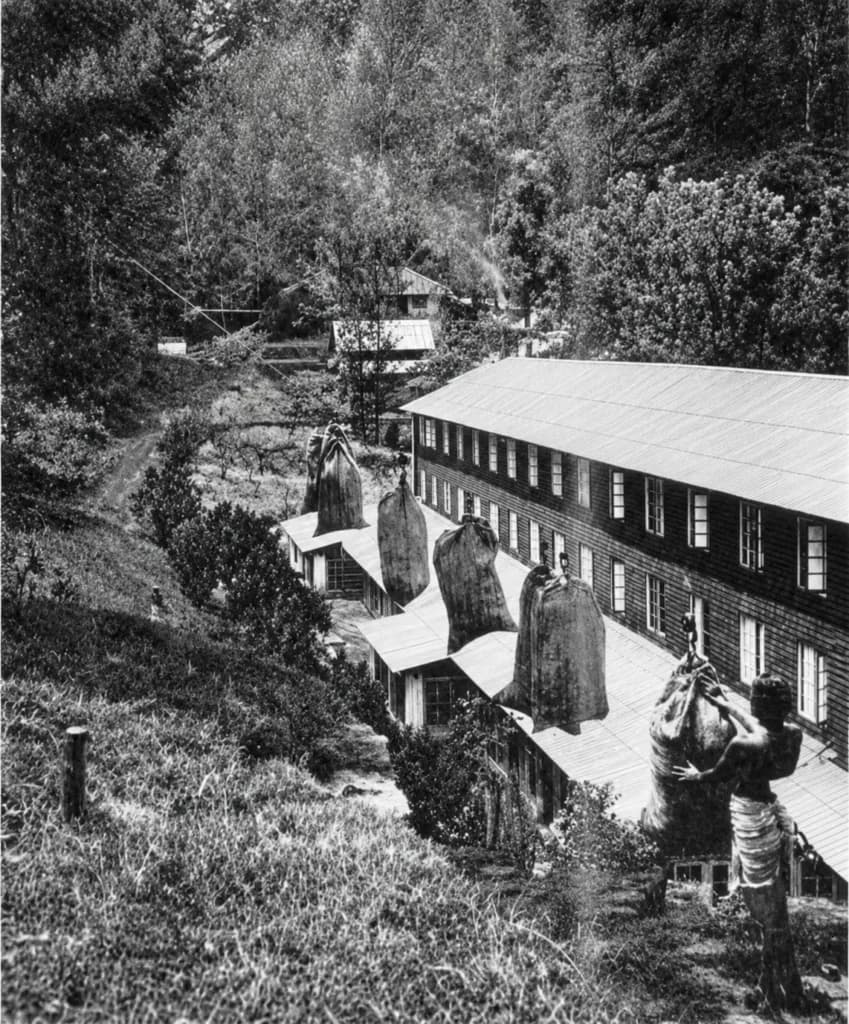
By stretching cables between elevated points, estates could use gravity and mechanical systems to move heavy sacks downhill towards the factory. The suspended loads crossed obstacles that would have made ground transport slow and labour-intensive.
How the Ropeway System Worked
Although individual estate installations differed, a plantation ropeway generally consisted of steel cables supported by towers or posts positioned across the estate.
Freshly harvested tea was placed inside large sacks or carriers and attached to travelling mechanisms on the cable. Gravity often helped move the loaded carriers downhill towards the factory.
Empty sacks or containers could then be returned towards the field divisions.
The system offered several practical advantages:
- Large quantities of leaf could be transported across steep terrain
- Valleys, streams and uneven ground could be crossed directly
- Fewer workers were required to carry heavy sacks over long distances
- The journey between the field and factory became faster and more regular
- Damage caused by repeated loading and unloading could be reduced
- Tea could reach the factory more efficiently after plucking
The ropeway was therefore not merely an unusual feature of plantation life. It formed part of the carefully organised process required to move tea from the plucking fields into production.
Tea Moving Above the Hills
It must have been an extraordinary sight.
Against a background of mist, eucalyptus trees and carefully planted tea bushes, heavy sacks travelled steadily along cables stretched across the hills. Below them, estate workers followed footpaths while factory machinery waited in the valley.
The image of tea moving through the air captures something unique about Old Ceylon’s plantation world.
The hills were not only beautiful. They were working landscapes. Every slope, path, stream, factory and cable had a purpose. The ropeway turned the natural shape of the land into part of the production system.
This is what makes these old cableways so fascinating. They show how estate engineering responded directly to geography.
Memories from Spring Valley
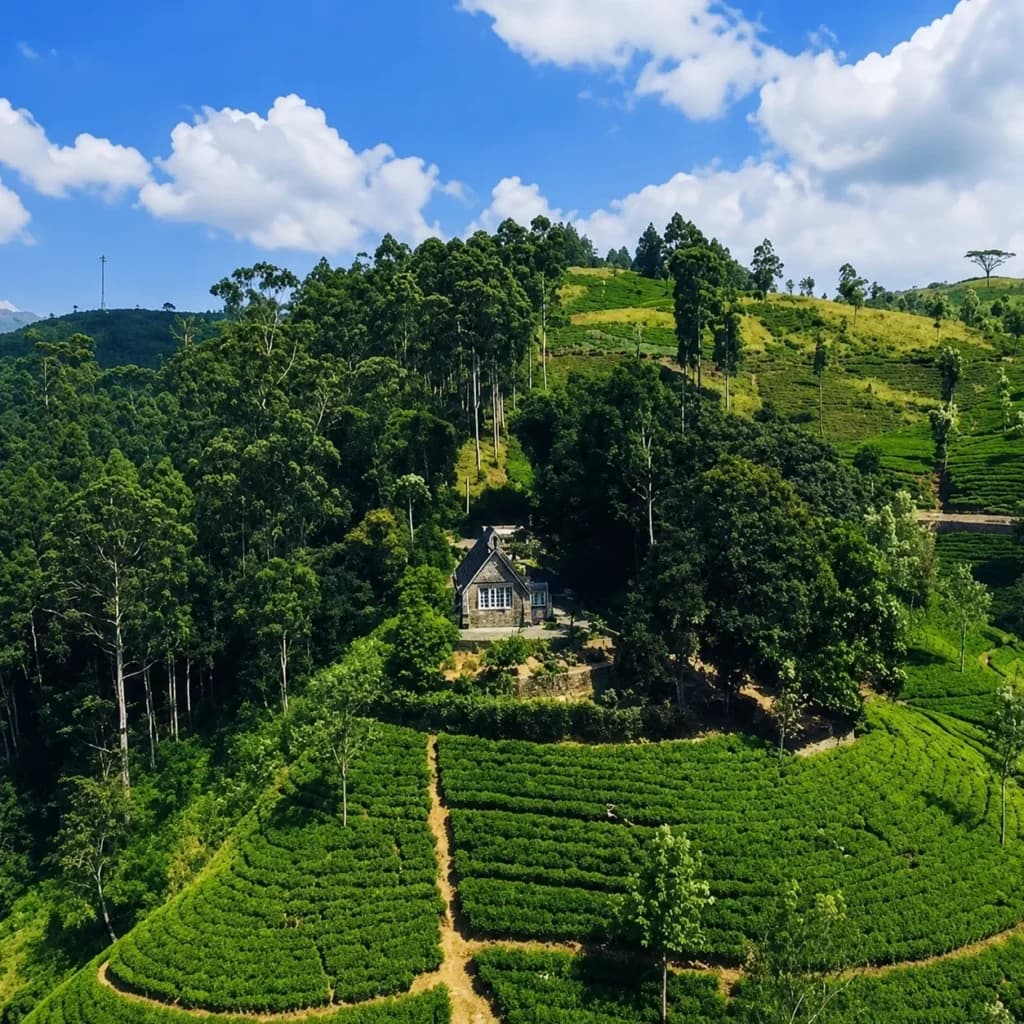
One particularly evocative memory comes from the Spring Valley Group in the Badulla District.
Residents familiar with the estate recall a cable transport system carrying tea from the Maimalai Division towards the Spring Valley factory. The system is remembered as having continued operating until comparatively recent times.
During school holidays at Wedamulla, children would reportedly gather to watch large tea sacks arriving from distant divisions along the cable.
To them, it was an unforgettable sight: sacks emerging from the misty landscape, travelling silently above the tea fields before descending towards the factory.
Spring Valley remains one of the recognised tea estates of the Badulla region, surrounded by the high-grown plantation landscape characteristic of Sri Lanka’s Uva tea country.
These personal recollections are particularly valuable because many estate transport systems disappeared without being formally documented. The memories of workers, families and residents may now be the only surviving record of how particular ropeways operated.
The Journey from Field to Factory
The transportation of green leaf was only the beginning of a complex manufacturing process.
Once the sacks reached the factory, the leaves were unloaded and weighed. They were then spread across ventilated troughs for withering, allowing much of their moisture to evaporate.
After withering, the leaf was rolled. Rolling broke the cells of the leaf and exposed its internal juices, beginning the oxidation process responsible for the colour, flavour and character of black tea.
The tea was then fired, graded and prepared for sale.
Timing and careful handling were essential throughout this process. Each stage affected the final quality of the tea.
The ropeway therefore linked two vital worlds of the estate: the open fields where tea was plucked and the factory where it became a finished product.
Without efficient transport, the quality of the leaf could suffer before it even reached the factory.
The People Behind the Machinery
Historic photographs of plantation engineering can easily draw attention towards cables, factories and machinery. Yet every part of the system depended upon people.
Estate workers plucked the leaves, carried baskets from the fields, packed the sacks and attached them to the ropeway. Other workers maintained the cables, operated the loading stations and received the leaf at the factory.
Their knowledge ensured that the machinery functioned safely and that the harvested leaf reached its destination.
The history of Ceylon tea cannot be understood only through the achievements of estate owners, engineers and commercial companies. It must also recognise the generations of plantation workers whose difficult and often poorly rewarded labour sustained the industry.
The ropeway may have reduced the burden of carrying heavy loads over long distances, but it still depended on human skill, discipline and daily labour.
The Role of Estate Engineering
The ropeways of Old Ceylon remind us that tea estates were not only agricultural spaces. They were also engineering landscapes.
Factories required power. Roads had to be built. Drainage had to be managed. Streams were diverted. Bridges were constructed. Cableways, machinery and transport systems were installed to keep production moving.
Estate engineers and supervisors had to adapt technology to difficult terrain.
In the case of ropeways, this meant choosing the right route, fixing cable supports, managing gradients and ensuring that sacks could move safely between field divisions and the factory.
These systems may look simple in old photographs, but they required careful planning.
They were part of the hidden technical world behind Ceylon tea.
From Cableways to Estate Roads
As road networks expanded and motorised transport became more practical, aerial ropeways gradually lost their importance.
Lorries and tractors could collect leaf from several divisions, travel between estates and operate without the specialised towers, pulleys and maintenance required by cable systems.
Many ropeways were dismantled. Others were abandoned and slowly reclaimed by vegetation. Timber supports decayed, machinery was removed and cables disappeared from the skyline.
In a few places, fragments may still survive among the tea bushes: a rusted wheel, a concrete foundation, an isolated tower or the remains of an old loading platform.
To an uninformed visitor, these may appear to be meaningless ruins. In reality, they represent an important stage in the industrial and agricultural history of Sri Lanka.
Why the Ropeways Matter to Old Ceylon
The forgotten ropeways matter because they reveal how tea country really worked.
Old Ceylon is often remembered through elegant plantation bungalows, railway journeys, hill stations and branded tea names. But behind that romantic image was a working system of labour, machinery and transport.
The ropeways show how estates solved real problems.
They moved green leaf quickly. They crossed steep valleys. They reduced delays. They linked distant divisions with the factory. They turned the contours of the hill country into a transport network.
They also remind us that the story of Ceylon tea was not limited to factories and export markets. It began in the field, continued through paths and cableways, and only then entered the factory.
Preserving a Disappearing Heritage
Sri Lanka’s tea heritage is usually represented by colonial factories, planters’ bungalows, railway stations and famous viewpoints. The smaller systems that connected these places receive far less attention.
Old ropeways deserve to be recorded alongside the better-known landmarks of the plantation era.
Estate archives, family photograph collections and oral histories could help identify where these systems operated. Former estate workers may still remember their routes, loading points and methods of operation.
Recording this knowledge would allow future generations to understand not only where Ceylon tea was produced, but how freshly plucked leaf moved through the landscape before modern transport changed plantation life forever.
Preserving this memory is important because once these small industrial systems disappear, the everyday working history of the estates becomes harder to understand.
What Travellers Should Notice in Tea Country
Travellers exploring Sri Lanka’s tea country should look beyond the scenery.
Among the tea bushes, old factories and estate roads, there may still be signs of earlier transport systems. These can include:
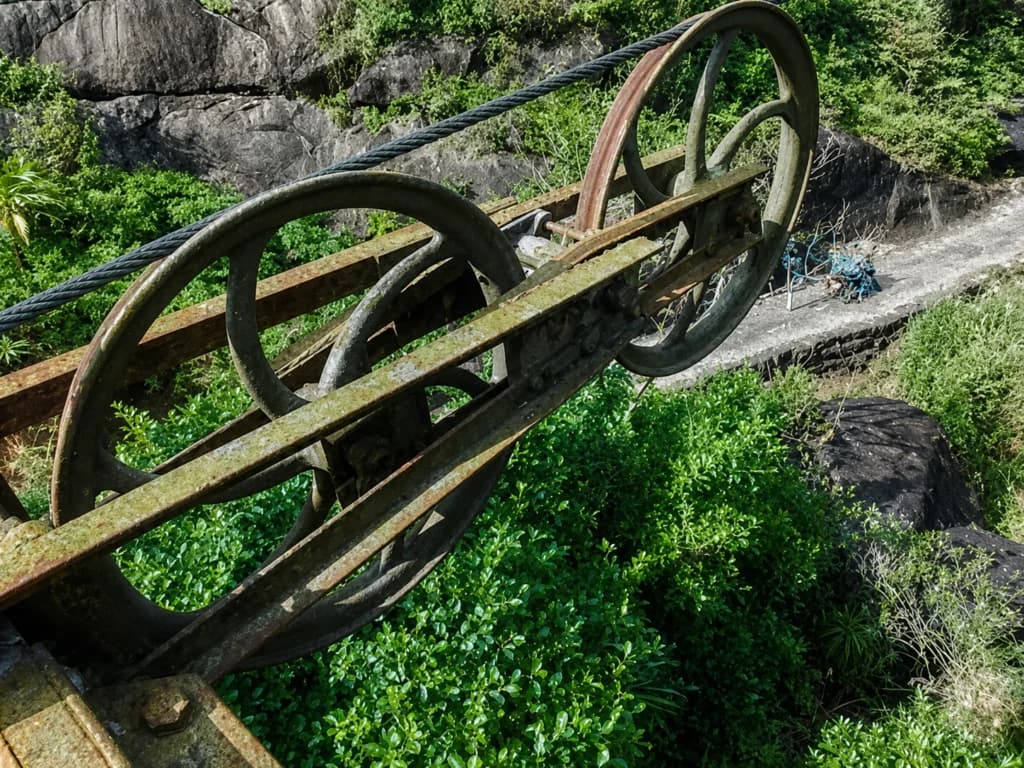
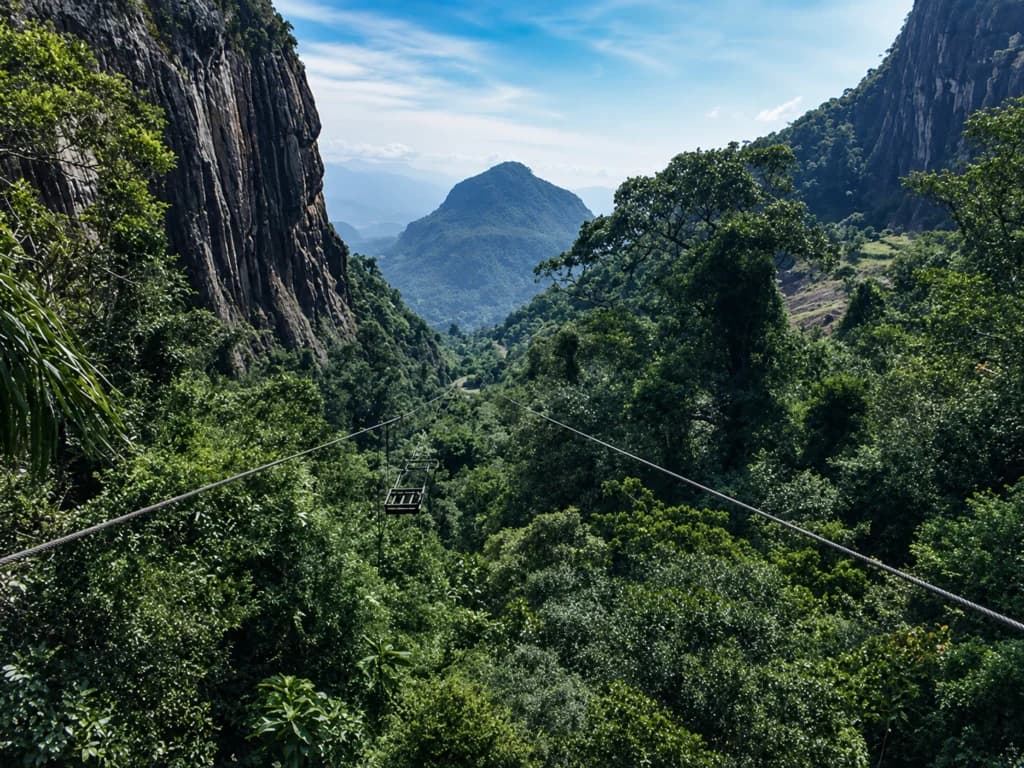
- Old cable supports
- Rusted wheels or pulleys
- Concrete foundations
- Loading platforms
- Abandoned paths between divisions
- Factory-side receiving points
- Oral memories from estate communities
These details may appear small, but they help tell a larger story.
The tea country was not only made beautiful by plantations. It was made functional by systems like ropeways, railways, roads, channels, bridges and factories.
For heritage travellers, noticing these hidden elements makes the landscape far more meaningful.
The Old Photograph as a Heritage Clue
The photograph of Lipton-marked sacks hanging from a ropeway should be treated as more than a nostalgic image.
It is a clue.
It points towards a wider transport system that once operated across parts of Ceylon’s plantations. It captures workers, machinery, material culture and estate branding in a single frame.
It also raises questions.
Where exactly was the photograph taken? What estate used this ropeway? How far did the cable run? Who maintained the system? When did it stop operating?
These questions show why old photographs are so important. Even when they do not give all the answers, they preserve evidence that may otherwise be lost.
When the Hills Carried Tea
For those who witnessed the ropeways during childhood, the memory remains vivid.
They remember the movement of sacks, the height of the cables, the sound of machinery and the excitement of watching tea travel through the air.
For travellers today, these memories and photographs offer a window into a nearly forgotten world.
There was a time when the tea fields of Ceylon were connected not only by roads and railways, but by slender cables carrying the day’s harvest through the mountain air.
That image is beautiful, but it is also practical.
It shows a plantation landscape solving its own transport problems with ingenuity, labour and gravity.
Final Thoughts: The Forgotten Ropeways of Old Ceylon
The aerial ropeways of Ceylon’s tea estates are among the most fascinating forgotten features of the plantation era.
They were not grand monuments. They were working systems. Yet they played an important role in moving green leaf from distant fields to estate factories.
Their story brings together tea, labour, engineering, geography and memory.
Today, most of these ropeways have vanished. But old photographs, scattered remains and estate memories still allow us to imagine them: sacks of tea leaves gliding above valleys, workers waiting below, and factories preparing to turn fresh green leaf into the tea that made Ceylon famous.
For Tripping Sri Lanka readers, this is exactly the kind of Old Ceylon story worth preserving.
It reminds us that the tea country was not only travelled by road and rail.
Once, tea travelled through the air.
Visit Us: https://trippingsrilanka.com/stories
More from Old Ceylon
Gaffoor’s Building: The Forgotten Jewel of Old Colombo That Once Stood at the Heart of Ceylon’s Trading Empire
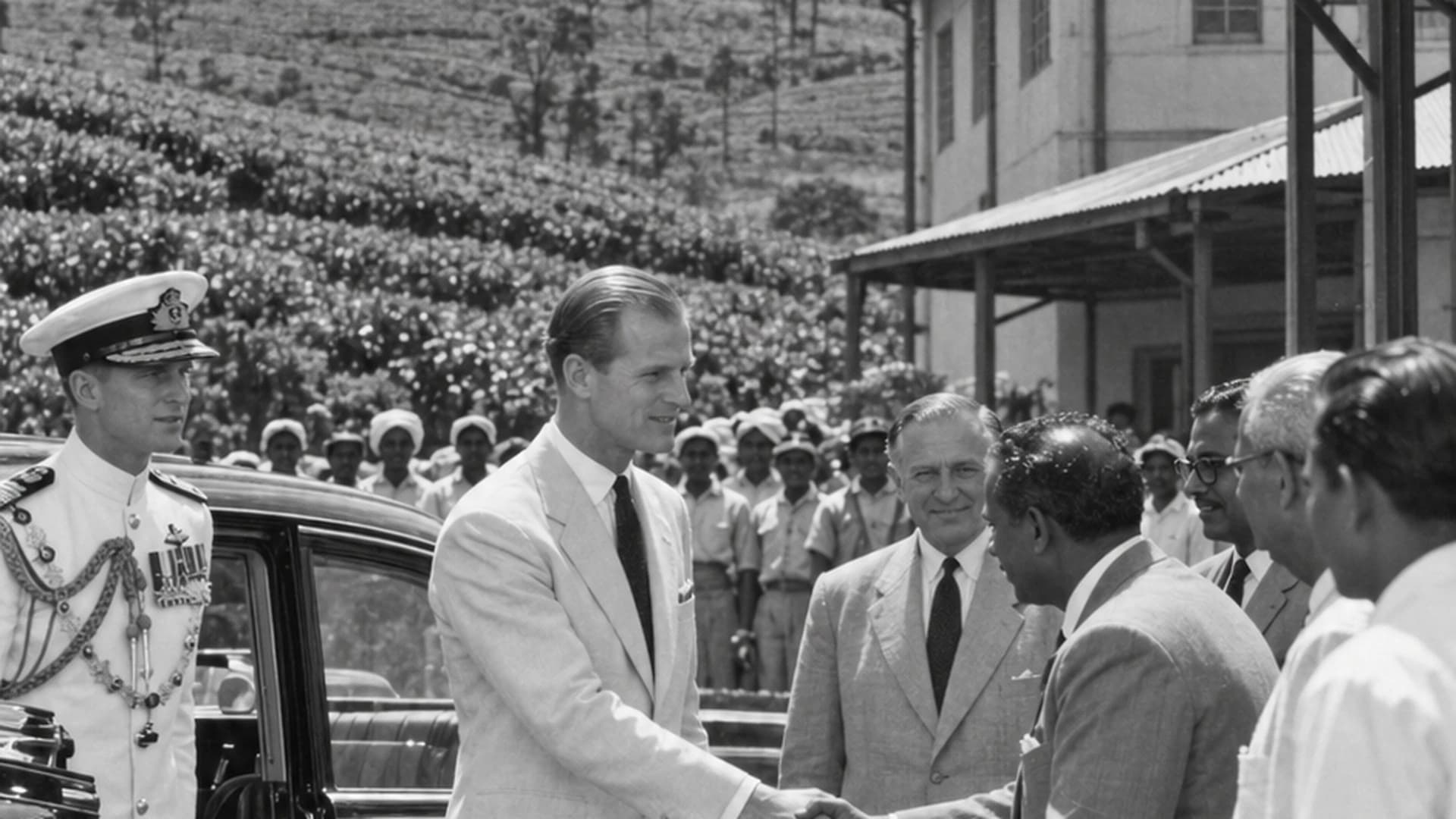
When Prince Philip Visited Pedro Estate: The Royal Visit That Became Part of Ceylon Tea History in 1954