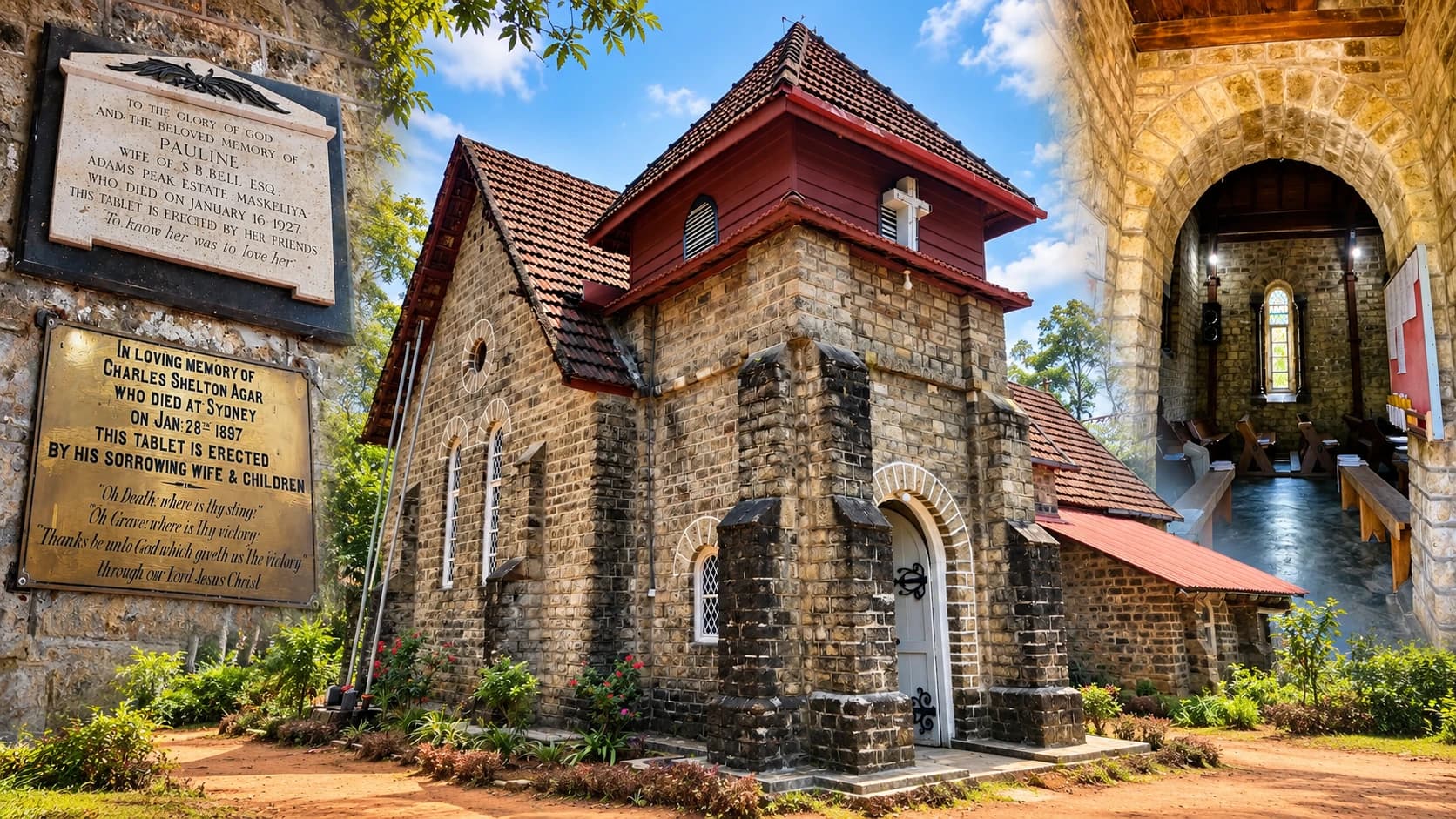
From Coffee to Tea: The Enduring Story of Christ Church Ragala

A Historic Plantation Church in Old Ceylon
Along St Leonard’s Road in the mist-covered hill country stands a modest stone church whose history is inseparable from the rise of Sri Lanka’s plantation economy.
Christ Church Ragala, consecrated on 13 June 1887, is more than a surviving place of worship. Its walls preserve the story of coffee estates, missionary activity, Tamil plantation communities, colonial-era migration and the transformation of the hills from coffee country into the heartland of Ceylon tea.
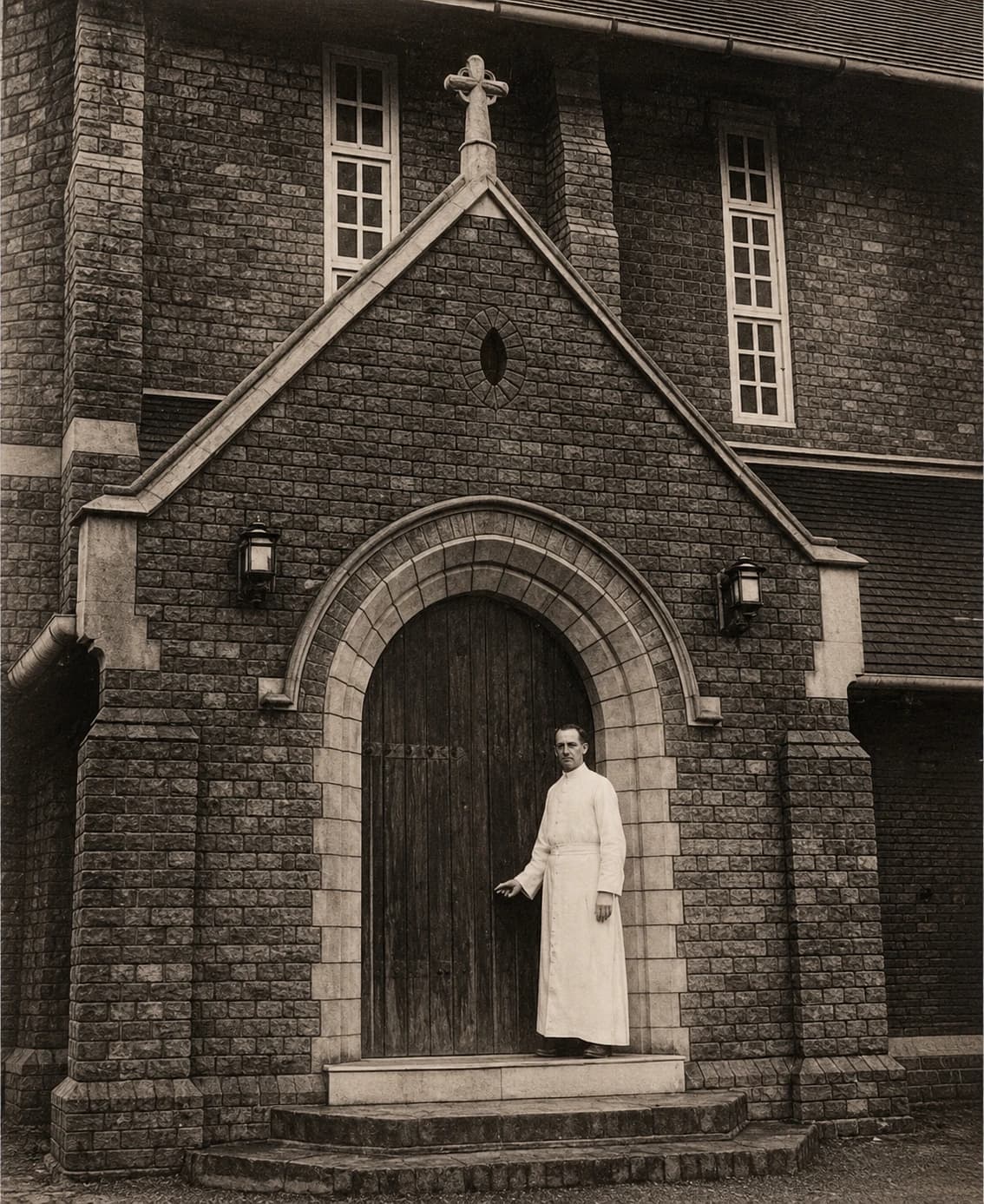
An old photograph of the church, showing a large congregation assembled before its steep stone façade, offers a glimpse into the community that developed around it. While the building reflects the architectural character of the British plantation period, the people gathered outside remind us that its history was shaped not only by European planters and missionaries, but also by generations of estate workers, catechists, teachers and families.
Check our previous article – https://trippingsrilanka.com/stories/st-peters-church-colombo
Where Is Christ Church Ragala?
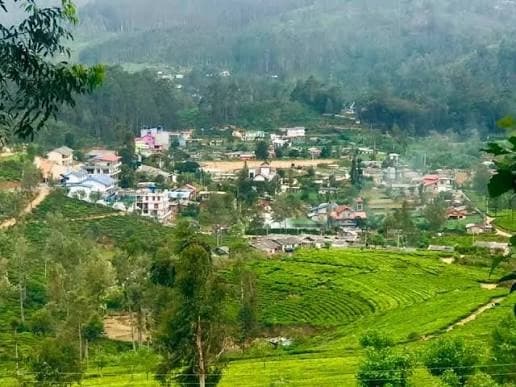
Christ Church Ragala is located in Ragala, in Sri Lanka’s central hill country. The area belongs to the wider Uda Pussellawa plantation region, a landscape known for mist, tea estates, winding roads, old estate bungalows and cool mountain weather.
This setting is important because the church was not built in a major colonial city such as Colombo, Kandy or Galle. It was built in a remote plantation district, where estate life shaped the rhythm of the community.
The church therefore belongs to a different kind of Old Ceylon heritage — not the grand public heritage of capitals and forts, but the quieter heritage of estate settlements, hill-country roads, small congregations and plantation schools.
Check our previous article – https://trippingsrilanka.com/stories/brookside-ragala-road-junction
A Church Born in Coffee Country
The origins of Christ Church Ragala can be traced to the expansion of coffee cultivation across the central highlands during the nineteenth century.
Commercial coffee estates began appearing in Ceylon during the 1820s. As plantations spread into previously remote mountain districts, new roads, stores, bungalows and settlements emerged around them. Estate superintendents and other European residents soon sought places where they could gather for Christian worship.
There were initially few permanent churches in these isolated areas. Services therefore took place wherever sufficient space could be found — in coffee stores, estate schools and centrally situated bungalows.
Visiting chaplains travelled between plantations, often over poor roads and through difficult mountain terrain.
These improvised services marked the beginning of organised Christian worship in many plantation districts.
Check our previous article – https://trippingsrilanka.com/stories/coffee-blight-of-ceylon
Why the Plantation Hills Needed Churches
As the plantation economy expanded, the hill country became home to a growing and diverse population.
European planters, estate managers, clerks, medical assistants, catechists, teachers, labour supervisors and workers all became part of the plantation world. The estates were often far from established towns, so religious and community institutions had to develop within the plantation districts themselves.
Churches such as Christ Church Ragala served several purposes.
They were places of worship, but they also became centres of gathering, identity, education and community organisation. In remote areas, a church could provide one of the few formal spaces where families met beyond the routines of estate labour and administration.
This makes Christ Church Ragala important not only as a religious building, but also as a community landmark.
Christianity Among Plantation Workers
The growth of the estates brought large numbers of Tamil-speaking labourers from southern India into Ceylon’s hill country. They and their descendants made an immense contribution to the development of the island’s coffee and tea industries and to the wider social and cultural life of Sri Lanka.
Mission organisations began conducting religious and educational work among these workers. One of the most active was historically known as the Tamil Cooly Mission. The organisation’s nineteenth-century name reflects the terminology of the colonial period; today, plantation workers or the Malaiyaha Tamil community are more appropriate terms.
Tamil catechists, schoolmasters and missionaries travelled between estates, conducting services, teaching children and maintaining contact with Christian families.
A contemporary account from 1876 describes a network of Tamil congregations, catechists and estate schools operating across Ceylon’s mountain districts. It also reveals that the system was complicated: English chaplains generally ministered to European planters, while Tamil-speaking catechists and teachers often worked separately among estate labourers.
Christ Church Ragala emerged from this broader religious landscape.
Why Ragala Needed Its Own Church
By the 1870s, permanent churches had been established in plantation centres such as Lindula and Dickoya. As estates expanded into Ragala and Uda Pussellawa, the local Christian population also grew.
The journey to neighbouring churches remained difficult, particularly before the development of reliable roads and transport. Ragala therefore required a permanent place where estate workers, staff, families and visiting clergy could gather regularly.
According to the Diocese of Kurunegala’s history of the church, a landowner named G. A. Dick donated a block of land and assumed responsibility for constructing the building.
The project also received contributions from members of the estate community. A kangany, or plantation labour supervisor, donated Rs. 100, while an estate medical assistant contributed Rs. 60.
These details are historically important.
They show that the church was not created entirely through distant colonial patronage. People working within the plantation system also contributed directly to its establishment.
Consecrated During an Economic Crisis
Christ Church Ragala was built during one of the most difficult periods in Ceylon’s plantation history.
The coffee industry, which had driven the expansion of the highlands, was collapsing. Estates failed, employment declined and many institutions that had depended on plantation income faced severe financial difficulties. Some churches and mission stations were reportedly forced to close.
Against this background, the completion of Christ Church Ragala represented a considerable achievement.
The church was formally consecrated on 13 June 1887, giving the developing Ragala community a permanent religious centre at a moment of widespread economic uncertainty.
The date places the building at a major turning point in Sri Lankan history. Christ Church Ragala belonged to the closing chapter of the coffee era, but it would survive into the age of tea.
From Coffee to Ceylon Tea
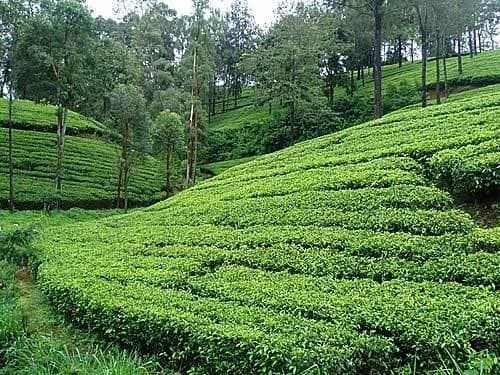
As coffee declined, planters increasingly turned to tea.
The landscape around Ragala and Uda Pussellawa was gradually reshaped by tea fields, factories, estate roads and new settlements.
The change brought renewed economic activity to the district. According to the church’s diocesan history, estate workers and staff eventually formed the core of its congregation. The church therefore evolved from a plantation-era mission outpost into a community institution serving families whose lives were closely connected to the tea estates.
This transition gives Christ Church Ragala particular historical value.
It physically connects two defining stages of colonial Ceylon’s economy: the rise and collapse of coffee and the subsequent expansion of tea.
The Architecture of Christ Church Ragala
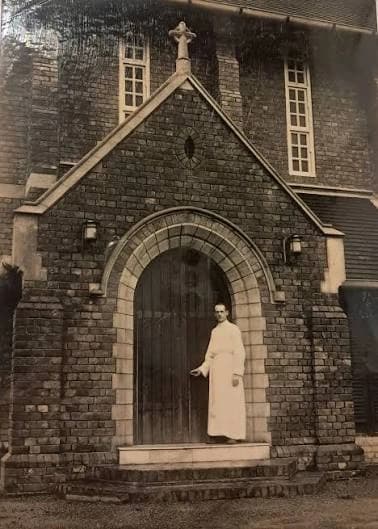
The historic photograph shows a compact church constructed from dark stone, with steeply pitched gables and a tall pointed entrance.
Its pointed arch and sharply rising roofline recall the Gothic Revival tradition commonly used for Anglican churches during the nineteenth century. Yet the building is relatively restrained when compared with grand colonial churches in Colombo, Kandy or Nuwara Eliya.
That simplicity suited its setting and purpose.
This was a church built for a remote plantation district rather than an urban congregation. Thick masonry walls would have offered protection from Ragala’s cold, wet climate, while the steep roof helped discharge the heavy rainfall characteristic of the highlands.
The rough stonework also allows the church to blend naturally with its mountain surroundings. Rather than dominating the landscape, the building appears rooted within it.
A Church Built for the Hill-Country Climate
Christ Church Ragala’s design reflects the practical needs of the highlands.
The hill country around Ragala is often cold, wet and misty. Buildings in this region needed to withstand damp weather, heavy rain and changing mountain temperatures.
The church’s stone walls, steep roof and compact form helped it survive in this climate. The architecture was not simply decorative. It was practical.
This is one of the reasons the building remains so meaningful today. It shows how colonial-era church architecture adapted to the realities of plantation life in the mountains.
A Centre of Education and Community Life
The influence of Christ Church Ragala extended beyond Sunday worship.
Christian schools were established on several estates associated with the surrounding mission area, including:
- Delmar
- Ragala Alanwick
- Tullos
- Allagalla
- Bramly
- Gordon
These schools combined religious instruction with basic education for children living in plantation communities.
Estate schools occupied a complicated position within the colonial system. They provided opportunities for literacy and education, but they also operated within plantation communities marked by economic dependency and social inequality.
Nevertheless, teachers, catechists and local families transformed these institutions into important centres of community life. In isolated districts where access to public facilities was limited, the church and school were often among the few organised spaces available for learning, worship and collective gathering.
What the Historic Photograph Reveals
The old photograph connected to Christ Church Ragala is as significant as the building itself.
The congregation includes men, women and children, estate workers, church officials and community leaders. Their presence transforms the image from a simple architectural record into a portrait of plantation society.
The photograph also challenges the tendency to describe colonial churches only through the actions of bishops, missionaries and estate owners.
Buildings may have been funded or initiated by prominent individuals, but congregations gave them meaning and continuity.
The people assembled before Christ Church Ragala were not merely figures in the background of the plantation economy. They formed families, established religious communities, educated children and created social networks that survived long after the coffee industry disappeared.
The Plantation Community Behind the Church
The story of Christ Church Ragala is also the story of plantation families.
Estate workers and their descendants lived through the transition from coffee to tea, the growth of plantation settlements and the development of estate schools and churches. Their lives were shaped by labour, migration, faith, education and community ties.
The church became part of that everyday world.
It may have witnessed baptisms, marriages, funerals, Sunday services, school gatherings and community events. For many families, it would have been more than a building. It would have been part of their identity in a remote hill-country district.
This is why Christ Church Ragala should not be remembered only as a colonial structure. It should also be remembered as a community landmark shaped by the people who worshipped there.
Its Historic Significance to Sri Lanka
Christ Church Ragala is historically important for several interconnected reasons.
First, it is a surviving monument from the nineteenth-century development of the Ragala and Uda Pussellawa plantation districts.
Second, its 1887 consecration connects it directly with the economic transition from coffee to tea.
Third, the church preserves evidence of early Anglican and Tamil Christian activity among plantation communities.
Fourth, the contributions made by a kangany and an estate medical assistant demonstrate the involvement of people working within the estates, rather than presenting the church solely as a European creation.
Finally, its associated schools reveal how religion, education and plantation life became interconnected in the central highlands.
Why Christ Church Ragala Matters to Old Ceylon
Christ Church Ragala matters because it tells a more complete story of Old Ceylon.
Old Ceylon is often remembered through planters’ bungalows, railways, clubs, forts and grand colonial buildings. But places like Christ Church Ragala show the everyday social and spiritual life of plantation districts.
It connects:
- Coffee estate expansion
- The collapse of coffee
- The rise of Ceylon tea
- Anglican missionary activity
- Tamil plantation communities
- Estate education
- Hill-country church architecture
- Local contributions to religious institutions
- Community life in remote plantation regions
This makes the church an important heritage site, not only for religious history but also for plantation, labour and social history.
Preserving a More Complete History
Places such as Christ Church Ragala should not be preserved merely as picturesque remnants of Old Ceylon. Their history must be interpreted honestly.
The plantation economy created roads, towns, railways, factories, churches and schools, but it was also built upon difficult labour conditions and deep social inequalities. Even today, the estate sector continues to experience greater levels of poverty and reduced access to services compared with many urban and rural communities.
Preserving Christ Church Ragala therefore means preserving the stories of everyone connected with it: planters and missionaries, but also plantation labourers, kanganies, teachers, catechists, medical assistants, women, children and generations of worshippers.
A complete heritage story must include all of them.
A Living Landmark of the Hill Country
More than a century after its consecration, Christ Church Ragala remains a quiet witness to the transformation of Sri Lanka’s highlands.
Its stone walls recall the coffee plantations that first brought organised colonial settlement to the district. Its congregation grew during the rise of Ceylon tea. Its schools contributed to community life across surrounding estates.
Most importantly, its history reveals how plantation workers and local Christians helped create institutions of their own within a system largely controlled by others.
Christ Church Ragala may appear modest beside Sri Lanka’s larger colonial landmarks. Yet its significance lies precisely in that modesty.
It tells the history of an ordinary hill-country community — and through that community, a much larger story about faith, labour, migration, education and survival in plantation-era Ceylon.
Final Thoughts: From Coffee to Tea, From Church to Community
Christ Church Ragala is not only a historic church. It is a witness to one of the most important transformations in Sri Lanka’s hill country.
It was born in the shadow of the coffee era, consecrated during economic crisis, and carried forward into the age of Ceylon tea.
Its history includes European planters and Anglican clergy, but it also includes Tamil plantation workers, kanganies, teachers, catechists, medical assistants, women, children and generations of worshippers.
For Tripping Sri Lanka readers, Christ Church Ragala is exactly the kind of Old Ceylon landmark worth rediscovering.
It is modest, mist-covered and deeply rooted in plantation life.
And through its story, we see how faith, labour, education and community helped shape the hill country of Ceylon.
Heritage places mentioned
Christ Church Ragala
More from Old Ceylon
When the King’s Birthday Was Celebrated on Galle Face Green: A Glimpse of Colombo in 1933
Holyrood Estate, Talawakelle: An Old Ceylon Bungalow and a Name That Echoes Scotland