Gaffoor’s Building: The Forgotten Jewel of Old Colombo That Once Stood at the Heart of Ceylon’s Trading Empire
Gaffoor’s Building colombo| Long before Colombo became a city of glass towers, traffic lights and hurried office workers, there was another Colombo. A city of horse-drawn carriages, bustling trading houses, European steamships and merchants who made fortunes from the treasures of Ceylon. At the heart of that vanished world stood one of the city’s grandest commercial landmarks – Gaffoor’s Building.
An Old Photograph of a Different Colombo
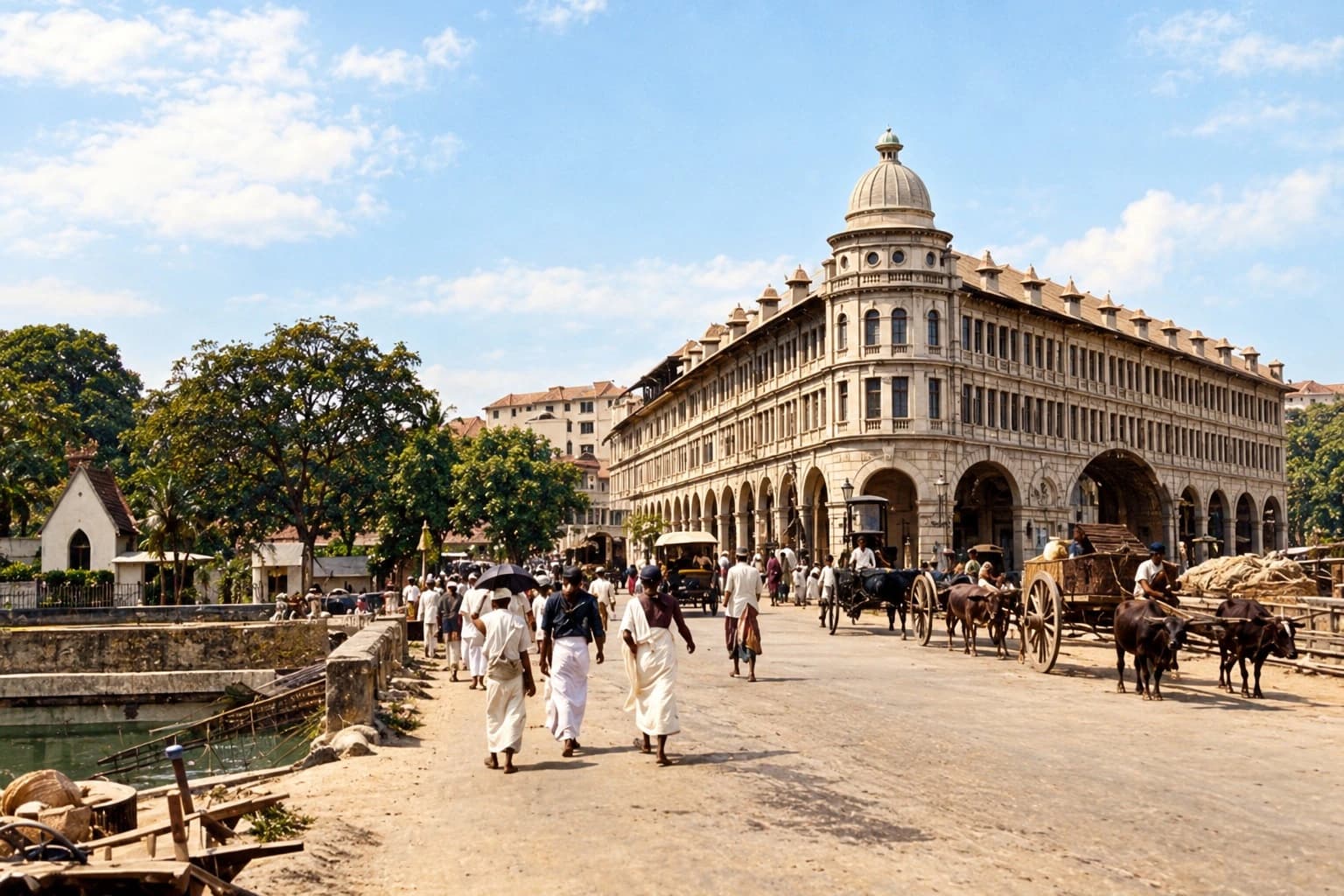
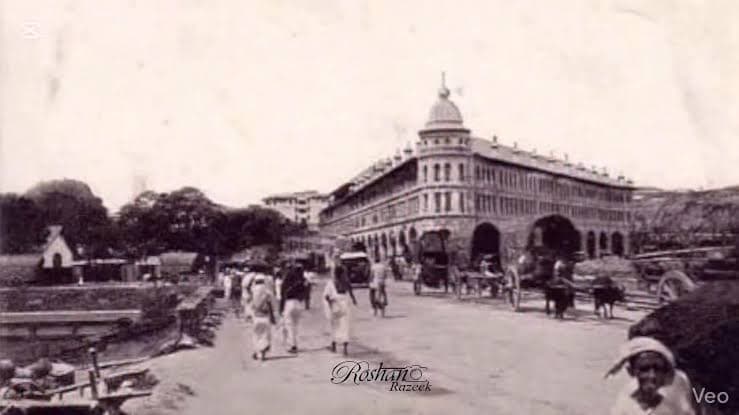
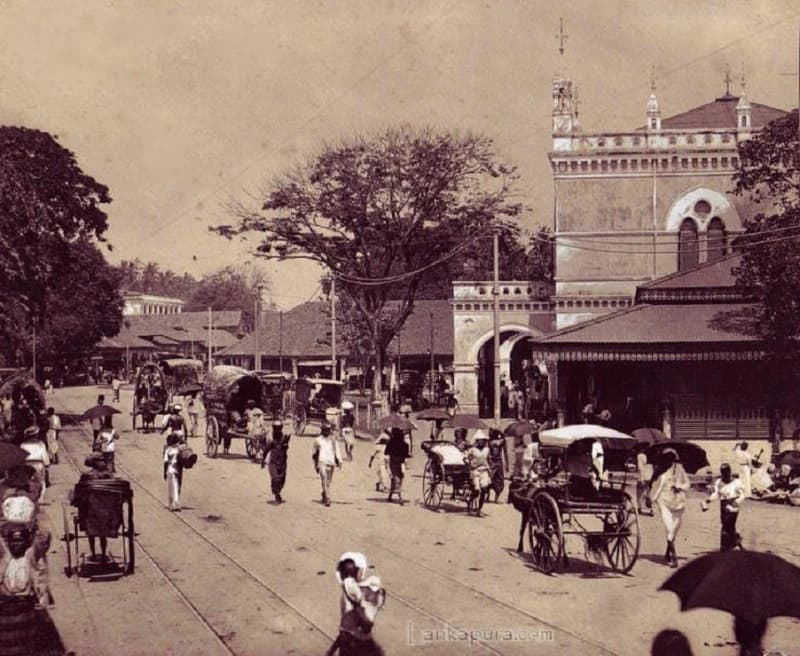
There is something rather beautiful about this old photograph of Colombo. The road is wide and dusty, men dressed in white walk beneath the tropical sun, and bullock carts and horse-drawn carriages share the street. A few pedestrians seem to have stopped to exchange a word or two. In the background stands an enormous building, its long façade stretching across the photograph, with elegant arches and a decorative dome rising above the surrounding streets.
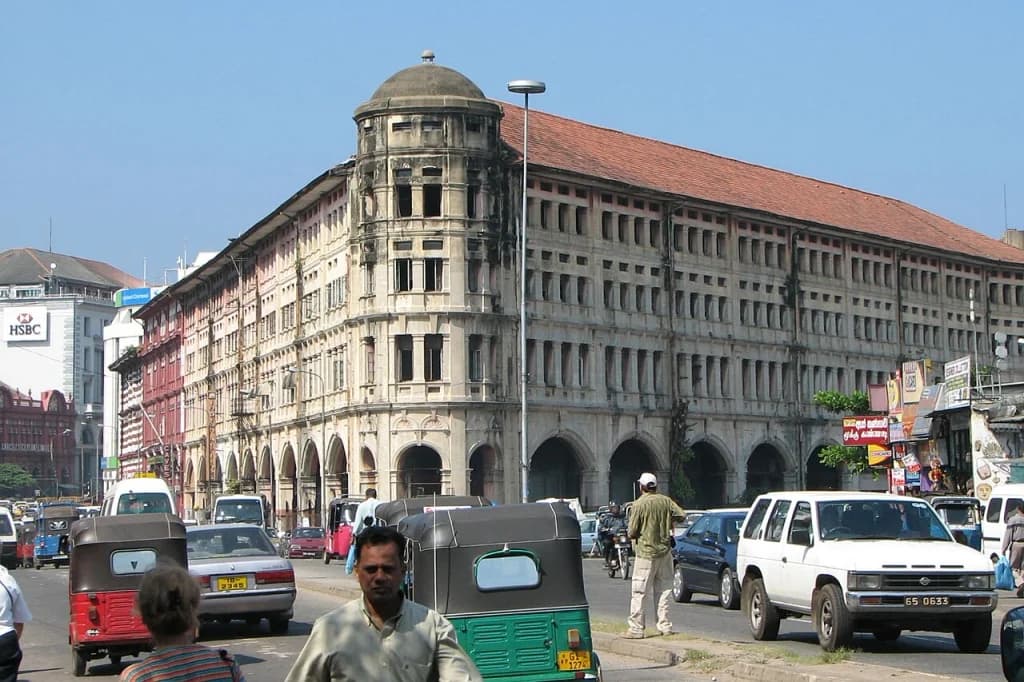
It is a scene from a Colombo that has almost entirely disappeared. Yet the building itself has survived. Known as Gaffoor’s Building, this once-magnificent commercial establishment still stands in Colombo Fort, at the junction of what is now Sir Baron Jayatilaka Mawatha and Leyden Bastian Street. More than a century has passed since its construction, but its story remains closely connected to a remarkable period in Ceylon’s history, when Colombo was emerging as one of the great commercial centres of the Indian Ocean.
Behind this building was a man whose business began with something considerably smaller than a grand commercial empire. His story began with precious stones and the passenger ships arriving in Colombo Harbour. From that trade emerged a business whose success would eventually become visible in one of the city’s most impressive commercial buildings.
Read out previous article – https://trippingsrilanka.com/stories/bristol-building-colombo-fort
A Young Merchant and the Treasures of Ceylon
To understand the story of Gaffoor’s Building, one must return to the Colombo of the late nineteenth century. At the time, the island was known throughout the world for its gemstones. Ceylon sapphires, rubies, cat’s eyes and other precious stones were highly sought after by wealthy collectors, European aristocrats and royal households. Colombo Harbour was an important stopping point for passenger steamships travelling between Europe and the East, bringing a steady stream of visitors through the city.
Travellers arriving aboard these vessels often had only a short time to explore Colombo, but for local merchants, their arrival presented an opportunity. Among those merchants was Noordeen Hajiar Abdul Gaffoor, born in Colombo in 1875. As a young boy, he learned the gemstone trade from his uncle, an established merchant. Together, they visited passenger ships entering Colombo Harbour, offering precious stones and jewellery to travellers who were often eager to take home something memorable from Ceylon.
It is not difficult to imagine the atmosphere of the harbour in those years. Great steamships anchored offshore or alongside port facilities, their decks crowded with passengers looking towards the tropical shoreline. Small boats moved between vessels and the port, while merchants approached prospective customers with goods that represented the island’s commercial reputation. Among them was a young Abdul Gaffoor, learning a business that would eventually make his name internationally recognised.
In 1894, while still only nineteen, he established a jewellery business at Colombo’s Bristol Hotel building. What began as a relatively modest enterprise grew into one of the island’s celebrated jewellery establishments. Gaffoor developed relationships with influential customers and built a reputation for the quality of his gemstones. His collections were exhibited overseas, including at major international exhibitions, bringing wider recognition to his business and to Ceylon’s gem trade.
When a Grand Building Rose Above Colombo
By 1915, Abdul Gaffoor’s commercial success had taken architectural form. Gaffoor’s Building was completed that year, becoming one of the most impressive business buildings in Colombo. It was no ordinary shop or warehouse, but a substantial commercial structure occupying a prominent wedge-shaped site in the Fort.
The building had a long, commanding frontage, rows of carefully arranged windows, ornamental architectural details and an arcade of arches at street level. Its corner tower, crowned by a graceful dome, gave it a distinctive silhouette above the surrounding buildings. The design was intended to be noticed, reflecting the prosperity and ambition of the merchant who commissioned it.
A commercial publication of the 1920s described the building as among Colombo’s largest and finest business structures. At a time when much of the city’s commercial activity still took place in comparatively modest premises, Gaffoor’s Building represented a new scale of development. Its size and architectural treatment spoke of confidence in Colombo’s growing importance as a centre of trade.
Constructing such an enormous building was apparently no simple undertaking. According to accounts preserved by the Gaffoor family, the site had once formed part of the Beira Lake area and required reclamation. Building on water-affected ground reportedly discouraged contractors until Walker Sons and Company undertook the work. It is a remarkable detail in the history of a structure created to display some of Ceylon’s most valuable treasures. Before the business could occupy its grand new premises, considerable effort had been needed to prepare the ground beneath them.
A World of Jewellers, Booksellers and Trading Houses
Although Gaffoor’s Building was closely associated with its owner’s jewellery business, its purpose extended far beyond the sale of precious stones. The building became home to several important commercial enterprises operating in Ceylon. Among its occupants were H. W. Cave & Company, the celebrated booksellers and publishers, Mackwoods Limited, the Holland-Ceylon Commercial Company and firms involved in the island’s produce trade.
These businesses represented an extraordinary mixture of colonial commerce. There were merchants dealing in agricultural products that sustained the island’s export economy, publishers producing books and photographs of Ceylon, and trading companies maintaining commercial relationships with London and other international ports. The building brought several strands of the island’s business world together under one roof.
During the early twentieth century, Ceylon’s economy depended heavily on plantation exports, particularly tea, rubber and coconut products. Much of that activity passed through Colombo, where merchants, clerks, agents, shipping representatives and labourers worked to connect the plantations of the interior with markets thousands of miles away.
One can imagine the atmosphere inside Gaffoor’s Building during its busiest years. Clerks sat at heavy wooden desks, carefully entering transactions into large account books. Visitors arrived with letters of introduction, merchants discussed shipments and prices, and customers examined precious gemstones under the light filtering through tall windows. The corridors would have carried the movement of office workers, papers and commercial correspondence throughout the working day.
Outside, the traffic of Old Colombo continued. Bullock carts made their journeys through the streets, horse-drawn vehicles carried passengers between commercial establishments, and the harbour brought a constant arrival of new faces. For those who worked there, Gaffoor’s Building was not a historic monument. It was simply part of everyday Colombo.
The Colombo That Lives Inside an Old Photograph
Look carefully at the photograph again, and perhaps the most fascinating part of the image is not the building itself but the ordinary life unfolding around it. The men walking along the road could hardly have imagined that, more than a century later, strangers would study their movements in an old photograph.
There is no heavy motor traffic, no forest of modern high-rise buildings and none of the advertising signs that now compete for attention across the commercial capital. Instead, the city seems to move at a different pace. The broad road, the occasional cart and the groups of people walking beneath the open sky offer a glimpse of a time when Colombo’s streets were still shared by older forms of transport and the newer commercial world taking shape around them.
Yet this was not a sleepy town. Colombo was already an important international port, and the wealth of colonial commerce was transforming its appearance. Buildings such as Gaffoor’s were physical expressions of that transformation, belonging to a period when local entrepreneurs, European trading companies and international merchants were reshaping the city.
The photograph also reminds us how easily the familiar disappears. Roads are widened, buildings are altered, old shopfronts vanish and names change. The reasons why a particular building was once considered important gradually fade from public memory. What remains is sometimes little more than a photograph, a street name or a weathered façade.
The Years That Changed Everything
Gaffoor’s Building witnessed enormous changes during the decades that followed its construction. It stood through the First World War, the economic turbulence of the interwar years and the Second World War, when Ceylon occupied an important strategic position in the Indian Ocean. The surrounding streets remained active, but the political and commercial world that had created the building was gradually changing.
In 1948, Ceylon gained independence from Britain, bringing an end to more than a century of British colonial rule. The old commercial structures of Colombo continued to function, but the institutions and relationships around them evolved as the country entered a new period.
The building had also acquired a diplomatic role during this time. In October 1947, the Australian High Commission moved its offices into Gaffoor’s Building, remaining there until relocating to the Grand Oriental Hotel in 1950. It was another indication of the building’s importance within Colombo’s commercial and administrative landscape.
As the years passed, motor vehicles replaced the horse-drawn carriages and bullock carts that had once dominated the roads. New commercial buildings appeared, businesses relocated and Colombo’s economic centre evolved. The trading houses that had given Gaffoor’s Building much of its earlier importance no longer occupied quite the same position in the country’s economy.
Like many great commercial buildings of colonial Colombo, it gradually lost the prominence it had once enjoyed. The city was moving into another age, and the old building had to find its place within it.
When the Grand Old Building Was Almost Lost
The later history of Gaffoor’s Building is not entirely a happy one. As decades passed, the once-proud landmark suffered from neglect and deterioration. Its original architectural appearance was altered, and decorative features that had once given the building much of its elegance disappeared or were changed, including elements of the corner tower and roofline.
The building that had once announced the prosperity of a successful merchant gradually became a reminder of Colombo’s neglected architectural inheritance. In October 2000, Gaffoor’s Building was officially declared a protected monument under Sri Lanka’s Antiquities Ordinance. Legal recognition, however, did not immediately resolve the difficulties associated with preserving such a large and ageing structure.
By the late 2000s, serious concerns had been raised about its structural condition, including water-related deterioration affecting the foundations. For a building that had once stood among the finest commercial establishments in Ceylon, the decline was particularly regrettable. Proposals emerged to convert it into a hotel and return it to commercial use, although redevelopment plans encountered complications.
In 2020, a restoration programme costing approximately Rs. 620 million was publicly reported. The project involved the Urban Development Authority, the Sri Lanka Navy and the University of Moratuwa, with the intention of conserving the historic structure while preparing it for renewed commercial activity.
The fact that such an extensive programme was considered necessary tells its own story about the difficulties of preserving Colombo’s architectural heritage. Protecting a historic building involves more than recognising its age. It requires maintenance, resources, practical use and an appreciation of why its survival matters to the city.
More Than a Relic of Colonial Colombo
It would be easy to look at Gaffoor’s Building and see only another old structure from the British colonial period. But that would overlook the most interesting part of its history. This was a building commissioned by a Ceylonese entrepreneur who developed an international business around one of the island’s oldest and most celebrated trades.
Abdul Gaffoor’s story belongs to a larger history of local merchants who operated successfully within the commercial world of colonial Ceylon. While European trading companies controlled significant parts of the island’s economy, entrepreneurs such as Gaffoor developed enterprises that carried the name of Ceylon far beyond its shores. His gemstones reached international customers, and his commercial success became visible in the architecture of Colombo itself.
That is why Gaffoor’s Building deserves to be remembered as more than an attractive old landmark. It represents a period when the wealth of the island’s trading economy, the ambition of its merchants and the rapid development of its principal port city came together.
The arches and windows tell one story. The man who built it tells another. And the changing streets around it tell the story of Colombo.
Read our previous article- https://trippingsrilanka.com/stories/colonial-colombo
A Building That Still Remembers Old Ceylon
More than 110 years after its completion, Gaffoor’s Building remains part of Colombo’s historic streetscape. The world that created it has long since disappeared. The great passenger steamships that brought wealthy travellers to Ceylon no longer define the harbour, and the merchant houses that once filled Colombo Fort have given way to new industries, businesses and institutions.
The bullock carts and horse-drawn carriages seen in the old photograph have vanished from the everyday life of the capital. Even the familiar name of Ceylon has passed into history. Yet there is something reassuring about knowing that this building has endured through all those changes.
Perhaps the real value of an old building lies not merely in its architecture or the famous people associated with it, but in its ability to remind us of lives we would otherwise never know. The clerks who hurried to their offices each morning, the merchants who arrived with business to discuss, the customers who examined Ceylon’s gemstones and the labourers who carried goods through the streets were all part of the building’s everyday story.
Those people have disappeared into history, but for a moment, when we look at the old photograph, they return. Behind them stands Gaffoor’s Building, just as it did when Colombo was young in the twentieth century, when the harbour was busy with steamships and when a successful gem merchant’s ambition helped shape the skyline of the city.
Old Colombo may have changed beyond recognition, but Gaffoor’s Building still carries the memory of a time when the fortunes of Ceylon passed through its streets, trading houses and harbour.
And perhaps that is why photographs like this remain so captivating. They do not simply show us how a city once looked. They remind us of everything a city has lived through.
Visit Us: https://trippingsrilanka.com/stories
More from Old Ceylon
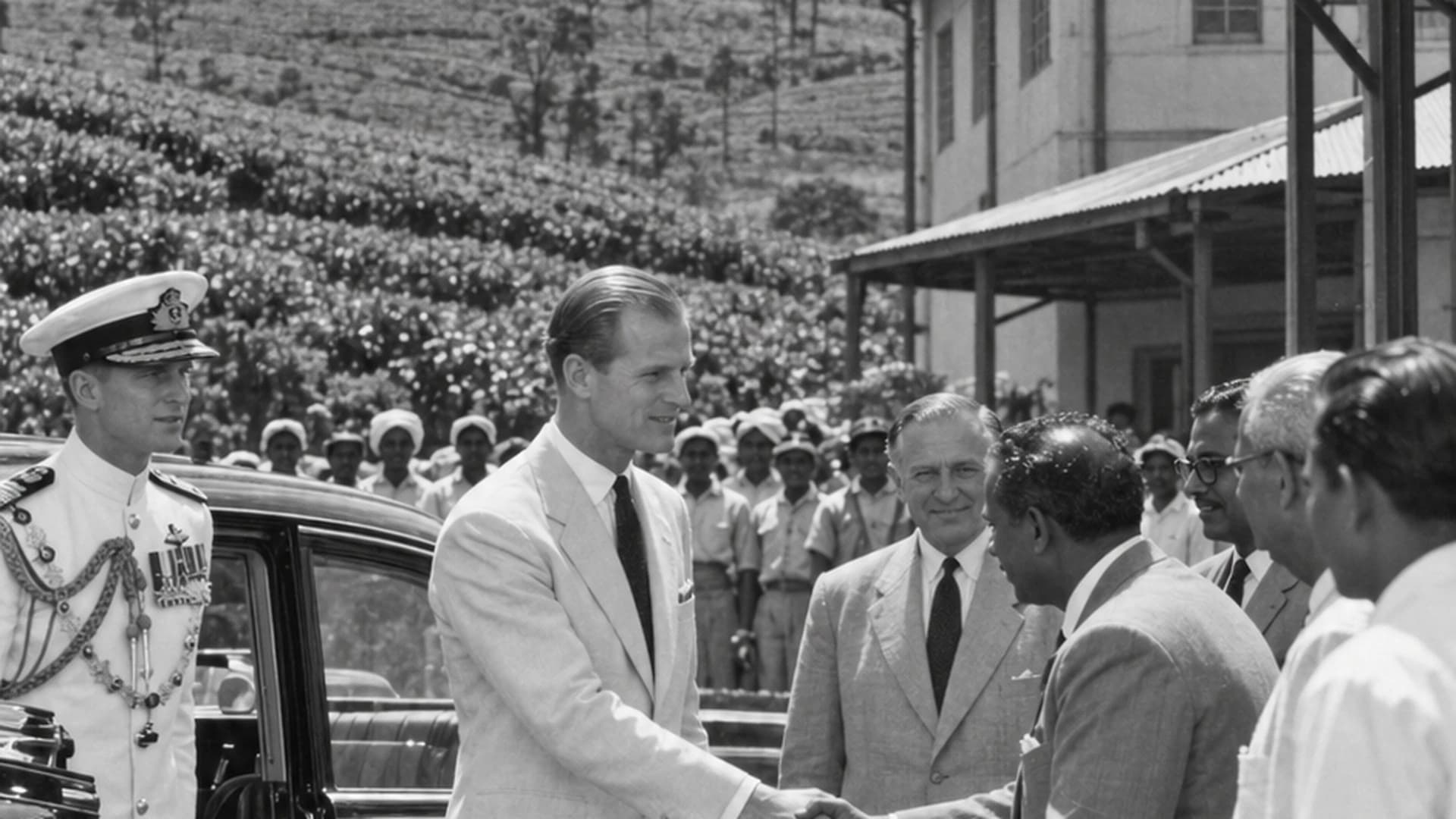
When Prince Philip Visited Pedro Estate: The Royal Visit That Became Part of Ceylon Tea History in 1954
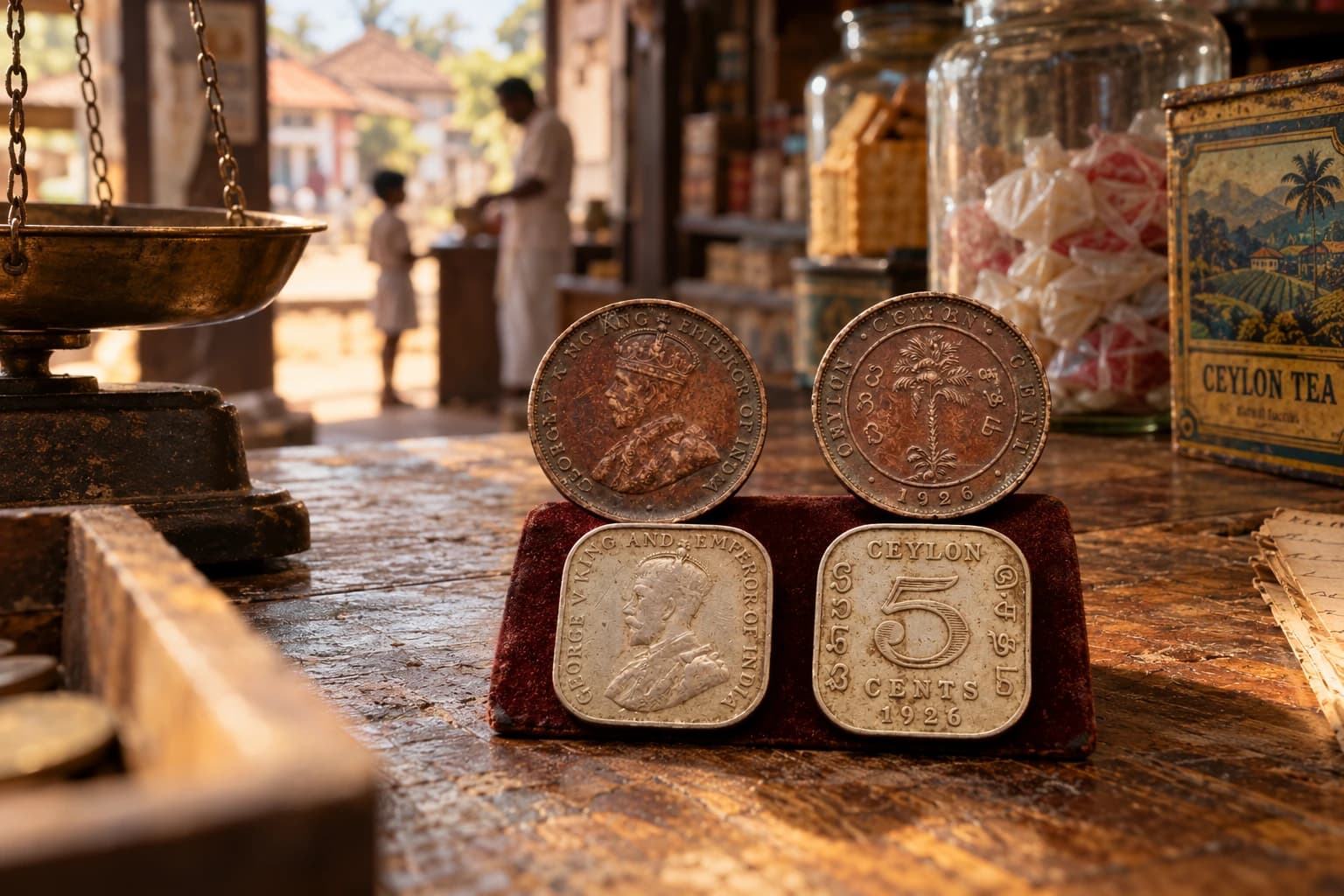
When Five Cents Mattered: The Forgotten Small Change of Old Ceylon